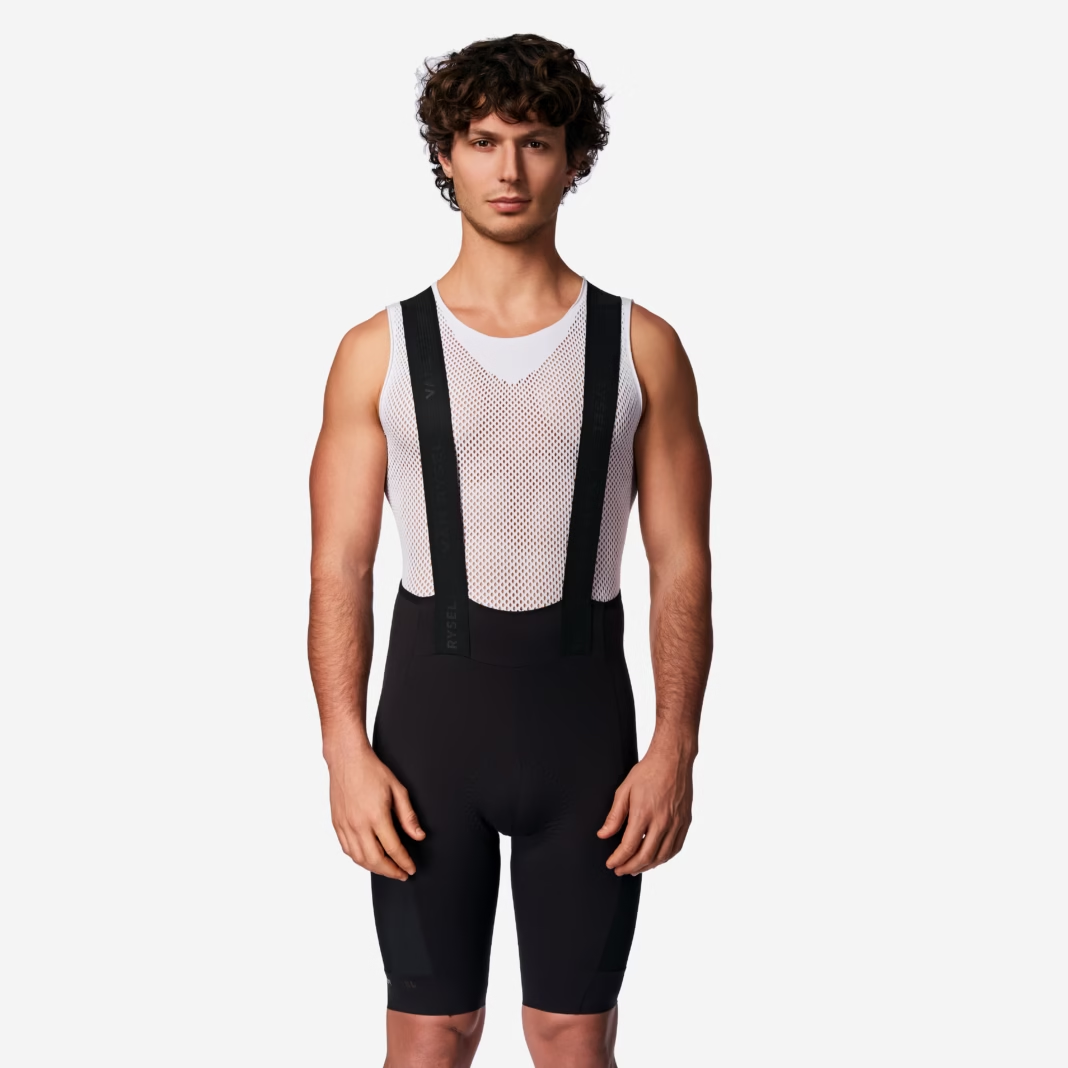
Van Rysel’s EDR Ultra bib shorts cost £99.99, putting them above entry-level cycling kit but below many established cargo alternatives. They combine an Elastic Interface seat pad with three pockets and are aimed at riders spending seven hours or more in the saddle.
On paper, that makes them an appealing option for audax rides, sportives and long summer training days. The more difficult question is whether the seat pad matches the endurance claims. Two independent tests reach different conclusions about the padding, which is more useful to a buyer than the manufacturer’s endurance rating alone.
Fit and saddle compatibility are personal, so those differences matter more for long-distance buyers than they might for a two-hour club ride.
What do you get for £99.99?
This pair sits in Van Rysel’s endurance range rather than its more race-oriented RCR collection. Decathlon lists the men’s smoked-black shorts at £99.99. They are intended for warm-weather road cycling, with Van Rysel specifically targeting rides lasting more than seven hours.
The most useful feature is the three-pocket layout. Two mesh pockets sit on the outer thighs, where food and small essentials can be reached without removing a hand from the bars for long. A third pocket sits at the back. That gives riders a way to carry food and small items without stuffing their jersey pockets.
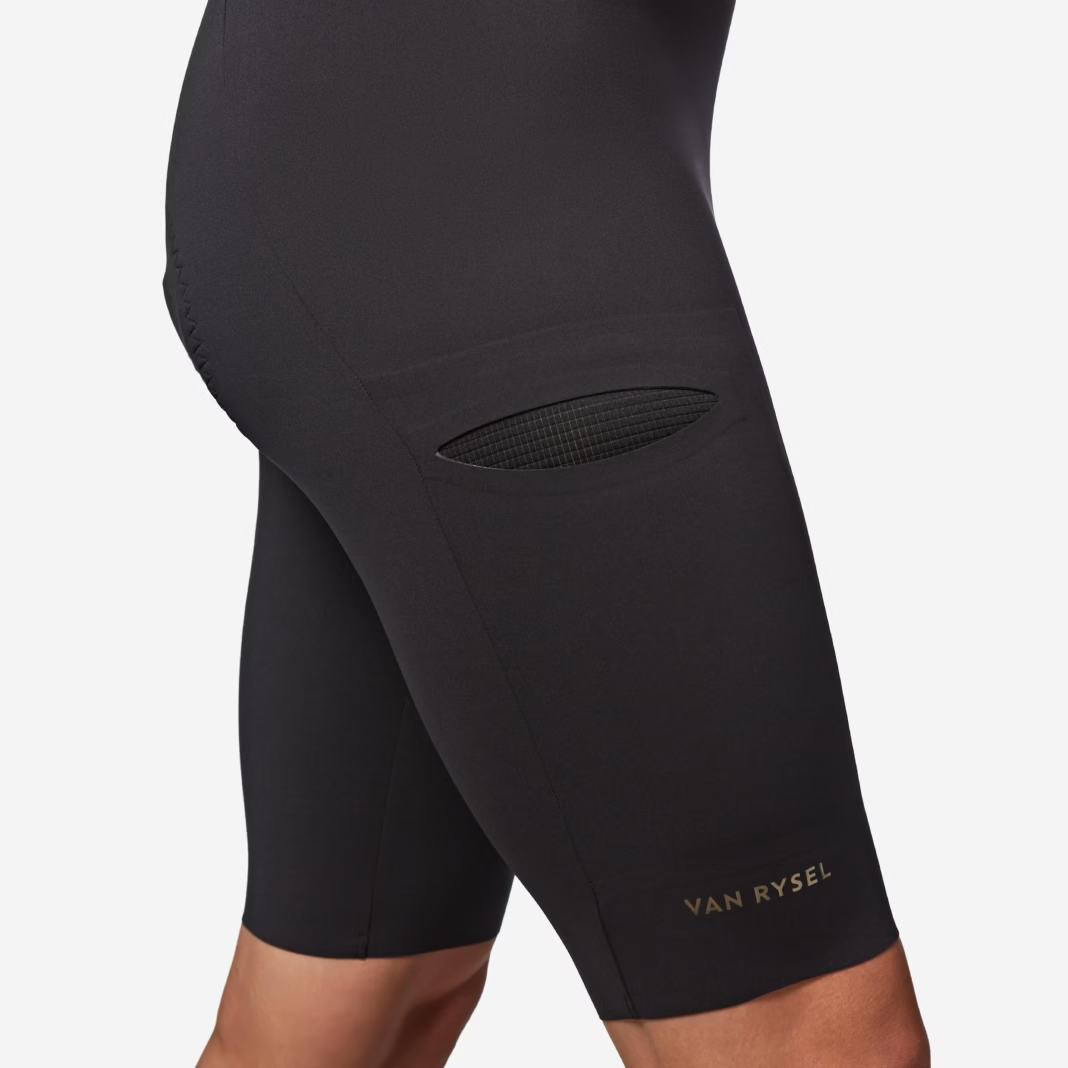
The main fabric is 58% polyamide and 42% elastane, with different blends in the other panels. Stretchy mesh straps and a close cut are intended to keep the pad steady as the rider moves. Van Rysel describes silicone leg grippers, although BikeRadar found hemless leg openings without silicone dots and reported that they stayed in place. Decathlon advises washing at 30°C without fabric softener and drying naturally.
The seat pad is the crucial detail
The shorts use an Elastic Interface pad, but the precise model name is not consistently described across the manufacturer’s own websites. Decathlon’s UK listing identifies a Strada Men’s Elastic Interface pad, while Van Rysel’s dedicated product page calls it Ultra Corsa Elastic Interface. Both describe a pad intended for long rides, but these are not interchangeable model names. Buyers should confirm the current pad specification with Decathlon before ordering if this distinction is important.
Decathlon highlights perforations and a smooth surface intended to improve breathability and reduce friction. Van Rysel refers to multi-density padding for managing pressure and vibration. Neither description guarantees comfort after seven hours.
The pad is where independent testing becomes especially valuable. TOUR’s assessment, written by Stefan Frey, questioned both its position and support. The reviewer found that the area offering the most support could sit too far back for some riding positions and that the soft padding became less convincing over longer distances. This is a meaningful reservation for a product marketed specifically towards ultra-distance riders.
BikeRadar’s separate test was more positive about comfort on the road but found the padding less convincing on rough gravel. Those findings are not necessarily contradictory. Road surfaces, saddle choice, rider anatomy and time spent seated all affect how a pad feels. Nevertheless, it makes them difficult to recommend as a universally safe choice for exceptionally long days.
Cargo pockets: useful storage, with one compromise
Two thigh pockets are arguably the best reason to choose these over conventional bib shorts. They make it easier to separate food from valuables and keep regularly used items accessible. On a sportive, that could mean a gel in one pocket and a bar in the other. On an audax, it could mean keeping a route card, lightweight gloves or a small packet of food within reach.
A pocket is only useful if its contents stay put when pedalling and do not create pressure against the leg. The manufacturer describes the thigh storage as easy to access while riding, but it does not publish a meaningful carrying-capacity figure. Bulky objects should still go in a jersey pocket or saddle bag, and a phone should be checked for fit rather than assumed to be secure.
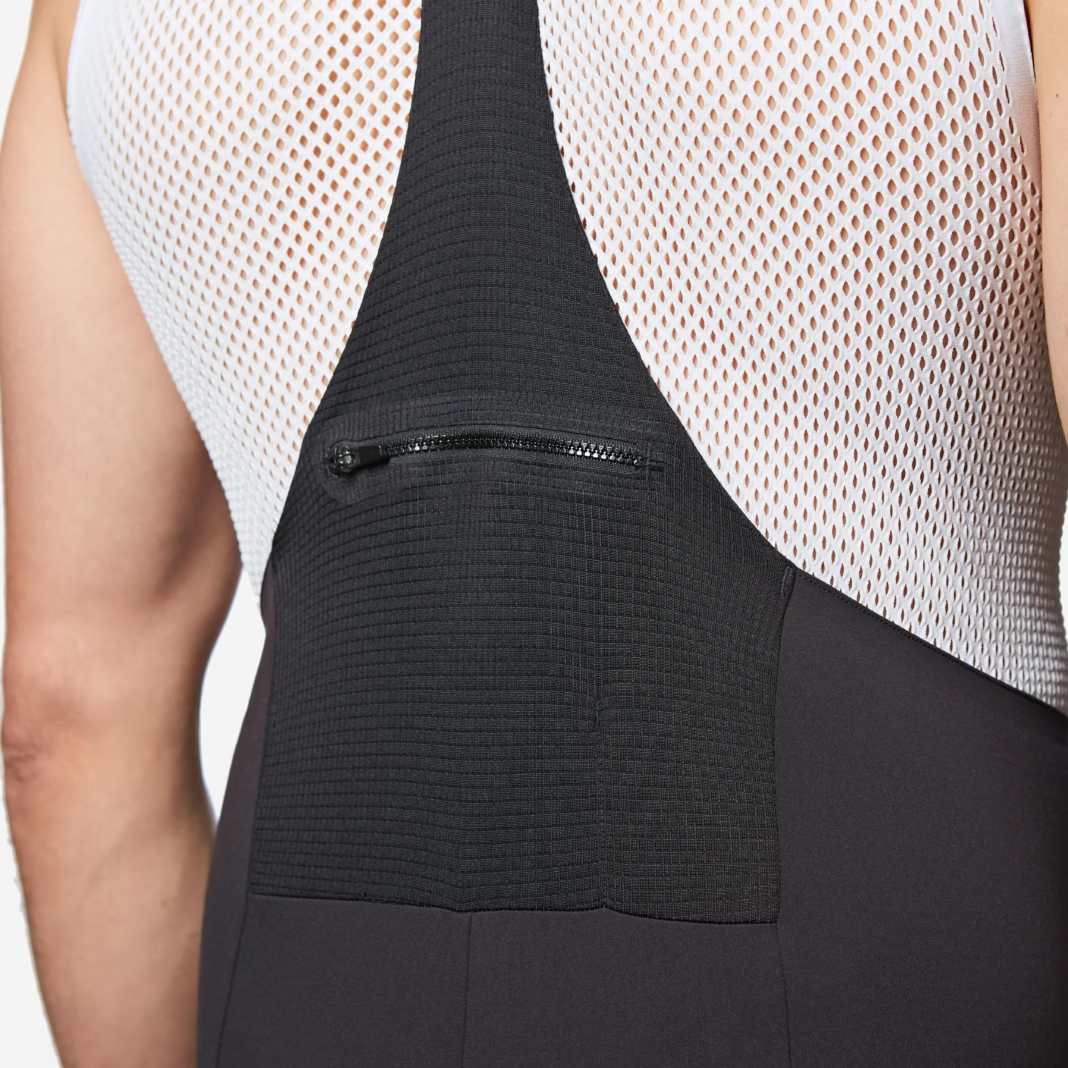
The large mesh pocket across the rear bib section is less straightforward. TOUR found it accessible but somewhat uncomfortable when loaded. That matters because the point of cargo bib shorts is to distribute storage without creating a new irritation. For riders who regularly use the back pocket, this criticism is worth taking seriously; for those who mainly want two thigh pockets, it is less decisive.
Fit, straps and warm-weather performance
The wide mesh straps should spread pressure across the shoulders, and the moisture-wicking fabric is designed for summer conditions. BikeRadar praised the leg openings for staying in place without the silicone dots commonly found on cycling shorts.
Small fit problems matter more on longer rides. A strap that feels fine after 20 minutes can irritate after five hours, while an otherwise comfortable leg opening can become noticeable once the rider settles into a fixed pedalling position.
The manufacturer’s size range on the UK product page runs from S to 2XL, corresponding to listed UK waist sizes from 30 to 43 inches. That is a useful starting point, but it is not a substitute for checking the size guide and trying the shorts on. The pad needs to sit correctly in the riding position, without excessive loose material underneath it.
For cyclists choosing between two sizes, the most important checks are whether the straps pull excessively on the shoulders and whether the pad moves as the hips rotate. A tight race fit is not automatically better for endurance riding, especially if it introduces pressure points. Our guide to padded cycling clothing explains why chamois position and fit matter more than a headline endurance rating.
Road riding versus gravel
These are best understood as road-focused endurance clothing with extra storage. The existence of thigh pockets does not, by itself, make a pair of shorts gravel-specific. Riding rough tracks introduces repeated impacts, more movement on the saddle and often a less static body position.
BikeRadar’s assessment drew precisely this distinction, judging the shorts better suited to endurance road use than gravel. That is useful guidance for anyone considering them for mixed-surface events. If gravel makes up most of your riding, a pair tested specifically for rough terrain may be a better purchase, even if it costs more.
On smoother roads, the argument for this pair is stronger. The pockets reduce dependence on a jersey, the fabric is intended for summer conditions and the design is geared towards long hours rather than a short, high-intensity race. Whether the pad suits you remains the deciding factor.
How do they compare on value?
At £99.99, these sit above Van Rysel’s more basic EDR bib shorts but below many premium cargo alternatives. The cheaper EDR range offers a simpler endurance proposition, while the RCR family focuses more on racing fit and performance. The extra money pays for the cargo arrangement, Elastic Interface pad and ultra-distance positioning. Our guide to which cycling clothing is worth paying more for provides a broader perspective.
It is tempting to judge value by counting features, but a pair of bib shorts lives or dies by comfort. Three pockets are useful only if the shorts themselves remain comfortable after several hours. TOUR’s reservations about the pad mean they are not necessarily better value than a simpler pair that fits the rider well.
A lower price matters little if the pad does not suit you. A rider who wants easy-access food storage for four-hour road rides may find these attractive. Someone planning a 300 km audax should be more cautious, because that rider is buying primarily for long-term pressure management rather than pocket convenience.
Who are they best suited to?
The clearest audience is the road cyclist who regularly carries food and small essentials but dislikes loading every jersey pocket. They may be particularly useful on summer sportives, longer club rides and training days when stopping to rummage through a saddle bag becomes irritating.
They are less convincing as a blind purchase for riders with a history of saddle discomfort, especially if the goal is ultra-distance riding. The independent concerns about pad position and softness are too closely connected to the product’s main selling point to ignore. Gravel-first riders should also look at alternatives designed for rougher surfaces.
Anyone buying a pair should try them in a proper riding position and, if possible, assess them on progressively longer outings before committing to a major event. Fit and pad compatibility matter more than the nominal seven-hour-plus rating.
Verdict
The side pockets are genuinely useful, the fabric is well suited to summer riding and £99.99 is competitive for cargo bib shorts. BikeRadar’s fit assessment was encouraging, particularly around the straps and leg openings.
The pad is the reason to hesitate. Independent testers have not agreed on its long-distance comfort, and Decathlon and Van Rysel give different names for it. At £99.99, these are worth considering for long road rides if the fit works for you, but they are not an automatic recommendation for ultra-distance events or demanding gravel routes.
View the Van Rysel EDR Ultra bib shorts at Decathlon UK (£99.99 when checked). This article contains affiliate links. ProCyclingUK may earn a commission from qualifying purchases at no additional cost to you.