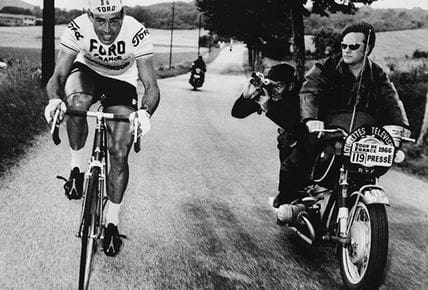
Vin Denson, one of the British riders who established a place for their country in European professional cycling long before the modern era of Tour de France success, has died aged 90. The Chester-born rider died on 14 October 2026. His career took him from British club time trials to the hardest races in France, Belgium and Italy.
He rode six editions of the Tour de France, supported Rik Van Looy and Jacques Anquetil, and became the first Briton to win a stage of the Giro d’Italia in 1966. These achievements belonged to an age when British riders had little of the structure that later generations would take for granted. Relocating to the continent, learning to live and race abroad and finding a place in a professional team were challenges in themselves.
Denson’s place in Tour history is sometimes overshadowed by the more easily remembered individual stage winners. Brian Robinson had already taken the first individual British Tour stage victory in 1958. Denson’s contribution was different: years spent supporting some of the sport’s biggest names, including on the Ford France team that won a stage of the 1965 Tour in the team time trial. He helped prove that a British rider could be trusted at the centre of a leading continental squad.
From Chester club rides to the Tour de France
Born Vincent Denson on 24 November 1935, he discovered cycling on a bicycle borrowed from his brother and began exploring the roads of Cheshire and North Wales. He joined Chester Road Club while still a teenager, first enjoying its social rides and then progressing into competition. Like many talented British riders of the time, he developed in long time trials before testing himself more regularly in mass-start road racing.
His early results included seventh at the 1959 Milk Race and fifth a year later, alongside appearances in the Peace Race across central and eastern Europe. That experience mattered: British time trials rewarded the ability to sustain a high pace alone, but the continent demanded bunch positioning, sudden accelerations, teamwork and the judgement to survive races lasting day after day.
After missing selection for the 1960 Olympics, Denson moved to France to pursue a professional career. The decision involved considerable personal and financial uncertainty. Britain had entered the Tour in 1937 and fielded a full national team for the first time in 1955, but very few British riders could make a sustained living from the sport abroad.
Denson earned selection for the British team at the 1961 Tour de France. He did not finish, abandoning on stage nine, but his appearance marked the beginning of a prolonged association with the race. His name belongs in the history of Britain’s Tour de France riders alongside those who were competing years before modern WorldTour teams made an international career considerably more accessible.
Working for Rik Van Looy and Jacques Anquetil
Denson steadily built his reputation in France, winning the Vuelta a Bidasoa and finishing sixth in the Grand Prix des Nations in 1962. He then moved to Belgium and joined Rik Van Looy’s Solo–Superia team in 1964. He was its only foreign rider, operating in an environment where language and the established hierarchy of the team made life demanding.
Solo–Superia won six stages of the 1964 Tour. Denson’s role was not to fight for those finishes himself but to contribute to the work that delivered them: helping to control attacks, protect team leaders, and support the riders expected to win. Such efforts rarely featured in newspaper headlines but were central to the system in which the biggest champions raced.
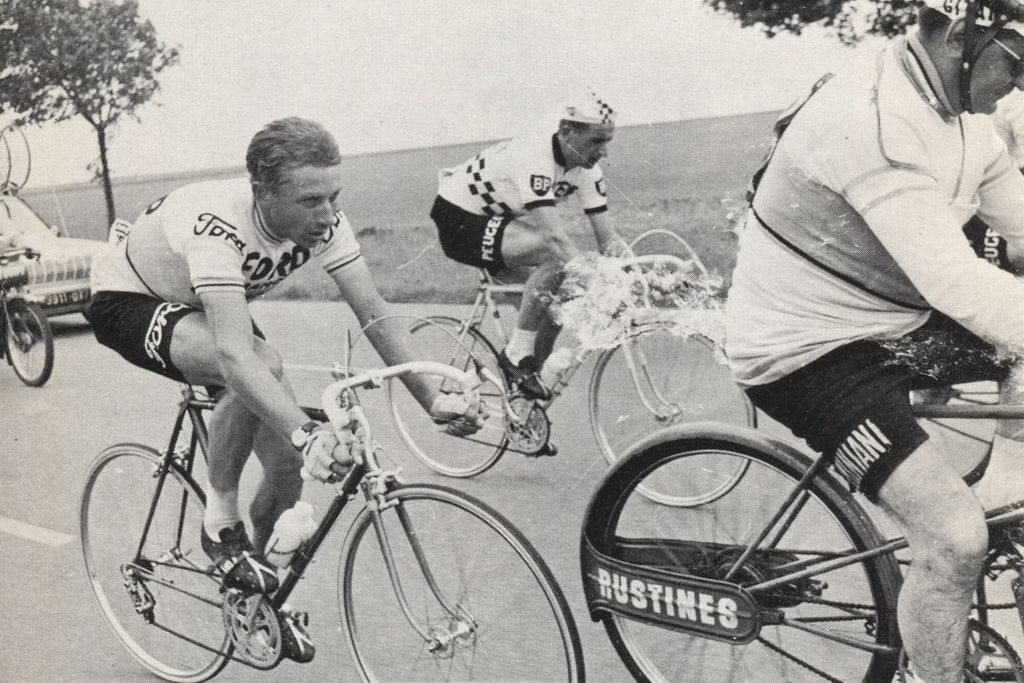
His ability drew the attention of Jacques Anquetil and director Raphaël Géminiani, who recruited him for Ford France in 1965. Anquetil had already won five Tours and had an exceptional reputation as a time-triallist. To be trusted as one of his helpers placed Denson in the heart of professional cycling.
A Tour stage win with Ford France in 1965
One of Denson’s most demanding assignments came in May 1965, when Anquetil won the Critérium du Dauphiné and then travelled almost immediately to Bordeaux–Paris, a race of roughly 580 kilometres. Denson and Jean Stablinski helped their exhausted leader through the night. Anquetil completed the remarkable double, but doing so depended on team-mates who could manage his effort and keep him moving over the distance.
The same season brought a Tour de France result that deserves a place in British cycling’s records. Ford France–Gitane won the team time trial on the opening day’s second half-stage, finishing just three seconds ahead of Peugeot. Denson rode for the winning team. It was a Tour stage victory shared by the squad, rather than an individual stage success, an important distinction when assessing his place in the race’s history.
Denson finished that Tour in 87th overall. The number provides little insight into the work expected of him: a domestique could sacrifice his own placing repeatedly to help a leader stay out of trouble, respond to attacks and save energy before important stages. Denson was doing that work at the highest level.
He also took an individual victory in 1965, winning the Tour of Luxembourg. It demonstrated that the rider trusted to work for others was capable of leading and winning in his own right when given the opportunity.
The 1966 Giro d’Italia: a first for Britain
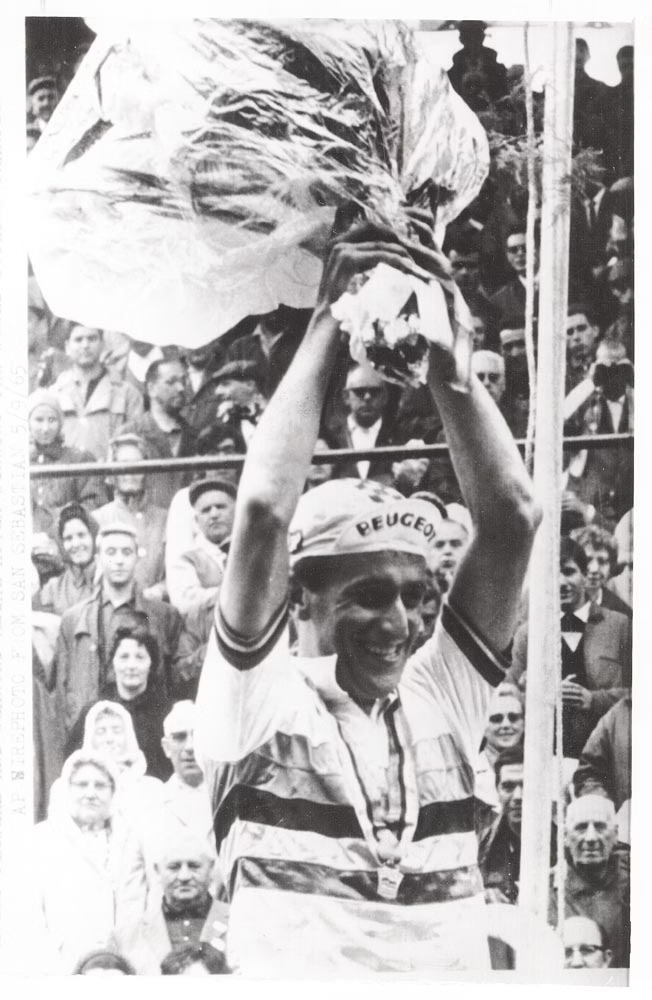
Denson’s most celebrated personal victory arrived at the 1966 Giro d’Italia. On stage nine, from Naples to Campobasso, he escaped with Toni Bailetti and André Messelis, then attacked them on the climbing approach to the finish. He crossed the line alone, 44 seconds ahead of Bailetti, becoming the first British rider to win a stage of the Giro.
It was a carefully judged effort rather than a lucky breakaway. Denson had studied the route, identified two climbs where he could test his companions and committed fully on the second. He knew he could not afford to arrive at the finish with a faster sprinter, so he made the winning move on terrain where he could put his sustained strength to use.
The race produced one of the anecdotes for which Denson became well known. Having enjoyed the pasta served at the team’s hotel, he persuaded Géminiani to provide a second helping by joking that he would win the next day’s stage. When the victory actually arrived, the Italian press turned the meal into a headline.
The story is memorable, but the sporting achievement matters more. Denson finished the Giro 40th overall, and his stage win gave British cycling its first major Giro landmark, decades before the successes of Robert Millar, Mark Cavendish, Chris Froome and Simon Yates.
Tom Simpson and the 1967 Tour tragedy
Denson’s relationship with Tom Simpson was one of the defining friendships of his racing life. Both were part of the small British group that had found a place in continental professional cycling, sharing not only national-team appearances but also the experience of living and working abroad.
In 1967 the Tour de France returned to national teams. Denson rode alongside Simpson in the British squad when Simpson collapsed on Mont Ventoux during stage 13 and died despite efforts to save him. It was a tragedy that profoundly affected Denson, who knew him as a friend rather than simply a famous rider.
The following stage, won by Barry Hoban at Sète, remains part of the complex story of the British team’s response to Simpson’s death. Different accounts of the discussions among the riders and peloton have emerged over the years. There is no need to turn that aftermath into a simple dispute over a stage victory to understand its significance: Denson was mourning somebody with whom he had shared the most difficult years of building a racing career.
Denson later spoke movingly about the loss and left the Tour before its conclusion. Simpson’s death became one of the events that forced cycling to reckon with the risks associated with extreme exertion and the use of stimulants. For Denson, its personal consequences lasted far beyond that July.
The last Tours and life after racing
Denson returned to the Tour in 1968, finishing 62nd overall, and spent part of the season with the Italian Kelvinator team. He ended his professional career after racing for Britain’s Bantel squad in 1969. By then he had accumulated the kind of experience that few other British riders of his generation could claim: six Tours, three Giros and seasons spent alongside some of cycling’s most prominent champions.
He and his wife Violet had run a bar in Ghent during his racing years, before returning to Britain and developing a business outside the sport. He continued riding and remained involved in cycling’s historical community, passing on stories of the practical realities of racing in the 1960s.
His autobiography, The Full Cycle, published in 2008, helped preserve an era in which the racing itself could be overshadowed by long journeys, uncertain salaries, difficult conditions and the strong hierarchy between team leaders and their helpers. Denson was an engaging witness because he had experienced so many different roles within that system.
Why Vin Denson matters to British Tour de France history
Denson was not the first British Tour rider and did not take an individual Tour stage victory. His importance rests on a more complicated history. He was a rider who helped make it normal for British professionals to belong inside the strongest continental teams, carrying out the work needed for celebrated champions to succeed while occasionally finding the chance to win himself.
The Tour team time trial in 1965, the demanding service he gave Anquetil and Van Looy, and the Giro stage he won in 1966 show different sides of his career. He could be an effective domestique, a competitor capable of winning a difficult stage race, and a tactically sharp attacker who understood how to separate rivals on the climbs.
In British cycling’s longer story, he stands alongside Robinson, Simpson and Hoban as part of a generation that proved there was a way beyond the domestic racing scene. The Tour success of Bradley Wiggins, Chris Froome and later British riders took place in a very different world, but that world did not emerge overnight.
Vin Denson died on 14 October 2026, just six weeks before what would have been his 91st birthday. His name is attached to a British first at the Giro, yet his Tour de France years are equally important. He helped lay the foundations for a country that would one day become a regular force in the sport’s biggest race.