
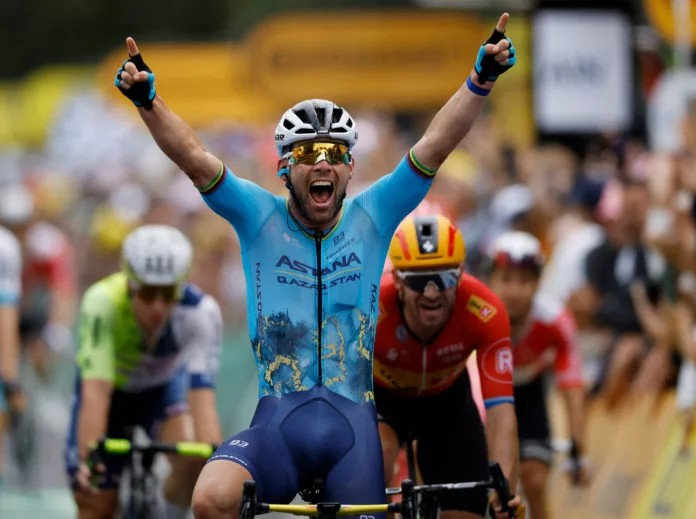
British riders have now won Tour de France stages in almost every possible way. They have won from sprints, breakaways, mountain attacks, prologues, individual time trials, summit finishes and yellow jersey battles. What began with Brian Robinson in the 1950s has grown into one of the strongest national stage-winning records in the modern Tour.
For decades, British success at the Tour meant isolated breakthroughs. Robinson opened the door. Michael Wright and Barry Hoban made British victories more regular in the 1960s and 1970s. Philippa York, racing then as Robert Millar, brought British climbing wins. Chris Boardman and David Millar then made prologues and time trials part of the story.
The modern era changed everything. Mark Cavendish became the most prolific stage winner in Tour de France history. Bradley Wiggins, Chris Froome and Geraint Thomas won stages on their way to overall British Tour victories. Steve Cummings, Simon Yates, Tom Pidcock and Adam Yates then added more variety through breakaways, mountain stages and opening-day drama.
This guide lists every British rider to win an individual Tour de France stage, with their stage-win totals, first victories, defining wins and place in the wider British Tour story.
For wider context, see our British riders in the Tour de France, the greatest British riders at the Tour de France and every Tour de France winner since 1903.
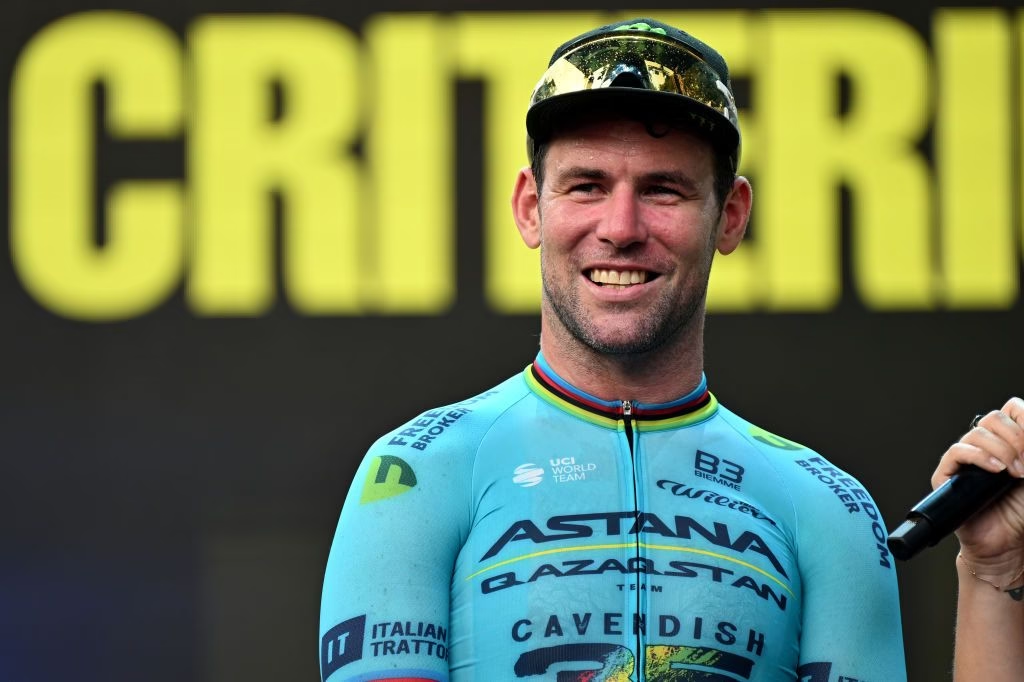 Photo Credit: Getty
British Tour de France stage winners: complete list
The full table of British Tour de France stage winners lists 16 riders from Great Britain with individual stage victories. This article follows the same individual-stage principle: prologues count, but team time-trial wins are not treated as individual British stage wins.
| Rider | Tour stage wins | First stage win | Main type of win |
|---|---|---|---|
| Mark Cavendish | 35 | 2008 | Sprint finishes |
| Barry Hoban | 8 | 1967 | Sprints, breakaways and hard road stages |
| Chris Froome | 7 | 2012 | Mountain stages and time trials |
| David Millar | 4 | 2000 | Time trials and breakaways |
| Chris Boardman | 3 | 1994 | Prologues and time trials |
| Michael Wright | 3 | 1965 | Sprints and road stages |
| Philippa York | 3 | 1983 | Mountain stages |
| Geraint Thomas | 3 | 2017 | Time trial and mountain stages |
| Simon Yates | 3 | 2019 | Mountain breakaways |
| Brian Robinson | 2 | 1958 | Road stages |
| Bradley Wiggins | 2 | 2012 | Time trials |
| Steve Cummings | 2 | 2015 | Breakaways |
| Sean Yates | 1 | 1988 | Breakaway |
| Max Sciandri | 1 | 1995 | Sprint from a reduced group |
| Tom Pidcock | 1 | 2022 | Mountain stage |
| Adam Yates | 1 | 2023 | Hilly opening stage |
That makes 16 British individual Tour de France stage winners. The number includes prologues, which are traditionally counted in Tour stage-win lists, but it does not include team time-trial victories as individual stage wins.
British Tour de France stage wins by rider
| Rank | Rider | Stage wins |
|---|---|---|
| 1 | Mark Cavendish | 35 |
| 2 | Barry Hoban | 8 |
| 3 | Chris Froome | 7 |
| 4 | David Millar | 4 |
| 5 | Chris Boardman | 3 |
| 6 | Michael Wright | 3 |
| 7 | Philippa York | 3 |
| 8 | Geraint Thomas | 3 |
| 9 | Simon Yates | 3 |
| 10 | Brian Robinson | 2 |
| 11 | Bradley Wiggins | 2 |
| 12 | Steve Cummings | 2 |
| 13 | Sean Yates | 1 |
| 14 | Max Sciandri | 1 |
| 15 | Tom Pidcock | 1 |
| 16 | Adam Yates | 1 |
The spread tells the story. Cavendish stands apart as the all-time Tour record holder. Hoban was the original British stage-win specialist. Froome, Wiggins and Thomas turned stage wins into part of overall Tour-winning campaigns. Boardman and Millar gave Britain a time-trial identity. York, Pidcock and the Yates brothers gave the list its climbing edge.
For the broader British hierarchy, see the greatest British riders at the Tour de France and British riders in the Tour de France.
Brian Robinson: Britain’s first Tour stage winner
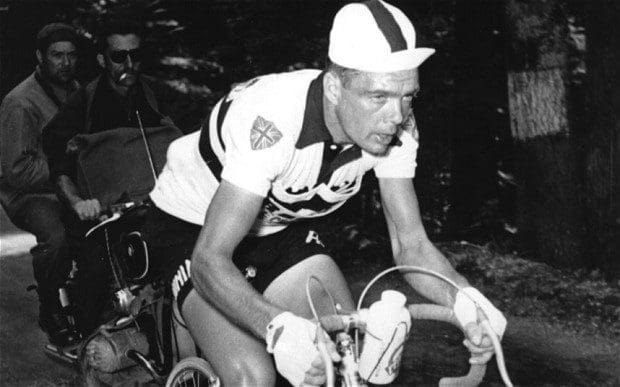
Brian Robinson was the first British rider to win a Tour de France stage. His breakthrough came in 1958, on stage 7 to Brest, after Arrigo Padovan crossed the line first but was relegated. Robinson was awarded the stage and became the first Briton to stand as a Tour stage winner.
A year later, he won again. His 1959 victory from Annecy to Chalon-sur-Saône was more emphatic, coming by a huge margin after a long solo effort. It proved the first win was not a quirk of relegation or circumstance. Robinson could win on the road in the biggest race in cycling.
His importance is difficult to overstate. Before Robinson, British riders had little place in the Tour’s professional world. He was also the first Briton to finish the race, giving later generations a basic proof that the Tour was possible.
Robinson’s two stage wins created the start of the British Tour story. Every later British winner, from Hoban to Cavendish, stands on that foundation.
For more on the riders who followed him, see British riders in the Tour de France and a brief history of the Men’s Tour de France.
Michael Wright: the overlooked triple stage winner
Michael Wright is one of the most under-discussed British Tour de France stage winners.
He won three Tour stages between 1965 and 1973, placing him level on stage-win count with Chris Boardman, Philippa York, Geraint Thomas and Simon Yates. That is a serious record, yet Wright’s name is often less prominent in British Tour discussions because his career sat partly outside the later British cycling narrative.
Wright raced much of his professional career on the continent and was closely tied to Belgian cycling. That has sometimes complicated how he is remembered in British lists, but his Tour stage wins belong firmly in the British story.
His first win came in 1965. He won again in 1967 and added a third in 1973. Alongside Barry Hoban, he helped give Britain a more regular Tour presence in the late 1960s and early 1970s. This was long before British teams, British Grand Tour structures or anything resembling the later Team Sky project.
Wright matters because he shows that British Tour success did not jump straight from Robinson to Hoban to the modern era. There was a deeper professional line of British riders making their way in European racing, often without much attention at home.
His place also helps explain why the British Tour story is broader than the modern Team Sky era. For that wider development, see the greatest British riders at the Tour de France.
Barry Hoban: the first British stage-win specialist
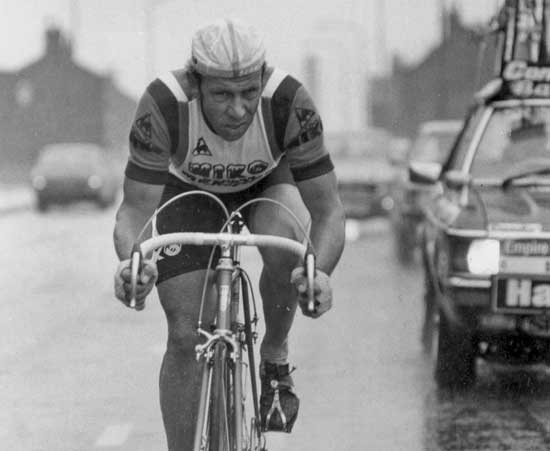
Barry Hoban was Britain’s Tour de France stage-win record holder for decades. His eight stage wins between 1967 and 1975 made him the most successful British Tour rider before Mark Cavendish.
Hoban’s first Tour stage win came in 1967, the day after Tom Simpson’s death on Mont Ventoux. That gave the victory a heavy emotional weight, but Hoban’s career cannot be reduced to that moment. He kept winning. He won stages in 1968, 1969, 1973, 1974 and 1975, building a record that stood as the British benchmark for more than 30 years.
He was more than a simple bunch sprinter. Hoban could survive hard stages, read finishes and win from different race situations. His 1968 win to Sallanches is often remembered as evidence of that range, because it came on a harder day than a normal flat sprint.
Hoban’s eight wins made British stage success feel repeatable. Robinson had opened the door. Hoban walked through it again and again.
He remained the British reference point until Cavendish passed him in 2009. Even now, Hoban sits second on the British all-time list, ahead of Froome, Millar, Thomas, Wiggins and every other British Tour winner except Cavendish.
For more on his wider place, see the greatest British riders at the Tour de France and Tour de France 2026 sprinters guide.
Philippa York: Britain’s first great Tour climber
Philippa York, who raced during her career as Robert Millar, won three Tour de France stages and became Britain’s first true mountain force at the race.
Her Tour stage wins came in 1983, 1984 and 1989. The 1984 victory was part of her greatest Tour campaign, when she won the mountains classification and finished fourth overall. That performance made her the first British rider to win a major classification at the men’s Tour and one of the best climbers in the race.
York’s stage wins matter because they changed the type of British success possible at the Tour. Robinson, Wright and Hoban had shown that British riders could win road stages. York showed that a British rider could win in the high mountains and challenge deep into the general classification.
The 1989 stage win to Superbagnères was another major result, coming on a classic Pyrenean day. It underlined the same point: York was not a breakaway novelty or a one-off climber. She was one of the strongest mountain riders of her generation.
Her three stage wins remain a central part of British Tour history. Before Wiggins, Froome and Thomas turned Britain into a yellow jersey nation, York had already proved that British riders could matter where the Tour is usually decided.
For more on the climbing side of the Tour, see Tour de France 2026 climbers guide, best climbers at the Tour de France 2026 and Tour de France 2026 jerseys explained.
Sean Yates: one stage win and a yellow jersey legacy
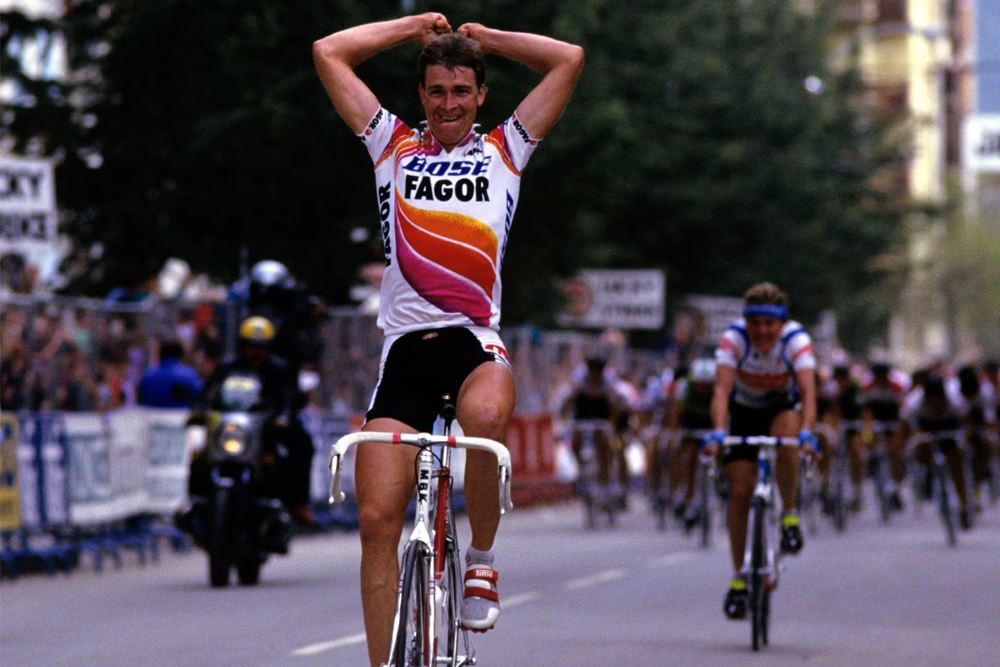
Sean Yates won one Tour de France stage, in 1988, and later wore the yellow jersey in 1994.
His stage win came from the kind of hard, committed racing that suited him. Yates was a powerful rouleur, a rider built for long efforts, crosswinds, breakaways and team work. He was not a prolific Tour stage winner, but his one victory gave him a permanent place in the British stage-win list.
His later yellow jersey day in 1994 added another layer. Before the British dominance of the 2010s, wearing yellow was still rare for British riders. Tom Simpson had done it first, Chris Boardman would do it through prologue victories, and Yates gave Britain another link to the jersey before the Wiggins-Froome-Thomas era.
Yates also mattered after his racing career. As a directeur sportif, he became part of the modern British team structure that helped deliver later Tour success.
His Tour stage-win total is modest, but his place in British Tour culture is bigger than one day. He connects the hard professional world of the 1980s with the more organised British success that followed.
For more on yellow jersey basics, see how the Tour de France general classification works and Tour de France 2026 jerseys explained.
Chris Boardman: the prologue specialist
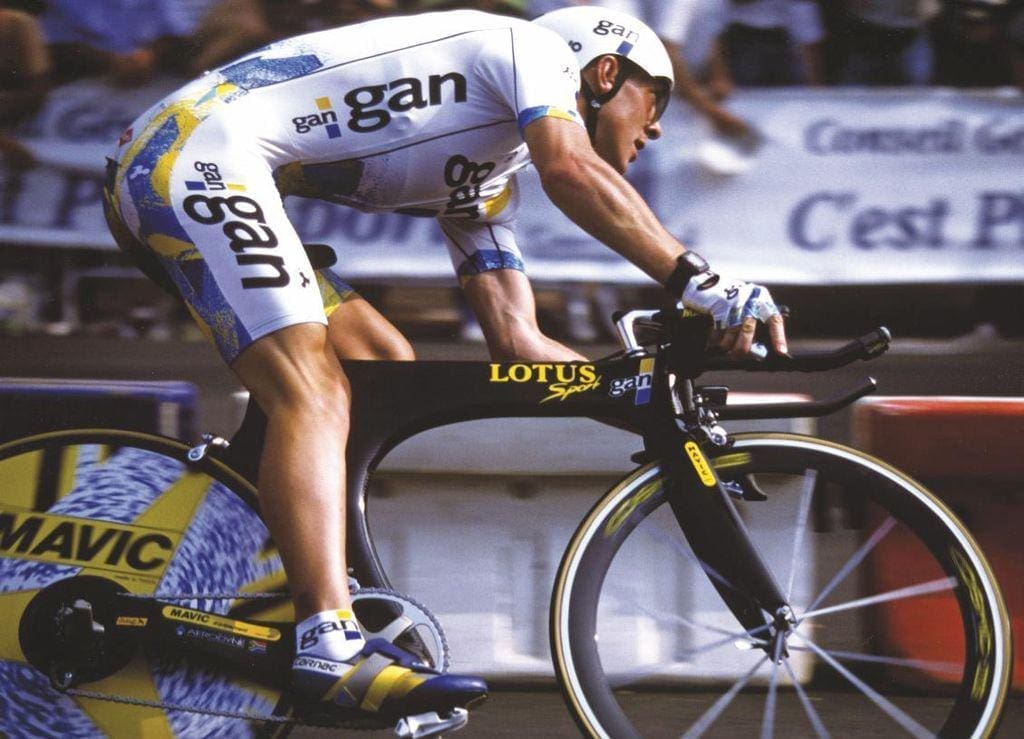
Chris Boardman won three Tour de France stages, all through time-trialling, and became one of the defining prologue riders of the 1990s.
His first win came in the 1994 prologue in Lille. It was a huge moment for British cycling. Boardman won on the Lotus bike, took the yellow jersey and announced a new kind of British presence at the Tour: technological, aerodynamic, precise and built around the clock.
He won the Tour prologue again in 1997 and 1998. Those victories made him one of the strongest short time-trial specialists of his era. They also helped British cycling build a reputation in prologues and time trials before the later success of David Millar, Bradley Wiggins and Geraint Thomas.
Boardman’s Tour career was also marked by crashes and bad luck. Prologue wins put him in yellow, but he did not build a long general classification career at the race. That does not reduce the importance of his stage wins. For British fans in the 1990s, Boardman in a Tour prologue was one of the few realistic routes to yellow.
His three wins helped shift British Tour identity away from only road-stage opportunism. Britain was becoming a time-trial nation, and Boardman was the clearest early sign.
For the wider time-trial lineage, see best time-triallists at the Tour de France 2026, Tour de France 2026 team time-trial explained and A history of team time trials at the Tour de France.
Max Sciandri: the cross-cultural British winner
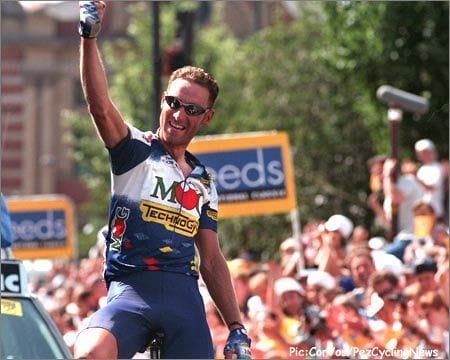
Max Sciandri won one Tour de France stage, in 1995.
His place in British cycling history is unusual because he was born in Derby, raised in Italy, and often sits between British and Italian cycling identities. Earlier in his career, he raced under an Italian licence, but his 1995 Tour stage win belongs in the British record.
Sciandri was a strong one-day style rider, fast from reduced groups and well suited to hard finishes. His Tour stage win came from that profile. He was not a Grand Tour general classification rider, but he had the punch and race craft to take his chance when the right day came.
His career also included Olympic bronze for Great Britain in 1996, strengthening his British sporting identity even further.
Sciandri is sometimes overlooked in British Tour lists because he does not fit the simple narrative of domestic British development. But that is part of what makes him interesting. British cycling history has often been shaped by riders who had to build careers abroad, cross cultures and find their own professional pathways.
His single stage win keeps him on the complete list and adds another shape to the British Tour story.
David Millar: time trials, yellow and redemption
David Millar won four individual Tour de France stages, making him one of Britain’s most successful stage winners.
His first came in 2000, when he won the opening time trial at Futuroscope and took the yellow jersey. That was a major British moment before the modern Tour-winning era. A British rider in yellow still felt rare, and Millar had done it through one of Britain’s growing strengths: time-trialling.
Millar won again in 2002, then later added further Tour stage victories after returning from a doping ban. His 2012 stage win was especially notable because it came in the same Tour that Bradley Wiggins won overall. By then, Millar’s career had become more complicated but also more reflective. He had moved from young time-trial star to breakaway winner and anti-doping voice.
His four wins put him fourth on the British Tour stage-win list, behind Cavendish, Hoban and Froome. That is a strong record in itself. He was not just a rider who wore yellow once. He repeatedly found ways to win stages.
Millar’s legacy will always carry complexity because of his doping ban, but his Tour stage-winning record remains an important bridge between Boardman’s prologue era and the Wiggins-Froome-Thomas generation.
For more on the clock-based side of the race, see best time-triallists at the Tour de France 2026 and A history of team time trials at the Tour de France.
Mark Cavendish: the greatest Tour stage winner of all
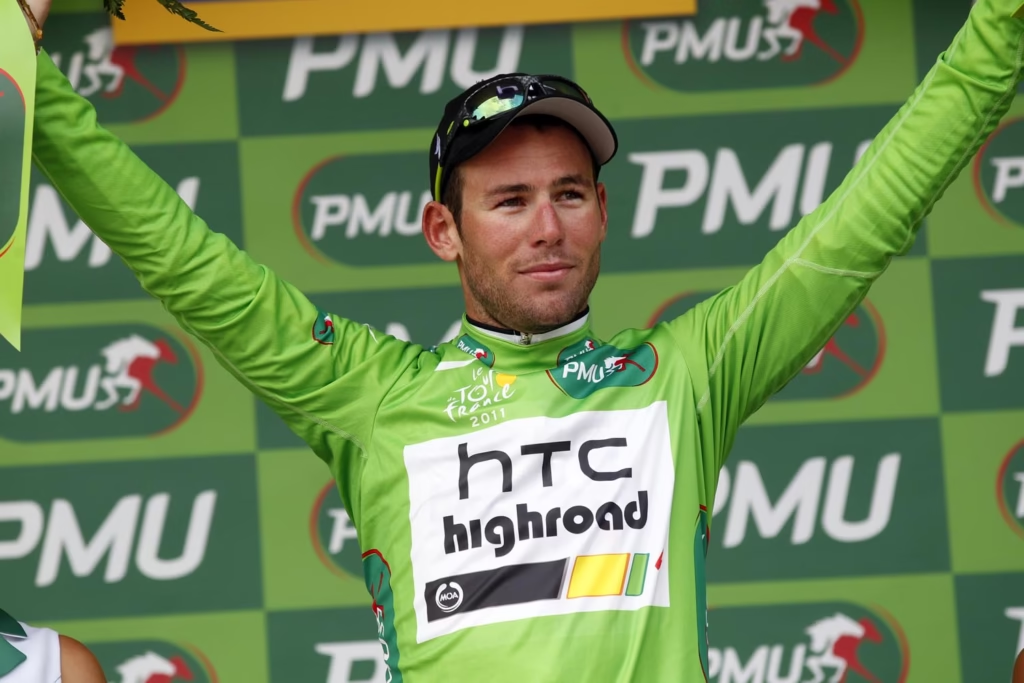
Mark Cavendish is the greatest Tour de France stage winner in history.
His 35 stage wins are the most by any rider, from any country. That makes him not only Britain’s leading Tour stage winner, but the leading stage winner in the entire race. He passed Eddy Merckx’s record in 2024, winning stage 5 in Saint-Vulbas and moving to 35. The official Tour de France report on Cavendish’s record-breaking Saint-Vulbas sprint described him as the most prolific stage winner in the history of the race outright.
Cavendish’s first Tour stage win came in 2008. He quickly became the dominant sprinter of his generation, especially with the HTC-Columbia lead-out train. But his record is not only about one team or one era. He won across different squads, different lead-outs, different sprint fields and different phases of his career.
His 2011 green jersey confirmed him as more than a stage collector. His four consecutive Champs-Élysées wins from 2009 to 2012 gave him one of the Tour’s most famous finish-line identities. His 2021 comeback, when he won four stages and another green jersey, was one of the great late-career revivals in cycling. His 2024 record win completed the story.
Cavendish’s place is simple. He is Britain’s greatest Tour sprinter, the Tour’s greatest stage winner, and one of the most important riders in the race’s modern history.
For more on his record, see Eddy Merckx congratulates Mark Cavendish for historic 35th Tour de France stage win and Châteauroux becomes Cavendish City in tribute to Tour de France stage wins.
Chris Froome: seven stage wins and four yellow jerseys
Chris Froome won seven Tour de France stages, making him Britain’s third most successful stage winner behind Cavendish and Hoban.
His first Tour stage win came in 2012, on stage 7 to La Planche des Belles Filles. That day was important because it announced the strength of Team Sky’s Tour project. Froome won the stage, Bradley Wiggins moved into yellow, and the shape of the 2012 Tour became clear.
Froome then won three stages in 2013, including mountain victories and the stage 17 time trial. Those wins were central to his first overall Tour victory. He added another mountain win in 2015, then won twice in 2016, including a downhill attack to Bagnères-de-Luchon and the stage 18 time trial.
His stage wins show the range that made him a four-time Tour champion. Froome could win summit finishes, attack downhill, time-trial strongly and use stage victories as part of a wider general classification campaign.
Unlike Cavendish or Hoban, Froome’s stage wins were rarely isolated targets. They were usually tied to the yellow jersey. He won stages to gain time, confirm control or reinforce his authority over the race.
That is why his seven wins carry such weight. They were not just British victories. They were often decisive moments in Tour-winning campaigns.
For more on the race he mastered, see how the Tour de France general classification works, Team Sky cycling team: a history and every Tour de France winner since 1903.
Bradley Wiggins: two time trials on the road to yellow
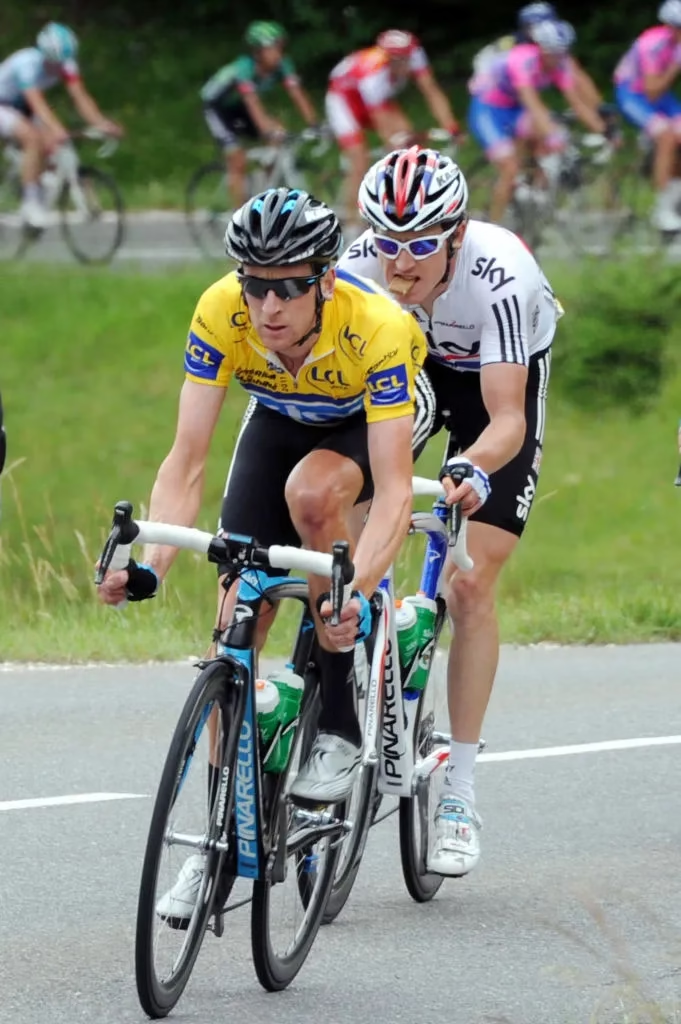
Bradley Wiggins won two Tour de France stages, both individual time trials, during his victorious 2012 Tour.
Those wins were central to his overall victory. Wiggins was already in control of the race before the final time trial, but his stage wins underlined why the 2012 route suited him so well. He could defend in the mountains with Team Sky, then take time against the clock.
The first came on stage 9, from Arc-et-Senans to Besançon. The second came on stage 19, from Bonneval to Chartres. By winning both, Wiggins turned the time-trial kilometres into the foundation of Britain’s first Tour de France overall victory.
His stage-win total is not high compared with Cavendish, Hoban or Froome, but the meaning is enormous. Wiggins did not win stages as isolated successes. He won them as part of the campaign that broke Britain’s long wait for a Tour winner.
That gives his two stage wins a special place. They were not only time-trial victories. They were the visible proof that Wiggins had built the right race, on the right route, with the right team, at the right time.
For more on the British Tour-winning era, see the greatest British riders at the Tour de France, Team Sky cycling team: a history and every Tour de France winner since 1903.
Steve Cummings: Britain’s modern breakaway specialist
Steve Cummings won two Tour de France stages, both from breakaways, and became one of Britain’s best modern stage hunters.
His 2015 win in Mende was one of the great tactical British Tour victories. Riding for MTN-Qhubeka, Cummings timed his move perfectly, catching and passing Thibaut Pinot and Romain Bardet late on. It was also a huge moment for MTN-Qhubeka, the first African-registered team to ride the Tour.
A year later, Cummings won again at Lac de Payolle. This time there was no doubt that he had become one of the race’s most dangerous breakaway riders. He attacked from the break, judged the effort and held off the chase.
Cummings’ wins mattered because they represented a different British Tour identity from Team Sky control. While Wiggins, Froome and Thomas were associated with GC structure, Cummings was the opportunist: calm, patient and able to read the right moment.
He was not trying to win the Tour overall, and he was not a sprinter. He was a specialist in difficult, tactical days when the breakaway had a chance.
For more on that style of racing, see what is a breakaway in the Tour de France?, Tour de France 2026 breakaway specialists to watch and Tour de France 2026 route: best days for breakaways.
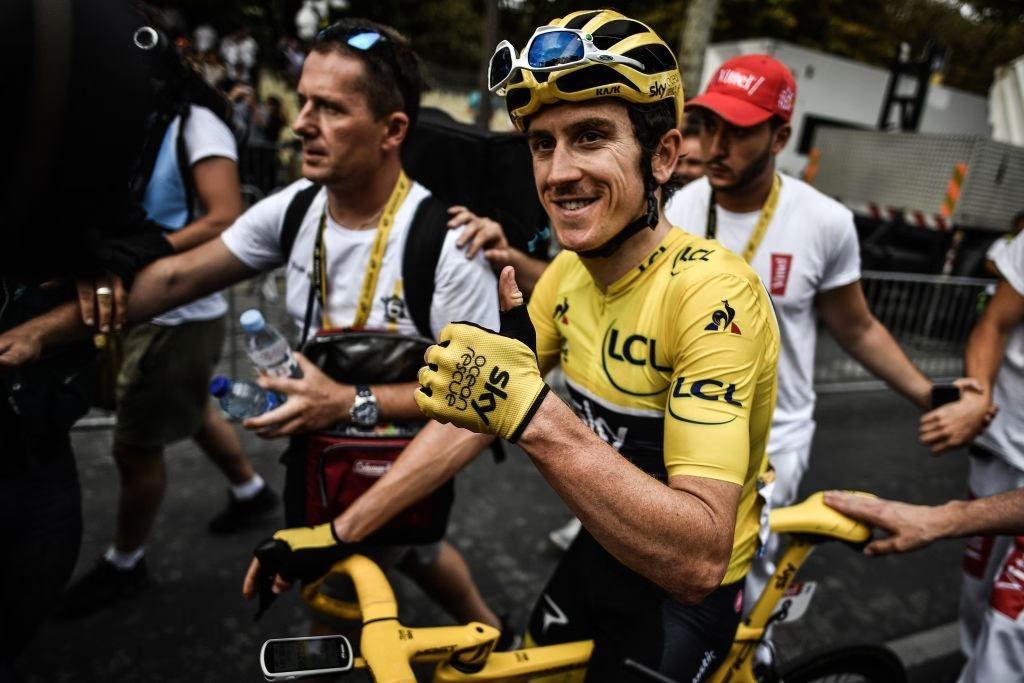 Photo Credit: Getty
Geraint Thomas: from prologue winner to Alpe d’Huez
Geraint Thomas won three Tour de France stages and the 2018 Tour overall.
His first stage win came in 2017, when he won the opening time trial in Düsseldorf and became the first Welshman to wear the yellow jersey. That victory fitted the earlier British time-trial tradition of Boardman, Millar and Wiggins, but Thomas then took his Tour stage-winning career in a different direction.
In 2018, he won stage 11 to La Rosière and then stage 12 to Alpe d’Huez. The Alpe d’Huez win was one of the most important British Tour stage victories ever. Thomas won on the race’s most famous summit finish while wearing yellow, then went on to win the Tour overall.
That combination gives his three stage wins real range. He won against the clock, on a summit finish, and as a yellow jersey leader in the mountains. He was not a pure time-triallist, not a pure climber and not a pure domestique by then. He had become a complete Tour contender.
Thomas’ stage-win record also shows his long evolution. He began as a team pursuit rider and road support rider, became a classics contender, then turned into a Tour winner.
For the Alpe d’Huez context, see A history of Alpe d’Huez at the Tour de France, why back-to-back Alpe d’Huez finishes could define the Tour de France 2026 and Geraint Thomas to ride final Tour as Ineos back Rodríguez for GC.
Simon Yates: three mountain breakaway wins
Simon Yates has won three Tour de France stages, all showing his quality as a mountain attacker.
His first two came in 2019. He won stage 12 to Bagnères-de-Bigorre and stage 15 to Foix Prat d’Albis, both from breakaways. Those victories showed how dangerous he could be when freed from pure GC pressure. He could climb, read a move and finish decisively from reduced groups.
His third Tour stage win came in 2025, on stage 10 to Puy de Sancy. Coming after his Giro d’Italia success, it added another layer to his Grand Tour career and moved him onto three Tour stage wins.
Simon Yates’ Tour record is not as central to his overall career as the Giro or Vuelta, but three stage wins in the world’s biggest race is still a strong return. He has been most effective at the Tour when using his climbing ability as a stage hunter rather than carrying full yellow jersey expectation.
That makes him part of the same British attacking line as Cummings and Pidcock, but with a deeper Grand Tour pedigree.
For more on stage-hunting terrain, see Tour de France 2026 stage hunters to watch, Tour de France 2026 route: best days for breakaways and Tour de France 2026 breakaway stages ranked.
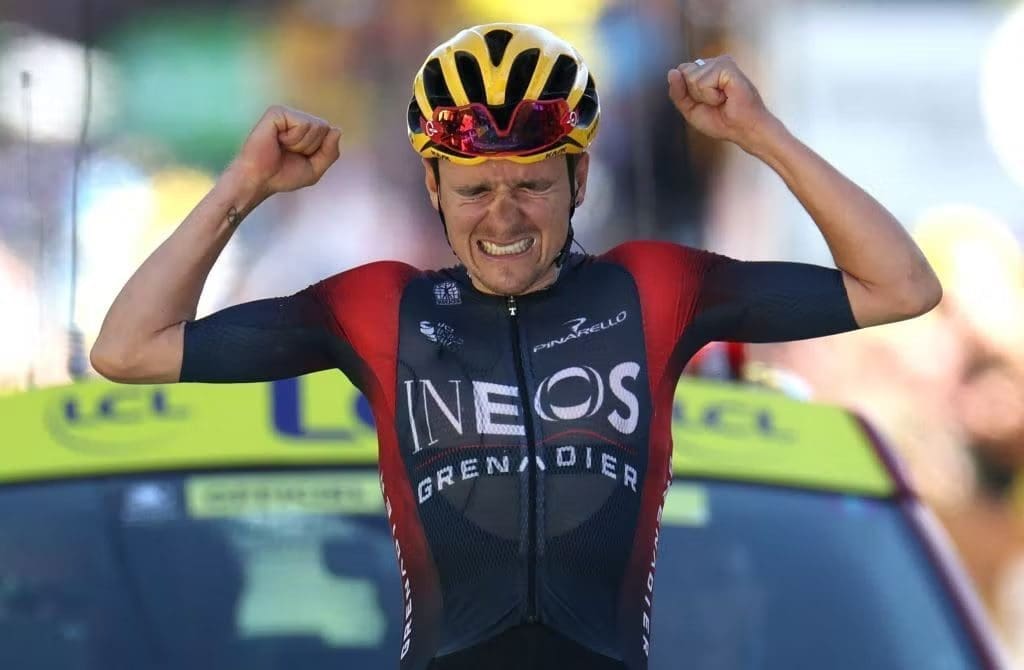 Photo Credit: A.S.O./Charly López
Tom Pidcock: Alpe d’Huez brilliance
Tom Pidcock has one Tour de France stage win, but it is one of the most spectacular British wins in race history.
His victory came on stage 12 of the 2022 Tour, finishing on Alpe d’Huez. Pidcock attacked from the breakaway, descended brilliantly, climbed with control and won on one of cycling’s most famous mountains. It was a win that suited his profile perfectly: technical skill, confidence, descending nerve and climbing power.
The stage mattered because of where it happened. Alpe d’Huez is not just another climb. It is one of the Tour’s defining theatres. British riders had already won the Tour by then, but a young British rider winning solo on Alpe d’Huez gave the national story a new image.
Pidcock’s Tour future remains difficult to define. He can be a stage hunter, mountain attacker, all-round wildcard or GC outsider depending on form, team role and route. But even if he never wins another Tour stage, Alpe d’Huez gives him a permanent place on the British list.
For more on his role, see Tom Pidcock at the Tour de France 2026, Tour de France 2026 stage hunters to watch and A history of Alpe d’Huez at the Tour de France.
Adam Yates: opening-day yellow in Bilbao
Adam Yates has one Tour de France stage win, and it came on one of the most memorable opening days of the modern race.
He won stage 1 of the 2023 Tour in Bilbao, beating his twin brother Simon Yates after the pair went clear late in the stage. It was a rare family duel at the front of the Tour and gave Adam the first yellow jersey of that edition.
The win mattered for several reasons. It was Adam Yates’ first Tour stage victory, his first yellow jersey at the race, and a major early success for UAE Team Emirates. It also showed the value of his all-round profile: strong enough to survive a hard Basque route, sharp enough to attack, and fast enough to finish the job.
Yates had already been a strong Tour performer before then. He finished fourth overall in 2016 and wore yellow in 2020. But the Bilbao stage gave him the one thing missing from his Tour record: a stage win.
Since then, he has become one of the most valuable climbing support riders in the race while still retaining the ability to chase his own results when the chance appears.
For more on his current Tour role, see Tour de France 2026 domestiques who could decide the race, what is a domestique at the Tour de France? and Tadej Pogačar at the Tour de France 2026.
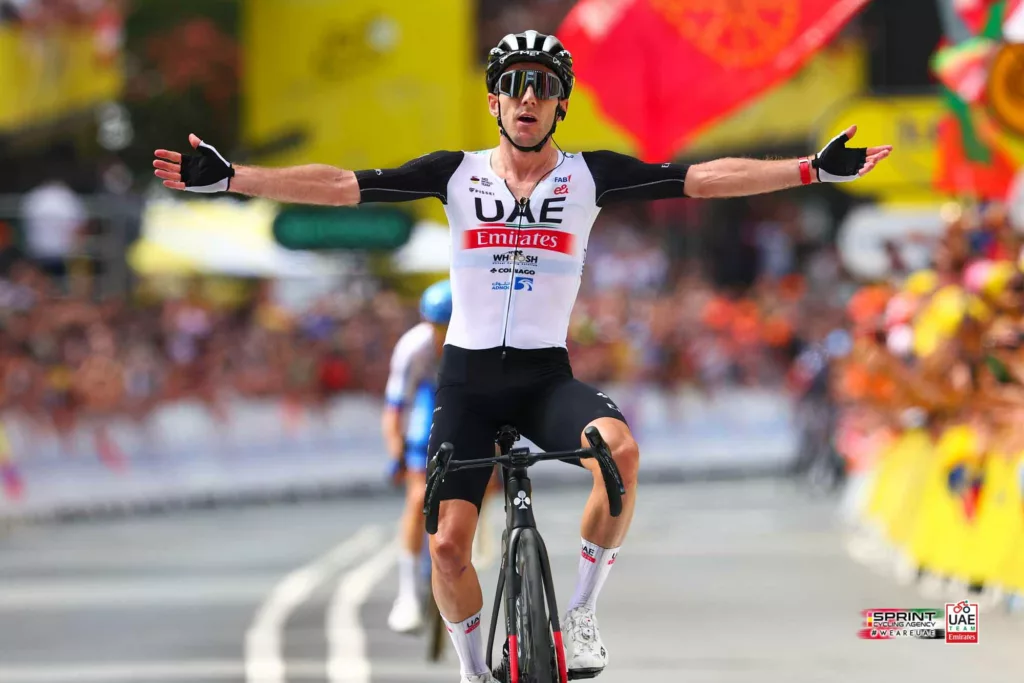 Photo Credit: Luca Bettini/SprintCyclingAgency
British Tour de France stage winners by type
| Type of victory | British riders most associated with it |
|---|---|
| Bunch sprint | Mark Cavendish, Barry Hoban |
| Breakaway | Steve Cummings, Simon Yates, Sean Yates, David Millar |
| Mountain stage | Philippa York, Chris Froome, Geraint Thomas, Tom Pidcock, Simon Yates |
| Individual time trial | Chris Boardman, David Millar, Bradley Wiggins, Chris Froome, Geraint Thomas |
| Opening stage or prologue | Chris Boardman, David Millar, Geraint Thomas, Adam Yates |
| Yellow jersey-linked stage win | Wiggins, Froome, Thomas, Adam Yates, Cavendish |
The variety is the key point. British Tour stage wins are no longer one category. Britain has produced the Tour’s greatest sprinter, multiple time-trial specialists, mountain winners, breakaway riders, yellow jersey winners and all-round stage hunters.
For more on the tactical differences, see what is a breakaway in the Tour de France?, what is a summit finish in the Tour de France? and how do Tour de France teams work?.
British Tour de France stage winners by era
| Era | British stage winners |
|---|---|
| 1950s | Brian Robinson |
| 1960s | Michael Wright, Barry Hoban |
| 1970s | Barry Hoban, Michael Wright |
| 1980s | Philippa York, Sean Yates |
| 1990s | Chris Boardman, Max Sciandri |
| 2000s | David Millar, Mark Cavendish |
| 2010s | Cavendish, Froome, Wiggins, Cummings, Thomas, Simon Yates |
| 2020s | Cavendish, Simon Yates, Tom Pidcock, Adam Yates |
The 2010s were the richest British stage-winning decade. Cavendish was still winning sprints, Wiggins and Froome were building overall Tour victories, Thomas emerged as a stage winner and Tour champion, and Cummings and Simon Yates added breakaway variety.
The 2020s have continued the spread. Cavendish broke the all-time record, Pidcock won on Alpe d’Huez, Adam Yates took yellow in Bilbao and Simon Yates added another mountain-stage victory.
For current British context, see best British riders to watch at the Tour de France 2026, full start list for Tour de France 2026 and Tour de France 2026 stage hunters to watch.
Who was the first British Tour de France stage winner?
Brian Robinson was the first British Tour de France stage winner. He was awarded stage 7 of the 1958 Tour after Arrigo Padovan was relegated.
The manner of the win has sometimes made people treat it as complicated, but it still counts as the first British stage victory. Robinson then removed any doubt by winning again in 1959, solo and by a huge margin.
That second win is important because it gives Robinson’s record a stronger sporting shape. He was not only the beneficiary of a relegation. He was a genuine Tour stage winner who could beat the race on the road.
Robinson remains the starting point for every British Tour stage-win list. The line from Robinson to Cavendish, Froome, Thomas, Pidcock and the Yates brothers is now one of the strongest national stories in Tour history.
 Photo Credit: Getty
Who has the most Tour de France stage wins by a British rider?
Mark Cavendish has the most Tour de France stage wins by a British rider. He has 35, which is also the all-time Tour de France record for any rider.
Barry Hoban is second among British riders with 8. Chris Froome is third with 7. David Millar is fourth with 4. Chris Boardman, Michael Wright, Philippa York, Geraint Thomas and Simon Yates are all on 3.
Cavendish’s record is so large that he has more Tour stage wins than the rest of the British top four combined. That shows how far he sits above every other British sprinter and above every other Tour stage winner in history.
For the sprinting side of the race, see Tour de France 2026 sprinters guide, best sprinters at the Tour de France 2026 and best lead-out riders at the Tour de France 2026.
Which British riders have won mountain stages at the Tour de France?
Several British riders have won mountain stages at the Tour.
Philippa York was the first great British Tour climber, winning mountain stages in the 1980s and taking the 1984 polka-dot jersey. Chris Froome won major mountain stages as part of his Tour-winning campaigns. Geraint Thomas won at La Rosière and Alpe d’Huez in 2018. Simon Yates has won mountain stages from breakaways. Tom Pidcock won on Alpe d’Huez in 2022.
These wins are important because the Tour’s mythology is built around mountains. Sprints and time trials matter, but mountain wins often define how riders are remembered.
Britain’s mountain-stage record is now much deeper than it once was. It runs from York’s pioneering climbing to Froome’s GC dominance, Thomas in yellow on Alpe d’Huez, and Pidcock’s modern stage-hunting brilliance.
For the 2026 mountain context, see Tour de France 2026 mountain stages ranked by difficulty, Tour de France 2026 Alps guide and Tour de France 2026 summit finishes guide.

Which British riders have won Tour de France time trials?
Chris Boardman, David Millar, Bradley Wiggins, Chris Froome and Geraint Thomas have all won Tour de France time trials or prologues.
Boardman was the prologue specialist of the 1990s. Millar won the opening time trial in 2000 and later added more stage victories. Wiggins won both individual time trials in 2012 on his way to the overall title. Froome won time trials during his Tour-winning years. Thomas won the 2017 opening time trial in Düsseldorf.
This is one of the strongest themes in British Tour history. Before Britain became a Tour-winning nation, it had already become dangerous against the clock. That line runs from Boardman’s Lotus bike to Millar’s yellow jersey, Wiggins’ 2012 dominance, Froome’s all-round GC strength and Thomas’ opening-day win.
For more on the discipline, see best time-triallists at the Tour de France 2026, Tour de France 2026 team time-trial explained and A history of team time trials at the Tour de France.
Which British riders have won Tour stages while wearing yellow?
Geraint Thomas won on Alpe d’Huez in 2018 while wearing the yellow jersey, one of the most famous British Tour stage wins.
Chris Froome also won stages during Tours he controlled in yellow, while Bradley Wiggins won the final individual time trial in 2012 with overall victory effectively secured. Mark Cavendish won stage 1 in 2016 and took the yellow jersey, though he did not start that day in yellow. Adam Yates won stage 1 in 2023 and took yellow the same day.
The yellow jersey changes the meaning of a stage win. A rider is no longer just chasing the day’s victory. They are defending or extending the race lead. That is why Thomas winning on Alpe d’Huez in yellow felt so important. It was not only a British stage win. It was a British Tour winner stamping authority on the race’s most famous climb.
For more on the jersey system, see Tour de France 2026 jerseys explained and how the Tour de France general classification works.

British Tour stage winners and the 2026 race
The 2026 Tour de France may not have an obvious British sprint favourite in the Cavendish mould, but the British stage-winning story is still active.
Tom Pidcock remains the biggest British stage-hunting name if he starts with freedom. His best route to victory is likely to come from a mountain or hilly stage rather than a bunch sprint. Adam Yates may be tied to UAE Team Emirates-XRG duties, but he has already shown that he can win a Tour stage when given space. Lewis Askey gives Britain another rider in the current startlist picture, though his role may be more about team work and opportunism.
The route also matters. The Barcelona team time-trial, the Pyrenees, the Massif Central, the Vosges, the Jura and the final Alpine block all offer different kinds of British opportunities. A pure bunch sprint may be harder for British riders in 2026, but breakaway and mountain days could still open the door.
For the current outlook, see best British riders to watch at the Tour de France 2026, Tom Pidcock at the Tour de France 2026 and Tour de France 2026 stage hunters to watch.
British Tour de France stage winners explained simply
The first British Tour de France stage winner was Brian Robinson in 1958. The most successful is Mark Cavendish, with 35 stage wins, the all-time Tour record. Barry Hoban is second among British riders with 8, while Chris Froome is third with 7.
There have been 16 British individual Tour stage winners: Brian Robinson, Michael Wright, Barry Hoban, Philippa York, Sean Yates, Chris Boardman, Max Sciandri, David Millar, Mark Cavendish, Chris Froome, Bradley Wiggins, Steve Cummings, Geraint Thomas, Simon Yates, Tom Pidcock and Adam Yates.
Their wins show how broad the British Tour story has become. Robinson and Hoban were pioneers. Boardman, Millar and Wiggins won against the clock. Cavendish became the greatest sprinter in Tour history. Froome and Thomas won stages as Tour champions. York, Simon Yates, Pidcock and Adam Yates brought climbing and attacking wins.
That is why British Tour stage-winning history is no longer just a list of isolated successes. It is a complete record across the race’s main disciplines: sprints, time trials, mountain stages, breakaways and yellow jersey days.
For more Tour de France coverage, visit our Tour de France hub, Tour de France 2026 full route guide and how to watch Tour de France 2026 in the UK.

