
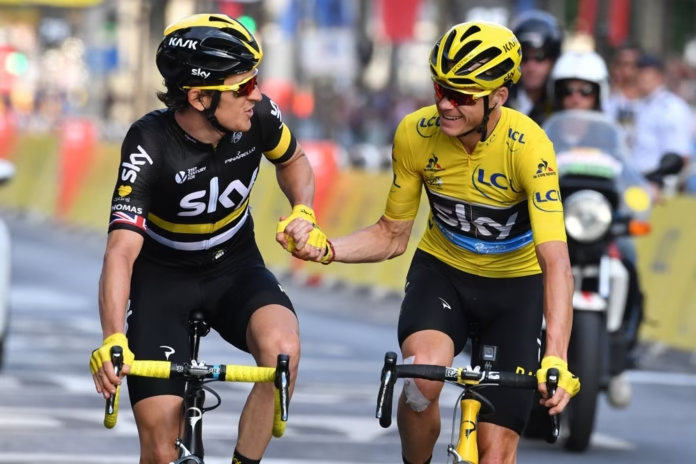
British cycling’s relationship with the Tour de France has changed completely over the last 70 years. What began with isolated pioneers trying to survive the hardest race in Europe became one of the defining national success stories of the modern Tour.
Brian Robinson was the first Briton to finish the race and the first to win a stage. Tom Simpson became the first British rider to wear yellow. Barry Hoban turned British stage wins into something repeatable. Philippa York, racing then as Robert Millar, became one of the best climbers in the race. Then came the modern explosion: Bradley Wiggins, Chris Froome, Geraint Thomas and Mark Cavendish all changed what British riders could expect from the Tour.
There are different ways to measure greatness. Overall victory matters most. Stage wins matter too. Wearing yellow matters. So does changing the expectations of British cycling. Cavendish never won the Tour overall, but no rider in history has won more Tour stages. Wiggins did not have Froome’s longevity, but he was the first British winner. Simpson’s record looks smaller on paper, but his symbolic place is enormous.
This ranking looks at the greatest British riders in Tour de France history, weighing general classification results, stage wins, jerseys, historical impact and the way each rider changed the British place in the race.
For wider Tour context, see our brief history of the Men’s Tour de France, every Tour de France winner since 1903 and British riders in the Tour de France.
Greatest British Tour de France riders ranked
| Rank | Rider | Best Tour achievement | Why they matter |
|---|---|---|---|
| 1 | Chris Froome | Four overall victories | Britain’s most successful Tour GC rider |
| 2 | Mark Cavendish | 35 stage wins | Most Tour stage wins in history |
| 3 | Bradley Wiggins | 2012 overall victory | First British Tour winner |
| 4 | Geraint Thomas | 2018 overall victory | Tour winner, podium finisher and long-serving team leader |
| 5 | Philippa York | 1984 polka-dot jersey and fourth overall | Britain’s first great Tour climber |
| 6 | Tom Simpson | First British yellow jersey wearer | Pioneer, stage winner and tragic Tour figure |
| 7 | Barry Hoban | Eight stage wins | Britain’s first repeat Tour stage winner |
| 8 | Brian Robinson | First British Tour finisher and stage winner | The rider who opened the door |
| 9 | David Millar | Stage wins and yellow jersey | Modern British time-trial and breakaway figure |
| 10 | Adam Yates | Yellow jersey and podium-level mountain riding | Modern GC contender and elite support rider |
| 11 | Simon Yates | Multiple Tour stage wins | Breakaway climber and Grand Tour winner elsewhere |
| 12 | Steve Cummings | Two breakaway stage wins | One of Britain’s best modern Tour stage hunters |
This is not just a list of results. It is a map of how British cycling developed at the Tour. Robinson and Simpson made British presence possible. Hoban made winning stages realistic. York proved British riders could climb with the best. Wiggins, Froome and Thomas turned yellow into a British achievement. Cavendish built a record that belongs not only to Britain, but to the whole history of the race.
1. Chris Froome
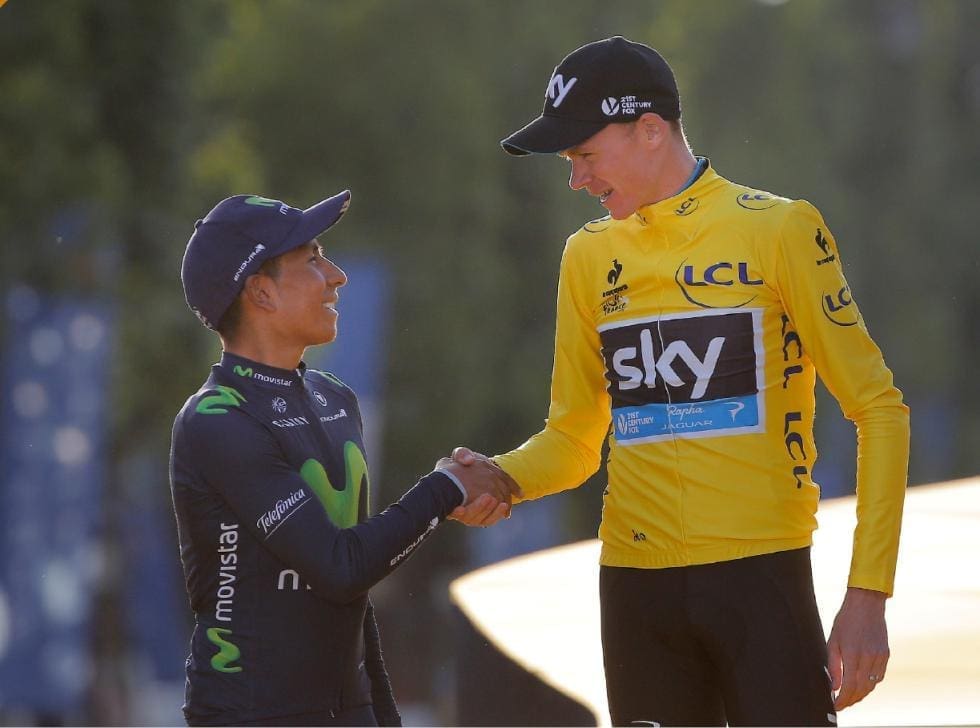
Chris Froome is the greatest British Tour de France rider by overall record. Four Tour victories, seven podium finishes and years as the dominant Grand Tour rider of his era put him at the top of any British Tour ranking.
Froome won the Tour in 2013, 2015, 2016 and 2017. Only Jacques Anquetil, Eddy Merckx, Bernard Hinault and Miguel Indurain have won more. Froome sits in the next tier of Tour history, one win short of the sport’s five-time giants. For a British rider, that level of achievement was almost unimaginable before the Team Sky era.
His first Tour breakthrough came in 2012, when he rode as Bradley Wiggins’ key mountain lieutenant and finished second overall. That created one of the most discussed team dynamics in British cycling history. Wiggins won the race, but Froome looked like the stronger climber on several mountain stages. A year later, he became the team’s undisputed Tour leader and won the 100th edition.
Froome’s Tour greatness came from his ability to combine climbing, time-trialling and team discipline. He was not the most elegant rider, and his style never had the romance of Simpson or the raw sprint drama of Cavendish, but his effectiveness was extraordinary. He could win by attacking on climbs, limiting losses in difficult moments, and using Team Sky’s control to suffocate rivals.
His 2016 Tour also showed range. He attacked downhill on stage 8, ran up Mont Ventoux after a crash on stage 12, and still defended yellow. That race made him more than a controlled mountain specialist. It gave his Tour career a stranger, more human edge.
Froome’s later career was altered by his 2019 crash at the Critérium du Dauphiné, but his Tour legacy was already secure. He remains Britain’s most successful yellow jersey rider and one of the defining Tour champions of the 21st century.
For more on the structure that supported that era, see Team Sky cycling team: a history, and for more on the race format he mastered, see how the Tour de France general classification works.
2. Mark Cavendish
Mark Cavendish is not a Tour de France winner, but he is one of the greatest Tour riders in history. His 35 stage victories make him the most successful stage winner the race has ever seen.
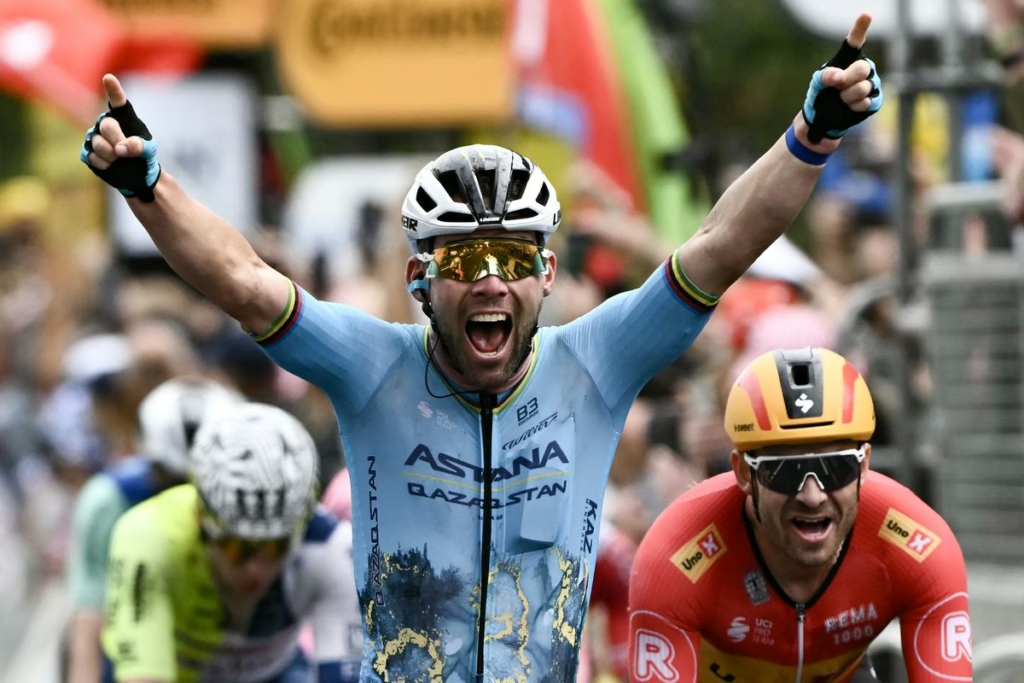
That record is the core of his case. Cavendish broke Eddy Merckx’s long-standing mark of 34 Tour stage wins in 2024, winning stage 5 in Saint-Vulbas. It was not just another sprint win. It was the final proof of a career built around speed, positioning, timing, resilience and an obsession with the Tour. The Tour’s own report on Cavendish’s record-breaking 35th stage win described the result as the moment he became the most prolific stage winner in race history outright.
Cavendish first won a Tour stage in 2008 and quickly became the defining sprinter of his generation. He was almost unbeatable when delivered well by HTC-Columbia, but his career cannot be reduced to lead-outs. He won with different teams, different support structures and across different eras of sprinting. He won when he was the obvious favourite, and he won when many thought his Tour story was over.
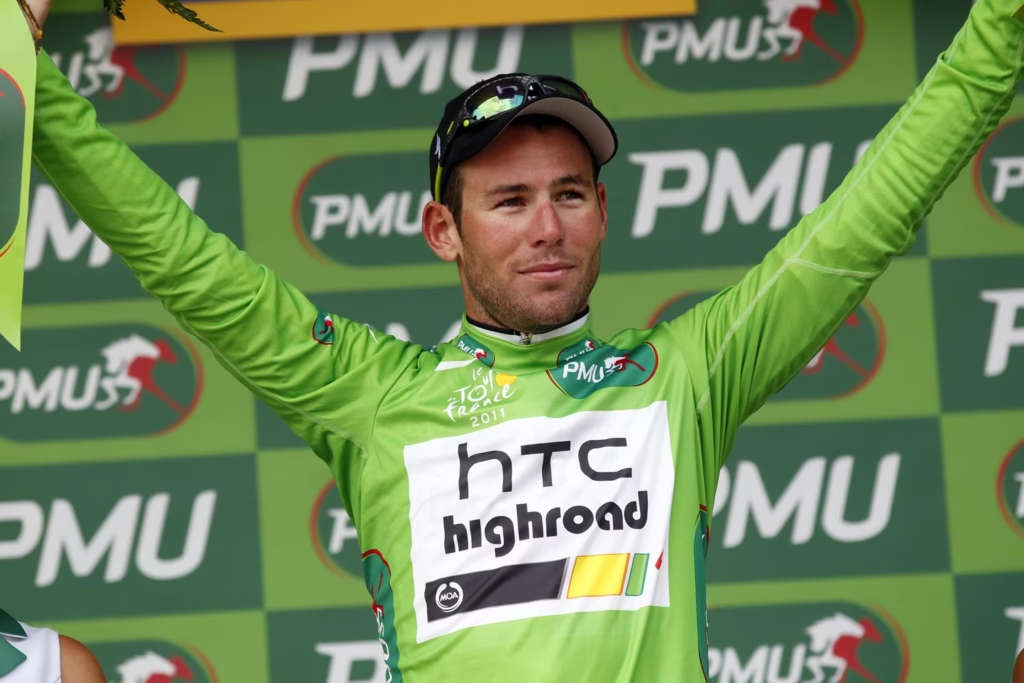
His 2011 green jersey was another landmark. British riders had won stages before, but Cavendish made British sprint dominance part of the Tour’s modern identity. He also won four consecutive final stages on the Champs-Élysées from 2009 to 2012, turning the most famous sprint finish in cycling into his own stage.
The comeback matters too. Cavendish’s 2021 return, when he won four stages and the green jersey, was one of the great late-career resurrections. His 2024 record-breaking win added another layer. He was no longer simply the fastest rider at his peak. He had become the rider who refused to let the record go.
Cavendish ranks behind Froome here only because the Tour’s ultimate currency is the yellow jersey. But as a Tour stage racer, sprinter and historical figure, no British rider has changed more records.
For more on that record-breaking moment, see Eddy Merckx congratulates Mark Cavendish for historic 35th Tour de France stage win and Châteauroux becomes Cavendish City in tribute to Tour de France stage wins.
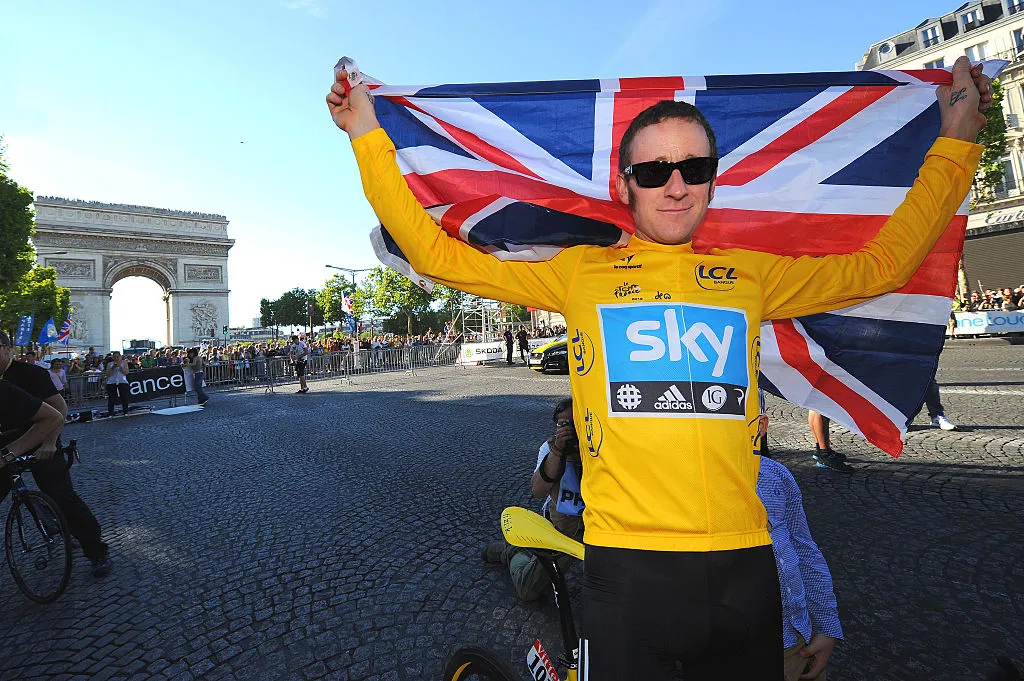
3. Bradley Wiggins
Bradley Wiggins’ place in British Tour history is simple: he was first.
In 2012, Wiggins became the first British rider to win the Tour de France. That alone gives him a permanent place near the top of this list. Before Wiggins, British Tour success had meant stage wins, jerseys, brave rides and near misses. After Wiggins, winning the Tour became something British cycling had actually done. British Cycling’s report on Wiggins making history as the first British Tour de France winner captured the scale of that shift at the time.
His victory was built on time-trialling, controlled climbing and Team Sky’s structure. The 2012 route suited him, with long time trials and mountain stages that could be managed by a strong team. Wiggins made the most of it. He won both individual time trials, defended in the mountains, and rode into Paris in yellow.
The wider meaning was enormous. Wiggins’ Tour win came just before the London Olympics, where he won time-trial gold. It created a peak British cycling summer and helped pull road racing into the British mainstream. The Tour had previously been a niche obsession for many UK fans. Wiggins made it front-page news.
There is always a debate about how to compare Wiggins with Froome. Froome won more Tours, finished on more podiums and had the longer Grand Tour peak. Wiggins had one perfect Tour-winning campaign. That is why Froome ranks higher overall.
But Wiggins’ symbolic status is unmatched. He changed what British riders could imagine at the Tour. He also changed what British audiences expected from July.
Without Wiggins in 2012, the British Tour story would still be rich. With him, it became complete.
For more on the broader winners’ lineage, see every Tour de France winner since 1903 and Tour de France winners list.
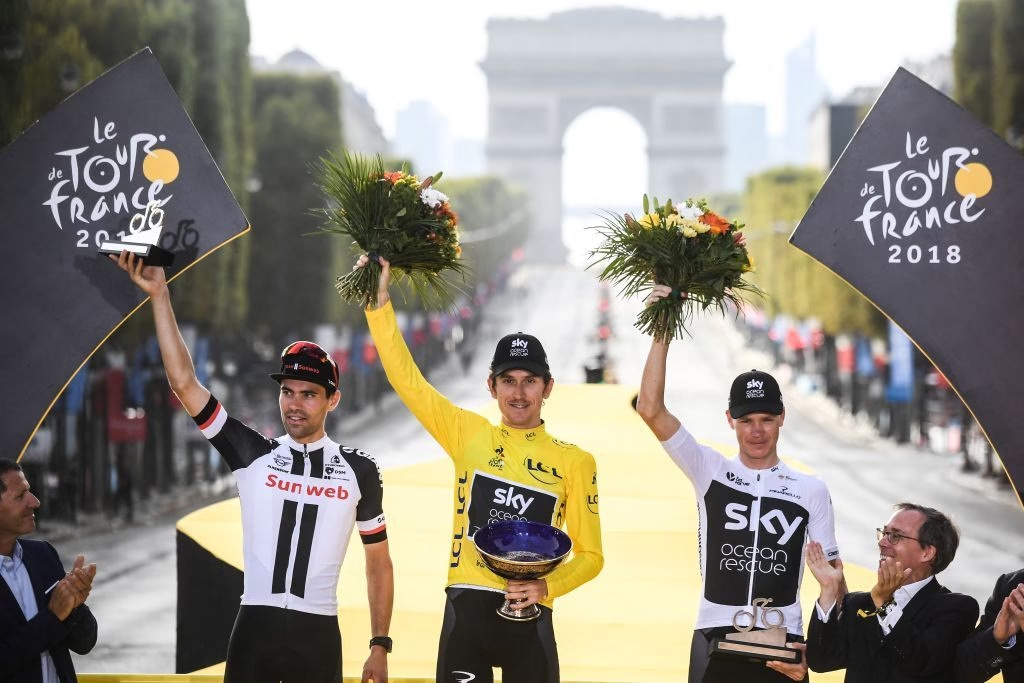
4. Geraint Thomas
Geraint Thomas is one of the most rounded British riders in Tour de France history. He was a domestique, classics rider, time-triallist, road captain, yellow jersey wearer and overall winner. Few British Tour careers have had as many different phases.
Thomas won the Tour in 2018, finishing ahead of Tom Dumoulin and Chris Froome. It was a huge result in its own right, but also a complicated one inside Team Sky history. Froome arrived as the reigning Tour champion and Giro d’Italia winner, but Thomas proved stronger and more consistent across the race. His back-to-back mountain stage wins at La Rosière and Alpe d’Huez gave his victory a strong sporting shape.
His Alpe d’Huez win was especially significant. British riders had won the Tour and worn yellow by then, but winning on cycling’s most famous summit finish while wearing the yellow jersey gave Thomas one of the great British Tour images.
Thomas also wore yellow after winning the opening time trial in 2017, becoming the first Welshman to lead the race. His 2019 second place behind Egan Bernal showed that 2018 was not a one-off. He later remained a reference point for British Grand Tour consistency, even as Ineos moved away from its period of Tour dominance.
His greatness also comes from longevity. Thomas rode many Tours in support of others before becoming the leader himself. He helped create the British Tour era, then became one of its headline winners. His later Tour career is covered in Geraint Thomas to ride final Tour as Ineos back Rodríguez for GC, which underlines how long his relationship with the race lasted.
He does not rank above Wiggins because Wiggins was first, and he does not rank above Froome because Froome won four. But Thomas’ Tour career may be the most complete British one in terms of roles performed. He was not only a winner. He was part of the machinery that made others win, then proved he could finish the job himself.
For the Alpe d’Huez context that shaped his most famous Tour stage win, see A history of Alpe d’Huez at the Tour de France.
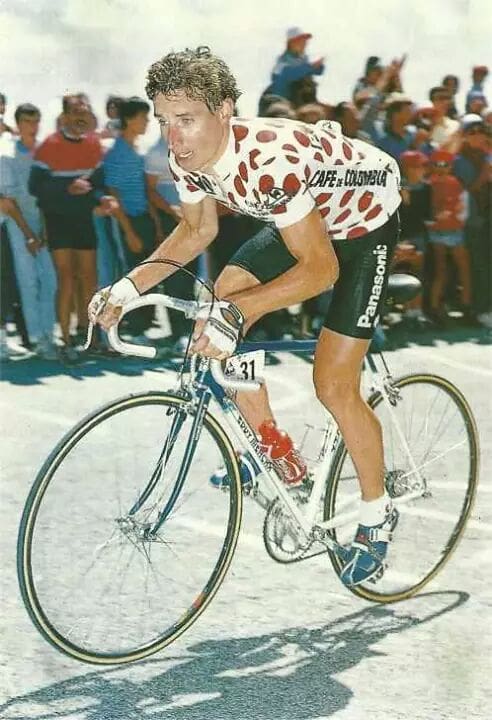
5. Philippa York
Philippa York, who competed during her career as Robert Millar, remains one of the most important British riders in Tour de France history. Before the British Tour-winning era, York was the rider who showed that a British climber could compete seriously in the highest mountains.
Her 1984 Tour was the defining performance. She won the polka-dot jersey as best climber, finished fourth overall and won a mountain stage. For a British rider in that era, that was extraordinary. The Tour was still a largely continental world, and British riders had to make their way into a culture that was not built around them.
York’s climbing style was distinctive. She was small, sharp and tactically aware, with a natural feel for mountain racing. She was not a stage-win sprinter like Hoban or a later controlled GC rider like Wiggins. She belonged to the high mountains, where British cycling had almost no history of success before her.
The fourth-place finish in 1984 stood for decades as one of the best British overall results at the Tour. It was not just a good placing. It was proof that a rider from Britain could be relevant deep into the race, not only in a breakaway or isolated stage finish.
Her career also sits awkwardly in British cycling memory because of how cycling culture treated her then and how her later life has been discussed. But in sporting terms, her Tour record is clear. She was Britain’s first true Tour climber and the first British rider to win a major classification in the men’s race.
That makes her place in this ranking secure. The modern British GC era did not appear from nowhere. York was one of the riders who made it imaginable.
For more on how the polka-dot jersey fits into the Tour, see our Tour de France 2026 climbers guide and Tour de France 2026 jerseys explained.
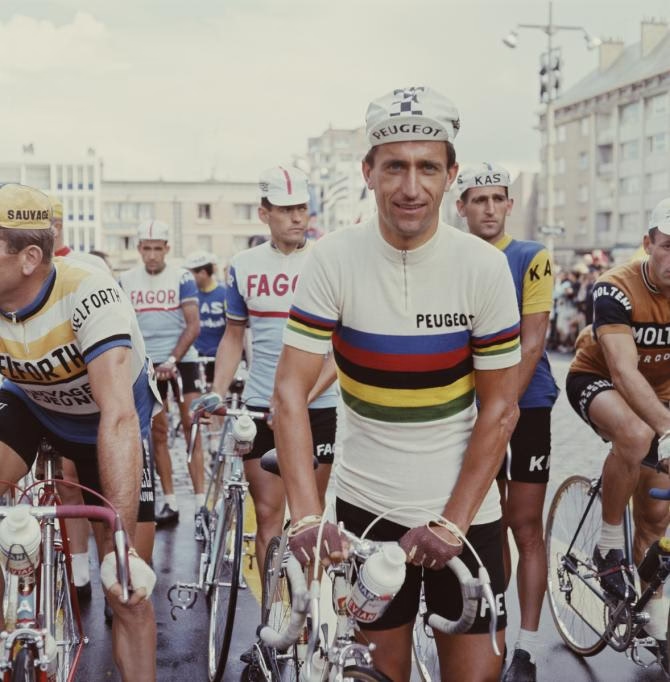
6. Tom Simpson
Tom Simpson’s Tour de France story is inseparable from tragedy, but his greatness should not be reduced only to Mont Ventoux in 1967.
Simpson was the first British rider to wear the yellow jersey, taking the race lead in 1962. That was a major breakthrough. At the time, British riders were still outsiders in the European professional peloton. For Simpson to lead the Tour was a symbolic moment that changed how British cycling saw itself.
He finished sixth overall that year, which remained a significant British benchmark for many years. He also won a Tour stage in 1963, adding a concrete result to his wider status as a pioneer. Beyond the Tour, he was world champion in 1965 and one of the first British riders to be fully respected in the continental professional scene.
His death on Mont Ventoux in 1967 became one of the darkest moments in Tour history. The circumstances are part of the sport’s wider reckoning with heat, exhaustion, doping and the demands placed on riders in that era. It is impossible to tell Simpson’s Tour story without acknowledging it.
But he belongs on this list because of what he achieved before that day. Simpson gave British cycling credibility in the Tour long before British teams had money, structure or depth. He was not a curiosity. He was a serious rider in the hardest race in the world.
In pure Tour results, Froome, Cavendish, Wiggins, Thomas and York are ahead. In historical importance, Simpson is close to the very top.
For the wider mountain history that frames some of the Tour’s hardest days, see what is a summit finish in the Tour de France? and Tour de France 2026 summit finishes guide.
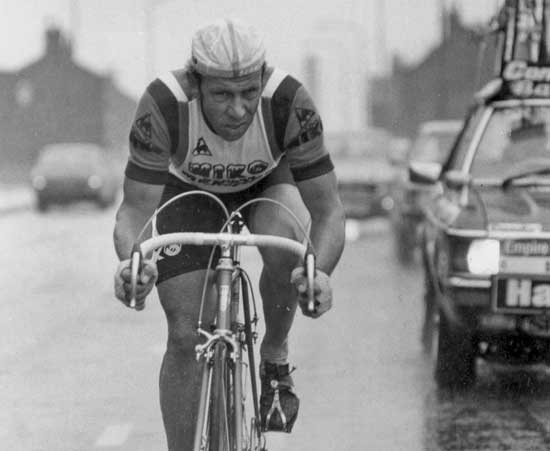
7. Barry Hoban
Barry Hoban was the first British rider to make Tour de France stage winning feel repeatable. His eight stage victories stood as the British record for decades until Mark Cavendish passed him.
Hoban’s first Tour stage win came in 1967, the day after Tom Simpson’s death. That alone gave it a heavy emotional weight. But Hoban’s career was not defined by one sombre victory. He kept winning. He won stages in 1967, 1968, 1969, 1973, 1974 and 1975, and became one of the most reliable British professionals of his generation.
His best quality was race intelligence. Hoban was often described as a sprinter, but that undersells him. He could survive hard days, read finishes, choose the right move and win from situations that were not simple bunch sprints. His 1968 stage win to Sallanches was a reminder that he could do more than wait for flat finales.
Hoban also completed the Tour repeatedly, another mark of his toughness in an era when support, nutrition and medical care were far less refined. He was a professional roadman in the old sense, embedded in the continental scene and capable of winning in the biggest race.
His stage total may look smaller now because Cavendish moved the record to another level, but Hoban’s eight wins were a huge British achievement for their time.
He is one of the riders who made later British success less surprising. Robinson opened the door. Simpson wore yellow. Hoban kept winning.
For the sprinting line that later ran through Cavendish, see Tour de France 2026 sprinters guide and best sprinters at the Tour de France 2026.
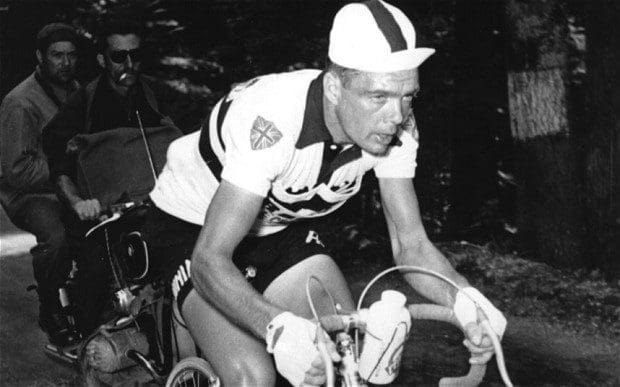
8. Brian Robinson
Brian Robinson’s greatness is foundational. He was the first Briton to finish the Tour de France and the first Briton to win a Tour stage. Every British Tour success that followed sits partly on the road he opened.
Robinson finished the Tour in 1955, at a time when British riders had little infrastructure in European professional cycling. That achievement alone mattered. Completing the Tour was not a routine act for a British rider then. It was proof that riders from Britain could survive the race.
In 1958, he became the first British stage winner. He won again in 1959, this time by a huge margin on the road from Annecy to Chalon-sur-Saône. These were not symbolic participation prizes. They were real results in the world’s hardest bike race.
Robinson’s career predates the era most modern fans know. There was no British WorldTour structure, no Team Sky, no normal pathway from British domestic racing to Tour leadership. His success came through persistence, adaptation and a willingness to race in a world where British riders had to prove they belonged.
That is why he ranks above riders with more modern visibility. Robinson’s numbers are modest compared with Cavendish or Froome, but his historical weight is enormous.
Without Robinson, the British Tour story starts later and looks much thinner. He was the first real bridge between British cycling and the Tour de France.
For a broader list of British Tour starters and results, see British riders in the Tour de France.
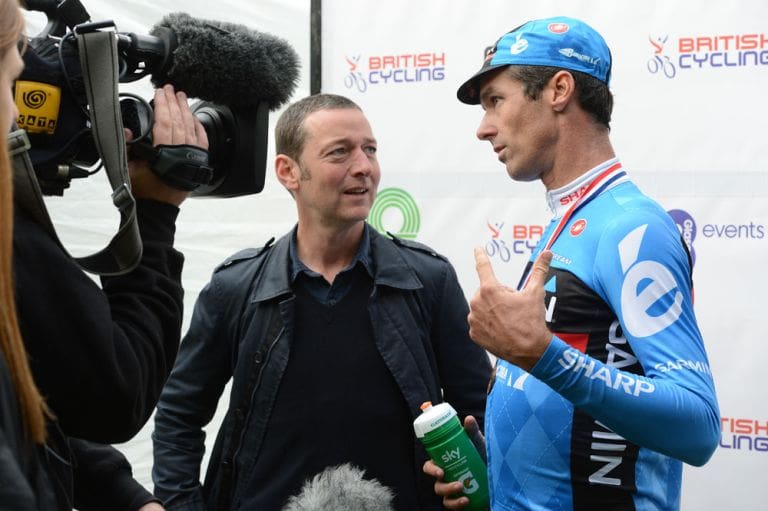
9. David Millar
David Millar’s Tour de France legacy is complicated, but he remains one of Britain’s most important modern Tour riders.
At his best, Millar was a superb time-triallist, a breakaway rider and a road captain. He won Tour stages, wore the yellow jersey and helped define the transition between the pre-Team Sky British presence and the later era of British Tour dominance.
His first Tour stage win came in 2000, when he won the opening time trial in Futuroscope and took yellow. That was a major moment for British cycling before the Wiggins-Froome-Thomas era. A British rider in yellow still felt rare and significant.
Millar later returned to win stage 12 of the 2012 Tour, the same race Wiggins won overall. That victory had a different feel. It came from a breakaway, after a long career marked by both talent and scandal. Millar had served a doping ban earlier in his career, and his later years were shaped partly by his role as an anti-doping voice.
That complexity affects how he is remembered. He cannot be separated from the sport’s doping era, but he also cannot be removed from the British Tour story. He was one of the best British riders of his generation and a significant figure in the professionalisation of British road cycling.
As a Tour rider, he was not at the level of Froome, Cavendish, Wiggins or Thomas. But as a bridge between eras, and as a rider with stage wins, yellow and tactical influence, he belongs in the top 10.
For more on the time-trial side of the modern Tour, see our best time-triallists at the Tour de France 2026 and history of team time trials at the Tour de France.
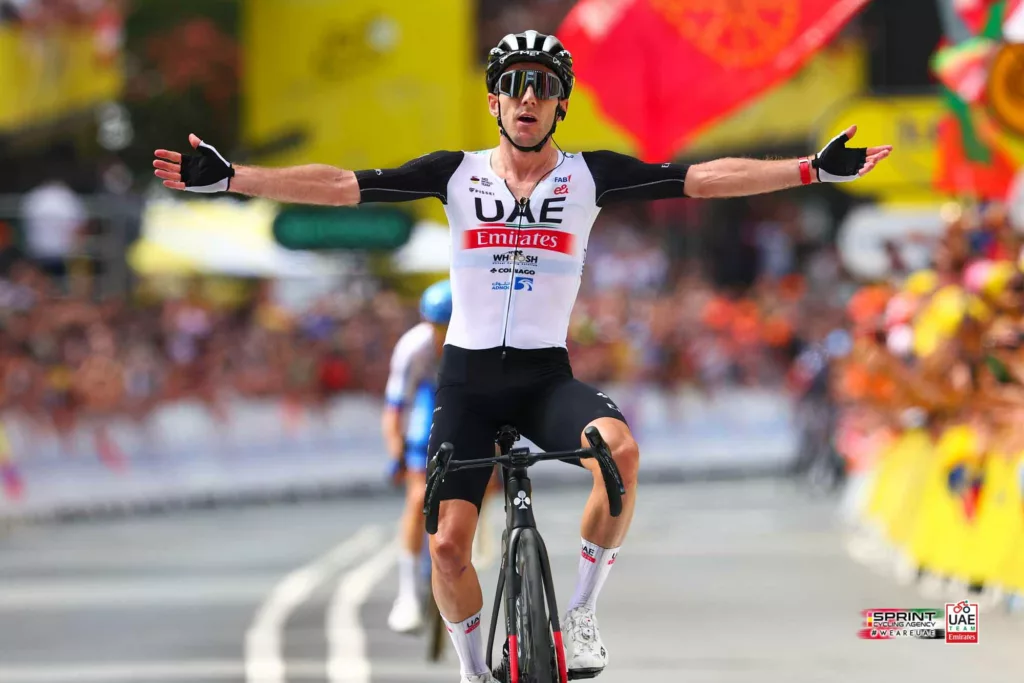 Photo Credit: Luca Bettini/SprintCyclingAgency
10. Adam Yates
Adam Yates is one of the best British Tour riders of the post-Team Sky generation. He has not won the race, but his Tour record includes yellow jersey days, high overall finishes, mountain strength and elite domestique work.
His breakthrough Tour came in 2016, when he finished fourth overall and won the white jersey as best young rider. That result showed he could ride near the top of the GC in his own right. In 2020, he wore the yellow jersey after Julian Alaphilippe was penalised, then defended it for several days.
Later, Yates became one of the most valuable mountain support riders in the race. His move to UAE Team Emirates-XRG placed him inside Tadej Pogačar’s Tour structure, where he could be both a protected option and an elite climbing domestique. He also won stage 1 of the 2023 Tour in Bilbao, ahead of his brother Simon, and took the first yellow jersey of that edition.
That mix makes his case interesting. Adam Yates is not a British Tour winner, but he has been a GC contender, yellow jersey wearer, stage winner and crucial support rider for one of the strongest modern Tour teams. Few riders combine all of those roles.
His place below David Millar is debatable. Yates has arguably been the stronger GC rider. Millar had more symbolic value in the earlier modern era. But Yates still has a strong claim as one of Britain’s best Tour performers.
For current British Tour context, see our best British riders to watch at the Tour de France 2026 and Tour de France 2026 domestiques who could decide the race.
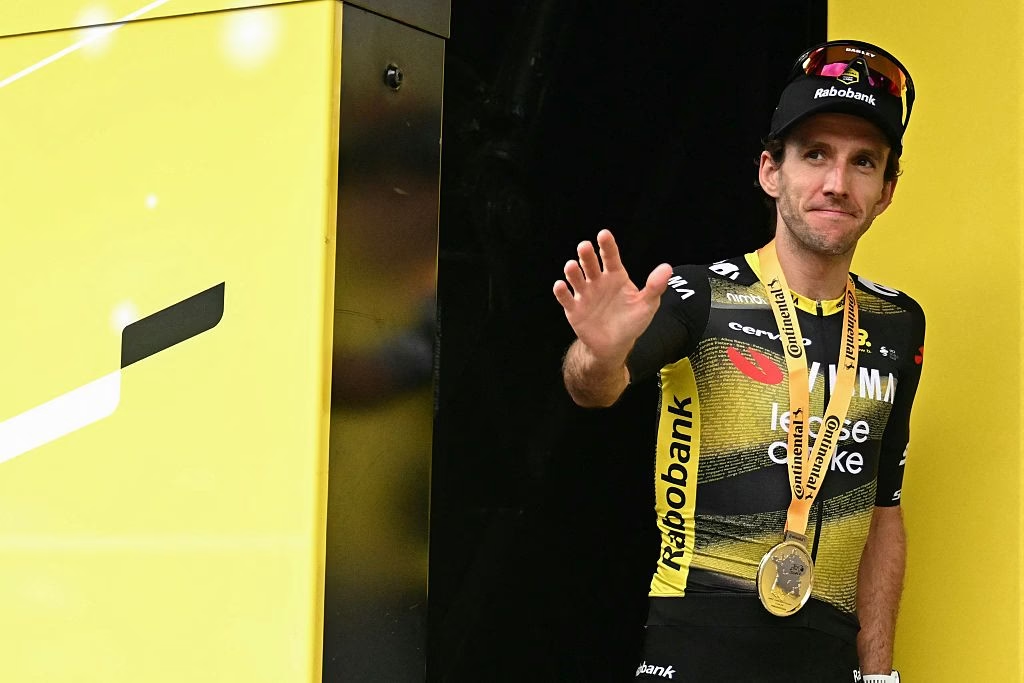
11. Simon Yates
Simon Yates’ Tour de France career is not as central to his overall reputation as the Giro d’Italia or Vuelta a España, but he has still produced major Tour moments.
His best Tour came in 2019, when he won two stages from breakaways. Those victories showed his range: he could climb, read a move and finish the job from reduced groups. He was not riding as a pure GC leader in that race, but as a stage hunter he was excellent.
Simon’s wider Grand Tour record helps his reputation, even if this ranking focuses on the Tour. He won the Vuelta a España in 2018 and the Giro d’Italia in 2025, placing him among Britain’s greatest Grand Tour riders overall. But at the Tour specifically, his legacy is more about stage wins than a sustained GC campaign.
That still matters. The Tour has always rewarded riders who can identify the right day and seize it. Simon Yates has done that. His style is more unpredictable than the controlled British Tour-winning model of Wiggins or Froome. He is at his best when the race opens, breaks apart and becomes tactical.
He ranks just outside the top 10 because others have deeper Tour-specific records, but in terms of raw talent and Grand Tour pedigree, he is among the strongest British riders ever to start the race.
For more on the kind of mountain opportunity that suits riders like Simon Yates, see Tour de France 2026 route: best days for breakaways and Tour de France 2026 stage hunters to watch.
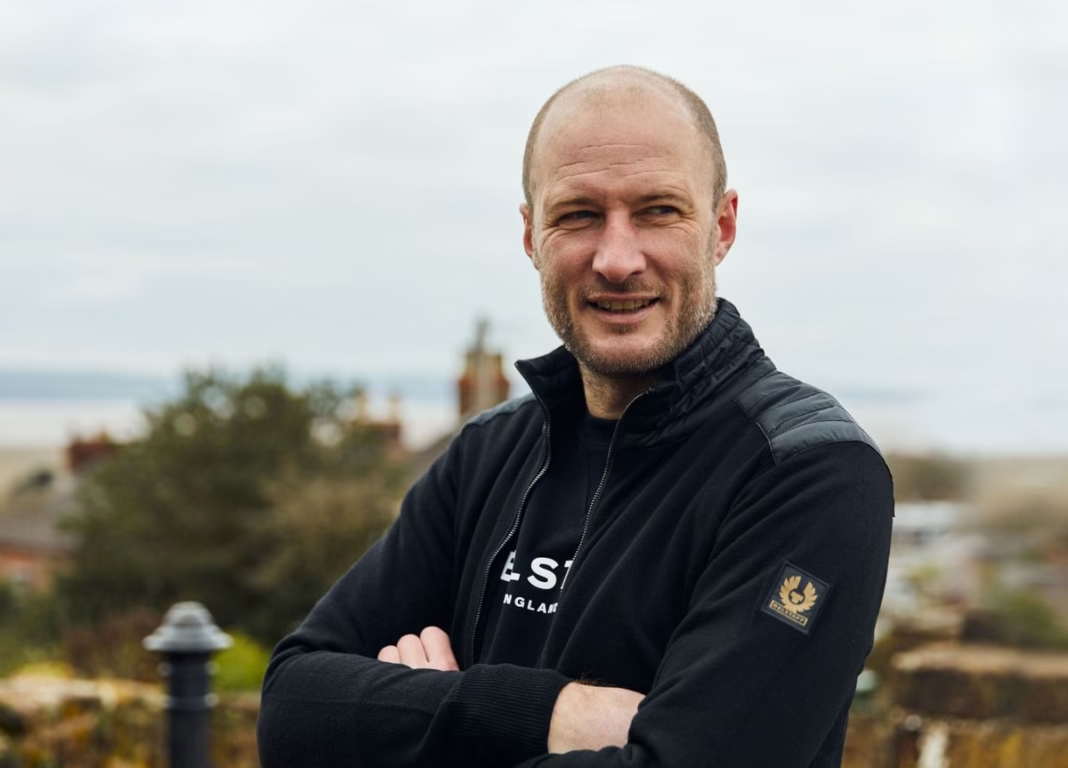
12. Steve Cummings
Steve Cummings was one of Britain’s best modern breakaway riders at the Tour de France. His two Tour stage wins, in 2015 and 2016, both came from the kind of racing that rewards timing, patience and tactical nerve.
His 2015 stage win in Mende was a major moment for MTN-Qhubeka, the first African-registered team to race the Tour. Cummings timed his move perfectly, catching and passing Thibaut Pinot and Romain Bardet late on to take a memorable victory.
A year later, he won again at Lac de Payolle, attacking from the breakaway and holding off the chase. That second win proved the first was not a one-off. Cummings had a rare ability to appear calm while reading a chaotic race.
He was not a GC rider and not a prolific Tour sprinter, which limits his ranking. But as a stage hunter, he belongs in the British Tour conversation. His wins came in an era when British cycling was often associated with Team Sky control, yet Cummings represented a different tradition: the lone opportunist, choosing the right moment from the break.
For more on that kind of rider, see what is a breakaway in the Tour de France? and Tour de France 2026 breakaway specialists to watch.
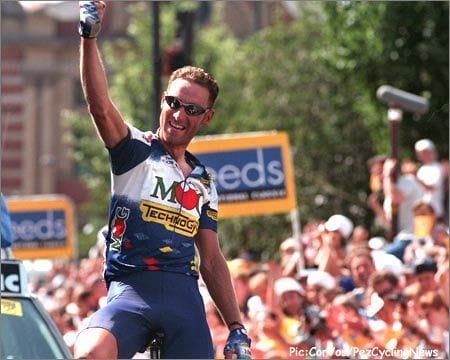
Other British Tour de France riders who deserve mention
Not every important British Tour rider fits neatly into a top 12. Some shaped the race through support work, single stages, team roles or historical presence.
Michael Wright won three Tour stages in the 1960s and 1970s and remains an under-discussed figure in British Tour history. He raced under a Belgian licence for part of his career, which has sometimes complicated how he is remembered in British lists, but his results belong in the broader story.
Sean Yates wore the yellow jersey in 1994, giving Britain a rare Tour leadership moment before the modern era. He later became an influential sports director, including inside the Team Sky structure that helped deliver British Tour wins.
Max Sciandri, born in Derby but raised in Italy and often associated with both cycling cultures, won a Tour stage in 1995. He is another reminder that British Tour history has often been shaped by riders who crossed national and cycling identities.
Ian Stannard, Luke Rowe and Peter Kennaugh played different support roles in the era of Wiggins, Froome and Thomas. Their work helped make British Tour success feel systematic rather than occasional.
More recently, Tom Pidcock has added another layer to the story. His 2022 Alpe d’Huez stage win was one of the most spectacular British Tour victories of the modern era. He does not yet have the Tour depth to rank with the names above, but his stage win and all-round talent make him one of the most important British Tour riders of the current generation.
For Pidcock’s role, see Tom Pidcock at the Tour de France 2026, A history of Alpe d’Huez at the Tour de France and Tour de France 2026 stage hunters to watch.
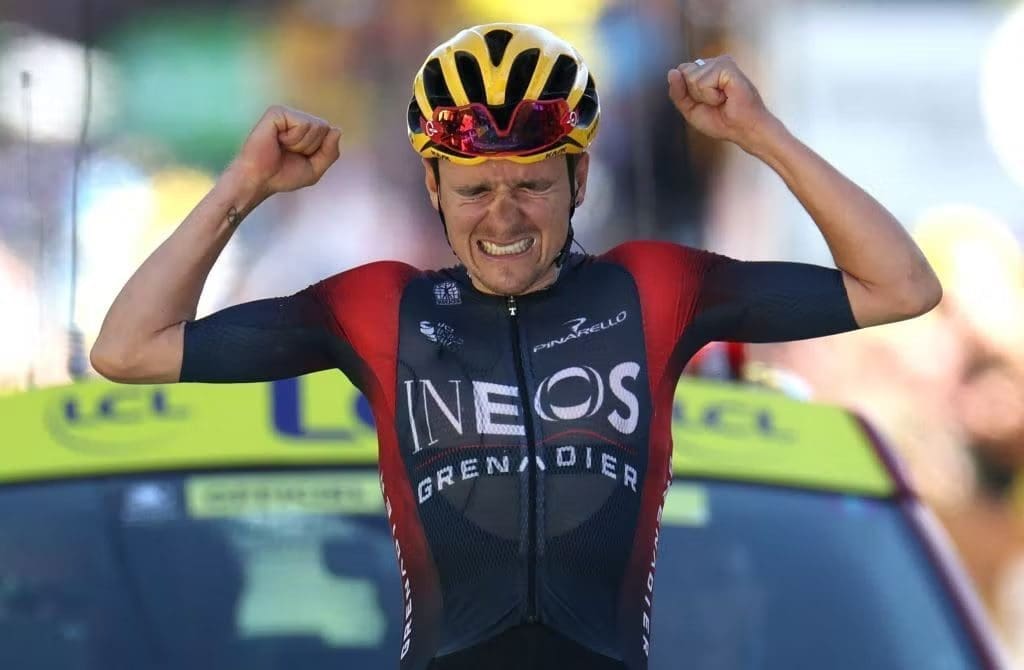 Photo Credit: A.S.O./Charly López
British Tour de France winners
Only three British riders have won the Tour de France overall.
| Rider | Year won | Notes |
|---|---|---|
| Bradley Wiggins | 2012 | First British Tour de France winner |
| Chris Froome | 2013, 2015, 2016, 2017 | Britain’s only four-time Tour winner |
| Geraint Thomas | 2018 | First Welsh Tour winner |
This is still a short list, but it is extraordinary given how long Britain waited for its first winner. Before 2012, the idea of a British Tour winner was still weighed down by decades of near misses, pioneering rides and structural disadvantages. Between 2012 and 2018, British riders won six of seven editions.
That run reshaped the Tour. It also changed British cycling’s self-image. The Tour was no longer something British riders visited. It was something they could control, win and defend.
For the wider winners’ list, see every Tour de France winner since 1903 and list of Tour de France champions.
British Tour de France stage winners
British riders have won Tour stages in many different ways: sprints, time trials, mountain attacks, breakaways and summit finishes.
| Rider | Tour stage-win identity |
|---|---|
| Mark Cavendish | Record-breaking sprinter |
| Barry Hoban | Early repeat stage winner |
| Brian Robinson | First British stage winner |
| Tom Simpson | Pioneer and stage winner |
| Michael Wright | Multiple stage winner |
| David Millar | Time trial and breakaway winner |
| Bradley Wiggins | Time-trial stage winner |
| Chris Froome | GC-stage and mountain winner |
| Geraint Thomas | Time trial, mountain and GC-stage winner |
| Steve Cummings | Breakaway specialist |
| Simon Yates | Mountain breakaway winner |
| Adam Yates | Stage winner and yellow jersey wearer |
| Tom Pidcock | Alpe d’Huez stage winner |
The range matters. British Tour success is no longer one thing. Cavendish represents sprinting. Froome, Wiggins and Thomas represent GC. York represents climbing. Cummings, Simon Yates and Pidcock represent stage hunting. Robinson, Simpson and Hoban represent the pioneers.
That spread is what makes the British Tour story so strong. It is not just built around one golden period. It has roots, breakthroughs and different styles of winning.
For current Tour route opportunities, see Tour de France 2026 route: best days for sprinters, Tour de France 2026 route: best days for GC attacks and Tour de France 2026 breakaway stages ranked.
British yellow jersey wearers
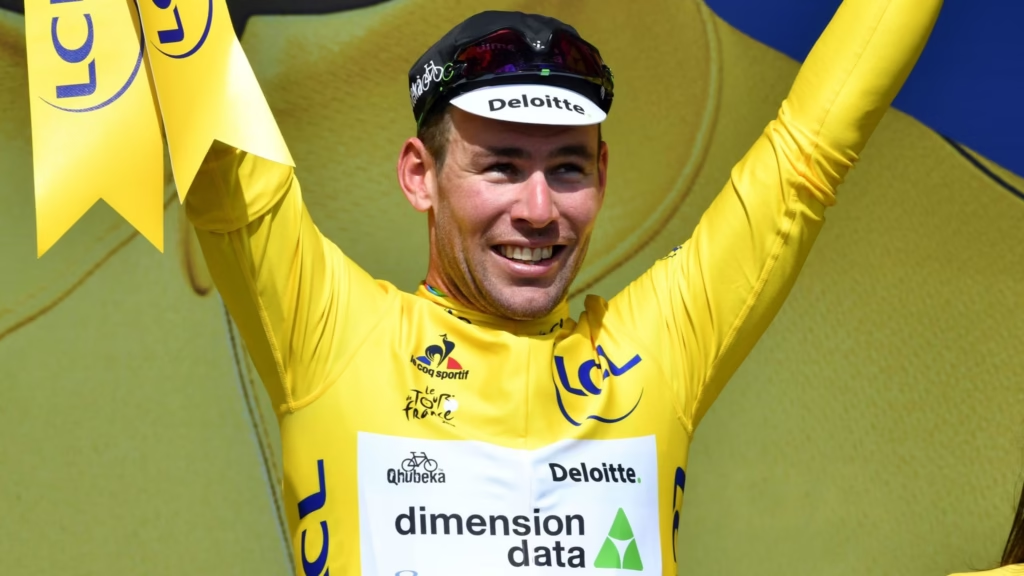
Wearing the yellow jersey is one of the biggest achievements in cycling. Several British riders have now done it, but Tom Simpson was the first in 1962.
| Rider | Yellow jersey significance |
|---|---|
| Tom Simpson | First British rider to wear yellow |
| Sean Yates | Wore yellow in 1994 |
| David Millar | Wore yellow after winning the 2000 opening time trial |
| Bradley Wiggins | Wore yellow on the way to overall victory in 2012 |
| Chris Froome | Multiple yellow jersey campaigns and four overall wins |
| Geraint Thomas | Wore yellow in 2017 and won in 2018 |
| Adam Yates | Wore yellow in 2020 and 2023 |
| Mark Cavendish | Wore yellow after winning stage 1 in 2016 |
The range of yellow jersey wearers shows how much British cycling changed. Simpson’s yellow was a breakthrough. Millar’s was a rare modern moment. Wiggins, Froome and Thomas made yellow British for much of the 2010s. Cavendish and Adam Yates showed different routes into it, through sprinting and opportunistic GC position.
For more on the jersey system, see Tour de France 2026 jerseys explained and how the Tour de France general classification works.
Greatest British Tour de France climber
The answer depends on how “climber” is defined.
If the question is pure climbing record at the Tour, Chris Froome has the strongest case. He won the race four times, made repeated mountain differences and built much of his dominance around high-mountain performance.
If the question is specialist climber identity, Philippa York has the strongest historical claim. Winning the polka-dot jersey in 1984 and finishing fourth overall made her Britain’s first true Tour climbing figure.
Geraint Thomas and Bradley Wiggins climbed well enough to win the Tour, but both were broader GC riders rather than pure climbers. Adam Yates and Simon Yates have both shown high-level climbing ability, while Tom Pidcock’s Alpe d’Huez win adds a spectacular modern example.
The best answer is probably split: Froome is Britain’s greatest Tour climbing GC rider, while York is Britain’s most important pure Tour climber.
For more on the mountain side of the race, see Tour de France 2026 mountain stages ranked by difficulty and Tour de France 2026 climbers guide.
Greatest British Tour de France sprinter
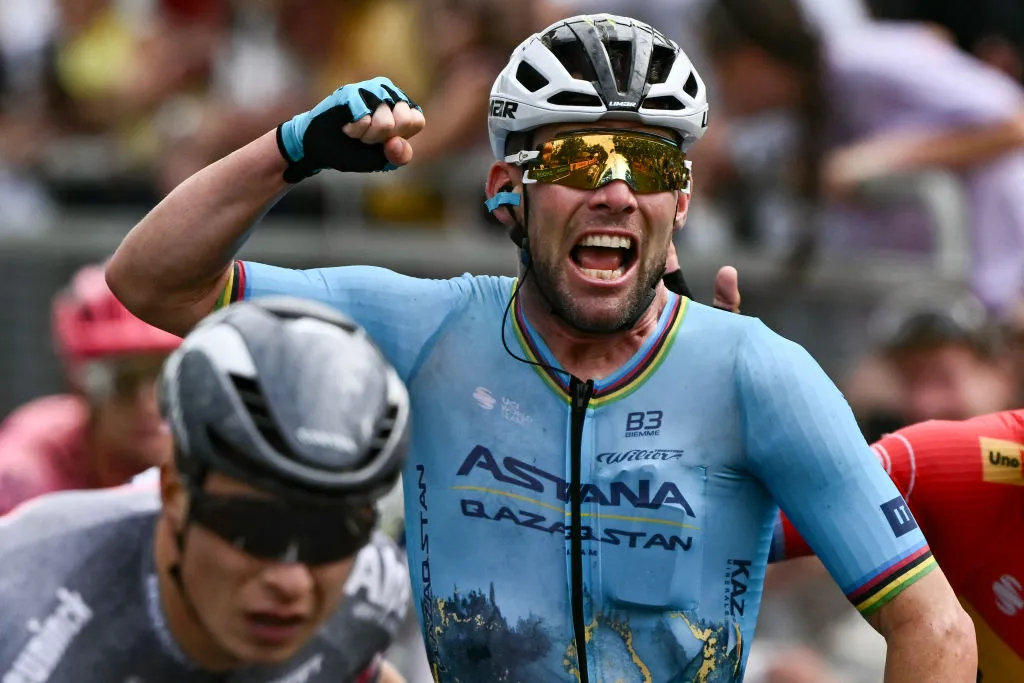
This one is not close. Mark Cavendish is the greatest British Tour sprinter and the greatest Tour de France sprinter of all time by stage wins.
Cavendish’s 35 stage victories put him ahead of every rider in the history of the race. He won across different eras, against different sprint rivals and with different teams. Barry Hoban remains hugely important as the first great British Tour stage winner, but Cavendish moved British sprinting into another category altogether.
The comparison with Hoban is still useful. Hoban made British sprint and stage success credible. Cavendish made it historic. Without Hoban, the road was harder. Without Cavendish, the Tour stage-win record belongs somewhere else.
For more on sprinting at the Tour, see why sprinters suffer in the Tour de France mountains and best lead-out riders at the Tour de France 2026.
Greatest British Tour de France domestique
Geraint Thomas has one of the strongest claims here because he served as a key support rider before becoming a Tour winner himself. His career shows the full domestique-to-leader arc better than any other British rider.
Chris Froome’s 2012 support role for Wiggins was also one of the most famous British domestique performances in Tour history, even if it lasted only one Tour before he became the leader. Froome’s strength that year created tension, but it also helped deliver the first British overall victory.
Luke Rowe deserves mention for his road captaincy at Team Sky and Ineos. He was not a Tour winner or stage winner, but his positioning work, communication and control were part of the British team era. Ian Stannard and Peter Kennaugh also contributed to that structure.
Among modern riders, Adam Yates has become one of the strongest climbing support riders in the race while still retaining his own GC quality. That dual role makes him important in the current Tour era.
For the role itself, see what is a domestique at the Tour de France? and Tour de France 2026 domestiques who could decide the race.
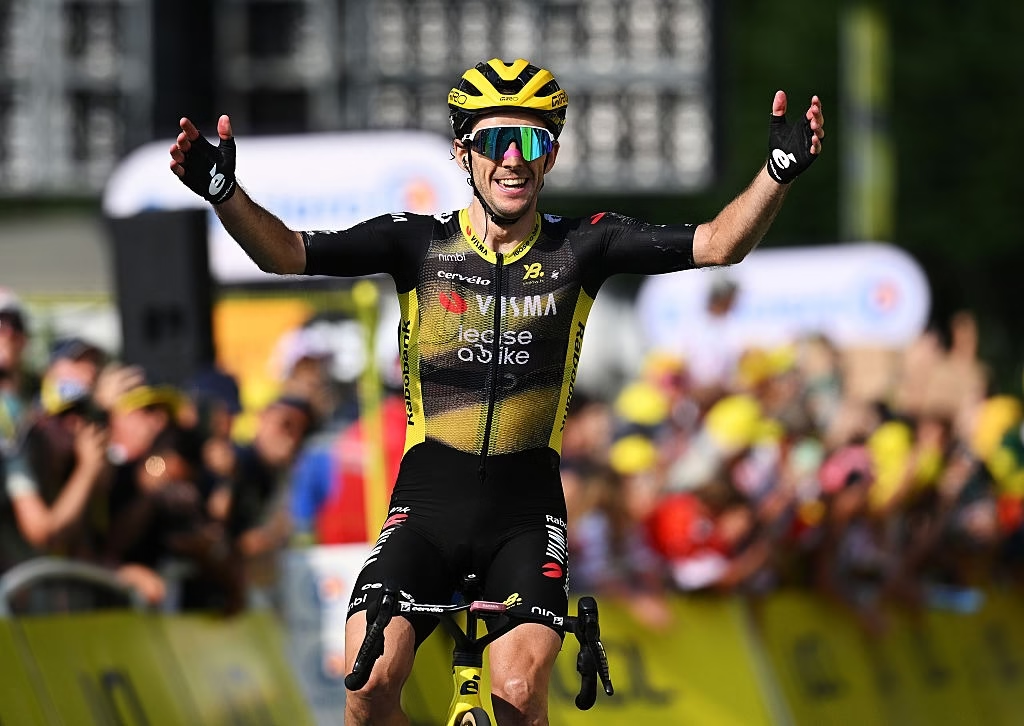 Photo Credit: Getty
Greatest British Tour de France stage hunter
Steve Cummings, Simon Yates and Tom Pidcock all have strong cases.
Cummings was the purest breakaway specialist. His stage wins in 2015 and 2016 came from timing, patience and tactical instinct. He was not trying to win the Tour. He was choosing the right days and making the race come to him.
Simon Yates is the stronger Grand Tour rider overall and won two Tour stages in 2019. His wins came from mountain breakaways, using climbing strength and tactical sharpness.
Pidcock’s Alpe d’Huez win in 2022 may be the most spectacular single British stage-hunting victory. He descended brilliantly, climbed with control and won on one of the Tour’s most famous mountains.
If judging only Tour stage-hunting craft, Cummings is the reference point. If judging highest peak on a single day, Pidcock’s Alpe d’Huez win is hard to beat.
For the wider tactical category, see what is a breakaway in the Tour de France? and Tour de France 2026 stage hunters to watch.
The British Tour de France era of Team Sky
The British Tour story changed most dramatically through Team Sky. From 2012 to 2018, British riders won six Tours: Wiggins in 2012, Froome in 2013, 2015, 2016 and 2017, and Thomas in 2018.
That period was built around control. Team Sky used powerful domestiques, detailed preparation, time-trial strength, climbing trains and marginal gains to reshape the way the Tour was raced. Supporters saw it as professional dominance. Critics often found it too controlled. Either way, it was one of the most successful team projects in Tour history.
The British element was central. Wiggins, Froome and Thomas were not simply riders on a strong team. They became the face of a British Tour identity that had never existed before. The race that once felt remote from British cycling suddenly ran through Manchester velodromes, British coaching systems and Team Sky buses.
That era has now passed. Ineos no longer dominate the Tour in the same way, and the race has shifted towards Pogačar, Vingegaard and more aggressive mountain racing. But the British period remains one of the most important chapters in modern Tour history.
For more on the team behind that shift, see Team Sky cycling team: a history. For how the current team landscape looks, see our Tour de France 2026 team-by-team guide and full start list for Tour de France 2026.

Who is the greatest British Tour de France rider?
Chris Froome is the greatest British rider at the Tour de France if the question is overall race achievement. Four yellow jerseys settle that. He won the Tour more often than any other British rider and sits among the great stage-race riders of the modern era.
Mark Cavendish is the greatest British Tour rider if the question is stage-winning history. His 35 victories are unmatched by anyone, from any country. He is not just Britain’s best Tour sprinter. He is the Tour’s most successful stage winner.
Bradley Wiggins is the most important symbolic British Tour rider because he was first to win the race overall. Geraint Thomas has the most complete role-based career, from domestique to yellow jersey winner. Philippa York remains the defining British climbing pioneer. Tom Simpson, Barry Hoban and Brian Robinson are the riders who made the whole story possible.
So the clean answer is this: Froome is Britain’s greatest Tour de France GC rider, Cavendish is Britain’s greatest Tour stage winner, and Wiggins is the rider who changed the ceiling forever.
British Tour de France greatness explained simply
The greatest British Tour de France riders fall into three groups.
The pioneers came first: Brian Robinson, Tom Simpson and Barry Hoban. They proved British riders could finish, lead and win stages in the Tour.
The breakthrough climbers and specialists came next: Philippa York, David Millar and later Steve Cummings. They showed British riders could win in the mountains, against the clock and from breakaways.
Then came the golden era: Bradley Wiggins, Chris Froome, Geraint Thomas and Mark Cavendish. Wiggins became the first British winner, Froome won four Tours, Thomas won in yellow on Alpe d’Huez and then took the overall, and Cavendish became the most successful stage winner in Tour history.
That is why the British Tour story is now one of the richest national stories in the race. It has pioneers, tragedy, stage-winning craft, climbing breakthroughs, sprint records and overall winners.
For more Tour de France coverage, visit our Tour de France hub, Tour de France 2026 full route guide and best British riders to watch at the Tour de France 2026.

