
The team time trial is one of the Tour de France’s most fascinating disciplines because it turns an individual race into a collective test. For one stage, the strongest rider is not enough. The whole squad has to move together, share the wind, hold formation, protect its leader and judge exactly how many riders it can afford to sacrifice before the finish.
That is why its return in the 2026 Tour de France matters. The race opens in Barcelona with a 19.6km team time-trial, the first time since 1971 that the Tour has started with the discipline. It is also not a completely traditional TTT. The team classification on the day will be based around the first rider to cross the line, while individual general classification times will be recorded separately. That changes the balance between collective speed and leader protection.
Team time trials have always sat slightly awkwardly inside the Tour. Supporters love the spectacle: eight riders moving in a line, huge speeds, perfect changes and the sight of a team functioning like one machine. Critics argue that they can punish strong riders on weak teams and distort the general classification before the mountains have even started.
That tension is the history of the Tour de France team time trial. It has been used, removed, revived, altered, criticised and celebrated. At its best, it is one of cycling’s purest team tests. At its worst, it can feel like a stage where the wrong rider pays for the wrong squad. In 2026, it returns with a modern twist and a clear purpose: to create early time gaps before the race leaves Barcelona.
For the immediate race context, see our Tour de France 2026 team time-trial explained, how the Stage 1 team time-trial could change the Tour de France 2026 and Tour de France 2026 full route guide.
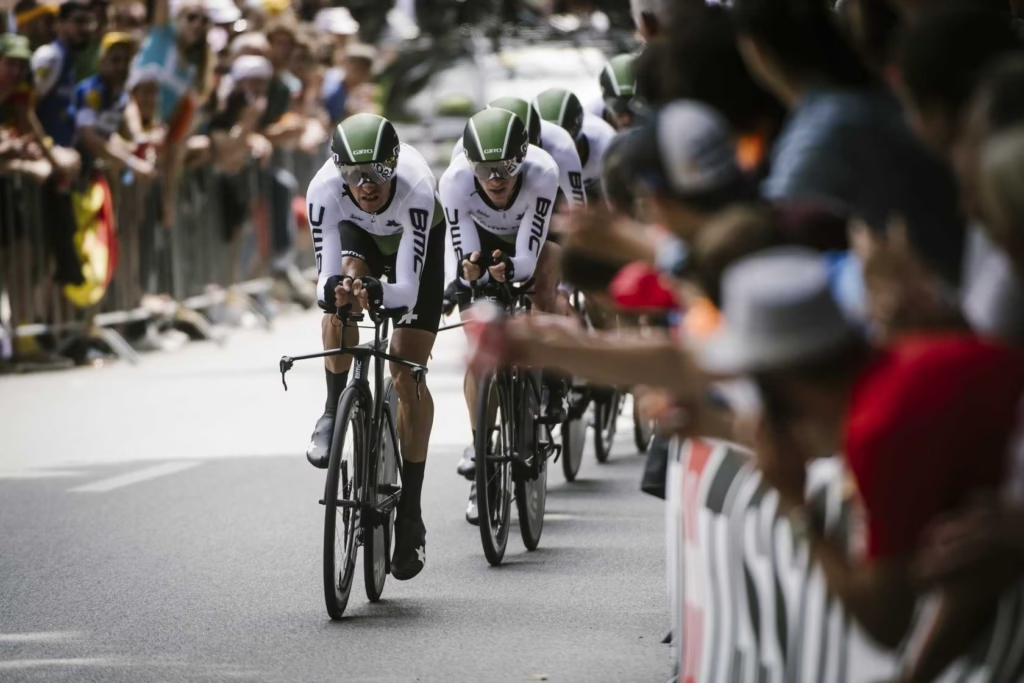 Photo Credit: A.S.O./Pauline Ballet
What is a team time trial?
A team time trial, often shortened to TTT, is a race against the clock where each team rides together rather than each rider starting alone. The aim is to cover the course as quickly as possible while keeping enough riders together to record the team’s time.
In a classic team time trial, riders rotate through the front of the line. The rider on the front works hardest because they are taking the wind. After a turn, they move aside, drop back into the line, recover briefly, and then come through again. Done properly, it is smooth, fast and controlled. Done badly, it becomes chaotic very quickly.
The discipline rewards organisation as much as raw power. A team with eight strong riders can still lose time if the line is uneven, the pacing is wrong, or the riders misjudge corners and climbs. A slightly weaker team can overperform if it stays together and avoids panic.
In the Tour de France, the team time trial matters because the time gaps affect the general classification. A GC leader can gain or lose significant time depending on the strength, cohesion and depth of their team. That is why TTTs are never just specialist stages. They can change the yellow jersey race.
For more on how squads are structured around these duties, see how Tour de France teams work, what is a domestique at the Tour de France? and Tour de France 2026 team-by-team guide.
Why team time trials are different from individual time trials
An individual time trial is simple in concept. One rider starts alone and races against the clock. Their time is their own. If they pace badly, corner poorly or crack, they pay the price themselves.
A team time trial is more complex. The riders are stronger together than alone because they can share the wind. But they are also tied to each other’s strengths and weaknesses. The fastest rider cannot simply ride away unless the rules allow individual times to count separately. In a traditional TTT, the team has to manage the group.
That makes pacing difficult. If the strongest riders pull too hard, weaker teammates may be dropped too early. If the pace is too cautious, the team wastes time. If the road climbs, descends or turns sharply, the formation can break apart. Every rider has to know their role.
A TTT also changes the pressure on domestiques. On most road stages, they protect leaders, chase, fetch bottles and set tempo. In a team time trial, they are part of the result itself. The whole team is visible, and one weak link can alter the stage.
That is why the discipline has always been loved by team directors and time-trial specialists, but feared by GC leaders whose squads are not built for it. For the 2026 individual time-trial context, see our best time-triallists at the Tour de France 2026 feature.
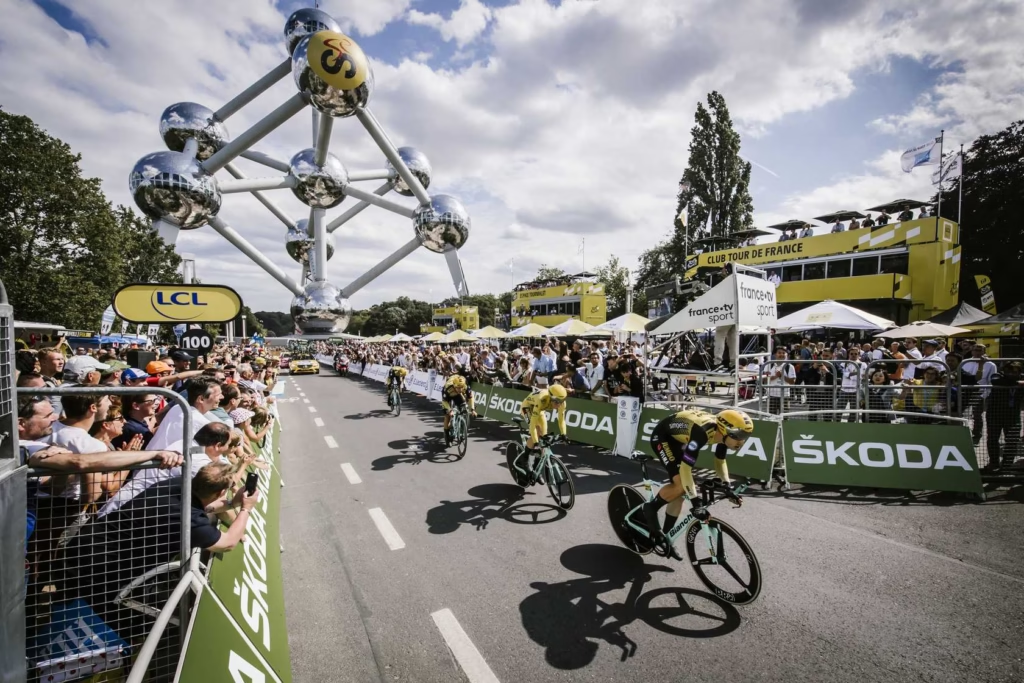 Photo Credit: A.S.O./Pauline Ballet
The earliest team time-trial-style experiments
The Tour’s relationship with team time trials goes back further than many people realise. The race did not begin with neat modern TTTs, but it experimented with team-start formats during the 1920s.
In 1927 and 1928, several flat stages used a system where teams started separately rather than all riders beginning together in one peloton. The idea was partly to stop negative racing and force riders to work rather than sit in. It was a team-time-trial-style format, even if it did not look like the polished discipline seen today.
The experiment had problems. Strong teams became stronger, weaker riders and independents suffered, and the race risked becoming less open rather than more aggressive. The Tour soon moved away from using so much of this format.
Those early experiments matter because they show the argument that has followed the TTT ever since. Does it reward collective strength fairly, or does it punish riders who already have less support? In the 1920s, the Tour was still trying to work that out. In different forms, it still is.
For a wider view of the Tour’s early development, see our brief history of the Men’s Tour de France and every Tour de France winner since 1903.
Team time trials and the national-team era
The team time trial became easier to understand once the Tour moved into the national-team era. For long periods, the race was not structured around the trade teams we know today. National squads played a central role, and that changed how collective riding was seen.
A TTT in that setting could feel like a national test. French, Belgian, Italian, Spanish or Dutch riders were not simply defending sponsors. They were riding in national colours, and the discipline became part of the wider identity of the race.
This also made the team time trial more politically and tactically interesting. The strongest national squads could use their depth to control the race. Smaller or weaker squads could be exposed early. A rider’s GC chances were shaped not only by their own climbing and time-trial ability, but by the strength of the riders around them.
That basic truth still applies in the modern Tour. The jerseys and teams have changed, but the TTT still asks the same question: how strong is the leader’s support structure when everyone has to race flat out together?
For how modern team structures work now, see our Tour de France 2026 team-by-team guide and full start list for Tour de France 2026.
The 1950s and 1960s: split stages and collective tests
The Tour often used split stages in earlier decades, with two stages on the same day. This created room for shorter time trials, including team efforts, alongside road stages. It was a very different kind of race structure from the modern three-week format.
A team time trial in that period could sit inside a day that also included a road race. That meant riders had to manage repeated efforts, recovery and team duties in ways that modern riders rarely face. It also gave the discipline a sharper edge because the TTT was not always isolated as the day’s only test.
Jacques Anquetil’s era is important here because it helped link the Tour more closely with time-trial mastery. Anquetil was not defined only by team time trials, but his success helped elevate racing against the clock as a central part of Tour winning. The TTT sat within that broader shift towards controlled, measured, time-based dominance.
By the 1960s, the Tour was becoming more modern in its sporting logic. Time trials, team strength, equipment and pacing were all becoming more central. The team time trial fitted that world, but it was never a permanent fixture. It appeared, disappeared and returned depending on how organisers wanted to shape the race.
For more on how winners are shaped by the whole race rather than one stage type, see how the Tour de France general classification works.
1971: the last opening TTT before Barcelona
The 2026 Barcelona opener stands out because the Tour had not started with a team time trial since 1971. That gap gives the stage its historical weight.
Opening with a TTT is very different from placing one in the middle of the race. On a normal Grand Départ road stage, the first yellow jersey may go to a sprinter, puncheur, breakaway rider or prologue specialist. In an opening team time trial, the first yellow jersey is tied directly to team strength.
That can create immediate GC gaps. A leader on a strong time-trial squad can start the Tour with an advantage. A leader on a weaker team can be behind before the mountains, crosswinds or road racing have even had a say.
That is why the 1971 comparison matters. The Tour is not just bringing back a TTT in 2026. It is bringing back an opening TTT, and doing so in a major foreign Grand Départ city. Barcelona will not simply host a ceremonial first stage. It will shape the general classification from day one.
For more on that opening weekend, see our Tour de France 2026 Grand Départ guide, why Barcelona is hosting the 2026 Tour de France Grand Départ and cycling in Barcelona: climbs, roads and Tour de France atmosphere.
The TTT in the modern trade-team Tour
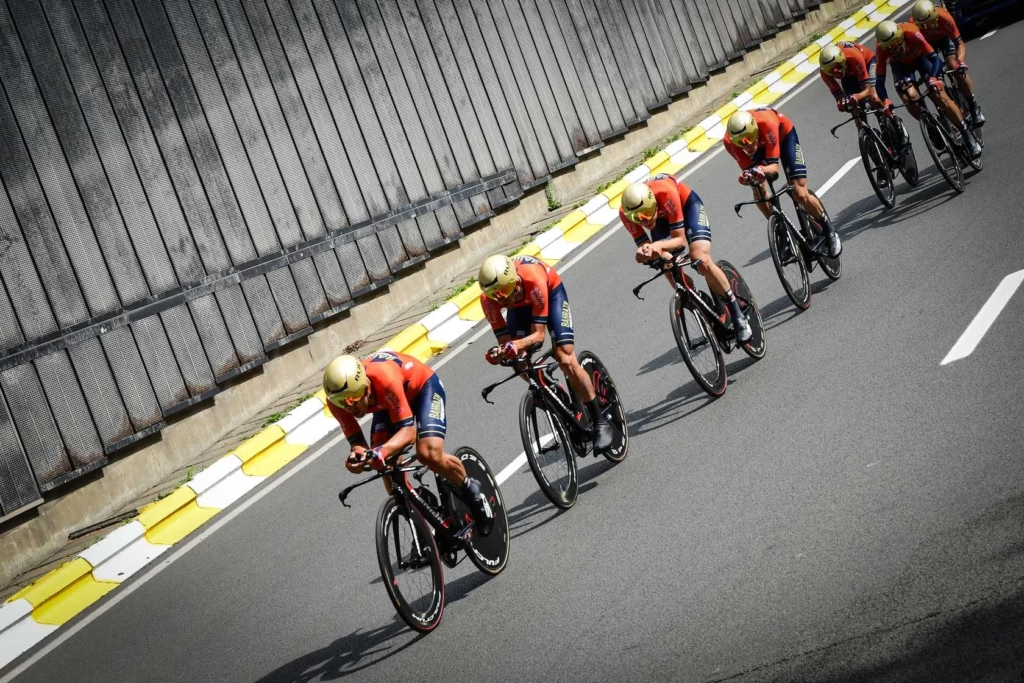
In the modern trade-team era, the team time trial has become a test of budget, planning and squad construction. It rewards teams with strong time-trial riders, aerodynamic equipment, disciplined formation work and riders who can hold high speed without breaking the line.
This is why it can be controversial. A GC contender does not choose their Tour team only for the TTT. They need climbers for the mountains, rouleurs for flat stages, domestiques for positioning, and sometimes a sprinter or stage hunter depending on team goals. A TTT can force a team to compromise.
Some squads are naturally suited to the discipline. Teams built around powerful rouleurs and time-trial specialists can gain time. Teams built mainly around climbers can struggle, especially on flat or rolling courses. If the stage includes climbs, the balance changes again because heavier riders may suffer while lighter GC riders become more useful.
The best Tour teams treat the TTT as a full project. They train formation changes, study corners, choose equipment carefully and decide beforehand which riders are expendable. The aim is not simply to start with eight riders and finish with eight riders. The aim is to get the leader to the line as fast as possible within the rules.
For the 2026 team picture, see our Tour de France 2026 team-by-team guide, full start list for Tour de France 2026 and best time-triallists at the Tour de France 2026.
Why team time trials are so fast
Team time trials are fast because riders share the aerodynamic burden. The rider on the front works hardest, while the riders behind benefit from drafting. A well-drilled team can maintain a speed that would be almost impossible for one rider to hold alone over the same distance.
The formation matters. On straight roads, a team may ride in a line, with each rider taking short turns. In crosswinds, the shape may change. Through corners, the team has to stretch, brake, accelerate and regroup without wasting energy. The faster the team goes, the more damaging each small error becomes.
The strongest riders often take longer turns. Weaker or lighter riders may take shorter pulls or skip turns if the pace is too high. On climbs, the formation can become less important than pacing, especially if the slope is steep enough to reduce the drafting benefit.
This is why a TTT is visually impressive. It looks smooth when done well, but underneath the movement there is constant calculation. How long should each rider pull? Who is struggling? Who can be dropped? Is the leader protected? Is the team still fast enough?
The discipline is not just about power. It is about collective speed under pressure. For a wider explanation of speed and race effort, see how fast do Tour de France riders go?.
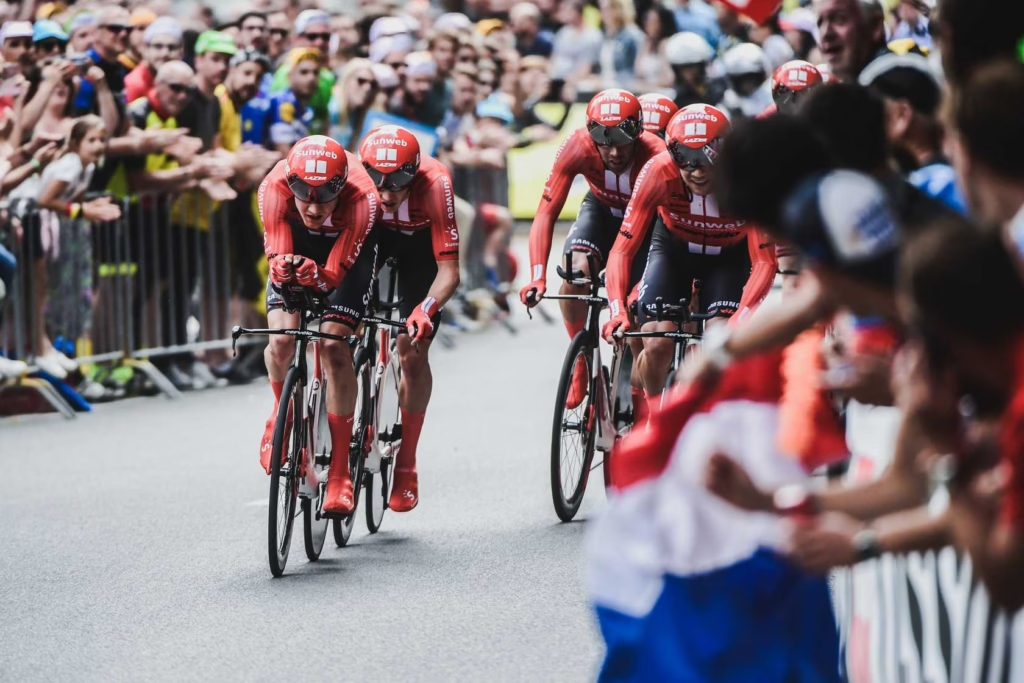 Photo Credit: A.S.O./Pauline Ballet
How team time trials affect the yellow jersey
The team time trial can be hugely important for the yellow jersey because it creates time gaps between GC contenders without those contenders necessarily racing directly against each other.
A strong GC rider can gain time because their team is excellent. A rival can lose time because their team is weaker, badly organised or missing key engines. That is the central controversy. The Tour is an individual general classification, but the TTT makes team strength visible in the standings.
That does not make it unfair by default. The Tour has always rewarded team strength. Leaders need domestiques in the mountains, protection in crosswinds and support in the final kilometres. The TTT simply measures that support in a direct, timed way.
The key question is scale. A short TTT may create gaps without deciding the race. A long TTT can reshape the GC more heavily. That is why organisers have often adjusted distance, placement and rules to manage its impact.
In 2026, the Barcelona stage is short enough not to settle the Tour, but technical and hilly enough to matter. It should create early gaps, test team depth and immediately show which leaders have the strongest support structure.
For the wider GC picture, see our Tour de France 2026 GC favourites ranked, Tour de France 2026 route analysis and how the Tour de France general classification works.
The fifth-rider rule and traditional TTT timing
Traditional team time trials have usually taken a team’s time on a set rider across the line, often the fourth or fifth rider depending on the race and period. This rule forces a team to keep a minimum number of riders together.
That detail matters. If the time is taken on the fifth rider, the strongest four cannot simply ride away and abandon the rest too early. The team must balance speed against survival. Riders can be dropped, but only once enough remain to record a valid time.
This creates tactical decisions inside the stage. A rider who is struggling may still be needed for a few more kilometres. Another rider may empty themselves early and then sit up. A leader may avoid taking long turns to stay fresh, but if they contribute too little the team may lose speed.
Traditional TTTs therefore reward collective pacing. The fastest team is not always the one with the strongest single rider. It is the one that best manages the line, the effort and the minimum number needed at the finish.
That is why changes to TTT rules matter so much. Altering how the time is taken changes the whole tactical purpose of the stage. The 2026 opener is covered in more detail in our Tour de France 2026 team time-trial explained guide.
The 2004 and 2005 capped time-loss rules
The Tour’s use of team time trials in the mid-2000s showed how difficult the discipline can be to balance. In 2004 and 2005, the race used rules that capped time losses based on team placing rather than allowing every team’s full deficit to count in the general classification.
The intention was clear. Organisers wanted the spectacle of the TTT without letting it destroy the overall race for leaders on weaker squads. If a team collapsed, the cap limited the damage. That made the stage less brutal in the standings, but also less pure as a sporting test.
This was controversial in its own way. If the point of a time trial is to race against the clock, why reduce the consequences? But if the TTT can punish a GC contender for factors beyond their individual control, why let it decide too much?
That debate has never fully disappeared. It is one reason the Tour has repeatedly changed how often it uses TTTs and how heavily it allows them to affect the yellow jersey.
The 2026 format is another attempt to solve the same problem, but in a different way.
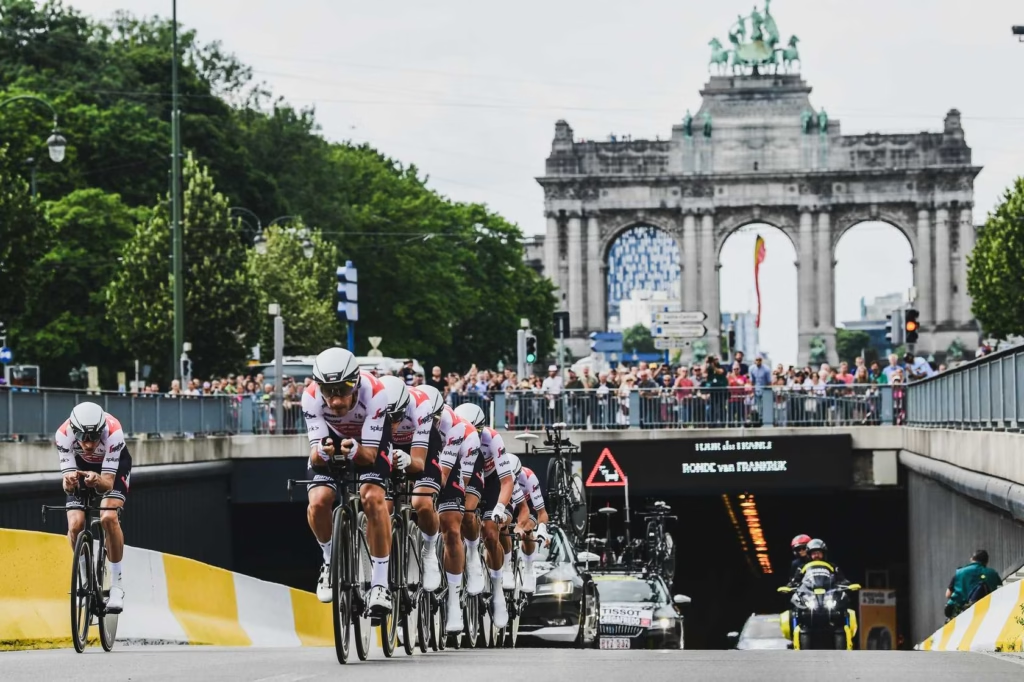 Photo Credit: A.S.O./Pauline Ballet
The TTT disappears and returns
The team time trial has never been a permanent Tour fixture. It has appeared in some editions and disappeared from others, depending on route design, sporting priorities and the organisers’ appetite for collective time gaps.
After 2005, the TTT was absent for several years before returning in 2009. It then appeared again in selected modern editions, including 2011, 2013, 2015, 2018 and 2019. That inconsistent pattern tells its own story. The Tour likes the TTT, but not every year.
The discipline is difficult to place. Early in the race, it can shape the GC too soon. In the middle, it can interrupt road-racing rhythm. Late in the Tour, it can feel too punishing when teams are already depleted. A crash, illness or abandonment before the stage can leave one team at a major disadvantage.
That is why the Tour tends to use the TTT as a special feature rather than a default. When it appears, it usually signals that organisers want an early structural test of team depth.
The 2026 Barcelona opener fits that pattern. It is short, high-profile, visually strong and designed to matter without overwhelming the race.
For the wider opening-week structure, see our Tour de France 2026 in Catalonia guide and Tour de France 2026 Pyrenees guide.
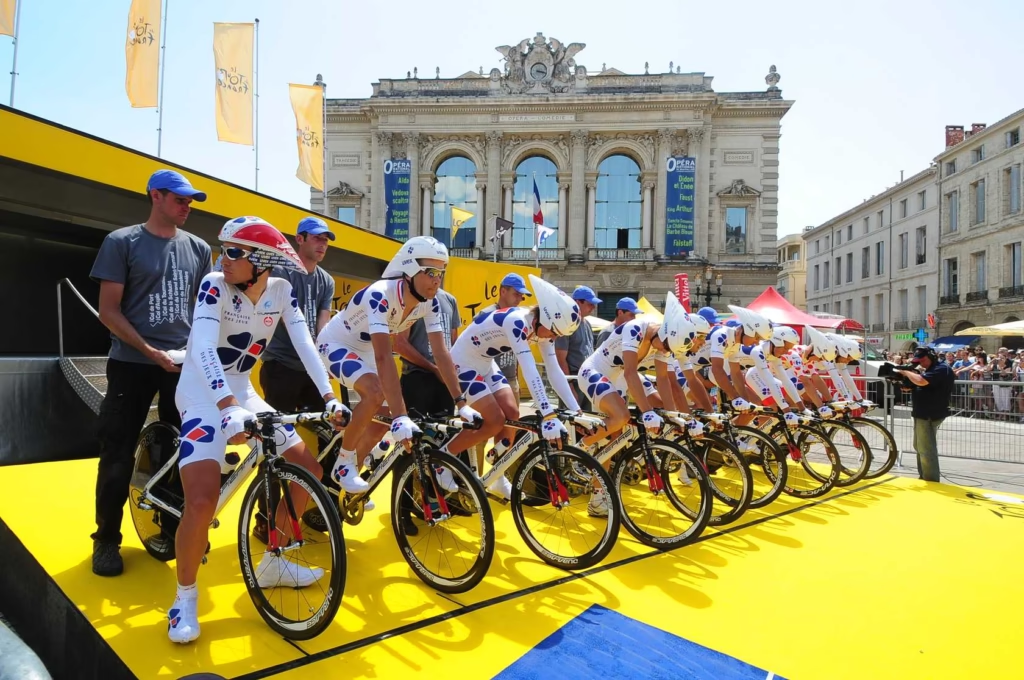 Photo Credit: A.S.O./Bruno Bade
2009: Astana and the modern GC TTT
The 2009 Tour brought the TTT back after a short absence and showed how sharply it could affect the general classification. Astana won the stage in Montpellier, using a powerful squad built around Alberto Contador, Lance Armstrong, Levi Leipheimer and Andreas Klöden.
That stage was important because it reinforced the TTT’s modern identity as a GC weapon. It was not only about a stage win. It was about time gained, pressure applied and hierarchy shaped. Astana’s strength made its leaders more secure, while rivals had to absorb early losses.
It also showed the problem for teams that were strong but not quite strong enough. In a team time trial, small differences in formation, cornering and depth can become meaningful gaps. Unlike a road stage, there is no hiding in the peloton.
The 2009 TTT helped remind the Tour why the discipline had been missed, and why it remained dangerous. It looked spectacular, but it also created immediate strategic consequences.
That is the balance organisers have chased ever since.
2011: Garmin-Cervélo and a narrow TTT win
The 2011 Tour included a team time trial around Les Essarts, won by Garmin-Cervélo. It was one of the modern examples of how the discipline can reward a squad built around power, cohesion and technical execution.
Garmin-Cervélo’s win also put Thor Hushovd into the yellow jersey, showing how the TTT can produce unusual race leadership. The first rider across the line from the winning team can become the yellow jersey wearer, even if that rider is not a long-term GC favourite.
That is part of the appeal. A TTT can create a different kind of opening-week story. Instead of the yellow jersey going only to a sprinter or prologue specialist, it can go to a rider whose team has delivered the fastest collective performance.
For GC contenders, the stage was still about avoiding damage. For the winning squad, it was about more than one rider. It was a team victory that placed an individual in yellow.
That contradiction is the essence of the Tour TTT. The stage belongs to the team, but the race still records an individual leader.
For a simple breakdown of what the yellow jersey represents, see our Tour de France 2026 jerseys explained.
2013: Orica-GreenEDGE and the fastest Tour TTT
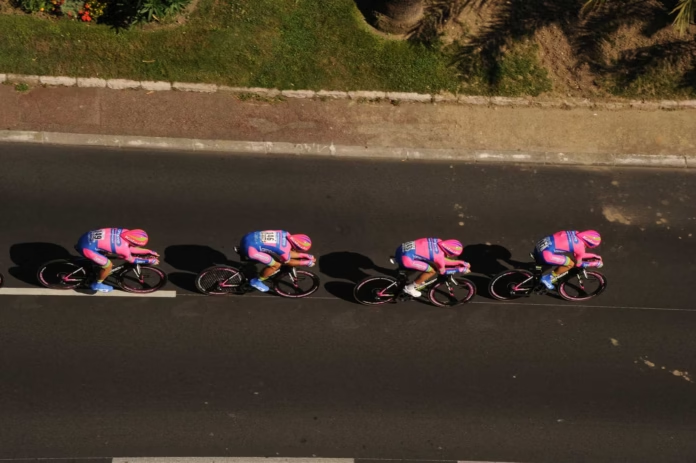
The 2013 Tour gave the team time trial one of its most famous modern performances. Orica-GreenEDGE won the 25km stage in Nice at extraordinary speed, putting Simon Gerrans into the yellow jersey.
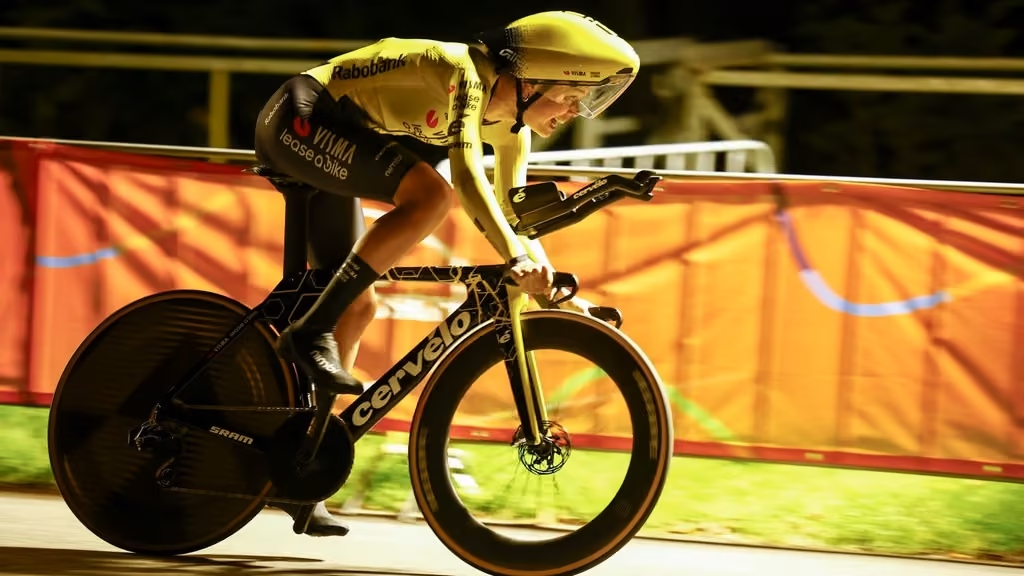
The stage was short, flat, fast and visually perfect for a TTT. It also showed how much the discipline had changed. Aerodynamics, equipment, rider specialisation and team rehearsal had made the TTT a highly polished performance. This was not simply a group of strong riders taking turns. It was a technical event.
Orica-GreenEDGE’s win remains one of the defining modern examples of the discipline. It was not a huge GC stage in the mountain sense, but it created a memorable yellow jersey change and gave the Tour one of its clearest displays of collective speed.
It also underlined why teams target TTTs so seriously. A squad without a likely overall winner can still make history through the discipline. The stage rewards identity, preparation and precision.
For newer fans, it is one of the best examples of why a team time trial can be worth watching even before the mountains arrive.
2015: BMC, Team Sky and fine margins
The 2015 Tour team time trial showed the discipline at its most finely balanced. BMC Racing Team won the stage to Plumelec, while Team Sky and Chris Froome limited the damage closely enough to keep control of the yellow jersey.
This was a reminder that TTTs do not need to create huge gaps to matter. A second here, a small hesitation there, one rider struggling in the final metres, and the stage result changes. At Tour level, the differences between elite teams can be tiny.
The stage also came just before the first rest day and after a brutal opening block. That made team condition especially important. A squad carrying injuries or fatigue could suffer badly. A team with depth and organisation could turn the stage into an advantage.
BMC’s victory showed the value of specialists and collective execution. Team Sky’s performance showed the other side: a GC squad does not always need to win the TTT, but it must avoid major losses.
That logic is still relevant in 2026. Pogačar, Vingegaard and Evenepoel do not all need to win the Barcelona TTT. But none of them can afford a bad day.
For those contenders, see our profiles on Tadej Pogačar at the Tour de France 2026, Jonas Vingegaard at the Tour de France 2026 and Remco Evenepoel at the Tour de France 2026.
2018: BMC win again, Van Avermaet takes yellow
The 2018 Tour included another BMC team time trial win, this time on stage 3 around Cholet. Greg Van Avermaet moved into the yellow jersey, again showing how the TTT can reward a powerful collective unit and produce an individual leader from that structure.
BMC had become one of the reference teams in the discipline. Their strength came from time-trial specialists, powerful classics riders and a culture built around precision. In a TTT, that combination is ideal.
The 2018 stage also mattered for GC. Teams with strong collective engines limited losses or gained time. Others had to start managing deficits earlier than they would have liked. In the Tour, even modest TTT gaps can influence how riders race later.
Van Avermaet in yellow also showed the TTT’s ability to give the race a different opening-week tone. A classics rider in yellow changes team priorities, media attention and stage tactics.
The TTT is not only a technical exercise. It changes the whole mood of the first week.
2019: Jumbo-Visma in Brussels
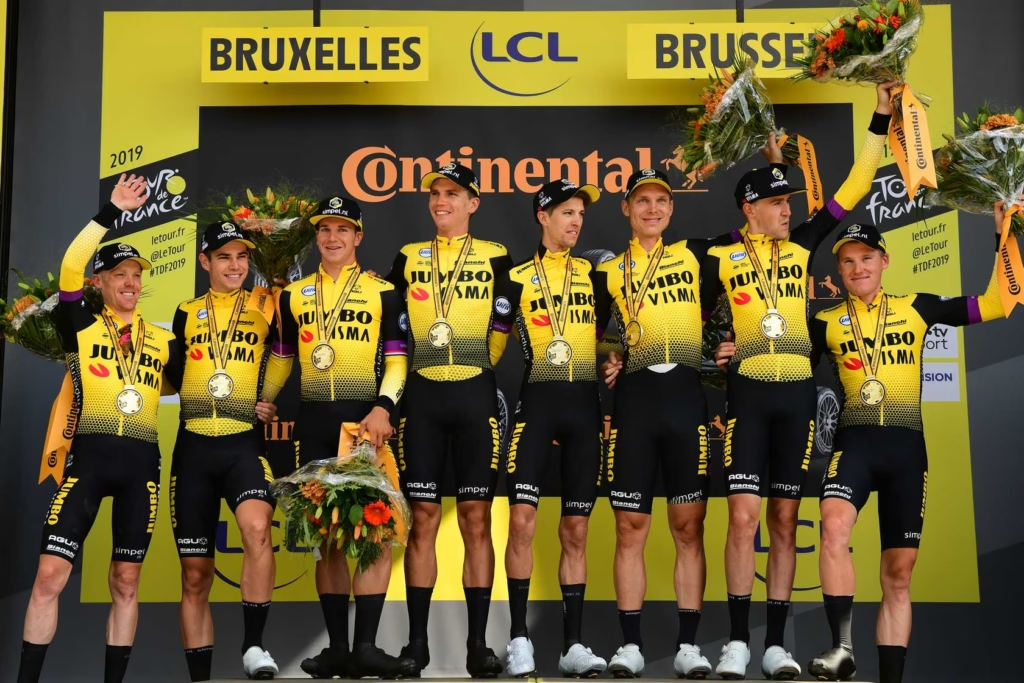
The last Tour team time trial before the 2026 return came in 2019, when Jumbo-Visma won in Brussels. It was a major statement from a team that was becoming one of the strongest collective forces in the sport.
The stage came one day after Mike Teunissen had taken yellow in the opening sprint. Jumbo-Visma then backed that up with a dominant TTT, keeping Teunissen in yellow and showing the depth that would soon define the team’s Grand Tour ambitions.
In hindsight, the 2019 TTT feels like part of a transition. Jumbo-Visma were moving from strong team to Tour-winning structure. Their time-trial organisation, powerful rouleurs and climbing depth would later become central to Jonas Vingegaard’s Tour victories.
It was also the last traditional modern reference point before the long TTT gap. The Tour did not use the discipline again from 2020 to 2025, making the 2026 Barcelona stage feel more significant.
For the current version of that team’s yellow jersey ambitions, see Jonas Vingegaard at the Tour de France 2026, Matteo Jorgenson at the Tour de France 2026 and our wider Tour de France 2026 GC favourites ranked.
Why the Tour stopped using TTTs every year
The Tour stopped using team time trials every year because they are difficult to balance. They can be spectacular, but they can also make the race feel unfair if one GC contender loses time mainly because their team is weaker.
There are also practical problems. TTTs require wide enough roads, safe corners, careful spacing and strong organisation. Crashes can be severe because riders are travelling at high speed in close formation. Rain or technical roads can increase risk.
The sporting issue is even bigger. The Tour wants to reward teams, but it also wants the yellow jersey to be decided by the strongest rider across three weeks. If a TTT is too long, it can create gaps that shape the whole race before the high mountains. If it is too short, it may feel like a spectacle without enough consequence.
Organisers have responded by using TTTs selectively. That makes each appearance feel more special, but also keeps the discipline from dominating the identity of the race.
The 2026 stage is a good example of that compromise: short, central, visually strong and given a new timing format.
The new 2026 Barcelona format
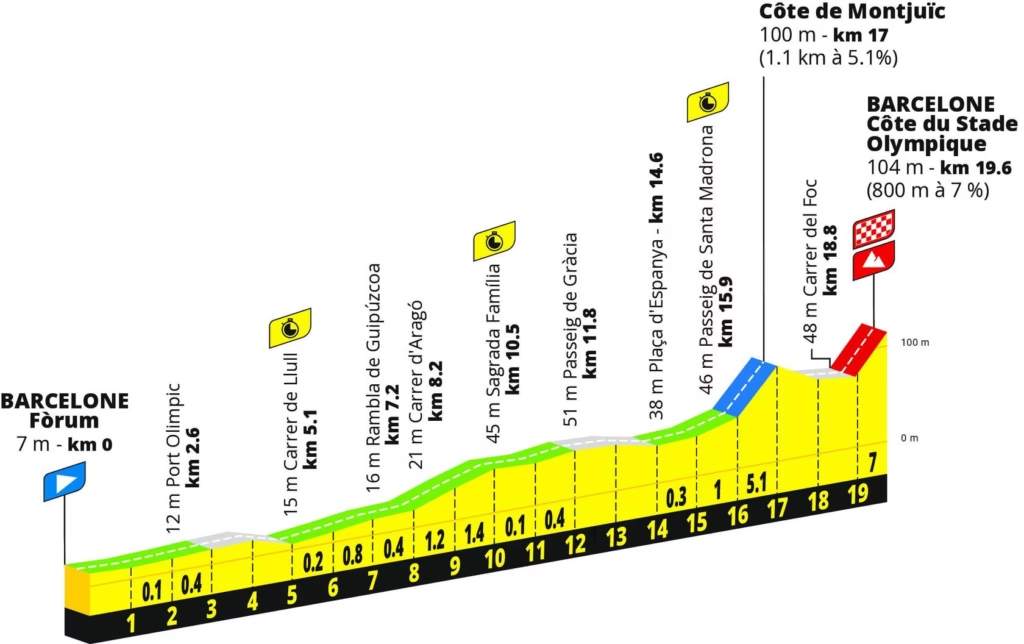
The 2026 Tour opens with a 19.6km team time-trial in Barcelona, but the format changes the traditional logic of the discipline. The team result is based on the first rider across the line, while individual general classification times are recorded separately.
That is a major shift. In a traditional TTT, the leader has to stay with the required number of teammates because the team time is taken on a set rider. In the 2026 format, the strongest leader could theoretically be launched by teammates and then finish faster individually.
This makes the stage feel closer to a team-assisted time trial than a pure old-style TTT. It still rewards team organisation, because the leader needs support for most of the course. But it also rewards individual strength in the final section, especially with the climb towards Montjuïc and the Stade Olympique.
The route matters here. A flat TTT might stay more collective. A hilly finish invites teams to use their strongest riders late. The result could look like a fast lead-out for GC leaders rather than eight riders finishing in a neat formation.
That is why the 2026 TTT has attracted so much attention. It brings back a historic discipline, but not in a museum-piece form. It updates it for a Tour that wants early GC gaps, television spectacle and tactical uncertainty from day one.
For the full stage breakdown, see our Tour de France 2026 team time-trial explained, how the Stage 1 team time-trial could change the Tour de France 2026 and Tour de France 2026 route analysis.
Why Barcelona suits a modern TTT
Barcelona is a strong setting for a modern team time trial because it gives the Tour a mix of spectacle, landmarks and technical pressure. The stage starts and finishes in the city, with a short distance, a coastal identity and a tougher final section around Montjuïc.
A TTT in a major city works visually. The speed is high, the teams are easy to compare, and the gaps can be followed clearly. The discipline also suits a Grand Départ because every team is still fresh, every leader is present, and the stakes are immediate.
The Montjuïc element changes the sporting character. This is not just a straight, flat power course. The final climb and urban roads should force teams to think carefully about pacing, rider order and whether to keep the group together or launch the leader.
For the race, that is useful. It means the opening day is not a procession. GC riders have to be alert from the first stage. Sprinters’ teams cannot simply wait for stage 2. Time-trial specialists, rouleurs and climbing leaders all have a role.
Barcelona also gives the TTT a sense of occasion. The Tour is not hiding the discipline on a mid-race industrial road. It is putting it at the centre of the Grand Départ.
For the city and fan angle, see how to visit the Tour de France 2026 Grand Départ in Barcelona, best places to watch the Tour de France 2026 in Barcelona and Tour de France 2026 in Catalonia: what fans need to know.
Which teams benefit most from a TTT?
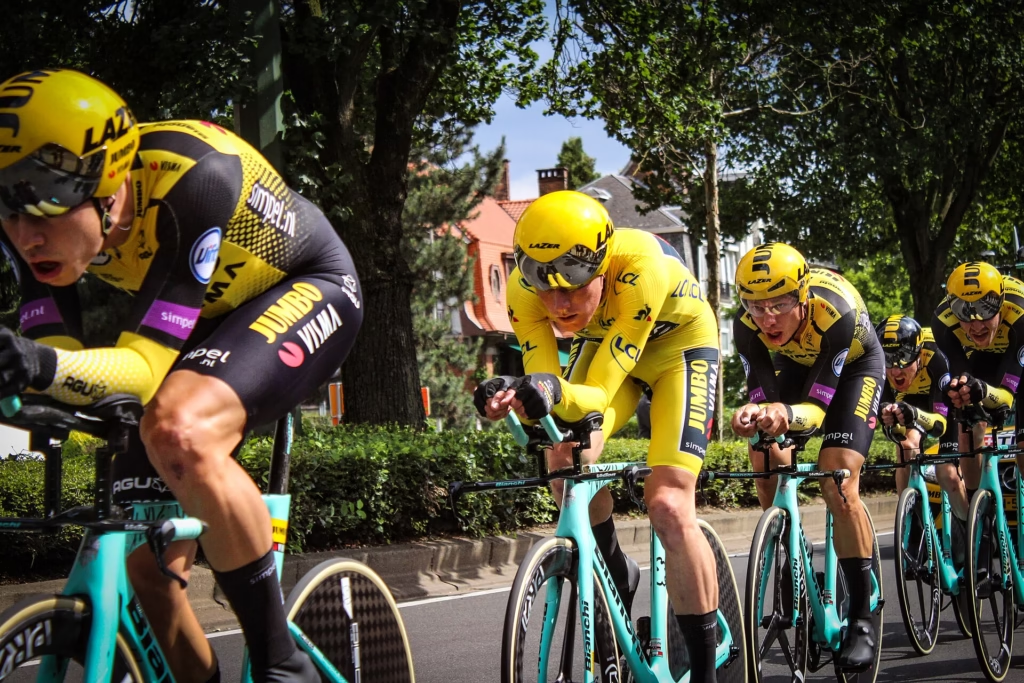
The teams that benefit most from a TTT are usually those with strong rouleurs, time-trial specialists, disciplined domestiques and a GC leader who can contribute without disrupting the formation.
In 2026, that immediately puts attention on UAE Team Emirates-XRG, Team Visma | Lease a Bike, Red Bull-BORA-hansgrohe and Netcompany INEOS. Those squads have the power, structure and GC leaders to make the Barcelona stage count.
UAE have Tadej Pogačar, Nils Politt, Brandon McNulty, Tim Wellens and other riders who can handle high-speed work. Visma have Jonas Vingegaard supported by riders such as Edoardo Affini, Victor Campenaerts and Matteo Jorgenson. Red Bull-BORA-hansgrohe have Remco Evenepoel, Mattia Cattaneo and Jan Tratnik. Netcompany INEOS have Filippo Ganna, Michał Kwiatkowski, Carlos Rodríguez and Kévin Vauquelin on the supplied startlist.
The interesting question is not only which team is fastest. It is which leader gains the most. A team could win the stage but leave a leader slightly exposed late. Another could lose the team result but place its GC rider perfectly.
That is the new 2026 puzzle.
For the full squad picture, see our Tour de France 2026 team-by-team guide, full start list for Tour de France 2026 and best time-triallists at the Tour de France 2026.
Why TTTs can hurt climbers
Team time trials can hurt climbers because the discipline often favours heavier, more powerful riders. On flat or rolling courses, big engines can hold high speed more easily, while lighter climbers may struggle to contribute as much in the line.
That does not mean climbers are useless in a TTT. A GC leader who climbs well but time-trials strongly can still be valuable, especially on hilly courses. But pure climbers on weaker teams can lose time if the course is fast and exposed.
This is one reason TTTs have often been criticised. A climber may be one of the best riders in the mountains but lose significant time because their team lacks power. In an individual time trial, that rider loses time through their own effort. In a TTT, the loss is more collective.
The 2026 route may soften that slightly because the Barcelona stage is short and includes a hilly finish. The climb towards Montjuïc should bring GC leaders more directly into the equation. But the early part of the course will still reward teams that can ride fast and cleanly.
A TTT is therefore not only a time-trial stage. It is a team-depth audit.
For how the mountains later shift the race back towards the pure climbers, see our Tour de France 2026 mountain stages ranked by difficulty and Tour de France 2026 summit finishes guide.
Why TTTs can help GC teams
For strong GC teams, the TTT is a chance to gain time without making a mountain attack. That can be hugely valuable. A leader who starts the race with a 20-second advantage can ride differently in the first week.
It also sends a message. A strong TTT shows that a team is prepared, disciplined and deep. It reassures the leader and puts rivals under pressure. Even if the time gaps are not huge, the psychological effect can be real.
A good TTT can also influence later tactics. A rival who loses time may need to attack earlier in the mountains. A leader who gains time can be more patient. Teams may decide whether to defend or chase based partly on those early gaps.
This is why the Barcelona opener matters so much. The race will still be long, with the Pyrenees, Massif Central, Vosges, Jura and Alps to come. But the TTT can set the opening hierarchy before any of that terrain arrives.
For the later GC battle, see Tour de France 2026 route: best days for GC attacks, Tour de France 2026 Pyrenees guide and Tour de France 2026 mountain stages ranked by difficulty.
The TTT and the first yellow jersey
A team time trial can decide the first yellow jersey in an unusual way. In a traditional format, the first rider from the winning team to cross the line can take the race lead, assuming no previous time gaps or bonuses change the situation.
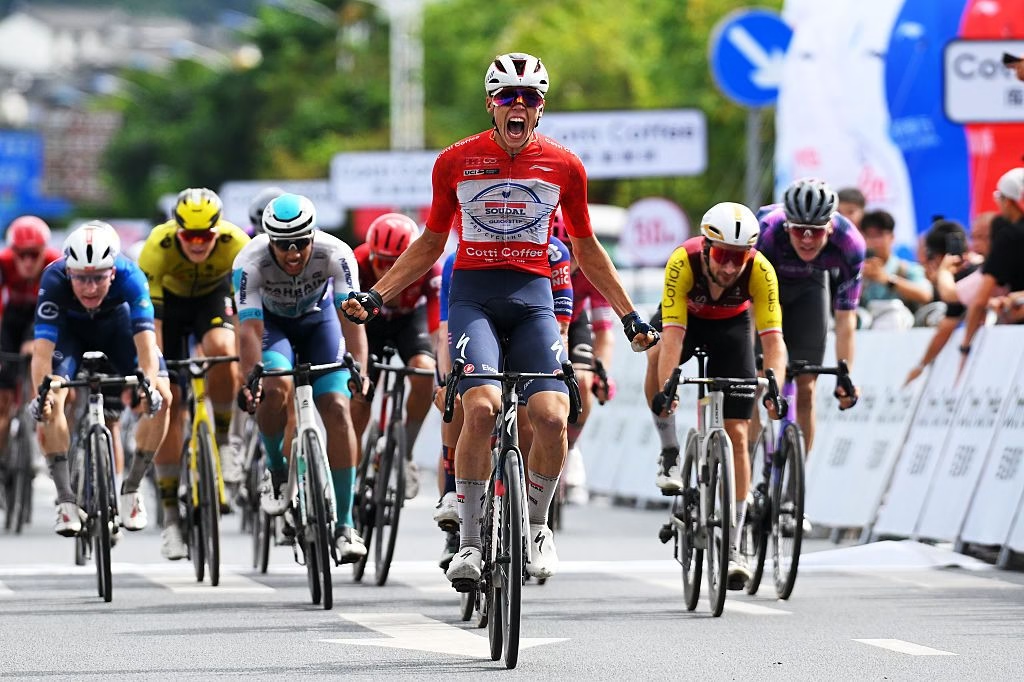
That can produce interesting yellow jersey wearers. A sprinter, classics rider or powerful rouleur can wear yellow because their team delivered the fastest collective ride. Thor Hushovd in 2011, Simon Gerrans in 2013 and Greg Van Avermaet in 2018 are examples of riders whose yellow jersey moments were tied to team time-trial success.
In 2026, the revised format adds another layer. Because individual times count separately, teams may need to decide which rider they want to launch towards yellow. A GC leader could take it. A powerful teammate could take it. A team could win the stage but still have internal timing choices to manage.
That makes the first yellow jersey less predictable than a flat sprint opener, but more strategic than a simple prologue.
For more on the jersey itself, see Tour de France 2026 jerseys explained and how the Tour de France general classification works.
The spectacle of the team time trial
The team time trial has always been visually distinctive. A road stage is messy, fluid and tactical. A TTT is clean, sharp and structured. Teams appear one after another, each trying to make eight riders look like one unit.
For television, it works well because comparisons are constant. Time checks show which teams are up or down. Cameras can follow formations, cornering and individual riders losing contact. The discipline is easy to explain visually, even if the tactics underneath are more complicated.
It also gives fans a rare chance to judge whole teams directly. In a road stage, one team may hide in the peloton for hours. In a TTT, no one can hide. Every rider has to contribute, survive or accept being dropped.
That is part of the beauty. The team time trial is controlled chaos. It looks smooth because the best teams make it look smooth. But one missed turn, one poor corner or one rider on the limit can disrupt everything.
The Tour does not need a TTT every year, but when it uses one well, the race feels different. For UK viewers planning around the race, see how to watch Tour de France 2026 in the UK.
Why some fans dislike team time trials
Some fans dislike team time trials because they can feel unfair to strong riders on weaker teams. The Tour de France is won by an individual, but the TTT can give or take time based on collective strength.
There is also a tactical criticism. A TTT can encourage conservative racing before and after the stage. If a leader gains time, they may ride defensively. If a rival loses time, they may be forced into predictable attacks later. Organisers have to be careful that the TTT adds tension rather than reducing it.
Another issue is risk. Riders race in close formation at high speed, often on technical roads. Crashes can affect several teammates at once. If a team has already lost riders earlier in the race, it may be badly disadvantaged.
But the counter-argument is strong. Cycling is a team sport, even when the winner is an individual. The Tour is not only about climbing and sprinting. It is also about organisation, support, equipment and discipline. The TTT measures those things directly.
That debate is why the discipline keeps returning, but not every year.
-
 Photo Credit: Cor Vos
 -
 Photo Credit: Zac Williams/AusCycling

Why team time trials still belong in the Tour
Team time trials still belong in the Tour because they test something no other stage tests in quite the same way. Road stages test positioning, endurance and tactics. Individual time trials test one rider against the clock. Team time trials test collective speed.
That is valuable. The Tour de France should reward complete riders and complete teams. A yellow jersey contender needs support across every kind of terrain. The TTT simply makes that support visible.
It also creates variety. A three-week race needs different kinds of challenges: sprints, mountains, summit finishes, crosswinds, breakaway days, individual time trials and team tests. Without variety, the race becomes narrower.
The key is moderation. A short, sharp TTT can add tension without deciding the race. A long, flat TTT can create bigger gaps and more controversy. The best use of the discipline depends on distance, course design and timing.
Barcelona 2026 looks like a deliberate attempt to bring the TTT back in a controlled but meaningful way.
For more on how the rest of the route balances that opening test, see our Tour de France 2026 full route guide and Tour de France 2026 route analysis.
Team time trials explained simply
A team time trial is when each team rides together against the clock. Riders take turns on the front, share the wind and try to get their leader and enough teammates to the finish as quickly as possible.
It matters in the Tour de France because the time gaps can affect the general classification. A strong team can help its leader gain time. A weaker team can leave its leader behind before the mountains even begin.
The discipline has appeared in many forms through Tour history, from early team-start experiments in the 1920s to modern high-speed tests in 2009, 2011, 2013, 2015, 2018 and 2019. It returns in 2026 with a new format on the opening stage in Barcelona.
That return matters because it brings back one of the Tour’s purest team tests. The yellow jersey may still be won in the mountains, but the first gaps of the 2026 race could come from eight riders trying to move through Barcelona as one.
For more Tour de France explainers, see our beginner’s guide to Men’s Tour de France 2026, what is a summit finish in the Tour de France? and what is a breakaway in the Tour de France?.

