
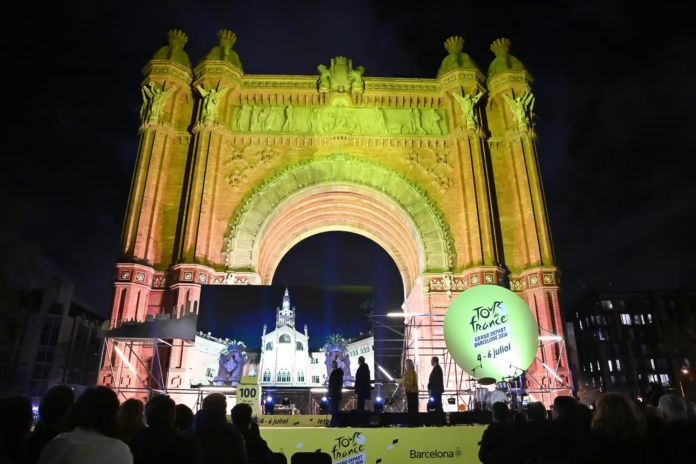
The Tour de France 2026 starts in Catalonia with one of the most attractive Grand Départs of recent years. Barcelona hosts the opening stage, Tarragona sends off stage 2, Granollers hosts the start of stage 3, and the race then heads north towards the Pyrenees and France. For fans, that means three days of Tour de France racing in a compact, accessible part of north-east Spain.
It is also not just a ceremonial start. The 2026 Tour begins with a team time-trial in Barcelona, then follows with a difficult stage from Tarragona back to Barcelona, finishing with repeated climbs of Montjuïc. Stage 3 then starts in Granollers and heads to Les Angles, taking the race into the mountains early. The opening weekend will not decide the Tour outright, but it can shape the first yellow jersey battle, the early GC gaps and the mood of the whole race.
That makes Catalonia a strong trip for fans who want more than a roadside glimpse. Barcelona offers an urban team time-trial with landmarks, crowds and public transport access. Tarragona gives stage 2 a coastal start. Montjuïc gives fans a repeat viewing point on the same climb. Granollers offers a more traditional stage-start atmosphere before the race moves towards the Pyrenees.
For the wider race picture, see our Tour de France 2026 full route guide, Tour de France 2026 route analysis and how to visit the Tour de France 2026 Grand Départ in Barcelona.
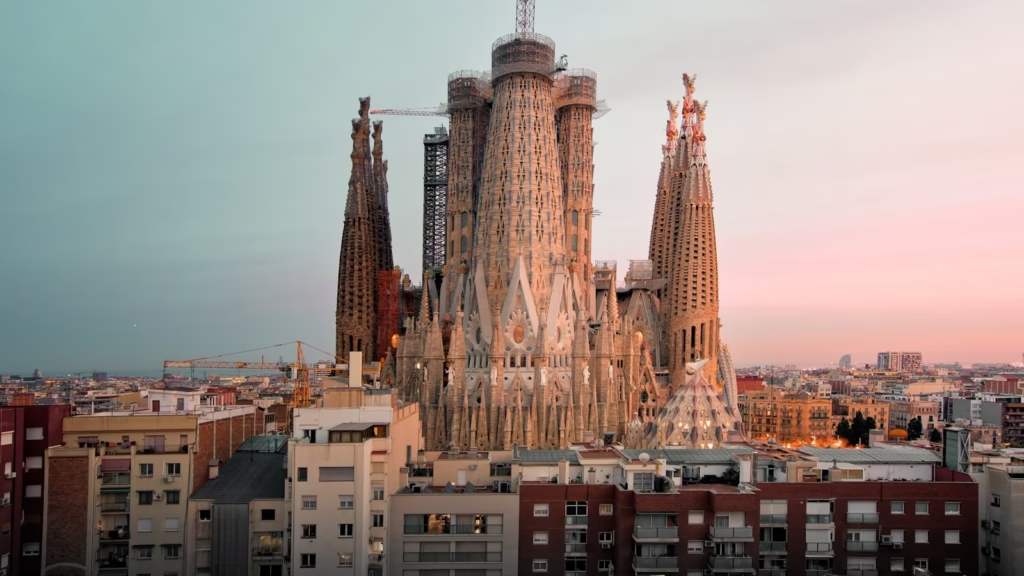
When is the Tour de France 2026 in Catalonia?
The Catalan Grand Départ runs from Saturday 4 July to Monday 6 July 2026.
| Date | Stage | Route | Type |
|---|---|---|---|
| Saturday 4 July 2026 | Stage 1 | Barcelona to Barcelona | Team time-trial |
| Sunday 5 July 2026 | Stage 2 | Tarragona to Barcelona | Hilly stage |
| Monday 6 July 2026 | Stage 3 | Granollers to Les Angles | Mountain stage |
Stage 1 is the headline city event. Stage 2 gives fans a road stage with a coastal start and a hard Barcelona finish. Stage 3 is the bridge from the Grand Départ atmosphere into the first mountain phase of the Tour.
The key planning point is that Barcelona will be busy across the whole weekend. Fans staying in the city can see stage 1 and the finish of stage 2 without needing a car, but anyone trying to see Tarragona, Granollers or the Pyrenees will need to plan transport carefully. For more on why the city was chosen, see our feature on why Barcelona is hosting the 2026 Tour de France Grand Départ.
Stage 1: Barcelona to Barcelona team time-trial
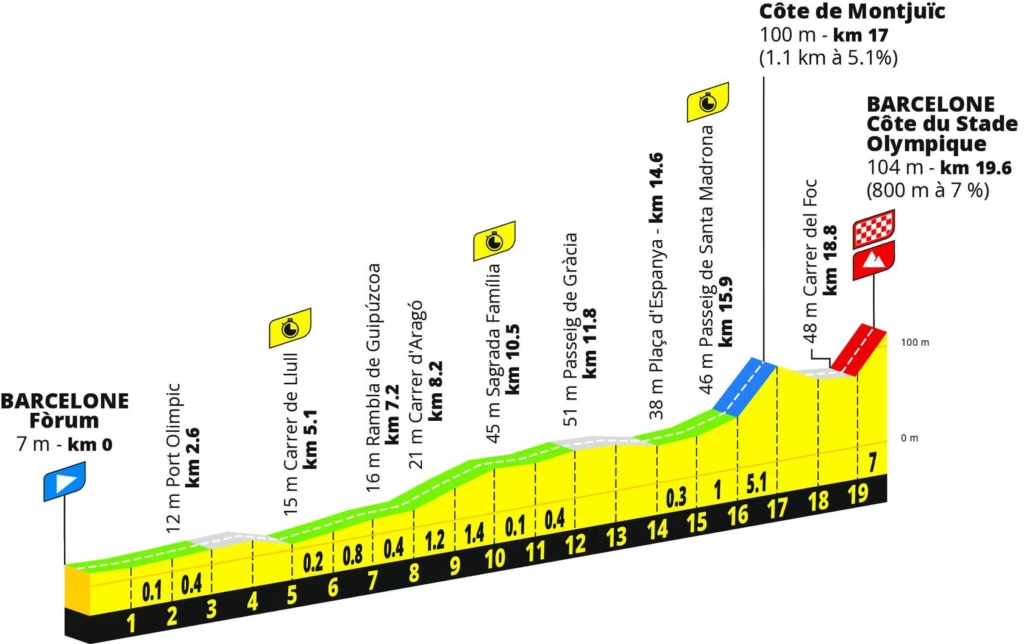
The 2026 Tour opens with a 19.6km team time-trial in Barcelona. It starts by the Mediterranean seafront, uses fast urban roads, passes major city landmarks and finishes on Montjuïc. For spectators, it is an excellent opening stage because the teams pass in sequence rather than in one single peloton. That means more time watching riders at race speed.
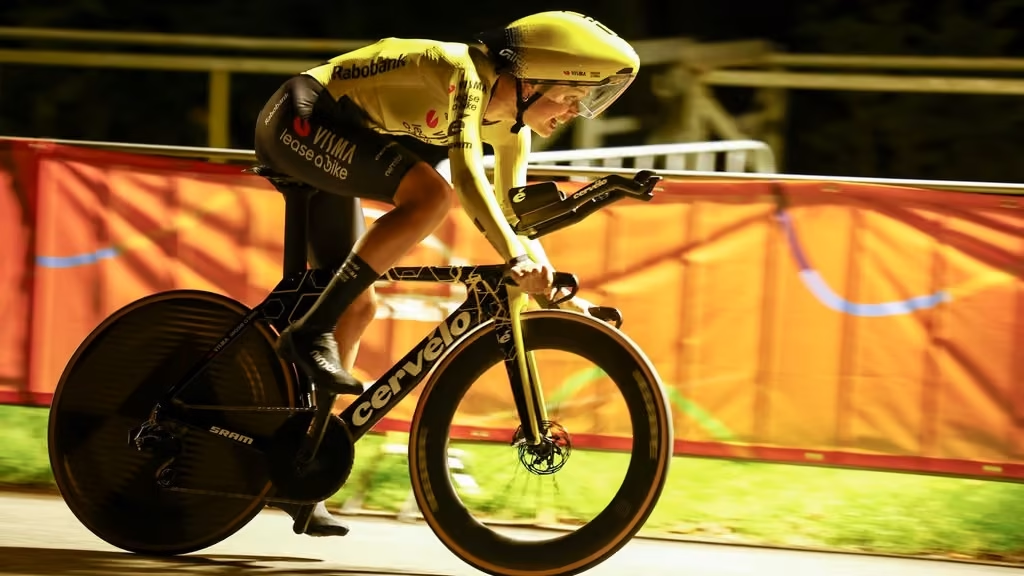
The format also matters. Team time-trials are visually dramatic because riders stay in formation, rotate turns and hold very high speeds through technical sections. In Barcelona, that should be especially striking because the course moves from open, fast city roads towards a more demanding finish.
Montjuïc is the obvious focal point. It gives the stage an uphill conclusion and creates a strong viewing area for fans who want effort, noise and atmosphere rather than a flat high-speed blur. The downside is that it will be one of the most crowded places on the route.
Fans who want easier access may prefer earlier parts of the course near the seafront or broader city boulevards. These areas should offer more space, though final route barriers, access points and crowd-control plans will decide what is realistic on the day.
For the race implications, see our Tour de France 2026 team time-trial explained and how the stage 1 team time-trial could change the Tour de France 2026.
Best places to watch stage 1 in Barcelona
The best viewing point depends on what kind of experience you want.
Montjuïc is the best option for atmosphere and race difficulty. The climb should make the speed differences more visible, and the finish area will carry the biggest sense of occasion. It is the place to be if you want to see riders under pressure.
The seafront is better for speed. The opening section of the course should show teams still organised, aerodynamic and fully committed. It may also be easier for fans who want to combine the race with a more relaxed day in the city.
Areas around major landmarks may be visually impressive, but they will also attract heavy crowds. If you are aiming for a famous backdrop, arrive early and expect movement restrictions.
The finish zone will be the hardest place to access without planning. Grand Départ finishes are busy even before the Tour caravan and teams arrive. If your priority is seeing the race clearly rather than being near the podium, a less obvious roadside location may be smarter.
For a more detailed visiting plan, see our Barcelona Grand Départ travel guide.
Stage 2: Tarragona to Barcelona
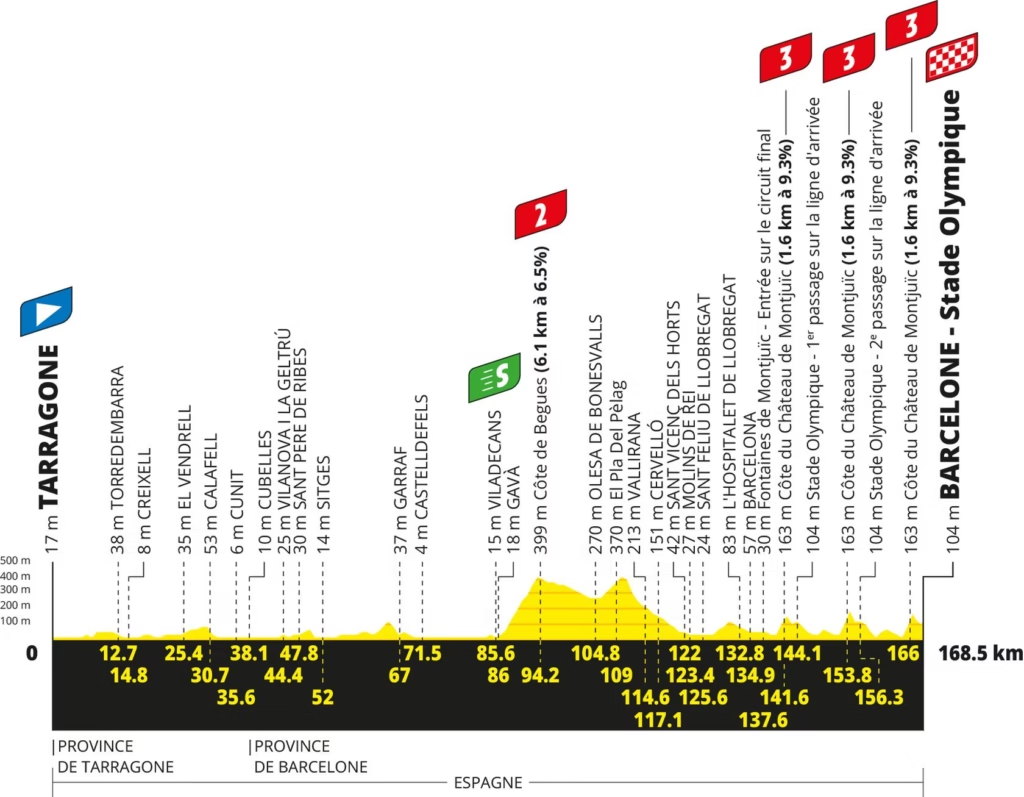
Stage 2 takes the Tour from Tarragona back to Barcelona. This is not a simple procession along the coast. The stage becomes harder as it approaches the city, then finishes with a demanding Montjuïc circuit. That makes it one of the most interesting early stages for fans and one of the first proper tests for the riders.
Tarragona gives the stage a different feel from Barcelona. It should be a strong option for fans who want a start-line experience rather than the bigger city crowds. Stage starts usually allow spectators to see riders sign on, teams prepare bikes, staff organise vehicles and the race village come to life. It is slower and more personal than watching the bunch flash past at race speed.
Barcelona is the better option for the decisive racing. The Montjuïc climb will be reached multiple times, which makes it especially attractive for spectators. A repeated circuit means fans can see the race more than once from the same general area, depending on access and barriers.
This stage could already create GC movement. A punchy finish in Barcelona will not suit every sprinter, and the repeated climbing gives puncheurs, GC riders and aggressive teams a reason to race hard. For the broader opening-week impact, see our Tour de France 2026 route: best days for GC attacks.
Best places to watch stage 2
For the full race build-up, Tarragona is the best choice. Stage starts give fans access to the atmosphere before the racing begins, and the city should feel fully part of the Grand Départ weekend. It is also likely to be more manageable than trying to move around Barcelona once the stage finish restrictions are in place.
For the racing itself, Montjuïc is the obvious target. The repeated climb means the crowd can build around one decisive section, and the riders will be under real pressure each time they come through. It should be one of the most atmospheric places in the whole Catalan opening.
For fans who want fewer crowds, the approach roads into Barcelona may be worth considering once the detailed route and closures are confirmed. The trade-off is that you may only see the race once and may have less public transport flexibility.
The best practical plan is to choose either Tarragona or Barcelona for stage 2, not both. Trying to watch the start and then race the Tour to the finish is rarely worth the stress, especially with road closures and heavy crowds.
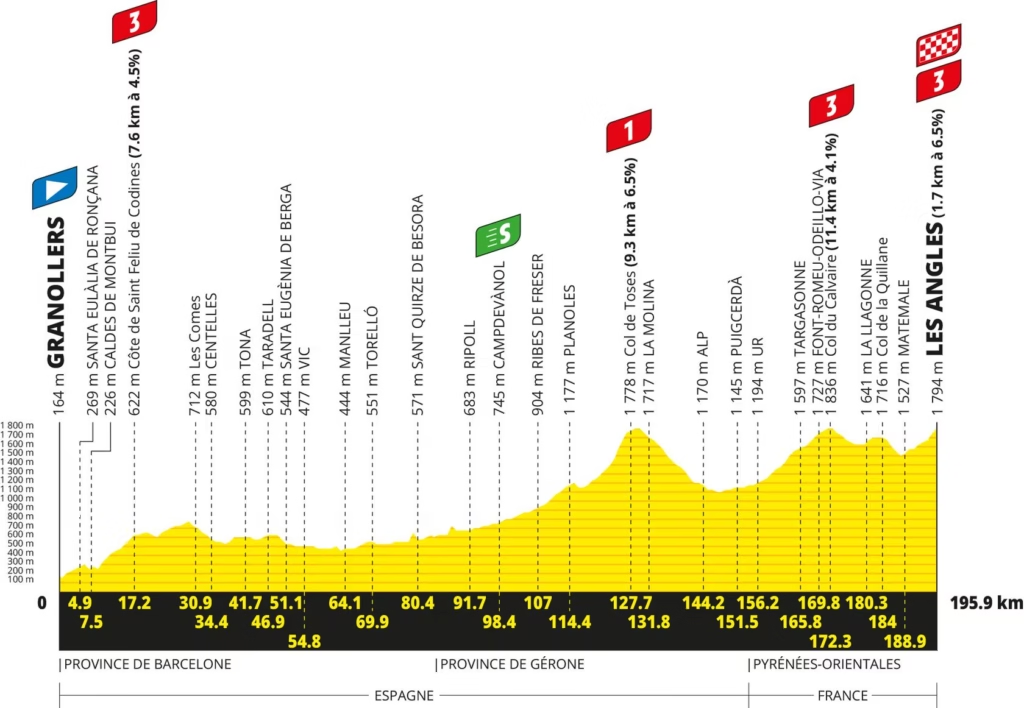
Stage 3: Granollers to Les Angles
Stage 3 starts in Granollers and heads north towards Les Angles in the Pyrenees. This is the point where the Grand Départ shifts from Catalan city racing into the first mountain phase of the Tour.
For fans based in Barcelona, Granollers is the most accessible part of stage 3. It offers a stage-start experience without needing to travel deep into the Pyrenees. That makes it a good choice for visitors who want one more Tour morning before flying home or staying in Barcelona.
For fans with more time, stage 3 can become the start of a Pyrenean road trip. The route towards Les Angles will pull the race into more mountainous terrain, and the atmosphere will change quickly from city spectacle to climbing test. That is where the Tour begins to feel like a Grand Tour rather than only a Grand Départ.
The important planning point is distance. Granollers is manageable from Barcelona. Les Angles is not a casual day trip once race traffic and mountain access are considered. If you want to watch the finish, stay closer to the Pyrenees and expect access restrictions.
For the wider early mountain context, see our Tour de France 2026 Pyrenees guide and Tour de France 2026 summit finishes guide.
Barcelona or Tarragona: where should fans base themselves?
Barcelona is the easiest base for most fans. It has the largest choice of flights, hotels, restaurants and public transport, and it gives you direct access to stage 1 and the stage 2 finish. If this is your first Tour de France trip, Barcelona is the simplest option.
Tarragona is better if you want a slightly calmer base and a strong stage 2 start experience. It is also a good choice for fans who want to combine the Tour with the Costa Daurada rather than staying in the busiest part of Barcelona.
Granollers is useful for stage 3, but less obvious as a main base unless you are specifically chasing the stage start or heading north afterwards. It works best as a practical stop rather than the centre of the trip.
For a three-day fan itinerary, Barcelona is the safest base. For a two-day city-and-coast trip, Barcelona plus Tarragona works well. For a more serious cycling trip, Barcelona to Tarragona to the Pyrenees is the more ambitious option.
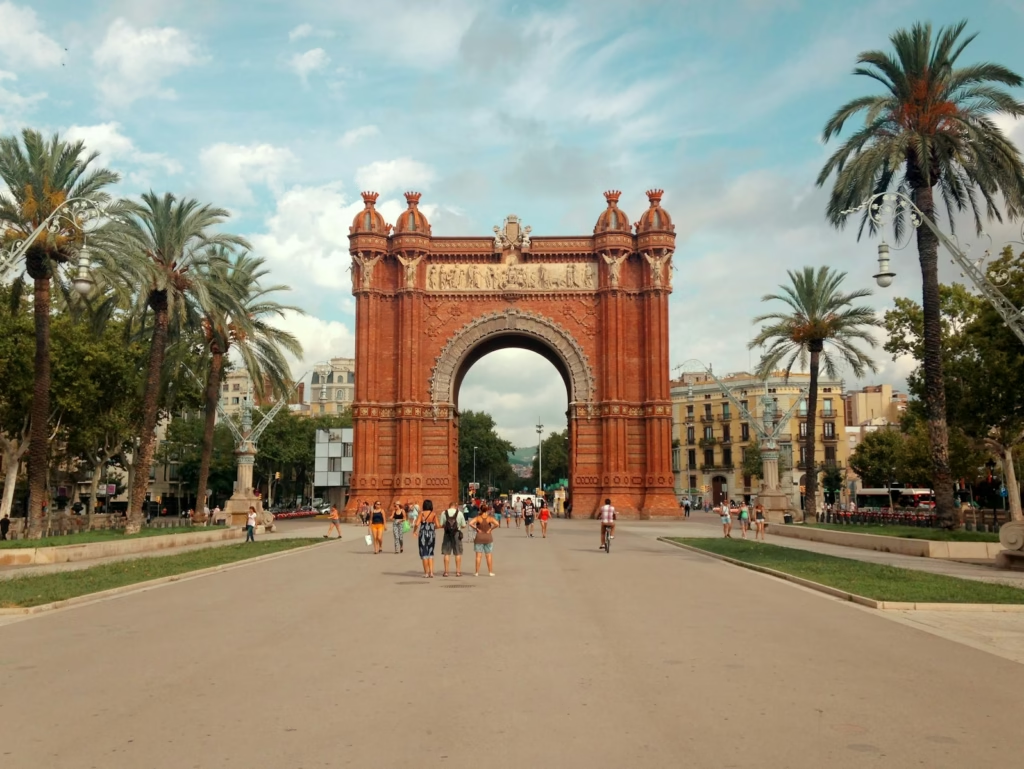
How to get around during the Catalan Grand Départ
Public transport should be the default option inside Barcelona. Driving into or across the city during a Tour stage is likely to be slow, restricted and frustrating. Road closures can begin well before the race arrives, and team buses, race vehicles, barriers and crowds all change normal traffic patterns.
For stage 1, use the metro, tram, suburban trains or walking routes where possible. Choose your viewing area before travelling and avoid assuming you can cross the course freely once barriers are in place.
For stage 2, trains between Barcelona and Tarragona may be useful for fans watching the start, but allow more time than usual and expect crowds. If you are watching the finish in Barcelona, stay in the city and move early.
For stage 3, Barcelona to Granollers is the most realistic public-transport move. Travelling from Barcelona to the Les Angles finish on race day is much more complicated and may require staying closer to the mountains.
The golden rule is simple: do not plan like it is a normal weekend in Catalonia. Plan like the Tour is closing roads, filling trains and changing the city timetable.
Will roads be closed?
Yes. Road closures are an unavoidable part of watching the Tour de France. Exact closure times will depend on the final local traffic plans, but fans should expect restrictions several hours before the riders arrive, especially around starts, finishes, climbs, technical sections and team areas.
In Barcelona, closures around Montjuïc, the finish zones and the team time-trial route will be especially important. On stage 2, the repeated Montjuïc circuit will make access more complicated because roads may be controlled for longer than on a normal point-to-point stage.
In Tarragona and Granollers, start areas will also have barriers, team bus zones and restricted access. That can be part of the appeal because fans can see the race infrastructure close up, but it also means normal routes through the city may not work.
If you are staying in Barcelona, check whether your hotel is inside or near a race closure zone. That matters for taxis, luggage, airport transfers and any plan to leave early on race day.

How early should fans arrive?
For the most popular spots, early means early morning. Montjuïc on stage 1 and stage 2 will be busy because it combines race difficulty, city access and a strong visual setting. Fans wanting a good position should not assume they can arrive shortly before the race.
For stage starts in Tarragona and Granollers, arriving early gives you more time to enjoy the team area, caravan atmosphere and sign-on. Once the crowd thickens, moving between buses, barriers and viewing points becomes harder.
For less obvious roadside locations, you may not need to arrive quite as early, but the same principle applies: once roads close, your options narrow. It is better to be in place too soon than stuck on the wrong side of the course.
Bring water, sun protection, food and patience. July in Catalonia can be hot, and Tour days involve waiting.
What should fans bring?
A Tour stage is a long outdoor day, even in a city. Fans should bring water, sunscreen, a hat, comfortable shoes, a portable phone charger and enough food to avoid relying completely on nearby cafés or shops.
For Barcelona, comfortable walking shoes matter more than anything. You may need to walk further than expected because of closures. A small bag is better than anything bulky, especially in dense crowds.
For the Pyrenees or stage 3 finish areas, bring layers as well as sun protection. Mountain weather can shift, and a long wait at altitude can feel very different from a morning in Barcelona.
A printed or saved offline map is also sensible. Mobile data can struggle in crowds, and road closures can make normal navigation apps misleading.
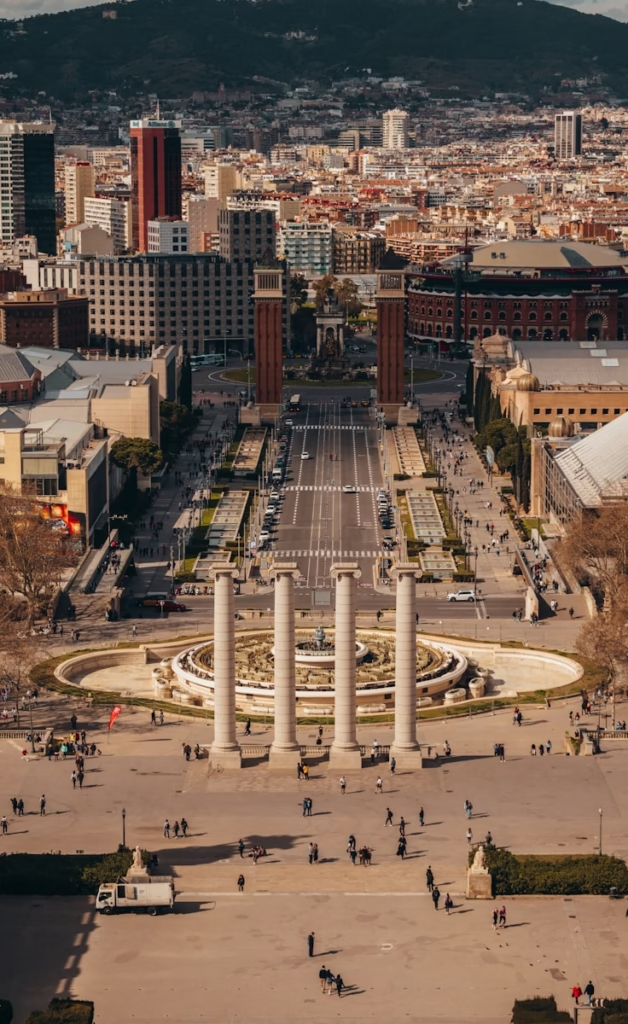
Can fans ride parts of the route?
Some fans will be tempted to bring bikes or hire them in Barcelona. That can be a good idea, but it needs care. The Tour route itself will be closed and controlled on race day, so do not assume you can ride on the course close to race time.
Barcelona is a bike-friendly city in many areas, but Tour weekend will not be a normal cycling weekend. Use marked cycling routes, avoid closed roads and follow police instructions. If you want a proper ride, do it away from the race route or on the days before and after the Grand Départ.
Montjuïc is an obvious cycling landmark, but it will also be one of the busiest parts of the race. Riding there on the morning of the stage may become impractical once closures and crowds build.
For fans wanting a cycling holiday, the smarter approach is to use the Tour weekend as the anchor, then ride before or after the stages rather than trying to combine a long ride with race-day logistics.
Is the Catalan Grand Départ good for families?
Yes, especially in Barcelona, but it needs planning. The team time-trial format on stage 1 is family-friendly because the action lasts longer than a standard road stage. Instead of waiting hours for one short peloton pass, fans see team after team ride through.
The challenge is crowd density. Montjuïc and the finish areas may be too busy for young children if you arrive late or try to stand in the most popular spots. A wider roadside section earlier in the stage may be easier.
Stage starts can also work well for families because they are slower and more interactive. Tarragona or Granollers may offer a more relaxed way to see riders, team buses and the Tour caravan.
For families, the best plan is not necessarily the most famous viewing point. It is the place with space, shade, toilets, food access and an easy exit.
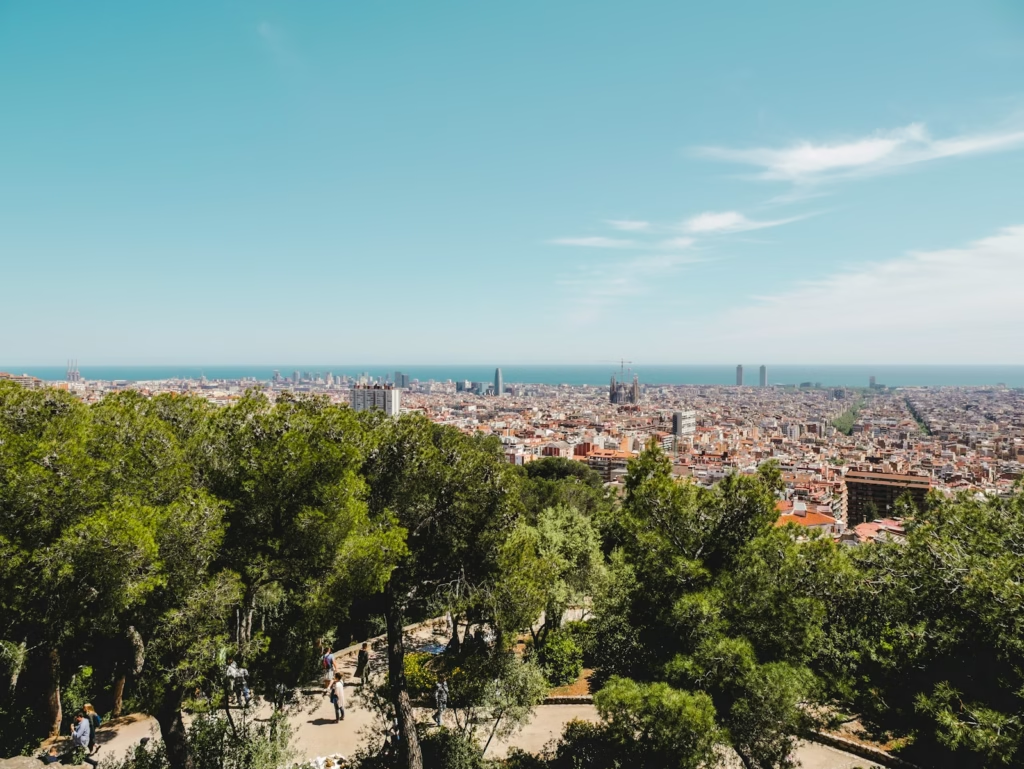
What makes Montjuïc so important?
Montjuïc is the sporting centre of the Catalan Grand Départ. It appears in the stage 1 team time-trial and again in the stage 2 finale. That means it can shape the yellow jersey battle on consecutive days.
The climb is not long enough to decide the Tour, but it is steep and awkward enough to create gaps, especially in a team time-trial or a hilly stage finish. Riders who are poorly positioned, isolated or already struggling can lose time quickly.
It also gives the race a visual identity. Barcelona has many landmarks, but Montjuïc provides the racing drama. It is where the opening weekend moves from spectacle to selection.
For fans, that makes it both the best and busiest place to watch. If you want atmosphere, go to Montjuïc. If you want space, look elsewhere.
What race action should fans expect?
Stage 1 should be about teamwork, time gaps and the first yellow jersey. The strongest squads will try to keep their GC leaders protected while still riding fast enough to challenge for the stage. The final climb towards Montjuïc could expose weaker teams or riders who cannot hold formation.
Stage 2 should be more aggressive. The route from Tarragona to Barcelona gives teams time to control the race, but the Montjuïc finish makes a pure sprint unlikely. Puncheurs, GC riders and aggressive all-rounders could all be involved.
Stage 3 should begin the first mountain phase. It is early enough that many riders will still be fresh, but hard enough to make the Tour feel serious. The race will not wait until France to test the general classification contenders.
For fans, that means all three Catalan days matter. This is not a parade start. It is a proper opening sequence. The first yellow jersey picture is explained further in our Tour de France 2026 jerseys guide.
How expensive will it be?
Barcelona is already a major tourist city, and the Tour will increase demand for hotels and short stays. Prices are likely to be higher than normal, especially for accommodation close to the route or Montjuïc.
Booking early is the safest option. Staying slightly away from the immediate course can reduce cost and stress, especially if you are near a metro or rail connection.
Tarragona may offer better value for some fans, but stage 2 will also increase demand there. Granollers may be practical for stage 3, but it has fewer obvious tourist options than Barcelona.
The cheapest way to watch the Tour is still roadside. The race itself is free to watch, but accommodation, transport and food can become expensive if left late.
-
 Photo Credit: Cor Vos
 -
 Photo Credit: Zac Williams/AusCycling

Three possible fan itineraries
Barcelona weekend
Base yourself in Barcelona. Watch the stage 1 team time-trial on Saturday, then return to Montjuïc or a different Barcelona location for the stage 2 finish on Sunday. This is the easiest and most efficient plan.
Catalan start-line trip
Stay in Barcelona but travel to Tarragona on Sunday morning for the stage 2 start, then return later without trying to chase the race. On Monday, go to Granollers for the stage 3 start. This is best for fans who enjoy team buses, sign-ons and pre-stage atmosphere.
Grand Départ to Pyrenees trip
Start in Barcelona for stage 1, go to Tarragona or the stage 2 route on Sunday, then move north for stage 3 and the Pyrenees. This is the best cycling-fan trip, but it needs proper planning, accommodation outside Barcelona and a realistic view of mountain access.
Common mistakes to avoid
The biggest mistake is trying to do too much. Watching the start and finish of the same stage is often unrealistic, especially during a Grand Départ. Pick one main objective each day.
The second mistake is relying on cars in Barcelona. Public transport and walking will usually be smarter.
The third mistake is arriving too late at Montjuïc. It will be one of the busiest points of the weekend.
The fourth mistake is ignoring the heat. July in Catalonia can make a long roadside wait harder than expected.
The fifth mistake is assuming stage 3 is “near Barcelona” just because it starts in Catalonia. Granollers is accessible. Les Angles is a different kind of trip.
Is the Catalan Grand Départ worth visiting?
Yes. The 2026 Catalan Grand Départ is one of the best fan opportunities on the route because it combines city access, landmark settings, a team time-trial, a hilly Barcelona finish and an early move towards the Pyrenees.
For casual fans, Barcelona is the obvious choice. You can see the race, enjoy the city and avoid complicated transfers. For committed cycling fans, the combination of Barcelona, Tarragona, Granollers and the Pyrenees makes a longer trip much more appealing.
The key is planning around the race rather than trying to fit the race around a normal city break. Roads will close. Crowds will build. Transport will be busy. Montjuïc will be packed. But if you choose your viewing points carefully, arrive early and keep the itinerary realistic, Catalonia should offer one of the most memorable starts to a Tour de France in years.
For more 2026 Tour coverage, visit our Tour de France hub, beginner’s guide to Men’s Tour de France 2026 and how to watch Tour de France 2026 in the UK.

