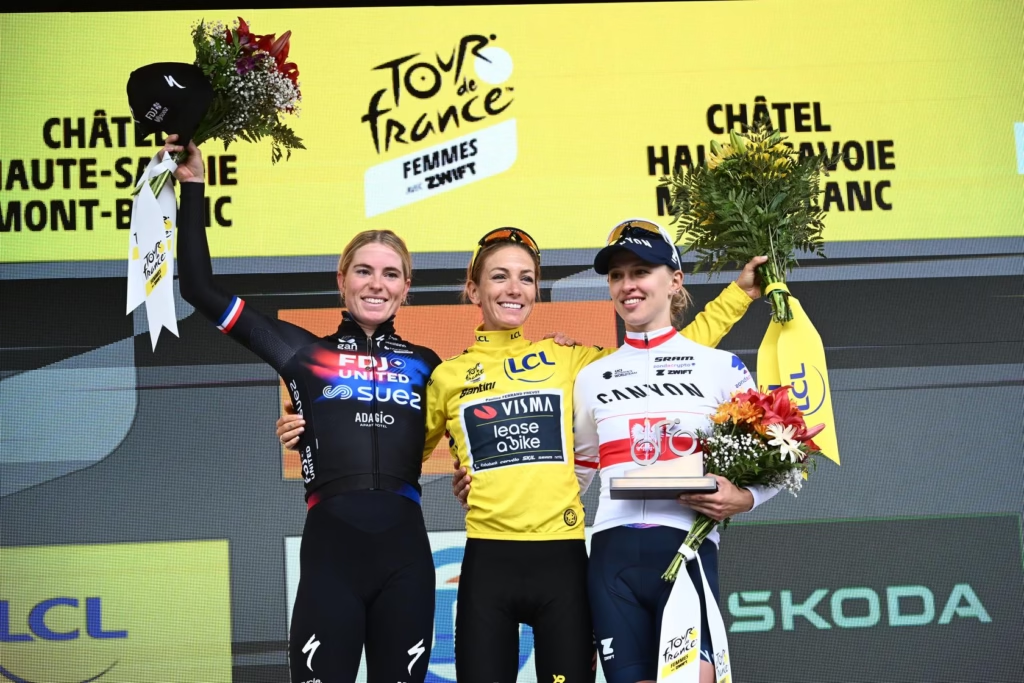
The 2026 Tour de France Femmes has more credible GC contenders than at any point in the modern race’s short history, but the pre-race narrative still keeps returning to two riders.
Demi Vollering and Pauline Ferrand-Prévot.
One is the 2023 winner, the strongest stage racer of 2026 and the rider whose season suggests she should begin the Tour as favourite. The other is the defending champion, whose extraordinary climbing performance last year transformed the race and whose entire 2026 campaign has been built around doing it again.
That is why this is the defining head-to-head before the race starts.
Paula Blasi has emerged as a genuine yellow jersey threat. Marlen Reusser could reshape the classification in the time trial. Kasia Niewiadoma-Phinney remains one of the most consistent Tour riders in the peloton. But the central question is still whether Vollering can reverse what happened in 2025, or whether Ferrand-Prévot can reproduce the level that carried her to yellow.
The Tour de France Femmes 2026 route gives both riders a clear route to victory.
Dijon should favour Vollering.
Mont Ventoux could favour Ferrand-Prévot.
Somewhere between the two lies the yellow jersey.
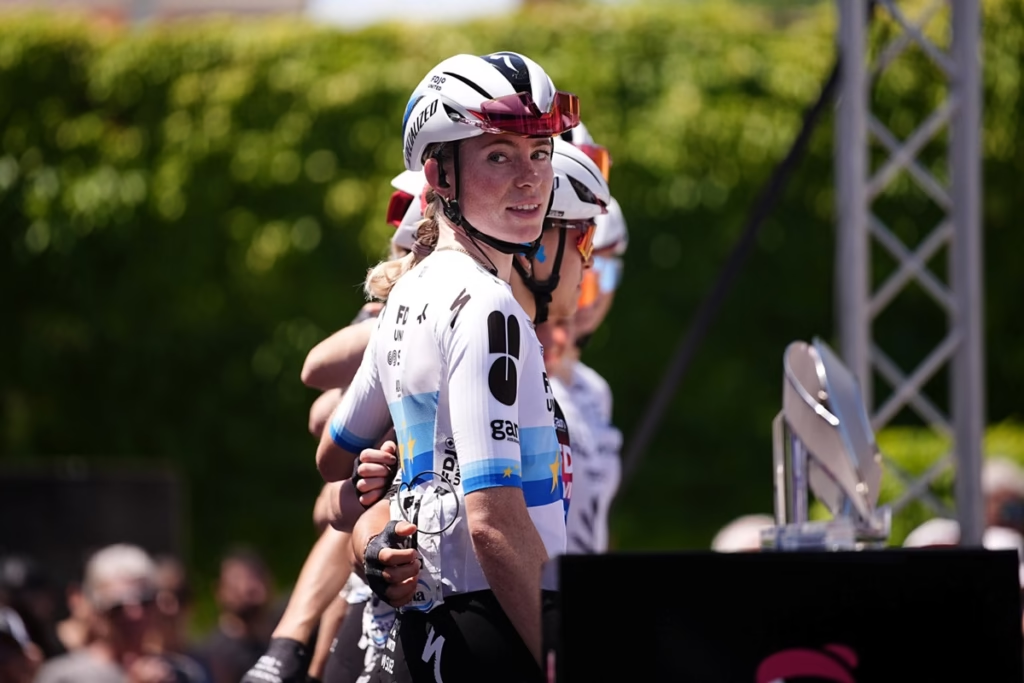 Photo Credit: RCS
Vollering has won the 2026 form argument
If the Tour were awarded on the basis of the season so far, Vollering would be ahead.
She has produced the stronger body of results and has repeatedly shown that she can win across different terrain.
Her victory at the Tour of Flanders was especially relevant because Ferrand-Prévot finished second. Vollering attacked on the Oude Kwaremont and turned the race into a sustained solo effort, while Ferrand-Prévot was left fighting for the minor places.
That is not directly comparable with a Tour mountain stage, but it is their clearest head-to-head result of the season and it went Vollering’s way.
The more important evidence came at the Giro d’Italia Women.
Vollering won the overall classification and showed exactly the sort of stage-racing durability that matters before the Tour. She was able to climb with the best riders, recover across multiple hard days and still produce decisive performances late in the race.
That combination is why Vollering sits at the top of the Tour de France Femmes 2026 riders to watch hierarchy.
Ferrand-Prévot’s season has been more understated.
She was second at Flanders, third at Paris-Roubaix and seventh at Flèche Wallonne. Those are strong results, but they do not offer the same evidence as Vollering’s Giro victory.
On form alone, Vollering leads.
The complication is that Ferrand-Prévot has already shown why form before the Tour cannot be read too literally.
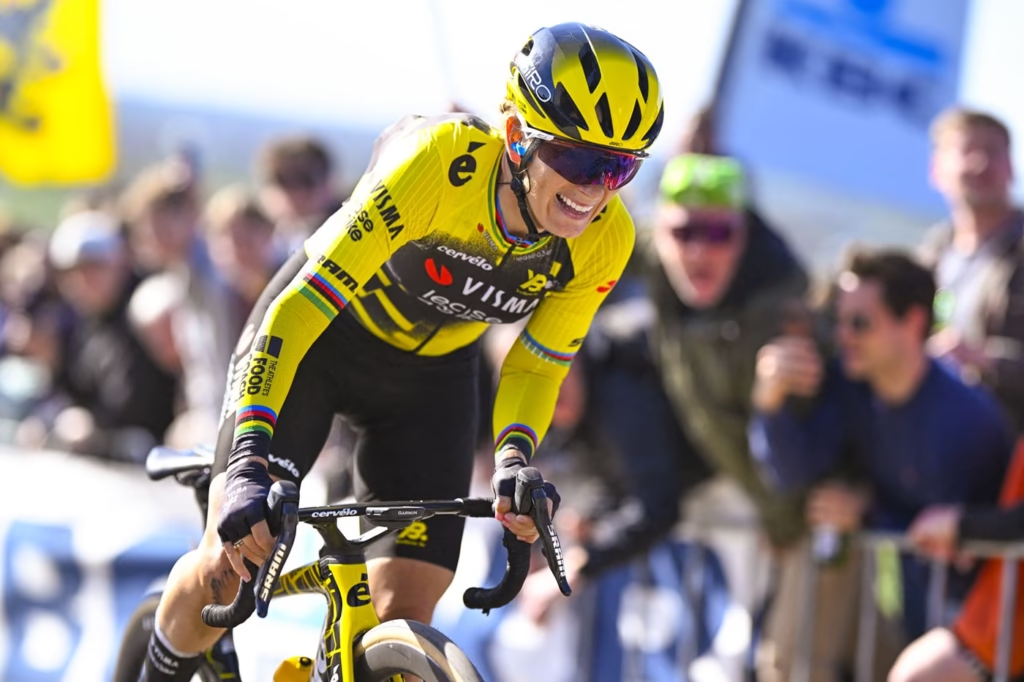
Ferrand-Prévot already proved that the Tour can reset the hierarchy
The central problem with comparing their seasons is 2025.
Ferrand-Prévot arrived at the Tour with major questions around how effectively she could translate her return to road racing into a nine-day GC campaign.
By the end of the race, those questions had disappeared.
She won the Tour by 3:42 over Vollering and Niewiadoma-Phinney, taking control when the race reached its hardest mountain terrain.
That performance established something important.
Ferrand-Prévot can build an entire season around one objective and arrive at that race at a level her earlier results did not fully predict.
That is why her quieter 2026 campaign does not automatically push her far behind Vollering.
If Ferrand-Prévot struggles in August, her season will look like evidence.
If she attacks Vollering off her wheel on Ventoux, nobody will care what happened in May.
Our Pauline Ferrand-Prévot Tour de France Femmes 2026 profile looks at the defending champion’s route fit and title defence in more detail.
Flanders gave Vollering the clearest direct win
There have not been many races this season where Vollering and Ferrand-Prévot were competing for exactly the same objective.
Flanders is therefore useful.
Vollering attacked from the decisive selection on the Oude Kwaremont and ultimately won alone. Ferrand-Prévot remained among the strongest riders in the race but could not follow the move.
That tells us something without telling us everything.
Vollering demonstrated that she can distance Ferrand-Prévot through sustained power rather than merely beat her in a sprint or against the clock.
But Flanders is not Ventoux.
Short, repeated cobbled climbs reward a different type of effort from a sustained mountain ascent lasting well over half an hour. Ferrand-Prévot does not need to prove that she can beat Vollering on the Kwaremont.
She needs to do it on the terrain where she dismantled the Tour last year.
That is what makes the rivalry interesting.
Vollering has the freshest direct evidence.
Ferrand-Prévot has the most important one.
Dijon is Vollering’s biggest tactical opportunity
Stage 4 may be the most important day in the head-to-head before Ventoux even arrives.
The 21km individual time trial from Gevrey-Chambertin to Dijon gives Vollering an opportunity to put Ferrand-Prévot behind before the mountains.
She is not the strongest specialist in the field. Reusser is the most obvious reference against the clock. But among the two main favourites, Vollering should hold the advantage.
Ferrand-Prévot has worked on her time trialling specifically because the stage matters so much.
She does not need to beat Vollering.
She needs to prevent the gap becoming tactically significant.
Fifteen seconds changes relatively little.
Thirty or 40 seconds gives Vollering something meaningful to defend.
A minute would fundamentally alter the second half of the race.
That is why the Tour’s lone time trial is about much more than one stage result.
It could decide who is forced to attack first on Mont Ventoux.
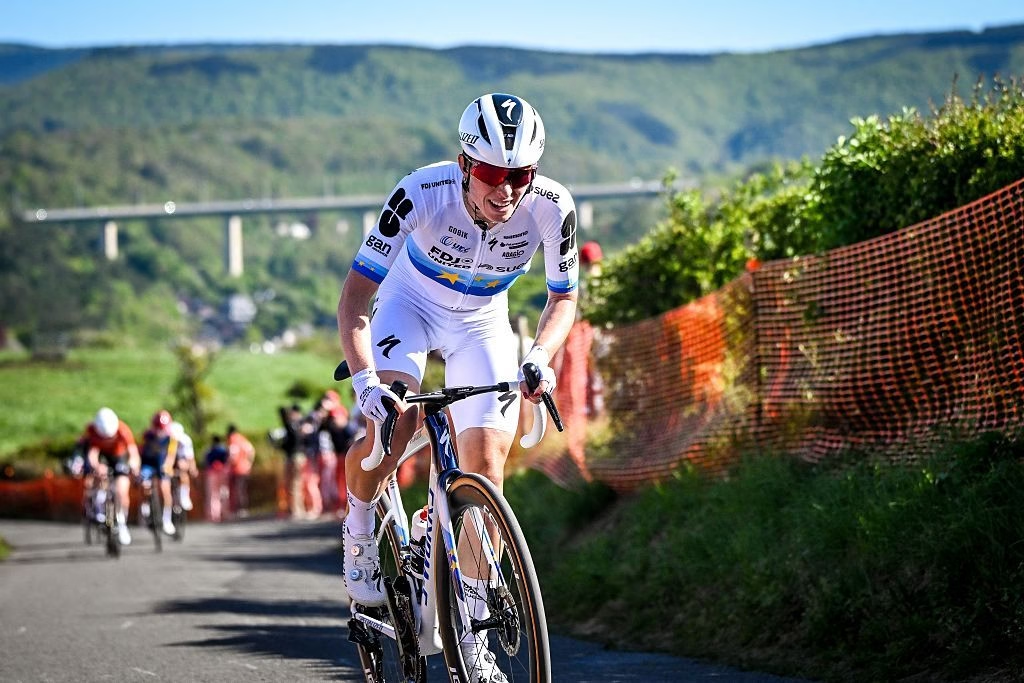
Vollering’s ideal Tour is controlled after Dijon
If Vollering gains time in Dijon, her tactical position becomes unusually comfortable.
She does not need to dominate every mountain.
She simply needs to prevent Ferrand-Prévot from doing what she did in 2025.
That distinction matters.
Vollering is strong enough on Ventoux that she should not need to ride defensively from the bottom. FDJ United-Suez can control the race, keep the pace high enough to discourage speculative attacks and force Ferrand-Prévot to show her hand.
The pressure then sits with Visma | Lease a Bike.
Ferrand-Prévot has to decide when the deficit is large enough to demand action.
The longer she waits, the fewer kilometres remain in which to take the time back.
The earlier she attacks, the more energy she exposes herself to spending against a rider capable of climbing close to her level.
That is probably Vollering’s preferred version of the Tour.
Win time in Dijon.
Make Ferrand-Prévot attack.
Follow her.
Ferrand-Prévot wants Ventoux to become something different
Ferrand-Prévot’s path to yellow is less controlled.
If she reaches Mont Ventoux behind, simply riding alongside Vollering achieves very little.
She needs separation.
That does not necessarily mean one spectacular acceleration in the final two kilometres.
Her 2025 Tour showed how effective sustained pressure can be when she reaches a mountain at peak condition. Ferrand-Prévot can increase the pace, strip Vollering of teammates and turn the final part of the climb into an attritional contest.
Ventoux should reward exactly that.
The climb is long enough that weaker riders cannot survive simply through positioning. Once the race settles into the upper slopes, sustained climbing ability matters more than tactical bluff.
Ferrand-Prévot’s job may therefore be to make the climb longer than Vollering wants it to be.
If she needs 30 seconds, waiting until the final kilometre is probably insufficient.
She may have to start testing Vollering much earlier.
That is where the duel could become genuinely compelling.
Ventoux does not automatically favour Ferrand-Prévot
It is tempting to divide the Tour too neatly.
Dijon for Vollering.
Ventoux for Ferrand-Prévot.
The reality is less convenient.
Vollering is an exceptional climber herself.
She won the Tour in 2023 by dominating on the Col du Tourmalet and has repeatedly proved capable of winning the hardest mountain stages in women’s cycling.
Ferrand-Prévot may have produced the stronger mountain performance at last year’s Tour, but there is no guarantee that difference will reappear.
That is why the time trial matters so much.
If Vollering reaches Ventoux with 30 seconds in hand and can climb within ten seconds of Ferrand-Prévot, the race moves firmly in her direction.
Ferrand-Prévot does not simply need to be excellent.
She may need to be meaningfully better.
Their teams could shape the duel before it becomes one-on-one
Neither rider will reach Ventoux alone.
FDJ United-Suez have built their Tour around Vollering. Juliette Berthet and Évita Muzic give her strong mountain support, while the wider squad has been constructed around keeping the race under control for as long as possible.
Visma | Lease a Bike have more tactical variety.
Ferrand-Prévot is joined by Marion Bunel, Femke de Vries, Sarah van Dam, Marianne Vos, Lieke Nooijen and Daniek Hengeveld.
Bunel may be particularly important.
Her third place at La Vuelta Femenina showed that she can remain relevant deep into a Grand Tour and gives Visma a second rider capable of forcing FDJ to make decisions.
That creates possibilities.
Bunel can attack first.
Ferrand-Prévot can force Vollering to respond personally.
Visma can try to isolate Vollering before the decisive move.
The duel may eventually become one-on-one, but the teams will decide how exhausted both riders are when that happens.
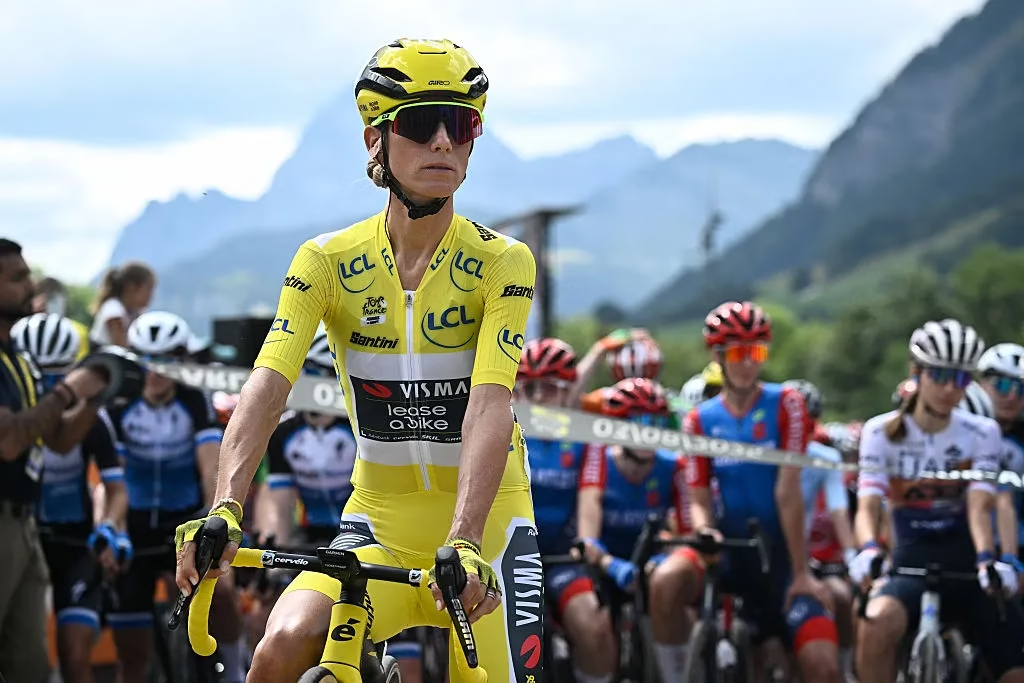
Ferrand-Prévot has more reason to gamble
The psychological difference between their positions is important.
Vollering does not need to prove she can beat Ferrand-Prévot through spectacular racing.
She needs yellow in Nice.
If she has the advantage, pragmatism works.
Ferrand-Prévot’s situation is different if she falls behind.
She cannot defend a title she is already losing.
That gives her more incentive to attack, particularly because the final mountain stage around Nice offers another opportunity after Ventoux.
The final day means Ferrand-Prévot does not necessarily have to recover every second on Stage 7.
But she does need to keep the Tour unstable.
If Vollering leaves Ventoux comfortably in yellow, FDJ can spend the remaining stages controlling.
If Ferrand-Prévot gets close enough that another attack around Nice can change the classification, the pressure continues.
Her best Tour may therefore be one that never settles.
Vollering is trying to reverse the story of 2025
There is another layer to their rivalry that cannot be removed from the numbers.
Vollering finished second to Ferrand-Prévot last year.
Not by four seconds, as she did to Niewiadoma-Phinney in 2024.
By 3:42.
Ferrand-Prévot did not edge her out through bonuses or tactical fortune. She was substantially stronger when the race reached the terrain that mattered most.
That gives Vollering a clear reference for 2026.
Her Giro victory, Flanders win and stronger season all matter, but the question she ultimately needs to answer is whether she has closed the gap that appeared last summer.
Ferrand-Prévot faces the reverse problem.
She knows she can beat Vollering at the Tour because she has already done it.
Now she has to reproduce an exceptional performance when everyone is specifically prepared for her to do so.
That is a very different challenge from arriving in 2025 with uncertainty still surrounding her stage-racing ceiling.
-
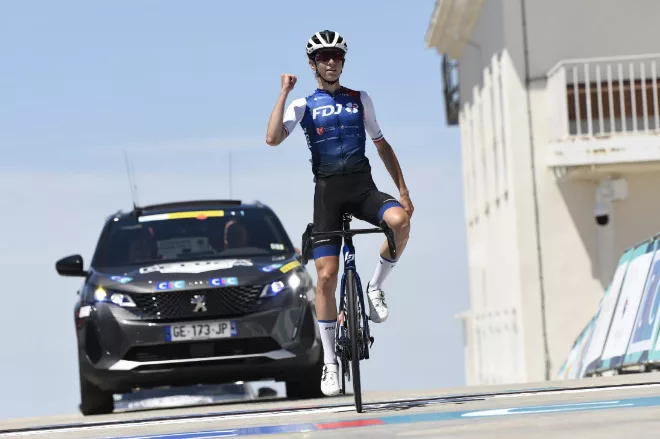 Photo Credit: Fred Machabert/Mont Ventoux Dénivelé Challenges
This is not necessarily a two-rider Tour
The temptation with a rivalry this obvious is to make the rest of the field disappear.
That would be a mistake.
Paula Blasi has produced the breakout season of 2026 and already proved she can win a Grand Tour. Reusser could emerge from Dijon with the strongest GC position of anyone. Niewiadoma-Phinney has won this race and repeatedly reached its podium. Anna van der Breggen and Elisa Longo Borghini cannot be treated as background names.
That actually makes the Vollering-Ferrand-Prévot rivalry more interesting.
Neither can spend nine stages watching only the other.
If Vollering refuses to chase a Blasi attack because she expects Ferrand-Prévot to do it, both can lose.
If Ferrand-Prévot focuses entirely on dropping Vollering while Reusser is still carrying a large time-trial advantage, the defending champion could win the duel and lose the Tour.
The strongest rivalry in the race exists inside a much wider GC battle.
Who has the advantage before the Tour?
Vollering.
But not by much.
Her 2026 season has been stronger, she beat Ferrand-Prévot directly at the Tour of Flanders and the route gives her a straightforward way to put the defending champion under pressure before the mountains.
The Tour de France Femmes 2026 GC picture begins with Vollering because she combines the best mix of current form, time trialling and climbing.
Ferrand-Prévot’s counterargument is one race.
The Tour de France Femmes 2025.
When the season reached the race that mattered most, she was stronger than Vollering by a margin nobody had predicted beforehand.
That is why this cannot simply be described as the rider in form against the defending champion.
Vollering has spent 2026 producing evidence that she should win the Tour.
Ferrand-Prévot has spent the year preparing for the race in which she already proved she can beat Vollering.
Dijon should tell us whether the defending champion has a problem.
Ventoux should tell us whether Vollering has solved hers.