

Vuelta a Burgos Feminas 2026 continues on Saturday, 23rd May with stage 3 from Busto de Bureba to Medina de Pomar, a 126km day that should be the most tactically open stage before the final summit finish at Lagunas de Neila.
After two stages that gave the fast finishers their clearest opportunities, stage 3 changes the tone. It is still not a full mountain stage, but the route is much more disruptive, with three third-category climbs, repeated changes of rhythm and a finale shaped by the second ascent of Alto de Bocos. This is the kind of stage where the GC teams cannot afford to switch off, even if the final mountain test on stage 4 remains the obvious overall decider.
For UK viewers, this is another lunchtime-to-mid-afternoon watch. The real start is scheduled for 11:36 BST, with the finish expected around 14:45 BST if the race runs close to the organiser’s 40km/h schedule. The fastest estimate has the finish at around 14:36 BST, while the slower schedule pushes it closer to 14:54 BST.
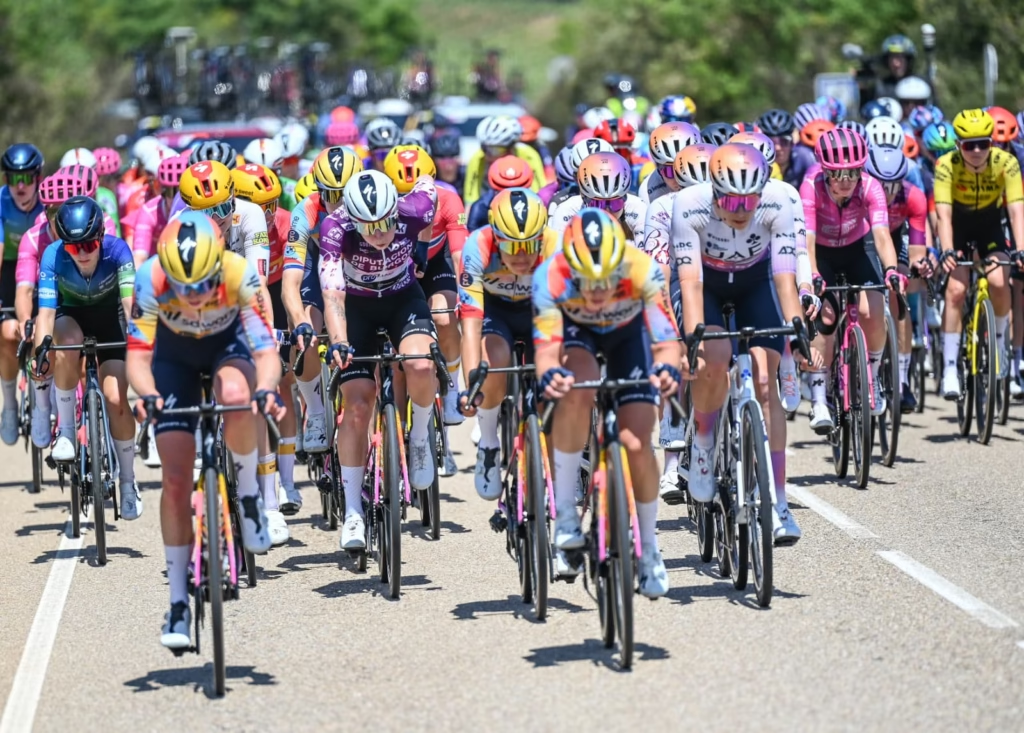 Photo Credit: Vuelta Burgos
When does Vuelta a Burgos Feminas 2026 stage 3 start?
Stage 3 takes place on Saturday, 23rd May.
The route runs from Busto de Bureba to Medina de Pomar over 126km. The neutralised start is scheduled for 11:31 BST, with the real start at 11:36 BST.
The estimated finish window is between 14:36 and 14:54 BST, with the most likely timing around 14:45 BST. That makes this a compact afternoon stage, but one where the decisive racing may begin much earlier than the final kilometres.
How to watch Vuelta a Burgos Feminas 2026 stage 3 in the UK
UK viewers should check HBO Max and TNT Sports for live coverage and race updates. HBO Max is now the main streaming home for Warner Bros. Discovery cycling coverage in the UK and Ireland, while TNT Sports remains the relevant platform to check for TV listings and stage information.
RTVE Play is also listing live Spanish-language coverage of Vuelta a Burgos Feminas, with its usual broadcast window from 13:30 BST. That should cover the most important part of stage 3, including the approach to the double ascent of Alto de Bocos and the final run back into Medina de Pomar. UK access can depend on rights restrictions on the day.
What time should UK viewers tune in?
The best time to tune in is from around 13:30 BST, when the main live broadcast window should begin. That should bring viewers into the stage as the race moves towards the most important section, with Medina de Pomar, Villarcayo and Bocos shaping the final hour.
For those who want the full tactical picture, the stage is worth following from the start. The first climb, Alto del Portillo de Busto, comes early, after around 13km of racing, so the breakaway may form under pressure rather than after a relaxed opening.
The essential viewing window should be the final 50km. The intermediate sprint comes in Medina de Pomar with around 46km remaining, before the race heads towards the first ascent of Alto de Bocos. That climb is then repeated later, with the second passage coming around 14km from the finish. From there, the descent and run-in to Medina de Pomar should decide whether the stage goes to a reduced group, a late attacker or a fast finisher who survives the climbing.
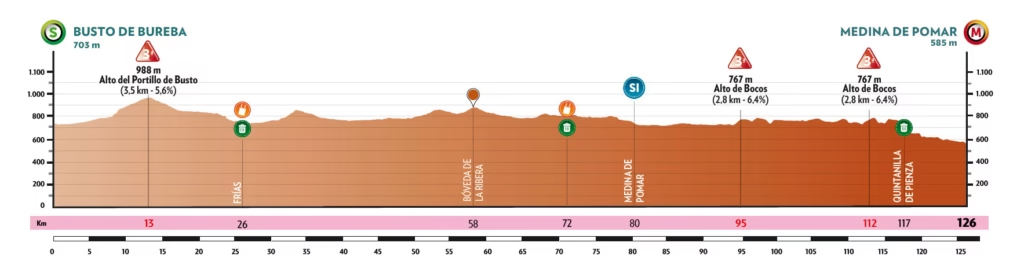
The stage 3 route
Stage 3 is titled “Territorio Obarenes”, and it takes the race from Busto de Bureba to Medina de Pomar. The route heads through the northern Burgos landscape, using short climbs, narrow roads and a looped finale to create a much more selective day than the opening two stages.
The first classified climb arrives early. Alto del Portillo de Busto is a third-category climb of 3.5km at 5.6 per cent. It is not long, but its early position means it can help form a strong breakaway and immediately make the peloton work.
The middle section then passes through places such as Frías, Cormenzana, Pedrosa de Tobalina, Bóveda de la Ribera and Quintanilla de Pienza before the first passage through Medina de Pomar. From there, the stage enters its decisive loop.
Alto de Bocos is the key climb. It is a third-category ascent of 2.8km at 6.4 per cent, and the riders take it twice. The first passage comes with around 31km remaining, while the second comes with around 14km to go. The climb is not long enough to create a pure climbers’ race, but it is steep enough to split the bunch if the pace is high.
The finish is on Avenida de Santander in Medina de Pomar, with a 600-metre finishing straight. That means a small group can still sprint for the win, but the final climb and descent will decide who gets the chance.
Why stage 3 is a GC warning before Lagunas de Neila
Stage 4 to Lagunas de Neila is still the obvious GC decider, but stage 3 cannot be treated as a neutral day. The double ascent of Alto de Bocos gives teams a chance to apply pressure before the final mountain stage, especially if they want to test rivals who have looked vulnerable in the opening two days.
The second climb comes close enough to the finish to matter. A strong move there does not need to gain a huge gap. If a small group goes over the top with 10 or 15 seconds, the descent and short run-in can make the chase awkward, particularly if the riders behind are looking at each other.
Bonus seconds may also matter. In a four-day race, small time gains can influence how riders approach Lagunas de Neila. A GC rider with a fast finish could look at stage 3 as a chance to take seconds before the summit finish, while climbers who lack a sprint may try to attack on the second ascent of Bocos rather than wait.
Why the sprinters may struggle
The stage is not impossible for sprinters, but it is much harder than stages 1 and 2. The repeated climbing, the early selection and the double passage of Alto de Bocos all make the day more suitable for durable fast finishers than pure bunch sprinters.
A full sprint is possible only if the strongest teams control the race carefully and ride the climbs at a manageable tempo. That may happen if the GC teams decide to save energy for Lagunas de Neila. But if the pace lifts on the second passage of Alto de Bocos, the fastest pure sprinters could lose contact or arrive at the finish without the lead-out structure they need.
That makes stage 3 a good day for riders who sit between categories: all-rounders, punchy sprinters and GC riders with a fast finish. A small group sprint looks more likely than a full bunch sprint.
What the GC riders need to do
The GC riders do not need to make a decisive move here, but they do need to stay alert. The first two stages have been about positioning and sprint control. Stage 3 introduces a different kind of stress: repeated climbs close enough to the finish to create gaps.
The most important task is to be near the front before the second ascent of Alto de Bocos. A rider caught too far back there may have to chase over the top or descend under pressure. That is exactly the sort of situation where small gaps can open.
The favourites for the overall should also be careful about letting dangerous riders into the breakaway. With Lagunas de Neila still to come, no team will want to spend too much energy, but allowing a strong climber or all-rounder too much freedom could complicate the GC before the final stage.


What kind of rider can win stage 3?
Stage 3 suits a rider who can climb short efforts, handle a technical finale and still sprint from a reduced group. It is not selective enough for pure climbers to feel guaranteed, but it is awkward enough to reduce the chance of a clean bunch finish.
Lorena Wiebes can still be a factor if she survives the climbs with support, but this is a more complicated day for her than the opening stages. She should still have things in hand. Elisa Balsamo, Chiara Consonni, Carys Lloyd and Georgia Baker may all see an opportunity if the race becomes a reduced sprint rather than a pure drag race.
The punchier GC riders could also come into play. A rider who can attack on the second ascent of Alto de Bocos and descend strongly into Medina de Pomar has a real chance of taking the stage. That makes the final 15km more important than the overall climbing numbers suggest.
Breakaway riders will also be interested. The early climb gives the move a natural launchpad, and if the bunch hesitates before the final stage to Lagunas de Neila, a strong group could go deep into the race.
Prediction
Stage 3 is the most open day of Vuelta a Burgos Feminas 2026 so far. The route is not hard enough to make a pure GC battle inevitable, but the double ascent of Alto de Bocos gives the race a clear tactical point before the descent and finish in Medina de Pomar.
The most likely outcome is a reduced sprint or a late move rather than a full bunch sprint. The GC teams will want to stay safe before Lagunas de Neila, but the stage is awkward enough that riders with strong legs may try to take advantage before the final mountain day.
Prediction: a reduced group to contest the finish in Medina de Pomar, with Lorena Wiebes likely to win her 3rd stage of the race.

