
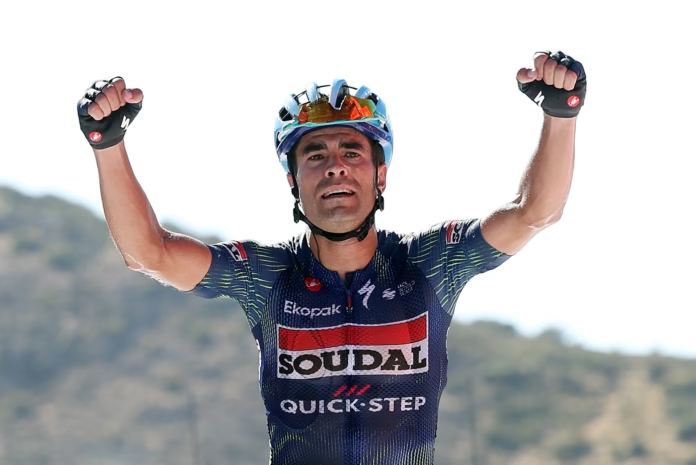
Mikel Landa won stage 20 of the 2026 Vuelta a España with a solo ride on Collado del Alguacil, ending a five-year wait for victory on the final mountain stage of the race.
The Soudal Quick-Step rider broke away from Tobias Halland Johannessen and Ramses Debruyne on the brutally steep final climb and steadily increased his advantage to the summit. Johannessen finished second at 47 seconds, with Debruyne third at 1:27 after a 186.8km stage through the Sierra Nevada containing almost 4,900 metres of climbing.
Several minutes later, Enric Mas completed the most important ride of his career. Felix Gall managed to finish 17 seconds ahead of the red jersey, but Primož Roglič cracked on the final climb and conceded another 38 seconds to Mas. The Movistar leader will therefore take a 2:15 advantage over Roglič into Sunday’s Granada finale, with Gall third at 2:44.
The final mountain stage gives the breakaway room
The 2026 Vuelta route had saved its hardest-looking final examination for the penultimate day. Stage 20 started in La Calahorra and crossed Puerto de Los Blancares before taking the riders into a much harder sequence containing two passages of El Purche, Puerto de El Duque and the new summit finish at Collado del Alguacil.
El Duque had replaced the planned Alto de Hazallanas after landslide damage made the original road unusable, but there was little reduction in difficulty. The stage still contained close to 5,000 metres of climbing before a final 8.3km at 9.8%.
The breakaway fight reflected what was at stake. Uno-X Mobility were particularly aggressive and eventually placed several riders ahead, including Johannessen, Magnus Cort, Simon Dalby, Andreas Kron and Andreas Leknessund.
Landa joined the move later, while Ramses Debruyne, Pau Miquel and other stage hunters also worked their way into the front of the race. With nobody posing a serious threat to Mas overall, Movistar were willing to allow the advantage to grow.
That created two distinct races. Landa and the other escapees could concentrate on the stage, while Roglič, Gall and Richard Carapaz still had one final afternoon to try to overturn a general classification that had increasingly moved in Mas’s favour.
Carapaz refuses to wait for the final climb
Carapaz was again the first of the leading GC riders prepared to take a significant risk.
The Ecuadorian attacked during the earlier climbing and briefly linked with riders ahead, forcing the teams protecting the podium positions to respond. Decathlon CMA CGM in particular had reason to keep him close, with Gall holding third overall.
Carapaz’s move was eventually neutralised, but it added another layer of pressure to a stage where Mas’s rivals could not afford to wait indefinitely.
The state of the race heading into the final week had left Roglič with the time trial and Gall with the mountains as their clearest routes back towards the red jersey. By Saturday, the time trial was gone and only one mountain stage remained.
Roglič therefore needed something much more substantial than another late acceleration.
Red Bull-Bora-hansgrohe kept numbers around him through much of the stage, while Movistar continued to ride a controlled race around Mas rather than becoming involved in the contest for the stage victory.
Landa, Johannessen and Debruyne emerge at the front
The large break gradually split as the climbing accumulated.
Landa, Johannessen and Debruyne eventually became the strongest three riders at the head of the race, establishing themselves before the final ascent. Behind them, the break had fragmented into smaller groups containing riders including Miquel, Jan Hirt, Jørgen Nordhagen and Sepp Kuss.
Kuss was also having an important day in the general classification.
The former Vuelta winner started 11th overall but used the aggressive racing to move well ahead of several riders immediately above him. Unlike Carapaz, he was far enough down the classification to receive more freedom once he attacked.
By the time the stage reached Collado del Alguacil, Landa’s group had enough of an advantage for the stage victory to be decided well before Mas and Roglič arrived.
Landa rides away on Collado del Alguacil
The first appearance of Collado del Alguacil in professional racing immediately justified its place as the final major climb of the Vuelta.
The 8.3km ascent averaged 9.8%, with the gradient repeatedly moving into double figures. After the accumulated work of El Purche and El Duque, there was nowhere to hide once the leading trio reached the steepest roads.
Landa increased the pace with around seven kilometres remaining.
Debruyne was the first rider unable to follow. Johannessen initially stayed closer, but Landa continued riding at a sustained tempo rather than relying on one explosive attack.
The gap gradually opened.
Johannessen never completely disappeared from view, but he was no longer able to make contact. Landa looked increasingly secure as the climb continued and entered the final kilometres with victory under control.
He reached the summit 47 seconds ahead of Johannessen, with Debruyne another 40 seconds back in third.
For Landa, the win carried particular weight. He had not won a race since 2021 and had not taken a Vuelta stage since 2015. His overall ambitions had disappeared much earlier in this edition, but the final mountain stage offered a chance to rescue the race with the type of climbing performance around which much of his career has been built.
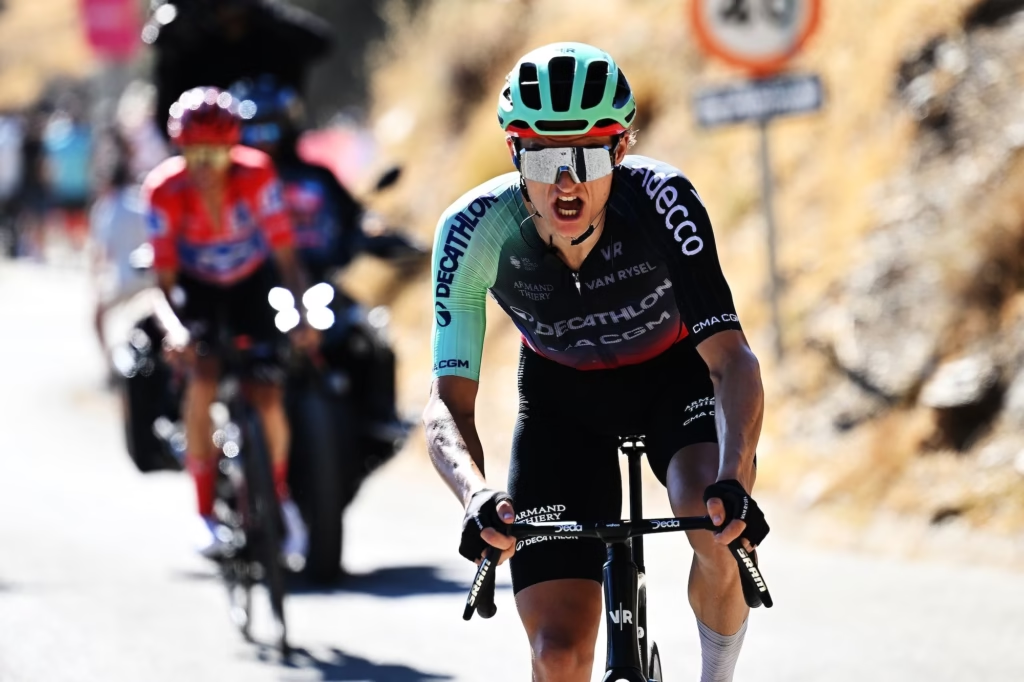
Gall attacks while Roglič begins to struggle
The race for red finally changed on the same slopes.
Red Bull had spent much of the lower part of the final climb around the front, but the expected decisive attack from Roglič never arrived. Carapaz had already spent energy trying to open the race earlier, while Mas remained composed behind his Movistar support.
Gall eventually made the strongest move from the GC group.
The Austrian accelerated and began taking time, but Mas did not need to immediately close every metre. Gall had started the stage 3:01 behind, giving the red jersey significantly more room to manage his effort than he had against Roglič.
The Slovenian then began to lose contact.
That was the moment the balance of the Vuelta changed from Mas defending his lead to Mas effectively securing it. Roglič had started the stage 1:37 behind after taking only 33 seconds in the Jerez time trial. The final mountain stage was his last realistic opportunity to recover the rest.
Instead, the gap went the other way.
Gall finished 17 seconds ahead of Mas, but Mas put 38 seconds into Roglič on the climb. The Slovenian’s deficit therefore increased to 2:15.
-
 Photo Credit: A.S.O./Billy Ceusters
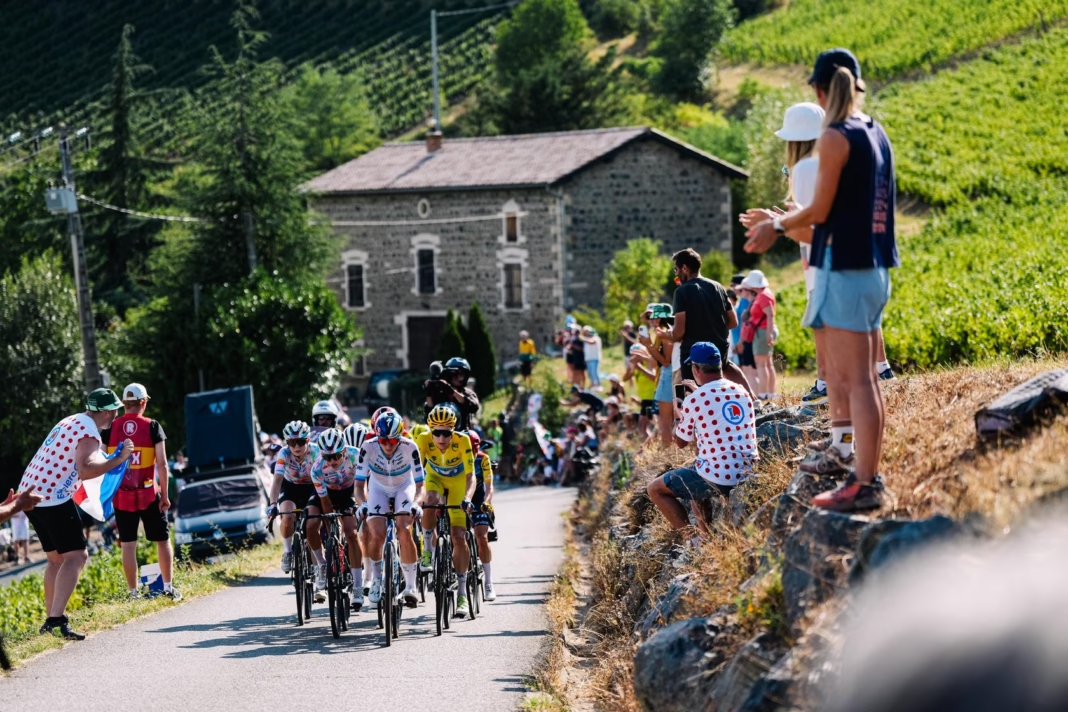
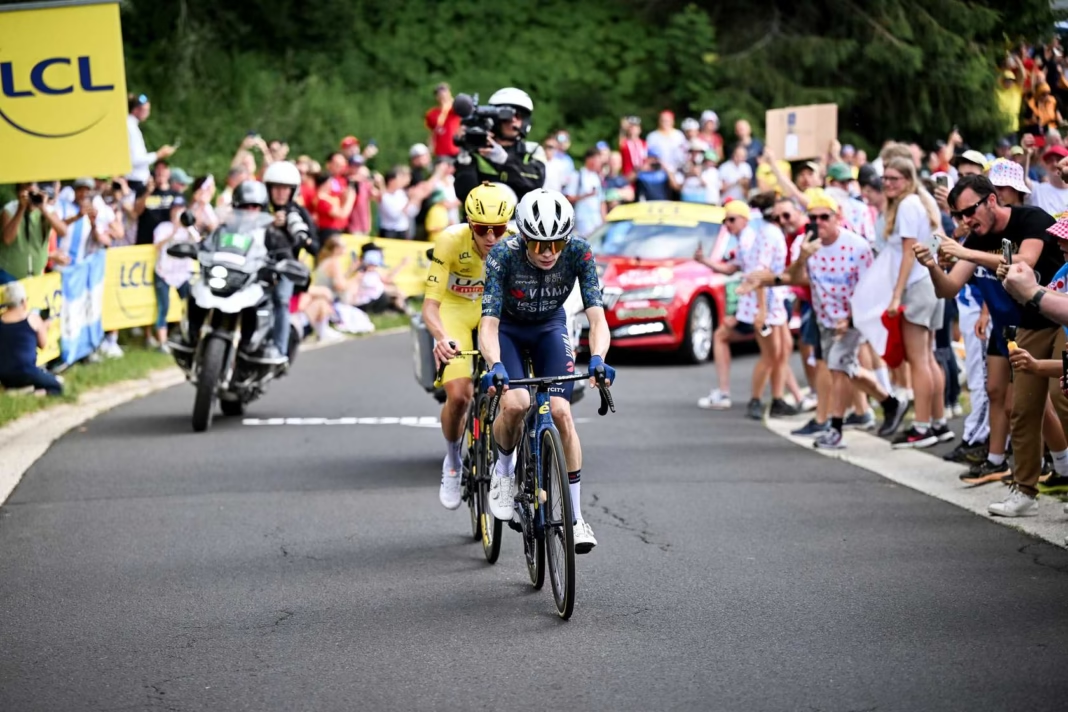
Gall moves closer to Roglič but Mas remains out of reach
Gall’s attack was enough to tighten the battle for second place.
The Austrian began the day 1:24 behind Roglič after struggling against the clock in Jerez. His stronger ride on Collado del Alguacil reduced that gap to 29 seconds, leaving Roglič second at 2:15 and Gall third at 2:44.
Carapaz remains fourth, but his repeated attempts to change the race eventually cost him time and he now sits 6:54 behind Mas.
Kuss produced the biggest movement further down the standings. His aggressive day lifted him from 11th to fifth overall at 8:45, moving him ahead of Oscar Onley, Jakob Omrzel and several other riders who had spent much of the Vuelta occupying the lower half of the top 10.
Onley drops to sixth but remains in control of the white jersey.
The changes underline how severe the final mountain stage proved even without a successful attack on Mas. Riders who began to struggle on Alguacil had no opportunity to limit their losses through drafting or a flatter final section.
Mas reaches Granada with 2:15 in hand
Mas entered the final week needing to defend against two different threats.
Roglič had the 32.1km Jerez time trial. Gall had the two mountain finishes immediately afterwards. Mas had the advantage he had accumulated by consistently outperforming both riders earlier in the race.
Jerez removed only 33 seconds of that cushion. Friday’s Peñas Blancas stage passed without Roglič or Gall taking anything further.
Collado del Alguacil was the last chance.
Gall was able to gain 17 seconds, but he began too far behind for that to seriously threaten red. Roglič needed to take well over a minute and instead lost another 38 seconds.
Sunday’s stage in Granada is classified as flat and offers no realistic terrain for overturning a 2:15 advantage under normal racing circumstances. Mas therefore stands on the verge of the first Grand Tour victory of his career and what would be the first Spanish Vuelta overall win since Alberto Contador in 2014.
For Landa, the penultimate day provided a different kind of reward. After years of injuries, near misses and races built around ambitions that did not always survive three weeks, he found one final mountain stage on which nobody could follow.
Vuelta a España 2026 stage 20 result
| Position | Rider | Team | Time/gap |
|---|---|---|---|
| 1 | Mikel Landa | Soudal Quick-Step | 4:58:01 |
| 2 | Tobias Halland Johannessen | Uno-X Mobility | +0:47 |
| 3 | Ramses Debruyne | Alpecin-Premier Tech | +1:27 |
| 4 | Pau Miquel | Bahrain Victorious | +3:00 |
| 5 | Urko Berrade | Equipo Kern Pharma | +4:12 |
| 6 | Jan Hirt | NSN Cycling Team | +4:18 |
| 7 | Jørgen Nordhagen | Visma | Lease a Bike | +4:35 |
| 8 | Sepp Kuss | Visma | Lease a Bike | same time |
| 9 | Walter Calzoni | Pinarello-Q36.5 Pro Cycling Team | +4:48 |
| 10 | Lorenzo Fortunato | XDS Astana Team | +4:53 |
Main photo credit: Getty

