
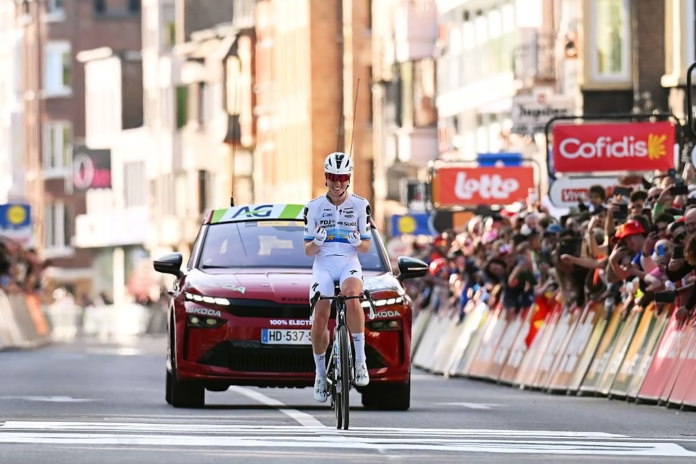
Liège-Bastogne-Liège Femmes 2026 gave the women’s spring its clearest closing statement. Demi Vollering did not simply win the race. She attacked on La Redoute with around 35km to go and rode solo all the way to Liège, becoming the first woman to win the race three times. Puck Pieterse then won the sprint for 2nd ahead of Kasia Niewiadoma-Phinney, with Anna van der Breggen 4th.
That matters because this was not a narrow uphill finish like La Flèche Wallonne Femmes, where the race can still compress into one final effort. Liège-Bastogne-Liège Femmes is the broadest and most demanding race of Ardennes week, and Vollering won it in the most authoritative way possible, by breaking the race open early enough that nobody could frame it as a late tactical coincidence.
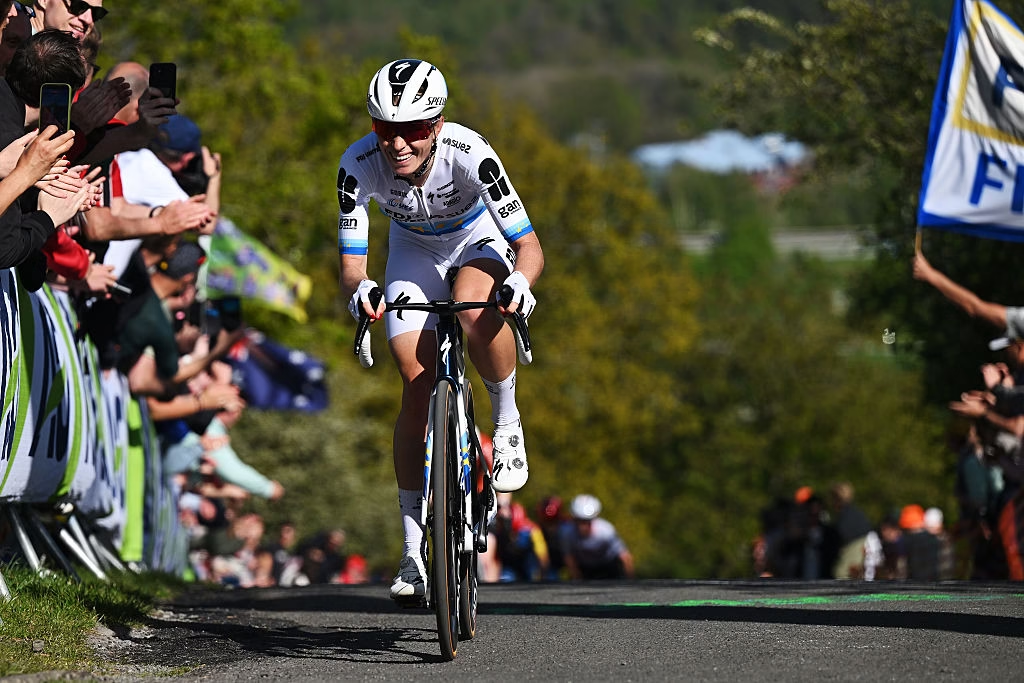 Photo Credit: Getty
Demi Vollering is still the defining rider of the hilly Classics
The biggest meaning of Liège-Bastogne-Liège Femmes 2026 is that Vollering remains the rider the season still bends around on this terrain. She had already won La Flèche Wallonne Femmes earlier in the week, and now she has closed the Ardennes block with a second major victory in four days.
It is the manner of the win that sharpens the point. Vollering did not wait for the final kilometre, and she did not rely on a tiny margin. She used La Redoute, one of the race’s decisive classic points, and turned a loaded Monument into a solo demonstration. That tells the rest of the peloton that if they let her race on her terms, she is still fully capable of ending the contest before the finale becomes crowded with possibilities.
That is what separates a strong winner from the defining rider of a terrain type. Vollering can now claim both the compressed uphill finish and the longer Monument-style race within the same week. That gives her spring far more weight than a single major result would have done on its own.
Puck Pieterse keeps the rivalry alive, but the balance has shifted again
Pieterse’s 2nd place still matters a great deal for the season. She remains close enough to keep shaping the biggest hilly one-day races, and her presence ensures that Vollering is not operating in a vacuum. But the balance of the Ardennes week has tilted back towards Vollering. Pieterse was close enough to remain relevant in both major races, yet Vollering won both Flèche and Liège.
Over a season, that distinction matters. Being close keeps a rider in the elite tier. Winning the biggest races is what defines who currently owns the terrain. Right now, that is Vollering again.
That does not weaken Pieterse’s year. If anything, it confirms that she is already central to the biggest one-day races. What it changes is the tone of the rivalry. Instead of a fully open Ardennes hierarchy, the week has restored a more familiar reality: Pieterse is the strongest challenger, but Vollering is still the rider setting the terms.
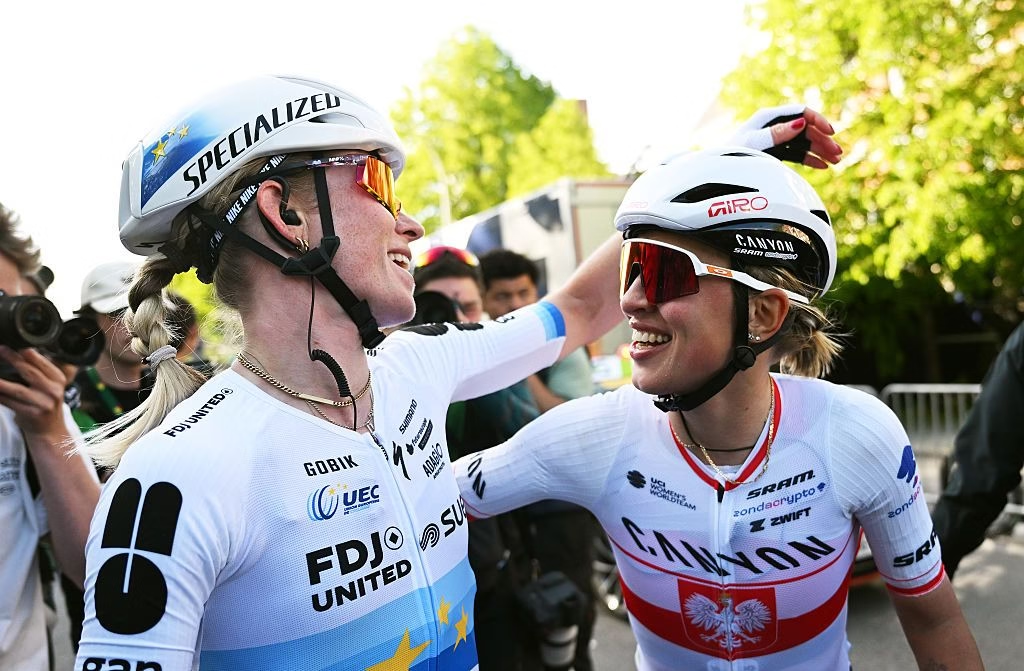
Kasia Niewiadoma-Phinney has turned consistency into a meaningful result
Niewiadoma-Phinney’s podium is one of the more useful takeaways from the race. In a year where Vollering remains the clearest reference point, and Pieterse continues rising, riders like Niewiadoma-Phinney need podiums of this level to keep themselves central to the wider stage-race and one-day conversation. Liège gave her exactly that.
That also matters because she remains one of the riders most likely to convert spring one-day strength into later stage-race relevance. A result like this does not just preserve her status. It strengthens it going into the next block of the season.
She may not have had the force to follow Vollering’s decisive move, but she was still there when the race settled into its true hierarchy. In a Monument like this, that still says a great deal.
Anna van der Breggen’s 4th says plenty, even without a podium
Van der Breggen’s 4th place is one of those results that looks quieter than it really is. She did not make the podium, but she was still close enough to the front of the race to remind everyone that she remains a major factor on this kind of terrain. In season terms, that is important. It means the upper layer of the Ardennes hierarchy still runs deeper than a simple Vollering versus Pieterse frame.
That gives the next part of the calendar a little more texture. If Vollering has reasserted control, Van der Breggen has still shown that she is not far enough away to be treated as an afterthought.
Results like this also matter because they keep pressure on the very top of the sport. Even when the winner looks commanding, the presence of a rider like Van der Breggen near the front makes the hierarchy feel contested rather than closed.
Paula Blasi has confirmed that this is not just a good week
One of the more important season-long developments of the Ardennes block is Paula Blasi’s rise. She was already 3rd at La Flèche Wallonne Femmes, and even without a Liège podium she leaves the week with a very different status from the one she carried into it.
That matters because seasons change when riders move from interesting outsiders to names that have to be marked properly. Blasi now looks much closer to that second category. She may not yet control races in the way Vollering does, but she has forced her way into the list of riders other teams have to account for on hilly terrain.
That sort of shift is one of the most useful things a race like Liège can reveal. Major Monuments do not only crown the winner. They also sort the wider field into riders who are arriving and riders who have already arrived. Blasi now looks much closer to the latter.
-
 Photo Credit: Getty
 -
 Photo Credit: Cs-wolves / Wikimedia Commons, CC BY-SA 4.0

The result gives extra meaning to the whole Ardennes week
Liège-Bastogne-Liège Femmes always matters because it closes Ardennes week, but in 2026 it also acted as the race that made the week feel coherent. Vollering did not just collect another victory. She linked the Mur de Huy finish and the longer Liège Monument into one clear statement.
That is why the week now reads less like a series of separate results and more like one sustained show of authority. The broader reading of What La Flèche Wallonne Femmes 2026 means for the season fits much more strongly after Liège than it would have on its own.
That is the mark of a major rider in a major phase of the season. Winning one big race shapes a headline. Winning the right pair of races shapes the whole narrative around you.
What Liège-Bastogne-Liège Femmes 2026 really changed
The clearest answer is that it restored a firmer hierarchy after an Ardennes week that still contained some uncertainty. Vollering did not just edge the field twice. She won Flèche through perfect execution and Liège through overwhelming force. That combination matters because it tells us she is not dependent on one race shape. She can win the compressed uphill Classic and the longer Monument-style test.
Behind her, Pieterse remains the main rival, Niewiadoma-Phinney has strengthened her season, Van der Breggen is still close enough to matter hugely, and Blasi has emerged from the week as one of the riders whose status has most clearly changed. That is a healthy place for the season to be. The hierarchy is visible, but it is not flat.
That is what Liège-Bastogne-Liège Femmes 2026 means for the season. It did not merely close Ardennes week. It clarified who still owns it, who is closest to shifting that order, and which names now leave the spring with much more weight than they carried into it. For the wider build-up and connected coverage, the full start list, the UK viewing guide and La Flèche Wallonne Femmes 2026 in historical context all connect cleanly into this result.

