Rik van Steenbergen belongs in any serious discussion of the greatest Spring Classics riders in cycling history. Describing him as a cobbles specialist gets part of the way there, but not all of it. He had the speed to win sprints, the resilience to survive the hardest one-day races and the class to take some of the biggest titles on the calendar. Across the road and track, he built one of the finest post-war careers in the sport.
Rider history
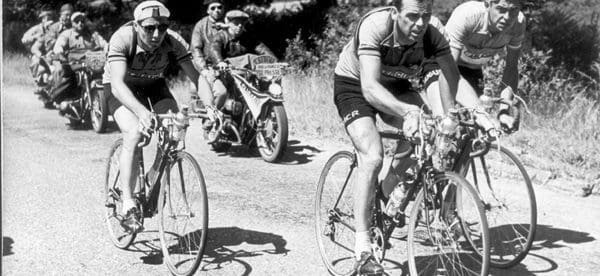
Van Steenbergen turned professional in the closing years of the Second World War. He was still only a teenager when he joined the ranks in 1942, and by 1944, aged just 20, he had already won the Tour of Flanders for the first time. He repeated that success in 1946, confirming himself early as one of Belgium’s great one-day riders.
The wins kept coming. Paris-Roubaix followed in 1948, then the world road race title in 1949. That same season also brought victory at La Flèche Wallonne and a stage win at the Tour de France. Although he was never defined by Grand Tour racing in the way some of his contemporaries were, he still showed remarkable depth by finishing second overall at the 1951 Giro d’Italia while also taking two stages. It remains one of the more striking reminders that he was far more than a pure Classics rider.
By the early 1950s, Van Steenbergen had also developed a reputation for racing frequently, chasing not only prestige but the appearance money and prize purses that mattered far more in that era than they do now. It was part of the reality of professional cycling at the time. Riders were far more dependent on what they earned from racing itself, and Van Steenbergen became known for combining the sport’s biggest prizes with a relentless appetite for competition.
The decade only added to his standing. He won Paris-Roubaix for a second time in 1952, then added Milan-San Remo in 1954. In 1956 and 1957 he claimed two more world road race titles, taking his total to three. That still leaves him among the most successful riders in the history of the men’s World Championships. His final major one-day victory came at La Flèche Wallonne in 1958, nearly a decade after his first win there.
Van Steenbergen continued racing until 1966, giving him a professional career that stretched across more than 20 years. He died in 2003 at the age of 78. By then, his place in cycling history had long been secure. He was one of the defining Belgian champions of the post-war period and one of the clearest examples of what a great Classics rider could be, tough over the cobbles, dangerous in any sprint and capable of winning on the biggest days.
Greatest race victory
1952 Paris-Roubaix
The 1952 edition of Paris-Roubaix is probably the race that best captures Van Steenbergen at his best. It was not simply that he won, but who he beat and how he did it.
As the race wore on, the decisive move included Fausto Coppi, one of the outstanding riders of the era and a man who would go on to complete the Giro d’Italia and Tour de France double later that same year. Van Steenbergen had to match the strength and aggression of one of cycling’s all-time greats across the toughest roads in the sport, then still find enough to finish the job.
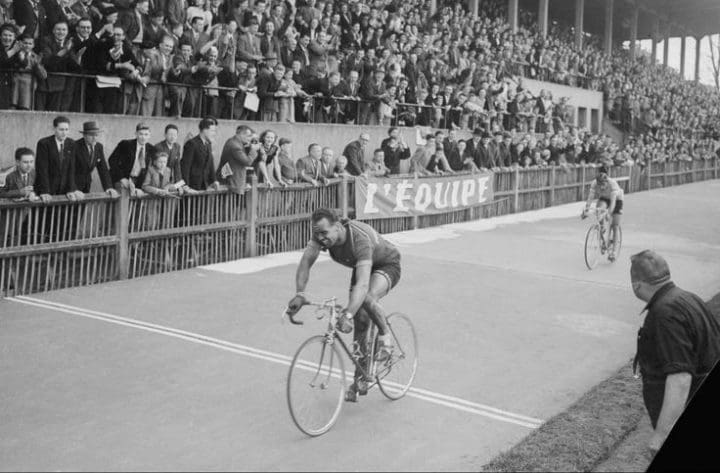
That is exactly what he did. The race came down to a duel between Van Steenbergen and Coppi, with the Belgian holding firm through the final phase before beating him in the Roubaix velodrome. It was the sort of finish that suited Van Steenbergen perfectly. He had the greater sprint and, after surviving everything Coppi could throw at him, he used it decisively.
What makes that victory stand out even more is that it confirmed his first Paris-Roubaix win in 1948 was no isolated success. Winning Roubaix once can define a rider. Winning it twice, and doing so against a rival of Coppi’s stature, helped cement Van Steenbergen’s place among the greatest one-day racers the sport has seen.
Spring Classics palmarès
Monuments
Milan-San Remo
1954
Paris-Roubaix
1948, 1952
Tour of Flanders
1944, 1946
Classics
La Flèche Wallonne
1949, 1958