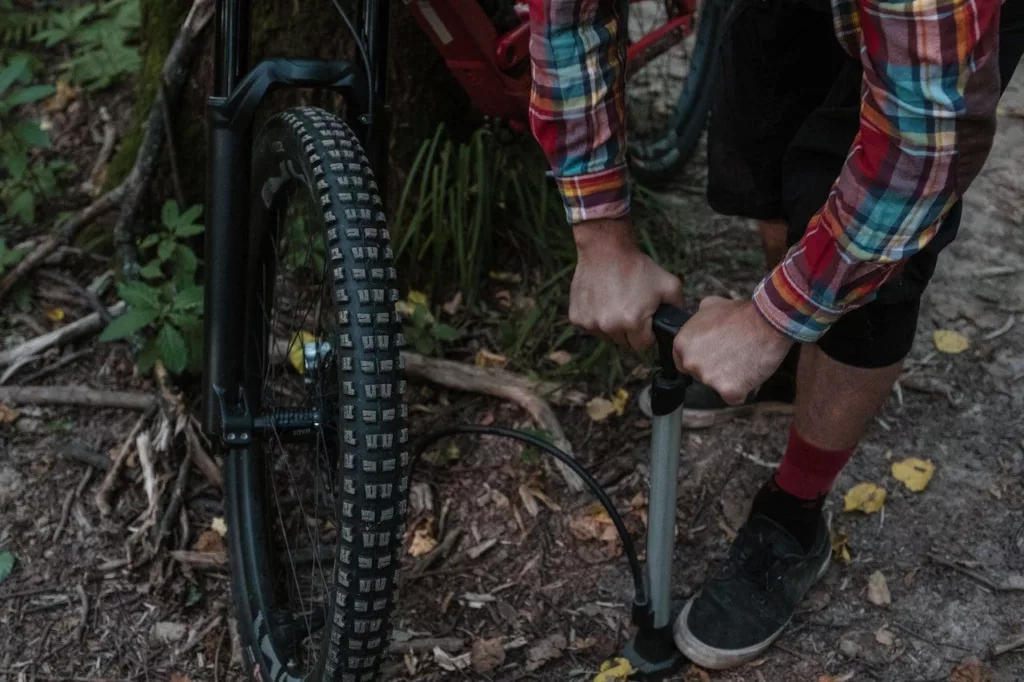
To pump up a bike tyre, identify the valve, fit the matching pump head and inflate to a pressure suitable for the tyre, rim, rider and riding conditions. The number printed on the tyre is not automatically the pressure you should ride. Where the tyre and rim have different limits, both must be respected.
A floor pump with a gauge makes routine checks easier than squeezing the tyre by hand. A mini-pump is useful on the road, but it can take more effort to reach your chosen pressure. Before starting, inspect the tyre for damage, check that it sits evenly on the rim and make sure the valve is not being pulled sharply sideways.
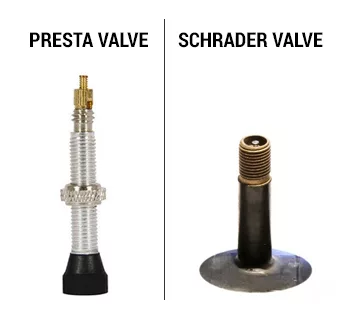
Which valve does your bike have?
| Valve | How to recognise it | What you need to do |
|---|---|---|
| Presta | Narrow stem with a small threaded nut at the tip | Undo the small tip nut before attaching a compatible pump head. |
| Schrader | Wider stem with a recessed centre pin, like a car valve | Use a Schrader-compatible head; there is no Presta-style tip nut to open. |
| Dunlop or Woods | Wider stem with a valve insert held by a retaining collar | Use a compatible head; leave the collar securing the insert in place. |
Presta and Schrader are common on modern bikes, while Dunlop valves are still found on some city and utility bikes. Other valve systems also exist, so identify the valve fitted rather than choosing a pump connection from the type of bike alone. Some pumps have separate openings, while others use a reversible insert or an automatically adjusting head.
1. Choose a pressure before you start
Tyre width, total load, surface and whether you use tubes or tubeless all affect a useful starting pressure. A narrow road tyre usually needs a different pressure from a wide gravel tyre carrying the same rider. The rear wheel may also need a different setting from the front because the load is not always shared equally.
Use guidance for your particular tyre and wheel combination, then make small adjustments within the permitted range. Too little pressure can allow squirming, rim strikes or pinch punctures with inner tubes. Excessive pressure can make a bike harsh on rough ground and must never exceed the equipment limits. Check whether the gauge reads psi or bar before comparing numbers.
2. Prepare the valve
Remove the dust cap. On a Presta valve, unscrew the small captive nut at the tip until it is free to move, then briefly press the tip to check that the valve opens. Do not unscrew the valve core itself. A Schrader valve is opened by the correctly fitted pump head.
If there is a retaining nut against the rim, it is not the part you open to inflate a Presta tube. Avoid wrenching it tight. Support the valve gently as you attach the pump, particularly when the tube is empty and the valve can move into the rim.
3. Attach the pump head squarely
Push or screw the correct head onto the valve according to the pump’s instructions. A locking lever does not work in the same direction on every pump, so check its markings rather than assuming that up always means locked. Keep the head in line with the stem to avoid bending a Presta tip.
You do not need an adaptor if your pump already supports the valve. A suitable Presta-to-Schrader adaptor can help with a Schrader-only pump, but the Presta tip still needs opening first. Do not force a mismatched pump head over the valve.
4. Inflate steadily and watch the gauge
Pump in controlled strokes, pausing to check the pressure. If the handle becomes very difficult to move immediately but the tyre stays soft, air may not be passing through the valve. Stop and check the head and valve rather than pushing harder.
When fitting a tyre or tube, begin with a little air and inspect both sides to make sure the bead sits evenly and no inner tube is trapped. Stop if the tyre bulges or begins lifting from the rim. Deflate and correct the problem before continuing.
5. Disconnect and close the valve
Release or unscrew the head carefully without pulling sideways. A brief hiss can come from air trapped in the hose; a tyre that continues losing air needs checking. On Presta valves, close the small tip nut finger-tight. Replace the dust cap to keep dirt away.
With screw-on heads, watch that a removable Presta core does not unwind as you disconnect. If it does, the tyre can empty rapidly. Secure the core using the appropriate tool and the valve maker’s instructions rather than gripping the delicate stem with pliers.
What changes with tubeless tyres?
A seated tubeless tyre is normally topped up through its valve in much the same way. Initial installation can require a larger burst of air to seat the beads, but adding more pressure is not a safe response to a tyre that refuses to seat. Check the rim tape, tyre compatibility and installation instructions.
Hookless rims have specific tyre and pressure requirements. An inner tube does not make an incompatible tyre suitable for a hookless rim. If you are changing wheels, our guide to choosing a Hunt wheelset explains the compatibility questions to settle first.
Why does the tyre keep going soft?
Some gradual pressure loss is normal, so establish a checking routine rather than waiting for the tyre to feel flat. Fast or repeated losses can come from a puncture, valve leak or, on a tubeless setup, sealant or rim-tape problems. Repeatedly pumping the tyre up does not address the cause.
If the pump works on another wheel, investigate the affected valve and tyre. If it fails on both, check its head setting and seals. The same basic checks apply to Brompton folding bikes; wheel size alone does not tell you which pressure or valve connection to use.