
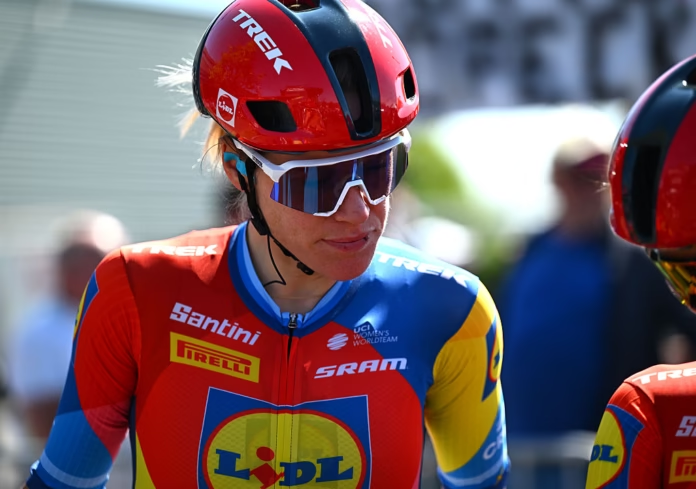
Ellen van Dijk built one of the most distinctive careers of her generation. She was never only a time trial specialist and never only a Classics rider. Instead, she combined a huge solo engine with a feel for hard northern one-day racing, which is why her palmarès stretches from world time trial titles and the UCI Hour Record to wins in the Tour of Flanders, Dwars door Vlaanderen and Le Samyn des Dames. By the time she retired at the end of 2025, she had amassed one of the strongest career records of her era.
That range is what makes Van Dijk so interesting historically. Riders with her sort of pure power often become highly specialised, but Van Dijk was at her best when races allowed her to use that engine aggressively rather than just against the clock. She could turn a flat race into a long pursuit, split Classics fields with repeated pressure and still remain one of the elite time triallists in the world for more than a decade. Within the wider women’s cycling history hub, she belongs to that important Dutch generation after Marianne Vos and alongside Annemiek van Vleuten and Anna van der Breggen, riders who helped define the sport’s move into a more visible and more professional era.
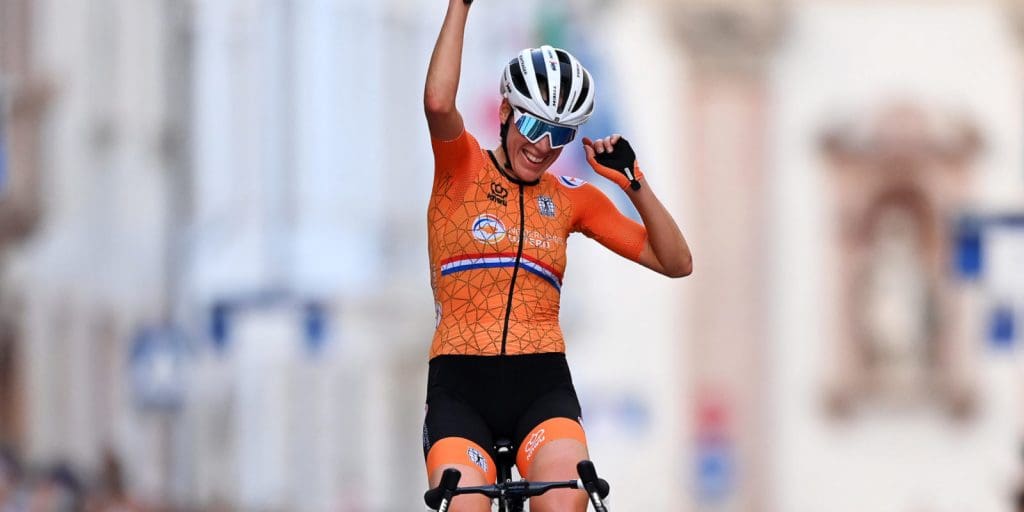
Before road racing, Ellen van Dijk came through speed skating and the track
Like several Dutch riders of her era, Van Dijk did not begin only as a cyclist. She also came through speed skating, a background that helps explain the qualities she later brought to the road – rhythm, pacing discipline and comfort with individual effort.
Those junior years already hinted at the shape of her career. She won Dutch junior national titles on the road and in time trials and raced in the same generation as Marianne Vos and Marta Bastianelli. What is striking in hindsight is that even when she was not yet the dominant senior rider she would become, the outline was there. Van Dijk kept excelling in the more controlled, power-based disciplines and gradually learned how to translate that strength into harder one-day road racing.
The first professional years and the track detour
Van Dijk turned professional in 2006 with Vrienden van het Platteland and made an impression quickly, taking a stage win and a top-five overall finish at the Tour Féminin en Limousin. She was already showing the combination that would define her early years: not yet one of the absolute best road riders in the world, but clearly strong enough to win against the clock and to animate races rather than just follow them.
The major interruption to that road progression was not a setback so much as an alternative peak. In 2008, after narrowly missing Olympic qualification on the track, she became world champion in the scratch race, attacking with eight laps to go and staying clear to the finish. That season also included European Under-23 titles on the track and another European Under-23 time trial title on the road, which says a lot about the breadth of her talent. She was still dividing her excellence across road and track rather than narrowing herself into one obvious elite specialism.
Columbia, HTC and the years of becoming a complete rider
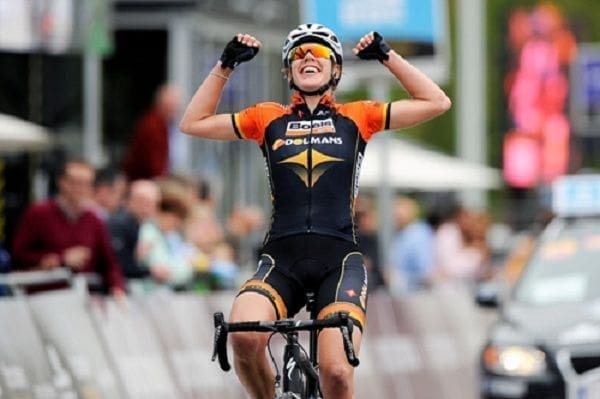
Van Dijk’s move into the Columbia-High Road and then HTC structures was crucial. She stayed within that broader setup for five years, and those were the seasons in which she shifted from promising all-rounder into a rider with real top-level authority. She won the Sparkassen Giro in 2010, then took a stage and the overall title at the 2011 Ladies Tour of Qatar. Even then, though, her most important development was not the win count alone. It was the fact that she was beginning to look like a rider who could dominate races in a very particular way: through sustained pressure, long solo efforts and pure control.
That made 2012 the real breakthrough year in the road sense. She raced the London Olympics, finished sixth in the team pursuit, eighth in the individual time trial and played a key attacking role in support of Marianne Vos in the road race. Away from the Games, she won Omloop van Borsele history, previous winners and greatest moments, the overall at the Belgium Tour and reclaimed the Dutch national time trial title. By then, Van Dijk was no longer simply a rider with strong track credentials and occasional road wins. She had become one of the best time triallists in the sport and a real threat in the Classics.
2013 and the move to world champion level
If one year turned Van Dijk from a very strong rider into a fully established star, it was 2013. She won Le Samyn des Dames history, previous winners and greatest moments, was second in both the Tour of Flanders and Ronde van Drenthe, and third in Trofeo Alfredo Binda history, previous winners and greatest moments. She also won stage races and time trials with a frequency that made the pattern unmistakable: this was now one of the peloton’s strongest engines, full stop.
The decisive moment came at the World Championships, where she won the elite women’s individual time trial. That title mattered beyond the medal itself because it confirmed what several seasons had been suggesting. Van Dijk was not just an elite domestic-level specialist or a rider who could dominate smaller races. She was the best in the world against the clock. That rainbow jersey gave her career a centre of gravity it had not quite had before.
The Tour of Flanders win and her greatest Classics phase
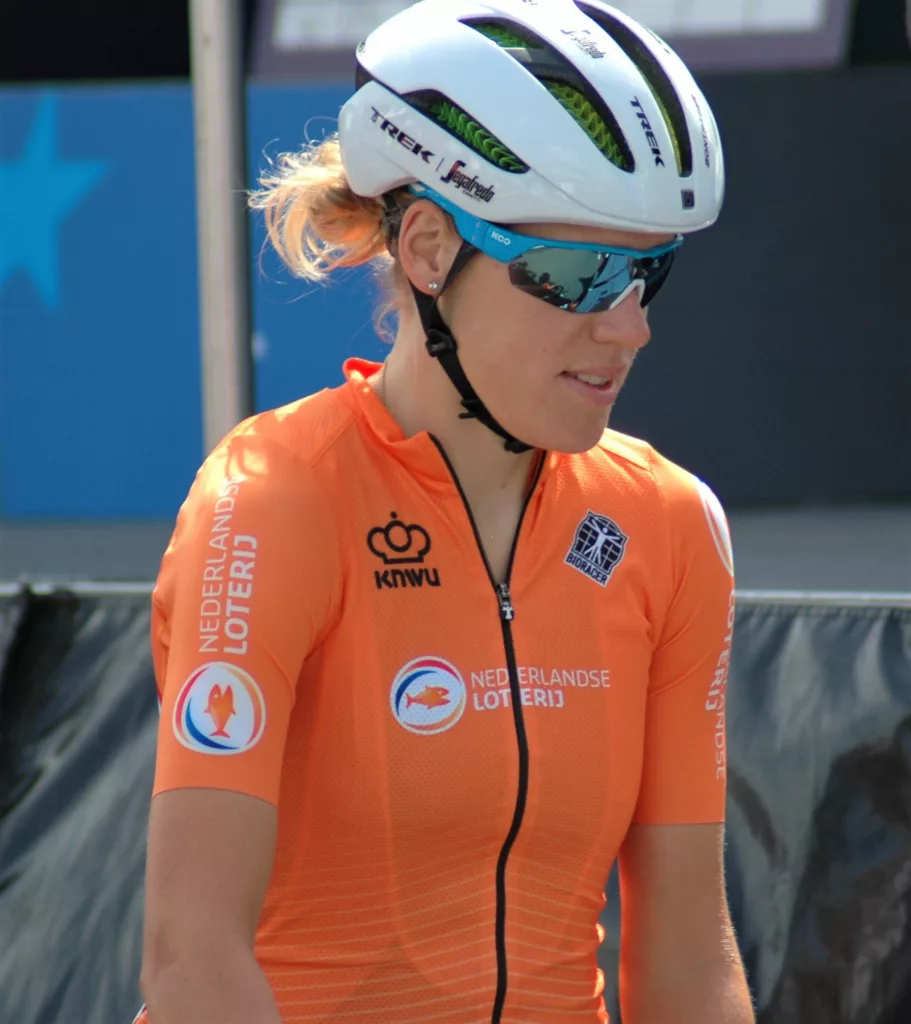
Van Dijk’s move to Boels-Dolmans in 2014 brought one of the defining wins of her career: the Tour of Flanders. It was won in the purest Ellen van Dijk way possible, with a long solo move on the Kruisberg and a relentless extension of the gap on the flat run into Oudenaarde. That victory remains one of the key results in Women’s Tour of Flanders history, previous winners and greatest moments, not just because of who won, but because it captured so perfectly the sort of rider Van Dijk was. She did not wait for uncertainty. She created certainty herself.
That period also made her one of the most dependable Classics riders in the world even when she was not winning. She stacked podiums and top-10s in Omloop Het Nieuwsblad Women history, previous winners and greatest moments, Ronde van Drenthe, Gent-Wevelgem, Trofeo Alfredo Binda and Liège-Bastogne-Liège. Then in 2018 and 2019 she added Omloop van het Hageland history, previous winners and greatest moments and Dwars door Vlaanderen wins, again through the sort of solo, power-based attacks that felt uniquely hers.
Why Ellen van Dijk was such a distinctive rider
Van Dijk was officially a rouleur and time trial specialist, but that still does not quite describe her. Plenty of strong time triallists have struggled to translate that strength into one-day racing at the highest level. Van Dijk managed it because she understood where to use that power. She was not usually waiting for the final 200 metres. She was looking for the section of road where the peloton hesitated just long enough for her to turn a move into a pursuit nobody could quite organise properly.
That is why she became such a recognizable rider tactically. A lot of champions are remembered for one spectacular ability. Van Dijk’s signature was the feeling that if she got ten seconds, the race could already be in trouble. It made her one of the most watchable riders of her era because every Classics finale in which she was present carried the possibility that she would simply decide to go long and make the bunch live with it.
The time trial specialist who kept getting better
The second great phase of Van Dijk’s career came not in her 20s but in her 30s. She won European time trial titles repeatedly and then returned to the top of the world level by winning the World Championships time trial in 2021 and again in 2022, adding those two titles to the one she had won back in 2013. That gave her three elite world time trial titles spread across almost a decade, which is a remarkable kind of longevity.
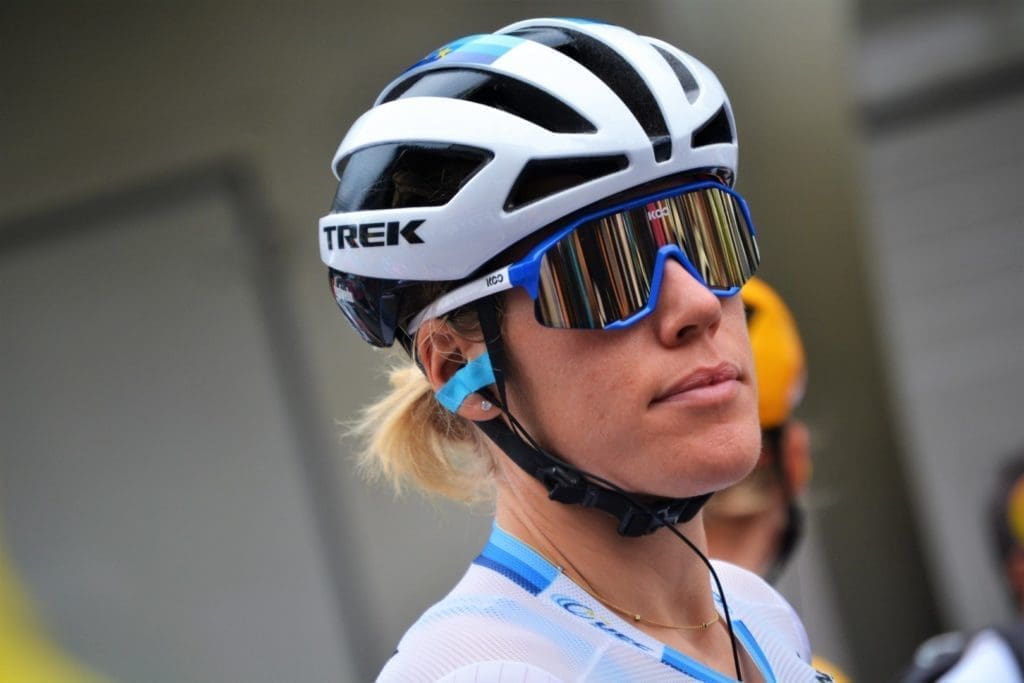
Those years were also the period in which she set the UCI Hour Record. In May 2022, Van Dijk rode 49.254km in Grenchen, becoming the new women’s hour record holder. That performance places her directly into the story told in Women’s hour record: a history, and it suits her legacy perfectly. The hour record is the most distilled expression of what Van Dijk was as an athlete: controlled, powerful, unflashy and utterly relentless.
Pregnancy, motherhood and the comeback attempt
In 2023, Van Dijk announced that she was pregnant and would step away from racing for the season, targeting a return in 2024 with the Paris Olympics as a major goal. That alone made her story feel newly relevant in a sport that is still working through what full support for rider-mothers really looks like. Her return to the peloton after giving birth in October 2023 was one of the most closely watched parts of the 2024 season.
The comeback did happen, but it was not a simple triumphal return. She raced the 2024 Olympics and later returned to the World Championships time trial, still competitive but no longer operating with the same certainty that had defined her best years. Van Dijk was still strong. She was just no longer in the phase of her career where every solo move looked inevitable.
Why Ellen van Dijk retired
In 2025, Van Dijk announced that she would retire at the end of the season. Her explanation was unusually direct and honest. She said that fear of crashes and further injury had changed her relationship with the peloton, and that the bunch no longer felt like her place.
That honesty matters. It gives her ending a different kind of dignity. Rather than trying to cling on until results disappeared completely, Van Dijk made a clear judgement about what the sport had become for her and stepped away on terms she could live with. It also makes her one of the more humanly understandable champions of her generation, because the decision was rooted not in abstraction but in fear, family and the desire to leave on terms she could control.
-
 Photo Credit: Getty

What comes after racing
Unlike some retired riders, Van Dijk did not announce a defined second career at the point of retirement. What was clear was a desire to prioritise family life and to find a life after the daily demands of professional racing.
That uncertainty feels fitting in a way. Van Dijk’s public persona was always more about the work itself than about building a louder identity around it. It would not be surprising if her next phase turns out to be similarly measured. What can already be said is that she leaves behind one of the clearest models of how a rider can build a huge career through consistency, intelligence and a refusal to accept the limits of one label.
Why Ellen van Dijk still matters in women’s cycling history
Van Dijk matters because she helped expand the idea of what an all-round Classics rider could be. She was not built in the mould of Marianne Vos, not a rider of instinctive sprinting brilliance. She was not quite in the mould of Anna van der Breggen either, whose climbing punch defined races in a different way. Van Dijk’s greatness came through long, visible effort – through making the race harder than others wanted it to be and then still having the strength to survive what she had created.
She also matters because her career links several important parts of women’s cycling history together. She appears in the histories of Flèche Wallonne Féminine history, previous winners and greatest moments, Women’s Tour of Flanders history, previous winners and greatest moments, Omloop Het Nieuwsblad Women history, previous winners and greatest moments, A brief history of the road cycling world championships and Women’s hour record: a history because she genuinely belonged in all of those conversations. That is rare enough on its own. Doing it across twenty years is rarer still.
Ellen van Dijk career highlights
- Three-time elite world time trial champion, in 2013, 2021 and 2022
- Five-time European champion, including four straight time trial titles from 2016 to 2019 and the 2022 road race title
- Winner of the 2014 Tour of Flanders
- Winner of Dwars door Vlaanderen in 2018 and 2019, Omloop van het Hageland in 2018, Le Samyn des Dames in 2013 and Omloop van Borsele in 2012
- UCI Hour Record holder from 2022 with 49.254km
- Track world champion in the scratch race in 2008
- Retired at the end of 2025 after a 20-year professional career

