
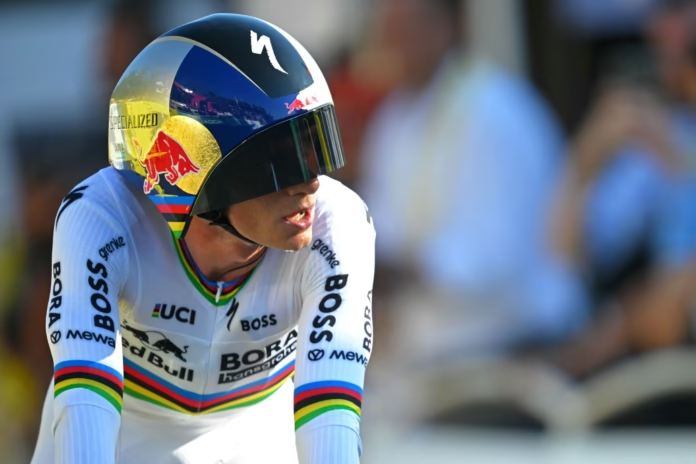
Remco Evenepoel has already moved into second place at the 2026 Tour de France. Stage 16 now gives him the chance to make that position much harder to take away.
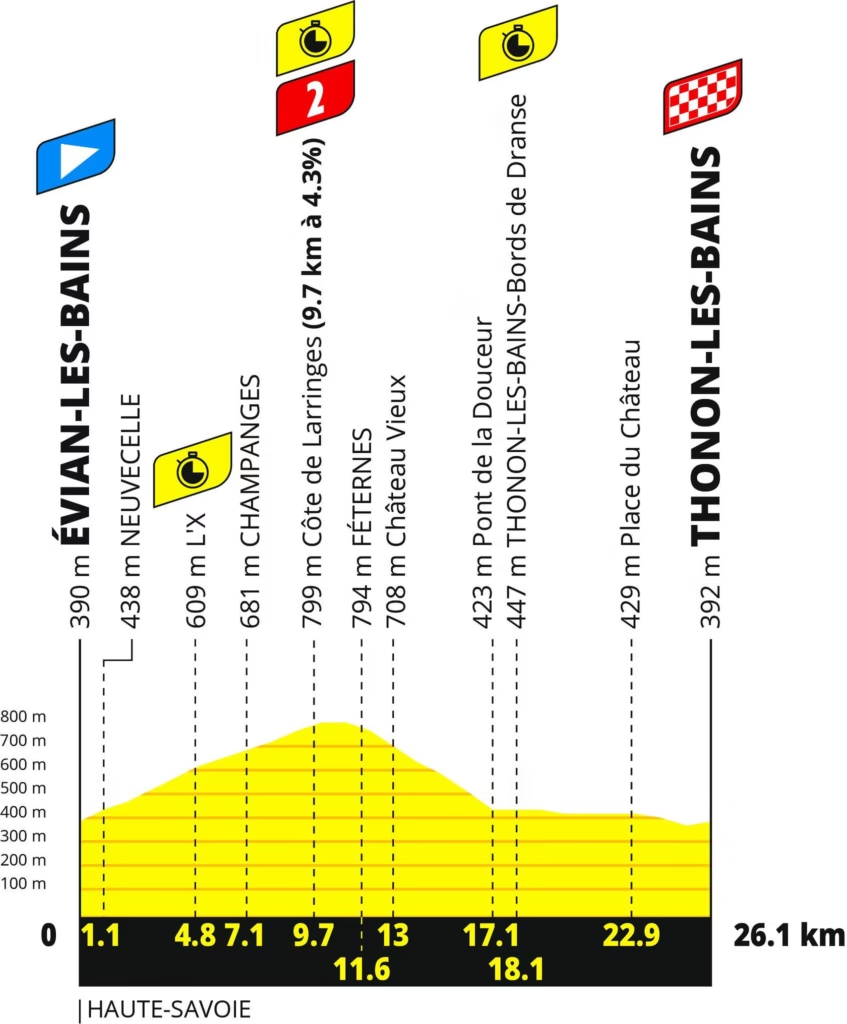
The 26.1km individual time trial from Évian-les-Bains to Thonon-les-Bains is the only solo test against the clock in this year’s race. It contains approximately 500 metres of climbing, making it too demanding to be treated as a flat specialist’s course but not steep enough to become a pure climbing time trial.
Evenepoel begins the stage five minutes behind Tadej Pogačar. He is therefore unlikely to turn one strong ride into a genuine battle for yellow.
That does not make the stage unimportant.
A victory could reduce the gap, force UAE Team Emirates-XRG to remain alert and strengthen Evenepoel’s control of second place. Behind him, Isaac del Toro, Paul Seixas, Florian Lipowitz and Juan Ayuso are separated by only 87 seconds.
Stage 16 may do more to reshape the podium than threaten Pogačar’s overall lead.
The route and wider tactical picture are covered in our Tour de France 2026 Stage 16 preview. This guide focuses instead on the riders most likely to decide the stage and podium battle.
Tour de France 2026 Stage 16 route at a glance
| Detail | Information |
|---|---|
| Date | Tuesday 21 July 2026 |
| Start | Évian-les-Bains |
| Finish | Thonon-les-Bains |
| Distance | 26.1km |
| Stage type | Individual time trial |
| Total climbing | Approximately 500 metres |
| General character | Rolling and climbing time trial |
| Main stage favourite | Remco Evenepoel |
| Yellow jersey | Tadej Pogačar |
| First rider starts | 13:00 |
| Expected final arrival | Around 17:50 |
The route begins by climbing away from Évian-les-Bains and includes a sustained opening section before a faster middle portion and a rolling final approach to Thonon-les-Bains.
The first major rise is approximately 9.7km at 4.3%. That is enough to make pacing and equipment decisions significantly more complicated than they would be on a conventional flat time trial.
Why 26.1km is enough to change the podium
A 26.1km time trial is not especially long by historic Tour standards.
It is still more than long enough for meaningful gaps.
The leading riders are unlikely to be separated by several minutes, but the podium contest does not require that. Del Toro, Seixas, Lipowitz and Ayuso begin the stage close enough together that differences of 20, 30 or 45 seconds can transform the standings.
The general classification after Stage 15 is:
| Position | Rider | Team | Gap |
|---|---|---|---|
| 1 | Tadej Pogačar | UAE Team Emirates-XRG | 55h 41m 31s |
| 2 | Remco Evenepoel | Red Bull-Bora-hansgrohe | +5m 00s |
| 3 | Isaac del Toro | UAE Team Emirates-XRG | +5m 58s |
| 4 | Paul Seixas | Decathlon CMA CGM | +6m 23s |
| 5 | Florian Lipowitz | Red Bull-Bora-hansgrohe | +6m 48s |
| 6 | Juan Ayuso | Lidl-Trek | +7m 25s |
Pogačar’s advantage appears secure.
The gaps behind him do not.
Only 25 seconds separate Del Toro and Seixas. Lipowitz is another 25 seconds behind the Frenchman, while Ayuso is 37 seconds behind Lipowitz.
Evenepoel has a 58-second advantage over Del Toro and 1:23 over Seixas.
A strong time trial could give him a much more comfortable buffer before the final Alpine stages. A poor ride would reopen the entire podium battle.
For newer viewers, our guide to how the Tour de France general classification works explains why every second recorded in the time trial is added directly to each rider’s overall total.
The climbing prevents this being a pure power test
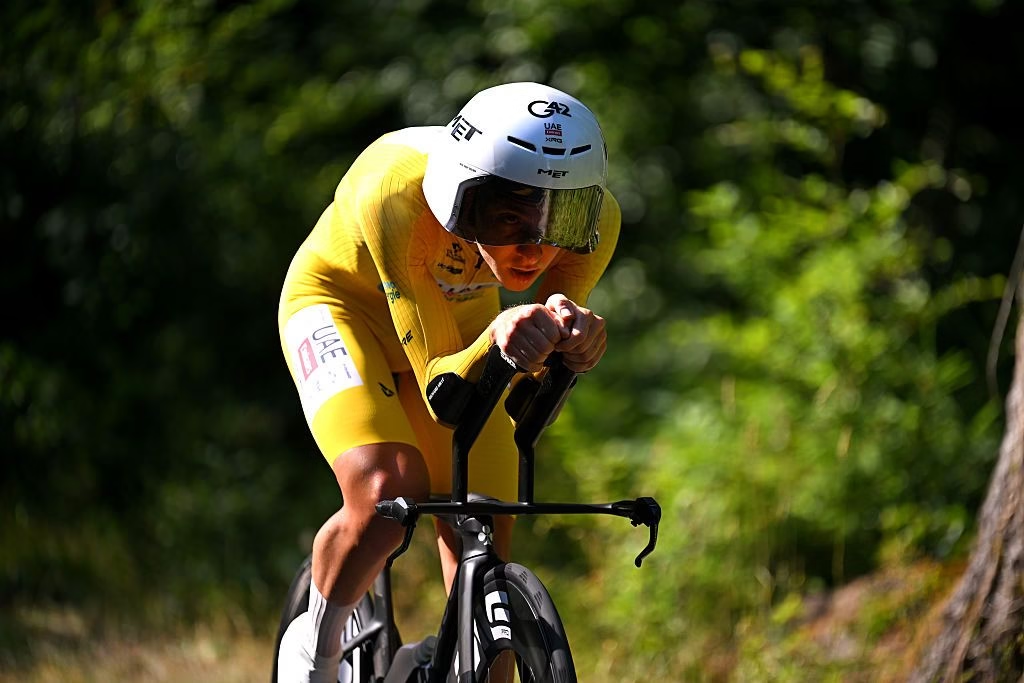
The course’s 500 metres of elevation gain is the defining detail.
A flat 26km time trial would give the largest and most aerodynamic specialists a clearer advantage. Riders such as Filippo Ganna and Joshua Tarling could hold high speeds for the entire course without needing to manage a long climbing effort.
Stage 16 demands something broader.
The riders must produce sustained power uphill without overcommitting, descend efficiently and then rebuild speed for the final kilometres.
A rider who begins too aggressively may lose much more time near the finish than they gained on the opening climb.
A rider who rides too conservatively risks reaching the faster roads with no realistic chance of winning.
Evenepoel is particularly well suited to that balance.
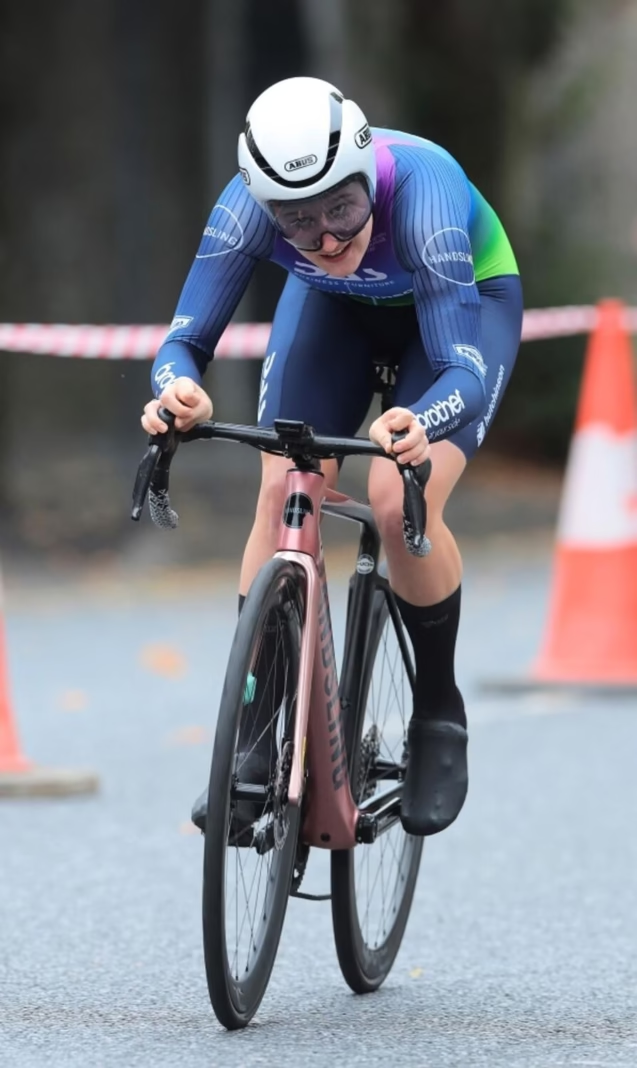
He combines the aerodynamic efficiency of a specialist with the climbing power required to remain competitive on sustained gradients. That gives him an advantage over heavier time triallists and pure climbers who lack the same speed on flatter roads.
His suitability for this exact test was one of the central themes in our pre-race assessment of Remco Evenepoel’s Tour de France 2026 time-trial hopes.
Why pacing will be more important than raw power
The opening climb encourages riders to push hard immediately.
That could be a trap.
The best time trial will probably come from maintaining a controlled effort during the first section rather than attempting to create the entire winning margin before the summit.
Riders must account for three different types of effort:
- Sustained climbing power during the opening section
- Aerodynamic speed on the descent and faster roads
- Enough remaining energy for the rolling approach to Thonon-les-Bains
Those demands make the course difficult to model.
A heavier specialist may lose time uphill but regain it on the descent and flatter sections. A lighter climber can gain on the rise but struggle to maintain the same speed afterwards.
The ideal rider sits between those extremes.
Evenepoel and Pogačar both fit that description.
Will riders change bikes?
The route creates a genuine equipment question, but a bike change is unlikely to be the obvious answer for most contenders.
A road bike is lighter and easier to handle on a climb. A time-trial bike is significantly more aerodynamic on the faster sections.
Changing between them costs time, disrupts rhythm and creates the risk of a mechanical problem.
The opening rise is long enough to make weight relevant, but its average gradient is not severe enough to guarantee that a road bike is faster overall.
Most leading riders are therefore likely to remain on their time-trial bike and adapt their gearing, wheels and pacing instead.
Teams will have modelled the course repeatedly before deciding.
The choice may also differ according to rider size. Ganna and Tarling have more to gain from remaining aerodynamic, while a lighter GC contender may at least examine whether a change could be worthwhile.
The transition time must still be recovered before the finish.
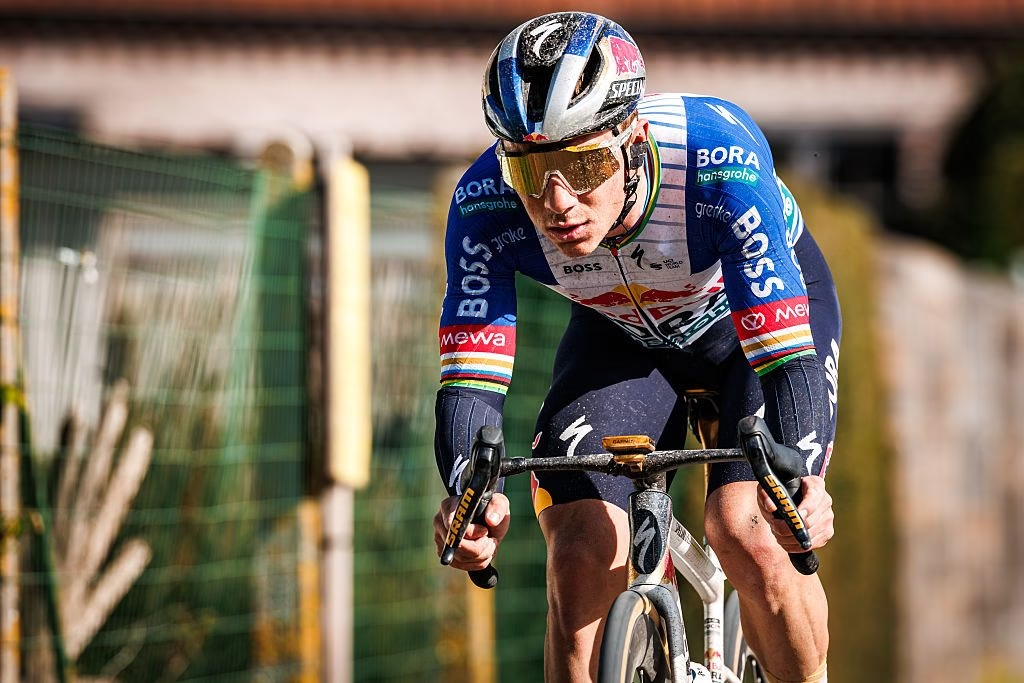 Photo Credit: Getty
Evenepoel is the obvious stage favourite
Evenepoel begins Stage 16 as the rider everyone else must beat.
The Belgian has won Olympic, world championship and Grand Tour time trials. He has also proved capable of winning against the clock at the Tour de France.
The route should suit him better than a pure climbing time trial would.
Evenepoel can use his compact position and aerodynamic efficiency on the faster sections without being exposed severely during the opening climb.
His condition is another reason for confidence.
He won Stage 15 at Plateau de Solaison, beating Pogačar in the final sprint and moving into second overall after Jonas Vingegaard’s withdrawal.
The result showed that he reached the second rest day with strong climbing form rather than merely surviving.
The main question is how much that mountain effort cost him.
Evenepoel had to ride hard on one of the steepest finishes of the Tour. Stage 16 arrives after a rest day, but the cumulative fatigue from 15 stages will still influence performance.
Even so, this is his strongest remaining opportunity to take time from Pogačar.
Can Evenepoel put pressure on Pogačar?
Yes, but pressure does not necessarily mean creating a realistic yellow-jersey contest.
Evenepoel starts five minutes behind.
Even an exceptional ride is unlikely to remove more than a small portion of that deficit. Pogačar is too strong against the clock and too well suited to the climbing profile to lose several minutes under normal circumstances.
A gain of 20 to 40 seconds would still matter.
It would demonstrate that Evenepoel remains capable of beating Pogačar in a major discipline and would reduce the margin before the Alps.
That may influence how UAE races the remaining mountain stages.
Pogačar would still hold a commanding lead, but the team could no longer treat Evenepoel purely as a rider defending second place. Any sign of weakness on Orcières-Merlette or Alpe d’Huez would become slightly more dangerous.
Evenepoel can also apply psychological pressure.
Winning the time trial after taking Stage 15 would give him consecutive victories and create the impression that he is becoming stronger as the Tour progresses.
That is unlikely to frighten Pogačar into panic.
It may be enough to ensure UAE continues racing defensively around yellow rather than giving Del Toro complete freedom in the podium battle.
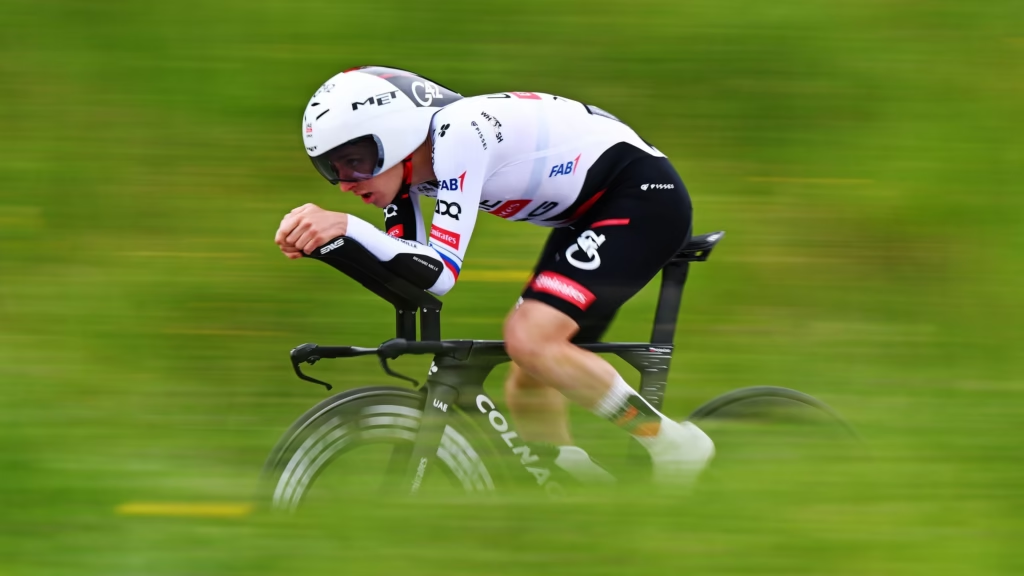
Pogačar has no reason to take unnecessary risks
Pogačar does not need to win Stage 16.
He needs to avoid a bad day.
The yellow jersey has already established a five-minute advantage and remains one of the strongest time triallists in the race.
The rolling course suits him.
He is lighter than Ganna and Tarling but produces enough power to remain fast on the flatter sections. The opening climb should allow him to use his superior climbing ability without the route becoming steep enough to neutralise aerodynamics completely.
The greatest danger may come from overcommitting in pursuit of the stage win.
Pogačar can afford to ride within himself, accept a small loss to Evenepoel and preserve energy for the final mountain block.
That does not mean he will.
Pogačar rarely approaches a stage simply as an exercise in damage limitation. If his intermediate times show that he is close to Evenepoel, he may increase the effort and attempt to win.
The calculation is whether another stage victory is worth the physical cost.
The remaining mountains and the way they could still test yellow are covered in our Tour de France 2026 Alps guide.
Could Evenepoel move within four minutes?
That appears to be an ambitious rather than likely target.
Evenepoel needs to gain more than one minute to reduce the overall gap below four minutes.
That would require a major performance and a relatively poor day from Pogačar. The Slovenian’s own ability against the clock makes such a swing difficult to envisage without an equipment problem, pacing error or unexpectedly weak ride.
A gain of 15 to 30 seconds is more realistic.
That would move the deficit towards 4:30 without fundamentally changing the race.
Pogačar would still control yellow, while Evenepoel would gain confidence and a stronger buffer over the riders behind.
Evenepoel’s first objective is securing second place
The podium battle matters more than the yellow jersey contest.
Evenepoel leads Del Toro by 58 seconds, Seixas by 1:23, Lipowitz by 1:48 and Ayuso by 2:25.
He should expect to gain time on most of them.
Lipowitz and Ayuso are capable time triallists, but neither has Evenepoel’s record at this level. Del Toro and Seixas are outstanding climbers but may lose more on the faster parts of the course.
If Evenepoel gains 30 seconds on Del Toro and more on Seixas, his second place becomes substantially safer.
That matters because three major Alpine stages remain.
Evenepoel would prefer to begin those mountains with enough time to ride defensively rather than following every attack from younger riders competing for the podium.
Stage 16 gives him the opportunity to create that margin.
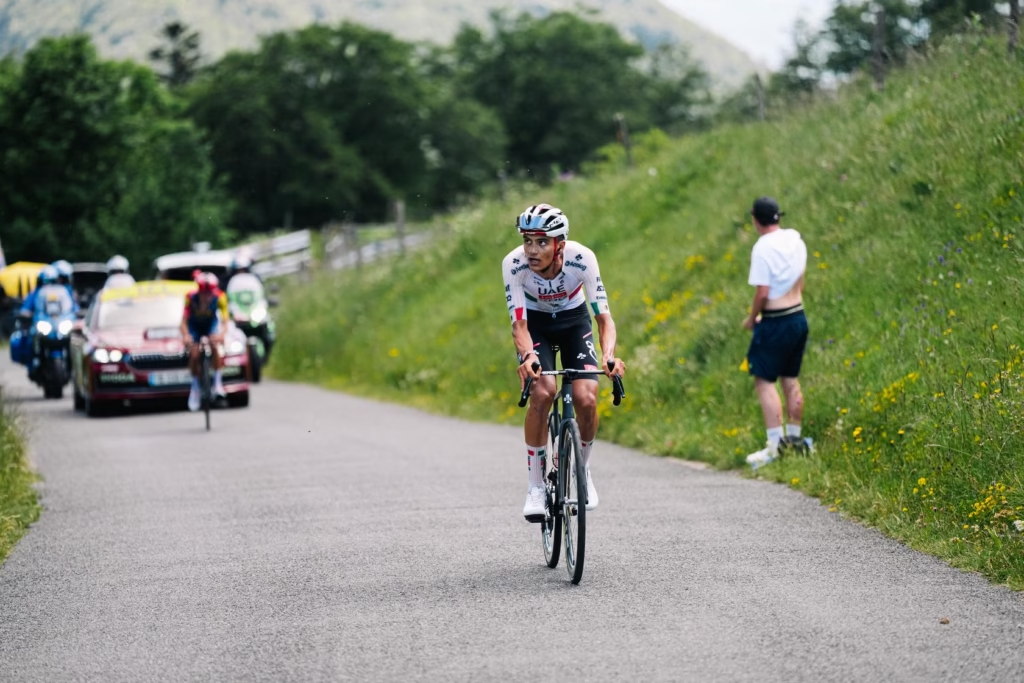
Isaac del Toro faces the biggest test of his podium position
Del Toro begins the stage third overall, 58 seconds behind Evenepoel.
His position is strong but vulnerable.
The Mexican has climbed with the best riders in the race and again demonstrated his form by finishing third on Plateau de Solaison.
The time trial asks a different question.
Del Toro must maintain enough speed on the flatter sections to prevent Seixas, Lipowitz and Ayuso from moving closer. He does not need to beat Evenepoel or Pogačar.
He needs to produce a controlled ride without a major technical or pacing error.
His 25-second advantage over Seixas is particularly fragile.
A reasonable ride could preserve third place. A loss of 30 or 40 seconds may remove him from the provisional podium before the Alps begin.
UAE must also decide how much attention it gives to Del Toro’s result.
Pogačar’s yellow jersey remains the priority, but protecting a second rider on the podium would be an important team objective.
Paul Seixas can gain a podium place without winning
Seixas begins only 25 seconds behind Del Toro.
That makes third place a realistic possibility.
The French rider’s main strength has been climbing, and he has limited experience in a Tour-level time trial carrying this much general classification pressure.
The route is not entirely against him.
Its opening climb allows Seixas to use his power-to-weight advantage, while the overall distance is short enough to reduce the damage that a pure specialist could inflict over 40 or 50 kilometres.
The faster second half is the concern.
Seixas must remain aerodynamic, descend efficiently and avoid losing rhythm after the main climb.
He does not need an extraordinary result.
Finishing close to Del Toro could keep him within striking distance of the podium before the Alps. Beating him by 26 seconds would move Seixas into third overall.
The stage will reveal whether his podium challenge is built only around climbing or whether he can defend it across every discipline.
For more on the scale of his breakthrough and the expectations surrounding him, see our feature on Paul Seixas and the next French Tour de France generation.
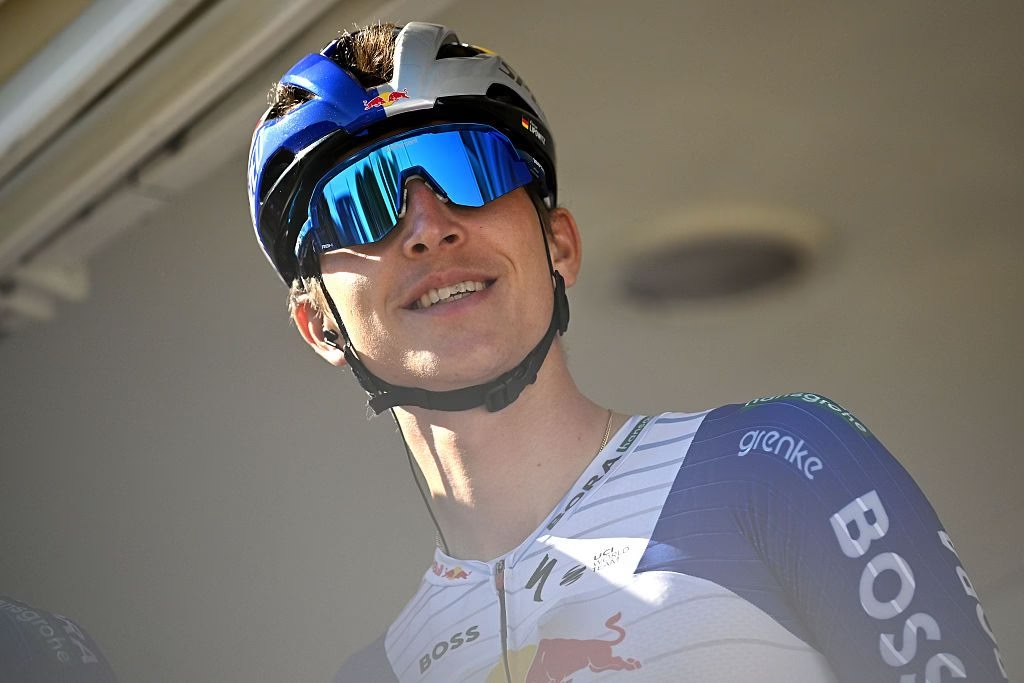
Florian Lipowitz could be the rider who gains most
Lipowitz may be the most dangerous podium challenger behind Evenepoel.
He begins fifth overall, 50 seconds behind Del Toro and 25 behind Seixas.
The German combines strong climbing with a better time-trial profile than several riders around him.
He should be able to use the opening rise without losing excessive speed on the remainder of the course.
That balance gives him a realistic chance of gaining on both Del Toro and Seixas.
A strong ride could move Lipowitz directly onto the podium.
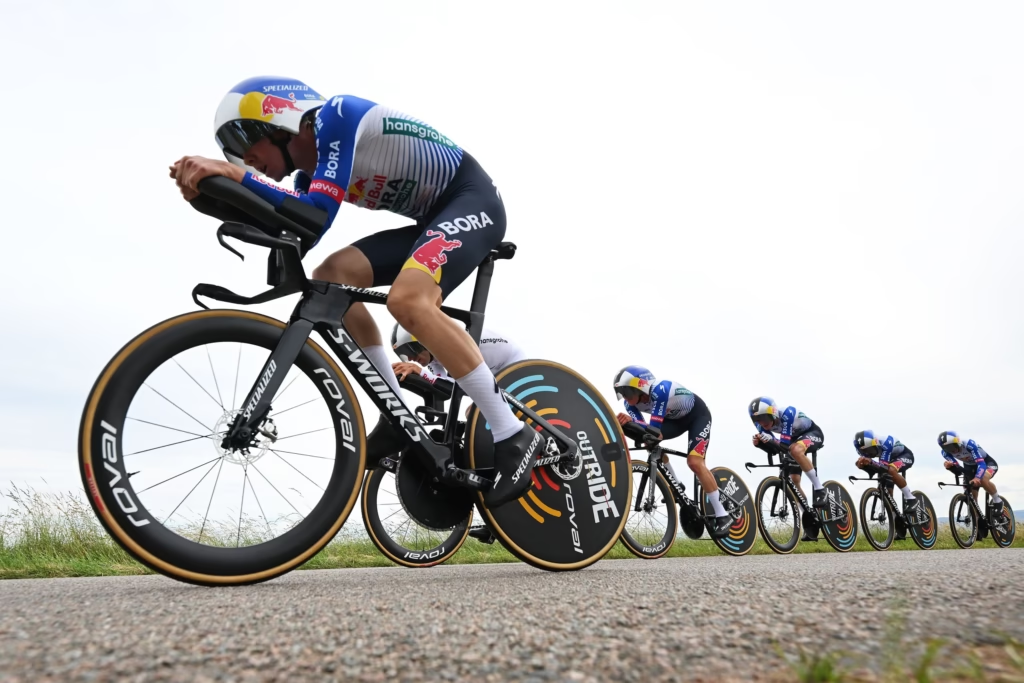
Red Bull-Bora-hansgrohe also has a useful tactical position. Evenepoel can concentrate on winning the stage and strengthening second, while Lipowitz can pursue his own ride without being required to sacrifice time for his leader.
The team could leave Stage 16 with two riders inside the top three.
That would be one of the biggest possible changes to the standings.
Red Bull’s depth and ability to use Evenepoel and Lipowitz as separate GC cards were highlighted in our Tour de France 2026 team-by-team guide.
Juan Ayuso needs to begin his recovery here
Ayuso enters Stage 16 sixth overall, 1:27 behind Del Toro and 1:02 behind Seixas.
His podium position is less immediate, but the time trial provides an opportunity to reduce those gaps.
Ayuso should perform better than his position might suggest.
He is a capable time triallist and should be comfortable on a course mixing climbing with faster sections.
He needs more than a respectable ride.
Ayuso must take meaningful time from Del Toro and Seixas if he wants to bring the podium within reach before the final mountain stages.
A gain of 30 seconds would help but still leave him needing an Alpine attack.
A gain closer to one minute would completely reopen his Tour.
The stage could also change Lidl-Trek’s internal priorities.
If Ayuso moves significantly closer to third, the team will have a clear podium objective. If he loses more time, stage victories and the team classification may become more realistic targets.
Ayuso’s suitability for a Tour containing both major climbing and an important individual test was examined in our Juan Ayuso Tour de France 2026 guide.
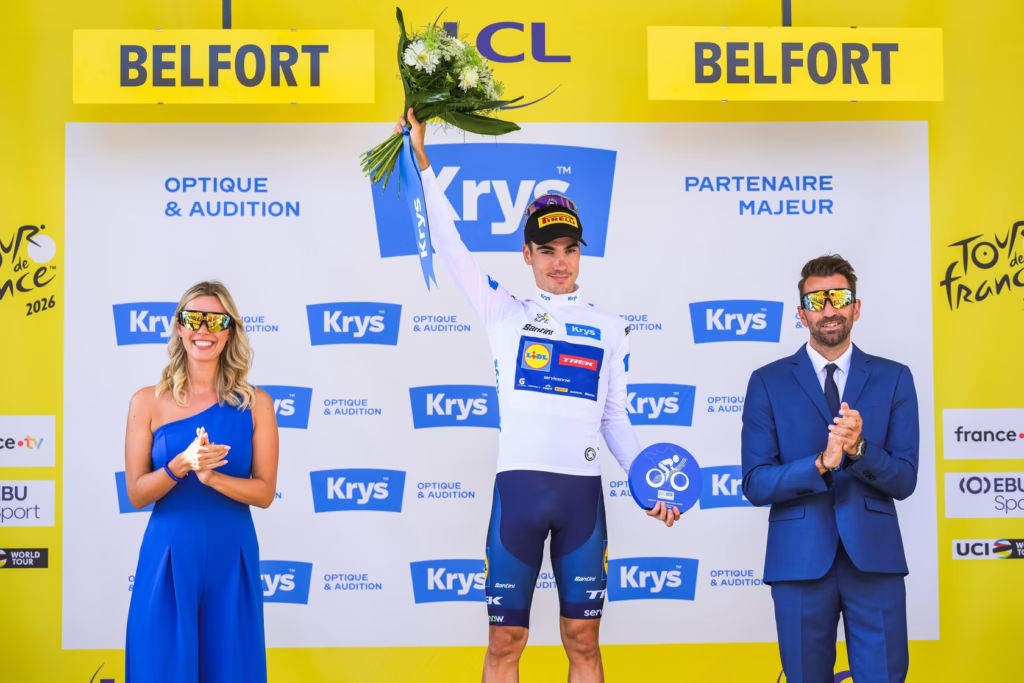 Photo Credit: A.S.O./Charly López
The white jersey could change again
Del Toro leads the young rider classification.
Seixas is 25 seconds behind him, with Ayuso at 1:27 and Lipowitz also involved in the wider battle.
Stage 16 may therefore change both the podium and white jersey standings simultaneously.
Seixas needs to limit losses on the faster terrain.
Del Toro must defend his advantage.
Lipowitz and Ayuso can use the discipline to move closer before the Alps.
The classification is too tight for any rider to approach the stage conservatively.
Every second gained in Thonon-les-Bains may reduce the number of attacks required later in the week.
The wider depth of this generation was clear before the race in our guide to the young riders to watch at the Tour de France 2026, while our Tour de France jerseys explainer covers how the white jersey is decided.
Filippo Ganna remains the biggest specialist threat
Ganna is the most obvious challenger to Evenepoel for the stage victory.
The Italian has the raw power and aerodynamic efficiency to dominate a flat time trial. The 500 metres of climbing makes this course less ideal, but it does not remove him from contention.
Ganna’s challenge is limiting losses on the opening rise.
If he can remain close to Evenepoel at the top, the faster middle and final sections may allow him to regain time.
His size also helps on descents and rolling terrain where momentum matters.
The difficulty is that Evenepoel can climb significantly faster without surrendering much aerodynamic efficiency.
Ganna may need to produce a near-perfect pacing performance and hope Evenepoel pays for his Stage 15 effort.
He was one of the central names in our pre-race guide to the best time triallists at the Tour de France 2026.
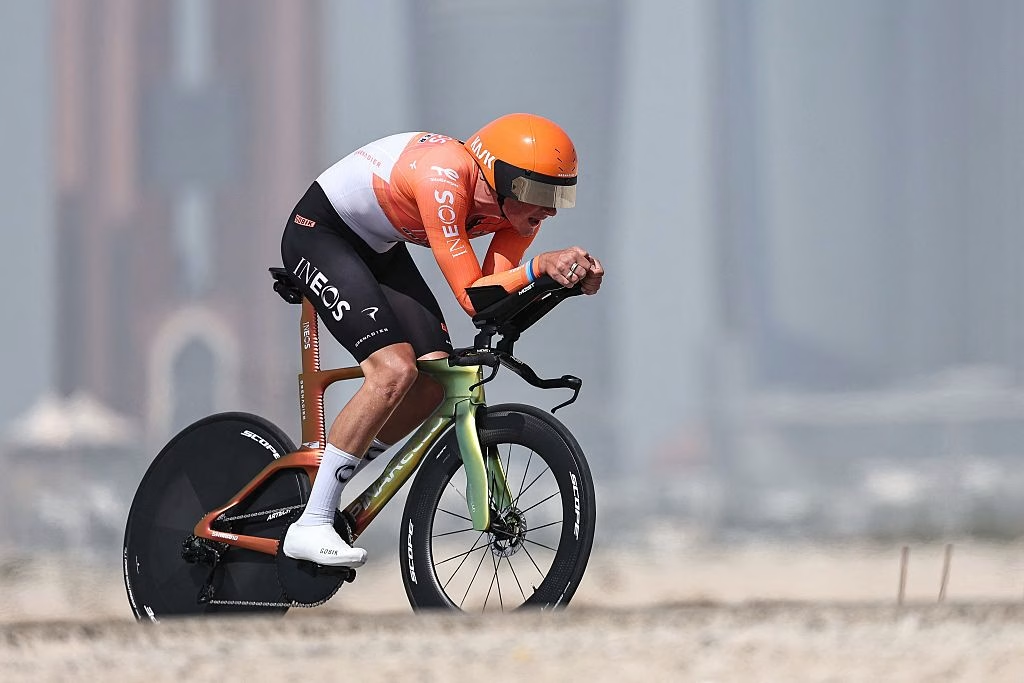 Photo Credit: Getty
Joshua Tarling has the power to win
Tarling is another genuine stage-winning candidate.
The British rider combines exceptional power with a time-trial position capable of competing against the best specialists.
The route should suit him slightly less than a flat course, but his climbing has improved enough for the opening section not to eliminate him automatically.
Tarling may also benefit from having no general classification reason to ride conservatively.
He can take every technical and pacing decision with the stage victory in mind.
That freedom separates him from Evenepoel and Pogačar, who must balance the stage against the larger Tour.
Tarling needs to avoid overpacing the first climb.
If he reaches the faster roads within touching distance, he has the power to challenge for the win.
Tobias Foss is a dangerous outsider
Foss should not be overlooked.
The Norwegian is a former world time-trial champion and remains capable of a major result when the course suits him.
Stage 16 gives him enough climbing to separate him from heavier specialists while retaining enough speed for his aerodynamic ability to matter.
He does not carry the same expectation as Evenepoel, Ganna or Tarling.
That may help.
Foss can ride according to his own numbers without worrying about intermediate comparisons or general classification consequences.
A podium finish would not be surprising.
Winning would require his best performance for several seasons, but the route gives him a better chance than a completely flat course might.
Edoardo Affini can target a top-five result
Affini becomes a more interesting contender after Vingegaard’s withdrawal.
Visma-Lease a Bike no longer needs him to save energy for protecting its leader in the following stages.
He can ride Stage 16 entirely for his own result.
Affini has repeatedly produced strong rides against the clock and possesses the power to challenge on the faster sections.
The climbing is not ideal for him, but the distance is manageable.
A top-five finish would represent a strong result. A stage victory would require the main favourites to underperform.
His freedom against the clock is one of the opportunities created by Visma’s tactical reset, explored in our analysis of what Visma-Lease a Bike can do after losing Jonas Vingegaard.
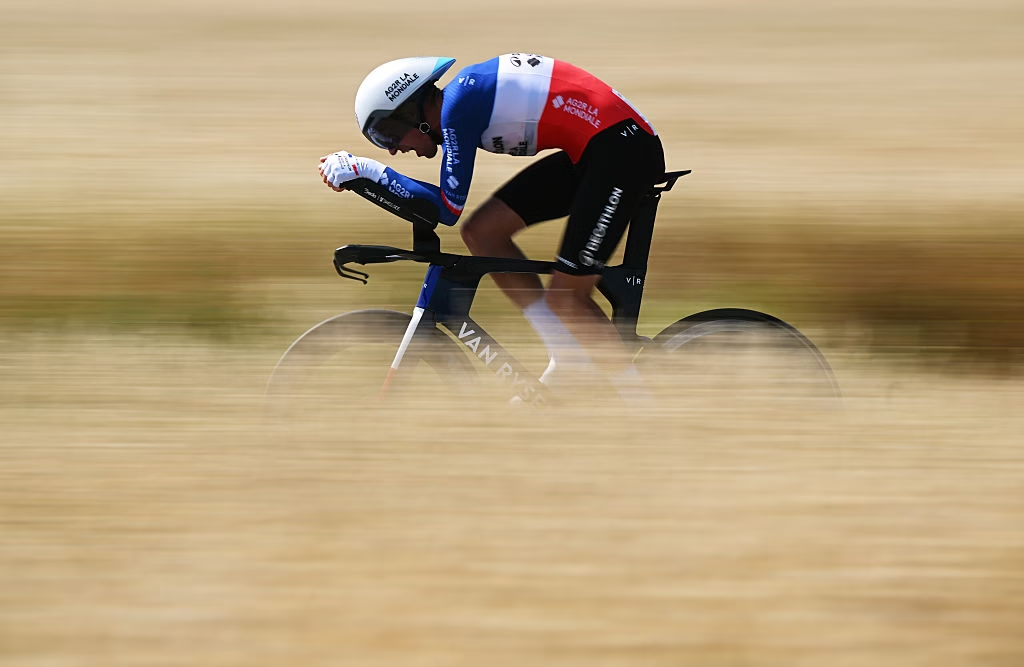
Bruno Armirail could surprise on home roads
Armirail is another rider who gains freedom following Vingegaard’s exit.
The Frenchman is an accomplished time triallist and should handle the mixed terrain better than some larger specialists.
He also has the motivation of racing a Tour time trial in France without needing to preserve energy for a GC leader.
The route’s opening climb should suit him.
Armirail is unlikely to match Evenepoel’s combination of climbing and aerodynamics, but a top-10 result is realistic.
He could also become one of Visma’s best early benchmarks before the leading riders start.
Other riders who could reach the top 10
Several riders may not be likely winners but have the profile to produce a strong stage.
Tadej Pogačar
Pogačar is a genuine stage favourite rather than merely a GC rider. The climbing and rolling terrain suit him, while his yellow jersey position allows him to pace according to Evenepoel’s splits.
Florian Lipowitz
Lipowitz’s podium ambitions give him additional motivation. A top-five stage result could also move him into the top three overall.
Juan Ayuso
Ayuso has enough time-trial ability to gain on Del Toro and Seixas while threatening the stage top 10.
Matteo Jorgenson
Jorgenson now has freedom following Vingegaard’s withdrawal. The opening climb and rolling terrain suit his all-round power better than a completely flat course would.
His range as both a time triallist and mountain support rider is covered in our Matteo Jorgenson Tour de France 2026 profile.
Kévin Vauquelin
Vauquelin is capable against the clock and should benefit from the climbing. He can target a strong result without needing to protect a major GC position.
Thymen Arensman
Arensman has the climbing and pacing ability to perform well on a course that rewards consistency more than pure speed.
Who is the favourite to win Stage 16?
Evenepoel remains the clear favourite.
The route requires exactly the combination he offers:
- Elite aerodynamic efficiency
- High sustained climbing power
- Strong pacing
- Technical confidence
- Proven performance under GC pressure
- The ability to recover after a difficult mountain stage
Ganna and Tarling are the principal specialist challengers.
Pogačar is the strongest GC threat and may win if Evenepoel is slightly below his best.
Foss, Lipowitz, Ayuso, Affini and Armirail form the next group of contenders.
The course prevents a simple specialist hierarchy.
The strongest rider on flat roads may not win. The best climber may also lose too much time elsewhere.
The winner must manage every part of the course.
Predicted Stage 16 contenders
Five-star favourites
- Remco Evenepoel
- Tadej Pogačar
Four-star contenders
- Filippo Ganna
- Joshua Tarling
Three-star outsiders
- Tobias Foss
- Florian Lipowitz
- Juan Ayuso
- Edoardo Affini
Riders capable of a top-10 result
- Bruno Armirail
- Matteo Jorgenson
- Kévin Vauquelin
- Thymen Arensman
- Isaac del Toro
-
 Photo Credit: SWPix.com
What would count as a successful ride for each GC contender?
| Rider | Successful outcome |
|---|---|
| Tadej Pogačar | Limits losses to Evenepoel and keeps a lead comfortably above four minutes |
| Remco Evenepoel | Wins the stage, gains on Pogačar and extends his advantage over third |
| Isaac del Toro | Retains third overall and the white jersey |
| Paul Seixas | Remains within striking distance of the podium |
| Florian Lipowitz | Gains enough time to move into or close on the top three |
| Juan Ayuso | Recovers at least 30 seconds on the riders ahead |
The stage does not offer every rider the same objective.
Pogačar can afford to manage.
Evenepoel must attack.
Del Toro and Seixas must defend.
Lipowitz and Ayuso need to gain.
That combination should make the intermediate times as important as the stage result itself.
Can Stage 16 reopen the Tour de France?
Probably not at the front.
Pogačar’s five-minute advantage is too large, and his own time-trial ability is too strong, for Evenepoel to transform the race in one day without an unusual incident.
The stage can still change almost everything behind yellow.
Evenepoel can secure second place.
Del Toro could lose the podium.
Seixas could move into third.
Lipowitz may become Red Bull-Bora-hansgrohe’s second rider inside the top three.
Ayuso can bring himself back into contention.
The white jersey can change hands, and the tactical balance before the Alps may look completely different.
That is why 26.1km is enough to matter.
Stage 16 is unlikely to decide who wins the 2026 Tour de France.
It may decide who stands beside Pogačar in Paris.

