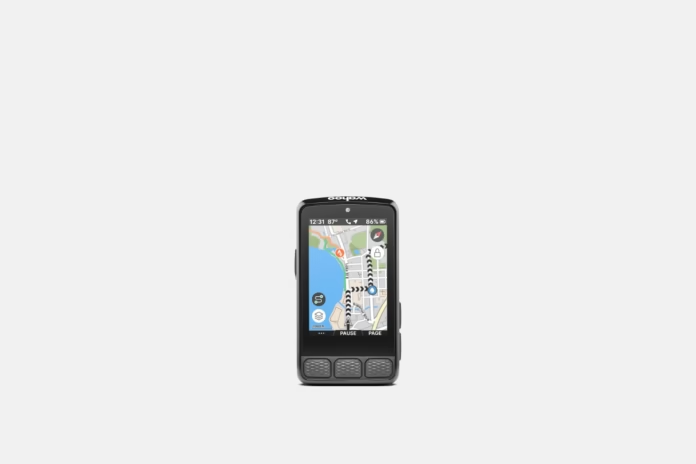
The Garmin Edge 850 and Wahoo ELEMNT ROAM 3 sit in much the same part of the GPS computer market, but their priorities are noticeably different. Garmin concentrates a deep set of training and navigation tools into a compact, exceptionally bright display. Wahoo favours an approachable interface, a slightly larger screen and more time between charges. Both have touchscreens and physical buttons, so the old argument about which brand is easier to use in winter is no longer straightforward.
At the UK prices checked on 2 November 2026, the Edge 850 was £429.99 and the ROAM 3 £359 at Sigma Sports, with both exact models listed in stock. That £70.99 difference matters more than a minor variation in screen size. The question is whether Garmin’s extra features will be used often enough to justify paying more, particularly when the Wahoo offers substantially longer claimed battery life.
This is a research-led comparison based on official specifications and published independent testing. ProCyclingUK has not tested these two units side by side. Battery figures are manufacturer estimates unless a particular independent test is identified. The focus is on which compromises make sense for different kinds of riding.
Garmin Edge 850 vs Wahoo ELEMNT ROAM 3 at a glance
| Specification | Garmin Edge 850 | Wahoo ELEMNT ROAM 3 |
|---|---|---|
| UK price checked, 2 Nov 2026 | £429.99 at Sigma Sports | £359 at Sigma Sports |
| Display | 2.7in colour touchscreen | 2.8in colour touchscreen |
| Controls | Touchscreen and physical buttons | Touchscreen and six physical buttons |
| Claimed battery life | Up to 12h demanding use; up to 36h saver | Up to 25h, depending on settings |
| Storage | 64GB | 64GB |
| Weight, unit | 113g | 109g |
| Navigation | On-device search, routing, Garmin mapping | Offline maps, voice turns, route and waypoint tools |
| Charging | USB-C | USB-C |
| Water rating | IPX7 | IPX7 |
Those battery claims are not identical test protocols. Garmin’s 36-hour figure depends on a battery-saving mode that limits normal screen and recording behaviour. Wahoo’s 25-hour claim also varies with backlight, connected sensors and navigation. Treat the figures as indications of the products’ design priorities, not guaranteed hours on every ride.
Screen and controls: the differences are smaller than they look
The Edge 850 uses a 2.7-inch high-resolution colour screen with touch input and a full set of physical buttons. It is a compact unit rather than a miniature smartphone. Independent testing from Cycling Weekly praised the bright, sharp display and responsive touchscreen, while also reporting occasional connection issues after auto-sleep. The touchscreen is useful for inspecting a junction or moving around a map, but the buttons remain important in heavy rain and when wearing winter gloves.
Wahoo’s 2.8-inch ROAM 3 has a fractionally larger display, with a 320 by 480 pixel resolution, pinch-and-zoom interaction and six buttons. The interface is built around relatively uncluttered ride screens and an easy-to-follow Ready-To-Ride dashboard. Cycling Weekly found its touchscreen responsive in dry weather and the physical controls reassuring when conditions deteriorated. Road.cc was positive about the clarity and speed of the interface but noted that excess water can occasionally trigger touchscreen behaviour.
A tenth of an inch does not decide this contest. Garmin is the stronger choice if your priority is a vivid screen with a dense selection of training fields and tools. Wahoo is attractive if you want the route, your next turn and a few essential numbers presented with minimal fuss. Riders who spend most of a ride on a single data page are unlikely to notice much difference once everything is configured.
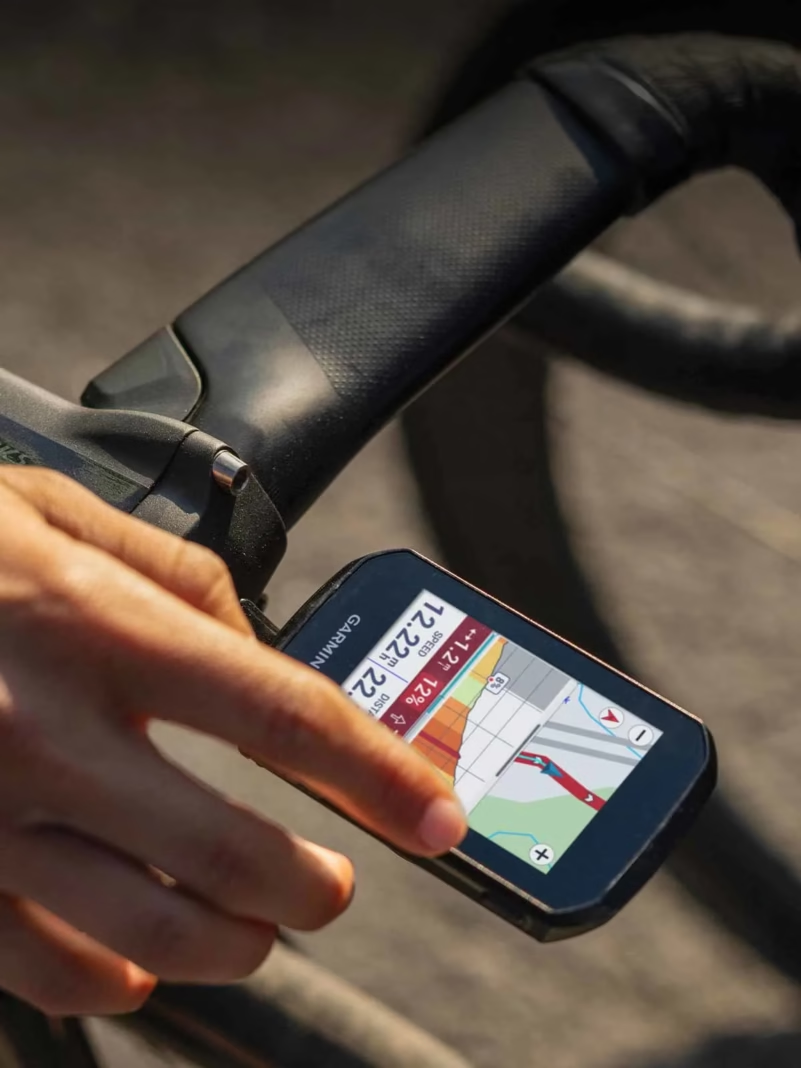 Photo Credit: Garmin
Navigation: Garmin offers more depth, Wahoo makes the essentials easier
Both devices can follow imported routes, display detailed maps, reroute after a wrong turn and work with major route-planning services. Garmin adds extensive on-device search, points of interest, ClimbPro, GroupRide functions and integrations across Garmin Connect. The Edge 850 also supports spoken navigation prompts and a digital bell through its built-in speaker. Some weather and live features require a connected phone, and advanced training metrics need the relevant sensors.
The ROAM 3 provides offline global mapping, audible turn-by-turn directions, 64GB of storage and route sharing through services including Strava, Komoot and Ride with GPS. Its Summit feature can identify climbs while riding, and the companion Wahoo app handles much of the setup. That app-first approach is convenient for a rider who plans routes on a phone, but can be less appealing to someone who wants to change every detail directly on the computer.
For an unfamiliar sportive with several awkward junctions, either is capable. Garmin’s deeper search and route-management options become more valuable when plans change mid-ride or you want to find a destination without reaching for your phone. Wahoo’s simpler route presentation may be preferable when you already know where you are going and want reliable prompts without working through layers of menus.
Neither unit is a substitute for judgement on a complicated road layout. A navigation prompt can arrive at an awkward moment, and a mapped cycle route may include a junction or surface that needs assessing in person. The best system is the one you can understand with a quick glance rather than a long look away from traffic.
Battery life is the clearest reason to favour Wahoo
Garmin quotes up to 12 hours for demanding Edge 850 use and up to 36 hours in battery-saver mode. Wahoo quotes up to 25 hours for the ROAM 3. The numbers need context, but independent testing supports the broad gap. In a direct comparison, BikeRadar reported approximately 11 hours from the Edge 850 and 18 hours from the ROAM 3 under its usual sensor and screen settings. Those are observations from one test setup, not controlled laboratory guarantees.
For a regular two-hour club ride, the difference is mostly about charging frequency. For a 200km event, a long gravel day or an audax, it becomes a genuine purchasing factor. Garmin’s battery-saving options can stretch its range, but reducing screen use and recording behaviour is a compromise rather than free extra endurance. The Edge 850 can also use external power solutions, although that adds cost and equipment.
Wahoo’s advantage does not mean every ROAM 3 will last 25 hours. Road.cc and Cycling Weekly both found the practical battery performance depended on usage, and riders running high brightness, navigation and multiple sensors should expect less than the headline maximum. Nevertheless, for someone regularly spending eight hours or more in the saddle, Wahoo offers a more comfortable margin without immediately changing settings.
 Photo Credit: Wahoo
Training, sensors and the wider ecosystem
Garmin’s appeal grows if you train with power, follow structured workouts and use Garmin Connect to review performance. The Edge 850 supports tools such as Power Guide, stamina, training status, Garmin Coach and tailored fuelling alerts. The last of these can suggest carbohydrate and fluid intake based on the course and workout, but it should not be treated as a substitute for an individual nutrition plan. Several advanced functions need a paired power meter or heart-rate sensor to be useful.
Wahoo covers the fundamentals well: structured workouts, power and heart-rate recording, Strava Live Segments, climb information and broad ANT+ and Bluetooth sensor compatibility. Its integration with KICKR trainers is particularly convenient if your winter routine moves between road and turbo. It does not attempt to replicate every Garmin performance metric, and that restraint can be an advantage for riders who analyse training elsewhere.
Both can connect to compatible rear radar units, shifting systems and other sensors. Owning a Garmin radar does not automatically require a Garmin head unit, just as owning a Wahoo trainer does not prevent you using Garmin outdoors. Check specific feature support before buying, however, because the basic sensor connection and the full set of brand-specific controls are not always the same thing.
Price, availability and long-term value
On 2 November, Sigma Sports listed the Garmin Edge 850 at £429.99 and the Wahoo ELEMNT ROAM 3 at £359, both available for delivery. These are observed UK listings, not permanent RRPs or promises that the same stock and prices will remain available. Both links are direct, non-affiliate retailer destinations.
The Wahoo is £70.99 cheaper on those listings. That is enough to cover a useful mount, winter gloves or a significant contribution towards a rear light. The Garmin makes more sense when its extra training tools, on-device search and brighter display are part of your normal riding, rather than features you might try once. An inexpensive computer with features you use can be better value than an expensive one whose menu remains unexplored.
There are less expensive alternatives within both brands. Our Edge 550 versus Edge 850 comparison looks at Garmin’s button-only option, while the BOLT 3 versus ROAM 3 comparison considers whether Wahoo’s larger screen is worth paying for. For a wider shortlist, see our £250 to £500 GPS computer guide.
What independent testers agree on, and where they differ
The broad consensus is that both are capable computers with strong navigation and useful physical controls. Cycling Weekly particularly liked the Edge 850’s screen and feature set but criticised its battery life. Its ROAM 3 review was positive about the clearer mapping, touchscreen and intuitive operation. Road.cc rated the ROAM 3 highly while identifying occasional wet-screen behaviour and app limitations.
BikeRadar’s direct comparison gives a useful perspective on endurance because the reviewer used both units under similar riding conditions. It should still be read as a practical test, not a universal battery benchmark. Screen readability, map preferences and touch behaviour are influenced by riding conditions, eyesight and the type of route. There is no evidence here to claim one unit has universally more accurate GPS tracking than the other.
Which should you buy?
Choose the Garmin Edge 850 if you want a compact, exceptionally bright screen, substantial on-device route controls and a rich set of training features. It is especially persuasive for riders already invested in Garmin Connect who routinely use power-based workouts and performance analysis. Accept that you will charge it more frequently, and think carefully before choosing it for very long rides without an external power option.
Choose the Wahoo ELEMNT ROAM 3 if your priorities are dependable navigation, uncomplicated controls and a better endurance margin. It is the more convincing buy for all-day rides, bikepacking and riders who prefer setting things up through a phone. At the verified prices it is also the less expensive option. Its app-led setup and occasional touchscreen quirks are worth knowing about, but neither cancels the battery and usability advantages for the right rider.