
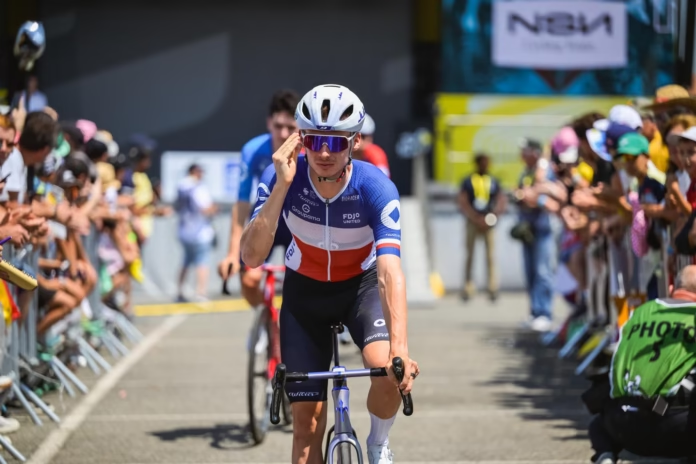
Every Tour de France stage matters, but 14 July carries a different weight for a French rider.
Bastille Day is France’s national holiday, known locally as le 14 juillet. Across the country, it is marked by military parades, public celebrations, flags and fireworks. Inside the Tour, it creates an annual race within the race: the pursuit of a French stage victory on the country’s most symbolic day.
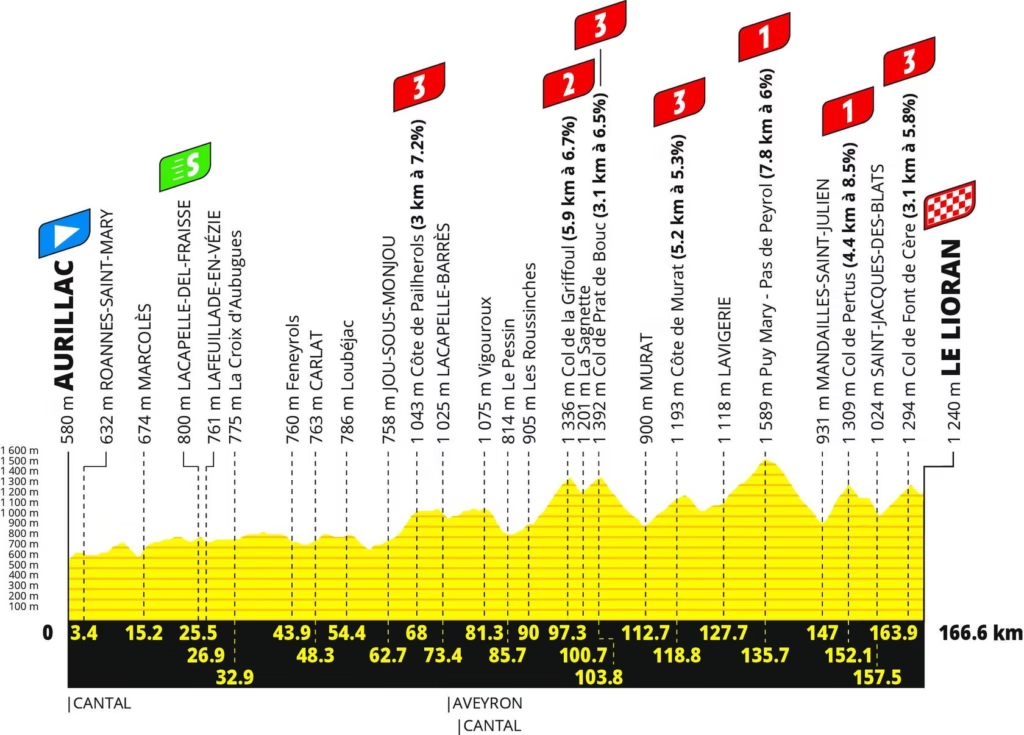
Stage 10 of the 2026 Tour gives the home riders a particularly attractive opportunity. The 166.6km route from Aurillac to Le Lioran contains 3,800 metres of climbing, with Puy Mary, the Col de Pertus and the road towards Le Lioran shaping a difficult final hour.
The full Tour de France 2026 stage 10 preview explains why the repeated climbs should favour attackers rather than a conventional sprint.
It is not a day reserved for Tadej Pogačar and Jonas Vingegaard, even if their general classification rivalry will dominate the coverage. A strong breakaway could still contest the victory, and French riders will be determined to place themselves in it.
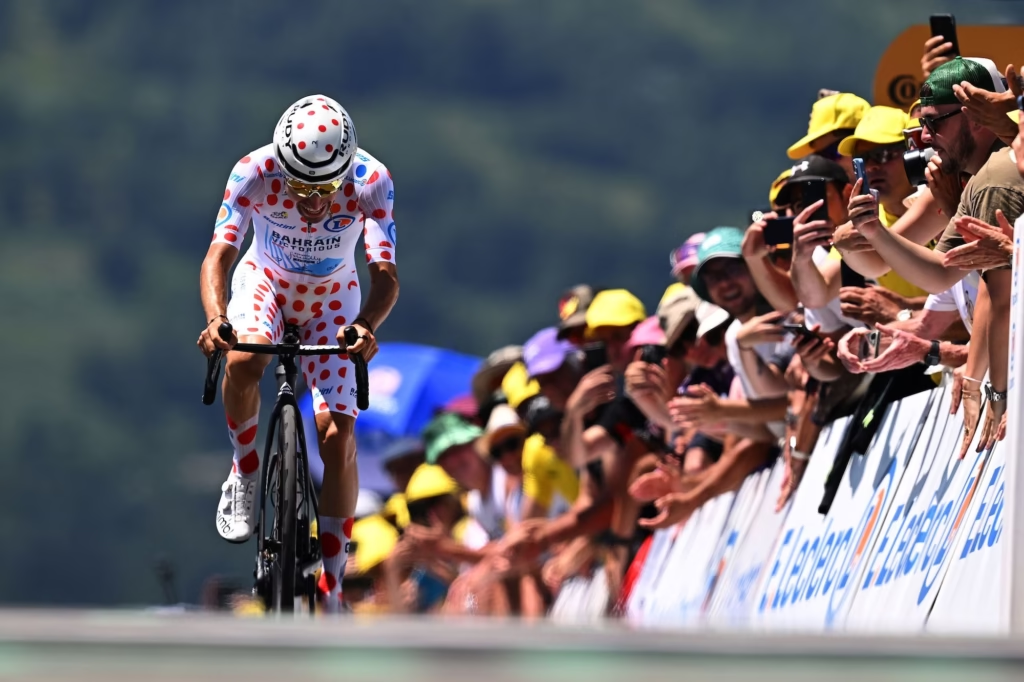
Why does Bastille Day matter so much in France?
The national holiday is closely associated with the storming of the Bastille on 14 July 1789, one of the defining moments of the French Revolution.
For most people in modern France, the day is less about studying the details of the revolution and more about national identity, public celebration and shared culture. The Tour de France fits naturally into that atmosphere because it is one of the country’s most visible cultural institutions.
The race moves through towns, villages and rural landscapes while millions watch from the roadside or on television. When a Tour stage takes place on 14 July, it becomes part of the wider national celebration rather than simply another day of professional cycling.
French flags are more prominent. Crowds are larger and louder. Television coverage spends more time discussing the home riders, while French teams know that the audience watching them is considerably broader than usual.
A victory on any Tour stage can define a rider’s career. Winning on Bastille Day adds a national story that continues to be repeated long after the result itself.
The Tour’s unofficial national stage
The Tour de France is an international race contested by commercial teams, not national squads.
French riders are spread across teams from several countries, while French teams employ riders of many nationalities. There is no rule requiring a French squad to ride for a French leader on 14 July, and no obligation for riders from rival teams to cooperate because they share a nationality.
The emotional reality is more complicated.
French riders know what a victory would mean. Team managers know the publicity it would generate. Sponsors understand that a strong performance on Bastille Day can provide greater domestic exposure than a similar ride on almost any other stage.
That creates a powerful incentive to attack. A French rider who joins the breakaway immediately becomes part of the day’s central story, even if the move is eventually caught.
The pressure is not always comfortable. Every French rider cannot win, and many will have team duties that prevent them from pursuing a personal result. Yet the expectation remains visible from the opening kilometres.
France’s long and sometimes complicated relationship with its home race runs through the careers of the greatest French riders at the Tour de France, from five-time champions to breakaway specialists who built their reputations through memorable stage wins.
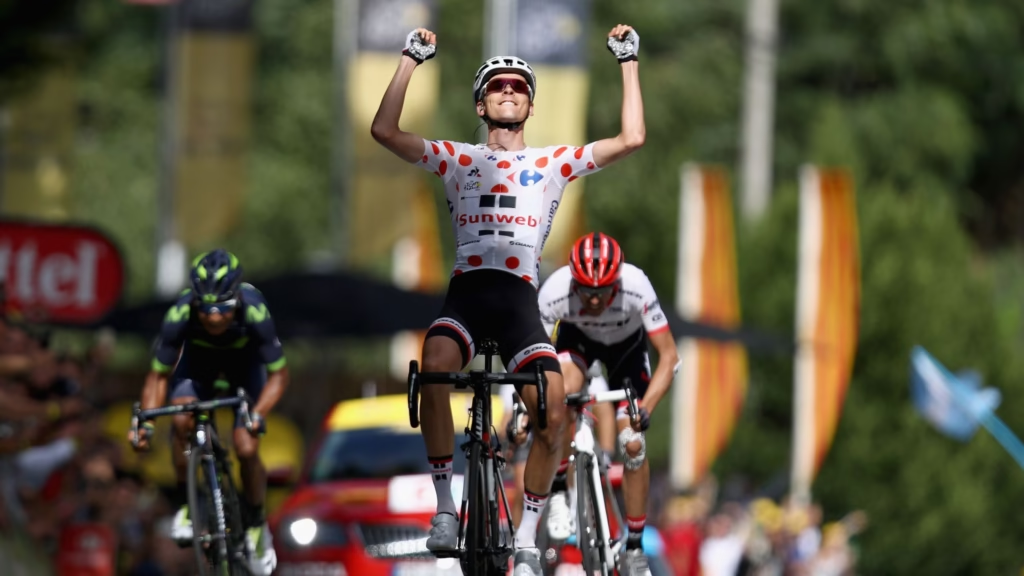
Warren Barguil remains the last French winner on 14 July
The most recent French rider to win a Tour stage on Bastille Day is Warren Barguil, who triumphed in Foix in 2017.
That stage was only 101km long but included three category-one climbs. Barguil survived an aggressive mountain race before beating Nairo Quintana, Alberto Contador and Mikel Landa at the finish.
It was Barguil’s first Tour de France stage victory and ended a 12-year wait for a French Bastille Day winner. The previous home success had come through David Moncoutié in Digne-les-Bains in 2005.
That long gap explains why the narrative returns every year. A French victory is treated as something that should happen, but history shows how difficult it is to achieve.
The strongest riders in the world do not step aside for the occasion. The yellow jersey still has responsibilities, sprint teams still chase and international stage hunters understand the value of winning on one of the Tour’s most watched days.
Why French teams will attack early
The first objective is to place at least one rider in the breakaway.
That sounds straightforward, but Bastille Day can make the opening hour unusually aggressive. Several French teams may send riders forward, while French riders employed by international squads attempt to follow the same moves.
The result can be a long fight before the escape is established. One group may gain a small advantage, only for a team without representation to chase it down. Another counterattack follows, creating an exhausting sequence before the stage reaches its main climbs.
French teams do not necessarily need to control the final result to gain value from the move. A rider at the front receives television exposure, crosses categorised climbs in a prominent position and gives supporters someone to follow throughout the afternoon.
That is the traditional role of the French baroudeur, the persistent attacker prepared to spend hours ahead of the peloton. The wider Tour de France 2026 breakaway specialists guide looks at the riders most likely to pursue stages in that way.
On Bastille Day, however, visibility alone will not feel sufficient. The strongest French climbers and stage hunters will be looking for a move capable of surviving to Le Lioran.
Why stage 10 is better than a pure sprint stage
A flat stage ending in a conventional bunch sprint would narrow the list of realistic French winners.
The race would be controlled by teams built around the fastest finishers. French attackers could still join the early break, but their chances of surviving against several organised sprint teams would be limited.
Stage 10 offers a much broader route towards victory.
The repeated climbing should remove the pure sprinters from contention. It also makes the chase more difficult because teams cannot simply place several powerful riders at the front of the peloton and maintain a stable gap throughout the day.
Domestiques will tire. The breakaway will divide. General classification teams may decide they are only interested in protecting position rather than contesting the stage.
That creates space for climbers, puncheurs and breakaway specialists. France has far more riders capable of winning through that type of race than it has sprinters able to beat the quickest finishers in a fully controlled bunch sprint.
The route also provides several points from which to attack. A French rider does not need to wait until the final kilometre. The stage can be won by anticipating before Puy Mary, attacking on the Col de Pertus or carrying a small advantage across the Col de Font de Cère.
The stage ranks among the strongest opportunities in the Tour de France 2026 breakaway stages guide because the succession of climbs makes the race difficult for one team to control.
The breakaway has a genuine chance
The most important decision may be made by UAE Team Emirates-XRG rather than any French squad.
Pogačar leads Vingegaard by 2:42 and does not need to win the stage. UAE can allow a breakaway containing riders well behind in the general classification to build a substantial advantage, then concentrate on controlling Vingegaard during the final climbs.
That would create the ideal situation for the stage hunters.
The breakaway could contest the victory several minutes ahead while the leading GC riders conduct a separate race behind. A French rider strong enough to survive Puy Mary and Pertus would then have a realistic opportunity to win without needing to defeat Pogačar directly.
The difficulty is constructing the right group. A break containing too many powerful riders may alarm UAE or other teams. A weak escape may be caught once the pace increases during the final hour.
French squads will therefore want strength in numbers. Placing two riders in a large break allows one to follow attacks while the other conserves energy or provides support.
The pressure of Bastille Day may encourage cooperation between French riders from different teams, but only temporarily. Once the possibility of victory becomes real, commercial team interests and individual ambitions take over.
The stage 10 live viewing and start time guide identifies Puy Mary and the Col de Pertus as the point where the breakaway battle and GC race are most likely to overlap.
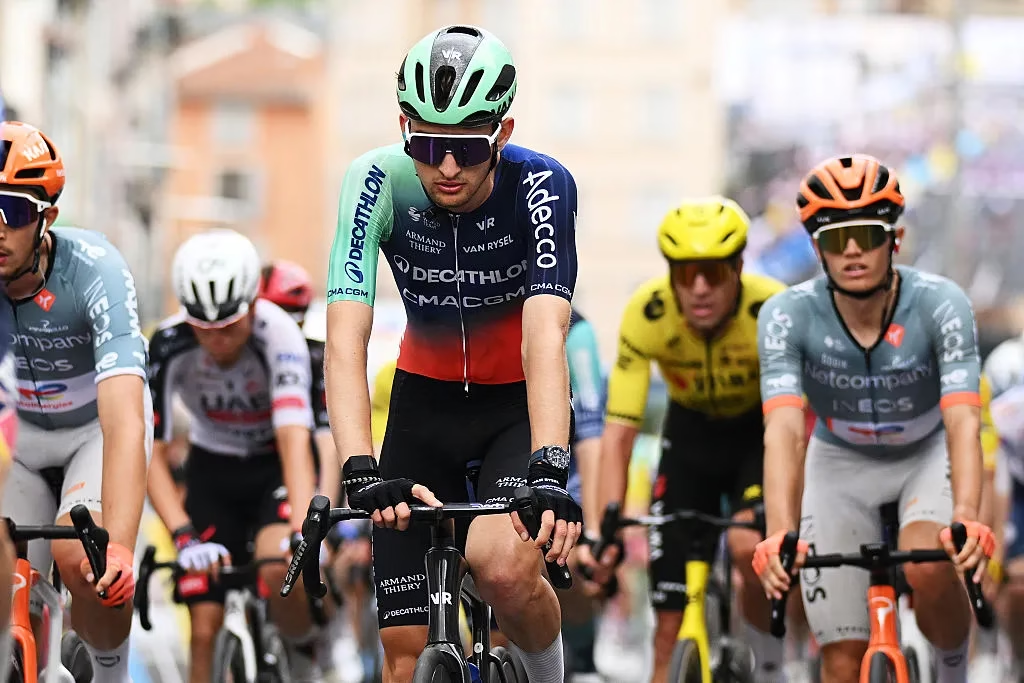
Paul Seixas faces a different Bastille Day challenge
Paul Seixas is the French rider receiving the greatest attention, but his position in the race makes a speculative breakaway almost impossible.
The 19-year-old begins stage 10 sixth overall, 3:55 behind Pogačar. He is close enough to the yellow jersey to be treated as a general classification threat, meaning UAE would never willingly allow him several minutes of freedom.
Seixas must therefore race with the favourites rather than the stage hunters.
A strong performance would still carry enormous significance. Following Pogačar and Vingegaard deep into the finale, protecting his overall position or attacking the other podium contenders would give the French public a major reason to celebrate.
The temptation will be to expect a dramatic national-holiday attack. Decathlon CMA CGM must balance that emotion against the importance of Seixas’s general classification campaign.
Losing several minutes through an impulsive move would not become sensible simply because the date is 14 July. His best Bastille Day result may be a disciplined ride that confirms he belongs among the Tour’s leading climbers.
That wider expectation is explored in Paul Seixas and the next French Tour de France generation.
Lenny Martinez may need permission from the GC group
Lenny Martinez is another obvious French rider for this terrain, although his freedom depends on his position in the overall standings and how closely UAE considers him a threat.
The short, steep climbs suit his acceleration. The Col de Pertus is particularly attractive because it rewards a rider capable of changing pace rather than maintaining one long mountain effort.
Martinez may therefore have to decide whether to wait with the favourites or attack from a reduced group later in the stage.
If he cannot join the original breakaway, a move on Puy Mary or Pertus could still place him in the battle for a top result.
He is among the leading French climbing options assessed in the Tour de France 2026 climbers guide.
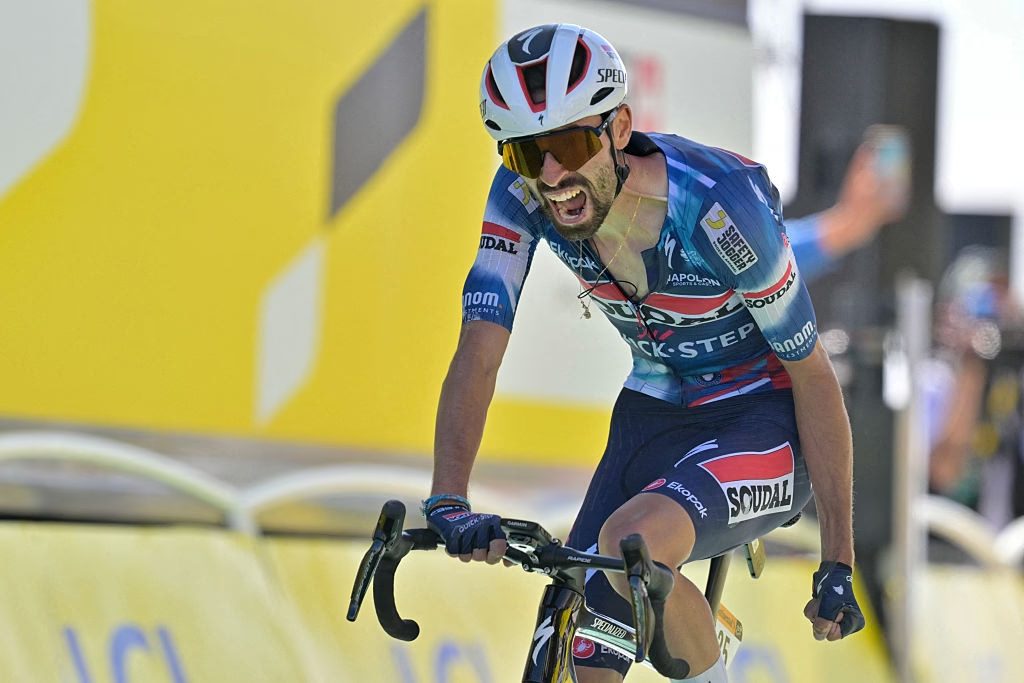 Photo Credit: Getty
Valentin Paret-Peintre has the profile of a stage hunter
Valentin Paret-Peintre may have a clearer route into the early breakaway.
He has the climbing ability required for the final sequence and an interest in collecting mountains classification points. That combination gives him a reason to attack before the GC race begins.
Paret-Peintre does not need to be the strongest rider in the peloton. He needs to be one of the strongest riders in the correct breakaway.
The ideal scenario would involve reaching the foot of Puy Mary with enough time to begin racing tactically. From there, he could follow the strongest climbers before using the steeper Col de Pertus to create separation.
His challenge is to conserve enough energy during the fight to establish the move. Entering the breakaway is only the first part of the job on a stage containing 3,800 metres of climbing.
Warren Barguil carries the history
Barguil’s presence gives the stage an obvious connection to 2017.
He is no longer expected to challenge the general classification, which should give him greater freedom to enter the breakaway. His experience also matters on a stage where riders must judge when to follow attacks and when to conserve energy.
A second Bastille Day victory would be one of the most remarkable stories of the race. Nine years have passed since Foix, and Barguil’s career has moved through several phases since he won two stages and the polka-dot jersey in 2017.
The obstacle is the depth of the field. Barguil would need to enter a strong move, survive almost 4,000 metres of climbing and then defeat younger riders on terrain that encourages repeated accelerations.
The romantic possibility is clear. The sporting task remains severe.
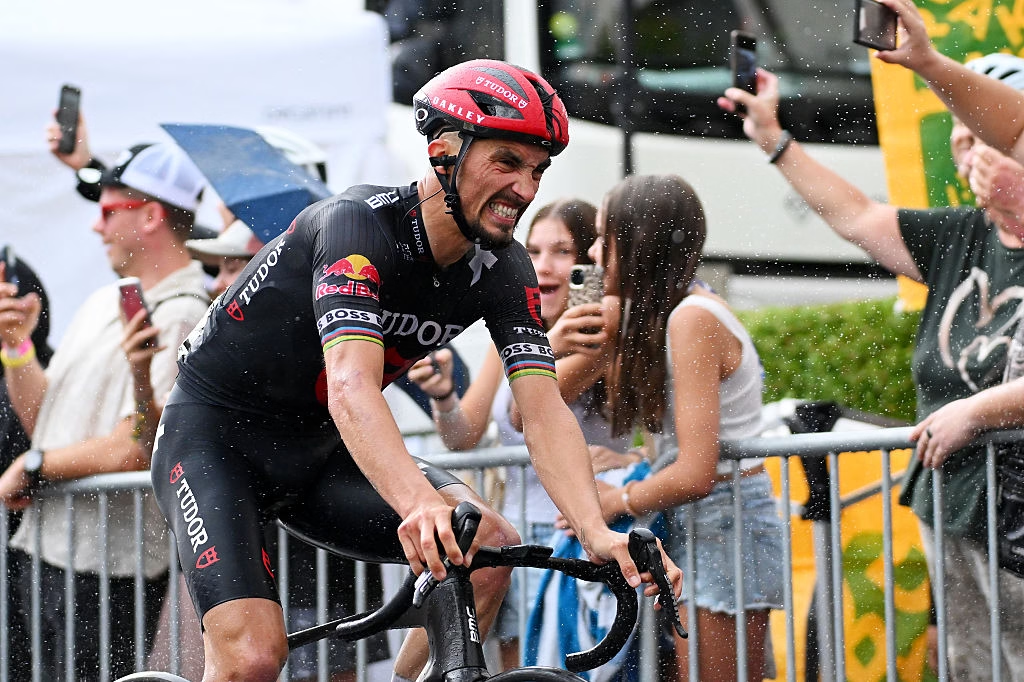
French riders cannot simply be allowed to win
The phrase “French riders will target Bastille Day” can create the impression that the peloton treats the stage differently for them.
It does not.
International teams want the same victory. Riders from Belgium, Spain, Britain, Colombia, Ecuador and elsewhere understand the prestige and exposure attached to winning on 14 July.
Some may even benefit tactically from the French obsession with joining the break. They can follow the attacks, allow the home riders to do more work and then exploit that energy later.
The GC favourites also shape what is possible. If Visma-Lease a Bike decides to make the stage extremely hard for Vingegaard, the breakaway may be caught regardless of how much motivation the French riders carry.
Pogačar is also an aggressive race leader who has shown little reluctance to pursue stage victories. A French rider reaching the final climbs at the front may still have the yellow jersey group approaching rapidly from behind.
Bastille Day increases motivation. It does not change the physical balance of the race.
A French win would need intelligence as well as emotion
The danger for the home riders is attacking too much.
The opening kilometres may be raced at exceptional speed, but the stage’s most important climbs are concentrated late in the route. A rider who spends too much energy forcing the breakaway may reach Puy Mary with little left.
The strongest French strategy is therefore not necessarily the most aggressive one.
A rider needs to enter the right move without becoming responsible for driving it throughout the day. They must eat, drink and stay protected in the heat, then arrive at the final sequence capable of making one decisive effort.
Numbers also matter. French teams with two riders in the escape can alternate attacks or force rivals to chase. A lone rider surrounded by several team-mates from another squad is much easier to control.
Emotion can create the initial move. Winning requires calm once the move has succeeded.
Why the roadside atmosphere matters
Professional riders are accustomed to noise, but Bastille Day creates a distinctive environment.
The roads through the Cantal should be packed with French flags and supporters who have used the public holiday to spend the day on the route. Every home rider moving through the breakaway will receive a reaction.
That support does not provide extra watts in any measurable sense, but it affects how the stage feels. Riders describe hearing their names, recognising flags from their home regions and sensing when the crowd understands the importance of the moment.
It can encourage someone to attack when their legs are beginning to fail. It can also push a rider into making a move that is emotionally satisfying but tactically premature.
The best performers use the atmosphere without being controlled by it.
-
 Photo Credit: Gaetan Flamme
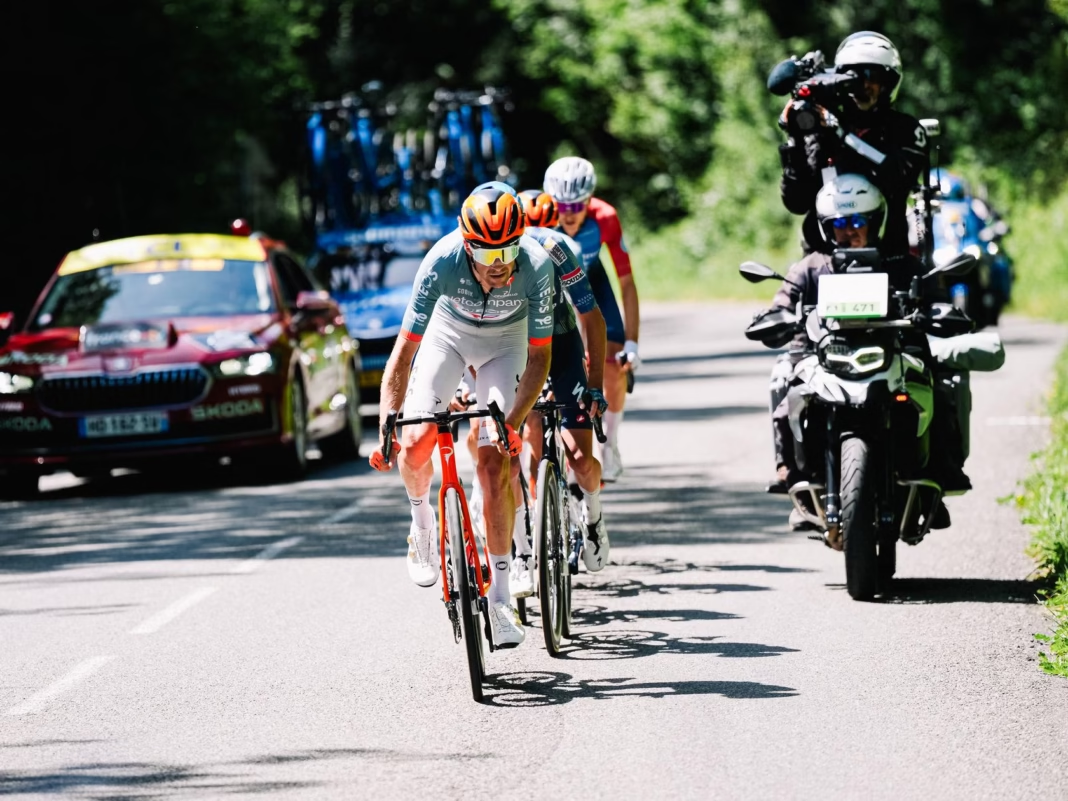
What would count as success for the French riders?
A stage victory is the obvious standard, but it is not the only possible success.
For Seixas, finishing with the leading GC contenders and protecting sixth place would strengthen his position as France’s most important young Tour prospect. The latest Tour de France general classification after stage 9 shows how close the young Frenchman remains to the wider podium contest.
For Martinez, a late attack or a move into the leading group could provide evidence that he can compete with the race’s strongest climbers.
For Paret-Peintre, Barguil or another stage hunter, success requires reaching the decisive final hour at the front. Once there, the ambition must become victory rather than combativity.
A long breakaway without the result would still create visibility for a French team, but the national audience has seen enough symbolic attacks. The real desire is to end the wait that has continued since Barguil won in 2017.
Why the Bastille Day story endures
French cycling has changed considerably since the Tour began, but the symbolism of 14 July has survived.
The modern peloton is international. Teams are commercial organisations, training is scientific and riders plan their seasons around performance rather than national narratives.
Yet sport is not separated from culture.
A French rider winning the Tour de France on France’s national holiday creates a story that immediately extends beyond cycling. It is understood by occasional viewers, national newspapers and people who may watch only one stage each year.
Stage 10 provides the right terrain for that possibility. It is too difficult for the pure sprinters, open enough for a breakaway and filled with climbs on which an ambitious French rider can attempt to change the race.
The wider group of possible home protagonists is covered in the guide to the best French riders to watch at the Tour de France 2026.
Pogačar and Vingegaard may still take control before Le Lioran. Their rivalry remains the strongest force in the Tour.
Before that happens, expect the French riders to attack.
On 14 July, they almost have to.

