A knee support may help some cyclists manage symptoms or follow a rehabilitation plan, but it is not a general performance upgrade. A sleeve, a patellar strap and a hinged brace do different jobs. None should be assumed to prevent cycling injuries, increase power or make it safe to ride through unexplained pain.
The first question is why you want one. Comfort on an otherwise pain-free ride is different from swelling after a fall, persistent pain when pedalling or a knee that gives way. Those situations should not lead automatically to the same product.
Knee sleeves, straps and braces: the differences
| Type | What it is | Important limitation |
|---|---|---|
| Compression sleeve | A flexible fabric support providing compression and warmth | Not the same as a brace designed to restrict movement |
| Patellar strap | A narrow strap worn around the area below the kneecap | Suitability depends on the cause of symptoms |
| Hinged or rigid brace | A device that can support or limit particular movements | Use and settings may need clinical supervision |
| Mountain-bike knee pad | Impact protection for falls or contact with obstacles | Not a treatment for pain inside the knee |
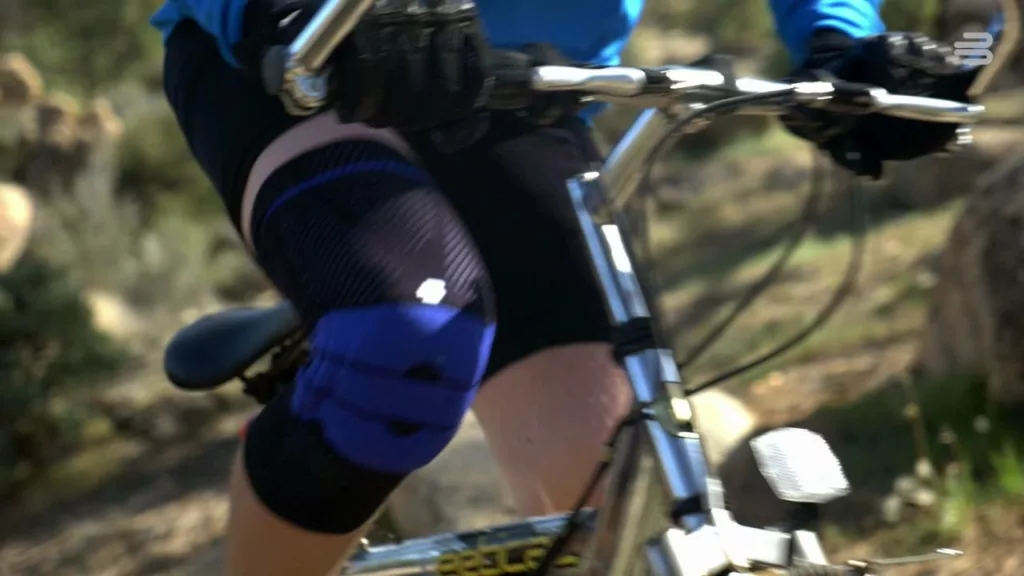
A product described as a “cycling knee support” may belong to any of these categories. Read what it is designed to do before comparing price or reviews. A comfortable protective pad for mountain biking should not be confused with a medical brace after a ligament injury.
When a support may be useful
A clinician may recommend a particular brace after injury or surgery, or for a condition involving instability. Some braces deliberately restrict movement. If one has been prescribed, ask whether cycling is currently appropriate and what range of movement is allowed; do not alter the settings to make pedalling possible.
A soft sleeve may feel comfortable for some riders, but feeling supported does not demonstrate that the underlying problem has healed. The relevant measure is whether the activity is appropriate for your condition and whether symptoms are settling, not whether the support lets you ignore them for longer.
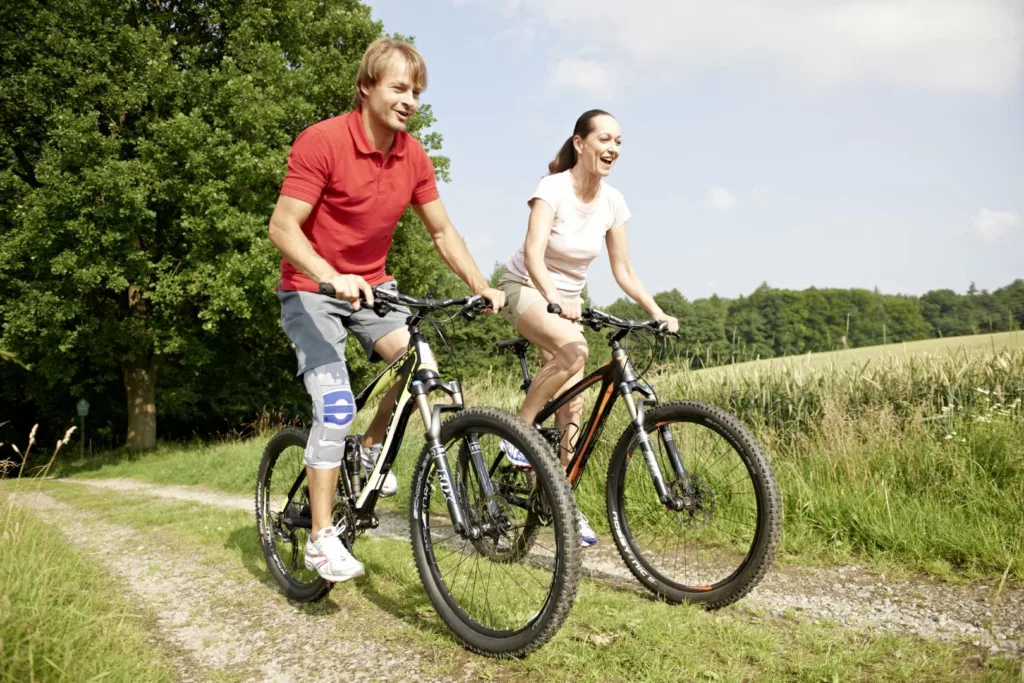
For knee osteoarthritis, supports are not routinely recommended for everyone. They may be considered in selected circumstances involving instability or abnormal loading when they help movement and make exercise possible. That condition-specific advice should not be turned into a claim that healthy cyclists need braces.
Can knee supports improve cycling performance?
There is no sound reason to buy a generic knee sleeve on the promise that it will make you faster by delivering more oxygen to your muscles. Compression, warmth, perceived comfort and mechanical restraint are different effects, and none automatically establishes an improvement in endurance or efficiency.
A support can be one part of returning to activity when properly selected, but it does not guarantee protection against another injury. Avoid using a reduction in discomfort as permission to resume your previous training load immediately. Rehabilitation and the progression back to riding need to fit the injury.
What to review when cycling causes knee pain
Note when symptoms begin, where they occur and what changed recently. Extra distance, harder climbing, a different saddle position, new shoes or altered cleats are useful details to take to a physiotherapist or other clinician. Pain location alone is not enough to diagnose a tendon, ligament or joint problem.
Bike fit can be part of the assessment, but there is no single saddle-height or cleat adjustment that cures every painful knee. If you have changed pedal systems, our SPD and SPD-SL guide explains the equipment differences. Keep a record of changes rather than moving several components at once.
For riders returning after injury, short, manageable exercise may form part of rehabilitation, with resistance and duration increased as advised. Our explanation of the muscles used in cycling provides background, but a muscle diagram cannot identify the cause of an individual knee problem.
Fit and comfort checks
If a support has been recommended, follow its sizing and fitting instructions. It should not roll behind the knee, chafe with every pedal stroke or cause new numbness, tingling or worsening pain. Stop using a non-prescribed support that causes those symptoms; seek advice about fit, and get prompt medical help if symptoms persist or circulation appears affected.
For a prescribed brace, follow the clinical team’s instructions and contact them about discomfort or slipping. Do not loosen, remove or change movement restrictions contrary to the treatment plan simply to finish a ride. More tension is not automatically more useful support.
When to seek medical advice
Seek urgent advice through NHS 111 if your knee is very painful, badly swollen, deformed, unable to bear weight, locking or giving way. A hot or red knee together with a high temperature or feeling unwell also needs urgent assessment. These are reasons to seek help, not to try a tighter sleeve.
Arrange an assessment for pain that keeps recurring or does not improve. A support may ultimately be useful, but identifying what is happening comes first. Until then, reduce or stop the riding that aggravates symptoms rather than pushing through to meet a mileage target.
Buying and caring for a support
Once the type of support has been chosen for a clear purpose, compare fit, adjustability, washing instructions and whether it allows the movement required by your treatment plan. Follow the manufacturer’s care guidance and inspect fabric, straps and hinges for wear. Product listings should help you find the agreed type of support, not decide which knee condition you have.
[content-egg-block template=offers_grid]