
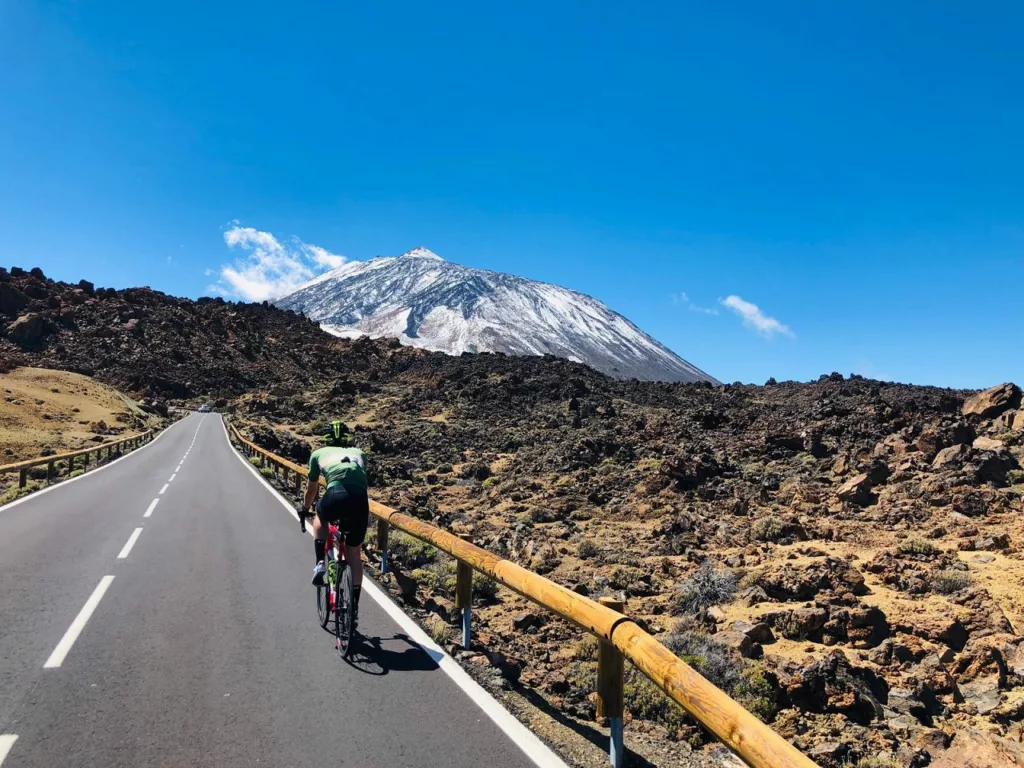
Cycling in the Canary Islands works because each of the main islands offers a different kind of riding. Tenerife is built around long climbs and altitude, Gran Canaria packs steep mountain roads into a compact island, Lanzarote adds rolling volcanic terrain and persistent wind, while Fuerteventura is better suited to long, exposed endurance days.
For UK riders, that variety is a big part of the appeal. Winter temperatures are usually far more inviting than at home, direct flights serve the four largest islands, and the road network is varied enough to build a full cycling holiday rather than simply escaping somewhere warm. The trade-off is that conditions can change quickly with altitude, wind and local microclimates, so choosing the right island matters.
This guide is the overview of cycling in Spain for the Canaries. If you already know which island you want, ProCyclingUK has separate guides to cycling in Tenerife, cycling in Gran Canaria, cycling in Lanzarote and cycling in Fuerteventura.

Which Canary Island is best for cycling?
There is no single answer because the riding is genuinely different from island to island. Tenerife and Gran Canaria are the obvious choices if climbing is the priority. Lanzarote is stronger for rolling endurance rides on open volcanic roads, while Fuerteventura suits riders who value long distances, quieter roads and a more exposed feel.
| Island | Best for | Riding character | Useful bases |
|---|---|---|---|
| Tenerife | Long climbs and altitude | Sustained ascents, long descents and major changes in elevation | Costa Adeje, El Médano, La Orotava |
| Gran Canaria | Steep mountain days | Hard gradients, ravines and compact mountain routes | Maspalomas, Playa del Inglés |
| Lanzarote | Rolling endurance riding | Open volcanic roads, moderate climbs and frequent wind | Puerto del Carmen, Costa Teguise, Playa Blanca |
| Fuerteventura | Long steady mileage | Exposed roads, wide landscapes and fewer sustained high climbs | Corralejo, Caleta de Fuste, Costa Calma, Morro Jable |
Tenerife: long climbs and altitude
Tenerife is the clearest choice if the trip is centred on climbing. Roads rise from the coast towards the Teide plateau at more than 2,000 metres, so a single ride can contain several hours of almost continuous ascent. The gradients are often steadier than the sharpest roads on Gran Canaria, but the total elevation gain adds up quickly.
One of the established northern routes starts in La Orotava and reaches a maximum altitude of around 2,300 metres during a 98km loop with more than 2,700 metres of climbing. From the south, routes through Vilaflor provide another classic way towards Teide. It is important to distinguish the road cycling climbs from the actual summit of Mount Teide at 3,718 metres. Riders reach the high plateau and national park roads, not the volcanic summit itself.
Costa Adeje and the south-west make practical bases for riders who want warmth, accommodation choice and access towards Vilaflor. El Médano works well further east, while La Orotava makes more sense if the northern approaches are the priority. The full Tenerife cycling guide goes deeper into the main Teide approaches and how they differ.

Gran Canaria: steep gradients in a compact island
Gran Canaria feels more compressed than Tenerife. The coast and the high interior are close together, which makes it possible to start from a resort base and reach serious climbing quickly. The trade-off is gradient. Roads towards Pico de las Nieves and across the central mountains repeatedly become steep, and the harder approaches are not forgiving.
Pico de las Nieves reaches about 1,948 metres and can be approached from several directions. The eastern side through La Pasadilla is particularly demanding, with sections above 20 per cent. The Valley of the Tears adds another famous test on the western side of the island, although route planning matters because road conditions and closures can affect how the most remote roads fit together.
Maspalomas and Playa del Inglés remain practical bases because they combine bike hire, accommodation and quick access towards the interior. Riders who want to understand the mountain character in more detail can use the dedicated Gran Canaria and Pico de las Nieves guide.

Lanzarote: volcanic roads, steady climbing and wind
Lanzarote is less about one huge mountain and more about rhythm. The roads rise and fall across black lava fields, vineyards and exposed ridges, with climbs such as Tabayesco and the roads around Haría and Mirador del Río giving the north more vertical character. Further south and west, routes around La Geria, Timanfaya and El Golfo create long days where the scenery changes without the need for Alpine-sized ascents.
The wind is part of the difficulty. A route that looks moderate on a map can become much harder when a steady Atlantic headwind is added for an hour or more. That makes Lanzarote useful for endurance training, but it also means riders should plan loops rather than assume the return leg will be easier.
Puerto del Carmen and Costa Teguise give straightforward access to several parts of the island, while Playa Blanca works for the south. Club La Santa remains one of the best-known sports bases on the island. For a more detailed look at the terrain, climbs and wind, see the Lanzarote cycling guide.

Fuerteventura: long, exposed mileage
Fuerteventura has a different appeal again. There are climbs, especially around the central and western parts of the island, but the defining feature is exposure. Long open roads, relatively sparse development and persistent trade winds make it a strong option for steady mileage rather than repeated high-mountain efforts.
An official road route running from Puerto del Rosario through the north and then south towards Morro Jable covers roughly 146km, which gives a good sense of the scale available. In practice, most visitors will break the island into shorter loops around Corralejo and La Oliva in the north, Betancuria and Pájara through the centre, or Costa Calma and Morro Jable in the south.
Wind direction should shape the route rather than simply distance and elevation. Crosswinds can also make deep-section wheels more tiring to handle, particularly for lighter riders. The Fuerteventura cycling guide covers the main bases, road character and how to plan around the wind.
What about La Palma, La Gomera and El Hierro?
The smaller western islands are viable for cycling, but they make more sense for riders who actively want quieter roads and more limited infrastructure. La Palma is very mountainous and can produce substantial climbing in a short distance. La Gomera is similarly steep, with twisting roads and frequent elevation changes, while El Hierro has the most remote feel of the three.
They are less convenient for a first Canary Islands cycling holiday because there are fewer bike hire options, fewer large cycling-focused accommodation bases and less route choice without repeating roads. For riders who already know the larger islands, however, that quieter character is the reason to go.
When is the best time to cycle in the Canary Islands?
Autumn, winter and early spring are the most useful periods for cyclists travelling from the UK. From roughly November through April, the islands can provide warm coastal riding when much of northern Europe is cold and wet. That is also the busiest period for training camps, so bike hire and cyclist-focused accommodation can fill earlier than expected.
Summer is still rideable, but heat and sun exposure become more important, especially at lower altitude. Tenerife and Gran Canaria also have strong microclimates. It can be warm at the coast and cold, cloudy or windy high in the mountains on the same ride. A lightweight layer for long descents is useful even when the day starts in short sleeves.

What gearing works best?
For Tenerife and Gran Canaria, most riders will be happier with climbing gears than with a race-focused setup. A 50/34 chainset with an 11-30, 11-32 or 11-34 cassette is a sensible starting point, with the lower end of that range depending on fitness and the routes planned. Strong riders may be comfortable with a tighter cassette, but there is little benefit in over-gearing a holiday that includes several consecutive climbing days.
Lanzarote and Fuerteventura do not demand the same low gears as the steepest mountain roads, but the wind can create long periods of resistance. Stable wheels and sensible gearing are often more useful than chasing an aerodynamic setup that becomes difficult to handle in gusts.
Bike hire or bring your own bike?
High-quality road bike hire is widely available on Tenerife, Gran Canaria and Lanzarote, with a growing range on Fuerteventura. Hiring avoids airline bike fees and the risk of damage in transit, while bringing your own bike gives you a familiar fit and equipment setup for long climbing days.
If hiring, book early for winter and ask about the exact cassette, crank length, pedal policy and whether spares such as tubes or tubeless plugs are included. Taking your own pedals, saddle measurements and position notes makes it much easier to reproduce your normal fit. If travelling with your own bike, check the airline’s sports-luggage rules before booking rather than assuming a standard checked bag allowance covers a bike box.
Road conditions, navigation and safety
The main cycling roads are generally good, but surfaces vary and remote mountain roads can deteriorate or be affected by works, rockfall and temporary closures. Downloading the route for offline use is worthwhile, particularly on long rides into the interior where mobile coverage and refuelling options can be less reliable.
Long descents deserve respect. Temperatures drop with altitude, corners can tighten unexpectedly and wind can change quickly on exposed sections. Carry enough water, take a light layer when climbing high and check the local forecast for the actual route rather than relying on the weather at the hotel. Spain’s emergency number is 112.
Canary Islands cycling FAQs
Is Tenerife or Gran Canaria harder for cycling?
Tenerife usually produces longer sustained climbing and bigger altitude changes, while Gran Canaria is more likely to confront you with very steep ramps and repeated changes of gradient. A Tenerife ride can be harder because of duration; a Gran Canaria ride can feel harder because the gradients are less forgiving.
Is Lanzarote too windy for road cycling?
No, but the wind should be treated as part of the route. It can turn an apparently easy endurance ride into a demanding day and can affect bike handling on exposed roads. Checking wind direction before setting off is more useful than simply looking at the temperature.
Can beginners cycle in the Canary Islands?
Yes, provided the island and route are chosen carefully. Lanzarote and Fuerteventura offer more opportunities to keep elevation under control, while the main Tenerife and Gran Canaria climbing routes are better suited to riders already comfortable with long ascents and descents. E-bike hire also widens the range of routes available.
Can you cycle in the Canary Islands all year?
Yes. The islands are rideable throughout the year, although winter is especially attractive for visitors from northern Europe. Summer requires more attention to heat and sun, while high-altitude routes on Tenerife and Gran Canaria can still be much cooler than the coast in winter.
Choosing the right island
-
 Photo Credit: Getty


Choose Tenerife if long climbing and altitude are the priority. Choose Gran Canaria if you want steep, compact mountain riding. Lanzarote is the better fit for rolling volcanic roads and structured endurance work, while Fuerteventura suits riders who enjoy long, open mileage and do not mind managing the wind.
That difference is what makes cycling in the Canary Islands so useful. The archipelago is not one cycling destination repeated across several islands. It is a group of distinct riding environments close enough to compare, but different enough that the right choice can completely change the character of the trip. More destination guides and planning pieces are collected in ProCyclingUK’s Travel and Riding Abroad section.

