
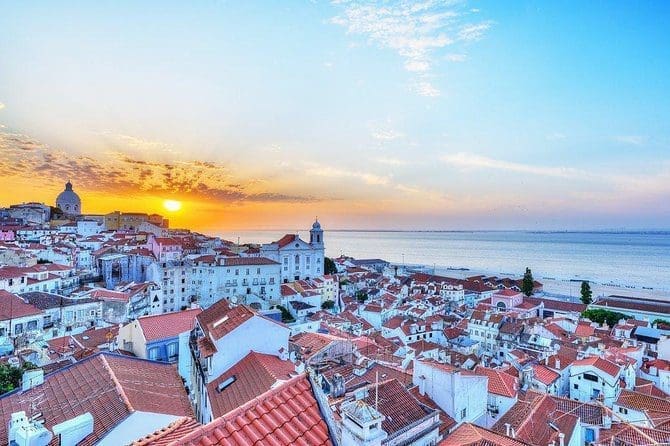
Portugal is unusually well suited to a cycling trip because the riding changes so much within a relatively small country. The Algarve offers warm-weather coastal miles, Lisbon and Sintra combine city access with steep roads and Atlantic scenery, Serra da Estrela provides the country’s biggest mountain riding, while Alentejo and the north reward riders who prefer quieter roads and longer days.
It is also increasingly useful for cycle touring. EuroVelo 1 follows Portugal’s Atlantic side as part of the long-distance Atlantic Coast Route, with the Algarve section alone covering more than 200km between the Spanish border and Sagres.
This guide focuses on where to ride, when to go and what type of cycling each region suits, rather than treating Portugal as one uniform destination.
Best places for cycling in Portugal at a glance
| Region | Best for | Terrain | Best time |
|---|---|---|---|
| Algarve | Winter sun, road riding, touring | Rolling coast, inland hills, longer climbs around Monchique | Autumn to spring |
| Lisbon, Sintra and Cascais | Short trips and mixed sightseeing/riding | Urban roads, coast, steep Sintra hills | Spring and autumn |
| Serra da Estrela | Mountain climbing | Long sustained ascents and high exposed roads | Late spring to early autumn |
| Alentejo | Quiet endurance rides | Rolling rural roads and open landscapes | Spring and autumn |
| Douro and northern Portugal | Climbing and scenery | Steep valley roads and repeated elevation | Spring to early autumn |
| Atlantic coast / EuroVelo 1 | Touring and bikepacking | Coastal cycleways, roads and mixed developed sections | Spring to autumn |
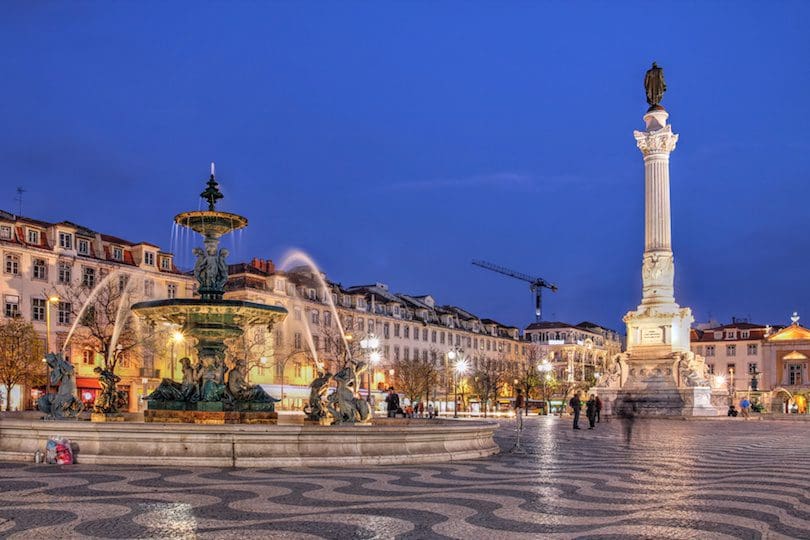
Cycling around Lisbon, Sintra and Cascais
Lisbon works well as a base if cycling is only part of the trip. The city itself is busy and hilly, so it is not the place to chase uninterrupted training kilometres, but the riding improves quickly once you head west towards Cascais or north-west into Sintra.
The Cascais coastline gives you an accessible route out of the urban centre, while Sintra provides the opposite experience: narrow roads, repeated gradients, forest and exposed Atlantic viewpoints. Cabo da Roca, the westernmost point of mainland continental Europe, is an obvious destination to build into a longer loop.
Traffic can be heavy around the capital, particularly at commuter times, and Lisbon’s tram tracks and polished paving are not especially friendly to narrow road tyres. For a dedicated riding holiday, staying closer to Cascais or Sintra can make more sense than starting every day in the city centre.

The Algarve for winter and shoulder-season riding
The Algarve is the easiest Portuguese region to recommend when the goal is escaping a northern European winter. Coastal temperatures are relatively mild, while riding inland quickly replaces resort roads with quieter lanes, whitewashed villages and rolling terrain.
The coast is not completely flat. Head towards Monchique and the gradients increase substantially, giving road riders a useful mix of steady endurance routes and climbing days. The western Algarve around Lagos and Sagres feels more exposed and windier, while routes further east towards Tavira are generally gentler.
EuroVelo 1 crosses the Algarve from the Spanish border to Sagres for more than 200km, which also makes the region attractive for touring rather than just day rides. ProCyclingUK’s separate guide to cycling in the Algarve goes into more detail on bases and route ideas.
Serra da Estrela for Portugal’s biggest climbs
Serra da Estrela is where to go if a Portugal trip is primarily about climbing. The roads rise for long stretches through the country’s highest mountain range, with several approaches towards Torre and the high plateau giving riders proper mountain days rather than short coastal hills.
The altitude is modest by Alpine standards but the climbs are sustained, exposed and often hotter than equivalent European mountain roads. Weather can also change quickly at elevation, especially outside midsummer.
Our full Serra da Estrela cycling guide covers the main climbs, suitable bases and the practical side of building a trip around the range.
Alentejo for quieter endurance riding
Alentejo offers a very different kind of ride. Instead of famous climbs or busy resort roads, the attraction is space: rolling countryside, long sight lines, cork-oak landscapes and towns separated by substantial stretches of quiet road.
It suits riders who enjoy building a route around distance rather than one headline ascent. Évora, Monsaraz and the surrounding countryside give plenty of options for road touring, while the open nature of the region means wind and heat can matter as much as gradient.
Summer temperatures are the main limitation. July and August can make exposed all-day rides unnecessarily hard, so spring and autumn are much better choices for most cyclists.
Douro and northern Portugal
The Douro valley is spectacular but rarely easy. Roads repeatedly climb away from the river through vineyards and villages, often on gradients that look harmless on a map until several have accumulated in the legs.
Porto can work as the gateway, but the best cycling comes further inland. Riders willing to move bases can combine Douro valley roads with the greener terrain of Minho and the north, where the landscape and weather are noticeably different from the Algarve.
EuroVelo 1 and cycle touring along the Atlantic
Portugal forms part of EuroVelo 1, the 10,650km Atlantic Coast Route connecting six countries. Within Portugal the route broadly follows the Atlantic coast and provides the clearest framework for riders planning a multi-day point-to-point trip.
Do not assume every kilometre is a separated cycle path. EuroVelo development status varies by section, and official GPX files can include developed, signed and still-developing stretches. Check the current route status before committing to a touring itinerary.
The route is most attractive when treated as a framework rather than a compulsory line. Portugal has enough parallel coastal roads, ecovias and local cycleways that a little route planning can improve both scenery and traffic levels.
When is the best time to cycle in Portugal?
There is no single answer because Portugal stretches far enough north to south, and high enough in Serra da Estrela, for conditions to vary considerably.
For the Algarve and Lisbon area, October through May can provide excellent riding, with spring and autumn offering the best balance of temperature and daylight. Northern Portugal is generally wetter in winter. Serra da Estrela is better from late spring into early autumn, once cold weather and the risk of snow at elevation have receded.
Peak summer can work on the coast if rides start early, but inland temperatures regularly make long exposed rides uncomfortable. Carry more water than you would on a comparable UK ride and plan refill points before heading into sparsely populated areas.
Road bike, gravel bike or touring bike?
A normal road bike works extremely well for the Algarve, Lisbon/Sintra, Serra da Estrela and Douro if the route stays on tarmac. Wider 28–32mm tyres make sense because surfaces can vary and urban paving is not always smooth.
A gravel bike becomes more useful for touring and exploratory riding, particularly if you want to combine ecovias, unsealed tracks and quiet back roads. Full suspension is unnecessary for most touring routes unless the trip is specifically built around mountain-bike trails.
Taking your own bike or hiring in Portugal
Taking your own bike makes sense for a dedicated training holiday, especially if fit and position matter. For a shorter city break with one or two riding days, hiring avoids airline baggage and transfer complications.
Check exactly what a rental includes before booking. Pedals, helmets, repair kits and spare tubes are not always standard, and riders using less common pedal systems are usually better bringing their own pedals and shoes.
For a wider look at destination planning, ProCyclingUK’s cycling travel guides cover other European riding regions and how they compare.
 Photo Credit: Getty
Practical tips for cycling in Portugal
Route choice matters more than chasing the shortest line between two towns. Main roads can carry fast traffic, while a parallel local road may be dramatically quieter. Build routes around road character rather than simply distance.
Heat and sun are the other recurring factors. Start early in summer, use sunscreen and know where bottles can be refilled. Coastal wind can also turn an apparently easy return leg into a much harder ride.
In towns, watch for cobbles, tram tracks and polished paving when wet. In rural areas, carry the basic tools needed to deal with a puncture or minor mechanical because shops and services can be widely spaced.
Is Portugal good for a cycling holiday?
-
 Photo Credit: Getty
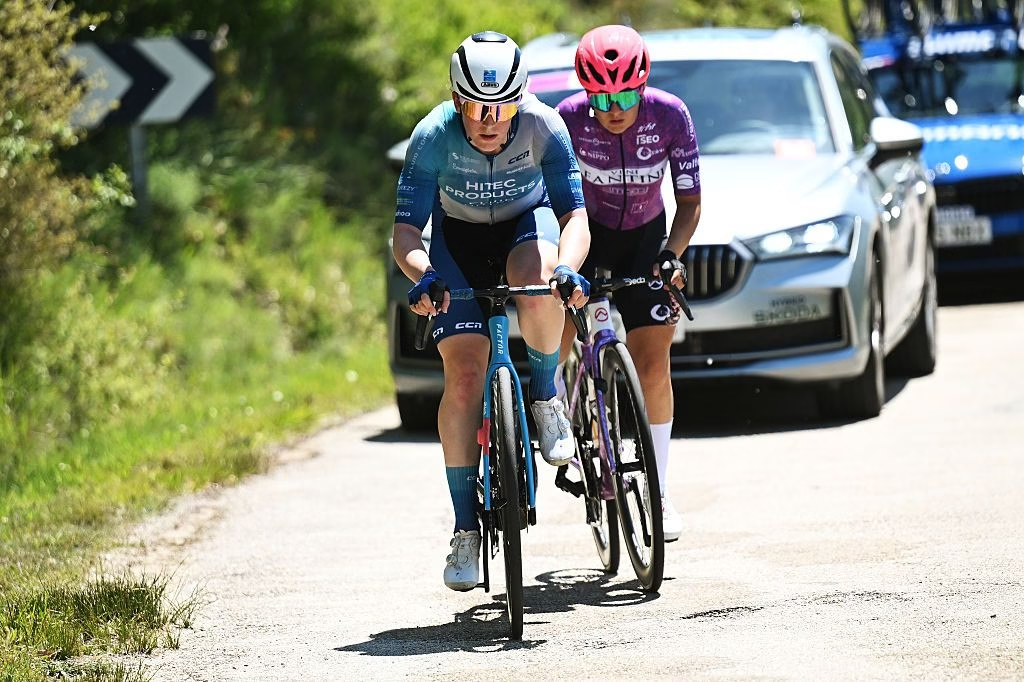
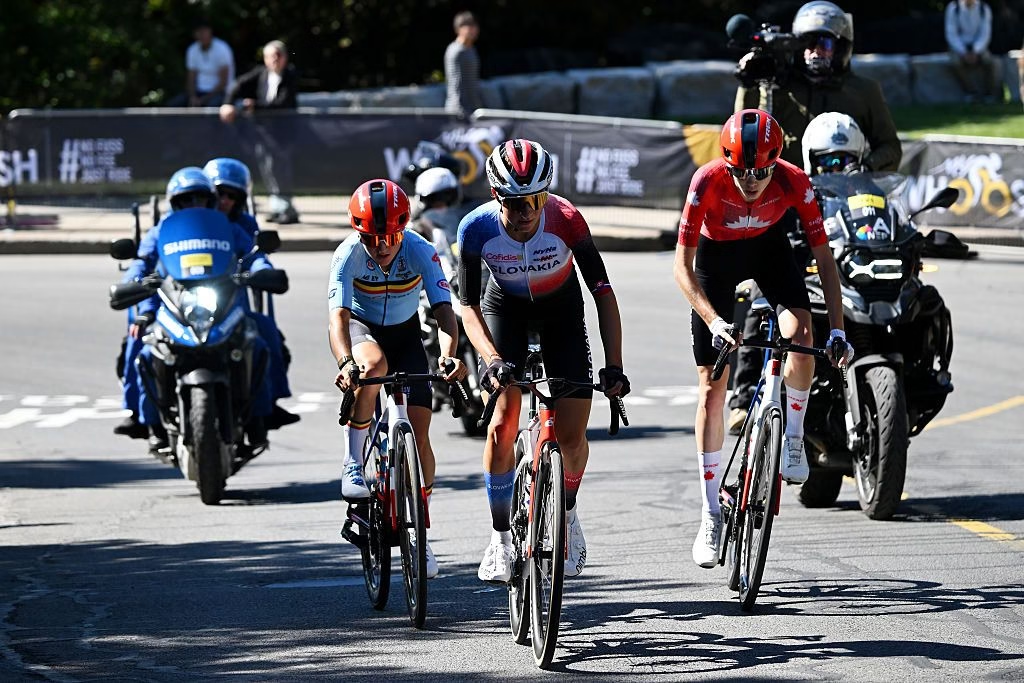
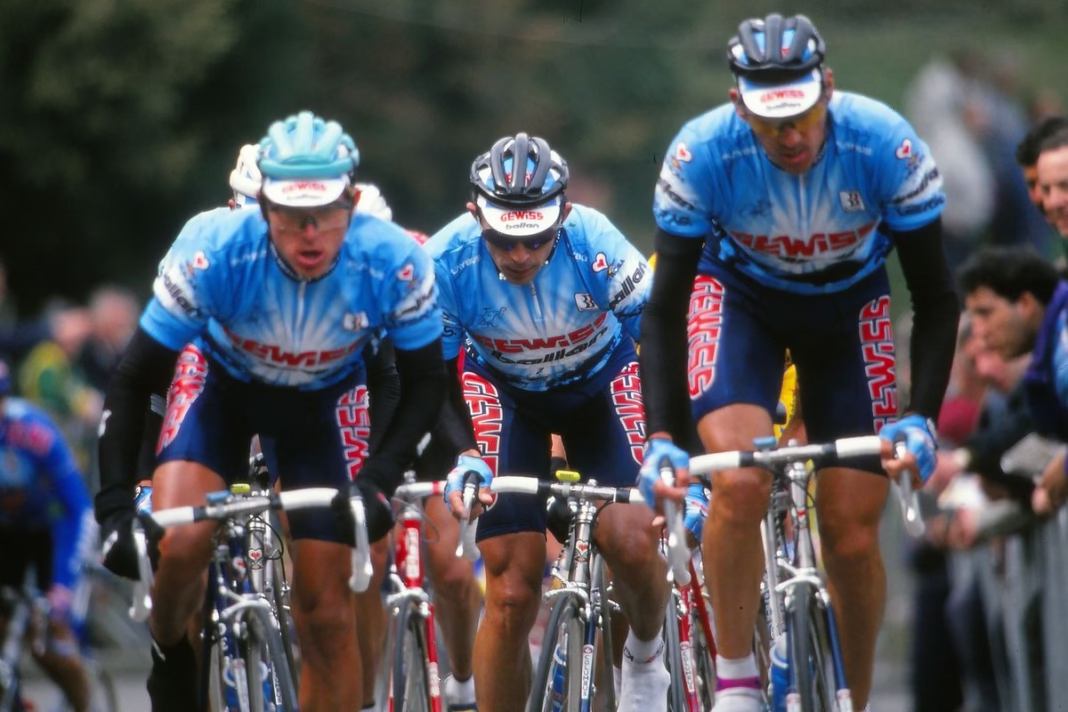
Yes, but the strongest reason is variety rather than one famous cycling destination. Portugal can deliver winter road miles in the Algarve, a mountainous training camp in Serra da Estrela, a relaxed tour along the Atlantic or a mixed city-and-cycling break around Lisbon.
Choose the region around the type of riding you want first, then the time of year. Done that way, Portugal is one of the more flexible cycling destinations in western Europe rather than simply a warm-weather alternative to Spain.

