
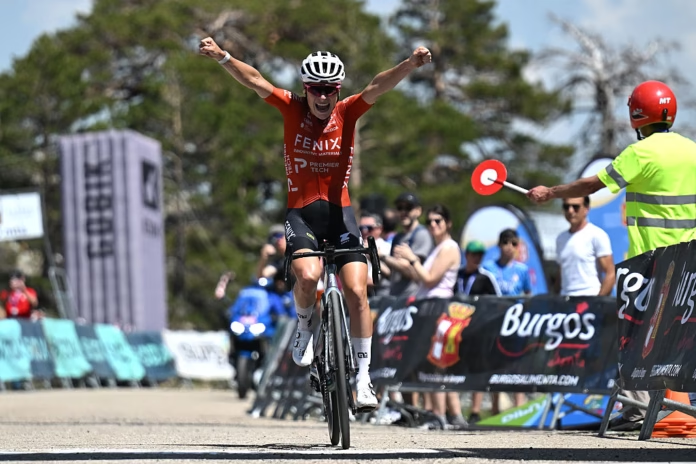
Vuelta a Burgos Feminas 2026 gave the race exactly the kind of edition it needed. It had dominant sprinting, tactical uncertainty, a late mountain decision, a new Women’s WorldTour stage-race winner and a final podium that said plenty about the changing depth of the women’s peloton. Yara Kastelijn won the overall title after taking the final stage to Lagunas de Neila, with Évita Muzic second and Usoa Ostolaza third.
That result matters beyond the immediate week. Vuelta a Burgos Feminas is still a young race, but since joining the Women’s WorldTour in 2021 it has quickly become one of the most useful indicators of where the stage-racing hierarchy is moving. Anna van der Breggen, Demi Vollering and Marlen Reusser had all won recent editions before Kastelijn. That is a serious line of winners for an event that only began as a national-level women’s race in 2015.
The 2026 edition did not rewrite the race’s identity. It clarified it. Burgos remains a four-day test that can look manageable until the final climb turns the general classification inside out. The difference this time was that the race did not simply confirm an established Grand Tour leader. It gave a rider on the edge of the top GC tier the platform to make a decisive step.
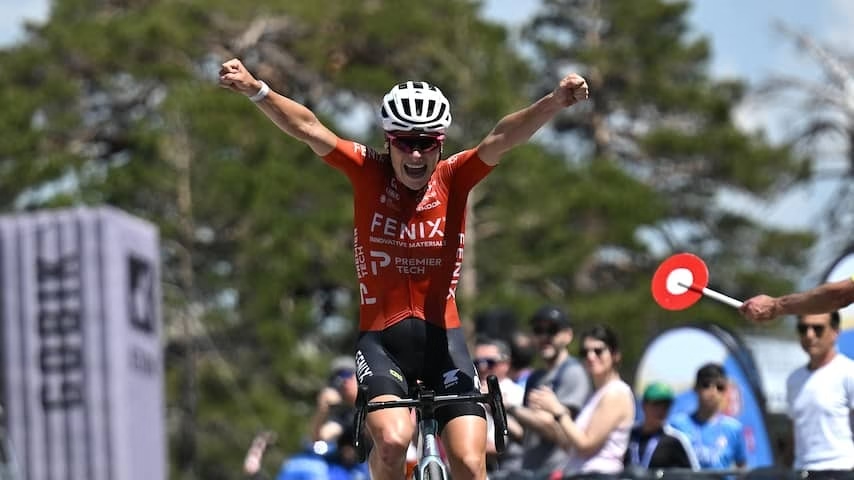 Photo Credit: Getty
Yara Kastelijn’s win changes the way her stage-racing ceiling is viewed
Kastelijn’s victory was not just a stage win with a bonus overall title attached. It was the clearest evidence yet that she can convert climbing strength into a complete Women’s WorldTour general classification result. Her attack inside the final 2km to Lagunas de Neila was sharp, but the bigger point was that she had managed the whole race well enough to make that attack decisive.
That is a meaningful change. Kastelijn’s Tour de France Femmes stage win in 2023 showed what she could do from the right move on a hard day. Her 2025 Vuelta a Burgos podium showed she could stay in the frame across a short stage race. Winning Burgos in 2026 moves the conversation on again. It makes her less of a dangerous climber who might win stages and more of a rider who can lead a team’s general classification project in this kind of race.
For Fenix-Premier Tech, that matters as much as the result itself. Their race was not passive. They had tried to disrupt SD Worx-Protime earlier in the week, especially on stage 2, and although Wiebes still won that day, the intention was clear. Burgos rewarded that persistence on the final climb. Kastelijn was still close enough to strike, and when the chance came, she did not need a complicated tactical situation. She simply climbed away.
Lagunas de Neila remains the race’s clearest historical signature
Vuelta a Burgos Feminas has become increasingly defined by its final climbing test. The race may include sprint stages, rolling days and tactical traps, but the summit finish gives it a recognisable shape. In 2026, Lagunas de Neila again acted as the judge.
The climb worked because the race arrived there still close. A group of major contenders remained within striking distance before the final stage, which meant the climb was not just a confirmation of an already decided race. It became the place where riders had to reveal what they had left. Muzic set the tempo, Ostolaza stayed in the podium fight, and Kastelijn waited until the right moment before making the winning move.
That is exactly what Burgos has been good at in recent years. It does not need a week of high mountains to be decisive. It needs four stages that create enough tension before one hard finish. In 2025, Picón Blanco and the final time trial gave Marlen Reusser the room to dominate. In 2026, Lagunas de Neila made the race more direct: climb better than everyone else when the road reaches its steepest point, or lose the race.
ProCyclingUK’s Vuelta a Burgos Feminas 2026 full route guide explained before the race why the final stage was likely to carry the greatest GC weight, with the road to Lagunas de Neila set up as the race’s clearest judgement day.
SD Worx-Protime dominated the first three days but did not win the race
The first half of the race belonged to SD Worx-Protime. Lorena Wiebes won the opening stage in Burgos, repeated the result on stage 2 at Bodega Viña Pedrosa, and then Mischa Bredewold gave the team a third victory on stage 3 in Medina de Pomar. By any normal stage-race measure, that is a superb return.
Yet the team did not win the general classification. That is the tension that makes Burgos useful. It can reward sprint dominance without making sprint dominance enough. SD Worx-Protime controlled the early narrative, but the race was always leaning towards the final mountain stage. Once the road tilted towards Lagunas de Neila, the week became about climbing depth rather than sprint control.
That does not make SD Worx-Protime’s race a failure. Two Wiebes wins, a Bredewold victory and the points jersey is a major haul. It does, however, show the limits of trying to convert stage control into GC control without the strongest climber in the decisive moment. Burgos can flatter a dominant team for three days, then ask a completely different question on day four.
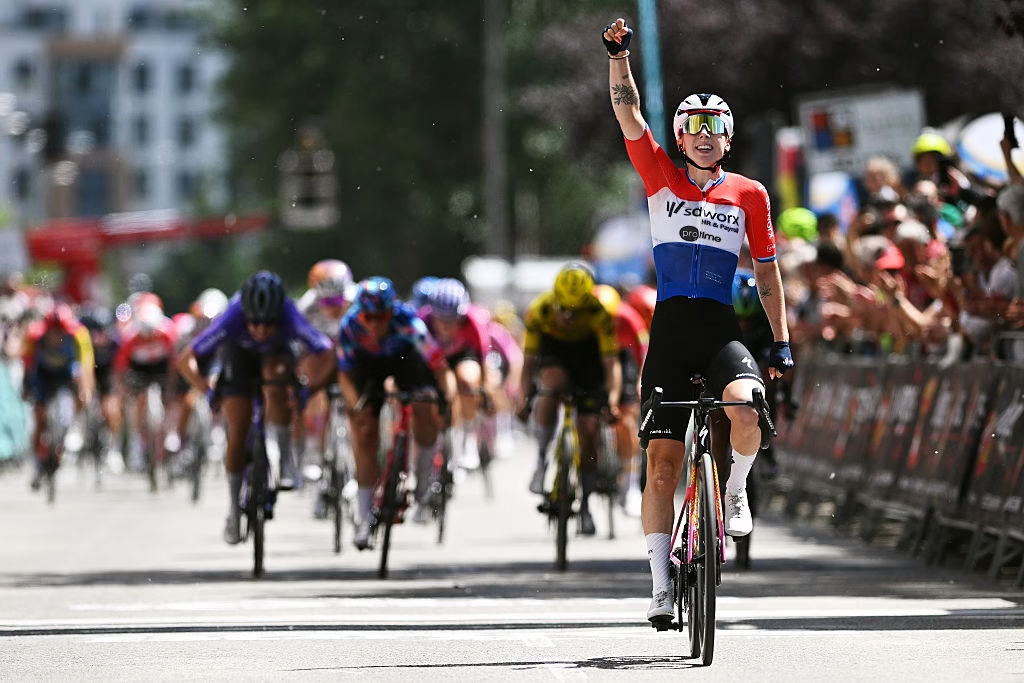
Lorena Wiebes showed her sprint dominance still travels
Wiebes taking the first two stages was not surprising, but it was still important. Burgos has enough rolling terrain, exposed roads and late positioning pressure to make even sprint stages more complicated than a simple lead-out drill. Wiebes and SD Worx-Protime handled that with authority.
The stage 2 win was particularly useful as a marker. Rival teams did try to avoid a straightforward sprint, with late attacks and attempts to create disorder on the finishing circuit. SD Worx-Protime still managed to cover the important moves, control the final kilometres and deliver Wiebes into the right place. That is a sign of a sprint structure that remains difficult to disrupt even when the terrain gives others a chance.
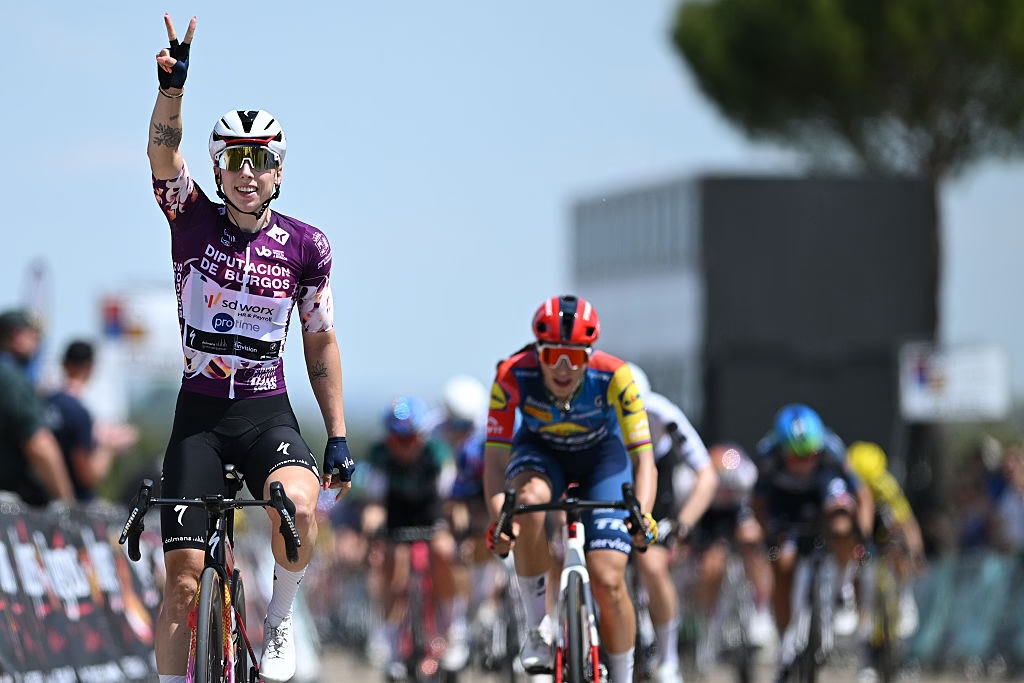
Her green jersey also fitted the pattern of the race. Wiebes did not need to be part of the GC fight for her week to matter. Burgos gave the sprinters two real opportunities before the climbers took over, and she made both count.
Évita Muzic continues to look like a serious mountain-stage benchmark
Muzic did not win the race, but her performance on Lagunas de Neila was one of the key images of the final day. She set the pace when the climb became decisive, thinned the front group and forced the race into a direct climbing contest. Kastelijn eventually came around her, but Muzic’s second place overall still told a strong story.
There is a difference between following a climb and shaping one. Muzic shaped the final climb. She made the selection, committed to the effort and put herself in the position to win. The fact that Kastelijn had the better final acceleration does not erase that work.
In historical terms, Muzic’s performance also fits the broader development of the French climbing group. She has been a visible mountain-stage rider for several seasons, but results like this strengthen her status as someone who can carry GC responsibility rather than simply chase stage opportunities. Burgos is short, but it is unforgiving. Finishing second here after forcing the decisive selection is a meaningful result.
 Photo Credit: Getty
Usoa Ostolaza gave the home race a proper Spanish podium story
Ostolaza’s third place overall was one of the most important home-rider results of the race. Vuelta a Burgos Feminas began as a Spanish domestic event before growing into a UCI race and then a Women’s WorldTour fixture. That history gives Spanish performances extra weight, especially now that the field is much deeper and more international.
Ostolaza did not need to win for the result to matter. A podium at this level, on home roads, against riders from some of the strongest teams in the sport, is a significant marker for Laboral Kutxa-Fundación Euskadi and for Spanish women’s stage racing more broadly.
Her third place also underlined the value of resilience. Burgos is short enough that riders cannot afford one bad day, but hard enough that consistency alone is rarely enough. Ostolaza had to survive the sprint days, stay close through the rolling stages and then deliver on Lagunas de Neila. That is the profile of a proper stage-race podium, not a result inherited by accident.
The young rider picture points to the next Burgos generation
Shirin van Anrooij winning the white jersey added another layer to the race. Burgos has become a useful place for younger riders because it combines different demands without stretching across a full week. There is enough climbing to expose weakness, enough sprint pressure to punish poor positioning, and enough tactical variation to reward riders who can adapt quickly.
Van Anrooij’s white jersey fits her wider profile as a rider with range. She is not limited to one type of terrain, and races like Burgos are useful precisely because they ask for more than one skill. For young riders trying to develop into stage-race options, this is the kind of event that reveals whether they can manage repeated pressure rather than simply produce one strong day.
That is also part of Burgos’s growing historical role. It is not only a race for established Grand Tour leaders. It is increasingly a place where the next group of contenders can test themselves against a compressed but serious WorldTour course.
The race’s history is becoming more international
The early years of Vuelta a Burgos Feminas were heavily Spanish in character. That made sense. The race began at national level, and its first phase was shaped by local teams and domestic riders. Since its rise into the Women’s WorldTour, the roll of honour has changed. Anna van der Breggen, Juliette Labous, Demi Vollering, Marlen Reusser and now Yara Kastelijn have all taken the race into a much more international space.
That transition is not just a matter of prestige. It changes how the race is raced. The strongest teams arrive with clearer objectives, the sprint field is deeper, and the climbers know the final day can carry major ranking and reputation weight. Burgos is no longer a Spanish race with some international participation. It is a Women’s WorldTour race that happens to have a strong Spanish identity.
That distinction matters. The race has not lost its place in Spanish cycling. If anything, its local identity now has more visibility because the international field gives home performances a stronger reference point. Ostolaza’s podium is more impressive because of the level she had to beat.
Burgos has found its place between the Ardennes, La Vuelta and the summer races
One of the reasons Vuelta a Burgos Feminas works is its calendar position. It comes after the spring Classics and La Vuelta Femenina, but before the biggest summer stage-race block. That makes it useful for several different types of rider.
Sprinters can collect WorldTour stage opportunities after the Classics have thinned their chances. Climbers can test form after La Vuelta Femenina and before later objectives. Teams can give leadership to riders who may not have been the main protected option in the biggest races. That mix creates a race that is difficult to reduce to one purpose.
In 2026, that variety showed clearly. Wiebes used the race as a sprint platform. Bredewold converted a tactical stage. Kastelijn turned it into a GC breakthrough. Muzic and Ostolaza used it to reinforce climbing status. That is a healthy sporting balance for a four-day race.
The race’s place after La Vuelta Femenina 2026 is important because it gives climbing-focused riders another immediate WorldTour target, while ProCyclingUK’s Tour de Suisse Women 2026 full route guide shows how the next major stage-racing block continues into June.
-
 Photo Credit: Getty



The biggest lesson is that Burgos now creates its own storylines
For a young race, this is the point that matters most. Vuelta a Burgos Feminas is no longer interesting only because it sits on the Women’s WorldTour calendar. It now creates storylines of its own. The 2026 race had a clear arc: SD Worx-Protime domination, rival attempts to disrupt the sprint machine, a tactical stage 3, then a final mountain finish that overturned the overall race.
That is a strong structure. It gives the race a beginning, middle and end. It also gives fans clear memory points. Wiebes winning twice, Bredewold extending SD Worx-Protime’s run, Muzic setting the climb alight, Kastelijn launching the decisive attack, Ostolaza taking a home podium. Those are not abstract results. They are narrative pieces that help a race build history.
That is how young races become established. Not simply by surviving on the calendar, but by producing editions that feel distinct. The 2026 Vuelta a Burgos Feminas did that.
Vuelta a Burgos Feminas 2026 verdict
Vuelta a Burgos Feminas 2026 showed a race growing into its status. It had the sprint credibility of Wiebes, the team strength of SD Worx-Protime, the climbing authority of Muzic, the home significance of Ostolaza and the breakthrough story of Kastelijn. That is a lot for four days to carry.
Historically, the result places Kastelijn alongside a recent winners list that has become increasingly serious. Van der Breggen, Labous, Vollering, Reusser and now Kastelijn make Burgos look less like a supporting race and more like a compact but meaningful stage-race title in its own right.
The race’s identity is now clear. It is short, varied and often decided late. It can give sprinters a platform, but it will not let them own the whole week. It can reward strong teams, but only if they have the right climber when the final road rises. In 2026, Fenix-Premier Tech and Yara Kastelijn got that balance exactly right.

