
Giro d’Italia Women remains one of the defining stage races in the sport because it asks for a fuller range of qualities than almost any other event on the women’s calendar. It is a race with history, weight and a route design that usually demands much more than one big climbing performance. Riders have to handle pressure across more than a week, manage recovery, stay alert through transitional days and still be strong enough to decide the overall when the mountains arrive.
That is what gives the race its own tone, distinct from both La Vuelta Femenina and the Tour de France Femmes. The Giro tends to reward riders who can cope with a long accumulation of effort rather than simply dominate one type of terrain. Sprint stages, technical finishes, time trialling and climbing all tend to matter somewhere. Even in years when the route clearly favours the mountain specialists, the race usually still finds ways to expose teams with weak depth or leaders who cannot stay consistent across a full week.
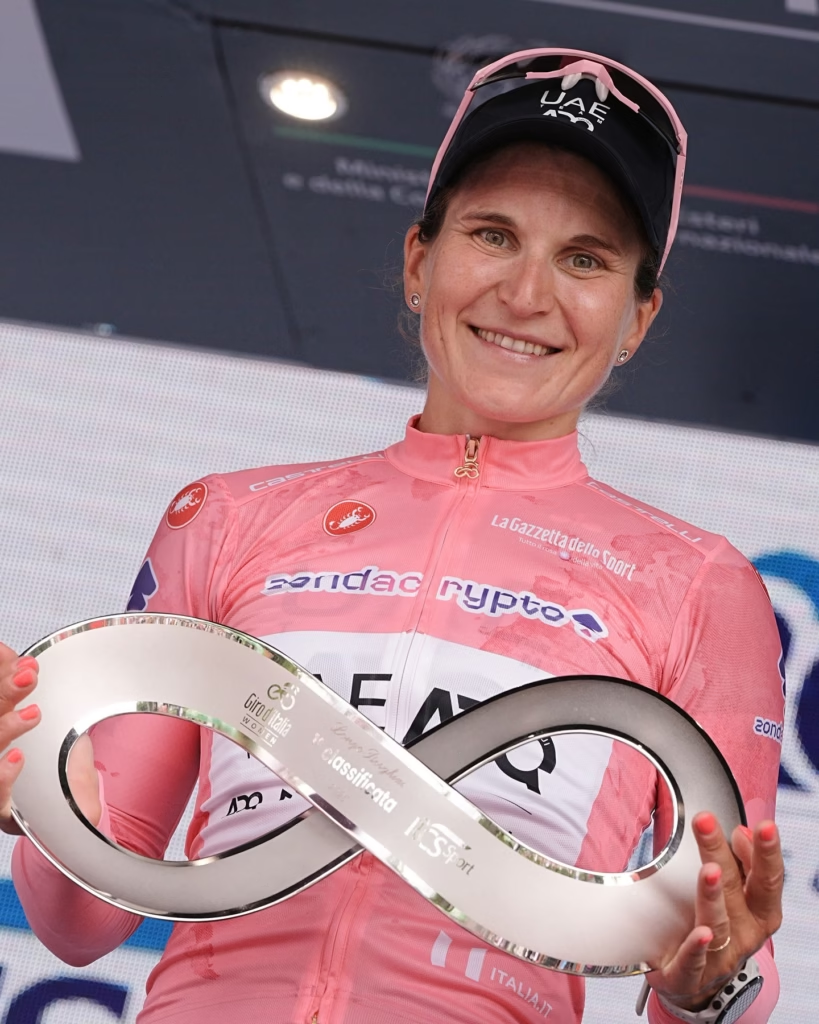
The recent winners underline that point. Elisa Longo Borghini won the Giro d’Italia Women in both 2025 and 2024, each time showing not only climbing strength but also the tactical composure and resilience needed to manage a Grand Tour-style race. Before that, Annemiek van Vleuten won in 2023, continuing the tradition of elite stage racers using the Giro to confirm their authority. This is a race that rarely rewards anything less than a complete GC performance.
For 2026, the route again looks rich in variety. There are clear opportunities for fast finishers, a significant uphill time trial, several hard mountain stages and a queen stage to Sestriere before a final day around Saluzzo. That should keep the race open well into the final weekend. The Giro d’Italia Women often builds rather than explodes all at once, and this route looks designed to do exactly that, with fatigue, climbing depth and team strength all likely to matter before the pink jersey is settled.
Previous Winners
2024
Elisa Longo Borghini
2023
Annemiek van Vleuten
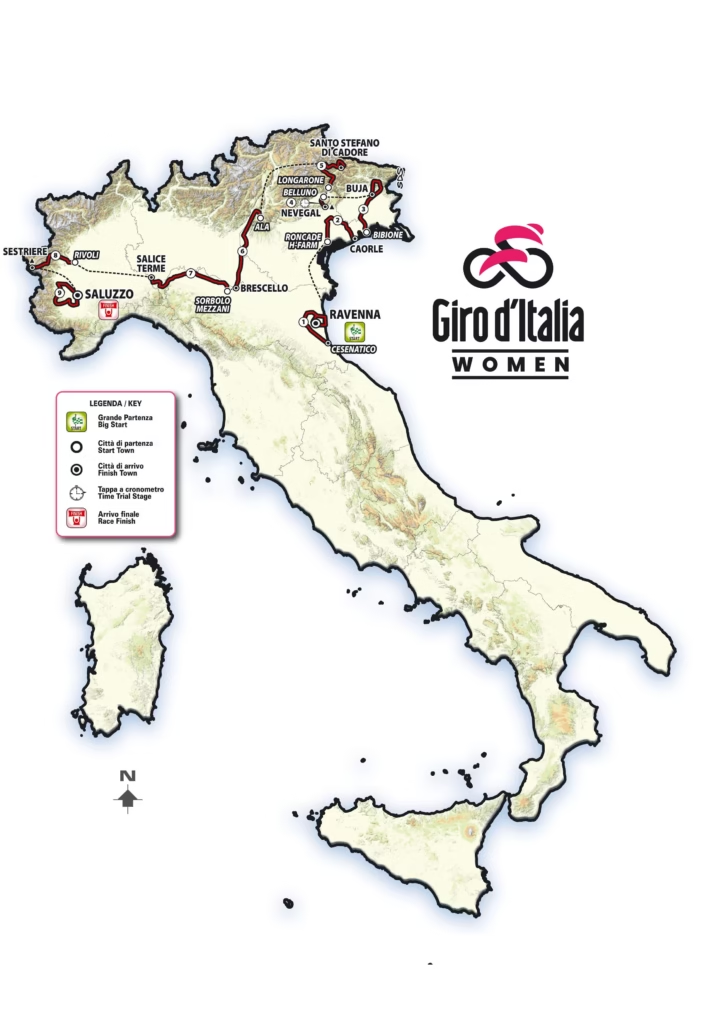
2026 Giro d’Italia Women route
The 2026 Giro d’Italia Women runs from Saturday 30th May to Sunday 7th June across nine stages, covering 1,177.7 kilometres from Cesenatico to Saluzzo. The route begins on terrain that should keep the race open for sprinters and punchier riders, then gradually becomes more selective through the hills, the uphill time trial and the mountains. That balance gives the race real depth. The overall contenders should not be able to drift quietly through the opening half of the week, but the biggest differences may still wait until the race reaches the harder climbing later on.
What stands out most is the range of tests packed into a relatively compact stage race. There is an uphill time trial to Nevegal, a Dolomite mountain stage to Santo Stefano di Cadore, an Apennine test towards Salice Terme, the queen stage to Sestriere and then a final stage around Saluzzo that looks far more serious than a ceremonial close. That makes the Giro d’Italia Women 2026 a race for complete riders and complete teams. Pure climbers will see clear opportunities, but they still need enough support and enough consistency to survive the flatter and more tactical stages that come before the biggest mountain verdicts.
Stage 1
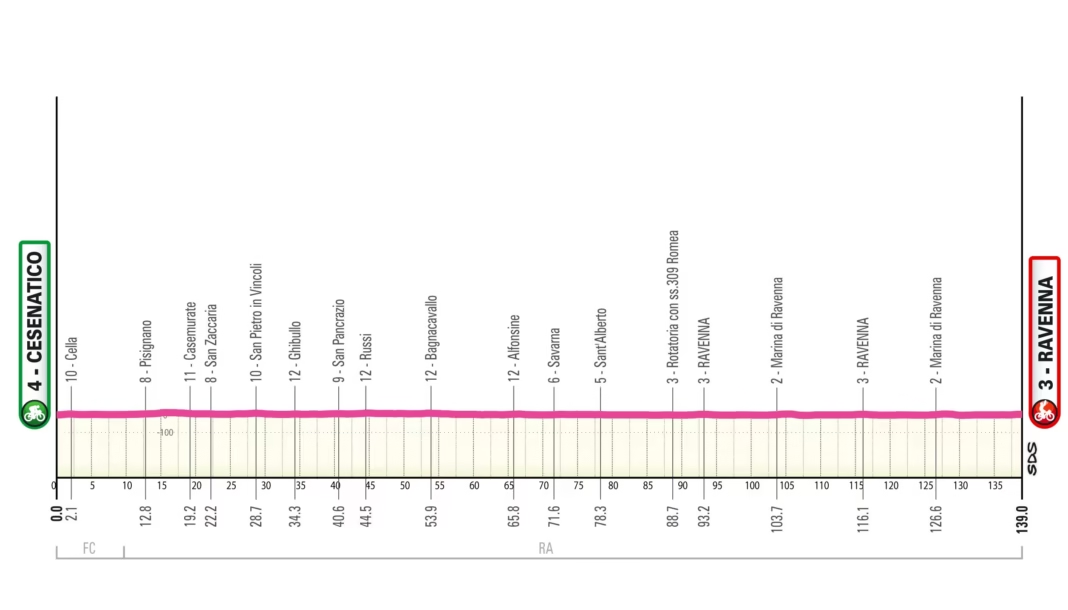
Stage 1 from Cesenatico to Ravenna covers 139 kilometres and looks like a suitable opening day for the faster riders, though early Grand Tour stages are rarely as simple as they first appear. Teams will want a clean first day, but nerves, crosswinds and the scramble for the first pink jersey can still make the stage more stressful than the profile suggests.
Stage 2
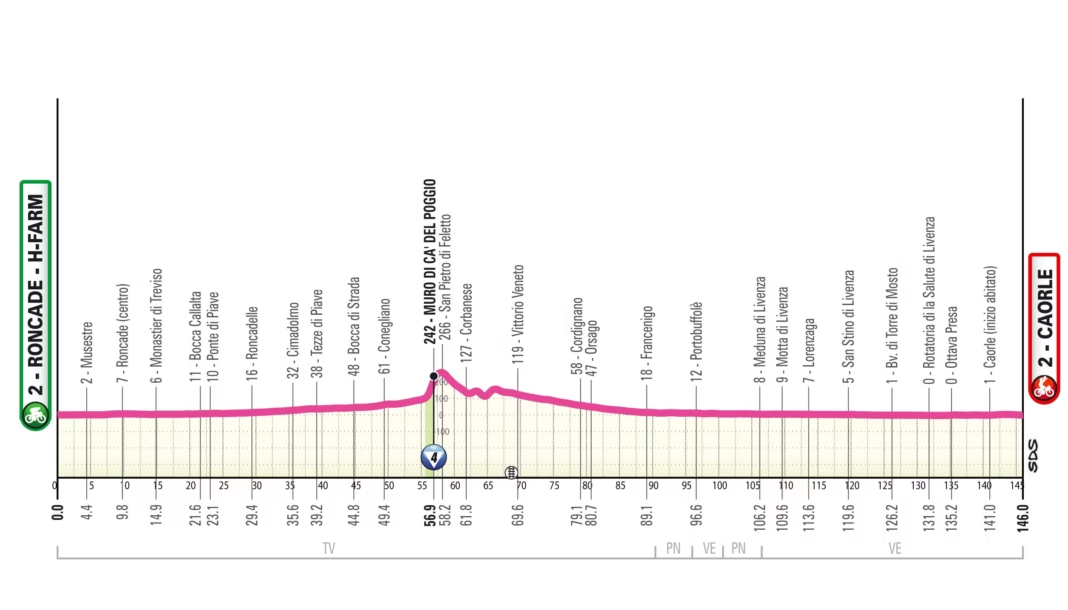
Roncade to Caorle is 156 kilometres and almost completely flat apart from Ca’ del Poggio. On paper, this is one of the clearest sprint opportunities of the race. It should appeal to teams built around fast finishers, but the long distance means there is still time for wind and positioning stress to shape the day.
Stage 3
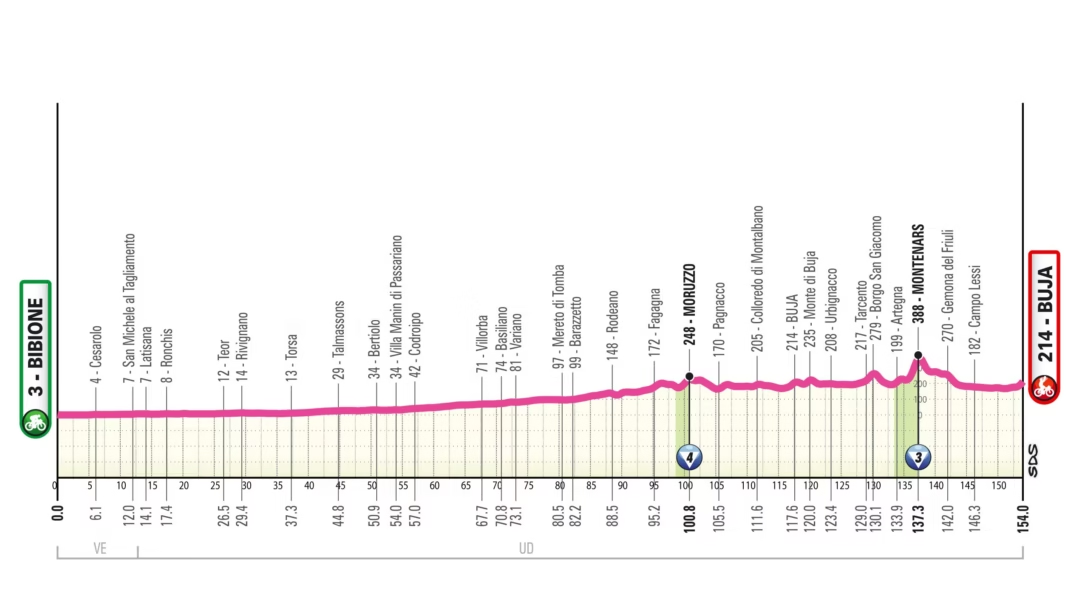
The third stage from Bibione to Buja stays flat for a long opening section before shifting character in the foothills. That change makes it more selective than Stage 2 and could suit puncheurs or aggressive GC teams trying to expose weaker rivals before the mountains and time trial begin to shape the overall picture more clearly.
Stage 4
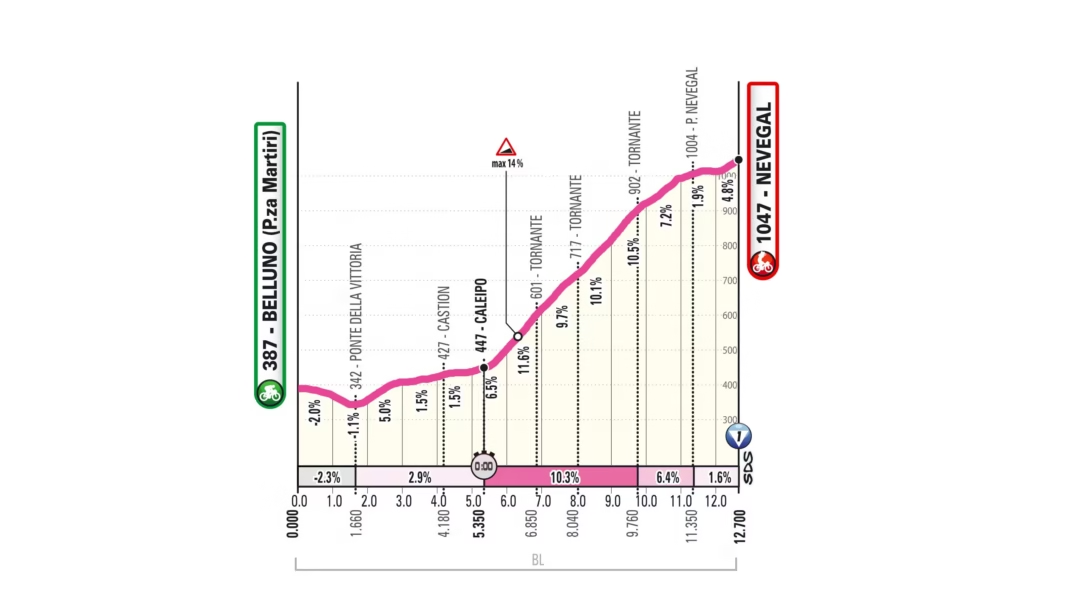
Belluno to Nevegal is a 12.7 kilometre uphill individual time trial and one of the key turning points of the race. This is not a simple power test on flat roads. It asks riders to combine pacing discipline with real climbing ability, which should create meaningful gaps among the overall contenders and put weaker climber-time triallists under immediate pressure.
Stage 5
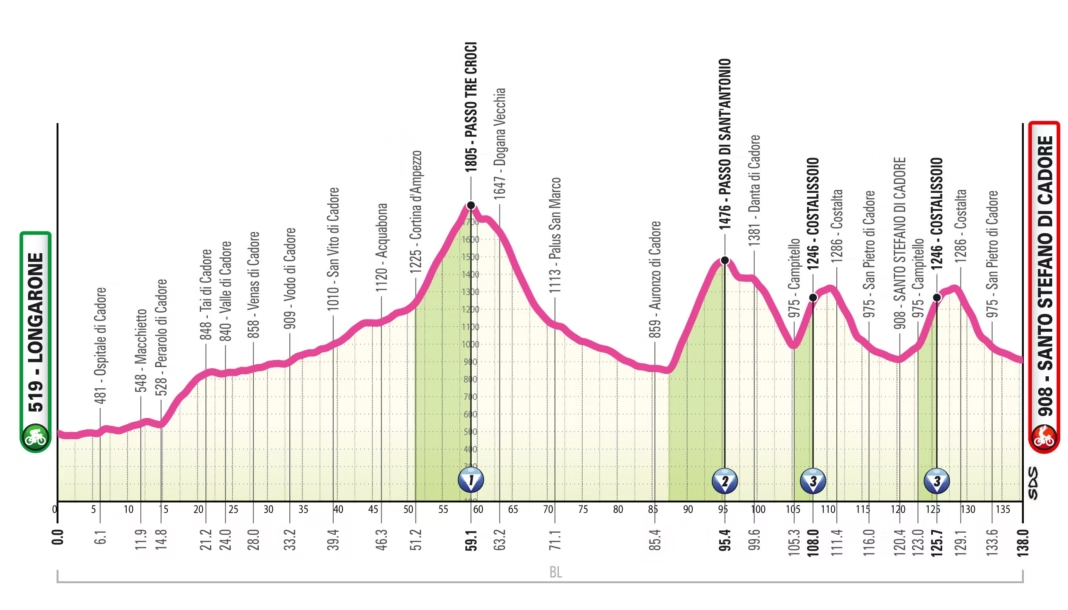
Longarone to Santo Stefano di Cadore is a major Dolomite mountain stage over 146 kilometres. With Passo Tre Croci and Passo Sant’Antonio before a final circuit that includes two climbs of Costa, this is one of the first days that can properly reshape the general classification through climbing rather than positioning or time trialling.
Stage 6
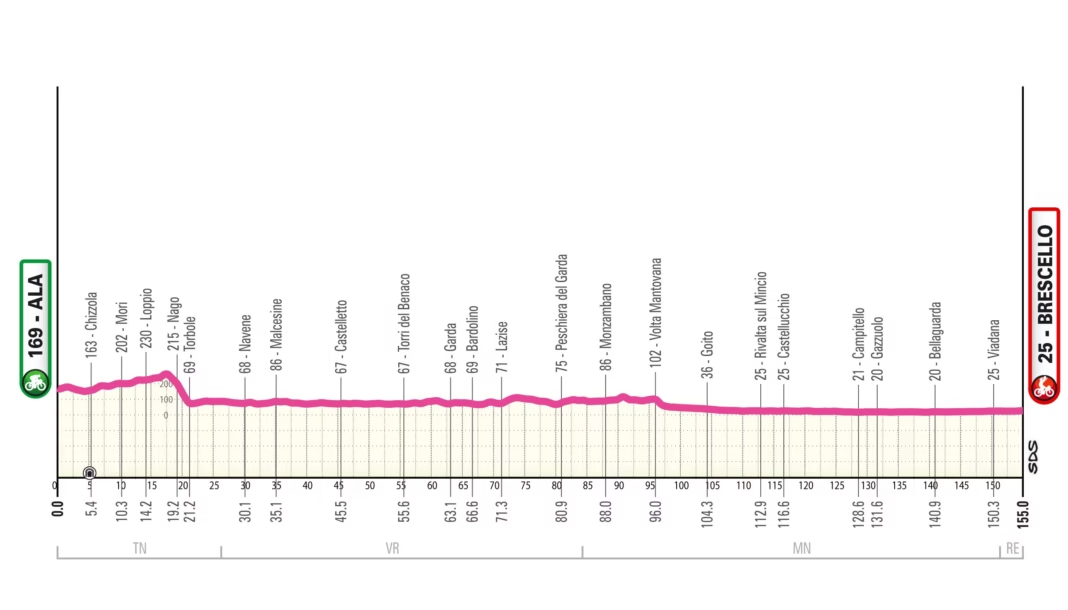
Stage 6 from Ala to Brescello is almost entirely flat across 159 kilometres, giving the race a reset of sorts after the climbing and the uphill time trial. For the sprinters, this is a crucial opportunity. For the GC teams, it is the sort of day where concentration still matters because crashes, splits and energy use can all carry consequences into the final three stages.
Stage 7
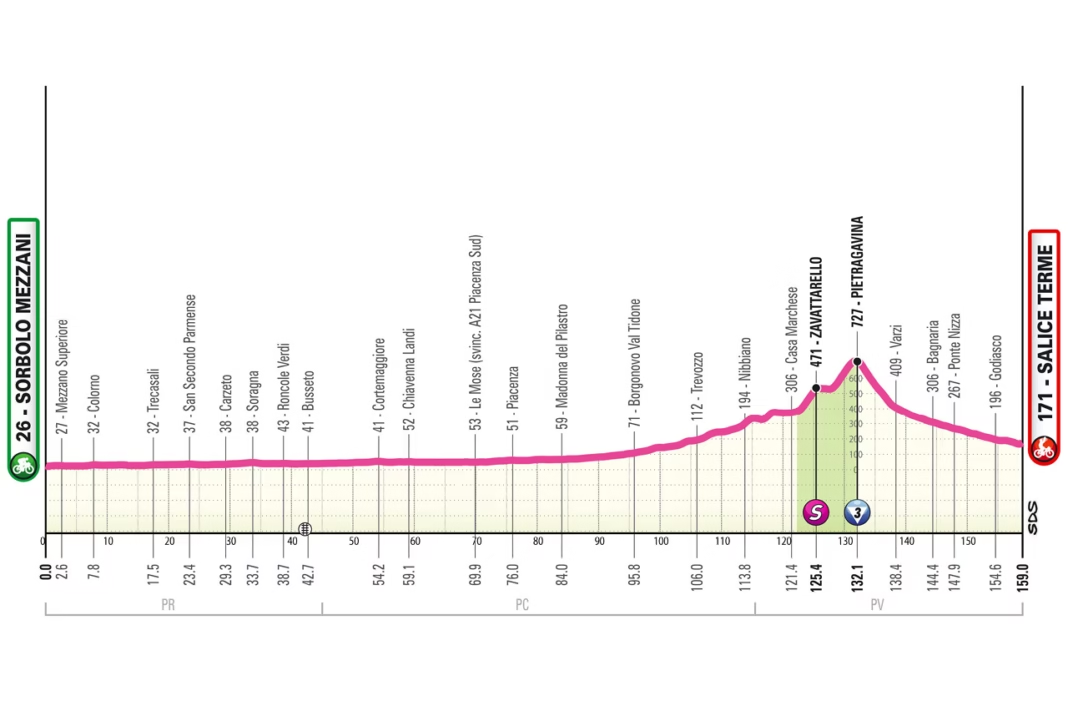
Sorbolo Mezzani to Salice Terme is an Apennine stage divided between a flatter opening and a more selective second half in the Oltrepò hills. The summit crossing at Pietragavina should create pressure, but the way the roads unfold afterwards may still leave tactical room for late attacks, counters or a reduced sprint from a small front group.
Stage 8
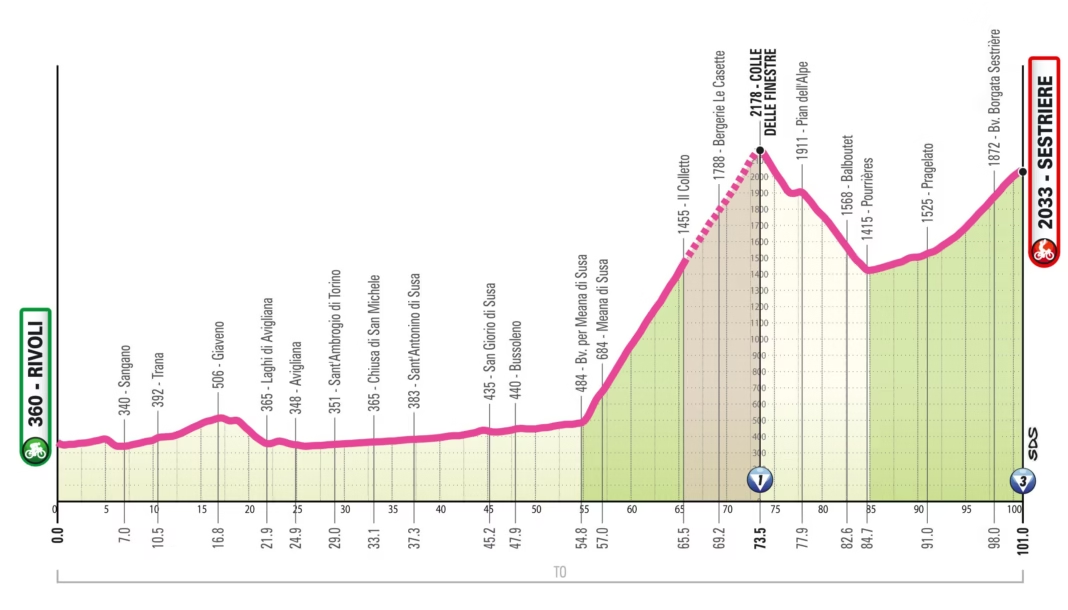
The queen stage runs from Rivoli to Sestriere over 105 kilometres and should be the defining mountain test of the race. The route is short, but that only makes the climbing more direct. By the time the race reaches the final ascent to Sestriere, there should be very little space left for concealment. The strongest climbers and best-supported GC riders need to show themselves here.
Stage 9
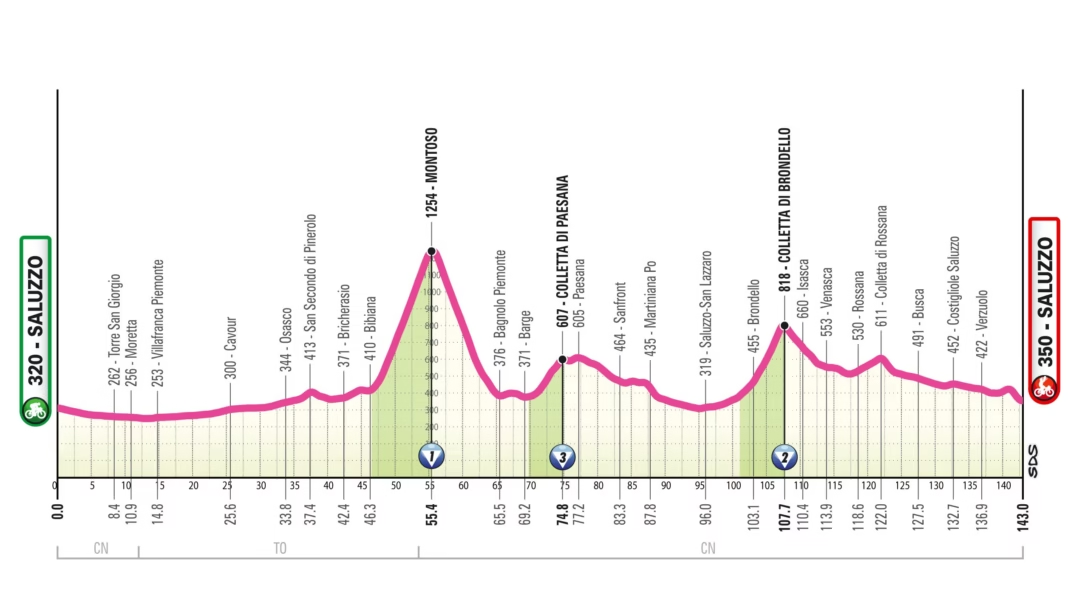
The final stage around Saluzzo is 145 kilometres and far too demanding to be treated as a simple procession into the finish. Three climbs, with the last more than 35 kilometres from the line, mean the race can still be attacked if the gaps remain tight. That gives the final day real tension and prevents the Giro from becoming fully settled before the race reaches its closing kilometres.
2026 Giro d’Italia Women live TV coverage
Race Date: Saturday 30th May to Sunday 7th June 2026
United Kingdom
Live coverage is available via TNT Sports and HBO Max.
International broadcasters
In Italy, the race is broadcast live via Rai, with additional coverage on Eurosport, HBO Max and Discovery+. Across the rest of Europe, coverage is available via Eurosport, HBO Max and Discovery+. In Belgium, the race is broadcast on VRT and RTBF. In the United States, coverage is available via HBO Max. In Canada and the rest of North America, coverage is available via FloBikes.
2026 Giro d’Italia Women startlist

2026 Giro d’Italia Women Contenders
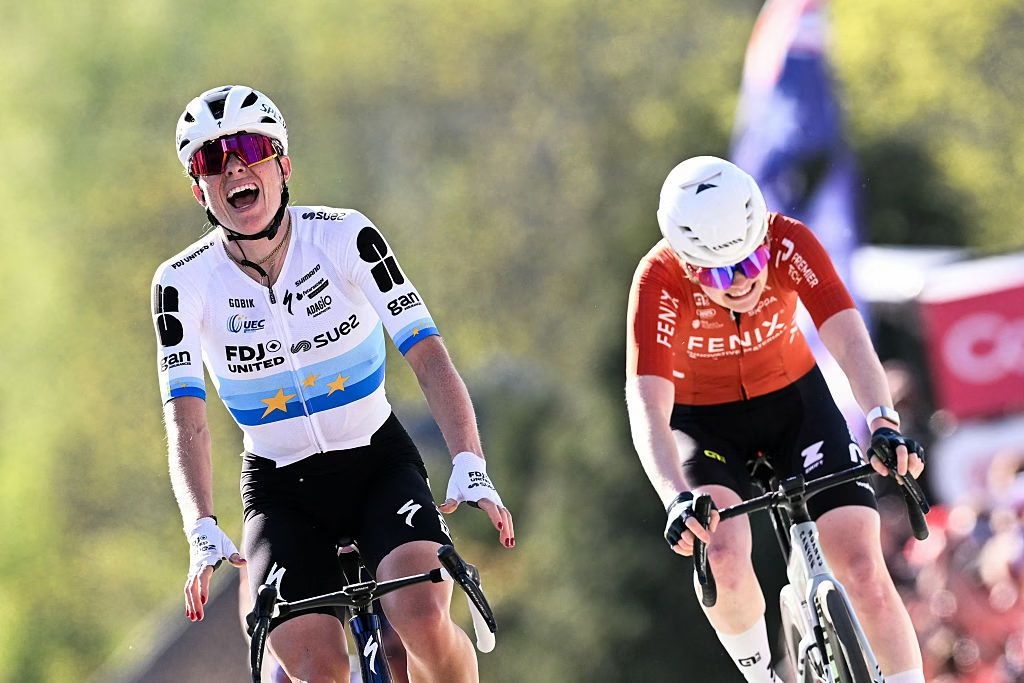
A team built to win the Giro outright starts with Demi Vollering, because even without a huge Giro sample size, the pedigree is already there, a podium from two starts, and the 2026 spring has shown the sharpness to win on command, including victory at Omloop het Nieuwsblad. The Giro question is not whether she can climb, it is whether the week is raced hard enough for pure strength to decide the overall. Elise Chabbey is the rider who can help make that happen, lifting the tempo on medium-mountain days and forcing the bunch into smaller groups before the decisive climbs. Vittoria Guazzini gives the team a serious pacing and time-trial style asset for the days when the race is nervous and time is lost through positioning rather than gradients, while Lauren Dickson and Amber Kraak give depth for the long, awkward days where GC contenders quietly bleed seconds.
If experience still wins stage races in Italy, then Anna van der Breggen is the rider other teams have to solve. Four Giro wins, seven podiums and eight top-10s from thirteen starts is not just a record, it is a reminder of how well she manages a week of attrition. The strength of this line-up is that it does not need to choose between GC and stages. Sprint days immediately become SD Worx days because Lorena Wiebes brings five Giro stage wins and changes how every team has to ride the flat finishes. Behind the headlines, riders like Femke Gerritse and Mikayla Harvey are the ones who keep leaders safe through the early stress, and that matters because the Giro often punishes one moment of poor positioning more than one moment of poor climbing.
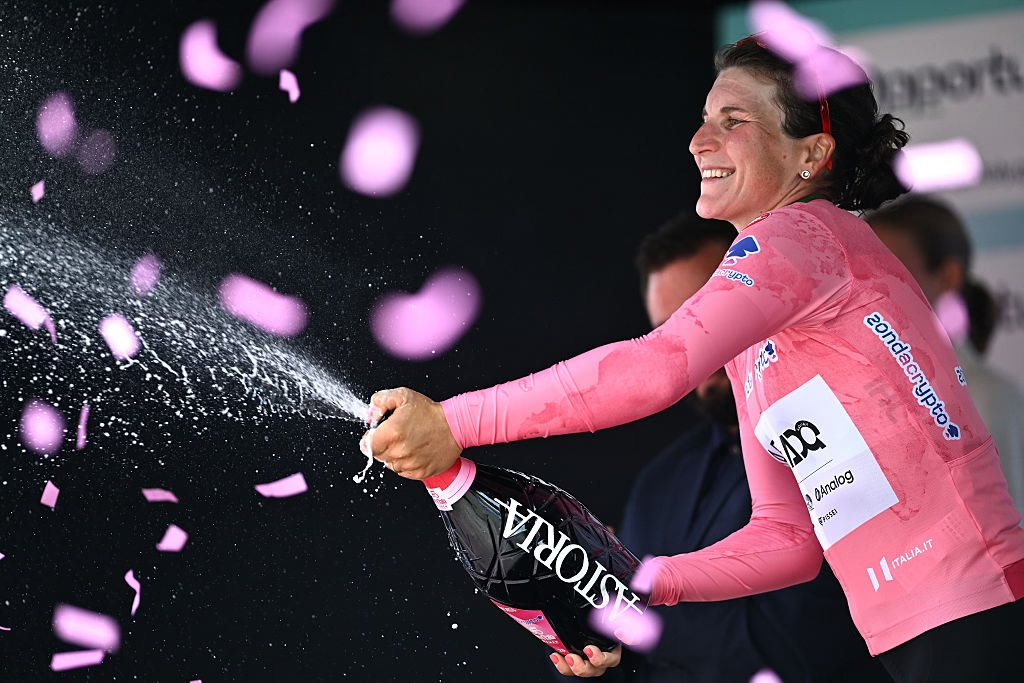 Photo Credit: Getty
A Giro contender with a record that reads like a career summary is Elisa Longo Borghini. Two wins, four podiums, ten top-10s and three stage victories from fourteen starts is sustained excellence in a race that is rarely forgiving. The 2026 form marker is strong too, with Longo Borghini winning Trofeo Oro in Euro, which is the kind of result that suggests she is arriving ready to race, not just to defend. Team depth is a genuine advantage in a stage race, and UAE have it. Erica Magnaldi brings three Giro top-10s from eight starts, a profile that usually means she is still there when others are falling away, while Silvia Persico and Alena Amialiusik add stability and positioning strength across the week. The extra layer is stage flexibility, because Eleonora Gasparrini and Lara Gillespie give UAE ways to turn selective sprint stages into results without compromising the GC plan.
A single Giro start can tell you a lot when it comes with immediate impact, and that is exactly what happened for Sarah Gigante. One start, one podium and two stage wins is a statement return, and it makes her the obvious GC headline for AG Insurance-Soudal. If the route offers a proper summit finish, she is one of the riders most likely to take time there, and her presence forces rivals to race earlier because nobody wants to arrive at the key climbs still within striking distance of a rider who can take minutes. Her current form and fitness is unknown, however, after yet another long-term recovery.
Urška Žigart gives the team a second climbing card, and riders like Justine Ghekiere and Ilse Pluimers help keep the group present on the days where the race is decided by repeated pressure rather than one single climb.
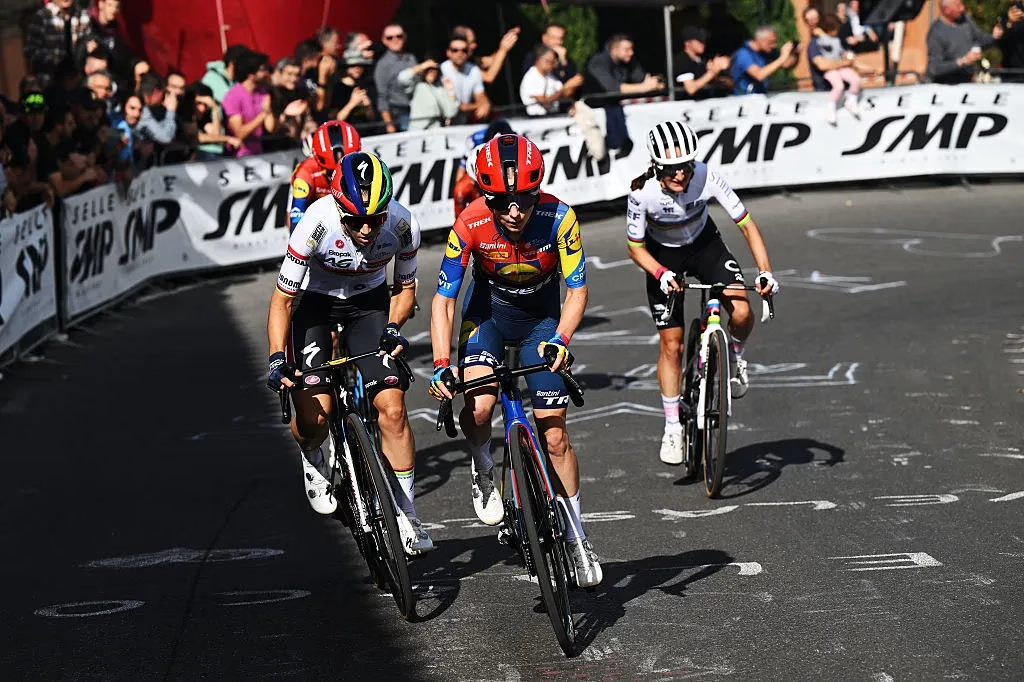 Photo Credit: Getty
If you want a squad built to score across the whole race rather than only on GC, Lidl-Trek make a lot of sense. The climbing and GC angle comes through Niamh Fisher-Black, who has four Giro top-10s and a stage win from five starts, a strong return that suggests she handles the week well as fatigue builds. Amanda Spratt brings a Giro podium and a stage win alongside three top-10s, which is exactly the sort of experience that pays off when a race becomes attritional and the small losses start to add up. There is also stage-winning depth that can shape the entire week. Elisa Balsamo has two Giro stage wins and remains a threat whenever the finish is fast, while Lucinda Brand has three Giro stage wins and is capable of profiting when the race becomes chaotic, and strength matters as much as raw sprint speed.
A team that can turn the Giro into a week of opportunism is Canyon SRAM, because they arrive with riders who can win stages even when the overall is out of reach. Cecilie Uttrup Ludwig has five Giro top-10s from nine starts, which suggests she repeatedly survives the hardest days even if she has not yet converted that consistency into a podium. The upside card is Antonia Niedermaier, because she already has a Giro stage win and fits the profile of a rider who can grow into a stage race as the week progresses. If stages finish from reduced groups, Soraya Paladin becomes a steady option after tough climbing, while Chiara Consonni brings three Giro stage wins and gives the team a clear route to success on sprint days. Kasia Niewiadoma-Phinney was on the original list but will not start this year’s Giro d’Italia Women.
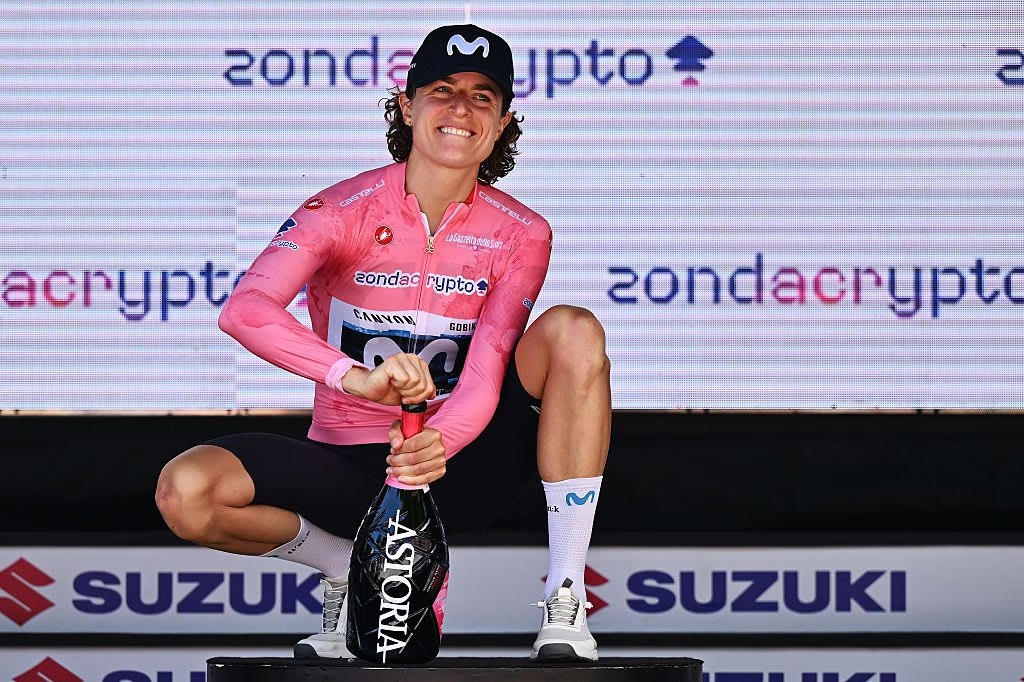
Marlen Reusser changes how a Giro stage is raced because she can turn “steady tempo” into a selection without needing a summit finish. A Giro podium and a stage win on her record is already enough to treat her as a genuine GC card, but the bigger point is how she can win time. If Movistar decide to race offensively, Reusser can harden long climbs through pace alone, then keep pushing on the rolling transitions where other teams are trying to regroup. On weeks where the gaps are made through cumulative pressure rather than one decisive summit, that ability becomes a weapon. Cat Ferguson adds another angle because she can follow the decisive move when the racing turns punchy and chaotic, rather than purely steady. If the front group hesitates, she is also the kind of rider who will commit to the next acceleration instead of waiting for others to chase. That combination means Movistar do not have to rely on one perfect day. They can take time in small chunks, then defend it through depth and positioning.
A quiet but very real GC pathway exists for Liv AlUla Jayco if the Giro is raced hard enough to reward steady climbing and consistent recovery, not just the most explosive final kilometre. Monica Trinca Colonel has a Giro top-10 from her only start, which is a meaningful marker for a rider still building her stage-race profile, and it suggests she can handle the week’s rhythm without cracking on day four or day five. If she arrives at the queen stage within range, the team can ride with patience, letting others fight early, then climbing steadily into a result when fatigue starts to flatten the explosive riders. The other reason Jayco are worth taking seriously is that they can still take stages even if GC does not fully land. On days where the peloton is reduced but not shattered, Silke Smulders and Quinty Ton are both the type of riders who can profit from a messy finish, especially when lead-outs are gone and the sprint is more about timing than top-end speed. That stage threat matters tactically too, because teams chasing the overall often hesitate to chase everything down if they know a strong finisher is waiting behind, and that hesitation is exactly how breakaways and small groups stay clear in the Giro.
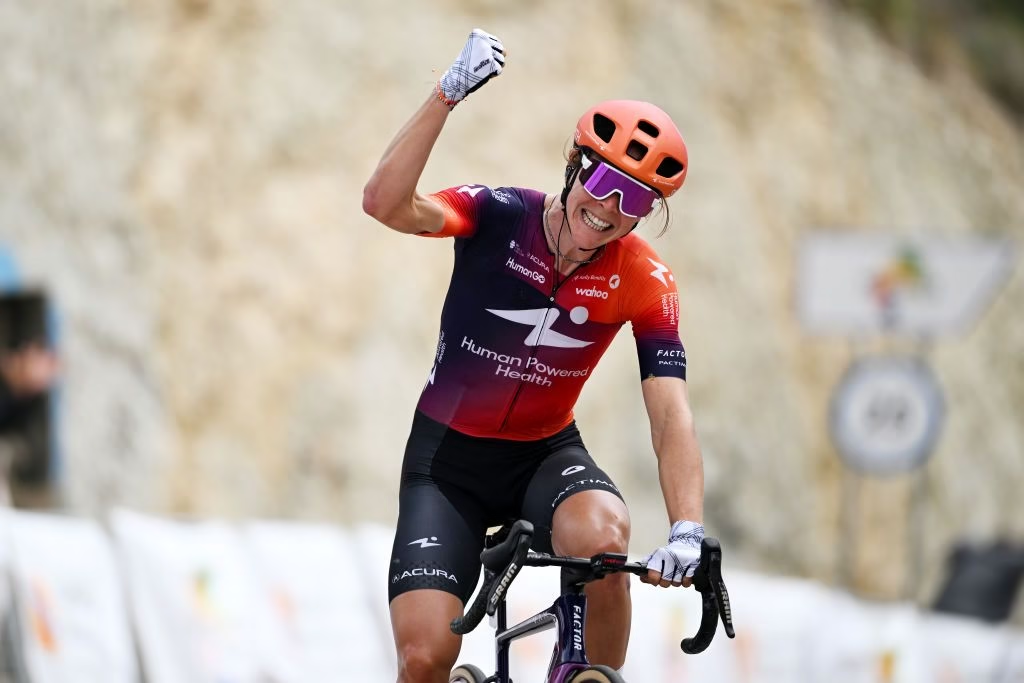
Human Powered Health look best when the Giro becomes a week of attrition rather than a tidy GC procession, because they have riders who can survive hard days and still keep producing results when others fade. Thalita de Jong is the clearest reference point, a rider with a Giro stage win who tends to improve as races get harder and the accumulated fatigue starts to bite. If the week includes lumpy stages where the GC teams are watching each other, de Jong is exactly the type who can get into the right move and finish it off. The depth behind her makes the team more than a one-card punt. Maggie Coles-Lyster and Marit Raaijmakers are well suited to selective stages where the winning group forms early and survives through commitment rather than pure climbing, while Barbara Malcotti having a Giro top-10 on her record is often a quiet sign that she handles the Giro rhythm better than many expect. If the week is chaotic and the GC battle leaves room for opportunists, Human Powered Health have enough riders who can work, survive, and still finish to turn one well-timed day into a defining result.
-
 Photo Credit: Getty
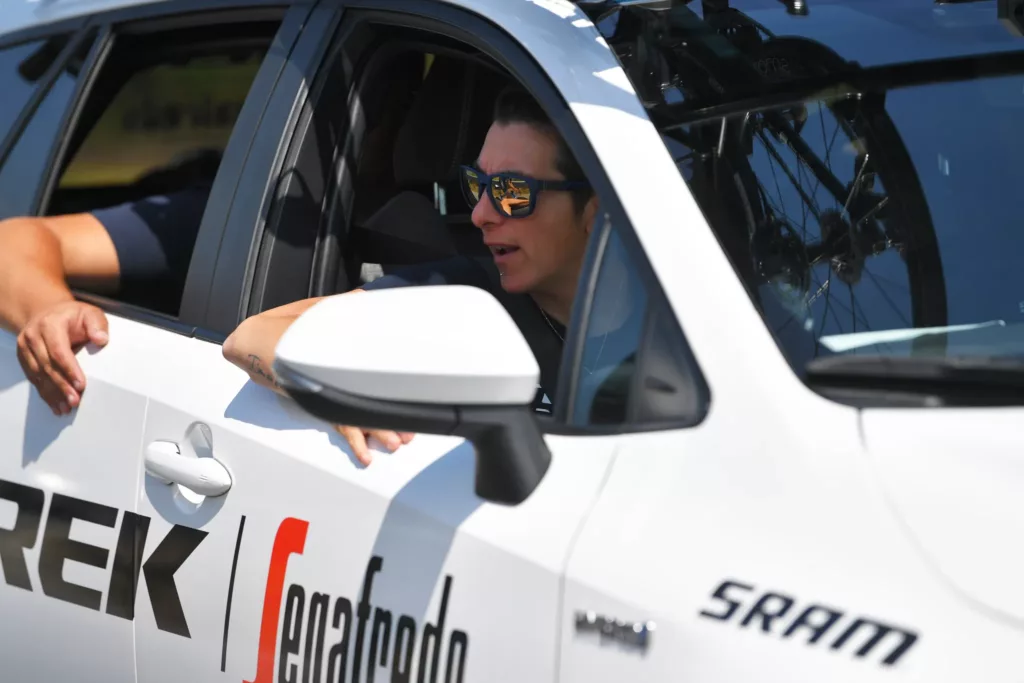
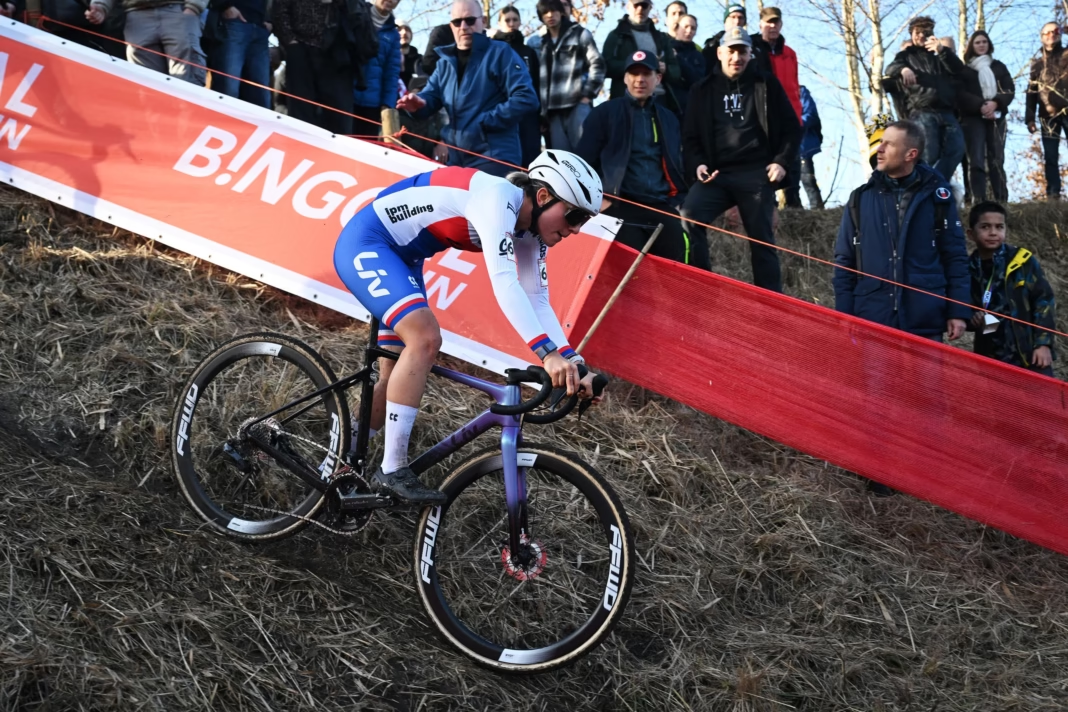
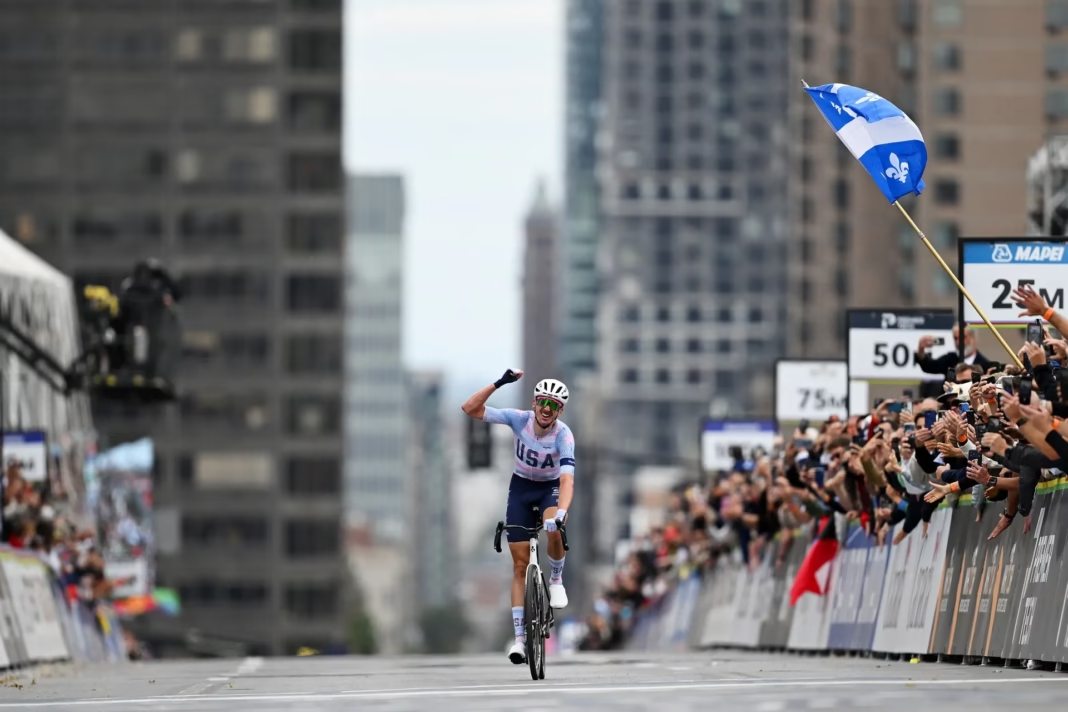
The most important thing to understand about Laboral Kutxa-Fundacion Euskadi at the Giro is that they do not need the race to gift them anything. They can create their own stage opportunities simply by being willing to race earlier than the big GC teams want to. Tiril Jørgensen is the sort of rider who can turn a hard medium-mountain stage into a breakaway battle, especially when the peloton is tired, and the favourites are reluctant to chase until the final climb. Marjolein van ’t Geloof brings the durability that matters on long days, the type of rider who can survive the early chaos, get into the right move, then still have enough to finish when others are hanging on. If the Giro offers a stage where the terrain is too hard for a pure sprint but not hard enough for GC teams to fully commit, those are the days this team should be hunting.
Top 3 Prediction
⦿ Demi Vollering
⦿ Elisa Longo Borghini
⦿ Anna van der Breggen
