
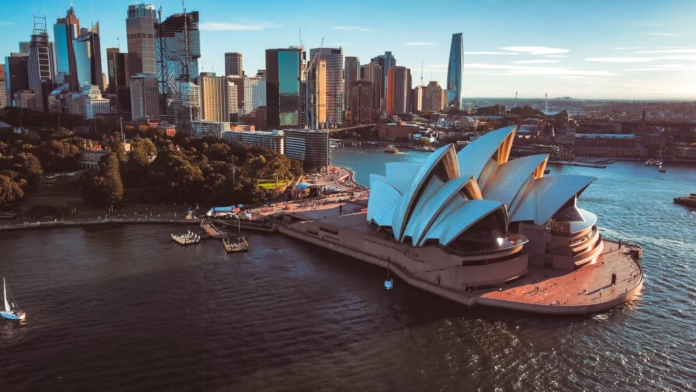
Sydney is not always an easy cycling city, but it can be a spectacular one. It does not hand itself over to riders in the way Girona or Annecy might. The roads can be busy, the suburbs spread endlessly, and the best routes often require planning, patience and an early start. Yet once you find the right roads, Sydney opens into one of the most varied riding landscapes of any major city in the world.
The appeal is in the contrast. One ride can begin with harbour light on the water, the Opera House and bridge somewhere in the background, and the smell of coffee drifting from cafés before the city has fully warmed. Another can take you through eucalyptus forest, sandstone cuttings, quiet national park roads and climbs that rise out of river valleys with enough bite to make the legs sting. The ocean is never far from the imagination, but the best Sydney cycling often comes when you move away from the postcard and into the folds of bushland around the city.
Cycling in Sydney rewards riders who are willing to look beyond the obvious. It has coastal spins, northern beaches loops, national park roads, punchy harbour climbs, inland gorges and long endurance routes that feel far removed from the city they sit beside. It is not a polished cycling resort. It is messier, louder, more urban and more complicated than that. But it also has a kind of drama that few riding destinations can match.
For more long-haul riding ideas, ProCyclingUK’s cycling in Australia and New Zealand hub brings together destination guides for riders looking beyond the familiar European bases.
Why Sydney works as a cycling base
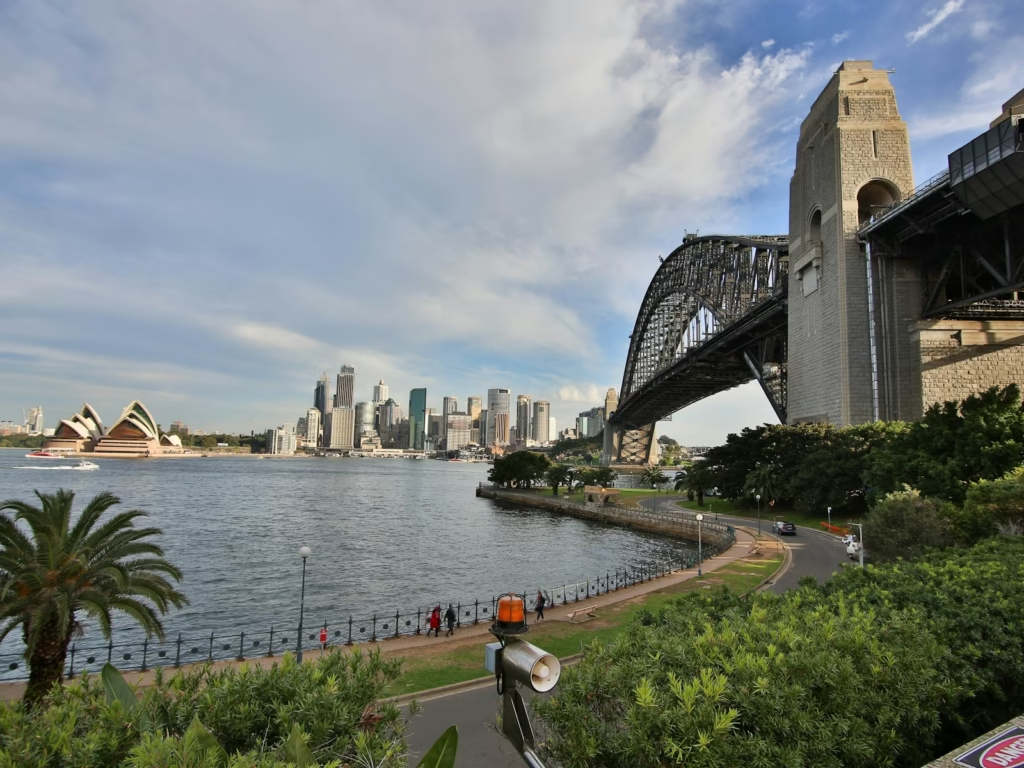
Sydney’s biggest strength is variety. The city itself sits around water, hills, ridges and bays, which means even shorter rides can feel more textured than a simple urban loop. Go further out, and the scale changes again. Ku-ring-gai Chase National Park, Akuna Bay, Bobbin Head, West Head, the Royal National Park and the roads towards the Blue Mountains all give Sydney a depth that is not obvious from the centre.
The climate helps too. Sydney can be ridden year-round, though summer heat and humidity need respect. Winter mornings can be cool but rarely become the sort of deep cold that stops riding altogether. Spring and autumn are often the sweetest periods, with enough warmth for early starts and enough softness in the light to make the longer national park rides feel especially good.
The city is also built around ritual. Early bunch rides, coffee stops, beach suburbs, ferry crossings and park loops all form part of the local cycling culture. Sydney is not always gentle to cyclists, and some roads require real care, but the riding community has carved out its own routes through the sprawl. Once you learn those routes, the city begins to make far more sense.
That is the key. Sydney is not a place where every road is good for riding. It is a place where the right roads are very good indeed.
The harbour and coast give Sydney its first cycling mood
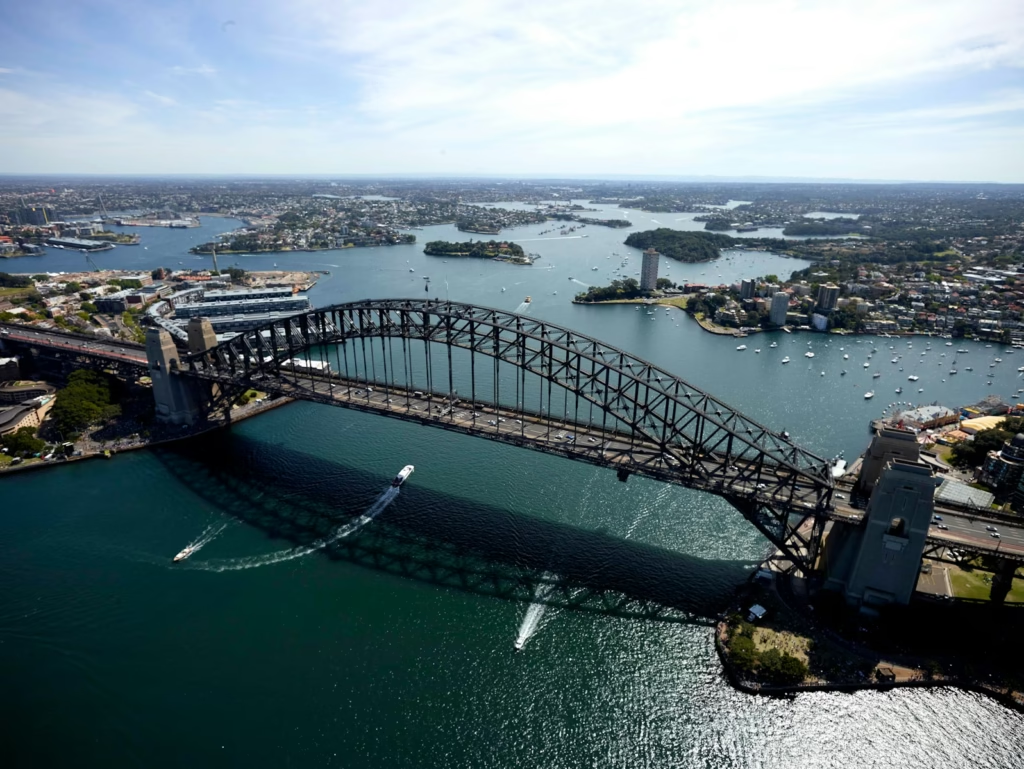
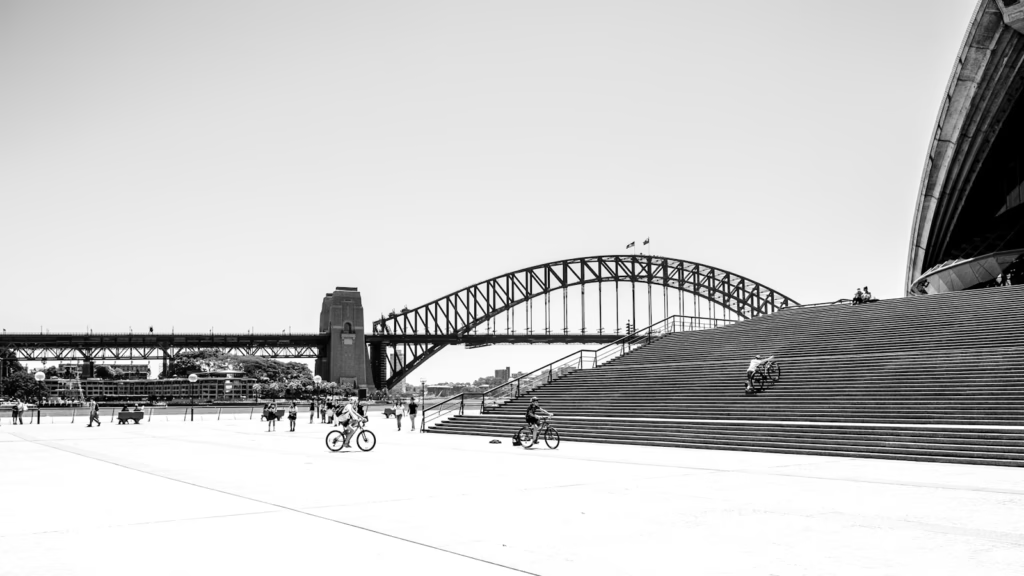
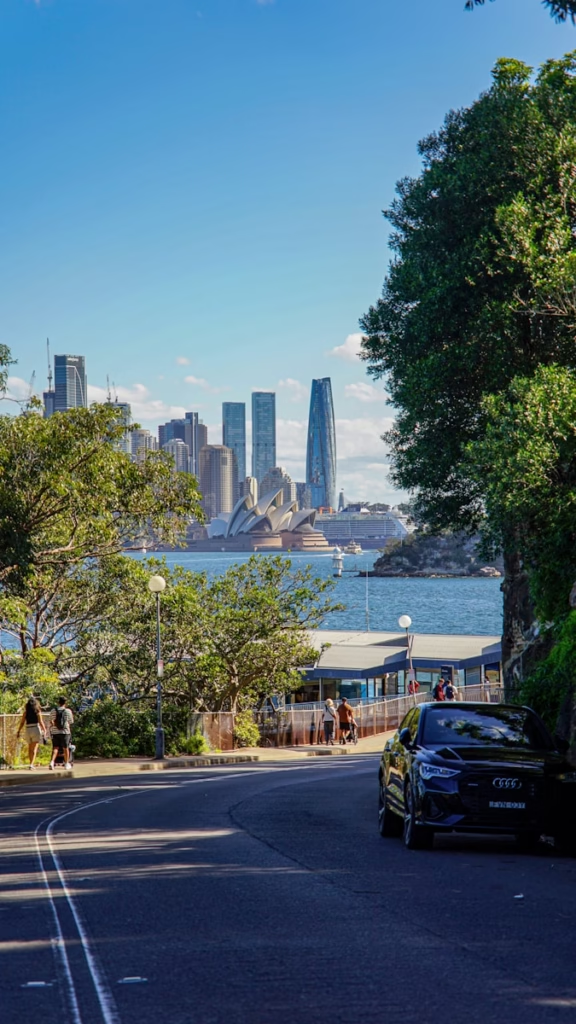
For many visiting riders, the first Sydney ride is about orientation rather than suffering. The harbour gives the city its shape, and riding around it early in the morning has a particular pleasure. The light bounces off the water, ferries leave white trails across the bays, and the city feels briefly calmer before traffic and heat begin to gather.
Routes through the eastern suburbs, around Centennial Park, out towards Bondi, Bronte or La Perouse, or north through Mosman and Manly can all offer a softer introduction. They are not necessarily easy in the sense of being flat. Sydney is full of short pinches, awkward ramps and rolling suburban roads that interrupt the rhythm just when you think you have settled. But they are manageable, scenic and useful for learning how the city rides.
Coastal Sydney has a different sound from the inland roads. There is more traffic noise, more conversation, more pedestrians, more cafés opening onto pavements, more salt and sunscreen in the air. It feels social. Even when the road kicks up, the ride remains connected to the city around it.
That coastal and harbour riding is beautiful, but it is only one layer. The more memorable cycling begins when the roads pull away from the city’s edges and drop into the national parks.
West Head: the classic northern escape
West Head is one of Sydney’s great road cycling names. Ask local riders for a proper route north of the city, and it will come up quickly. The attraction is clear: once inside Ku-ring-gai Chase National Park, the roads become quieter, greener and more flowing, with fewer traffic lights and a sense of distance from the suburbs below.
The road to West Head has a rhythm that suits endurance riders. It is not one long alpine climb, but a sequence of rolling rises, dips, bends and open sections through bushland. The gradients are enough to work the legs without turning the whole day into survival. On a good morning, with the air still cool and the trees throwing broken shadows across the tarmac, it feels like a proper escape from Sydney rather than just a ride on the edge of it.
The lookout gives the route its reward. The view across Pittwater, Broken Bay and the surrounding headlands has the wide, blue openness that makes New South Wales feel enormous. You arrive with salt drying on your face, eucalyptus in the air and the soft buzz of insects replacing the noise of the city.
West Head is also valuable because it can be shaped to suit the day. It can be part of a longer ride from the city, a northern beaches loop, an out-and-back from Terrey Hills, or a bigger route that also takes in Akuna Bay. That flexibility is one reason it has become such a Sydney staple.
Akuna Bay: quiet water, forest roads and a proper climb
Akuna Bay changes the mood again. The descent drops through bushland towards still water, with the road curling down into a pocket of quiet that feels much further from Sydney than it really is. The smell here is green and dry at the same time: eucalyptus, dust, warm bark and the faint dampness of the bay below.
The climb back out is the part cyclists remember. It is not brutally long by European standards, but it has enough length and gradient to become a real effort, especially after the rolling roads that often come before it.
What makes Akuna Bay special is not only the climb. It is the setting. The road sits inside Ku-ring-gai Chase National Park, where the city drops away and the ride becomes more enclosed. There are no shopfronts, few distractions and long stretches where the only sounds are tyres, birds and breathing.
Climbs like this are part of Sydney’s hidden cycling identity. The city is not known globally for mountains, but it has repeated short-to-medium climbs that accumulate into serious days. Akuna Bay is exactly that kind of road: beautiful, manageable, repeatable and hard enough to become a benchmark.
Bobbin Head and the northern gorges
Bobbin Head is another essential Sydney climb, and it has a slightly different character from Akuna Bay. It is a descent into a sheltered valley, a crossing near the water, and then a climb back out through thick bush and sandstone. The road feels contained, almost secretive, as though the city has folded in on itself and hidden a cycling route inside the trees.
The riding here is not about one spectacular viewpoint alone. It is about repeated transitions: suburb to forest, ridge to river, descent to climb, shade to heat. Bobbin Head gives Sydney one of its most satisfying combinations of accessibility and immersion, close enough to reach from the suburbs but enclosed enough to feel properly removed.
The climb out can feel harder than the numbers suggest because of how it arrives. You have descended into calm, perhaps taken in the water and the trees, and then the road immediately asks you to work again. The gradient is steady enough to settle into, but it never feels casual if the pace is on.
Linked with Galston Gorge, Berowra Waters or other northern routes, Bobbin Head can become part of a much larger climbing day. These are the roads that show how Sydney’s terrain works. It does not need one enormous mountain. It uses repetition, heat, bends and short valley climbs to wear down the legs.
Royal National Park: Sydney’s southern classic
South of the city, the Royal National Park gives Sydney another kind of cycling stage. It is one of the most important road riding areas near the city, with routes that combine bushland, coastal air, rolling roads and access towards the Grand Pacific Drive.
The park has a more rugged feel than many urban riders expect. The roads rise and fall through trees, then open suddenly towards coastal light. There is a sense of being held between forest and ocean, with the air shifting as you move. Some sections smell of dry leaves and warm bark, others carry a faint salt edge from the coast.
For Sydney cyclists, the Royal National Park can be a training ground, a weekend escape or the start of a longer ride towards Stanwell Tops and the Sea Cliff Bridge. For visitors, it is one of the clearest ways to understand how quickly Sydney can turn from city into landscape.
The riding demands attention. Roads can be narrow in places, traffic varies by time of day, and weekends can bring cars, motorbikes and other riders. But ridden early and planned well, the Royal National Park is one of Sydney’s great cycling experiences.

Stanwell Tops and the Grand Pacific feeling
Extend beyond the Royal National Park and the ride begins to take on a more dramatic coastal quality. Stanwell Tops is the obvious landmark, with views that open over the coastline and the road dropping towards the northern Illawarra. It is the kind of place where you stop not just because you need a breather, but because the view demands it.
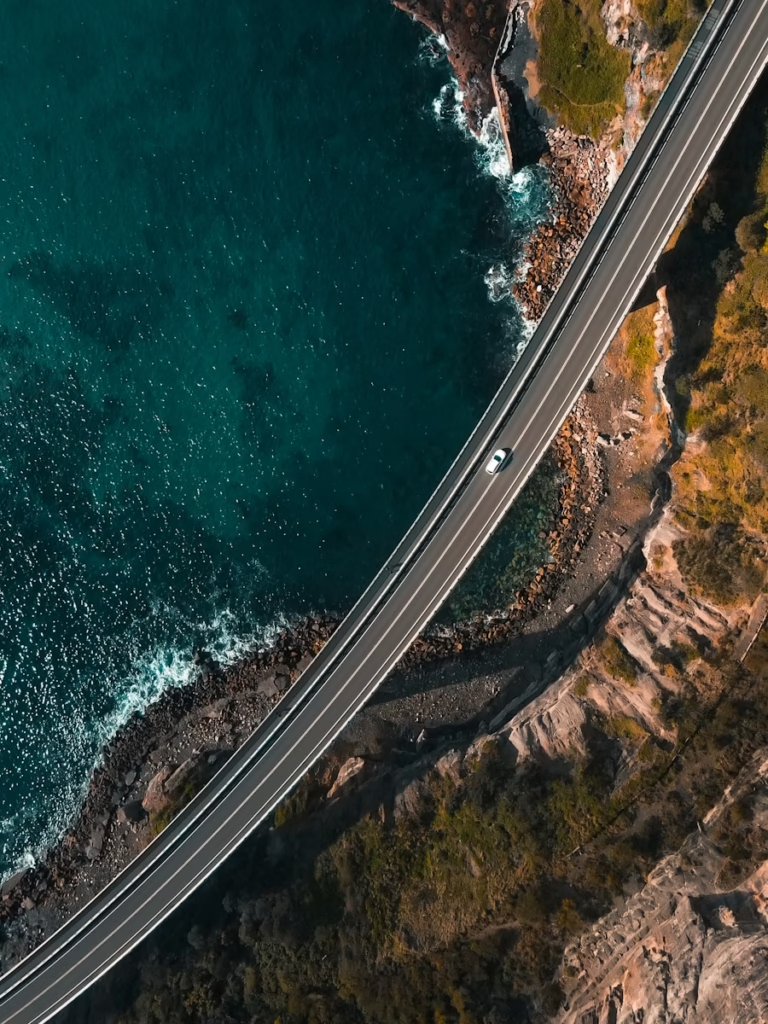
The descent and the roads towards the Sea Cliff Bridge carry a different atmosphere from the northern national park rides. This is Sydney as edge rather than harbour: cliffs, sea wind, open sky and the constant sense that the coast is pulling the route southwards.
It can be a hard ride, especially when built into a longer day from the city. The climbs are not always individually huge, but the distance, exposure and rolling terrain accumulate. The reward is the feeling of a proper journey, not just a loop. You leave the city, cross a national park, touch the coast and return with the sense that you have ridden through several versions of New South Wales in one day.
The city climbs: short, sharp and everywhere
Sydney’s surrounding climbs get the attention, but the city itself is full of smaller tests. The roads around Mosman, Balmoral, Vaucluse, Dover Heights, North Head and the eastern beaches are littered with short rises that can ruin an easy ride if you misjudge them.
These are not famous climbs in the European sense. There are no summit signs or long switchback sequences. Instead, they appear suddenly between houses, parks, beaches and harbour views. A road dips towards the water, then kicks back up at a gradient that feels unreasonable for a supposedly casual spin.
That gives Sydney’s riding a punchy character. Even a shorter harbour loop can produce repeated accelerations and enough climbing to surprise visitors. It is one reason local riders often become strong on rolling terrain. The city teaches you to climb in fragments: 90 seconds here, four minutes there, a steep drag away from the water, then another one before the legs have fully cleared.
The atmosphere is different from the national parks, but no less memorable. Instead of isolation, you get city texture: jacaranda shade, ferry horns, beach crowds, apartment blocks, glimpses of blue water and cafés where the ride can end almost too easily.
The roads and traffic: why planning matters
Sydney cycling needs honesty. It is not one of the world’s most naturally bike-friendly cities, and visitors should not assume that every road will feel comfortable. The surrounding riding can be excellent, but the city’s scale and traffic mean the route choice matters more than it might in a compact European cycling base.
That does not mean Sydney should be avoided. It means the difference between a brilliant ride and a stressful one can come down to using known cycling roads, starting early, avoiding peak traffic and understanding where the city’s best riding corridors are.
That is one of the biggest differences between Sydney and a place such as Girona, where much of the riding starts almost immediately from the city edge. ProCyclingUK’s cycling guide to Girona and the Costa Brava shows how a more compact European base can work, while Sydney asks for more planning in exchange for greater contrast between harbour, coast, bush and climb.
Early starts are part of the culture for a reason. The air is cooler, the light is better, the roads are calmer and the cafés feel like a reward rather than an escape. A 6am roll-out in Sydney has its own mood: the city still half asleep, the harbour pale, the beaches quiet, the first heat not yet on the road.
The national parks also require practical respect. Services can be limited once you are inside, mobile reception may vary, and water stops should not be left to chance. Sydney rewards riders who prepare properly. It punishes those who treat a long park loop like a casual spin around the block.
The atmosphere: water, sandstone and eucalyptus
The atmosphere of Sydney cycling is built from contrasts. Water is everywhere, even when you are not riding beside it. The harbour, Pittwater, the Pacific, bays, coves and river crossings all shape the way the city feels on a bike. You climb away from water, descend back towards it, glimpse it through trees, or sense it beyond the ridge.
Sandstone gives the landscape its texture. Cuttings glow gold in the sun. Cliffs catch the morning light. The bushland feels dry, aromatic and ancient, especially inside the national parks. Eucalyptus hangs in the air, sometimes sharp, sometimes sweet, mixing with dust, salt, hot tarmac and coffee depending on where the ride takes you.
The sound changes too. In the city, there is traffic, café chatter, pedestrian crossings and the clatter of urban life. In Ku-ring-gai Chase or the Royal National Park, the noise thins out. Birds become louder. Freewheels echo briefly off rock. Climbs become quieter because conversation disappears and the rhythm of breathing takes over.
That is why Sydney stays with you. It is not always smooth or simple, but it is vivid. The rides have layers: city, beach, harbour, bush, gorge, coast, climb. Few destinations can move between those moods so quickly.
When to ride in Sydney
Sydney can work as a cycling destination across the year, but the best riding often comes in spring and autumn. The temperatures are more forgiving, the light is strong without being too harsh, and longer rides into the national parks become easier to manage.
Winter can be excellent for serious riding. Mornings may be cool, especially inland or in shaded valleys, but the days are often manageable and the lower humidity can make climbing more pleasant. For riders coming from the UK, a Sydney winter can still feel generous.
Summer is beautiful but needs caution. Heat, humidity and UV exposure can make long rides demanding, particularly away from the coast. Early starts, extra water, sun protection and realistic route choices become essential. A ride that feels comfortable beside the harbour can feel very different on a climb out of Akuna Bay or inside the Royal National Park once the day warms up.
Weather can also change the character of the roads. Rain can make descents slippery, especially under trees or on shaded corners. Wind can affect exposed coastal sections. Sydney is not a place to ignore conditions simply because the forecast looks warm.
Who is Sydney best for?
Sydney suits riders who enjoy variety more than simplicity. If you want a compact European-style cycling base where every route begins on quiet lanes within five minutes, it may frustrate you. If you enjoy working a city out, finding the right roads and being rewarded with huge contrasts, it can be superb.
Climbers will enjoy Akuna Bay, Bobbin Head, Galston Gorge, the Royal National Park and the longer northern or southern loops. Endurance riders have enough distance to build proper days, especially by linking the national parks. Riders who prefer scenic, social riding can stay closer to the harbour, beaches and Centennial Park.
It is also a good destination for mixed trips. Sydney has enough food, beaches, culture, ferries, walks and neighbourhoods to make the off-bike part of the trip easy. A hard ride can end with a swim, a long lunch or a ferry back across the harbour, which is not a bad way to recover from repeated climbs through the bush.
Practical information for cycling in Sydney
Where you stay should depend on the kind of riding you want. The northern beaches and lower north shore are useful for access towards West Head, Akuna Bay and Bobbin Head. The eastern suburbs work better for coastal and harbour rides. Staying centrally gives more flexibility for sightseeing but may require more careful route planning to escape the busiest roads.
A car can be useful for reaching some of the best riding, particularly if you want to start closer to the Royal National Park, West Head or the Blue Mountains. Public transport can help with some routes, but bikes, timing and station access need checking in advance.
Gearing should reflect repeated climbing rather than one giant ascent. Sydney’s climbs are often medium-length or short and steep, and fatigue builds through repetition. A climbing-friendly setup makes the national park loops more enjoyable, especially in heat.
Water and food planning are essential on longer rides. Cafés are easy to find in many urban and coastal areas, but once inside the national parks or on longer loops, services can become less frequent. Carry enough to be self-sufficient between known stops.
How Sydney compares with other Australia and New Zealand riding bases
Sydney sits in a different category from the quieter, more purpose-built riding bases elsewhere in Australia and New Zealand. It is less immediately simple than the long open roads around Adelaide and McLaren Vale, and less mountain-focused than Victoria’s High Country around Bright and Falls Creek. It asks more of the rider before giving its best roads back.
That is also part of the attraction. ProCyclingUK’s guide to cycling from Adelaide to McLaren Vale captures a more race-road, wine-region version of Australian riding, while cycling Bright and Falls Creek is built around longer alpine climbs. Sydney gives something else: a city, a harbour, national parks and surrounding climbs that need to be stitched together into a ride.
For riders who like road trips and wider travel, it also pairs naturally with coastal or big-landscape riding elsewhere in the region. ProCyclingUK’s cyclist’s guide to the Great Ocean Road shows the more sweeping coastal side of Australian riding, while cycling in Queenstown and Central Otago captures a very different New Zealand version of open roads, big views and travel-led riding.
Why Sydney deserves a place on your riding list
Sydney deserves a place on a cycling list because it gives riders more than scenery. It gives atmosphere, contrast and a genuine sense of movement through different worlds. The harbour and coast provide the city’s glamour, but the surrounding climbs give it depth.
West Head offers the classic northern escape. Akuna Bay gives quiet water and a proper climb back through the trees. Bobbin Head and the gorges bring repeated valley efforts. The Royal National Park creates a southern riding world of bush, coastal light and longer endurance routes. The city itself adds short, sharp climbs and constant visual reward.
For more cycling travel inspiration, ProCyclingUK’s wider travel and riding abroad section includes destination guides across Europe, North America, Australia and beyond, from compact cycling bases to big-landscape trips where the riding changes completely from one day to the next.
Sydney is not the easiest cycling destination, and that is part of its truth. The roads need choosing, the traffic needs respecting and the heat can be unforgiving. But when the ride comes together, it can be extraordinary: harbour light at dawn, eucalyptus in the climbs, sandstone glowing beside the road, ocean air on the return and the satisfying feeling that one city has somehow given you several rides at once.

