
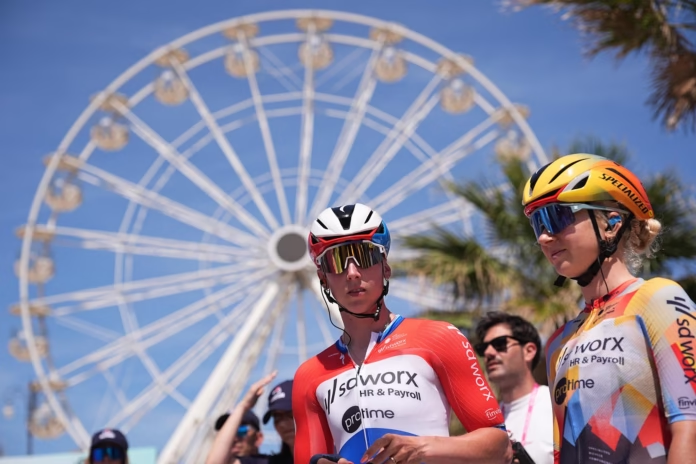
Giro d’Italia Women 2026 stage 2 gives the sprinters another major opportunity, but it is not quite as straightforward as the flat opener to Ravenna. The route from Roncade to Caorle on Sunday, 31st May covers 156km, with around 500 metres of climbing and one short, sharp obstacle placed early enough to create tension without necessarily preventing a bunch sprint.
The key feature is the Muro di Ca’ del Poggio, a fourth-category climb that comes roughly halfway through the stage. At around 1.2km at 12.2%, it is steep enough to sting, split the bunch and put some fast finishers under pressure, but with around 90km still to race afterwards, the sprint teams should have enough road to regroup before the finish on the Adriatic coast.
That makes stage 2 a familiar but still delicate Giro problem. On paper, it should be a sprint. In practice, the peloton has to get over a sharp wall, reorganise, manage the long run towards Caorle and then handle a fast urban finish where positioning will decide almost as much as pure speed.
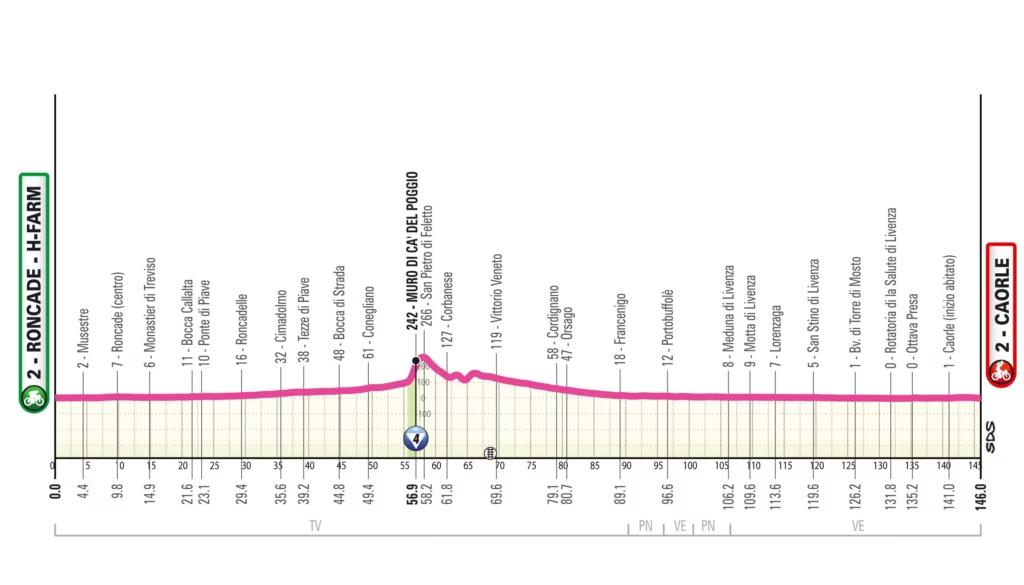
Giro d’Italia Women 2026 stage 2 route
Stage 2 starts in Roncade, with the H-FARM innovation hub hosting the departure, before the race heads north through Veneto towards Vittorio Veneto. The opening half of the stage gradually rises on a shallow drag, never becoming mountainous but slowly adding weight to the legs before the day’s main obstacle.
The Muro di Ca’ del Poggio is the only categorised climb of the stage. It is short, but it is not gentle. The gradient is steep enough to force the sprinters’ teams to work carefully, because any poor positioning before the climb could leave riders chasing once the road levels out again. It should also decide the first real points in the mountains classification, giving attackers and opportunists a reason to race it hard.
After Ca’ del Poggio, the route drops away and becomes much more favourable to a sprint finish. The roads towards Caorle are generally wide and straight, which should help the peloton bring back any dangerous move. The final kilometres are urban, with four corners linking straight sections before a 600-metre finishing straight on wide asphalt.
For the bigger race picture, ProCyclingUK’s Giro d’Italia Women 2026 full route guide explains how the opening sprint stages lead into the harder GC tests later in the week.
What’s on offer on stage 2?
- Stage: Stage 2
- Date: Sunday, 31st May
- Route: Roncade to Caorle
- Distance: 156km
- Stage type: Flat / sprint stage with one short climb
- Elevation gain: around 500 metres
- Key climb: Muro di Ca’ del Poggio, category 4, around 1.2km at 12.2%
- Expected start: around 09:15 BST
- Expected finish: around 13:58 BST
- UK live coverage: TNT Sports and HBO Max
Why the Muro di Ca’ del Poggio matters
The Muro di Ca’ del Poggio is not long enough to decide the stage on its own, but it changes the texture of the day. Without it, stage 2 would be a much more standard sprint stage, with the peloton controlling the break and setting up a fast finish by the sea. With it, there is a mid-race point where teams can test the sprinters, score mountains points and force weaker lead-out trains to spend energy chasing.
The timing of the climb is important. With around 90km remaining after the top, it comes too far from the finish to be an obvious race-winning launchpad. That should keep the main favourites calm. But if a strong group goes clear over the top and the sprint teams hesitate, the stage could become more complicated than the profile suggests.
It also brings the maglia azzurra into play. Stage 1 offered no real climbing, so the first meaningful mountains points should carry symbolic weight. A rider or team looking for early jersey visibility may treat the climb as the day’s first serious target, even if the stage itself still comes back together later.
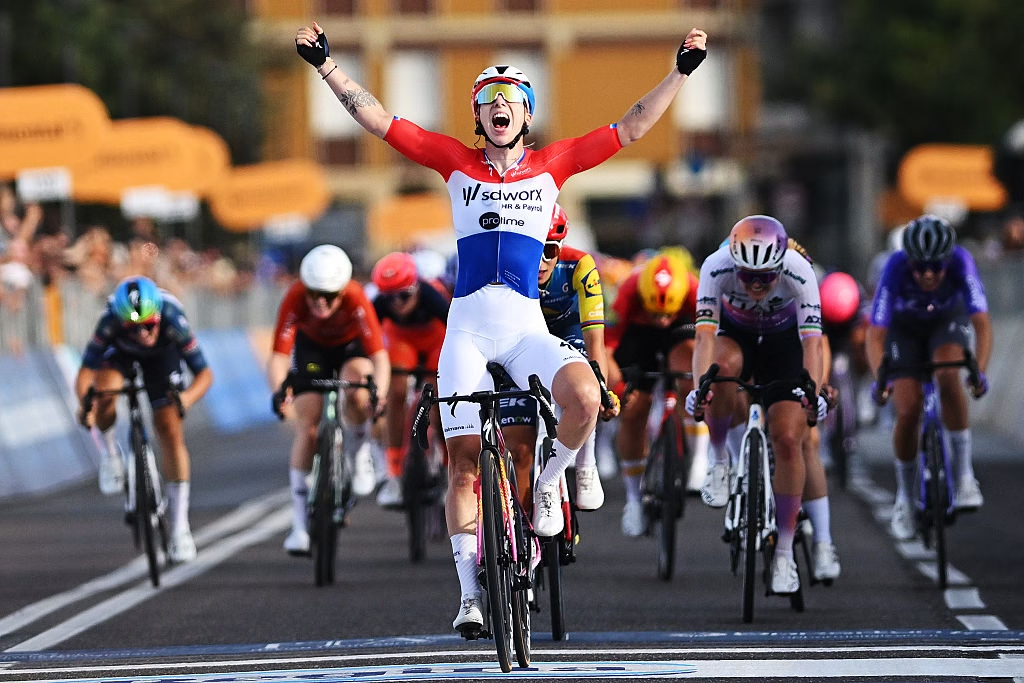 Photo Credit: Getty
Will stage 2 end in a bunch sprint?
A bunch sprint is the most likely outcome. The official race description points towards an almost completely flat day apart from Ca’ del Poggio, and the long run from the climb to Caorle gives the sprint teams plenty of time to restore order.
That does not mean it will be easy. The stage is 156km, longer than the opener, and the peloton will already be carrying the fatigue and nervousness of the first weekend. The sprint teams will have to judge the chase carefully if a breakaway builds a useful gap before the climb.
The most likely pattern is a controlled breakaway, pressure over Ca’ del Poggio, a regrouping phase and then a full sprint in Caorle. The challenge for the fast finishers is not only surviving the climb, but still having the team support and positioning to contest the final.
Could the maglia rosa change hands?
Stage 2 gives the opening race leader a defendable day, but the maglia rosa is not completely locked down. Bonus seconds at the finish could bring the jersey into play, especially if the stage 1 winner is a sprinter and the same riders are fighting for the win again in Caorle.
The GC contenders should not be looking to gain major time here, but they still need to stay alert. A flat-looking stage can become dangerous if a crash, split or badly timed chase happens late in the day. The finishing roads are generally wide, but the urban finale still demands careful positioning.
For Demi Vollering, Elisa Longo Borghini, Marlen Reusser, Anna van der Breggen and the other overall contenders, stage 2 is mainly about staying safe. The proper GC selection begins later, especially with the uphill time trial to Nevegal on stage 4 and the Dolomite stage to Santo Stefano di Cadore on stage 5.
Riders to watch on Giro d’Italia Women stage 2
Lorena Wiebes will again be the sprint reference if the race comes back together in Caorle. The route is manageable for a rider with her strength, and the long, wide finishing straight should give her room to use her top-end speed if she is delivered well.
Charlotte Kool should be another central contender. A slightly more complicated sprint day can suit her if the lead-outs are disrupted and the final becomes more instinctive. The key will be staying close over Ca’ del Poggio and not wasting energy chasing back afterwards.
Elisa Balsamo brings a strong mix of speed, positioning and resilience. A stage like this, with one short climb and a fast coastal finish, should not put her out of the picture. A home Giro stage win would also carry obvious value.
Chiara Consonni has the finish to take advantage if the sprint becomes less structured. The final 600 metres should reward timing, and Consonni is one of the riders capable of coming through late if the biggest trains start too early.
Letizia Paternoster is another name to watch if the climb and the length of the stage reduce the group slightly. She is not the purest power sprinter in the field, but she can be dangerous when the finish rewards positioning, track skills and a sharp final acceleration.
Lara Gillespie could be a useful option if the stage becomes more chaotic than expected. UAE Team ADQ’s main GC focus is Elisa Longo Borghini, but Gillespie gives them a rider who can survive a harder day and still contest a reduced sprint.
Rachele Barbieri should also be considered if the finale becomes tactical. A stage that includes a short wall and then a long chase towards a sprint can sometimes reward riders who handle repeated accelerations rather than only a perfectly controlled lead-out.
 Photo Credit: RCS
Could attackers surprise the sprinters?
Attackers have a route into the stage, but it is a difficult one. The Muro di Ca’ del Poggio is the obvious launch point, yet it comes too far from the finish to make a solo move realistic unless the peloton mismanages the chase badly.
A stronger scenario would be a small group forming over the climb, especially if it includes riders who are not obvious GC threats but have enough engine to work together on the run towards Caorle. The problem is that the roads after the climb are generally suited to pursuit. Wide, straight sections usually favour the organised peloton over a small escape.
That leaves late attacks inside the final 10km as a possible but still unlikely alternative. The sprinters’ teams know this is one of their clearest chances of the whole Giro, so they should be reluctant to let anything slip away before the harder stages arrive.
Key tactical question: who controls after Ca’ del Poggio?
The most important tactical section may come after the climb, rather than on it. If the peloton splits over Ca’ del Poggio, the sprint teams will have to decide how quickly to commit to the chase. Go too early, and they may burn through domestiques before Caorle. Wait too long, and a strong group could begin to believe.
Teams with sprinters who can climb reasonably well may try to make the climb hard enough to drop rivals without destroying their own lead-out. That is the delicate balance. A team like SD Worx-Protime can back Wiebes in a sprint, but they will not want to drag every rival back comfortably. Other teams may see the wall as a chance to make the race less predictable.
The final kilometres then become a positioning contest. Four corners before the long straight mean the sprint may be shaped before the final 600 metres. The strongest team will not simply be the one with the fastest rider, but the one that can arrive organised after 156km of racing.
-
 Photo Credit: Getty
Giro d’Italia Women 2026 stage 2 prediction
Stage 2 should still favour the sprinters. Ca’ del Poggio gives the route a useful complication and may create a mid-race selection, but the long distance from the climb to the finish should allow the peloton to regroup. The fastest teams will know this is one of the few clear sprint chances before the Giro becomes much harder.
Prediction: Lorena Wiebes
Wiebes remains the safest pick because the finish suits her and the climb comes far enough from the line that it should not remove her from contention. If her team keeps the race under control and delivers her into the final straight, she has the speed to win in Caorle.
How to watch Giro d’Italia Women 2026 stage 2 in the UK
UK viewers can watch Giro d’Italia Women 2026 stage 2 live on TNT Sports and HBO Max. The stage is expected to start in the morning, with the finish due around early afternoon UK time.
There is no free-to-air UK broadcast for the race. TNT Sports is the main linear TV route, while HBO Max carries the live stream. ProCyclingUK’s how to watch Giro d’Italia Women 2026 in the UK guide explains the broadcast and streaming options across all nine stages.
Giro d’Italia Women 2026 stage 2 verdict
Stage 2 looks like a sprint day with just enough difficulty to keep it interesting. The Muro di Ca’ del Poggio should animate the middle of the stage, open the mountains classification properly and force the sprint teams to work, but the long run to Caorle still points towards a bunch finish.
For the fast finishers, this is a major opportunity. Once the Giro reaches Buja, Nevegal and the Dolomites, the race becomes much less forgiving. Wiebes, Kool, Balsamo, Consonni and the rest of the sprint field need to take advantage while the profile is still on their side.
For the GC contenders, the job is less glamorous but just as important. Stay upright, avoid splits, get through the urban finish safely and wait for the real overall battle to begin later in the week.

