
There is a particular sound to riding into Geraardsbergen. It is not loud at first. The town does not announce itself like an Alpine resort or a polished Mediterranean cycling base. Instead, it arrives through brick houses, small squares, railway lines, cafés with steamed-up windows and roads that seem ordinary until they suddenly begin to rise.
Then the Muur appears.
Not as a distant mountain, not as a skyline, not as a neat climb sign promising a measured effort, but as a physical interruption. The road tilts, the cobbles tighten, the chapel waits above, and the rhythm of the ride changes in an instant. Geraardsbergen is not a place where cycling drama comes from altitude. It comes from texture, history, gradient, rain, road camber and the emotional weight of a climb that has shaped generations of Flemish racing.
For riders building a Belgian cycling trip, Geraardsbergen and Pajottenland deserve far more than a quick detour to tick off the Muur. This is one of the most rewarding parts of Flanders to ride because it brings together the full range of the region’s character: cobbled climbs, rolling farm lanes, old race roads, exposed ridges, quiet villages, sharp little ascents and the feeling that cycling is woven into the landscape rather than placed on top of it.
It sits naturally alongside the better-known Flemish riding around Oudenaarde and the Ronde van Vlaanderen climbs, but it has a different mood. Geraardsbergen feels older and rougher around the edges. Pajottenland is softer, more pastoral and more deceptive, with roads that roll through fields, orchards and village centres before suddenly asking for a proper effort. Together, they make a cycling base or day trip that feels rich, authentic and deeply connected to the sport’s northern soul.
For more Belgian cycling travel ideas, our wider cycling travel hub brings together destination guides across Europe, while our guide to riding the cobbled climbs of Flanders explores the broader Classics landscape around Oudenaarde, the Flemish Ardennes and the roads that have shaped the spring season.
Why Geraardsbergen matters
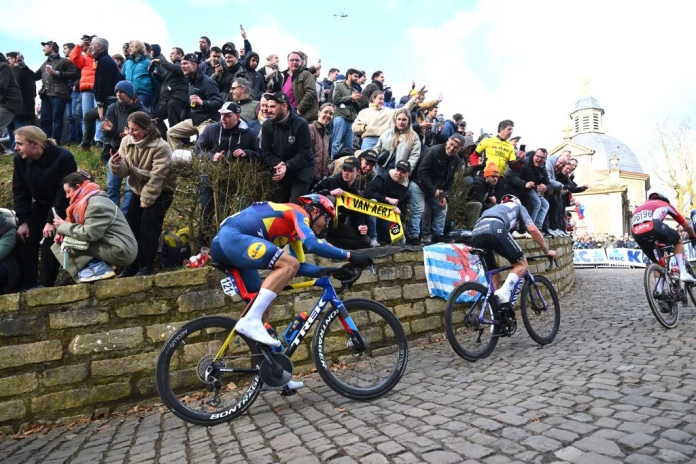
Geraardsbergen is inseparable from the Muur van Geraardsbergen. The climb has carried many names and many moods over the years, but for cycling fans it is simply the Muur: a cobbled wall rising from the town towards the chapel at the top, steep enough to hurt and famous enough to make the hairs rise before the gradient has even done its work.
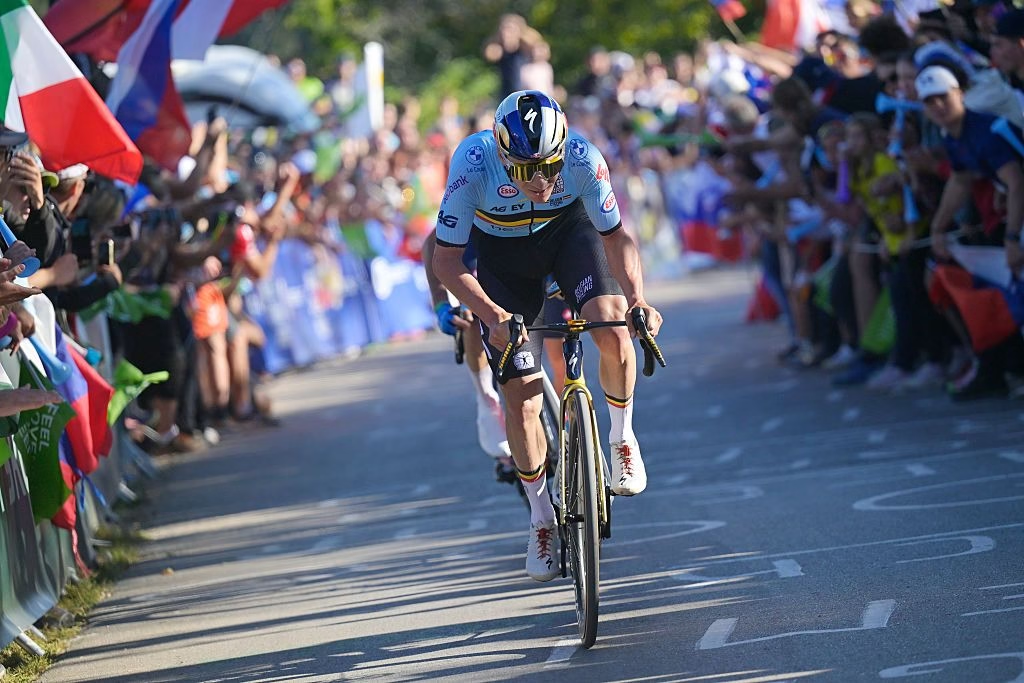
Its power comes partly from racing memory. For years, the Muur was one of the defining climbs of the Tour of Flanders, often arriving late enough to act as a brutal filter before the run-in to the finish. The images are embedded in the sport’s collective imagination: riders fighting for traction, crowds pressed close to the barriers, faces twisted by effort, the chapel above them and the road narrowing until the race seemed to become personal.
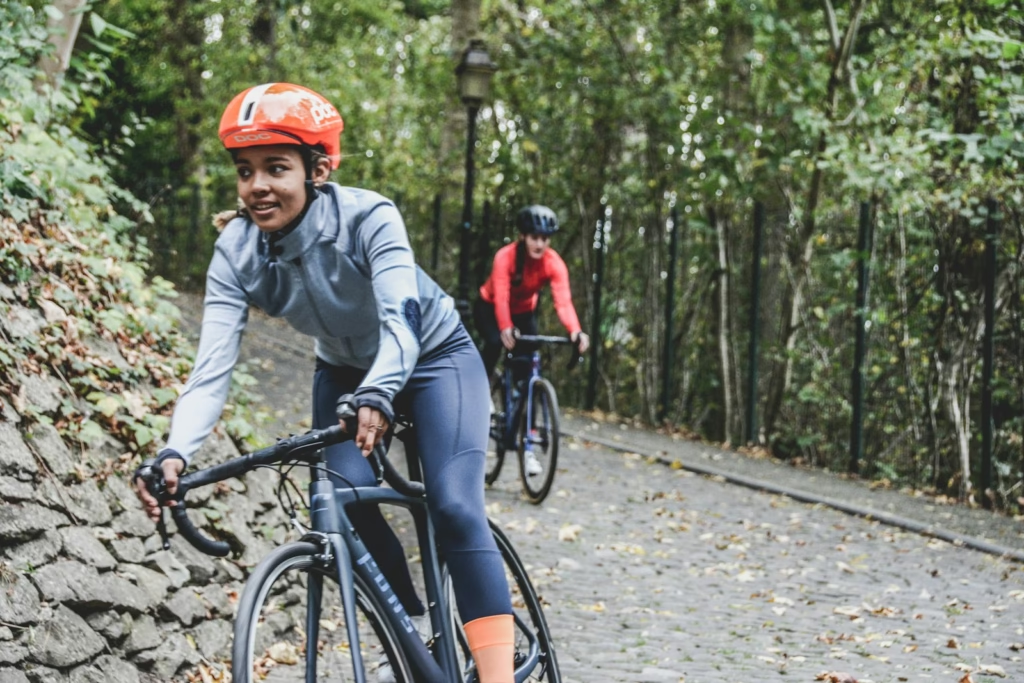
But the Muur is not just a climb to watch on television. Riding it gives a different understanding of why it matters. From the lower slopes, the climb feels almost awkward rather than dramatic. The cobbles are uneven, the road bends through the town, and the sense of occasion builds gradually. Then the steepest sections begin to bite. The bike knocks beneath you, the front wheel searches for a clean line, and the gradient feels less like a number than a pressure through the arms, shoulders and lower back.
There are longer climbs in Belgium. There are smoother climbs, harder climbs in pure numbers, and more scenic ones if the only measure is landscape. But very few have the same emotional density. The Muur compresses Flemish cycling into a short, uneven, unforgettable ascent. It is effort, history and atmosphere in one piece of road.
The chapel, the cobbles and the feeling at the top
The Kapelmuur is not simply a finish to the climb. It is the reward. The chapel at the top gives the Muur its final image, and for riders who have just wrestled up the cobbles, it turns a difficult effort into something almost ceremonial.
The top is not grand in the way a mountain pass can be. There is no vast Alpine panorama, no snow wall, no sweeping hairpin view down into a valley. Instead, there is a compact sense of arrival. The road eases, the body relaxes, and the view opens across the town and the rolling Flemish landscape beyond. On a damp day, the air can feel cool and metallic. On a clear day, the fields stretch away in layered greens, with church towers and villages marking the distance.
It is the kind of place where you naturally stop. You unclip, lean the bike against a wall or railing, and let the effort settle. The smell is often a mix of wet stone, leaves, chain oil and coffee drifting from somewhere below. If you have climbed it in the rain, the cobbles seem to hold the water in every gap. If you have climbed it in sunshine, they still look as though they are waiting for bad weather.
That is part of the charm. The Muur never feels sanitised. It still has the roughness that makes Flemish climbs so different from the polished myth of some famous roads. It does not need to be beautiful in a conventional way. It is meaningful.
Pajottenland: the quieter beauty beyond the Muur
The mistake would be to ride the Muur, take a photograph, and leave. Geraardsbergen is the obvious headline, but Pajottenland is what turns the area into a proper cycling destination.
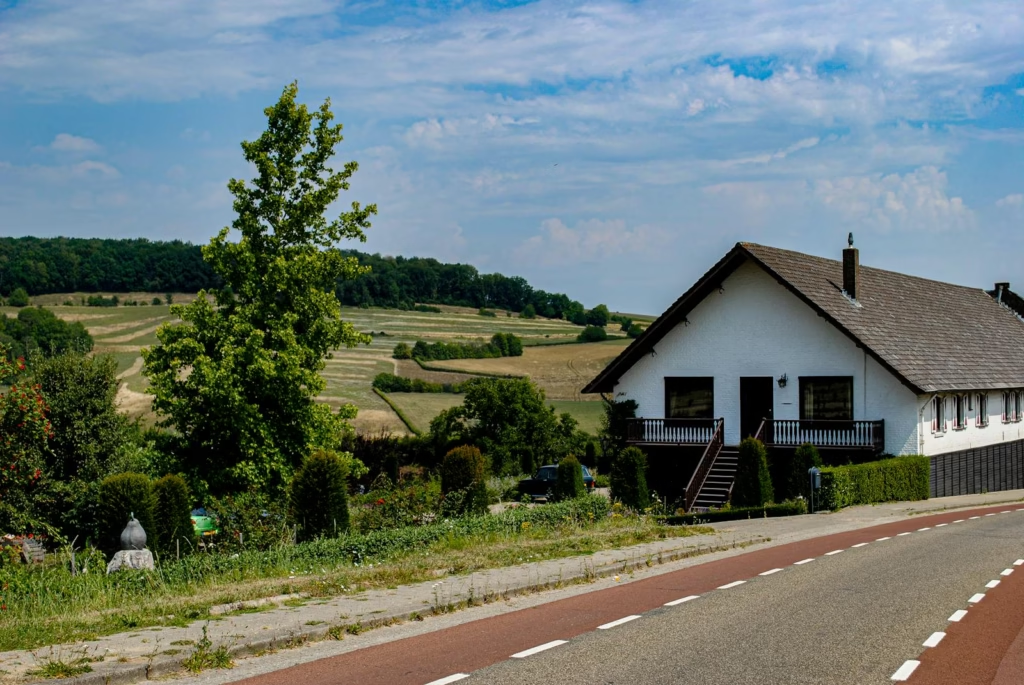
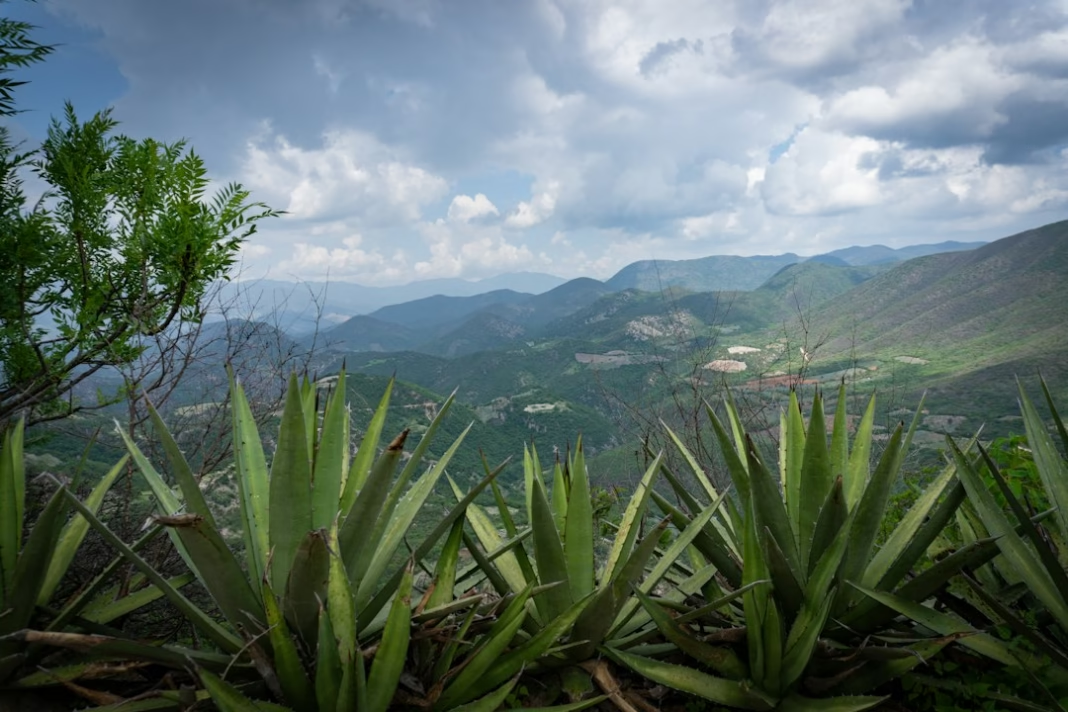
Pajottenland sits west and south-west of Brussels, a rolling rural landscape of small lanes, farms, breweries, brick villages and soft hills that can feel gentle until the kilometres begin to gather. It is often described through its food and drink culture, particularly lambic and gueuze, but for cyclists it offers something just as distinctive: a network of roads that feel made for endurance riding.
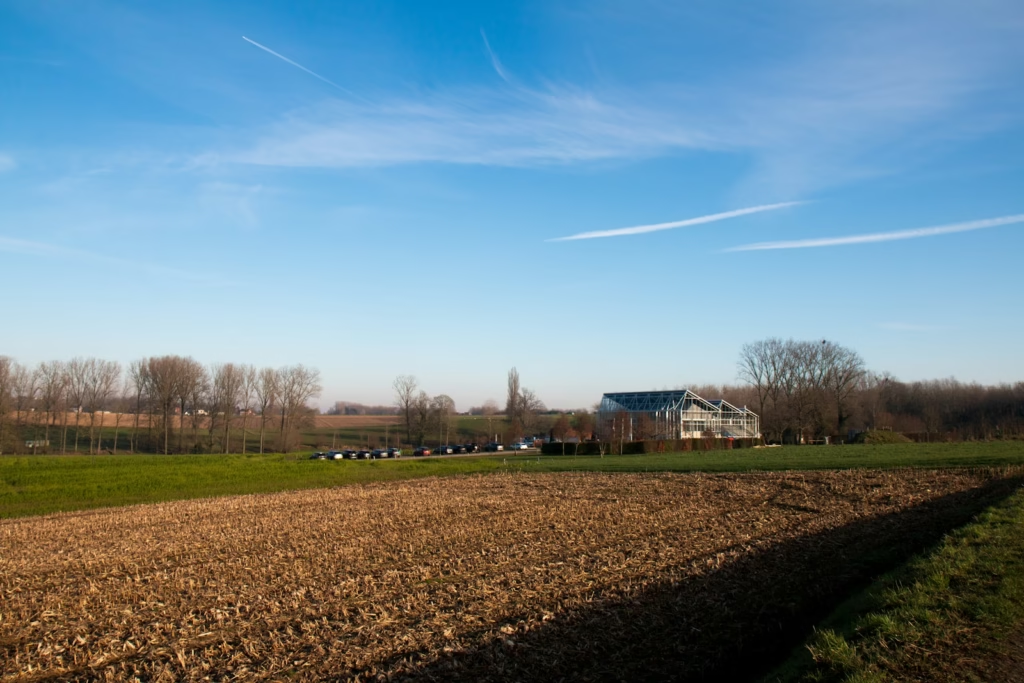
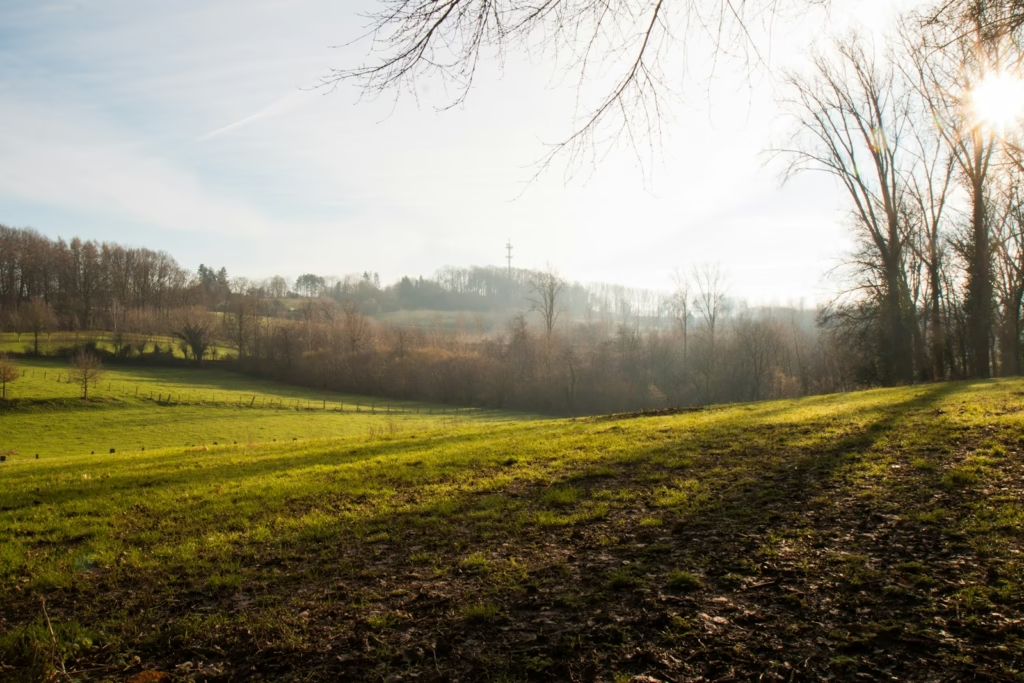
The gradients are rarely enormous, but the rhythm is constant. A lane rises past a farmhouse, drops towards a stream, twists through a village, then climbs again between fields. The surfaces change. One road is smooth and fast, another is patched and narrow, another carries a strip of cobbles that seems to appear without warning. There is often a smell of damp grass, woodsmoke, manure, bakery ovens and wet hedgerows, depending on the season.
This is riding that rewards attention. You do not switch off and simply follow a valley. The road is always doing something. It turns, rises, narrows, opens, drags or kicks. In a group, the pace naturally stretches and compresses. Alone, it becomes a private rhythm of small efforts and short recoveries.
Pajottenland also gives a ride room to breathe. After the emotional hit of the Muur, the surrounding countryside allows the day to expand into something more layered. You can build a loop that includes Geraardsbergen, smaller climbs, quiet lanes and café stops without feeling as though the ride is only about one famous ascent.
The roads: broken rhythm, hidden difficulty
Flanders does not punish like the Alps. It does not ask for an hour of steady climbing at altitude. Instead, it chips away. Geraardsbergen and Pajottenland are excellent examples of that Flemish logic.
The roads constantly interrupt rhythm. Short rises force a gear change. Cobbled stretches ask for power and softness at the same time. Open sections expose you to wind. Village corners require attention. Descents can be narrow, greasy or broken by junctions. Even when the profile looks manageable, the ride can become tiring because there is so little easy, sustained rhythm.
That is what makes this region so good for cyclists who enjoy Classics-style riding. It rewards strength, but also judgement. You need to know when to push over the top of a climb, when to ease on a rough section, when to hold the crown of the road and when to accept that the fastest line is not always the cleanest one.
Tyre choice matters more here than many visiting riders expect. A slightly wider tyre, sensible pressure and a bike set up for comfort can make the day much more enjoyable. This is not because the roads are unrideable. Far from it. It is because the repeated vibration becomes part of the effort. On the Muur and the smaller cobbled lanes, comfort is performance.
The rhythm is very different from the longer climbs found in destinations such as Mallorca or Girona and the Costa Brava. In Belgium, the strain comes through repeated interruptions: a corner, a ramp, a crosswind, a rough surface, a short recovery, then another rise.
How to build a ride around Geraardsbergen
The best way to ride Geraardsbergen is to give the Muur a place within a wider loop rather than treating it as a one-climb challenge. The climb is short enough that it can be ridden as part of a broader Flemish day, but significant enough that it deserves respect within the route.
A good ride might start in Geraardsbergen itself, allowing you to tackle the Muur early while the legs are fresh. That gives you the satisfaction of completing the main landmark before heading into the rolling countryside. From there, the route can push out through smaller roads towards Pajottenland, linking villages, ridges and farm lanes before returning to town.
Another option is to base the ride from the wider Flemish cycling network around Oudenaarde, Ninove or even the edge of Brussels, using Geraardsbergen as the emotional high point of the route. That makes sense for riders already exploring the Ronde van Vlaanderen region, especially if they want to connect the Muur with other famous climbs and cobbled sectors.
The important thing is not to make the route too sterile. This part of Belgium is best enjoyed when the ride has texture. A little cobble, a little narrow road, a café stop, a few unexpected ramps and enough distance to feel the place properly. The Muur is the headline, but the surrounding roads are the story.
The atmosphere: cafés, bricks, fields and race memory
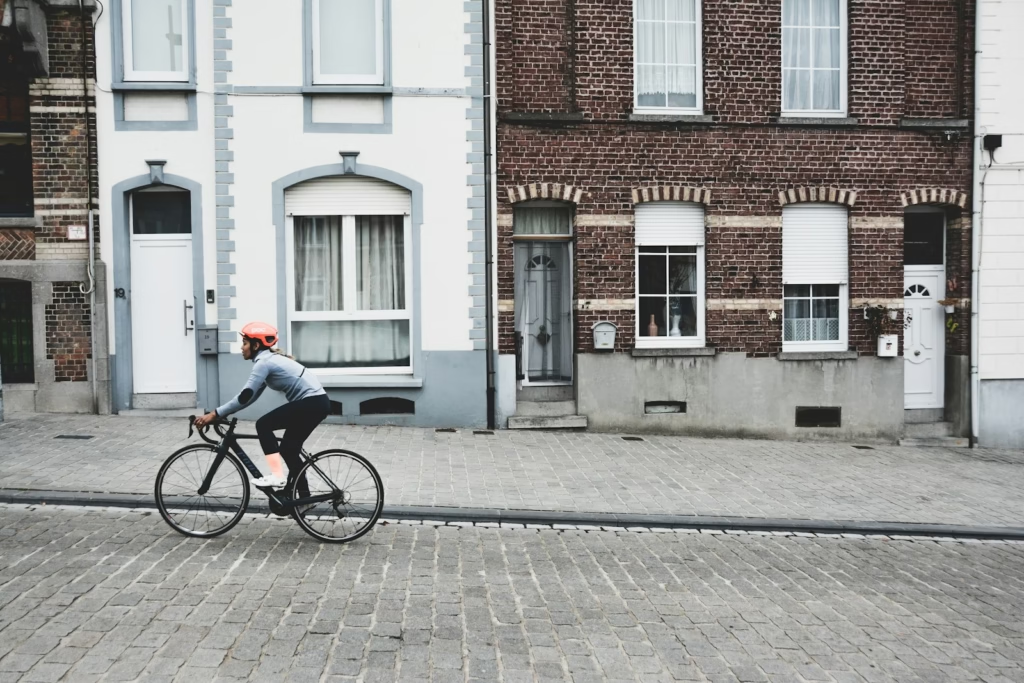
There is a warmth to riding here that is different from the spectacle of high mountains. In Geraardsbergen, the cycling culture feels domestic and lived-in. Bikes lean outside cafés. Riders appear from side streets in small groups. Club jerseys pass in the opposite direction with a nod. The roads do not need signs telling you cycling matters here, because the landscape already says it.
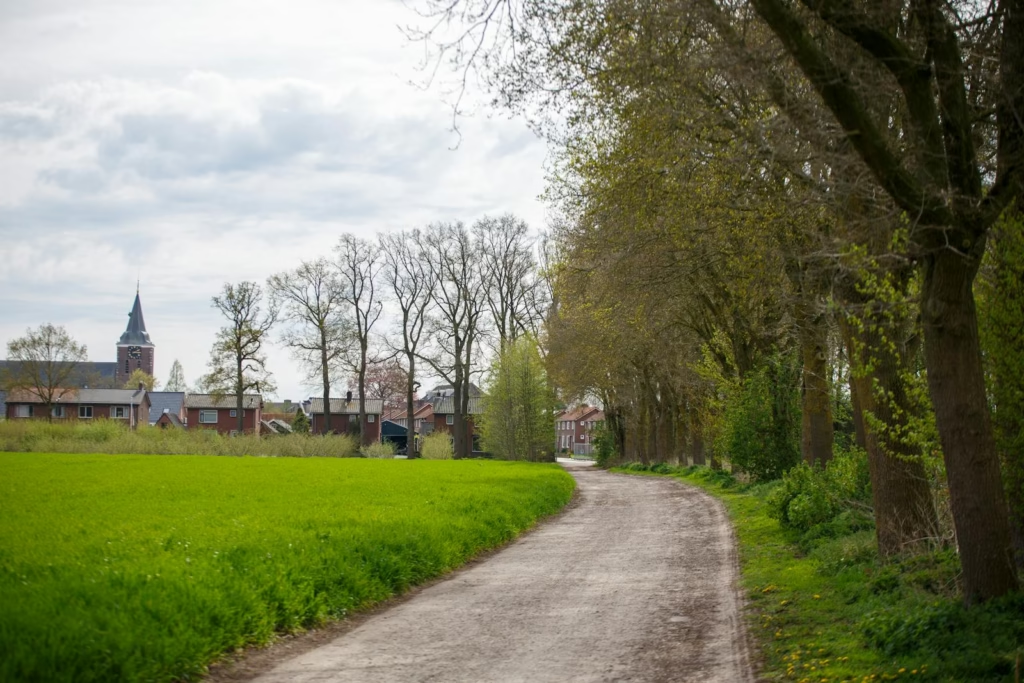
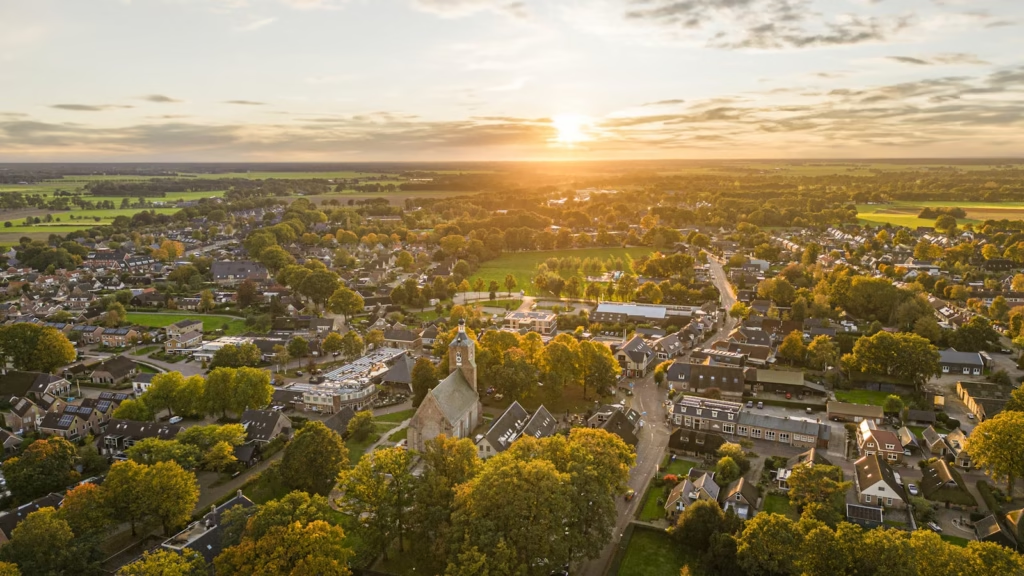
The buildings are part of the mood. Red brick, church towers, low houses, farm walls, cobbled squares, quiet chapels and cafés with lace curtains. On a grey day, the whole region can feel muted and intimate, as though the clouds have lowered the ceiling over the fields. On a bright spring morning, the lanes turn almost golden, with the fields opening wide and the wind moving through them in visible waves.
There is also the persistent sense of racing memory. You do not have to be on a closed-road event to feel it. The Muur carries it most obviously, but the smaller roads do too. Every little rise feels as though it could have been used to force a split. Every exposed section feels like a place where a group could fracture. Every village seems to have seen a race pass through at some point.
That gives ordinary riding a special edge. You are not pretending to be in a race, but the roads invite you to understand why racing here looks the way it does. It is the same quality that makes the Ronde van Vlaanderen such a compelling race: terrain that looks modest on paper, but becomes profound once the road surface, wind, history and pressure are added together.
When to ride the Muur and Pajottenland
Spring is the most atmospheric time to ride here. March and April bring the full Classics mood: cool air, changeable skies, damp lanes, early blossoms and the sense that every road has just been raced on or is waiting to be raced on. It can be cold, wet and windy, but that is part of the truth of the place.
Late spring and early summer are easier for a more relaxed trip. The days are longer, the fields are brighter, and the cafés feel more inviting after a ride. Summer can be beautiful, though some roads may be busier and the exposed sections can feel surprisingly hot if the wind drops.
Autumn is underrated. The colours soften, the air cools, and the region takes on a quieter feel. It is a good time for riders who want the roads without the spring crowds. Winter is possible for hardy cyclists, but it can be wet, slippery and dark, especially on cobbles and shaded lanes.
The Muur itself is best ridden when it is quiet. Early morning gives it the most atmosphere. There is something special about climbing those cobbles before the town is fully awake, hearing only the tyres on stone and your own breathing.
How hard is the riding?
The Muur is hard, but the wider region is harder than many riders expect in a cumulative sense. The climbs are short, so the numbers can look modest compared with Alpine or Pyrenean routes. But the repeated accelerations, rougher surfaces and constant changes in direction make the effort feel bigger than the distance suggests.
A 70km ride here can feel like more than 70km. A 100km loop with several cobbled climbs, rolling lanes and a headwind can become a serious day out. That is the beauty of it. The difficulty is not blunt. It is layered.
For most riders, a standard road bike is ideal, with 28mm or wider tyres if frame clearance allows. Lower pressures will help on the cobbles. A compact or semi-compact chainset is sensible, not because the climbs are long, but because some ramps are steep enough to make a low gear very welcome. On the Muur, pride is less useful than traction.
Good braking and confident handling also matter. The roads can be narrow, damp and occasionally greasy, especially under trees or after rain. Descents are rarely Alpine-fast, but they can be technical enough to demand concentration.
What makes it different from Oudenaarde?
Oudenaarde is the obvious base for many Flemish cycling trips, and rightly so. It gives immediate access to many of the most famous Tour of Flanders climbs and has built a strong cycling identity around that heritage.
Geraardsbergen and Pajottenland feel different. They are slightly less polished as a cycling destination, but that is part of the attraction. The riding has a more local, slightly wilder edge. The Muur is famous, but the roads around it can feel quieter and less curated than the better-known loops near Oudenaarde.
That makes the area particularly appealing for riders who have already done the classic Flemish checklist and want something with the same spirit but a different tone. It is still unmistakably Flanders, but with a softer rural landscape to one side and a more dramatic historic climb at its centre.
The two areas can also be combined. A longer Belgian cycling trip could use Oudenaarde for the central Ronde van Vlaanderen climbs, then Geraardsbergen and Pajottenland for a day that blends the Muur with quieter lanes and a different kind of Classics atmosphere.
Food, drink and the post-ride feeling
A ride in this part of Belgium should not end too cleanly. The best version finishes with mud on the bike, tired hands, a slightly salt-stained jersey and the deep satisfaction that comes from being worked over by roads rather than altitude.
Geraardsbergen has the kind of post-ride appeal that suits cyclists well. It is not flashy. It is practical, warm and grounded. Coffee tastes better after the Muur. So does a beer, especially if the weather has been cold enough to make the café feel like a refuge. Pajottenland’s lambic and gueuze culture adds another layer for those staying locally, though preferably after the riding is done rather than between climbs.
There is also the famous mattentaart, the local pastry associated with Geraardsbergen. After a hard ride, it feels exactly right: sweet, simple, regional and tied to the place. Some cycling destinations are remembered through climbs alone. This one is remembered through cobbles, cafés, pastry crumbs, damp gloves and the feeling of having ridden through somewhere with a genuine cycling identity.
Practical information
Location
Geraardsbergen sits in East Flanders, close to the border with Flemish Brabant and within reach of Pajottenland. It can work as a day trip from Brussels, Ghent or Oudenaarde, but it is also worth staying nearby if you want a quieter, more immersive Flemish cycling experience.
Key climb
The Muur van Geraardsbergen, also known as the Kapelmuur, is the essential climb. It is short, steep, cobbled and historically central to Flemish racing culture. The gradient, surface and atmosphere make it much harder than its length suggests.
Riding style
Expect rolling roads, short climbs, cobbles, exposed lanes, farm roads and constant rhythm changes. The region suits Classics-style riding rather than steady mountain pacing. It is ideal for riders who enjoy punchy climbs, rougher textures and route variety.
Best time to go
Spring gives the full Classics atmosphere, especially around March and April. May, June and September are often more comfortable for a riding trip, with longer days and generally better conditions. Autumn can be beautiful and quieter, while winter is best left to riders comfortable with wet roads and slippery cobbles.
Bike setup
A road bike with 28mm or wider tyres is ideal. Lower pressures help on cobbles and rough lanes. A compact or semi-compact setup is sensible for the steeper ramps. Bring a rain jacket even if the forecast looks reasonable, because Flemish weather can change quickly.
-
 Photo Credit: Flavia Ossola
Why Geraardsbergen and Pajottenland deserve a place on your riding list
Geraardsbergen and Pajottenland deserve a place on your riding list because they offer something cycling often loses when it becomes too polished: texture.
The Muur is the obvious reason to come. It is one of the most evocative climbs in the sport, a road where history sits in the stones and every rider gets a tiny, private version of the drama they have watched on television. But the reason to stay longer is the landscape around it. Pajottenland turns the ride into a fuller experience, with quiet lanes, rolling fields, small villages and a rhythm that keeps asking questions.
This is not a destination built around one perfect climb or one grand view. It is a place of fragments: cobbles under the tyres, church bells in a village, the smell of wet fields, the sting of a short ramp, a café window glowing after rain, the chapel above the Muur, and the strange satisfaction of roads that never quite let you settle.
For riders who love the Classics, it is essential. For riders who think Belgium is only flat, it is a correction. For anyone who wants a cycling trip with history, atmosphere and honest physical character, Geraardsbergen and Pajottenland are more than worthy of the journey.

