
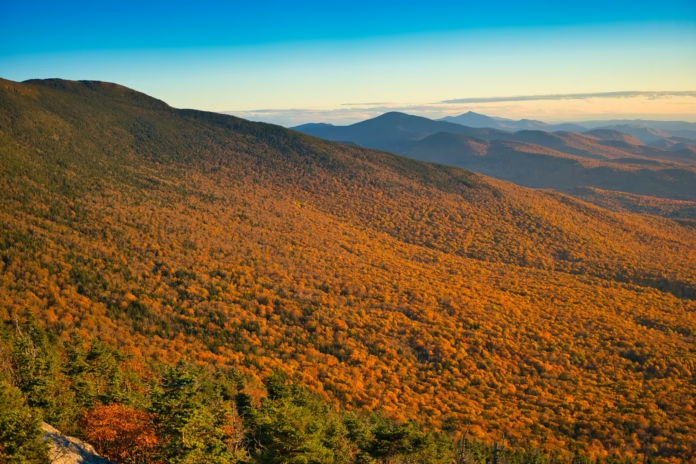
The Vermont Green Mountains do not shout for cycling attention in the way the Alps, Dolomites or Pyrenees do. It does not offer giant summit signs, ski-resort theatrics at every pass, or the grand theatre of a mountain road made famous by July television coverage. Its appeal is quieter, more wooded and more intimate. You feel it in the first long drag through maple forest, in the smell of damp leaves after rain, in the sudden opening of a valley view, and in the way a narrow road can turn from smooth tarmac to packed dirt without losing its rhythm.
The Vermont Green Mountains run like a spine through Vermont, shaping the state’s roads, weather, villages and riding culture. For cyclists, they create a landscape that sits somewhere between road-riding purity and gravel adventure. There are paved climbs with proper gradients, rolling farm roads, covered bridges, dirt sectors, forest lanes, river valleys and small towns where a general store can feel like the most important landmark on the route.
It is a place for riders who enjoy texture. Vermont is rarely about one famous climb. It is about the accumulation of details: a red barn against a green hillside, tyres humming over chipseal, a dirt road rising between trees, the sweet smell of maple syrup from a roadside stop, a descent that flickers between sunlight and shade, and the feeling that the road has been laid around the landscape rather than forced through it.
For riders who like the idea of a cycling trip built around atmosphere as much as mileage, Vermont’s Green Mountains deserve a serious place on the list. This is New England at its best, rugged enough to test the legs, beautiful enough to slow you down, and varied enough to reward both road cyclists and gravel riders.
For more North American riding ideas, our USA and Canada cycling guide places Vermont alongside regions such as the Rockies, California, Arizona and the Pacific Northwest, while the wider cycling travel hub brings together cycling destinations across Europe, North America and beyond.
Why Vermont is such a good cycling destination
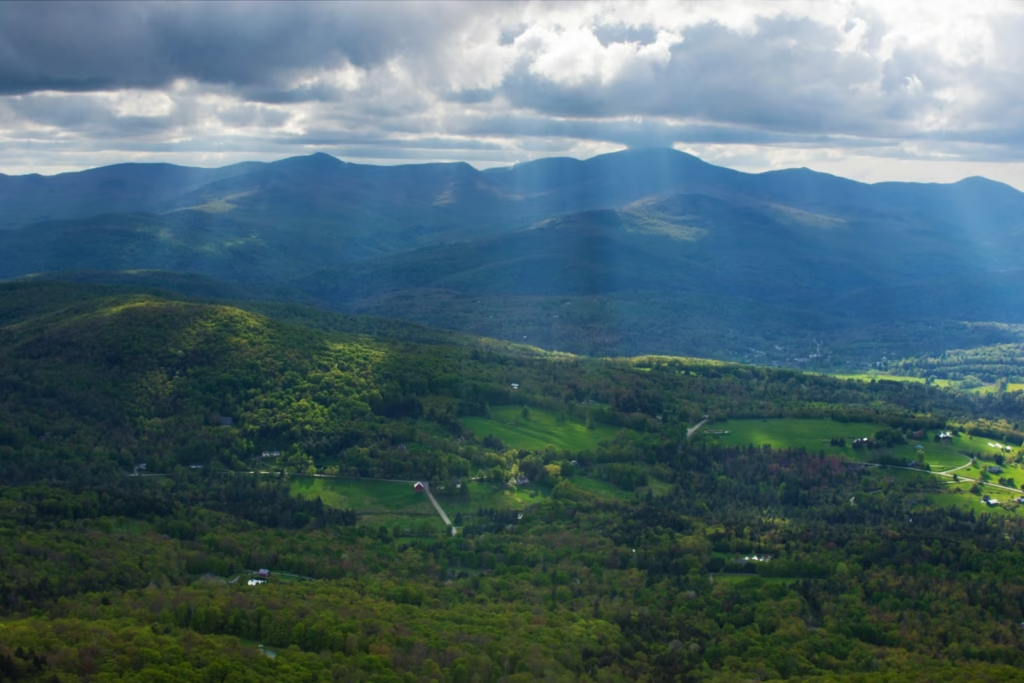
Vermont works so well for cycling because the riding feels honest. The state is not built around broad motorways or endless urban sprawl. Once you are outside the larger towns, the roads quickly become quiet, rolling and rural. The landscape narrows around you: trees close in, streams run beside the road, wooden houses sit back from the lane, and the mountains are rarely far away.
For road cyclists, the Green Mountains offer a different kind of climbing from Europe’s big passes. The climbs are generally shorter, rougher and more irregular, with gradients that bite sharply rather than settling into a perfectly engineered rhythm. You often climb through forest, with glimpses of a view rather than constant panorama. That makes the riding feel enclosed and physical, especially on humid summer days or cool autumn mornings when the air hangs beneath the trees.
For gravel riders, Vermont is exceptional. The state’s dirt road network is one of its defining cycling strengths. Many roads are well-maintained, rideable on a gravel bike, and connected in a way that makes route-building feel almost endless. A loop can shift between tarmac, hardpack, loose gravel, shaded forest, open farmland and small-town main streets without ever feeling disjointed.
The result is a cycling destination that rewards curiosity. You can come for structured road loops around climbs and gaps, or you can let the dirt roads pull you into a more exploratory kind of riding. That gives Vermont a very different feel from bigger mountain destinations such as Asheville and the Blue Ridge Parkway, where the road often carries you along long ridgelines. In Vermont, the magic is more fragmented: a short climb, a shaded dirt lane, a village green, then another rise disappearing into trees.
The Green Mountains and the rhythm of the climbs
The Green Mountains give Vermont its cycling identity. They are not enormous by global standards, but they shape every ride. Roads rise and fall constantly, and even a route that looks modest on paper can become hard through repeated climbing, broken gradients and rougher surfaces.
The climbs here often feel old-fashioned. They do not always follow the neat logic of modern road design. Some roads pitch suddenly. Others drag for longer than expected, with false flats that make you question whether you are climbing or simply tired. Dirt climbs can change character depending on weather, tyre pressure and recent maintenance. A climb that feels smooth and fast in dry conditions can become sticky and heavy after rain.
That variability is part of the charm. Vermont riding is not sterile. You need to listen to the road. On a paved climb, that might mean choosing a lower gear before the road kicks up beneath the trees. On gravel, it might mean staying seated to keep traction, relaxing the hands, and letting the bike move slightly underneath you.
The climbs rarely have the fame of European icons, but they have a different appeal. They feel personal. You remember the bend where the trees opened, the barn at the top, the dog that barked from a porch, the smell of wet leaves, the short section where the gradient suddenly turned cruel. In that sense, Vermont sits closer to a sensory riding experience than a checklist destination. It is less about conquering one headline road and more about letting a day accumulate around you.
Gaps, valleys and mountain roads
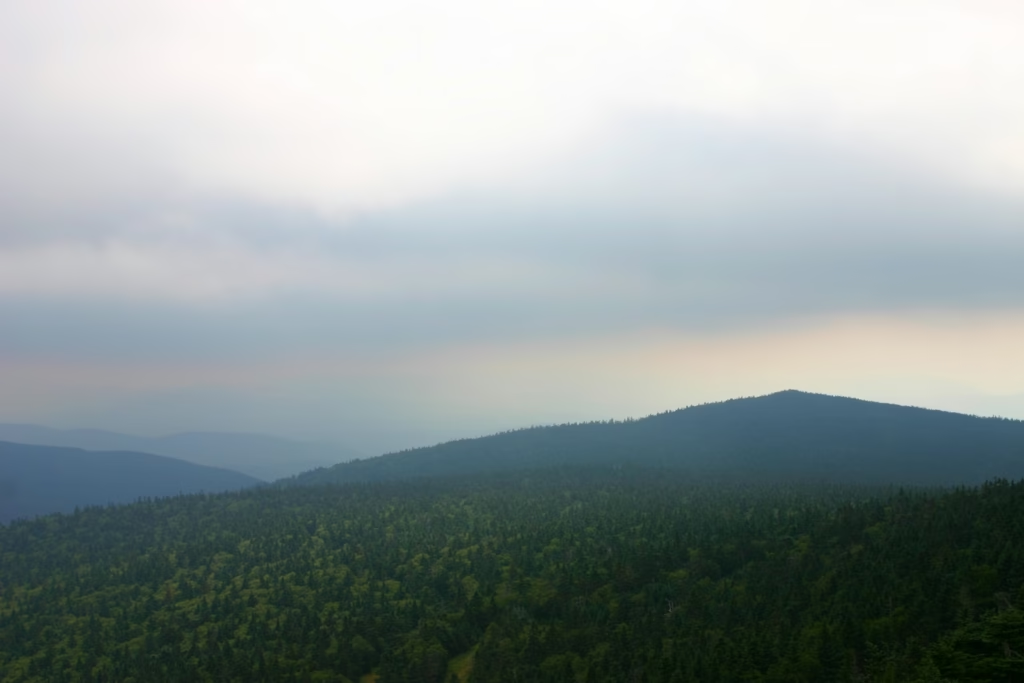
Vermont’s mountain roads are often built around gaps, the passes that cross the Green Mountains and connect one valley to another. For cyclists, these gaps provide the natural structure for bigger rides. They give you the satisfaction of crossing from one side of the mountains to the other, but without the scale or altitude stress of high Alpine passes.
Routes around places such as Middlebury, Rochester, Waitsfield, Stowe and Waterbury can be shaped around these crossings, linking valleys with sustained climbs and long descents. The roads often begin gently, following rivers or farmland, before the gradient tightens as the route climbs into forest.
The best part is often the transition. At the bottom, the Vermont Green Mountains feel open and pastoral: fields, fences, barns, cows, village greens and low hills. Higher up, the trees close in, the air cools, and the road becomes more serious. On the descent, the world opens again, sometimes with a sudden view into another valley and the sense of having quietly crossed a proper piece of terrain.
This is where the Green Mountains feel most rewarding. They are not dramatic in a showy way, but they make you work for movement. Every valley reached by bike feels earned.
Gravel roads that make the Vermont Green Mountains special
It is impossible to talk about cycling in the Vermont Green Mountains without talking about gravel. The state’s unpaved roads are not an optional extra. They are central to its riding culture.
Unlike some gravel destinations where the riding feels remote or harsh, Vermont gravel often feels woven into daily life. These are roads to farms, houses, trailheads, sugar shacks and small communities. They can be smooth, fast and almost road-like, or they can become rough, loose and steep enough to demand full concentration.
The beauty of Vermont gravel is its range. A gentle dirt road between fields can feel relaxed and almost nostalgic, with dust lifting behind the bike and grasshoppers flicking from the verge. A forest climb can feel much more serious, the surface changing under the tyres, the gradient forcing you to manage traction, and the silence broken only by breathing, chain noise and birdsong.
A gravel bike is the ideal tool for this region because it lets you stop worrying about the surface. You can follow the most interesting roads rather than the smoothest ones. That changes the whole mood of a ride. Instead of building a route around avoiding dirt, you start looking for it.
Stowe, Waterbury and the northern Vermont Green Mountains
Stowe is one of the best-known bases for riding in northern Vermont. It has the advantage of mountain scenery, good accommodation, food options and access to a varied network of roads. It can feel polished compared with quieter Vermont towns, but that makes it practical for a cycling trip.
From Stowe, riders can build loops that head towards Waterbury, Morrisville, Smugglers’ Notch and the surrounding gravel roads. The riding here has a strong mountain feel, with forested climbs, winding roads and the sense that the landscape can change quickly with weather.
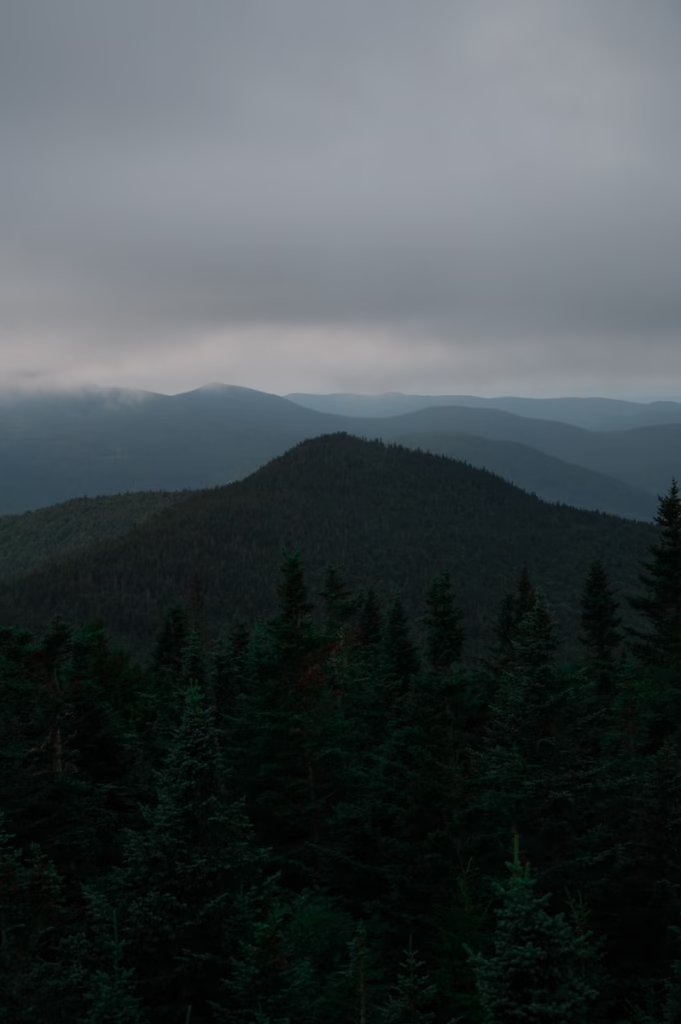
Smugglers’ Notch is one of the most memorable paved routes in the area, with a road that tightens dramatically as it rises between rock, trees and mountain walls. It is not simply a climb for numbers. It is a climb for atmosphere. The upper sections feel enclosed and dramatic, especially when the road narrows and the forest presses close. It is the kind of place where the sound of the tyres seems louder because everything else has gone quiet.
Waterbury gives a slightly different feel, with easier access to rolling roads, river valleys and classic Vermont countryside. It also works well for riders who want a practical base with good food and drink after a hard day. The post-ride atmosphere is part of the appeal here: tired legs, a cool drink, a plate of something substantial, and the satisfaction of having spent the day threading together roads that never felt generic.
Middlebury, gaps and classic Vermont road riding
Middlebury is another excellent base, especially for riders who want access to some of the Vermont Green Mountains’ classic road climbs. It has a quieter college-town feel, with a good balance of practicality and landscape. From here, the riding can quickly move into more serious terrain.
Routes from Middlebury can take in mountain gaps, rolling farmland and wooded climbs, making it a strong choice for road cyclists who want structured climbing days. The roads west of the mountains can feel more open, with views across fields and towards higher ground. Once the route turns east, the landscape becomes steeper and more enclosed.
This part of Vermont is particularly good for riders who enjoy a proper day out rather than a short highlight loop. The climbs are long enough to matter, the valleys give natural recovery, and the small towns provide useful places to stop. There is a rhythm to riding here that feels deeply satisfying: climb, descend, roll through a village, refill bottles, then climb again.
In autumn, the riding around Middlebury can be spectacular. The maple trees turn red, orange and gold, and the forest seems to glow even under grey skies. It is almost too pretty at times, the sort of scenery that makes it difficult to keep riding hard because every bend asks you to look again.
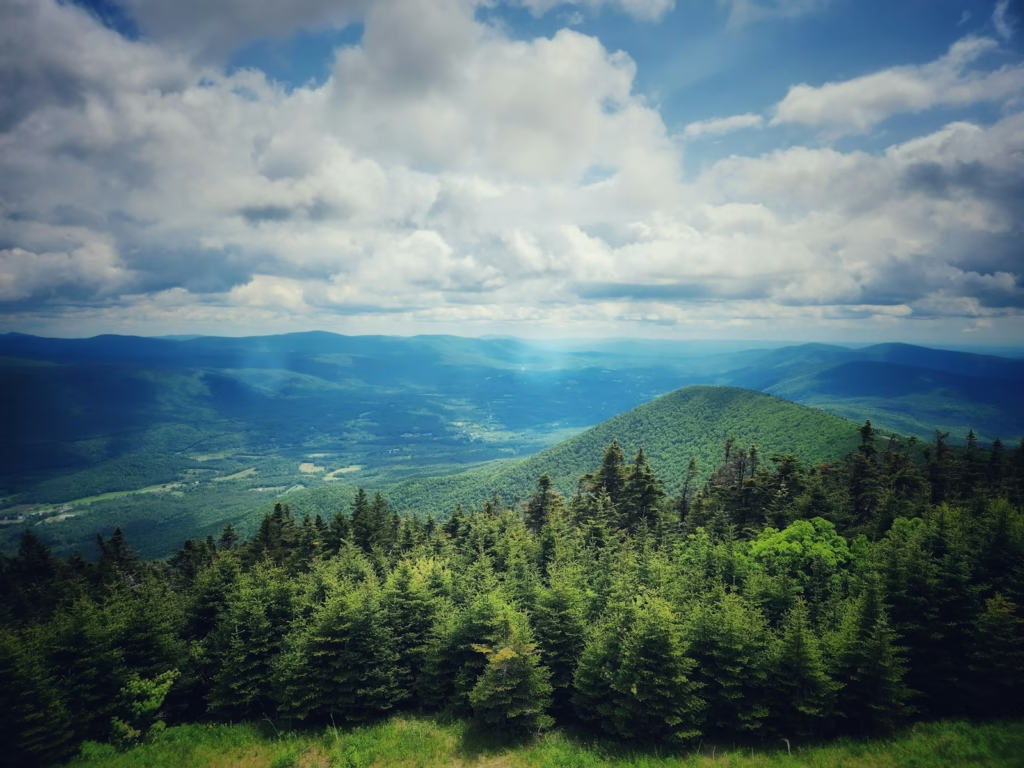
Waitsfield, Warren and the Mad River Valley
The Mad River Valley is one of Vermont’s most rewarding cycling areas. Waitsfield and Warren sit in a landscape that feels made for the kind of rider who likes climbing, dirt roads, quiet lanes and small-town character.
This is an area where a ride can become hard without ever feeling forced. Roads rise out of the valley into forest, drop back towards rivers, then climb again through farmland and wooded lanes. The gradients can be punchy, and the surfaces vary enough to keep the body engaged. It is not a place where you settle into one position and hold it for an hour. You are always adjusting: gear, line, effort, posture, tyre grip.
The Mad River itself gives the valley a softness that balances the climbing. There are moments when the road follows the water, with the sound of it moving over stones beside you. Then the route turns away and begins to rise, and the softness disappears into effort.
Warren has the kind of village atmosphere that makes Vermont feel distinctive. Wooden buildings, trees, a compact centre, and a sense that everything sits naturally within the landscape. A ride ending here, with the bike leaned against a wall and sweat drying under a flannel shirt or rain jacket, feels exactly right.
The Vermont Green Mountains atmosphere: maple, barns, forest and weather
The Vermont Green Mountains are as much about atmosphere as terrain. Vermont riding stays with you because it engages the senses constantly.
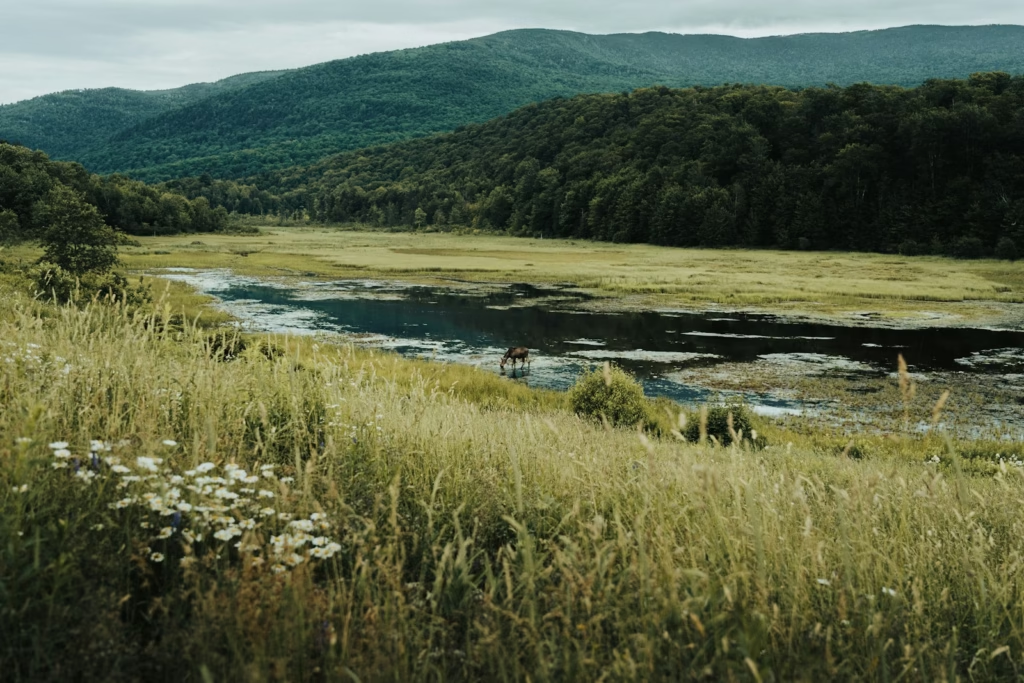
In spring, the roads can feel raw and newly awake. Streams run high, the trees are still filling in, and the air has a damp, earthy smell. Some dirt roads may be soft or rutted after winter, so route choice matters, but the sense of the landscape opening up again is powerful.
Summer brings green density. The forests become deep and shaded, the air can feel warm and humid, and climbs under the trees can be sweaty, quiet and intense. Fields are bright, rivers look inviting, and long daylight makes bigger loops easier to plan.
Autumn is the postcard season, but it deserves the reputation. The colours can be extraordinary, especially when the sun breaks through after a cool morning. The smell of leaves, woodsmoke, coffee and wet roads gives the whole ride a slightly nostalgic feel. It can also be busy in popular areas, so early starts are worthwhile.
Weather is part of the experience. Vermont can be changeable. A clear morning can become a damp afternoon. A shaded descent can feel much colder than the climb. Dirt roads can shift character after rain. Good kit choices matter, especially in spring and autumn. A lightweight rain jacket, sensible tyres and an acceptance that the bike may come home dirty will make the trip much better.
How hard is cycling in Vermont?
Cycling in Vermont can be harder than the headline numbers suggest. The climbs are not usually enormous, but the repetition adds up. A route with 1,500 metres of climbing may feel more demanding than expected if much of it comes through steep pitches, rough gravel and constantly rolling terrain.
The surfaces also add fatigue. Even on paved roads, chipseal and broken edges can make the ride feel more physical than smooth European tarmac. On gravel, the whole body works harder. Hands, shoulders and core all become part of the effort, especially on descents or washboard sections.
The best approach is to plan conservatively at first. A 60km Vermont gravel ride can feel like a much bigger day if it includes steep dirt climbs and rough surfaces. A 100km road loop through the gaps can be a serious ride, especially if weather turns or food stops are limited.
This is part of what makes Vermont special. The riding rewards strength, but it also rewards judgement. You need to pace climbs, manage surfaces, respect weather and choose routes that match your bike and confidence. Riders who enjoy that blend of climbing and self-sufficiency may also find a similar long-day satisfaction in North American routes such as Vancouver and the Sea-to-Sky corridor or the Icefields Parkway, though Vermont’s scale and mood are very different.
What bike should you use?
A gravel bike is the most versatile choice for Vermont. It opens the full road network, handles dirt confidently and still works well on paved climbs and valley roads. Tyres in the 35mm to 45mm range are a sensible choice for mixed routes, depending on how much rough gravel you plan to include.
A road bike can still be excellent, especially if you are focusing on paved climbs and gap roads. Wider road tyres, ideally 28mm to 32mm if your frame allows, will make the riding more comfortable and secure. Vermont is not the place for fragile ultra-narrow tyres and overinflated pressure.
For riders planning steeper dirt climbs, low gearing is worth having. A compact road setup may be enough for paved routes, but gravel climbs can make smaller gears feel essential. Staying seated and smooth is often better than forcing a big gear and losing traction.
Disc brakes are useful, especially for wet descents and gravel routes. You do not need a special bike to enjoy Vermont, but you do need a setup that respects rough surfaces and changing conditions.
Food, drink and post-ride Vermont
Part of the pleasure of cycling in Vermont is what happens after the ride. This is a state that understands small pleasures: coffee, baked goods, maple syrup, local beer, farm produce and cosy places to sit when the weather turns.
A mid-ride stop at a country store can feel as memorable as a climb. You step off the bike with dusty legs or damp gloves, lean it against a wooden porch, and walk inside to the smell of coffee, sandwiches and something sweet from the counter. Maple appears everywhere, sometimes subtly, sometimes with full commitment. After a hard ride, it rarely feels like too much.
Post-ride food is equally satisfying. Vermont’s small towns often have the kind of pubs, breweries and cafés that suit cyclists well: informal, warm, practical and generous. There is a particular happiness in finishing a cold autumn ride, changing into dry clothes and sitting down with tired legs while the light fades behind the trees.
This is not separate from the riding. It is part of the experience. Vermont is a place where the effort of the road and the comfort after it belong together.
When to ride in the Vermont Green Mountains
The best months for cycling in the Vermont Green Mountains are usually late spring through autumn, with each season offering something different.
Late May and June can be excellent, with green landscapes, cooler temperatures and quieter roads before peak summer travel. Some dirt roads may still carry signs of spring weather, but the riding can be beautiful.
July and August bring warmth, long days and the easiest logistics. It can be humid, and popular towns may be busier, but the riding conditions are generally reliable. Early starts help avoid both heat and traffic in busier areas.
September and early October are arguably the most atmospheric months. The temperatures become cooler, the forests begin to change colour, and the riding feels sharper and more vivid. Peak foliage can bring more visitors, especially in well-known towns, but the reward is enormous.
Winter is a different proposition. Snow, ice, cold temperatures and short days make normal road cycling much less practical, though fat biking and indoor training culture take over in some areas. For a visiting cyclist, spring to autumn is the natural window.
How Vermont compares with other North American cycling destinations
Vermont’s Green Mountains sit in a very different category from the biggest North American cycling destinations. They do not have the dry, endless climbing feel of Mount Lemmon in Tucson, the ocean-and-headland drama of the San Francisco Bay Area and Marin Headlands, or the coastal mountain scale of British Columbia.
Its strength is intimacy. The roads feel smaller, the communities closer, and the climbs more woven into ordinary life. It is less about one iconic ascent and more about the rhythm of a whole week: morning mist, dirt roads, maple woods, village stores, rolling valleys and repeated climbs that quietly add up.
That makes it particularly appealing for riders who want a calmer trip pace. Vermont is not the obvious choice for a winter training camp, and it is not the place to chase huge altitude numbers. It is a destination for riders who want road feel, gravel options, seasonal atmosphere and the kind of routes that reward attention rather than spectacle.
-
 Photo Credit: Getty

Practical information
Location
Vermont sits in New England in the north-eastern United States, bordered by New York, New Hampshire, Massachusetts and Québec. The Green Mountains run north to south through the state and provide the backbone for many of the best cycling routes.
Best bases
Stowe, Waterbury, Middlebury, Waitsfield, Warren, Woodstock and Burlington can all work depending on the style of trip. Stowe and Waterbury suit northern Green Mountain riding, Middlebury works well for gap routes, Waitsfield and Warren are ideal for the Mad River Valley, and Burlington offers a larger base with access to Lake Champlain as well as inland riding.
Riding style
Expect a mix of paved climbs, rolling lanes, dirt roads, forest routes, farm roads and technical descents. Vermont is excellent for gravel bikes, but road cyclists can still build superb paved loops around the Green Mountains and valley roads.
Best time to go
Late May to October is the main cycling season. June and September are particularly good for comfort and atmosphere. Autumn foliage can be spectacular, especially from late September into early October, but popular areas may be busier.
Bike setup
A gravel bike with 35mm to 45mm tyres is the most versatile option. For road-only riding, a road bike with 28mm to 32mm tyres is sensible. Use lower pressures than you might on perfect tarmac, bring reliable lights, and carry enough food and tools for rural sections.
Weather and kit
Bring layers. Vermont weather can change quickly, especially in the mountains. A lightweight rain jacket, arm warmers or a gilet can be useful even in warmer months. In autumn, shaded descents can be cold after a sweaty climb.
Why Vermont’s Green Mountains deserve a place on your riding list
Vermont’s Green Mountains deserve a place on your riding list because they offer cycling with character. The roads are not always smooth, the climbs are not always predictable, and the weather does not always behave. But that is exactly why the riding feels so memorable.
This is a destination for riders who like the space between categories. It is road cycling and gravel riding, climbing and exploring, endurance and atmosphere. A single ride can move from paved valley roads to dirt climbs, from forest shade to open farmland, from a covered bridge to a mountain gap, from hard effort to a quiet coffee stop.
The Green Mountains do not need to imitate Europe’s famous cycling regions. Their appeal is different: quieter, rougher, greener and more intimate. You come here for roads that feel lived-in, landscapes that change with the weather, climbs that ask for patience, and small towns that make the end of a ride feel as satisfying as the ride itself.
-
Photo Credit: Getty
For cyclists who want a trip built around mood as much as metres climbed, Vermont is special. It is the smell of wet leaves, the crunch of gravel, the glow of autumn maples, the ache of a steep dirt road, and the deep satisfaction of finding a place where the riding still feels beautifully, stubbornly real.

