
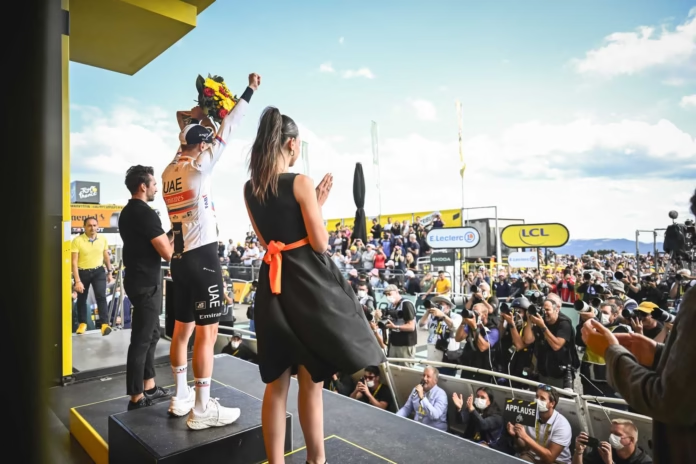
Tour de France stage 14 takes the race from Mulhouse to Le Markstein Fellering on Saturday 18 July, with the hardest day of the Vosges block offering a genuine opportunity to reshape the general classification.
The 155.3km route contains approximately 3,800 metres of climbing and four categorised ascents.
The Grand Ballon begins the pressure after only 15km. The Col du Page and Ballon d’Alsace continue the attrition before the category-one Col du Haag provides the decisive launchpad.
Its summit arrives just 5.9km from the finish.
That positioning makes stage 14 very different from the previous day’s route to Belfort. There is almost no time for a chasing group to reorganise after the final climb. A rider who creates a gap near the top can carry it all the way to Le Markstein.
Tadej Pogačar begins as the obvious stage favourite, but Jonas Vingegaard, Remco Evenepoel, Juan Ayuso, Paul Seixas, Isaac del Toro and the other leading climbers all have reasons to treat the Col du Haag seriously.
The wider terrain is covered in our Tour de France 2026 Vosges and Jura guide.
Tour de France 2026 stage 14 at a glance
| Detail | Information |
|---|---|
| Date | Saturday 18 July 2026 |
| Start | Mulhouse |
| Finish | Le Markstein Fellering |
| Distance | 155.3km |
| Stage type | Mountain |
| Total climbing | Approximately 3,800 metres |
| Main climbs | Grand Ballon, Col du Page, Ballon d’Alsace and Col du Haag |
| Final climb | Col du Haag, 11.2km at 7.3% |
| Distance from final summit to finish | 5.9km |
| Expected winner | GC favourite or elite breakaway climber |
| GC impact | High |
Stage 14 is one of the most dangerous mountain stages before the final Alpine block.
It does not finish at the summit of its final categorised climb, but the short run from the Col du Haag to Le Markstein means it should behave like a summit finish.
The stage is also included among the most important days in our guide to the Tour de France 2026 route’s best opportunities for GC attacks.
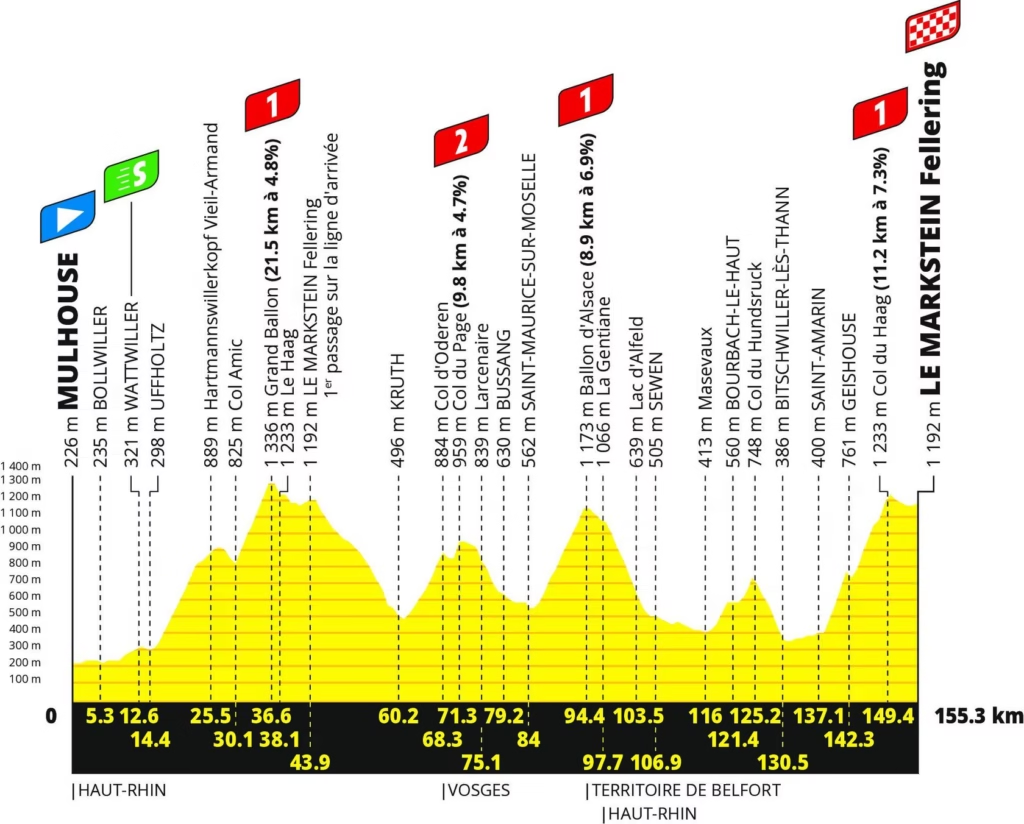
Tour de France stage 14 route
The stage begins in Mulhouse and reaches its first major climb almost immediately.
There is no long flat approach for the peloton to settle into the day.
After passing Wattwiller, the road begins climbing towards the Grand Ballon. The riders then descend through Le Markstein before continuing towards the Col du Page and Ballon d’Alsace.
The middle of the stage contains a longer descending and valley section before the road rises again through the Col du Schirm and Col du Hundsruck.
Those climbs are not categorised, but they add fatigue before the Col du Haag.
The final ascent begins with approximately 17km remaining. Once the riders reach its summit, only 5.9km remain to Le Markstein Fellering.
The stage contains four categorised climbs:
| Climb | Length | Average gradient | Category | Distance from finish at summit |
|---|---|---|---|---|
| Grand Ballon | 21.6km | 4.7% | Category 1 | 118.7km |
| Col du Page | 9.8km | 4.7% | Category 2 | 84km |
| Ballon d’Alsace | 8.9km | 6.9% | Category 1 | 60.9km |
| Col du Haag | 11.2km | 7.3% | Category 1 | 5.9km |
The official profile may show only four categorised climbs, but the stage never becomes comfortable.
The total elevation gain and repeated uncategorised rises make the route more demanding than the numbers beside the four main ascents suggest.
Our Tour de France 2026 climbs guide places the Vosges sequence within the wider mountain structure of the race.
The Grand Ballon can make the stage hard from the start
The Grand Ballon is the longest categorised climb of the day.
At 21.6km and 4.7%, it is not consistently steep enough to decide the stage. Its importance comes from its position.
The climb begins almost immediately after the race leaves Mulhouse.
That creates several possible tactical consequences.
A strong breakaway may form on the lower slopes rather than during the opening flat roads. Teams targeting the stage can send genuine climbers into the move without asking them to force an attack at 60km/h.
The GC teams can also make the race difficult from the beginning.
A high pace would reduce the number of domestiques reaching the middle of the stage and place riders under pressure before the decisive climbs arrive.
UAE Team Emirates-XRG does not need to attack here, but it may use the climb to control the composition of the breakaway.
Visma-Lease a Bike, Red Bull-Bora-Hansgrohe and Lidl-Trek could take the opposite approach by placing riders ahead as possible satellites for later attacks.
The Grand Ballon will not decide stage 14.
It may decide how many tactical options remain when the race reaches the Col du Haag.
Col du Page prevents the stage from settling
The Col du Page is 9.8km at 4.7%.
Its gradient is manageable for every GC contender, but it arrives after the race has already crossed the Grand Ballon and descended through the Vosges.
The climb prevents the peloton from settling into a long transition section.
A strong breakaway will need to continue working, while riders dropped on the Grand Ballon may struggle to return before the next important section.
The Col du Page should favour tempo riding rather than explosive attacks.
Its main purpose is to add another layer of fatigue before the Ballon d’Alsace.
The Ballon d’Alsace returns one day later
The Tour crosses the Ballon d’Alsace on both stages 13 and 14.
Stage 14 approaches it from a different direction, with the climb officially listed as 8.9km at 6.9%.
The summit comes with 60.9km remaining.
That is too far from Le Markstein for most GC riders to launch a direct attack for the finish, but the climb can still transform the race.
A hard pace could isolate leaders before the final valley. Teams with several riders remaining may then use their numerical advantage on the uncategorised climbs that follow.
The Ballon d’Alsace is also worth ten mountains points.
Riders targeting the polka-dot jersey will have already collected points on the Grand Ballon and Col du Page, making the early breakaway particularly valuable.
The history and tactical role of the Vosges finish are explored in our history of Le Markstein at the Tour de France.
The uncategorised climbs will drain the domestiques
The route between the Ballon d’Alsace and the Col du Haag is not flat.
The peloton passes through the Col du Schirm and Col du Hundsruck before returning to the Thur valley.
Neither climb carries mountains points.
Both contribute to the cumulative difficulty.
This is where riders who survived the official climbs may begin to lose contact.
GC domestiques must continue riding on narrow, uneven roads rather than recovering during a predictable valley section. Teams that spent heavily controlling the breakaway may reach the foot of the Col du Haag with only one or two helpers.
That matters because the final climb is too difficult for an isolated leader to manage through positioning alone.
Stage 14 is not built around one famous ascent.
It is built around wearing teams down until the Col du Haag exposes what remains.
Col du Haag is the decisive climb
The Col du Haag is 11.2km at 7.3%.
Its gradient and placement make it one of the clearest attacking opportunities of the Tour.
The climb is long enough to reward sustained climbing strength but irregular enough to encourage accelerations.
There are steeper sections where a rider can create separation, while the upper slopes offer enough distance to turn a small gap into a meaningful advantage.
The summit comes with 5.9km remaining.
That is the key number.
A chasing group has very little time to organise before the finish. There is no long valley and no large descent where several riders can combine against one attacker.
A rider who reaches the summit with 15 or 20 seconds may keep most of that advantage to the line.
The Col du Haag also arrives after more than 140km and almost all of the stage’s 3,800 metres of climbing.
The leading contenders will not reach it fresh.
Our ranking of the Tour de France 2026 mountain stages by difficulty identifies stage 14 as one of the race’s major GC tests for exactly that reason.
Why the finish is not a conventional summit finish
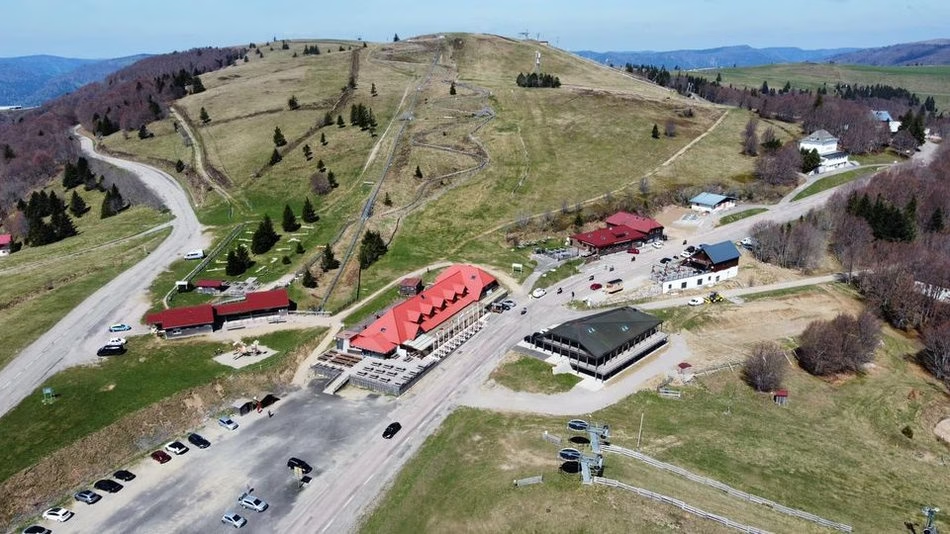
The official finish is at Le Markstein Fellering rather than the summit of the Col du Haag.
The final 5.9km are not completely downhill.
The road initially descends and rolls before reaching the finish area at Le Markstein.
That creates a slightly different tactical problem from a summit finish.
A rider who attacks on the steepest part of the Col du Haag must still maintain concentration and speed after the summit.
A small group containing stronger rouleurs may recover a few seconds.
The distance is still short enough that hesitation will be costly.
If three or four favourites cross the summit together, they may begin watching one another before the finish. That could allow a dropped rider to return or give a fast-finishing contender an advantage.
Pogačar’s sprint from a small group makes him particularly dangerous in that situation.
Will the breakaway survive?
Stage 14 gives a strong breakaway a chance, but the GC favourites begin as the more likely stage winners.
The early climbs make it possible for elite climbers to build a strong escape.
The problem is that UAE Team Emirates-XRG may want the stage.
Pogačar has already shown that he is willing to pursue victories on terrain where bonus seconds and psychological advantage are available.
The final climb also offers such a clear GC opportunity that Visma, Red Bull and Lidl-Trek may contribute to the chase.
A breakaway needs several conditions to align:
- A strong group must form on the Grand Ballon
- Every rider must be well behind on GC
- UAE must decide that controlling the stage is unnecessary
- The escape must retain several minutes at the Ballon d’Alsace
- The strongest climbers must avoid wasting energy attacking one another too early
If the advantage falls below four minutes before the final 60km, the GC group should have enough terrain to bring the move back.
Stage 14 appears in our ranking of the best breakaway stages at the 2026 Tour, but it sits below the clearer breakaway opportunities because the yellow jersey contenders have such a strong reason to race.
Why Pogačar may attack
Pogačar does not need to attack from long range.
He can allow UAE to control the race before using the steepest section of the Col du Haag.
The short run to the finish suits him.
If Pogačar creates a small gap, Vingegaard and the other contenders have almost no time to recover it.
If the strongest riders remain together, Pogačar is also the fastest finisher among the principal GC favourites.
That gives him two ways to win.
He can attack late on the climb or wait for a reduced sprint at Le Markstein.
The main reason for restraint is stage 15.
Plateau de Solaison is a more severe summit finish and comes immediately before the second rest day. UAE may prefer to control stage 14 without spending every domestique.
Pogačar’s wider relationship with the route is covered in our analysis of Tadej Pogačar’s Tour de France 2026 form, route fit and chances.
What does Vingegaard need to do?
Vingegaard needs to begin converting strong climbing performances into time gains.
Following Pogačar is no longer enough if the yellow jersey advantage remains substantial.
The Col du Haag provides a realistic opportunity because it rewards sustained climbing and reduces the value of a fast finish.
Vingegaard’s best option may be to make the race difficult before Pogačar launches.
Visma can use Matteo Jorgenson, Sepp Kuss, Davide Piganzoli and Victor Campenaerts across the earlier climbs. Jorgenson can also attack as a tactical option rather than simply setting tempo.
The team cannot rely on Wout van Aert because he is not racing the 2026 Tour.
If Visma reaches the Col du Haag with several riders, it can increase the pressure early and attempt to remove Pogačar’s support.
Vingegaard then needs to attack before the final kilometre of the climb.
Waiting for Le Markstein almost certainly favours Pogačar.
Remco Evenepoel can use the stage differently
Evenepoel is unlikely to match Pogačar and Vingegaard if the final climb becomes a pure sequence of accelerations.
His chance comes from maintaining a high, sustained pace.
Red Bull-Bora-Hansgrohe can use Florian Lipowitz as a second GC threat and Jai Hindley as mountain support.
That gives the team options.
Lipowitz can attack before the leading favourites commit, forcing UAE and Visma to respond. Evenepoel can then ride the Col du Haag at his own rhythm rather than repeatedly closing sharp moves.
The short section after the summit also helps him.
If Evenepoel crosses the top a few seconds behind, his time-trial power gives him a chance to reduce the deficit before Le Markstein.
He must avoid being isolated early.
The repeated climbs make this stage particularly dangerous for a rider who needs a controlled tempo.
Juan Ayuso has two competitions to protect
Ayuso is fighting for both a high overall placing and the white jersey.
His advantage over Paul Seixas and Isaac del Toro remains small enough that stage 14 could change the classification completely.
Lidl-Trek has several tactical options.
Mattias Skjelmose can support Ayuso or attack before the final climb. Quinn Simmons and Toms Skujiņš can enter the breakaway, although the team may prefer to keep its strongest riders around Ayuso.
Ayuso should be suited to the Col du Haag.
He can sustain a high pace and has enough acceleration to respond to the first major attacks.
The danger is the accumulated fatigue before the final climb.
His main rivals in the young rider competition may be willing to attack earlier because they have less to defend.
The latest white jersey picture is covered in our GC and jerseys update after Tour de France stage 12.
 Photo Credit: Getty
Paul Seixas can continue his breakthrough Tour
Seixas has remained close enough to Ayuso to make the white jersey a realistic objective rather than a secondary achievement.
Stage 14 should suit his climbing profile.
The French rider does not need to attack Pogačar or Vingegaard. His race is against Ayuso, Del Toro and the other young contenders.
Decathlon CMA CGM can use Felix Gall and Aurélien Paret-Peintre to support him deep into the stage.
Seixas may also benefit if the main GC favourites watch one another.
A well-timed move on the upper Col du Haag could gain the seconds required to take the white jersey without threatening yellow.
The pressure will be significant on French roads, but Seixas has already shown that he can race with patience rather than chase every acceleration.
Isaac del Toro gives UAE a second threat
Del Toro’s position creates tactical freedom for UAE.
If rival teams concentrate entirely on Pogačar, Del Toro can attack earlier on the Col du Haag.
Visma and Red Bull must then decide whether to chase.
Allowing Del Toro to gain time could strengthen UAE’s control of the overall podium and move him closer to the white jersey.
Chasing him uses riders that might otherwise support Vingegaard or Evenepoel against Pogačar.
Del Toro can therefore shape the stage even if he does not win it.
His presence makes UAE much harder to attack than a team built around one isolated leader.
Florian Lipowitz can attack without waiting
Lipowitz gives Red Bull-Bora-Hansgrohe an important alternative to Evenepoel.
He is a stronger pure climber on the steepest terrain and may receive more freedom because rival teams initially look towards the team’s higher-placed leader.
The Col du Haag suits a late Lipowitz attack.
If he moves before Pogačar and Vingegaard begin their own contest, UAE must decide whether to use a domestique or ask Pogačar to respond directly.
Lipowitz also has the advantage of not needing to preserve a fast finish.
His clearest route to a stage result is separation on the climb.
Lenny Martinez should welcome the final climb
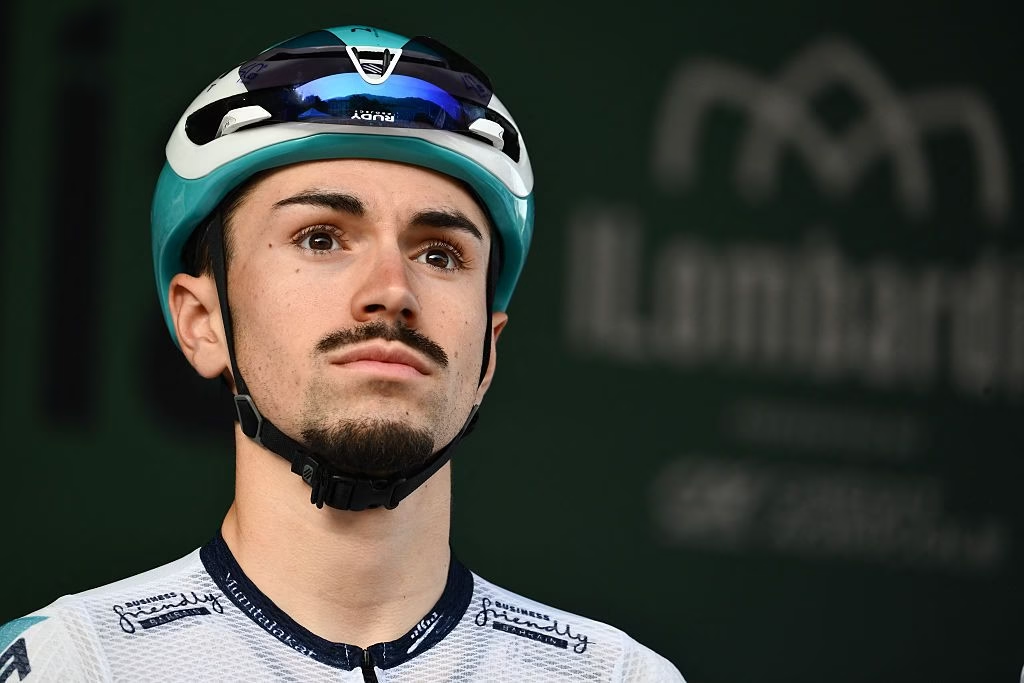
Martinez is one of the riders most naturally suited to the Col du Haag.
He is light, explosive and comfortable on irregular climbs.
The problem is his general classification position.
If Bahrain Victorious wants to protect his placing, Martinez may have less freedom to enter the early breakaway than riders already far behind.
He could still attack from the GC group on the final climb.
Matej Mohorič and Antonio Tiberi provide different tactical options for the team, but this is a stage where Martinez should be the priority.
The short run to Le Markstein gives him a chance to convert a climbing attack into a stage result.
Could the stage suit a breakaway climber?
Several confirmed starters could win if the breakaway receives enough freedom.
Richard Carapaz is an obvious option.
He can collect mountains points across the early climbs before attacking on the Col du Haag.
Valentin Paret-Peintre has a similar reason to enter the move, particularly if the polka-dot jersey remains open.
Michael Storer, Kévin Vauquelin, Ben Healy, Tobias Johannessen, Javier Romo, Alex Baudin and Warren Barguil are also suited to the route.
Their problem is the strength of the GC chase.
A climber may need six or seven minutes before the Ballon d’Alsace to survive Pogačar, Vingegaard and the leading teams on the Col du Haag.
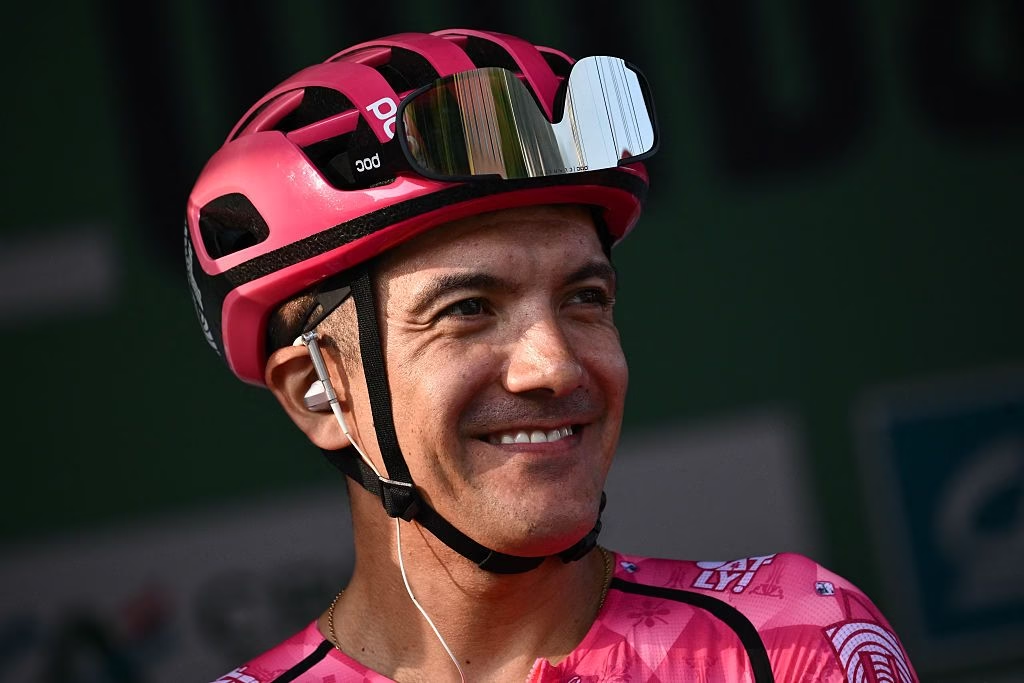 Photo Credit: Getty
Richard Carapaz
Carapaz is one of the leading breakaway favourites.
He is far enough behind in the general classification to receive freedom and strong enough to collect points across every categorised climb.
The stage’s structure suits his attacking style.
Carapaz does not need to wait for the final ascent. He can force a selection on the Ballon d’Alsace, use the uncategorised climbs to isolate rivals and begin the Col du Haag with a reduced group.
He will not want to reach Le Markstein with faster riders.
A solo attack remains his most likely route to victory.
Michael Storer
Storer is another strong option from the breakaway.
The Australian is suited to repeated climbs and should be one of the best riders in an escape when the race reaches the Col du Haag.
His weakness is tactical speed.
If several riders cross the summit together, Storer may struggle to win from a small group.
That gives him a reason to attack early on the final climb rather than wait for the steepest sections.
Tudor Pro Cycling also has Julian Alaphilippe and Marc Hirschi, but the stage’s climbing load makes Storer its most natural option.
Ben Healy
Healy can target the breakaway but must judge his effort carefully.
The route contains more sustained climbing than his ideal stage, although he has repeatedly shown that he can remain competitive on difficult mountain days.
His best chance may come before the Col du Haag.
An attack on the Col du Hundsruck or in the valley before the final climb could force stronger pure climbers to chase.
If Healy waits until the steepest gradients, riders such as Carapaz and Storer may have the advantage.
EF Education-EasyPost can also use Alex Baudin as a second option.
The riders best suited to this type of racing are covered in our Tour de France 2026 breakaway specialists guide.
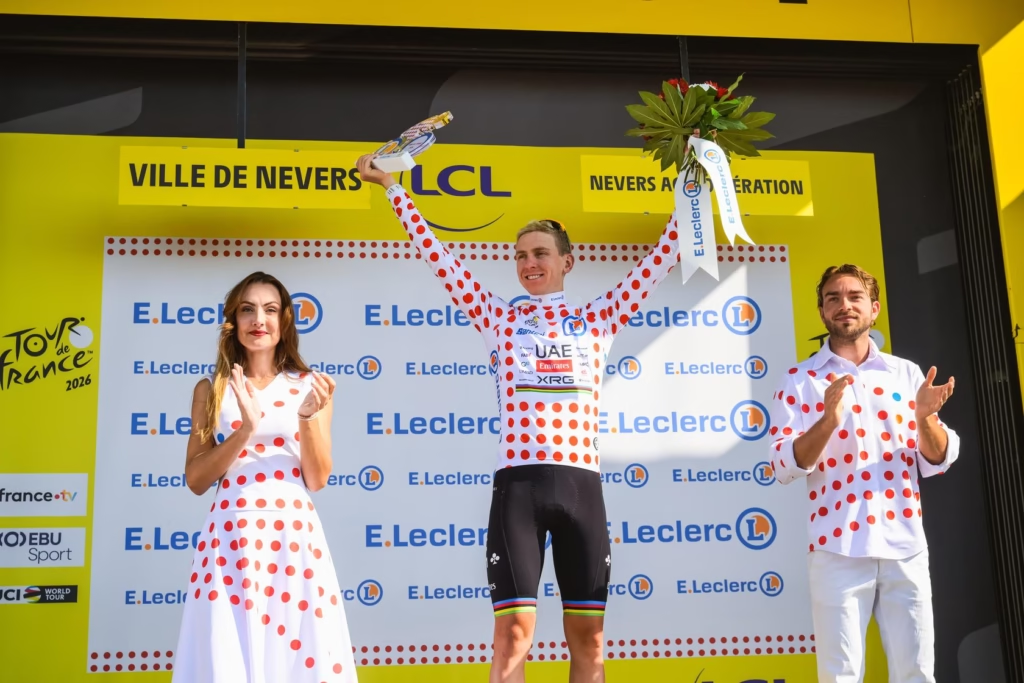 Photo Credit: A.S.O./Charly López
What stage 14 means for the polka-dot jersey
Stage 14 is one of the most valuable mountains classification days before the Alps.
The available points are:
- Grand Ballon: 10 points
- Col du Page: 5 points
- Ballon d’Alsace: 10 points
- Col du Haag: 10 points
A rider who leads across all four climbs can collect 35 points.
That is enough to transform the competition.
Pogačar may continue leading the classification through his GC performances, with another rider wearing the jersey while he remains in yellow.
Carapaz, Paret-Peintre, Seixas and other breakaway climbers have a clear incentive to attack from the opening slopes.
The early fight for the breakaway may therefore involve riders targeting mountains points as well as the stage win.
Our Tour de France 2026 climbers and polka-dot jersey guide explains why stages such as Le Markstein can allow a breakaway specialist to challenge the GC favourites for the classification.
The green jersey contenders face a survival day
The intermediate sprint comes in Wattwiller before the Grand Ballon has fully developed.
That places the points opportunity early enough for Mads Pedersen and his rivals to contest it.
The difficulty comes immediately afterwards.
Sprinters must then manage the Grand Ballon, Col du Page, Ballon d’Alsace and Col du Haag while remaining inside the time limit.
Pedersen may decide that the intermediate points justify an early effort.
Jasper Philipsen, Tim Merlier and Olav Kooij are less likely to spend heavily before such a difficult mountain stage.
The main objective for the pure sprinters is reaching Le Markstein safely and preserving energy for later opportunities.
Will team strength decide the stage?
Stage 14 may expose the difference between teams that still have several mountain domestiques and those relying on one leader.
UAE can use João Almeida, Adam Yates, Isaac del Toro and other climbing support around Pogačar.
Visma has Jorgenson, Kuss and Piganzoli for Vingegaard.
Red Bull can use Lipowitz, Hindley and Aleksandr Vlasov around Evenepoel.
Lidl-Trek has Skjelmose and other support for Ayuso.
The repeated climbs make those numbers valuable.
A leader isolated on the Ballon d’Alsace may need to respond personally to every attack during the final 60km.
A team with three riders remaining can control the valley, discourage moves and position its leader at the front of the Col du Haag.
Our guide to the Tour de France 2026 domestiques who could decide the race explains why Le Markstein is particularly dependent on collective strength.
Could stage 14 decide the Tour?
The Tour is unlikely to be won completely at Le Markstein.
It can be lost there.
A contender who struggles on the Grand Ballon or Ballon d’Alsace faces a long day of isolation before the final climb.
A bad moment on the Col du Haag can cost 30 seconds quickly, with almost no road left to recover.
That loss then carries into stage 15 to Plateau de Solaison and the stage 16 individual time trial.
The psychological effect also matters.
A rider dropped at Le Markstein cannot approach the following stages with the same confidence or tactical freedom.
Stage 14 may not create the largest gaps of the race.
It can determine which riders remain capable of challenging Pogačar during the final week.
The wider pre-Alps picture is analysed in our guide to where the Tour de France 2026 can be won before the Alps.
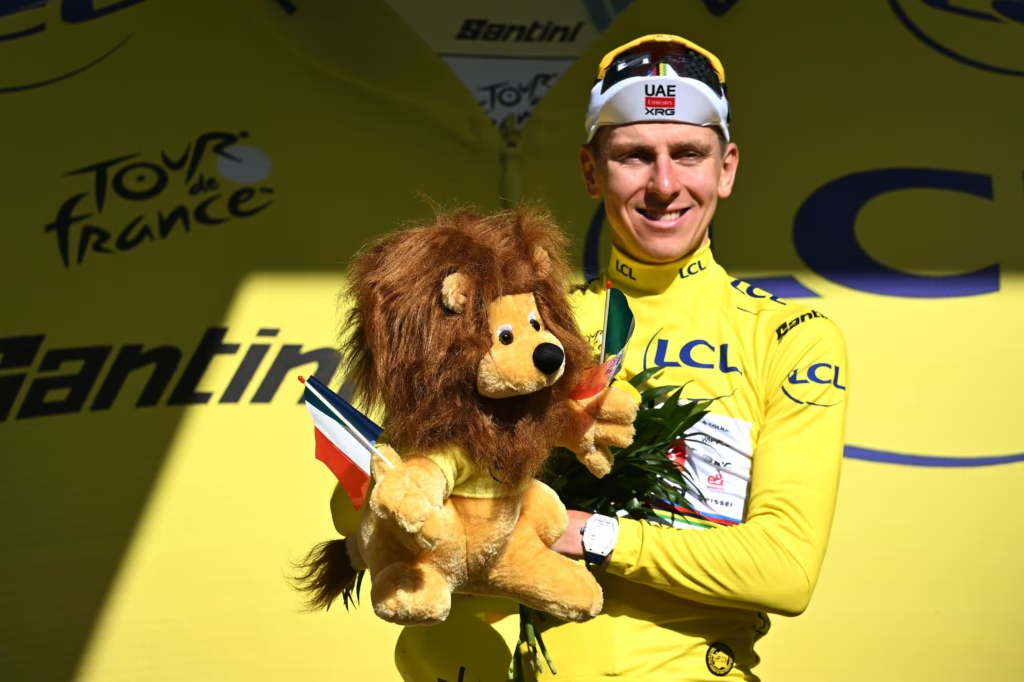 Photo Credit: Getty
Tour de France 2026 stage 14 favourites
Five-star favourite
Tadej Pogačar
Four-star favourites
Jonas Vingegaard
Remco Evenepoel
Three-star favourites
Juan Ayuso
Isaac del Toro
Paul Seixas
Florian Lipowitz
Richard Carapaz
Two-star favourites
Lenny Martinez
Michael Storer
Ben Healy
Kévin Vauquelin
Valentin Paret-Peintre
Tobias Johannessen
One-star outsiders
Mattias Skjelmose
Javier Romo
Alex Baudin
Warren Barguil
Felix Gall
Davide Piganzoli
-
 Photo Credit: A.S.O./Gaëtan Flamme
Tour de France stage 14 prediction
The Grand Ballon should create a strong breakaway and begin reducing the number of domestiques in the peloton.
UAE is unlikely to chase every rider immediately, but the team should keep the gap manageable enough for the GC favourites to contest the stage on the Col du Haag.
The Ballon d’Alsace and uncategorised climbs should leave a reduced group before the final ascent.
Vingegaard needs to attack before the finish, while Evenepoel and Ayuso should attempt to ride at a strong sustained pace.
Pogačar can wait.
The short distance from the Col du Haag summit to Le Markstein means one acceleration may be enough. If nobody can distance him, his sprint provides the most reliable route to victory.
Stage 14 predicted top three
- Tadej Pogačar
- Jonas Vingegaard
- Remco Evenepoel
Pogačar has the strongest combination of climbing acceleration and finishing speed.
Vingegaard needs to make the Col du Haag difficult enough to prevent a reduced sprint, while Evenepoel may be able to limit his losses through the final kilometres.
The breakaway has a chance, particularly if Carapaz or Storer builds a substantial advantage.
The most likely outcome is still a GC-controlled finale.
Stage 14 is short, dense and placed perfectly for aggressive racing.
The Col du Haag gives the leading contenders almost nowhere to hide and almost no time to recover from a mistake.

