

The Giro d’Italia Women 2026 moves into one of its most awkward remaining stages on Friday, 5th June, with 159km from Sorbolo Mezzani to Salice Terme. After the flat sprint opportunity into Brescello, stage 7 brings the race back into hilly terrain, with enough late climbing to make this much more than a simple transition day before Sestriere.
Stage 7 is scheduled to start at 12:40 local time, which is 11:40 BST for UK viewers. The expected finish is around 17:12 local time, or 16:12 BST, depending on the speed of the race, the breakaway situation and how hard the late climb is ridden.
UK viewers can watch the stage live through TNT Sports and HBO Max. For a deeper look at the route and likely contenders, our Giro d’Italia Women 2026 stage 7 preview breaks down why this could be a day for a breakaway, a reduced sprint or a late GC probe. Our Giro d’Italia Women 2026 full route guide also explains how this stage fits into the final weekend.
What time does Giro d’Italia Women 2026 stage 7 start?
Giro d’Italia Women 2026 stage 7 is scheduled to start at 11:40 BST on Friday, 5th June.
The riders will cover 159km from Sorbolo Mezzani to Salice Terme. It is a hilly stage rather than a pure mountain day, but the late climb and fast run-in mean the final hour should be important.
The key stage 7 details for UK viewers are:
- Date: Friday, 5th June
- Stage: stage 7
- Route: Sorbolo Mezzani to Salice Terme
- Distance: 159km
- Elevation gain: around 1,000 metres
- Stage type: hilly
- Scheduled start: 11:40 BST
- Expected finish: around 16:12 BST
- UK live coverage: TNT Sports and HBO Max
The timing makes this an afternoon viewing stage for UK fans, with the most important racing likely to come later in the day once the route reaches the Oltrepò hills and the climb towards Pietragavina begins to shape the front of the race.
 Photo Credit: Getty
How can UK viewers watch Giro d’Italia Women 2026 stage 7?
UK viewers can watch Giro d’Italia Women 2026 stage 7 live through TNT Sports and HBO Max.
TNT Sports is the TV route for subscribers watching through a platform that carries the channel, while HBO Max is the main streaming option for viewers using a laptop, tablet, mobile or smart TV.
Full race broadcast information is available in our guide on how to watch the Giro d’Italia Women 2026 in the UK.
For this stage, the live window matters more than the official start. The opening kilometres may be controlled by breakaway formation, but the decisive section should come much later, once the race leaves the flatter Po Valley roads and moves into the hillier approach towards Salice Terme.
Why stage 7 is worth watching live
Stage 7 is worth watching because it sits in a tactical grey area. It is not hard enough to guarantee a full GC showdown, but it is too difficult to be treated as a straightforward sprint stage. That makes it one of the more unpredictable days of the final part of the Giro.
The sprinters will look at the finish and wonder whether they can survive. The breakaway riders will look at the late climb and see a real opportunity. The GC teams will look at Sestriere on stage 8 and may prefer not to spend too much energy. Those competing incentives can make the stage difficult to control.
That is exactly why it could produce interesting racing. If the sprint teams hesitate, the break can go deep. If the GC teams sense weakness, the climb can become a launchpad. If everyone waits too long, a reduced group could arrive in Salice Terme with tired legs and limited team support.
What is the route for stage 7?
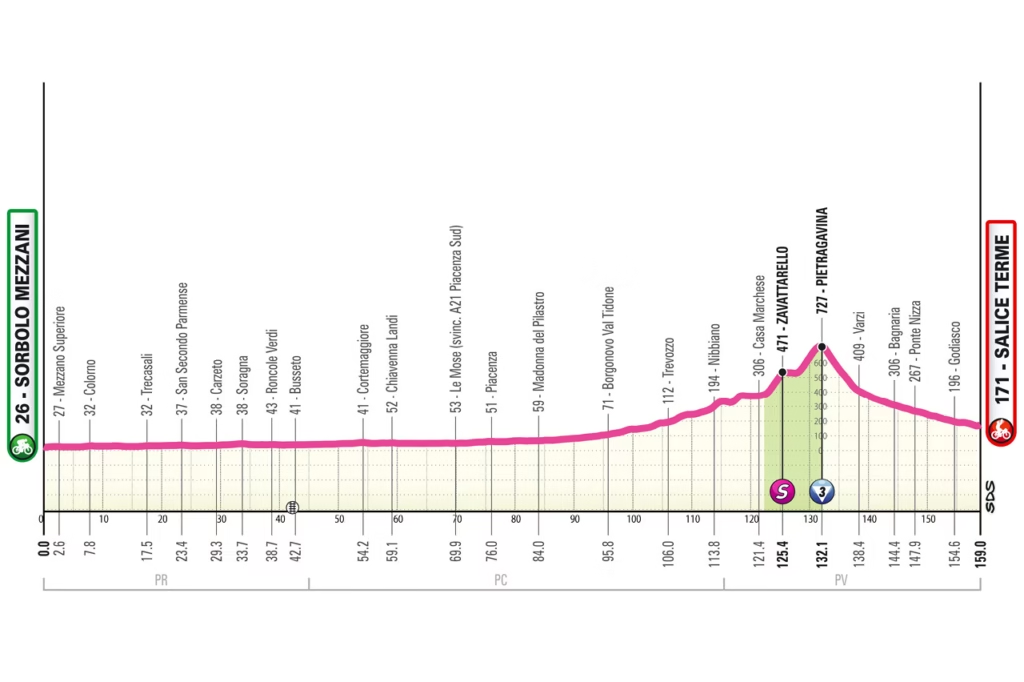
Stage 7 starts in Sorbolo Mezzani and heads towards Salice Terme over 159km. The first part of the day crosses the Po Valley, where the terrain should be relatively manageable and the breakaway fight may shape the early pattern of the stage.
The race then moves into the Oltrepò hills, where the main difficulty comes late. The Pietragavina climb is not as severe as the high-mountain tests elsewhere in the race, but its position makes it important. Coming late in the day, and after almost a week of racing, it should be hard enough to remove weaker sprinters and expose any rider struggling with fatigue.
The final kilometres are slightly downhill or flat, with two corners inside the final kilometre and the last one coming close to the finish. That means positioning will matter if a reduced group comes back together. A rider with the fastest sprint may still lose the stage if she enters the final corners too far back.
What is the GC situation before stage 7?
The GC battle is already tightly defined before the final weekend. Anna van der Breggen remains the rider everyone is trying to dislodge, with Demi Vollering, Antonia Niedermaier, Isabella Holmgren, Marlen Reusser and Elisa Longo Borghini all still central to the race for the podium and top 10.
Stage 7 is unlikely to create the same gaps as the Nevegal time trial, the Dolomite stage to Santo Stefano di Cadore or the coming Sestriere stage. But it can still matter. A small split, a badly timed mechanical, a missed move or a moment of hesitation over the late climb could change the race before the biggest mountain day.
The full classification picture after stage 5 is covered in our GC and jerseys after Giro d’Italia Women 2026 stage 5 update.
 Photo Credit: RCS
Could Elisa Balsamo survive the climb?
Elisa Balsamo’s chances depend on how aggressively the late climb is raced. If the peloton controls the day steadily and the strongest teams hesitate before Sestriere, she has the resilience to remain in the front group or come back before the finish.
If the climb is attacked properly, however, the stage becomes much harder for the pure sprinters. The summit comes far enough from the finish to allow some regrouping, but only if the front of the race slows down. If a strong group keeps driving over the top, dropped riders may struggle to return.
For Balsamo, the stage is also about the points classification. She has already shaped the sprint story of this Giro, and any stage where she can survive and score points matters. But stage 7 is less straightforward than Brescello, and Lidl-Trek may also need to balance her sprint hopes with their GC interests through Isabella Holmgren and Niamh Fisher-Black.
Who are the best riders to watch?
Elisa Longo Borghini looks well suited to this kind of stage. It asks for endurance, positioning, climbing strength, descending confidence and race craft rather than pure mountain climbing or pure sprint speed. If the favourites hesitate before Sestriere, she has the experience to use the late climb and the run-in to Salice Terme.
Demi Vollering and Anna van der Breggen will remain central if the GC riders decide to test each other. Vollering has already shown she can turn selective terrain into stage victory, while Van der Breggen’s priority will be control rather than unnecessary risk.
Antonia Niedermaier and Isabella Holmgren are also worth watching. Both have climbed strongly, and both could become dangerous if the bigger names start marking each other too closely. Holmgren’s ride in the young rider classification has already moved her into the wider GC conversation, which makes her one of the most interesting riders on any hilly or mountain stage.
Chiara Consonni, Lara Gillespie and Balsamo are the key names if the stage becomes a reduced sprint. They will need to survive the late climb, stay near the front and then handle the final corners cleanly.
Could the breakaway survive?
A breakaway win is very possible on stage 7. The route is hard enough to discourage a full sprint-team chase, but not so hard that the GC teams are guaranteed to take responsibility from distance.
That makes the composition of the early move important. A break with riders who are far enough down on GC, strong enough to handle the late climb and committed enough to keep working after the summit could be difficult to bring back.
The chase will depend on how many teams believe they have a realistic stage winner behind. If Lidl-Trek, UAE Team ADQ, Canyon SRAM zondacrypto or FDJ United-Suez all want a reduced sprint or late GC selection, the break may be kept closer. If those teams hesitate, this could become one of the best opportunities left for attackers.

What comes next after stage 7?
Stage 8 is the major final mountain day of the Giro d’Italia Women 2026, with the race heading from Rivoli to Sestriere over 105km. The Colle delle Finestre and the summit finish should make it the most important remaining GC stage.
That looming mountain test shapes stage 7. Some GC teams will want to save energy. Others may decide that attacking before the obvious battleground is the smarter move. The sprinters and breakaway riders know this may be their final realistic chance before the race turns fully back towards the climbers.
Stage 9 around Saluzzo then gives the race one last difficult day, but Sestriere is the stage that every GC contender will already have marked. That makes Salice Terme a dangerous in-between stage, one where opportunity and caution sit side by side.
Giro d’Italia Women 2026 stage 7 live viewing summary
Giro d’Italia Women 2026 stage 7 takes place on Friday, 5th June, with 159km from Sorbolo Mezzani to Salice Terme. The stage is scheduled to start at 11:40 BST, with the finish expected at around 16:12 BST.
UK viewers can watch the stage live on TNT Sports and HBO Max. The route points towards a breakaway, reduced sprint or late attack rather than a straightforward bunch finish, with the climb towards Pietragavina likely to decide who reaches the finale with a chance.
This is the final hilly trap before Sestriere. The biggest GC gaps may wait until stage 8, but stage 7 has enough uncertainty to make it far more dangerous than a simple transition day.

