
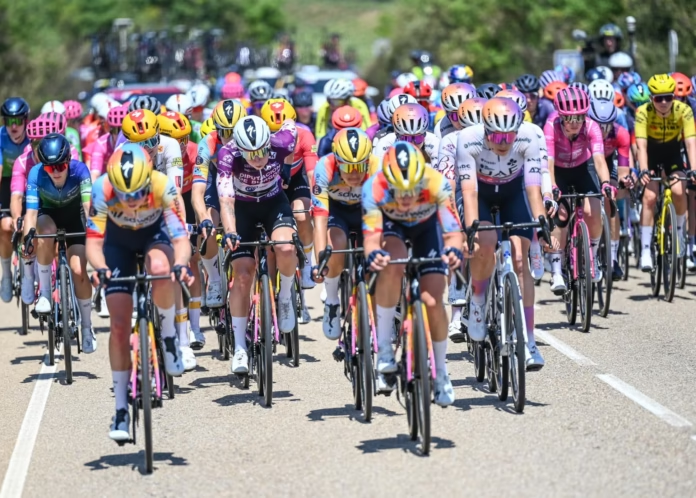
Women’s cycling is much easier to follow than it used to be, but the problem for new fans is no longer only access. It is knowing where to start. The calendar has grown, the biggest races now receive proper live coverage, teams are producing more content, and specialist voices are helping explain the tactics, riders and storylines that can otherwise feel difficult to pick up mid-season.
The best approach is to mix three types of content. Race highlights help you see what happened. Podcasts explain why it happened. Rider, team and race channels give you the personalities, context and behind-the-scenes texture that make the sport easier to care about.
For new fans, that balance matters. Watching the final kilometre of a sprint is useful, but it does not always explain why one team controlled the race, why a favourite was isolated, or why a rider who finished 7th may have had an excellent day. Good women’s cycling coverage fills in those gaps.
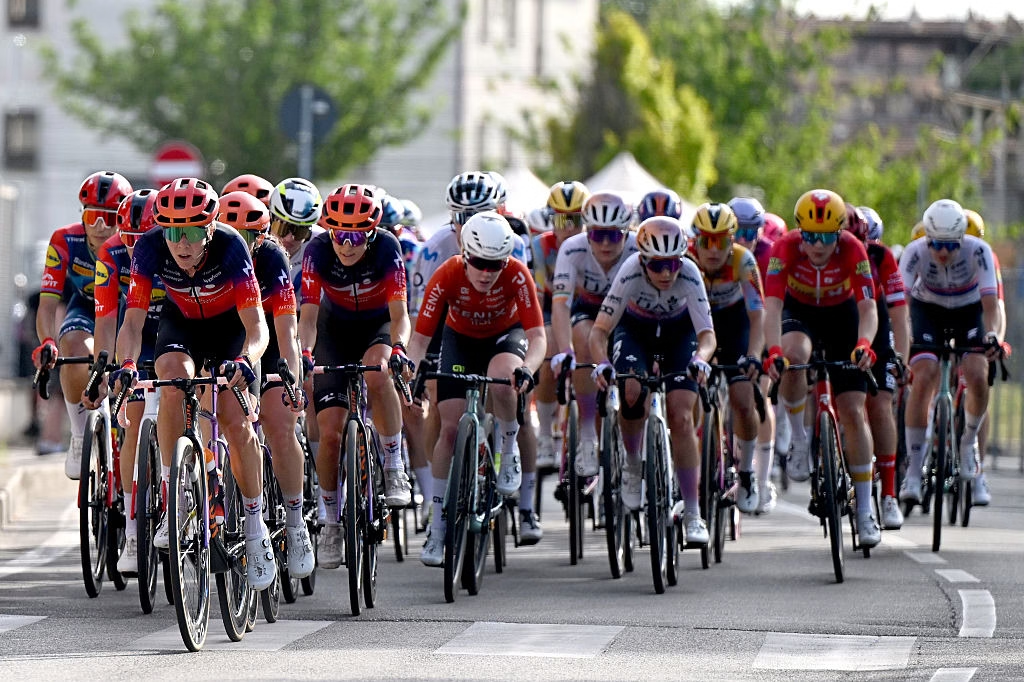 Photo Credit: Getty
Wheel Talk
Wheel Talk is the best first podcast recommendation for anyone who wants to follow women’s road racing properly. It is women’s-cycling focused, regular, informed and accessible, with a clear emphasis on the Women’s WorldTour, rider development, team dynamics and the broader direction of the sport.
Hosted by Escape Collective, it has the advantage of being built around people who follow the women’s peloton closely rather than treating it as an occasional side subject. That makes a difference. The best episodes do not just recap results; they explain how teams raced, which riders are moving up a level, and why certain results matter beyond the podium.
For a new fan, Wheel Talk is especially useful because it helps build recognition. Names such as Demi Vollering, Lotte Kopecky, Elisa Longo Borghini, Lorena Wiebes, Elisa Balsamo, Kasia Niewiadoma-Phinney, Marianne Vos and Anna van der Breggen start to sit inside a wider picture. Instead of simply knowing who won, you begin to understand what kind of rider they are, what role their team plays, and how their season is developing.
It is best for fans who want one regular women’s cycling podcast that treats the sport as the main event.
Voxwomen
Voxwomen remains one of the most useful women’s cycling platforms for new fans because it sits somewhere between media outlet, video channel and rider-access hub. Its YouTube content is particularly helpful if you want interviews, explainers, short features and race-adjacent material that brings the peloton closer.
The value of Voxwomen is tone. It is not only about results. It helps introduce riders as people, which is important in a sport where new fans often need more than a list of names and teams. Interviews, features, behind-the-scenes clips and race content can make the women’s peloton feel less distant.
That matters because women’s cycling is full of riders with distinctive stories. Some come from cyclocross, track, mountain biking or triathlon. Others have moved through development teams or balanced education with early professional racing. A channel like Voxwomen helps make those routes visible.
Voxwomen also has its own women’s cycling website and Voxwomen Cycling Podcast, giving new fans a mix of written updates, video content and audio interviews.
It is best for fans who want rider personality, interviews and women’s-cycling-specific video content.
TNT Sports Cycling
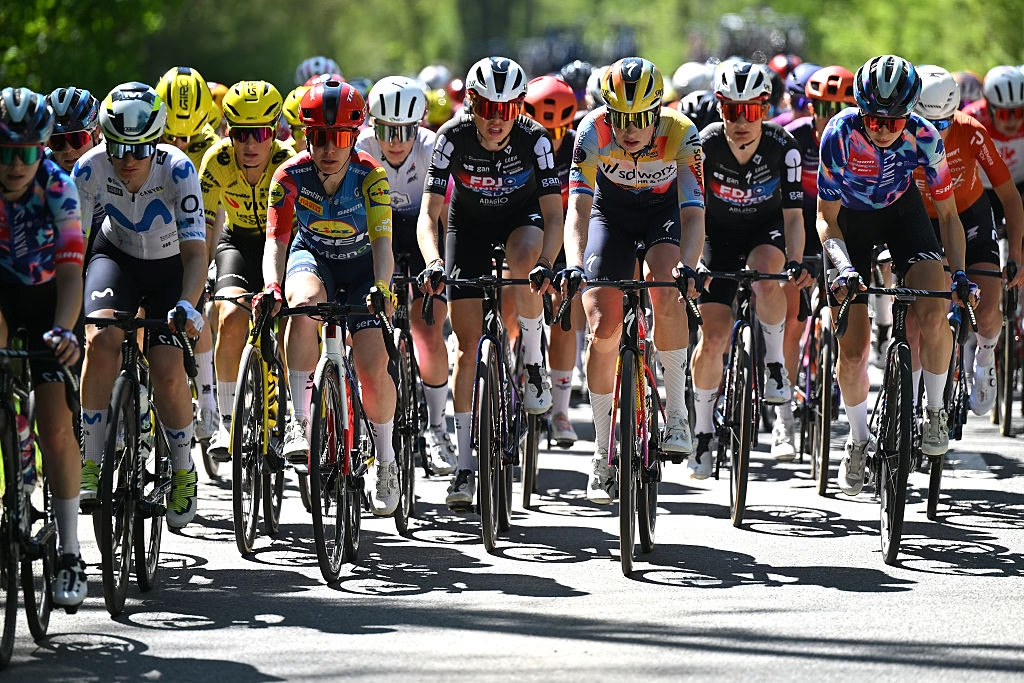
TNT Sports Cycling is one of the most practical YouTube channels for UK fans because it publishes highlights and key race moments from many of the races shown through the Warner Bros. Discovery cycling package. For new fans, highlights are often the quickest way to catch up without committing to several hours of live coverage.
The channel is especially useful during major stage races. If you miss a Giro d’Italia Women stage, La Vuelta Femenina stage or Women’s WorldTour one-day race, a short highlight video can give you the winning move, sprint finish, crash point, decisive climb or final kilometre. That is often enough to stay connected to the story before reading deeper analysis or listening to a podcast.
The limitation is that highlights are not always enough on their own. A short package can show the decisive attack, but it may not explain the tactical build-up, the importance of a domestique’s pull, or why a rider lost time before the cameras focused on the front. Used alongside podcasts and written previews, though, TNT Sports Cycling is one of the easiest tools for staying up to date.
It is best for fans who want quick race highlights and key moments from major women’s races.
Lanterne Rouge Cycling Podcast and YouTube
Lanterne Rouge Cycling Podcast is not a women’s cycling-only platform, but it has become one of the most recognisable places for race analysis across professional cycling. Its strength is tactical explanation. The best Lanterne Rouge videos and podcast episodes break down how a race was won, where the key selection happened, and how teams used riders to shape the outcome.
For new fans, this can be extremely useful. Cycling tactics can be hard to understand at first because the decisive move is rarely only the obvious attack. Often, the important moment is a team riding hard 40km earlier, a leader being isolated before the final climb, or a domestique closing a gap at exactly the right time. This style of analysis helps explain that logic.
The channel also covers major women’s races, particularly Grand Tours and high-profile WorldTour events. That makes it a good companion to women’s-specific platforms. It may not give the same constant week-to-week women’s peloton focus as Wheel Talk or Voxwomen, but when it does cover women’s racing, it usually does so with tactical clarity.
The podcast is also available through standard podcast platforms, including Apple Podcasts.
It is best for fans who want to understand race tactics rather than only results.
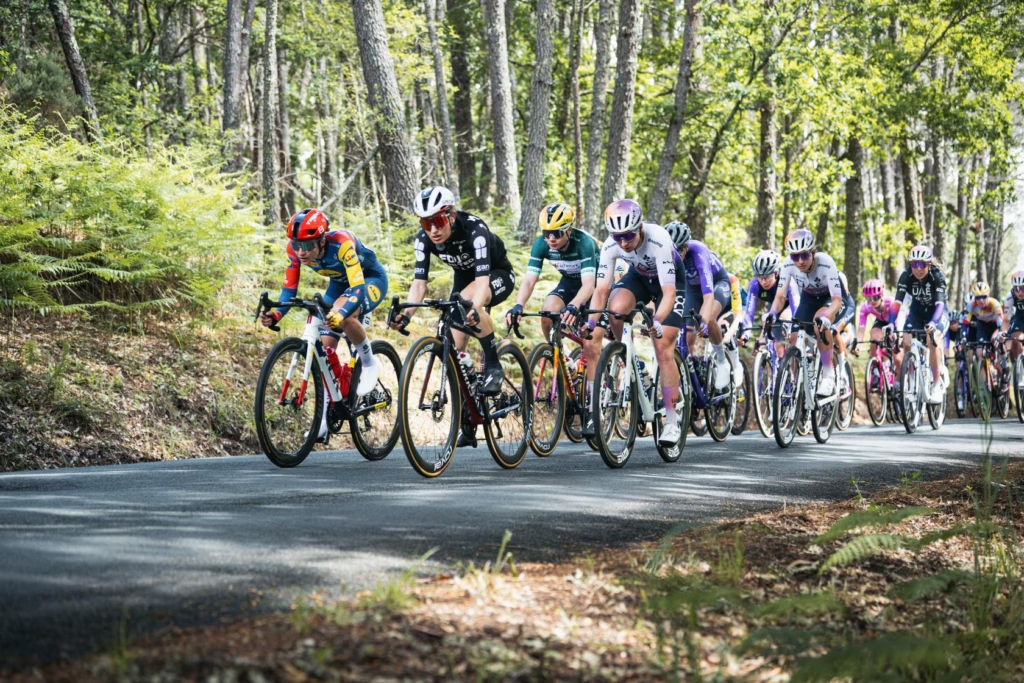 Photo Credit: Unipublic/Cxcling/Naike Ereñozaga
UCI YouTube channel
The UCI YouTube channel is useful for official event highlights, especially around World Championships, World Cups and disciplines that sit outside the road calendar. For women’s cycling fans, it can be a good way to follow road worlds, track, cyclocross, mountain biking and other events where major road riders sometimes appear.
That broader view is useful because women’s cycling is more interconnected than many new fans realise. Riders often move between disciplines. Cyclocross stars can become road contenders. Track riders can become sprint specialists. Mountain bikers can move into road climbing roles. Following UCI content helps show that the women’s peloton is not built from one pathway.
The UCI channel is not always the best place for weekly Women’s WorldTour road-race coverage, but it is valuable for official highlights and for understanding the wider cycling ecosystem.
It is best for fans who want official highlights and a broader view beyond road racing.
Never Strays Far and For The Love Of Cycling
Never Strays Far and the related For The Love Of Cycling project are useful for fans who enjoy a more conversational, British-led approach to the sport. The presence of Lizzie Deignan gives them obvious value for women’s cycling fans, particularly around major race coverage and the Tour de France Femmes.
This is not the same sort of show as a pure race-analysis podcast. Its strength is personality, storytelling and the feeling of being close to the road. For new fans, that can be just as valuable as technical detail. Cycling is not only tactics and watts. It is travel, weather, pressure, history, roadside culture and the strange emotional rhythm of a long race.
Deignan’s presence matters because she brings experience from inside the women’s peloton. When a former world champion talks about positioning, fear, nerves, team responsibility or race-day judgement, it gives new fans a more human understanding of what they are watching.
It is best for fans who want storytelling, British cycling voices and major-race atmosphere.
Race organiser YouTube channels
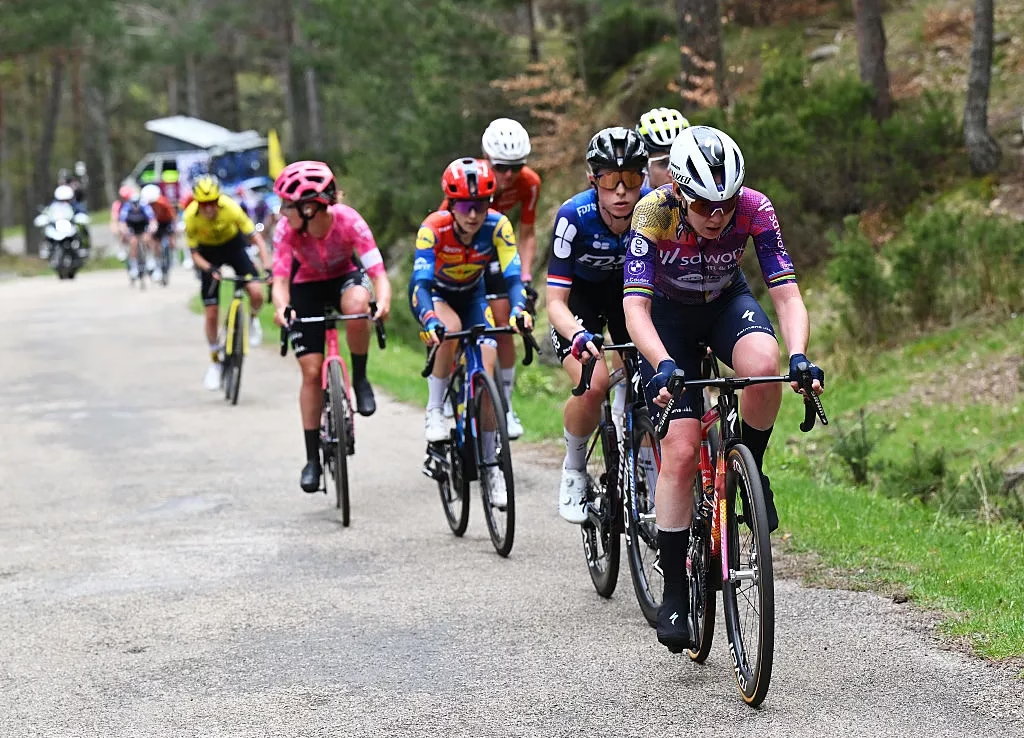
Race organiser channels are often overlooked, but they can be very useful for new fans. Events such as the Tour de France Femmes, Giro d’Italia Women, La Vuelta Femenina, Paris-Roubaix Femmes and other major races often publish highlights, route videos, interviews, final kilometres and behind-the-scenes content through official channels.
The advantage is direct access. If you want the official route presentation, stage highlights, podium clips or rider interviews from a specific race, the organiser’s channel is often the simplest place to check. It can also help new fans learn the character of different races. The Tour de France Femmes has a different feel from Paris-Roubaix Femmes. The Giro d’Italia Women has a different rhythm from La Vuelta Femenina. Official content helps make those identities clearer.
The limitation is that organiser channels naturally focus on their own event. They will not always explain the wider season, team politics or form lines across races. They work best alongside podcasts and independent coverage.
They are best for fans who want race-specific highlights, route videos and official interviews.
Team YouTube channels
Team channels are useful when you want to understand riders away from the race result. Lidl-Trek, Team SD Worx-Protime, Canyon SRAM zondacrypto, FDJ United-SUEZ, EF Education-Oatly and Team Visma | Lease a Bike all offer different levels of team video, rider access and behind-the-scenes material.
This kind of content is especially helpful for new fans because it turns team names into real structures. You begin to see who leads, who supports, who handles media, who works on the front, and how much coordination sits behind a result that may only appear as one line in a results sheet.
Team content is naturally selective. It will not usually criticise tactics or explain failures in the same way independent media might. But it gives something else: access to mood, preparation and personality. For new fans, that can be the difference between knowing a rider’s name and actually caring about her season.
Team channels are best for fans who want behind-the-scenes access and rider personality.
Rider YouTube channels and social media video
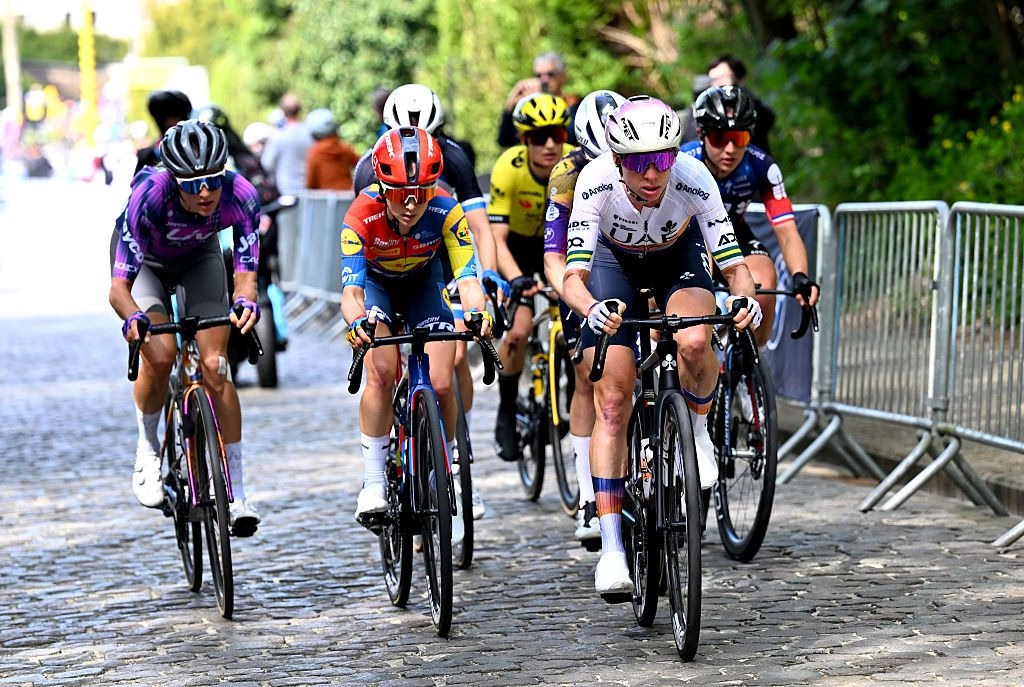
Individual rider channels and social video can be excellent, even if they are less predictable than dedicated media outlets. Some riders post race diaries, training updates, café rides, sponsor content, travel clips or short behind-the-scenes videos from inside the peloton.
For new fans, this kind of content can be more approachable than formal race coverage. You see the practical side of professional cycling: packing bikes, travelling between races, warming up, recovering, eating, dealing with bad weather and trying to reset after difficult days.
The best way to use rider content is to follow riders you already notice in races. If a rider catches your attention in a sprint, breakaway or mountain stage, look for their team content and social video afterwards. That builds familiarity quickly.
It is best for fans who want personal stories and a closer feel for life inside the peloton.
How new fans should use these channels together
The easiest way to follow women’s cycling is to build a simple weekly routine.
Start with highlights. TNT Sports Cycling, organiser channels and team channels can show what happened. Then use a podcast such as Wheel Talk or Lanterne Rouge Cycling Podcast to understand why it happened. After that, use Voxwomen, team channels and rider content to learn who the riders are beyond the result.
That order works because cycling is easier to enjoy when the visual memory comes first. Seeing the sprint, climb or attack gives you an anchor. The analysis then makes more sense because you already know the key moment. The rider content adds personality afterwards.
For written context, ProCyclingUK’s women’s cycling race hub is a useful place to follow previews, route guides, start lists, viewing guides and race reports through the season. The women’s cycling TV guide hub is particularly useful if you mainly need to know where and when races are shown in the UK.
-
 Photo Credit: Getty


Best starting combination for a new women’s cycling fan
For a new fan, the strongest starting combination would be Wheel Talk, Voxwomen, TNT Sports Cycling and Lanterne Rouge.
Wheel Talk gives the women’s peloton focus. Voxwomen gives rider personality and women-specific video content. TNT Sports Cycling gives accessible highlights from major races. Lanterne Rouge adds tactical explanation when you want to understand why a move worked.
From there, add organiser channels for specific races, team channels for behind-the-scenes context, and Never Strays Far or For The Love Of Cycling for a more conversational British-led style around the biggest events.
That mix gives a new fan the most important thing: repetition. The same rider names, team colours, race situations and tactical patterns start to appear across different formats. After a few weeks, the sport becomes far easier to follow. After a few months, the peloton stops feeling like a blur and starts to feel like a set of stories running in parallel.
The best women’s cycling podcasts and YouTube channels to start with
Wheel Talk is the best women’s cycling podcast for regular Women’s WorldTour discussion. Voxwomen is the best women-specific video hub for interviews, features and rider access. TNT Sports Cycling is the easiest highlights channel for UK fans following major races. Lanterne Rouge Cycling Podcast and YouTube are best for tactical race analysis. The UCI channel is useful for official championship and multi-discipline highlights. Never Strays Far and For The Love Of Cycling add personality, British voices and major-race storytelling.
No single channel explains everything. Women’s cycling is too varied for that. The best way in is to let each source do what it does well: highlights for the action, podcasts for the explanation, rider content for personality, and written previews for the structure of the season.

