

The Men’s Tour de Suisse 2026 begins on Wednesday, 17th June, with a stage that immediately removes any idea of a gentle opening day. Stage 1 starts and finishes in Sondrio, in Italy’s Valtellina region, over 144.0km and 2,455m of climbing. It is officially classified as a hilly stage, but the numbers and route shape make it clear that this is a serious first test.
The race has moved into a new five-day format, which changes the rhythm completely. There is no long opening phase, no succession of quiet sprint days and no chance for riders to ride themselves into the race slowly. The Men’s Tour de Suisse 2026 full route guide shows the pattern clearly: Sondrio opens the race with a demanding hilly stage, Locarno and Bad Ragaz add more rolling terrain, Aarburg brings a 23.8km individual time trial, then Villars-sur-Ollon provides the final mountain stage.
That makes stage 1 about more than the first yellow jersey. It is about who has arrived sharp, who can already handle pressure, and who risks losing time before the race has even reached Switzerland. The official route description points towards a selective finale, with two short but very steep climbs likely to create the first clear separation. A full bunch sprint looks unlikely.
For wider race context, see our Men’s Tour de Suisse 2026 contenders preview, the full start list for Men’s Tour de Suisse 2026 and our Men’s Tour de Suisse 2026 team-by-team guide.

Men’s Tour de Suisse 2026 stage 1 route
Stage 1 is based around Sondrio, a town in the Valtellina valley with terraced vineyards, mid-altitude roads and famous cycling terrain nearby. The route does not go straight into a high-alpine pass, but it does not need to. With 2,455m of climbing in 144.0km, the day has enough difficulty to make the race nervous from the first afternoon.
The opening section is expected to be relatively flat, giving the early breakaway a chance to form and allowing teams to settle into the race. After that, the route becomes far more irregular. The official description says the stage quickly turns into a constant up and down, with the character closer to demanding races such as Il Lombardia than to flat Classics.
That comparison is useful. This is not a day of huge altitude or one decisive mountain pass. It is a stage of rhythm disruption. Riders will be climbing, descending, changing position, recovering briefly, then climbing again. That kind of terrain can be awkward on the first day of a stage race because teams are still establishing control and riders are still adjusting to the speed of competition.
The finale is the decisive part. Two short but very steep climbs should give puncheurs, classics riders and aggressive GC contenders a chance to split the bunch before the finish. If the race is ridden hard, the first leader’s jersey is more likely to go to a reduced-group winner or a late attacker than a pure sprinter.
Why stage 1 matters for the GC
Stage 1 will not decide the whole Tour de Suisse, but it can create the first fault lines. In a five-day race, a small mistake becomes more expensive. A rider who loses 20 or 30 seconds in Sondrio does not have a long week to repair the damage. There are only four stages left, and two of them are an individual time trial and a final mountain stage.
That changes how the favourites need to approach the opener. Tadej Pogačar, Primož Roglič, Tom Pidcock, Richard Carapaz, Antonio Tiberi, Lenny Martínez, Enric Mas and the rest of the GC group cannot simply hide until the time trial or Villars-sur-Ollon. They need to be alert from the first selective moment.
The danger is not only a direct attack from a GC rival. It is also a split on a climb, a missed move, a technical descent, a poorly timed mechanical, or being caught behind riders who lose contact near the top of one of the final ramps. The stage is difficult enough to punish bad positioning, but not so hard that every team will organise itself into a clean GC formation early.
That is what makes Sondrio interesting. The biggest favourites may not want to spend too much energy chasing the stage win, but they also cannot allow the first day to become chaotic. The teams that balance patience and aggression best should come out of stage 1 with the race under control.
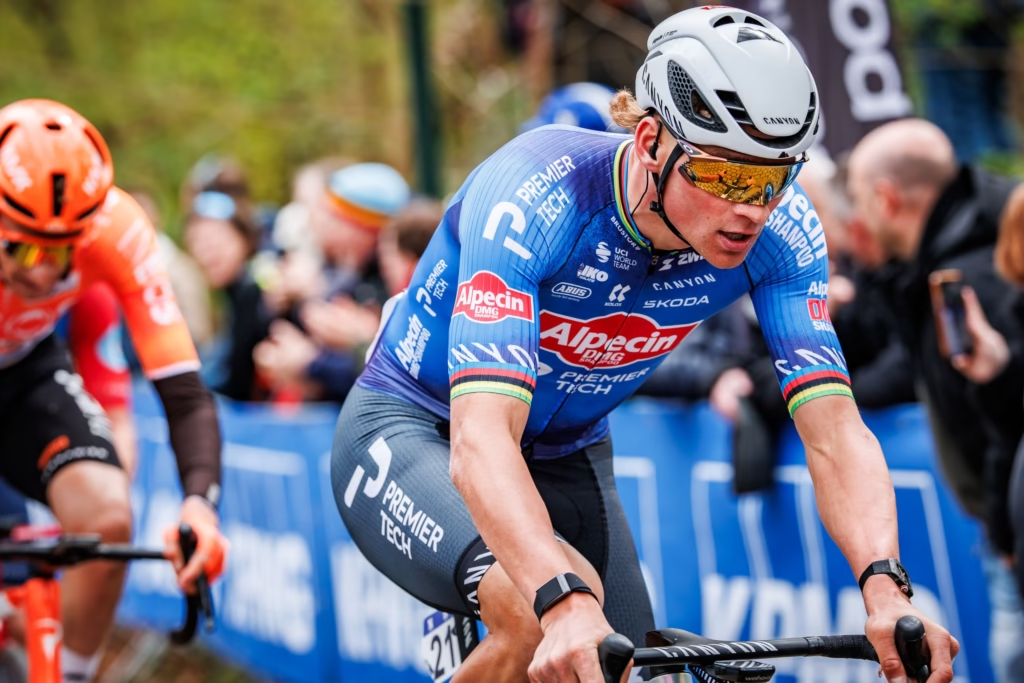 Photo Credit: Getty
What kind of rider can win in Sondrio?
The stage looks best suited to a punchy all-rounder rather than a pure climber or a pure sprinter. The winner needs to handle repeated climbs, stay near the front through the final steep sections, and still have either a sprint from a reduced group or the power to go clear late.
That brings several rider types into play. A classics-style rider could survive the climbing and win from a small group. A GC contender could take the stage if the final climbs are ridden hard enough to reduce the front to the overall favourites. A late attacker could also profit if the biggest teams hesitate, especially with nobody wanting to carry the full burden of yellow too early.
The finish should not suit a conventional bunch sprint. Alpecin-Premier Tech may have sprint strength on the start list, but the route is awkward for a full lead-out. Jasper Philipsen or Kaden Groves would need the climbs to be controlled rather than explosive. Mathieu van der Poel, by contrast, looks much more naturally suited to the stage shape.
The best tactical position may belong to riders who are dangerous enough to be watched, but not so central to the overall that they force an immediate full chase. Marc Hirschi, Romain Grégoire, Thibau Nys and Van der Poel all sit somewhere in that space.
Tadej Pogačar – UAE Team Emirates-XRG
Tadej Pogačar is the obvious favourite for the overall race, and stage 1 gives him an immediate opportunity if he wants to take control. The Sondrio route suits him well: hilly, selective, technical enough to reward positioning, and hard enough in the finale to remove many faster finishers.
The main question is intent. Pogačar does not need to win on the opening day. With the Aarburg time trial and Villars-sur-Ollon mountain stage still to come, he has obvious later chances to take time. But if the final climbs create a natural selection, he is unlikely to ignore the opportunity. A reduced group containing Pogačar is usually a problem for everyone else.
UAE Team Emirates-XRG have the strength to ride the stage aggressively if they choose. Brandon McNulty, Felix Grossschartner, Marc Soler, Mikkel Bjerg, Nils Politt and Domen Novak give the team control across different terrain. They can keep the race together, put pressure on late, or simply protect Pogačar until others show their hand.
The risk for rivals is that a stage like this does not require Pogačar to launch a huge attack. A short acceleration on one of the steep climbs, a small gap over the top, or a reduced sprint from a group of favourites could already put him in yellow. If UAE want the race early, Sondrio gives them the terrain to do it.
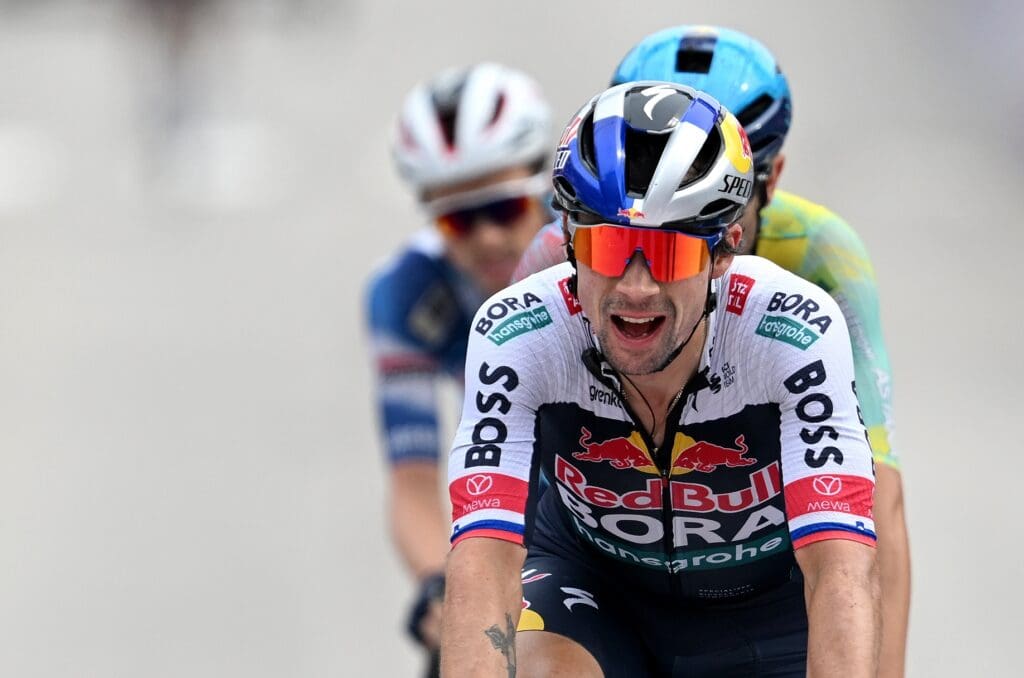 Photo Credit: Getty
Primož Roglič – Red Bull-BORA-hansgrohe
Primož Roglič also has a strong case on stage 1, even if the final time trial and mountain stage may be more important to his overall hopes. A short, steep, selective finale is exactly the kind of environment where Roglič has built so much of his stage-racing reputation.
He does not need a long climb to hurt rivals. He needs positioning, timing and a final ramp where others hesitate. The two steep climbs in the finale could give him that kind of opening, especially if the race is reduced but not fully broken apart.
Red Bull-BORA-hansgrohe have Aleksandr Vlasov, Finn Fisher-Black, Giovanni Aleotti, Alexander Hajek, Emil Herzog and Frederik Wandahl around him, giving the team enough climbing support to keep Roglič protected. They may not need to control the whole stage. Their priority should be getting Roglič into the final 20km near the front and out of trouble.
The stage-winning question is whether he wants the yellow jersey immediately. Taking it on day one would bring responsibility, but Roglič is rarely passive when a stage suits him. If the finale comes down to a small group of favourites, he is one of the riders best equipped to finish it.
Mathieu van der Poel – Alpecin-Premier Tech
Mathieu van der Poel may be the most interesting stage 1 contender because the route sits close to his ideal Tour de Suisse role. He is unlikely to be a serious overall contender once the time trial and final mountain stage arrive, but Sondrio gives him a real chance to win early and shape the race.
The final climbs should be hard enough to remove many sprinters, but not necessarily hard enough to remove Van der Poel if he is in strong condition. That is the sweet spot. If the group is reduced to classics riders, puncheurs and a few GC names, his finishing speed becomes a major weapon.
Alpecin-Premier Tech also have sprint options, but this is not the obvious stage for a pure lead-out. Van der Poel gives them a better tactical bridge between aggression and speed. He can follow attacks, make his own move, or wait for a reduced sprint if the group comes back together.
The difficulty is that everyone knows how dangerous he is. If Van der Poel attacks late, he will not get much freedom. His best chance may be a hard but controlled finale where he survives with a small front group and uses his speed rather than asking the peloton to let him go.
Tom Pidcock – Pinarello-Q36.5 Pro Cycling Team
Tom Pidcock should like this kind of opening stage. It is not a pure mountain test, but it is exactly the sort of technical, hilly, uneven day where he can use more than one skill set. He can climb sharply, descend well, position himself in small groups and race aggressively when the road becomes awkward.
For Pidcock, stage 1 offers both stage-winning potential and GC relevance. He will not want to lose time before the time trial, but he should also see Sondrio as one of his better chances to take time or a stage win before the final mountain stage. If the race becomes tactical, he is one of the riders who can make a move without waiting for the obvious GC moment.
Pinarello-Q36.5 Pro Cycling Team may not be able to control the race like UAE or Red Bull-BORA-hansgrohe, but that may suit Pidcock. He does not need a train. He needs a hard finale, space to follow the right moves and the confidence to commit if the favourites look at each other.
A podium on the stage would not be a surprise. A win is realistic if the front group is reduced but still varied enough that the biggest GC riders do not simply ride away from everyone else.
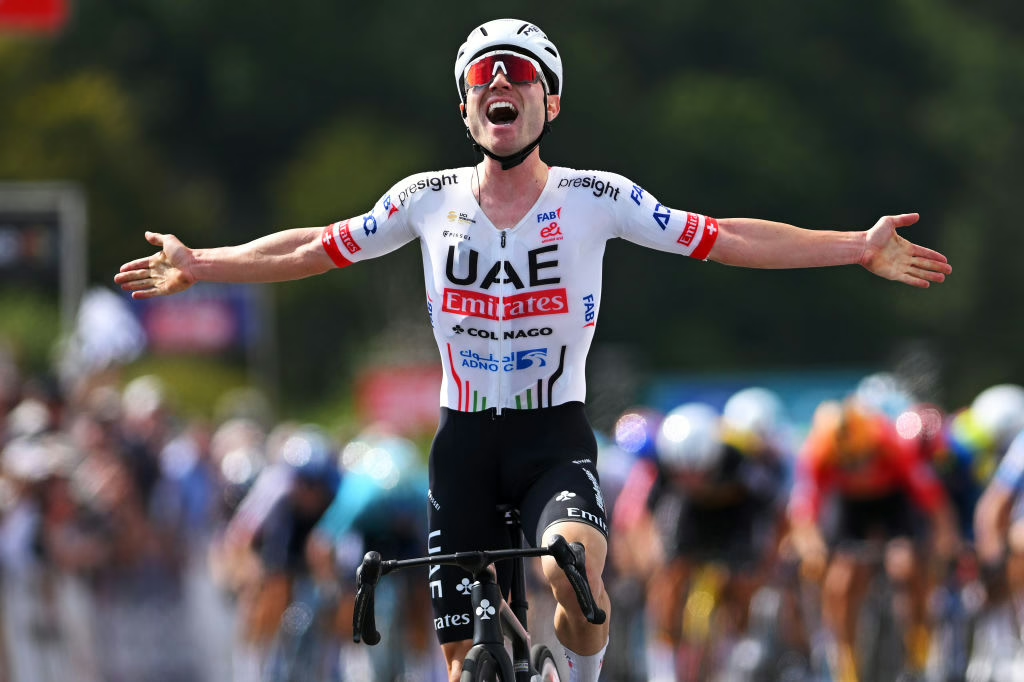 Photo Credit: Getty
Marc Hirschi – Tudor Pro Cycling Team
Marc Hirschi gives the opening stage a strong home-interest angle. Sondrio is not in Switzerland, but this is the Tour de Suisse, and Tudor Pro Cycling Team will want to be visible from the start. Hirschi is their best chance of turning that motivation into a result on stage 1.
The stage profile suits him well. The repeated climbs and steep finale are hard enough to make it selective, but not so hard that pure GC climbing becomes the only currency. Hirschi can handle the final ramps, follow attacks and sprint from a reduced group if he arrives with the right riders.
This is exactly the kind of day where he can make a race difficult to organise. If UAE, Red Bull-BORA-hansgrohe and the GC teams are watching each other, Hirschi can move at a moment when no one wants to chase immediately. If it comes back together, he still has a finish.
For Tudor, stage 1 may be one of the best chances of the week. The later time trial and queen stage are more likely to push the race towards the biggest GC names. Sondrio gives Hirschi a route to victory before the race becomes more controlled.
Romain Grégoire – Groupama-FDJ United
Romain Grégoire is another rider with a strong stage 1 profile. He is punchy, aggressive and capable of winning from a reduced group on hilly terrain. The Sondrio finale looks much closer to his strengths than a pure sprint stage or a long high-mountain finish.
Groupama-FDJ United should not need to carry the race, which could help him. Grégoire can sit behind the bigger GC teams, follow the late selections and use the final climbs as a launchpad. If the race becomes a small-group sprint, he has the speed to be dangerous. If it becomes more tactical, he has the instinct to attack.
The challenge is surviving the most severe version of the stage. If Pogačar or Roglič decide to make the final climbs a GC test, Grégoire may have to fight just to stay in contact. But if the stage is hard without becoming a pure climbing contest, he is one of the most obvious names for the win.
A strong result here would immediately put Groupama-FDJ United into the race. In a five-day edition, early success matters.
Thibau Nys – Lidl-Trek
Thibau Nys is one of the most natural stage 1 picks if the finale comes down to a punchy reduced group. The route has the right ingredients for him: short climbs, repeated accelerations, positioning stress and a finish where explosive power can make the difference.
The question is how hard the final climbs become. Nys can handle difficult terrain, but if the pure GC riders go all-in, the group may become too selective. If the front remains slightly broader, he immediately becomes one of the fastest and most dangerous riders left.
Lidl-Trek also have Mathias Vacek, Andrea Bagioli, Bauke Mollema, Patrick Konrad and Sam Oomen, which gives them plenty of ways to approach the stage. Vacek can be important in positioning and power, Bagioli offers another punchy option, while the climbers can help if the race tilts more heavily towards the GC riders.
For Nys, stage 1 is probably one of the clearest opportunities of the week. The time trial and final mountain stage are unlikely to suit him as much, so Lidl-Trek should be alert to any chance of bringing him into the final kilometres with a group he can beat.
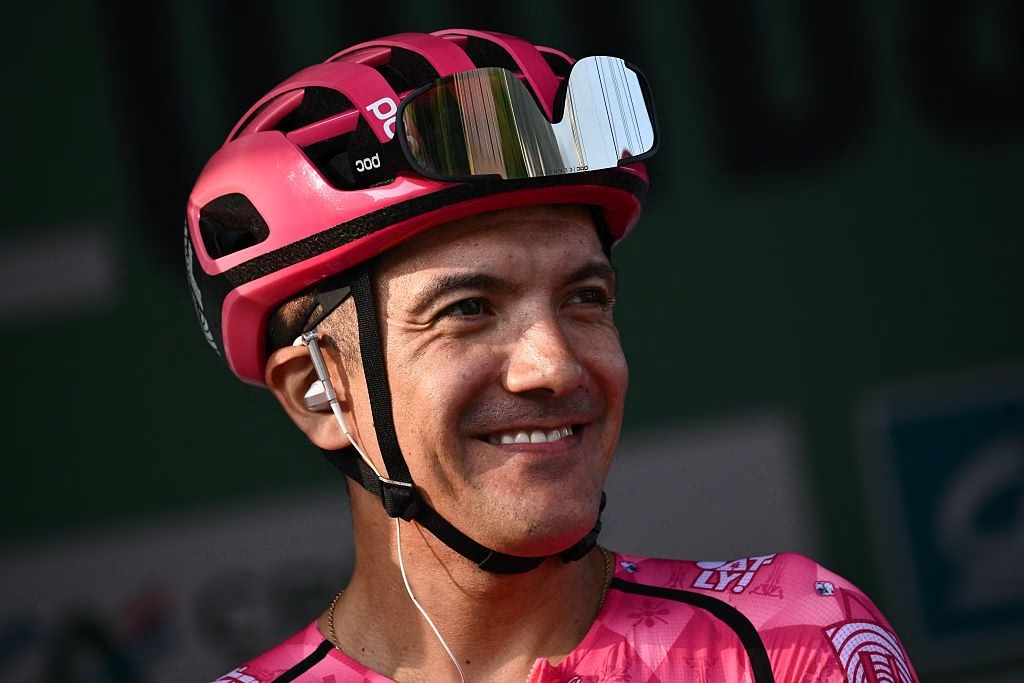 Photo Credit: Getty
Richard Carapaz – EF Education-EasyPost
Richard Carapaz is less obvious as a stage 1 winner than some of the punchier riders, but he is very relevant if the race becomes aggressive. The Sondrio route gives him space to test rivals without waiting for the final mountain stage, and he is exactly the kind of rider who can make a hilly stage more difficult than expected.
EF Education-EasyPost may not want to control the day, but they can animate it. Carapaz could attack over one of the final climbs if the favourites hesitate, especially if the group is already reduced and teams are low on numbers. He is unlikely to beat riders like Van der Poel or Nys in a reduced sprint, so his best route is probably aggression before the finish.
The other question is GC caution. Carapaz will want to stay close overall, and he may not want to spend too much energy before the time trial and final mountain stage. But if the stage opens naturally, he is too instinctive a racer to ignore a chance.
A stage win may require a late solo or a small group without the fastest finishers. A strong GC day simply requires him to be near the front when the race splits.
Antonio Tiberi and Bahrain Victorious
Antonio Tiberi starts the race as one of the most complete GC options outside the biggest names, and stage 1 is the first chance for Bahrain Victorious to show how they want to use their depth. Tiberi can climb, time trial and handle a hard week, but Sondrio is more about alertness than a clean test of GC hierarchy.
His main job is to avoid losing time. A rider like Tiberi will expect the Aarburg time trial and Villars-sur-Ollon mountain stage to matter more for his overall ambitions. But the opening day is dangerous enough that he cannot drift through it.
Bahrain also have Lenny Martínez and Afonso Eulálio, giving them multiple climbing cards. Martínez may be more dangerous if the race becomes very selective, while Eulálio has the chance to continue building on his Giro d’Italia breakthrough. With three riders who can matter on GC, Bahrain do not have to race defensively.
That could make them one of the teams to watch if the favourites hesitate. They can follow with more than one rider, keep pressure on others, and avoid committing everything to a single leader too early.
Other riders to watch
Ilan Van Wilder is an important name because the route as a whole suits complete riders. Stage 1 may not be his best chance to win, but he needs to stay close and avoid splits before the time trial, where he could gain ground. If the finale becomes more attritional than explosive, he could also be closer to the front than expected.
Enric Mas and Nairo Quintana are more likely to think in GC and mountain-stage terms than stage 1 victory, but Movistar cannot afford a passive opening day. Mas in particular needs to stay close before the time trial, while Quintana could be useful if the race becomes harder than expected.
Max Poole should be watched as a young GC option. The stage is awkward for him because it is not a pure climbing day, but it is exactly the sort of day where a developing GC rider can lose time cheaply if positioning goes wrong. Staying close would be a strong start.
Kaden Groves and Jasper Philipsen are only realistic stage options if the climbs are ridden more steadily than expected. The official stage description suggests a bunch sprint is highly unlikely, but Alpecin-Premier Tech may still have a role if the final group is bigger than anticipated.
-
 Photo Credit: A.S.O./Gaëtan Flamme
Race tactics
The first part of the stage should be about the breakaway and control. Teams without clear GC options will know that the opening day may be one of their best chances, especially if the favourites are reluctant to take responsibility too early.
The difficulty is that the first yellow jersey is available, and the stage is too hard for the peloton to be careless. A strong breakaway with the wrong composition could become difficult to manage once the route turns into constant climbing and descending. UAE Team Emirates-XRG, Red Bull-BORA-hansgrohe, Alpecin-Premier Tech, Tudor and Lidl-Trek all have reasons to keep the gap under control.
The final climbs should decide whether the stage goes to a GC favourite, a puncheur or a reduced sprint. If UAE lift the pace for Pogačar, the group may shrink quickly. If Red Bull-BORA-hansgrohe keep Roglič close but do not fully commit, other riders may try to anticipate. If the GC favourites watch each other, stage hunters like Hirschi, Grégoire, Nys, Van der Poel or Pidcock could use the hesitation.
The first yellow jersey also brings a tactical cost. Some teams may want the stage without wanting full race responsibility from day one. That tension could make the final 20km more open than the route profile alone suggests.
Prediction
Stage 1 looks too hard for a full bunch sprint and too punchy to be left entirely to the pure climbers. That puts Mathieu van der Poel in a strong position if he survives the final steep climbs with a reduced group. He has the finishing speed, strength and tactical range to win from exactly this kind of messy hilly opener.
Pogačar is the most dangerous GC-based option. If UAE Team Emirates-XRG decide to take the race by the throat immediately, he can win the stage and take yellow. Roglič is similarly dangerous if the finale becomes a short, sharp fight between the strongest overall contenders.
Hirschi, Grégoire, Nys and Pidcock all have realistic stage-winning profiles if the GC riders do not fully commit. That group may define the stage: strong enough to survive the climbs, fast enough to win from a reduced selection, and dangerous enough to punish a moment of hesitation.
The most likely finish is a reduced group, not a full peloton and not a pure mountain selection. If Van der Poel is still there after the final steep climb, he is the pick.

