
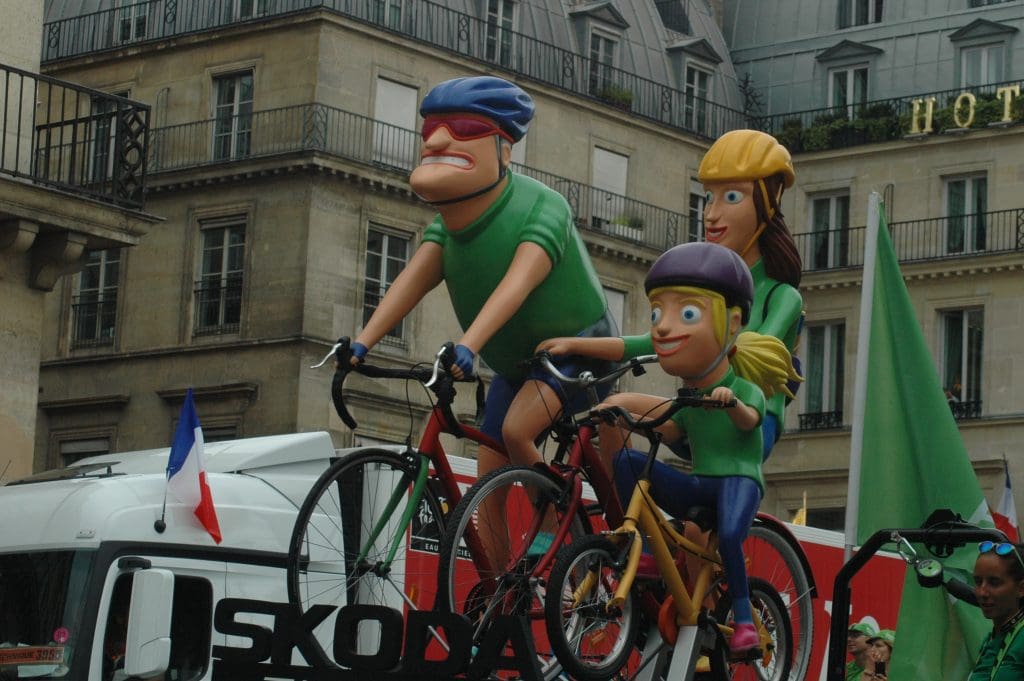
For new fans, the Tour de France can look like a bike race with a long wait attached to it. You find a place on the roadside, settle in, watch the road close, hear helicopters in the distance, then the peloton flashes past in a blur of colour, noise and speed.
But that is only part of the day.
Long before the riders arrive, the Tour de France publicity caravan turns the roadside into something closer to a moving festival. It is loud, strange, deeply commercial and completely part of the Tour experience. For many spectators, especially families and first-time visitors, it is the moment when the long wait starts to feel like an event.
At the 2026 Tour de France, which begins in Barcelona before heading through France towards Paris, the caravan will again be part of the spectacle. The full race shape is covered in our Tour de France 2026 full route guide, but this guide focuses on the part of the day that arrives before the race itself.
New fans do not need to understand every sponsor, every tradition or every logistical detail. They just need to know what the caravan is, when to expect it and how to enjoy it safely.
 Photo Credit: A.S.O./Aurélien Vialatte
Quick answer: what is the Tour de France caravan?
The Tour de France caravan is a procession of branded vehicles, floats and sponsor cars that travels along the race route before the riders. It is part advert, part parade and part warm-up act. Music plays, performers wave, brands show off their products and small promotional items are handed out to spectators along the roadside.
It normally passes well before the peloton, so fans who only arrive just before the riders are likely to miss it. For new spectators, that is a mistake. The caravan is one of the reasons watching the Tour in person feels different from watching it on television.
For the wider roadside experience, our guide to what it is like to watch the Tour de France on the roadside explains how the race builds from road closures and team cars into the sudden arrival of the peloton.
Why the caravan matters
The Tour de France is not just a race. It is a travelling event that takes over towns, villages, climbs, roundabouts, city centres and mountain roads. The caravan helps create that sense of occasion.
For riders, the day is about tactics, positioning, suffering and survival. For roadside fans, the day is also about waiting. The caravan fills that gap. It gives the crowd something to react to before the race convoy arrives. It also creates a shared atmosphere between people who may have spent hours guarding a spot on the same strip of pavement or grass verge.
That is especially important on flat stages, where the peloton may pass very quickly. A sprint stage can involve several hours of build-up for a few seconds of racing at full speed. The caravan makes the whole day feel worthwhile rather than just the final rush.
 Photo Credit: A.S.O./Aurélien Vialatte
A brief history of the Tour caravan
The caravan is not a modern add-on. It goes back to the early commercial history of the Tour.
In 1930, the race shifted away from trade teams and introduced national teams. That change created a financial problem because the organiser had to find other ways to support the race structure. The publicity caravan became part of the answer. Brands paid for visibility, the Tour gained revenue, and spectators got a show before the riders.
That basic idea has survived for nearly a century. The vehicles are more polished now, the safety operation is tighter, and the brands are different, but the principle is recognisable: the Tour sells attention, and the roadside crowd becomes part of the spectacle.
It is one of the reasons the Tour feels so deeply French even when it starts abroad. The caravan is not just marketing. It is part of the race’s public theatre.
What to expect at the 2026 Tour de France
The 2026 Tour starts in Barcelona on Saturday 4 July with a team time trial. That means the opening day will feel different from a standard road stage. Instead of one peloton arriving together, teams will start separately and race against the clock.
For new fans, that distinction matters. Time trial days can still have atmosphere, especially at the start, finish and popular roadside points, but the rhythm is different. The caravan schedule may also feel different compared with a normal road stage, so checking local stage information is important.
The opening weekend is covered in more detail in our Tour de France 2026 in Catalonia fan guide and our dedicated guide on how to visit the Tour de France 2026 Grand Départ in Barcelona.
Stage 1 will also be a useful test case for new spectators because the race takes place on city roads, with a route that starts by the Barcelona seafront and finishes around Montjuïc. Our Tour de France 2026 stage 1 preview explains the sporting side of that opening team time trial.
From stage 2 onwards, the race moves into more familiar Tour territory: road stages, climbs, sprint days, mountain tests and the long journey towards Paris. On those conventional stages, the caravan becomes easier to understand. It comes through first, the atmosphere builds, official race vehicles follow, then the riders arrive.
The important point is simple: do not plan your day around the peloton alone. Plan it around the whole Tour procession.
 Photo Credit: A.S.O./Aurélien Vialatte
How long before the riders does the caravan arrive?
As a broad rule, the caravan usually passes well before the riders. Spectators often talk about it arriving around one and a half to two hours before the peloton, but the exact timing can vary by stage, road layout, policing, weather, climbs and local organisation.
The best approach is to use the official stage timetable when it is available. The Tour publishes detailed route timings for each stage, including when the caravan and race are expected to pass key points. Local host cities and regional authorities may also publish road closure and spectator information.
For mountain stages, arrive earlier than you think you need to. Roads may close well before the caravan passes, and the best spots on famous climbs can be taken hours in advance. For city stages, access can depend on barriers, pedestrian crossings and public transport changes.
If you are travelling with children, older relatives or anyone who needs shade, food or toilets, timing matters even more. The caravan is fun, but the Tour is still a long roadside day.
What does the caravan actually look like?
Expect noise first. Music, horns, amplified voices and crowd reaction all announce that something is coming.
Then come the vehicles. Some are sponsor cars. Others are elaborate floats shaped around products, mascots or brand themes. There may be giant objects mounted on vehicles, performers waving from raised platforms, dancers, presenters, motorbikes and safety cars. Some vehicles move slowly enough for people to absorb the show. Others are gone quickly.
It can feel chaotic at first, but it is carefully controlled. The caravan has its own order, safety vehicles and staff. The whole thing moves as part of the broader race operation, ahead of the actual sporting convoy.
For new fans, the best way to treat it is as a parade rather than a pre-race advert. Yes, it is commercial. Very commercial. But that is also the point. The absurdity is part of the charm.
 Photo Credit: A.S.O./Aurélien Vialatte
What freebies can you get?
The caravan is famous for small giveaways. These can include hats, keyrings, sweets, bags, wristbands, flags, samples, stickers or other branded items. The exact mix changes by year and by sponsor, and there is no guarantee of what you will receive.
The trick is not to become too serious about it. The freebies are part of the fun, not the main reason to be there. Adults diving for a packet of sweets can be funny, but it can also become unsafe if people step into the road or push past children.
The best rule is simple: keep your place, keep your hands clear of the road and do not chase anything into the route. If something lands near you, great. If it does not, the race is still coming.
How to watch safely
The caravan is fun because it is close. That closeness is also why spectators need to behave sensibly.
Stay behind barriers where they are provided. On open roads, stay well back from the carriageway. Do not step forward for freebies. Do not lean into the road for photos. Keep children beside you rather than in front of you. If you are on a climb, remember that riders, vehicles and motorbikes all need space, especially where the road narrows.
Dogs should be kept secure and away from the road. Loose pets are dangerous for riders, vehicles and spectators. The same applies to bags, flags, selfie sticks and camping chairs. Anything that can fall or swing into the route is a problem.
The Tour is relaxed in atmosphere but serious in movement. Once the race convoy arrives, everything happens quickly. That speed is easy to underestimate, especially for new fans. Our guide to how fast Tour de France riders go gives useful context for why the roadside needs to be treated with respect.
 Photo Credit: A.S.O./Aurélien Vialatte
Best places to watch the caravan
The best place depends on the kind of day you want.
Town centres are lively and easier for food, toilets and transport. They are good for families and new fans, though they can be crowded. Starts and finishes offer more infrastructure, big screens and official activity, but access may be tighter and security more controlled.
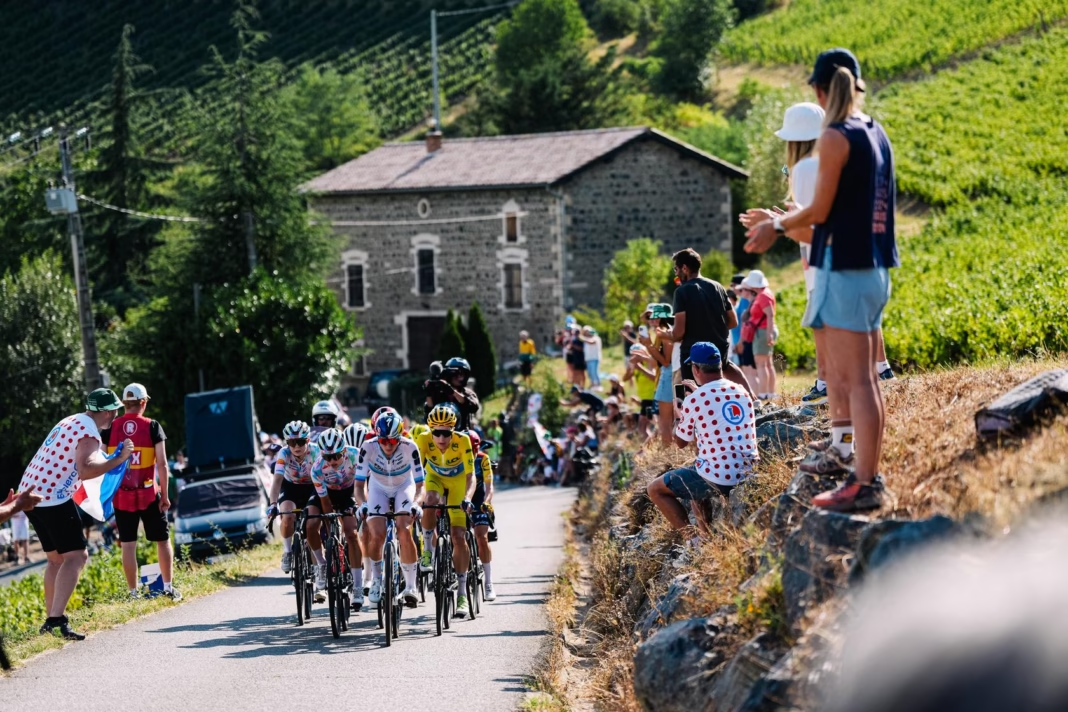
Rural roads feel more traditional. You can get a stronger sense of the Tour passing through the landscape, and the caravan can feel delightfully surreal when giant branded floats roll past fields, vineyards or mountain villages.
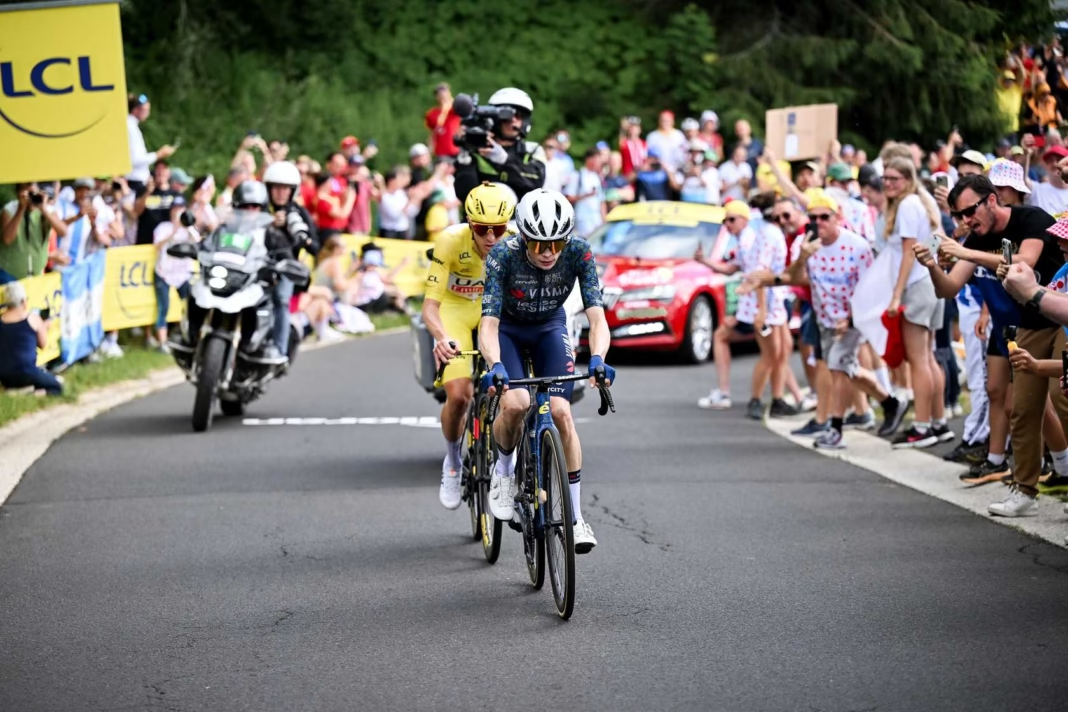
Climbs are the most iconic. They are also the most demanding. You may need to arrive very early, walk or ride in after road closures, carry food and water, and be ready for heat, cold, wind or rain. The caravan on a climb can be brilliant because the vehicles pass more slowly, but famous climbs can become very crowded.
For first-time spectators, a smaller town on the route can be the best compromise. There is atmosphere, access and a decent chance to see the caravan without the pressure of the biggest mountain crowds.
What to bring
A good Tour roadside day is easier if you prepare properly.
Bring water, food, sun cream, a hat, a light waterproof, comfortable shoes and a charged phone. A small radio or live-tracking app can help you understand where the race is once the caravan has gone. If you are travelling with children, bring snacks and something to keep them occupied during the quieter parts of the wait.
Do not rely on shops being open or accessible once roads are closed. In small villages, the Tour can overwhelm normal services. In cities, barriers may make a short walk much longer than expected.
A folding stool or picnic blanket can make the wait easier, but keep anything bulky well away from the roadside. The aim is to be comfortable without getting in the way.
 Photo Credit: A.S.O./Romain Laurent
What not to do
Do not arrive late and expect to reach the front. Do not drive towards the route once closures are in place. Do not assume you can cross the road whenever you like. Do not stand on traffic islands, narrow bends or the inside of corners unless the area is clearly open to spectators.
Do not run after caravan giveaways. Do not push children forward to collect items. Do not wave flags into the road. Do not take selfies with your back to the direction of the race convoy.
Most of all, do not underestimate the speed of the race. The caravan is slow enough to enjoy. The peloton is not. Even on a climb, the riders and motorbikes arrive with much less margin than people expect.
Is the caravan worth seeing?
Yes, especially for new fans.
If you already follow cycling closely, the race itself may be the main draw. You may care more about the breakaway composition, GC positioning, crosswind risk or sprint lead-out. Our beginner’s guide to the men’s Tour de France 2026 explains the sporting structure of the race, from stages and jerseys to how the overall contest works.
But the caravan explains why the Tour is bigger than a normal bike race.
It turns waiting into participation. It makes children feel part of the event. It gives casual spectators something to remember before the riders arrive. It also shows the Tour’s unusual balance: elite sport on one hand, travelling popular festival on the other.
That combination is why the Tour can pass through a village for a few minutes and still dominate the entire day.
Tour de France 2026 caravan tips for new fans
| Question | Simple answer |
|---|---|
| Does the caravan come before the riders? | Yes, it passes ahead of the race convoy and peloton |
| Is it free to watch? | Yes, roadside viewing is generally free, though access depends on road closures and local rules |
| Can you get free items? | Often, yes, but giveaways are not guaranteed |
| Is it suitable for children? | Yes, if you choose a safe viewing spot and keep them away from the road |
| Should I arrive early? | Definitely, especially on climbs, in towns and near starts or finishes |
| Is it the same on every stage? | No, timing and atmosphere can vary by stage type and location |
| Should I check official timings? | Yes, always use the official stage timetable and local road closure information |
-
 Photo Credit: A.S.O./Billy Ceusters
How it fits into the rhythm of the Tour
The caravan is one part of a much larger moving system. Once it has passed, the road does not simply go quiet until the riders arrive. There are police motorbikes, official cars, race vehicles, team cars, neutral service, media bikes and other elements of the convoy.
That is why watching in person gives a different sense of the Tour. On television, the peloton is the focus. At the roadside, you see the race being assembled. The caravan is the most colourful part of that process, but it sits inside a wider structure that runs stage after stage for three weeks.
The 2026 race will also have two rest days, which can affect how fans plan a trip around the route. Our guide to Tour de France 2026 rest days explains when those pauses happen and how they divide the race into clear blocks.
For fans watching from home before or after a roadside visit, our Tour de France 2026 live stream guide by country covers the main viewing routes.
The final word
The Tour de France caravan is ridiculous, commercial, noisy and occasionally baffling. It is also one of the most enjoyable parts of watching the race in person.
For new fans at the 2026 Tour, the key is to see the day as more than the moment when the riders pass. The caravan, the waiting crowd, the closed roads, the police motorbikes, the helicopters and the sudden arrival of the peloton all belong to the same experience.
Watch it properly and the Tour starts long before the yellow jersey appears. That is the secret of the caravan. It turns a roadside wait into a Tour de France memory.

