
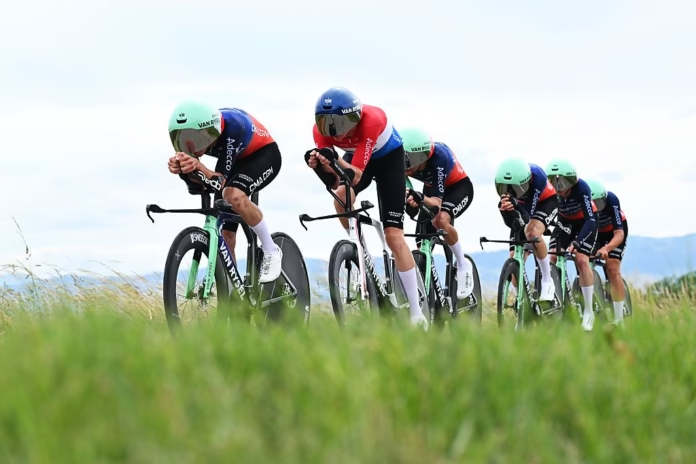
The Tour de France 2026 begins with something rare, awkward and immediately important: a team time-trial through Barcelona.
Stage 1 is not a gentle road stage, a sprint opener or a short prologue designed only to place the first yellow jersey. It is a 19.6km team time-trial from Barcelona to Barcelona, starting the race with a collective test that should create small but meaningful general classification gaps before the peloton has even left Catalonia.
That makes this one of the most important opening stages in recent Tour history. The distance is short enough to avoid deciding the race, but the format is unusual enough to shape the first week. Teams with time-trial depth, clear leadership and a strong final rider should gain immediately. Teams that lose structure, mistime the last climb or leave their GC leader exposed could be chasing from day one.
The route starts by the Barcelona seafront, uses fast city roads and then moves towards the more selective final section around Montjuïc. The finishing climb to the Côte du Stade Olympique de Montjuïc gives the stage a sting that a normal flat team time-trial would not have. It should reward power, but not only power. Teams have to be fast, organised and tactically clear about who they are trying to put across the line first.
For the wider race picture, see our Tour de France 2026 full route guide, Tour de France 2026 Grand Départ guide and Tour de France 2026 route analysis.
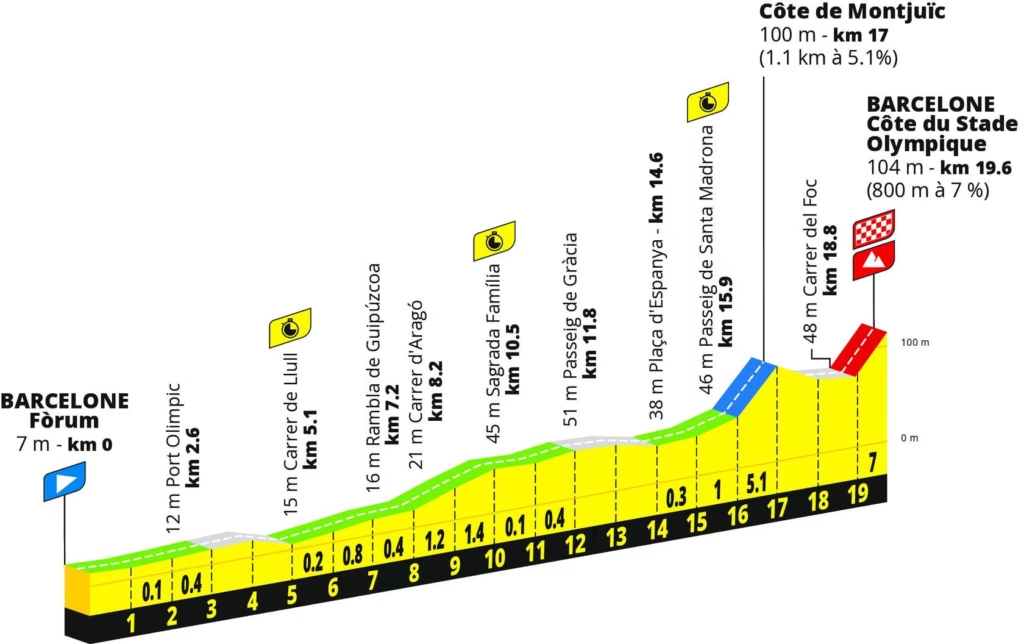
Tour de France 2026 stage 1 route
| Detail | Stage 1 |
|---|---|
| Date | Saturday 4 July 2026 |
| Start | Barcelona |
| Finish | Barcelona |
| Distance | 19.6km |
| Stage type | Team time-trial |
| Elevation gain | Around 200m |
| Key climb | Côte du Stade Olympique de Montjuïc |
| Climb detail | 0.8km at 7% |
| First yellow jersey | Decided by team time-trial result and individual finishing times |
Stage 1 is short, but it is not simple. The opening part should allow teams to build speed and settle into formation. The seafront and wider city roads will suit the strongest engines, especially teams with riders who can hold high speed in an aerodynamic line without disrupting the rhythm.
The middle section through the city should increase the pressure. Urban team time-trials are rarely as smooth as open-road efforts. Corners, road furniture, changes in width and small changes in gradient can all disturb a line. The best teams will look calm through that section. The weaker ones may already start losing shape.
The final kilometres towards Montjuïc are where the stage becomes more than a straight power test. The climb to the Olympic Stadium is short, but steep enough to change the order of riders and expose anyone already on the limit. A team that goes too hard early may pay for it here. A team that saves too much may leave seconds on the road.
For more on the local viewing and route setting, see best places to watch the Tour de France 2026 in Barcelona and cycling in Barcelona: climbs, roads and Tour de France atmosphere.
Why the stage 1 format matters
This is not a traditional team time-trial in the old Tour sense.
The stage classification will be based on the first rider from each team to cross the line. Individual general classification times will also be recorded separately. That changes the logic of the stage. In a classic TTT, teams usually have to finish with a set number of riders together, often around the fourth or fifth rider. That forces the strongest riders to keep enough teammates with them.
In Barcelona, the final section could become more like a team-assisted launch for the chosen rider. A squad may use its heavier rouleurs early, then leave its GC leader or strongest finisher to climb the final section as quickly as possible. That makes the stage tactically different from a normal TTT and could produce more variation inside teams.
The format also means the first yellow jersey may go to a GC rider rather than a time-trial specialist or sprinter. Tadej Pogačar, Jonas Vingegaard, Remco Evenepoel, Juan Ayuso, Carlos Rodríguez and other contenders will not be waiting for the mountains to start racing. Their Tour begins on the opening ramp in Barcelona.
For more on the rule change and its consequences, see Tour de France 2026 team time-trial explained and how the Stage 1 team time-trial could change the Tour de France 2026.
What kind of team can win stage 1?
The winning team needs four things: raw power, technical discipline, a clear leader and enough climbing strength for the final section.
A pure flat-road engine is useful, but not enough. The route is only 19.6km, so there is no time to recover from mistakes. A poor corner, a missed pull, a rider losing the wheel or a badly judged final climb can cost the stage. The best teams will need to ride as a unit for most of the course, then shift smoothly into the final launch towards Montjuïc.
The new timing format should reward teams that know exactly who they want to finish first. For GC teams, that will usually be the protected leader. For teams without a yellow jersey candidate, it may be a powerful time-triallist or punchy rider who can finish strongly uphill.
That creates different tactical choices. A GC team may not care about the stage win if it gets its leader safely into a strong position. A team without GC pressure may be more willing to burn riders early and fully target the stage. A team with multiple protected names must avoid internal confusion.
This is why the opening stage could reveal more than time gaps. It will show which teams are organised, which leaders are protected, and which squads have built their Tour around the Barcelona start.
For the full squad picture, see Tour de France 2026 team-by-team guide and full start list for Tour de France 2026.
Stage 1 favourites
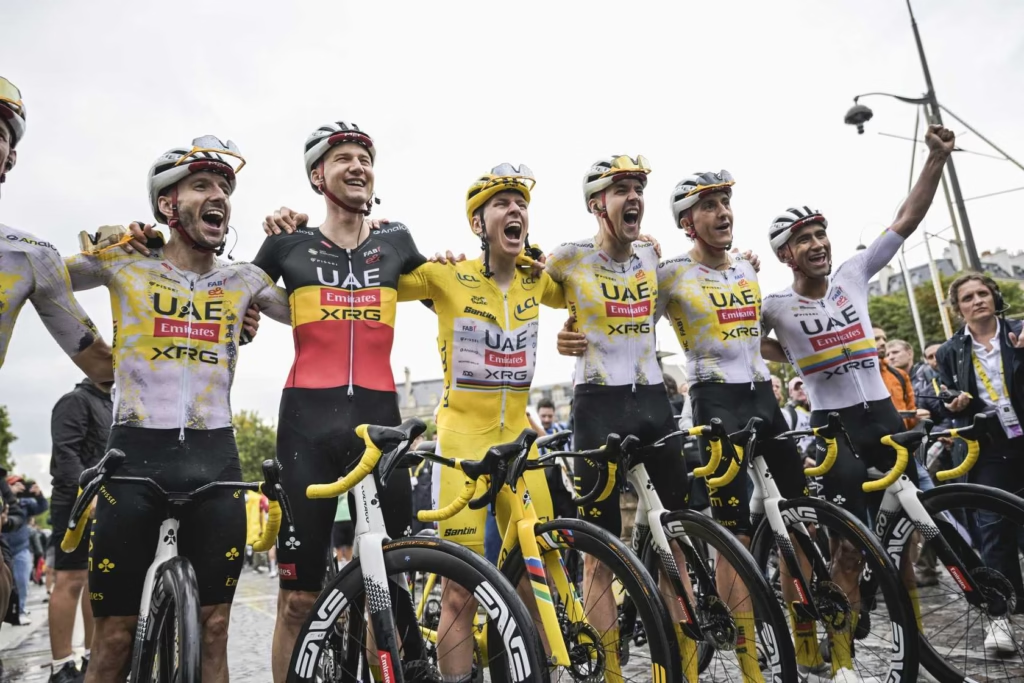
UAE Team Emirates-XRG look like the obvious reference point. Tadej Pogačar gives them the strongest possible final rider, while Nils Politt, Brandon McNulty, Tim Wellens, Adam Yates, Isaac del Toro, Felix Großschartner and Florian Vermeersch give the team depth across power and climbing. This route should suit them well because it is not just flat, and the final climb gives Pogačar a chance to finish the work.
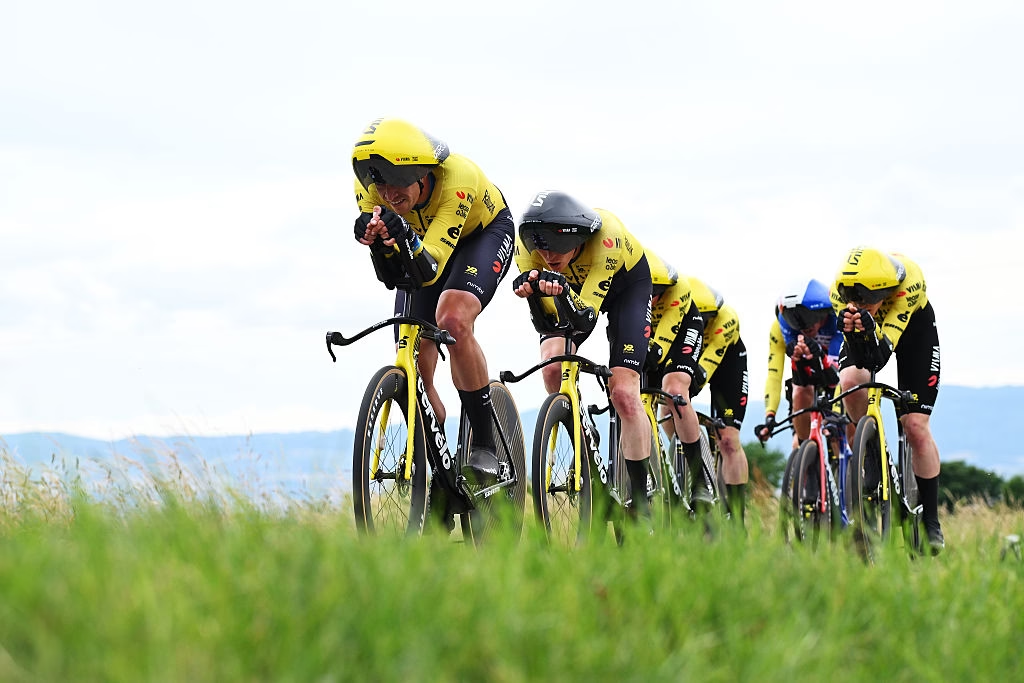
Team Visma | Lease a Bike should also be strong. Edoardo Affini and Victor Campenaerts give them serious time-trial power, while Matteo Jorgenson, Sepp Kuss, Bruno Armirail and Jonas Vingegaard bring the climbing and GC structure. Their question is whether they can match UAE’s acceleration in the final kilometre if the stage becomes leader-focused.
Red Bull-BORA-hansgrohe may be the most dangerous challenger. Remco Evenepoel is one of the best time-trial riders in the world and should relish a format where individual finishing strength matters. Mattia Cattaneo, Jan Tratnik, Tim van Dijke, Nico Denz, Jai Hindley, Florian Lipowitz and Maxim Van Gils give the team enough strength to make this a real target. If Evenepoel is delivered well into the final climb, he could take yellow.
Netcompany INEOS have a strong case because of Filippo Ganna. If the team can keep Carlos Rodríguez and Kévin Vauquelin well positioned while using Ganna’s power early, they should be competitive. The issue may be depth, depending on the final numbers and how they balance stage ambition with GC protection.
Lidl-Trek are another team to watch. Juan Ayuso, Mads Pedersen, Mathias Vacek, Toms Skujiņš, Quinn Simmons, Mattias Skjelmose and Carlos Verona give them a strong mix of power and all-round quality. They may not be the favourites, but they have enough riders suited to this kind of effort to challenge for the top five.
For time-trial context, see best time-triallists at the Tour de France 2026 and A history of team time trials at the Tour de France.
Teams with the most to lose
The biggest losers could be GC teams that are short on power or unclear about leadership.
A weak opening TTT does not end the Tour, but it can change the race immediately. Losing 20 or 30 seconds on stage 1 forces a contender to chase time in the Pyrenees, the stage 16 individual time-trial or the Alps. Against Pogačar, Vingegaard and Evenepoel, that is not a comfortable place to be.
Teams built around pure climbers may find the route awkward. The final climb helps them slightly, but the opening part still demands speed and discipline. If a squad loses two or three riders too early, the final kilometres could become damage limitation.
There is also a risk for teams with multiple ambitions. A squad chasing the stage win, protecting a GC rider and trying to give a punchy teammate a chance at yellow could end up doing none of those things perfectly. The best teams will make one plan and commit to it.
Stage 1 should not create minute-level gaps among the favourites, but the Tour does not need that for the stage to matter. Ten seconds here, fifteen there, and a weak team performance can become tactically important once the race reaches the mountains.
For the wider yellow jersey picture, see Tour de France 2026 contenders preview and Tour de France 2026 GC favourites ranked.
GC implications
The biggest GC question is not simply who wins the stage. It is which favourite finishes the day with the best individual time.
Pogačar will want to start the race by gaining time rather than defending. Vingegaard will want to stay close enough that the final Alpine block remains his real opportunity. Evenepoel will see this as a chance to make the Tour uncomfortable for both of them from day one.
The stage 1 gaps should also matter for riders just below the top tier. Ayuso, Rodríguez, Jorgenson, Lipowitz, Del Toro, Ben O’Connor, Richard Carapaz, Antonio Tiberi and Cian Uijtdebroeks all need to avoid early losses. A rider targeting the podium cannot afford to give away time before the first road stage.
The format also makes teammates more interesting. Matteo Jorgenson, Isaac del Toro, Florian Lipowitz and Adam Yates could all finish high on the stage if their teams use them late. That may create early GC positions that become tactically useful later.
The first yellow jersey is valuable, but not as valuable as a clean GC position. If a team has to choose between a stage win and protecting its Tour leader, the leader should come first. But on this route, the strongest teams may be able to do both.
For more on how the race lead works, see how the Tour de France general classification works and Tour de France 2026 jerseys explained.
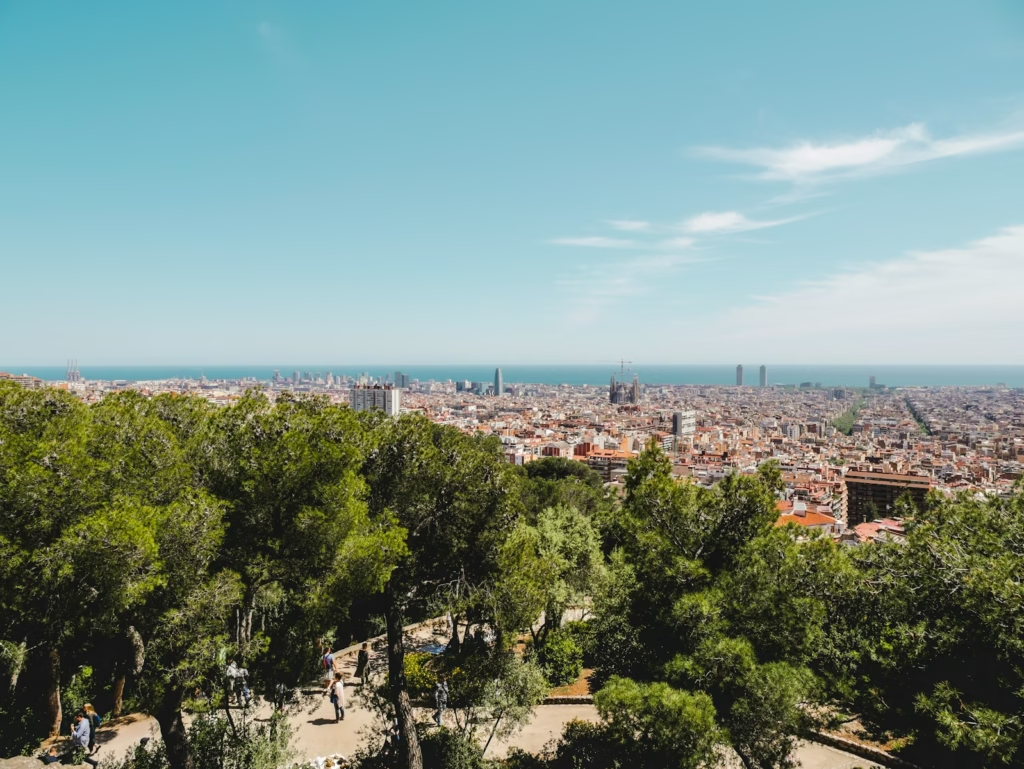
Where the stage could be won
The stage can be lost early, but it is likely to be won late.
The opening kilometres along the seafront should be about settling into the line, building speed and avoiding panic. Teams that start raggedly may never recover. On a stage this short, there is no long middle section where mistakes can be fully repaired.
The city section near the Sagrada Família should test handling and discipline at speed. Teams need to stay smooth, avoid over-braking and keep the leader sheltered without letting the line become too cautious. This is where time can leak away without anything dramatic happening.
The decisive section should be the run towards Montjuïc and the climb to the Olympic Stadium. That is where the strongest teams can change pace, shed riders who have done their work and launch the protected finisher. The final 800 metres at 7% are hard enough to punish a rider who arrives overgeared, isolated or already at the limit.
The best team may not be the one that looks fastest at kilometre five. It may be the one that still has the right rider in the right position at kilometre 19.
For more on the Barcelona terrain, see why Barcelona is hosting the 2026 Tour de France Grand Départ and Tour de France 2026 in Catalonia: what fans need to know.
Riders who could wear yellow
The most likely first yellow jersey candidates are the leading riders from the strongest TTT teams.
Tadej Pogačar is the obvious name if UAE win or go close. The uphill finish suits him, and UAE have the riders to deliver him into the final section. A Pogačar yellow jersey on day one would immediately put pressure on the rest of the race.
Remco Evenepoel may be the most natural rider for this format. If Red Bull-BORA-hansgrohe can keep him sheltered and fast into the final climb, his combination of power and time-trial ability could be ideal. Stage 1 may be one of his best chances to take yellow in the whole Tour.
Jonas Vingegaard is less explosive than Pogačar or Evenepoel in this kind of finish, but Visma are strong enough that he must be considered. If the final is ridden more as a steady high-power effort than a punchy launch, he can be very close.
Filippo Ganna is an interesting outside option if Netcompany INEOS fully target the stage result, but the individual GC implications for Carlos Rodríguez may complicate that. Mads Pedersen could also be a factor if Lidl-Trek ride the final for him rather than Ayuso, though the climb makes it a more complicated ask.
The format creates uncertainty. In a normal TTT, yellow often goes to the first rider across the line from the winning team, but team structure tends to be clearer. Here, the final kilometres could turn into a deliberate selection inside the team.
For more on the opening jersey battle, see how the Stage 1 team time-trial could change the Tour de France 2026.
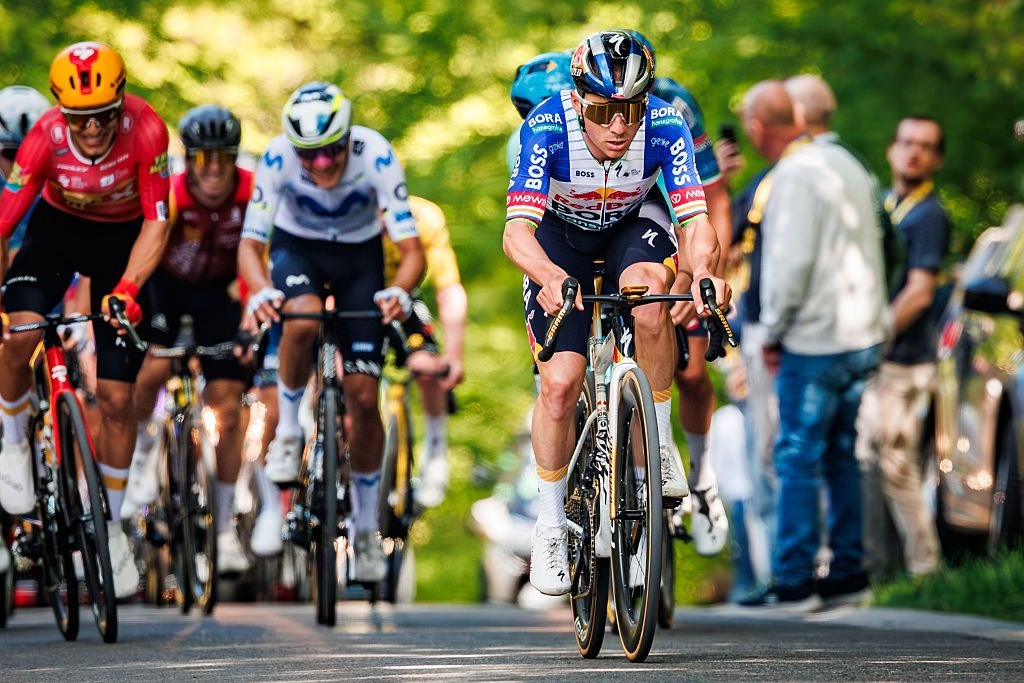
Stage 1 contenders
| Team | Key riders | Why they can win |
|---|---|---|
| UAE Team Emirates-XRG | Tadej Pogačar, Brandon McNulty, Nils Politt, Tim Wellens, Adam Yates, Isaac del Toro | Strongest mix of GC leader, power and climbing depth |
| Red Bull-BORA-hansgrohe | Remco Evenepoel, Mattia Cattaneo, Jan Tratnik, Tim van Dijke, Florian Lipowitz | Evenepoel’s time-trial strength and strong support unit |
| Team Visma | Lease a Bike | Jonas Vingegaard, Edoardo Affini, Victor Campenaerts, Matteo Jorgenson, Sepp Kuss |
| Netcompany INEOS | Filippo Ganna, Carlos Rodríguez, Kévin Vauquelin, Michał Kwiatkowski | Ganna gives them huge power, but GC balance matters |
| Lidl-Trek | Juan Ayuso, Mads Pedersen, Mathias Vacek, Toms Skujiņš, Mattias Skjelmose | Powerful, versatile squad with several finishing options |
| Soudal Quick-Step | Remco-style TTT culture absent, but strong rouleurs | Could challenge for a high placing if the line holds |
| Jayco-AlUla | Ben O’Connor, Luke Plapp, Luke Durbridge, Mauro Schmid | Strong engines, but likely more top-10 than win contender |
UAE and Red Bull-BORA-hansgrohe look like the most convincing stage-win options because their leaders are especially well suited to the final format. Visma may be the best team if the stage is ridden as a pure collective effort, but the first-rider rule may slightly favour Pogačar and Evenepoel.
Netcompany INEOS could be very fast if Ganna is used correctly, while Lidl-Trek have enough depth to surprise. The margins should be tight, but the top teams will know that a poor opening day can leave marks on the entire first week.
-
 Photo Credit: Cor Vos
 -
 Photo Credit: Zac Williams/AusCycling
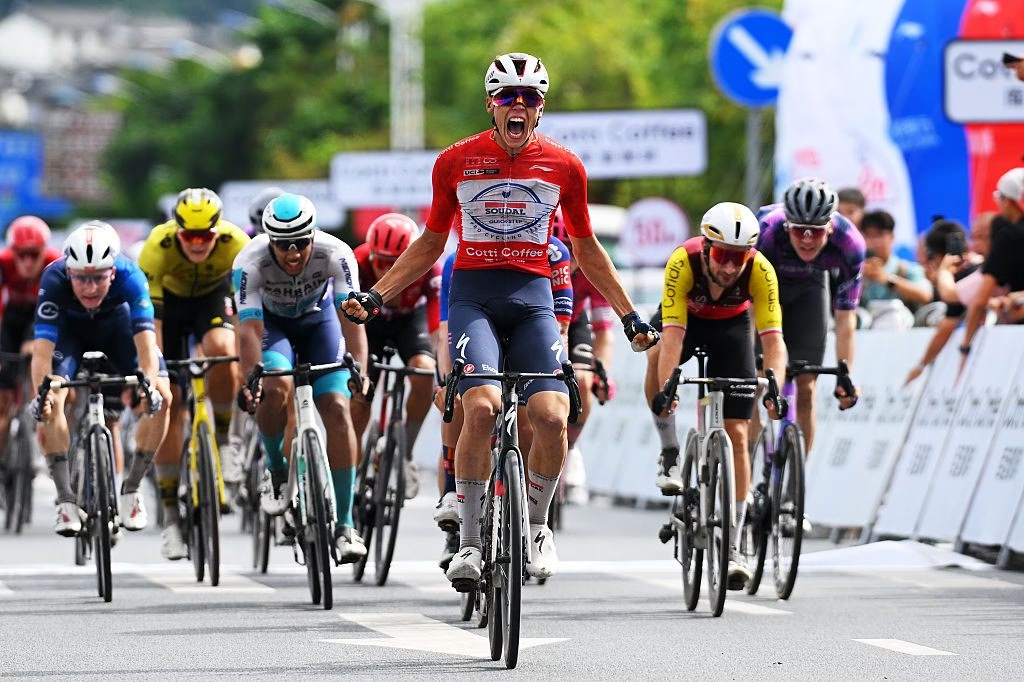
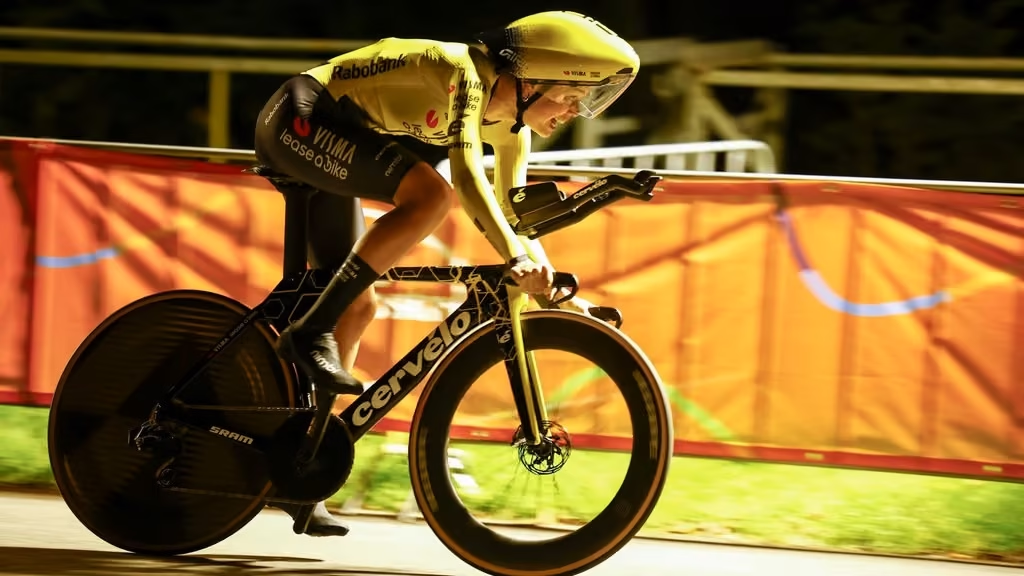
Prediction
UAE Team Emirates-XRG look like the safest pick for stage 1. They have the strongest Tour favourite, enough flat power to handle the opening half, and enough climbing depth to keep the final section under control. Pogačar finishing first for UAE and taking yellow would be the cleanest version of their opening-day plan.
Red Bull-BORA-hansgrohe are the biggest danger. Evenepoel is almost perfectly suited to a TTT format that ends with individual finishing strength, and his team should be strong enough to put him into the final climb with a real chance.
Visma | Lease a Bike should be close, but the final climb may make it harder for them to beat UAE and Red Bull unless their formation is cleaner through the whole stage. Netcompany INEOS and Lidl-Trek look like strong podium or top-five stage candidates.
Stage 1 prediction:
| Position | Team | First rider |
|---|---|---|
| 1 | UAE Team Emirates-XRG | Tadej Pogačar |
| 2 | Red Bull-BORA-hansgrohe | Remco Evenepoel |
| 3 | Team Visma | Lease a Bike | Jonas Vingegaard |
Stage 1 verdict
Tour de France 2026 stage 1 is short, but it should be much more than a ceremonial opener. The Barcelona team time-trial puts GC teams under immediate pressure, gives the first yellow jersey to a rider who can combine team support with individual finishing strength, and ensures the race begins with a tactical test rather than a waiting game.
The revised format makes the stage especially interesting. Teams cannot simply ride an old-style TTT and expect the same outcome. They must decide who they are finishing for, how many riders to sacrifice, and how to handle the final climb to Montjuïc.
The gaps should not be huge, but they do not need to be. A clean win could put Pogačar, Evenepoel or Vingegaard into yellow and immediately shape the GC hierarchy. A bad ride could leave a contender chasing before the Tour reaches the Pyrenees.
Barcelona is giving the Tour a Grand Départ with consequence. The first stage may last less than half an hour for the fastest teams, but its effects could run deep into the first week.
For more Tour de France 2026 coverage, visit our Tour de France hub, Tour de France 2026 contenders preview and how to watch Tour de France 2026 in the UK.

