The sprinters have had to wait, but stage 5 of the Tour de France 2026 should finally give them their clearest opportunity of the race so far.
After a demanding opening in Barcelona, the early Pyrenean summit finish at Les Angles and a hard day to Foix, the race turns west from Lannemezan to Pau on a 158.3km route that is officially listed as flat, although it still carries 1,600 metres of climbing.
On paper, this is a day for the fast men. In practice, it will still need control, patience and clean positioning. The route is not mountainous, but it is not a pan-flat dragstrip either. The late Côte de Baleix gives the stage a small sting inside the final 30km, and the run into Pau will come with the usual fight for position as sprint teams try to take command before the first obvious bunch finish of the Tour.
For the wider route picture, see our Tour de France 2026 full route guide and our breakdown of the best sprint stages at the Tour de France 2026.
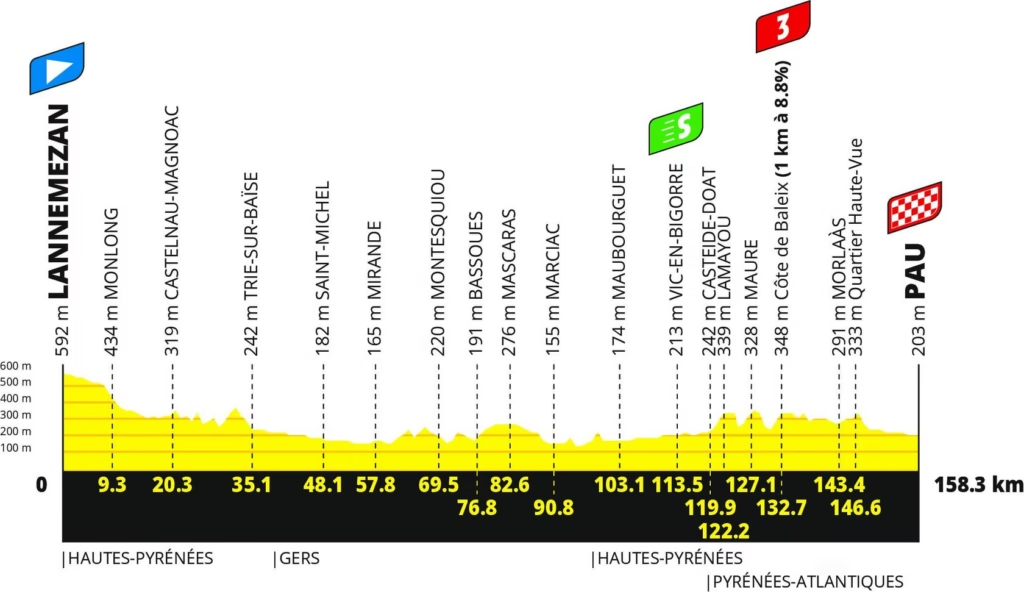
Tour de France 2026 stage 5 route
| Detail | Stage 5 |
|---|---|
| Date | Wednesday 8 July 2026 |
| Start | Lannemezan |
| Finish | Pau |
| Distance | 158.3km |
| Stage type | Flat |
| Elevation gain | 1,600m |
| Neutralised start | 14:05 CEST / 13:05 BST |
| Fastest expected finish | 17:37 CEST / 16:37 BST |
| Key climb | Côte de Baleix |
| Likely winner type | Sprinter |
A sprint chance after a chaotic opening block
Stage 5 arrives after a lively and unusual start to the Tour. The opening team time-trial in Barcelona immediately put time gaps between the general classification contenders. Stage 3 then brought the race into the Pyrenees early, where Tadej Pogačar won at Les Angles and moved into yellow after a direct duel with Jonas Vingegaard.
That first summit finish already made the opening week feel significant, as covered in our Tour de France 2026 stage 3 report. Stage 4 then changed the complexion again, with Mads Pedersen winning in Foix from the breakaway and Torstein Træen moving into the yellow jersey after a large time gain by the escape.
That context matters for stage 5. The GC favourites will not want unnecessary trouble before stage 6, which takes the race from Pau to Gavarnie-Gèdre on a 186.2km mountain stage with 4,100 metres of climbing. The sprint teams, meanwhile, have a rare early chance to justify their selections.
That should create a clear tactical split: the GC teams want calm, while the sprint teams need control.
Why Pau should suit the sprinters
Pau is one of the Tour’s most familiar host cities, often used as a gateway to or from the Pyrenees. It can launch mountain stages, finish transition days or provide a platform for sprint and breakaway outcomes, depending on the route.
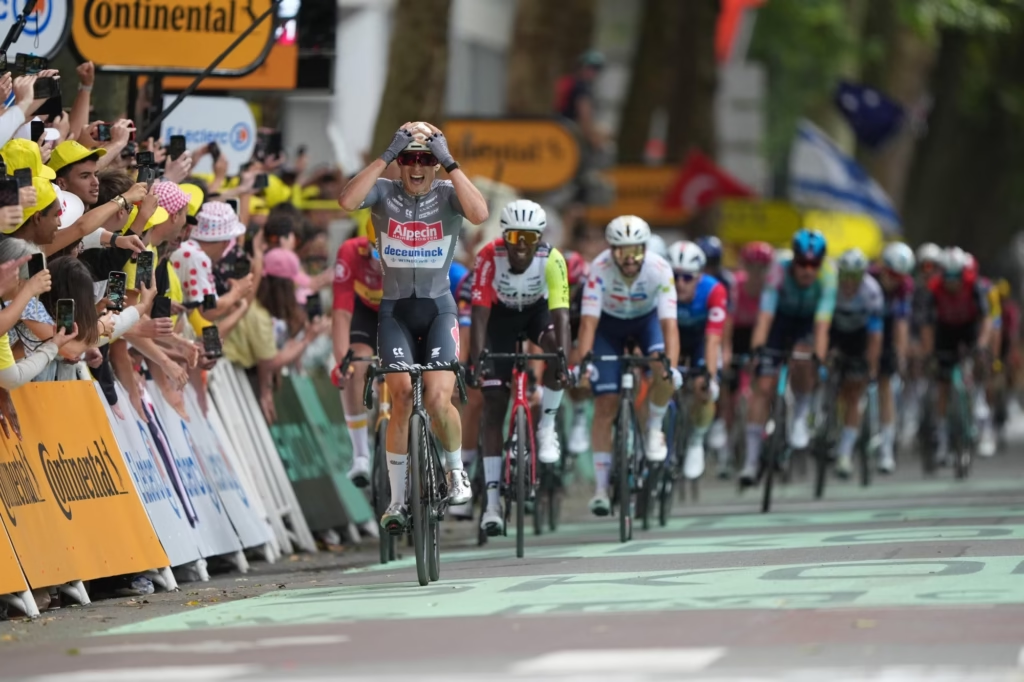
This time, the balance is in favour of the sprinters. The route starts in Lannemezan and heads west through rolling terrain rather than into the major climbs. The official distance is short by Tour standards, and the 1,600 metres of climbing are spread across a route that should be manageable for most sprint trains.
The key question is not whether the fastest riders can survive the route. Most should. The question is whether their teams can keep the race together after the chaos of the first four stages.
With stage 6 in the mountains, this is not a day the sprint teams can afford to waste. Opportunities like this are limited in the 2026 Tour, and several teams have built part of their selection around winning exactly this kind of stage.
The key point: Côte de Baleix
The only categorised climb of the day is the Côte de Baleix, which comes at kilometre 132.7, just over 25km from the finish. It is a 1km climb at an average of 8.8%, making it short but sharp enough to disrupt the rhythm late in the stage.
That placement is important. If the climb came 50km from the finish, it would likely be little more than a line on the profile. At around 25km to go, it becomes a useful pressure point.
A breakaway rider could attack there and try to force hesitation behind. A team with a strong all-round sprinter might choose to lift the pace and test some of the heavier fast men. GC teams will also want their leaders well placed because a late climb, narrow roads and a nervous peloton can create crashes or splits even on a stage labelled flat.
Still, the Côte de Baleix is probably not hard enough to stop a bunch sprint on its own. It is more likely to thin the order, stretch the peloton and force teams to rebuild their trains before Pau.
Intermediate sprint and green jersey battle
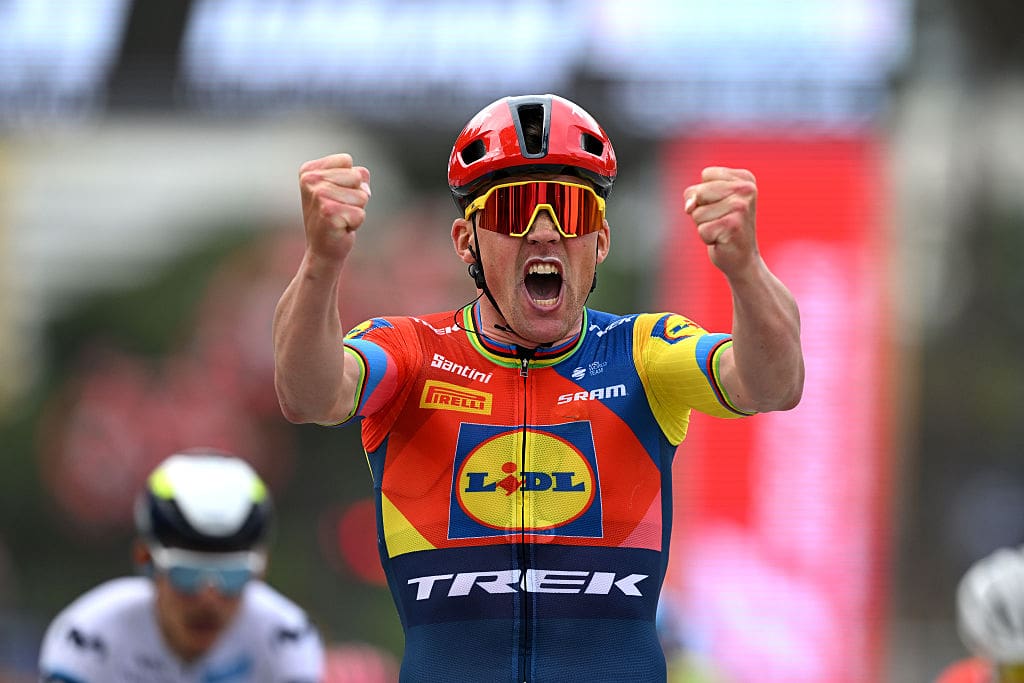
The intermediate sprint comes at Vic-en-Bigorre, after 113.5km. That will matter for the green jersey, especially because the 2026 Tour has not given the sprinters many clean early chances.
That makes stage 5 a major day for the points competition.
The pure sprinters will see Pau as a chance to claim both the stage and a major haul of points. Riders with stronger climbing legs, such as Pedersen, may also look at the day as part of a longer green jersey strategy. If the race becomes attritional over three weeks, riders who can score on flat stages, reduced bunch finishes and intermediate sprints often become harder to dislodge than pure sprinters who only have a few ideal days.
The wider sprint hierarchy is covered in our guide to the best sprinters at the Tour de France 2026, where the balance between pure speed and hard-stage durability is especially important this year.
The intermediate sprint may also affect the breakaway. If the green jersey battle is active, sprint teams may want the escape kept close enough to bring the points back into play. That would reduce the breakaway’s room and make the stage even harder to steal.
What the breakaway needs
For the breakaway, this is a difficult day to judge.
The route is not completely flat, and the early part of the stage could see plenty of riders try to get up the road. Teams without a sprint option may want television time, mountains points on the Côte de Baleix or a chance to force the sprint teams into doing the work.
But the problem is obvious: this looks like the first proper sprint stage of the Tour. Too many teams need it to end together.
Alpecin-Premier Tech, Soudal Quick-Step, NSN Cycling Team, Decathlon CMA CGM Team and other sprint-focused squads should all have an interest in controlling the gap. Lidl-Trek may also want to keep Pedersen involved after his stage 4 success. If several of those teams commit even one rider each to the chase, the breakaway’s chances become slim.
A late move over the Côte de Baleix has a better chance than a long-distance escape, but even that will need hesitation behind. The most likely scenario is a small early break, steady control from the bunch, a catch inside the final 20km and a fast finish in Pau.
For a wider view of which days genuinely suit the attackers, see our guide to the best breakaway stages at the Tour de France 2026.
The favourites for stage 5
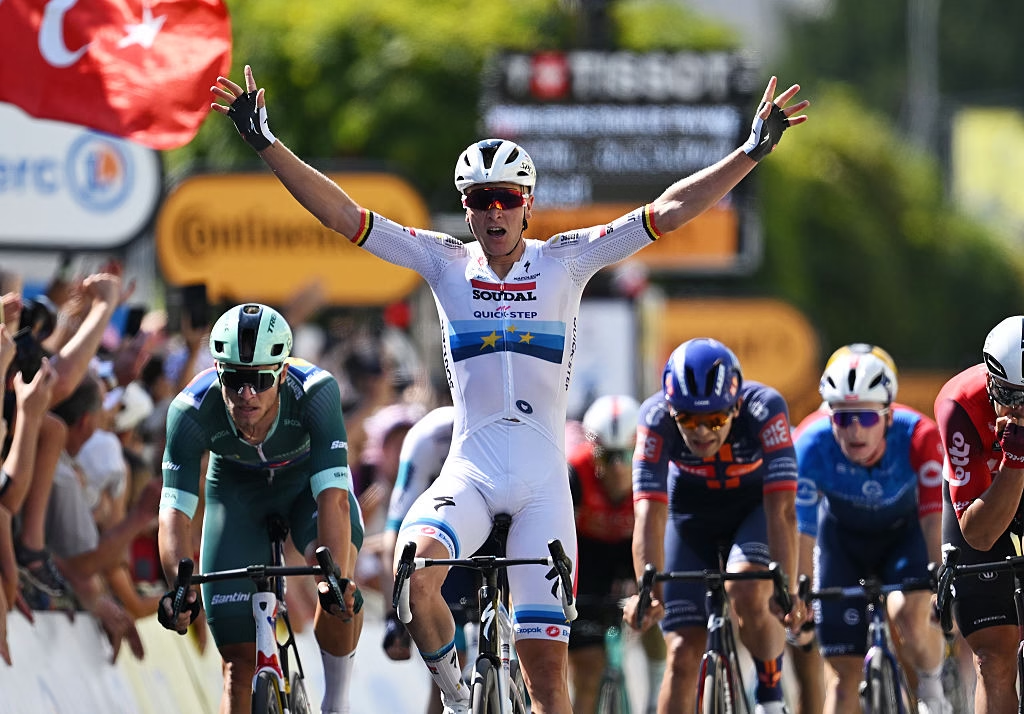
Jasper Philipsen will be one of the obvious names. Pau has already been a happy Tour finish for him, and this is the kind of stage where Alpecin-Premier Tech can organise around a full lead-out. If the race comes down to a clean sprint, he has the finishing speed to win.
Tim Merlier is another major contender. Soudal Quick-Step have brought a sprint structure around him, and a relatively straightforward stage into Pau is exactly the sort of day they will have circled. If the lead-out clicks, Merlier has the raw speed to beat anyone.
Biniam Girmay will also expect to be there. NSN Cycling Team have made him their central sprint figure, and his ability to handle slightly rolling terrain makes this stage look suitable. If the finale becomes untidy, Girmay’s positioning and resilience could become as important as straight-line speed.
Olav Kooij should also be watched closely. He has the speed for a finish like this and enough climbing ability to handle the late rise if the pace increases. The question is whether his team can place him perfectly in a Tour-level sprint where every train is fighting for the same road.
Mads Pedersen is the more complicated name. He won stage 4 from the breakaway and is not a pure bunch sprinter in the same way as Philipsen or Merlier, but his points profile is excellent. If the stage becomes harder than expected, or if the sprint is messy rather than textbook, Pedersen moves closer to the front of the conversation.
His wider green jersey case is covered in our Mads Pedersen at the Tour de France 2026 preview.
Could the GC riders lose time?
They should not, but that is not the same as saying the day is risk-free.
Flat stages before mountain days are often nervous. Everyone knows what is coming next, but nobody wants to lose time before it arrives. GC teams will try to keep their leaders near the front, sprint teams will try to dominate the same space, and the final 30km could become crowded and stressful.
The Côte de Baleix adds another reason to stay alert. It is too short to be a GC climb, but it could stretch the bunch at exactly the wrong moment for riders caught too far back. If there are splits, crashes or mechanical problems after the climb, the road to Pau may suddenly feel much less comfortable.
For Pogačar, Vingegaard, Remco Evenepoel and the other overall contenders, the aim is simple: stay safe, avoid time loss, save energy and reach stage 6 in one piece.
For Træen in yellow, the stage is also manageable on paper. His real test comes in the mountains, but a flat day in yellow is still a different experience. Uno-X Mobility will have to balance the prestige of defending the jersey with the practical need to stay out of trouble.
The wider team context is covered in our Tour de France 2026 team-by-team guide, which explains the different roles of the sprint teams, GC squads and stage-hunting line-ups.
Stage prediction
Everything points towards a bunch sprint in Pau.
The route is short enough for the sprint teams to control, the late climb is sharp but not severe enough to remove the fast men, and the next day’s mountain stage should discourage GC attacks. The breakaway will almost certainly try, but this looks like a day when the peloton will give the sprinters their chance.
The decisive phase should begin around the intermediate sprint at Vic-en-Bigorre, then intensify on the approach to the Côte de Baleix. If the sprinters survive that climb with their teams intact, the last 20km should become a lead-out battle.
Prediction: bunch sprint, with Jasper Philipsen, Tim Merlier, Biniam Girmay and Olav Kooij the main names to watch.
Tour de France 2026 stage 5 FAQs
When is stage 5 of the Tour de France 2026?
Stage 5 takes place on Wednesday 8 July 2026.
Where does stage 5 start and finish?
Stage 5 starts in Lannemezan and finishes in Pau.
How long is stage 5?
The stage is 158.3km long.
Is stage 5 flat or mountainous?
It is officially listed as a flat stage, although it includes 1,600 metres of climbing and one categorised climb late in the route.
What is the main climb on stage 5?
The key climb is the Côte de Baleix, a 1km climb at 8.8% that comes around 25km from the finish.
Is stage 5 likely to be a sprint?
Yes. This is one of the clearest early sprint chances of the 2026 Tour de France, although the late Côte de Baleix could make the finale more nervous.
Who are the favourites for stage 5?
Jasper Philipsen, Tim Merlier, Biniam Girmay, Olav Kooij and Mads Pedersen are among the key names to watch.