

The Tour de France is not over. It is too early, too long and too fragile a race for that.
But after stage 6 to Gavarnie-Gèdre, it is no longer the same Tour.
Tadej Pogačar’s attack on the Col du Tourmalet did more than win a stage and take the yellow jersey. It changed the question. Before the Pyrenees, the race was still being framed around whether Pogačar and Jonas Vingegaard could erase the early gap created by Torstein Træen’s move into yellow. After the Tourmalet, the question became harsher: can anyone actually put Pogačar under sustained pressure?
Pogačar took control of the race with a solo stage 6 victory after UAE Team Emirates-XRG had weakened the field early, with Vingegaard losing 2:42 on the day. The race has quickly moved from “can Pogačar and Vingegaard close the gap?” to “what can Pogačar’s rivals do now?”
The answer is not that the Tour is finished. The answer is that Pogačar has forced it onto his terms.
Our stage 6 report from Gavarnie-Gèdre covers how the day unfolded, while the wider race context is laid out in our GC and jerseys after Tour de France 2026 stage 6.
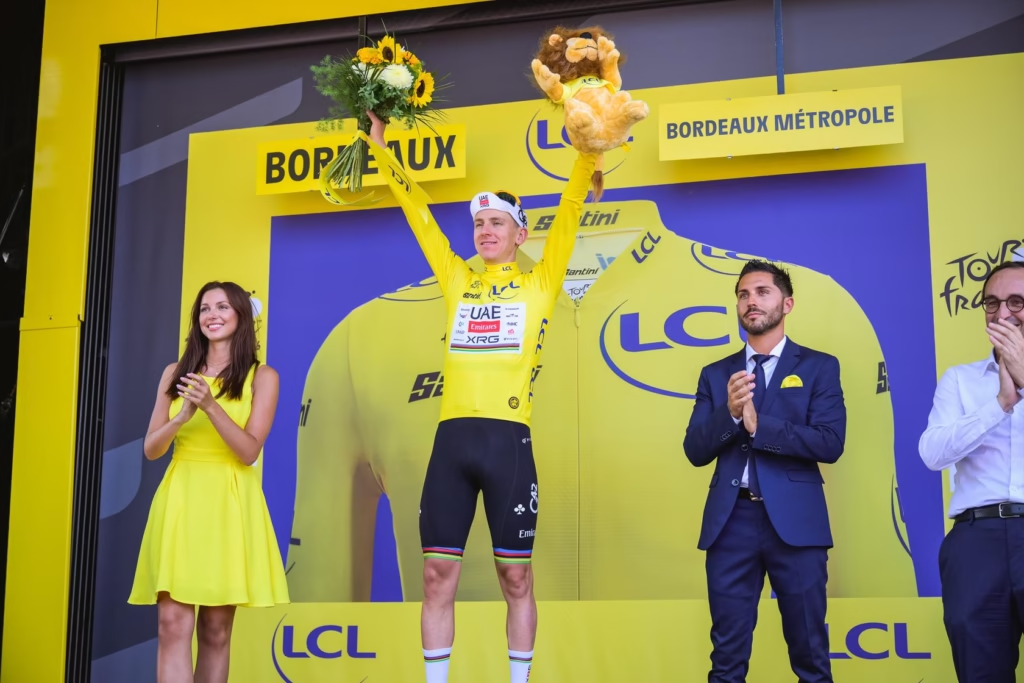 Photo Credit: A.S.O./Charly López
Quick answer: is the Tour de France already over?
No, the Tour de France is not already over, but Pogačar’s stage 6 performance has changed the shape of the race. He now leads Jonas Vingegaard by 2:42, with Isaac del Toro third at 3:27, and the Tour has shifted from a direct head-to-head into a race where Vingegaard and the other contenders need a tactical route back. That could come through fatigue, weather, team pressure, long mountain chains, crosswinds, crashes or one bad day from UAE Team Emirates-XRG, but Pogačar is now clearly controlling the race.
| Question | Current answer |
|---|---|
| Is the Tour mathematically over? | No |
| Is Pogačar now in control? | Yes |
| Can Vingegaard still win? | Yes, but he needs more than simply matching Pogačar |
| Has the race become a battle for second? | Not yet, but it is now a real talking point |
| Can UAE put two riders on the podium? | Yes, Isaac del Toro is already third overall |
| What can still change the race? | Fatigue, weather, crashes, team tactics, long climbs and a bad day |
| What changed on stage 6? | Pogačar attacked on the Tourmalet and put major time into every rival |
Why stage 6 changed the race
Stage 6 was the first proper mountain test of the Tour de France 2026, and it was not a gentle one.
The route from Pau to Gavarnie-Gèdre took the race over the Col d’Aspin and the Col du Tourmalet before the final climb to the finish. It was 186.2km long, with 4,100m of climbing, and it came early enough in the race to feel almost violent. Our stage 6 preview marked it as the first major yellow jersey examination of the race.
The important part was not just that Pogačar won. It was how he won.
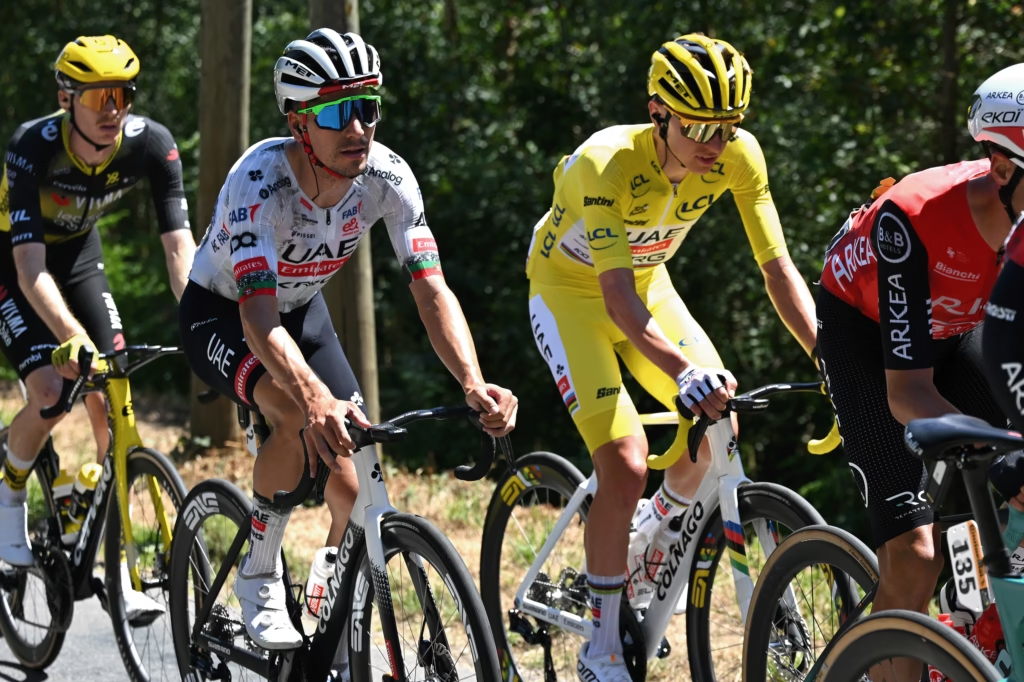
UAE Team Emirates-XRG made the stage hard before the decisive attack. That matters because it means Pogačar did not simply jump away in an isolated moment. His team shaped the day, softened the race, removed options from rivals and then gave him the platform to finish it.
When Pogačar attacked on the Tourmalet, Vingegaard could not hold the wheel. That is the image that now sits over the whole race.
The post-stage position left Pogačar in yellow, Vingegaard at 2:42, Del Toro at 3:27, Remco Evenepoel at 3:30, Juan Ayuso at 3:34 and Paul Seixas at 3:55. Those are not race-ending gaps, but they are already large enough to change tactics.
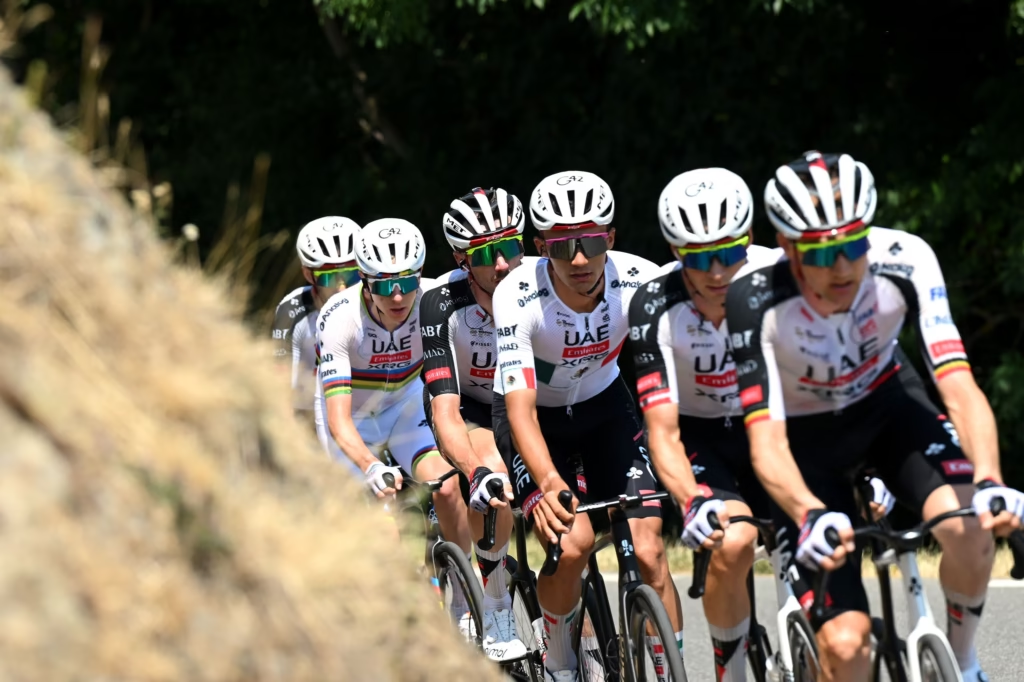 Photo Credit: Getty
The old race question has gone
Before stage 6, the Tour had a strange shape.
Pogačar and Vingegaard had been pushed down the standings after the stage 4 move that put Torstein Træen in yellow. The obvious question was whether the two main favourites could close that gap and restore the normal hierarchy.
They did. But Pogačar did more than restore it.
He did not just move back into contention. He moved into command. That is why the race now feels different. The discussion is no longer “how do Pogačar and Vingegaard catch Træen?” It is “how does anyone move Pogačar from the front of the race?”
That is a much harder question.
The piece we wrote on why Pogačar and Vingegaard were 7:53 down now feels like a different phase of the Tour. Stage 6 closed that chapter and opened another.
What Vingegaard has to do now
Vingegaard’s problem is not only the time gap. It is the nature of the gap.
A deficit of 2:42 is not impossible in the Tour de France. There are still major mountain stages to come, including the Vosges, the Alps, Orcières-Merlette and the double Alpe d’Huez finale. The Tour de France 2026 full route guide shows there is still enough terrain to change the race.
But Vingegaard cannot simply wait for the next summit finish and hope to ride Pogačar off his wheel. Stage 6 suggested that, on current evidence, Pogačar has the better climbing acceleration and the stronger supporting platform.
That means Vingegaard now needs a tactical route back.
He needs Visma-Lease a Bike to test UAE repeatedly. He needs long stages where pressure builds before the final climb. He needs rivals to collaborate rather than race for minor places. He needs weather, heat, descents, crosswinds or team attrition to introduce instability. He may also need to attack earlier than he would like.
That is the hard bit. Chasing Pogačar is not just about legs. It is about making the race less comfortable for him.
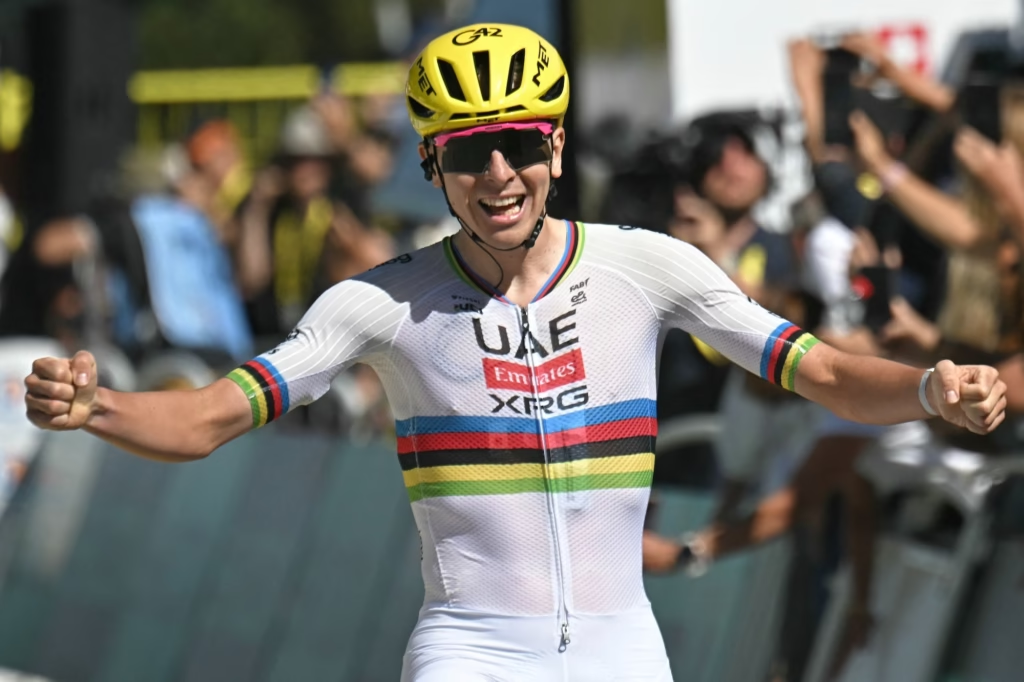
Matching Pogačar is not enough
This is the crucial point.
If Vingegaard matches Pogačar from here to Paris, he loses the Tour. If he limits losses, he still loses the Tour. If he waits until the final week and only then discovers Pogačar is still this strong, he loses the Tour.
He has to create difference.
That could mean attacking before the final climb. It could mean using teammates up the road. It could mean forcing UAE to chase on stages where they would rather control calmly. It could mean making Pogačar respond again and again, not just once.
The danger is obvious. If Vingegaard attacks and cracks, the Tour could really become one-sided. But after stage 6, caution is no longer enough.
The race is still open only if Pogačar’s rivals are prepared to race as if it is open.
Our guide to the best days for GC attacks on the Tour de France 2026 route explains where those opportunities may still come.
Why second place suddenly matters
Nobody inside a team bus will say they are racing for second in the first week of the Tour. They should not. The race is too long and too unpredictable.
But the road has already made second place part of the conversation.
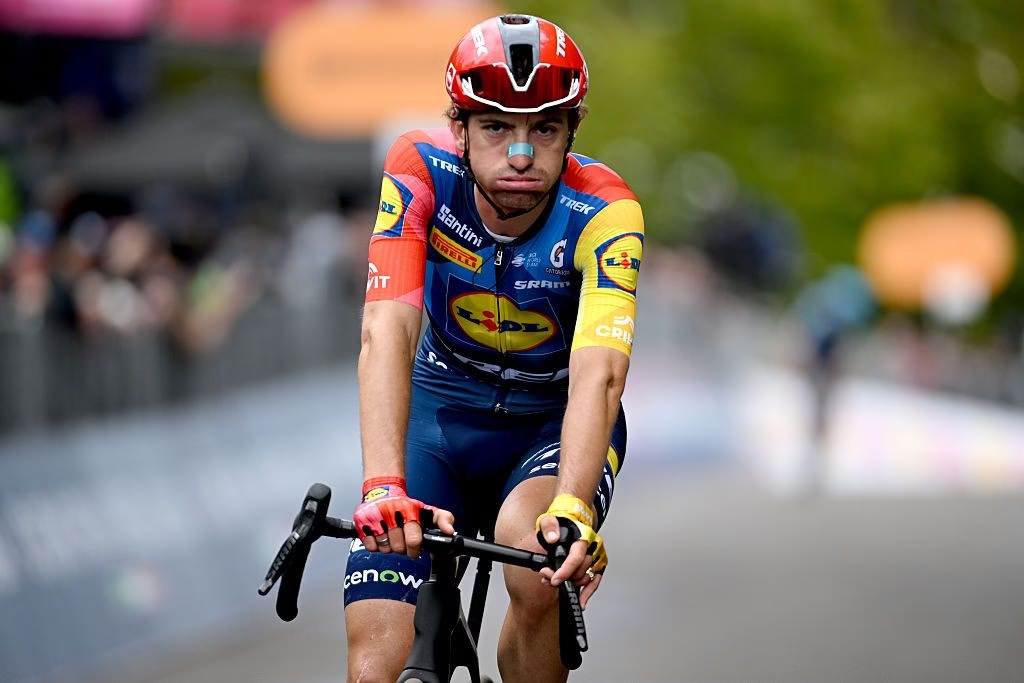
Vingegaard is second overall. Del Toro is third. Evenepoel, Ayuso and Seixas are all within striking distance of the podium. That changes the incentives. The more Pogačar looks untouchable, the more the riders behind him have to decide how much risk they are willing to take.
This can make a Tour strange.
If everyone believes Pogačar is beatable, the race can become aggressive. If everyone believes the podium is the realistic target, attacks may begin to serve two purposes: pressure Pogačar in theory, but protect or improve second and third place in practice.
That is where the race could tilt. If Vingegaard attacks, is Evenepoel obliged to help? If Ayuso moves, does Del Toro chase or sit? If Del Toro is already on the podium, does UAE defend both first and third? The yellow jersey battle may still be the headline, but the podium battle is already part of the tactical picture.
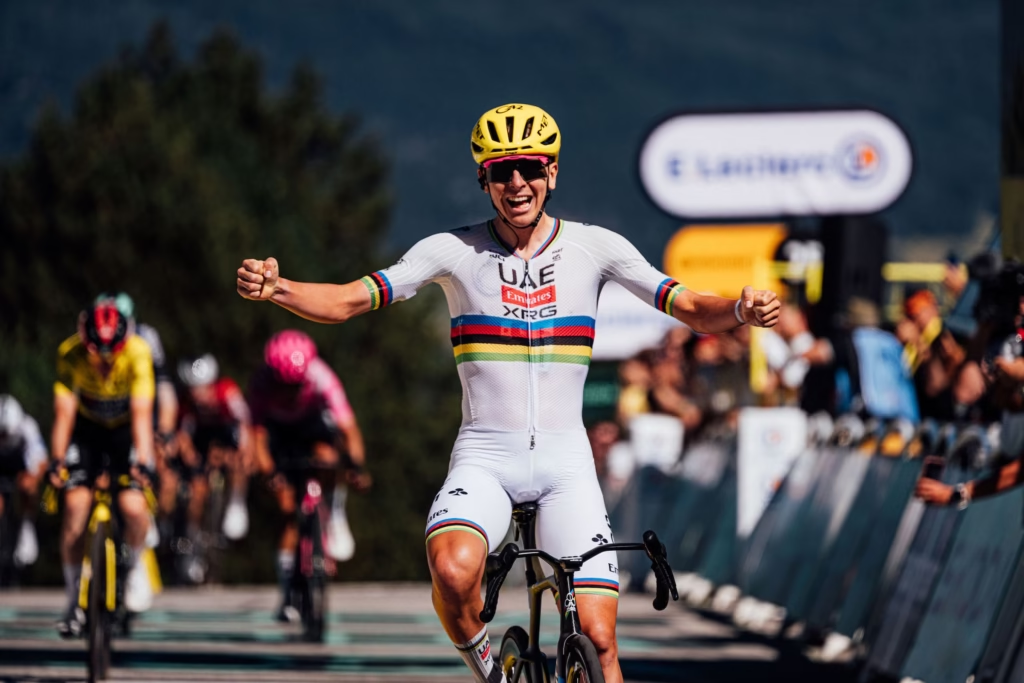 Photo Credit: Getty
Could UAE try to put another rider on the podium?
Yes, and that may become one of the most interesting subplots of the race.
Isaac del Toro sitting third overall after stage 6 gives UAE Team Emirates-XRG a second strategic card. That is useful for Pogačar in several ways.
First, it means UAE can force other teams to think about more than one rider. If Del Toro attacks, Visma cannot simply ignore him forever. Red Bull-Bora-Hansgrohe and Lidl-Trek also have to judge whether he is a podium threat rather than just a teammate up the road.
Second, it gives UAE insurance. If the race becomes chaotic, they have another rider high on GC. That does not replace Pogačar, but it strengthens the team’s position.
Third, it changes how others race. A rival trying to take time on Pogačar may also have to think about Del Toro, especially if the young rider continues to look this strong.
The risk for UAE is that defending two podium positions can become expensive. The more they try to control everything, the more they may expose themselves later. But right now, that is a good problem to have.
Our Tour de France 2026 team-by-team guide looks at how those squad roles shape the race beyond the headline leaders.
What risks still remain for Pogačar?
This is why the Tour is not over.
Pogačar is in control, but he is not in Paris. The Tour de France has too many moving parts to be declared finished after six stages.
| Risk | Why it still matters |
|---|---|
| Fatigue | The race still has more than two weeks to run |
| Heat | Repeated hot stages can change recovery and team strength |
| Crashes | One fall can undo the strongest rider’s advantage |
| Crosswinds | Flat stages can become GC days if the race splits |
| Mechanical trouble | A badly timed issue can cost serious time |
| Team attrition | UAE’s control depends on helpers staying strong |
| Long mountain chains | Repeated climbs can expose even dominant riders |
| Bad day | Every Grand Tour leader is still vulnerable to one poor day |
The key is that Pogačar does not need to be weak often. He only needs one bad day for the race to reopen.
That does not mean rivals can simply wait for luck. They have to create stress. The more comfortable UAE are allowed to be, the less likely those risks become decisive.
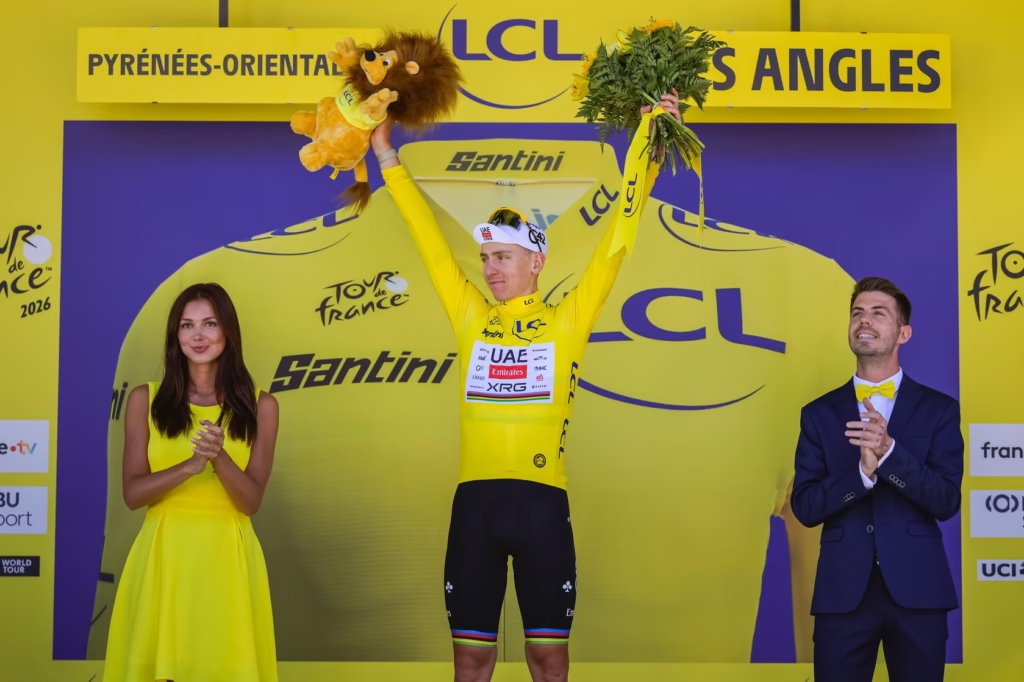 Photo Credit: A.S.O./Charly López
Why the Tour can feel over before it actually is
This is a familiar Grand Tour problem.
A rider dominates one early mountain stage, takes a meaningful gap, looks visibly stronger than his rivals and suddenly the race feels decided. Viewers begin asking whether everyone else is racing for second. Commentators start searching for caveats. Rivals say the race is long, because that is what they have to say.
Sometimes that feeling is correct. Sometimes it is not.
The Tour can feel over because the strongest rider has taken control of the story. But the actual race is more complicated. Stages stack up. Weather changes. Teams lose riders. Recovery varies. Confidence can swing. A dominant rider can become isolated. A rival can find one day where the whole race suddenly looks different.
That is why “over” is the wrong word. “Changed” is the right one.
After stage 6, the Tour de France 2026 has changed from a balanced duel into a race where Pogačar has the authority and everyone else has to disturb it.
Can Vingegaard still beat Pogačar?
Yes, but the pathway is narrow.
Vingegaard still has the climbing pedigree, the Tour pedigree and the team structure to challenge. He is not a rider who should be written off after one bad mountain day. He has won the Tour twice, he knows how to build form through a three-week race, and Visma-Lease a Bike have the tactical habits of a team used to racing from strength.
But the problem is not reputation. It is evidence.
On the Tourmalet, Pogačar was better. Not by a few metres. Not by a late sprint. He was better in a way that created a major time gap and changed how everyone must now race.
For Vingegaard to win, one of three things probably needs to happen.
He needs to become stronger relative to Pogačar as the race goes deeper. He needs Visma to create a tactical day that UAE cannot fully control. Or Pogačar needs to have a problem, whether physical, tactical or mechanical.
None of those is impossible. None of them is guaranteed.
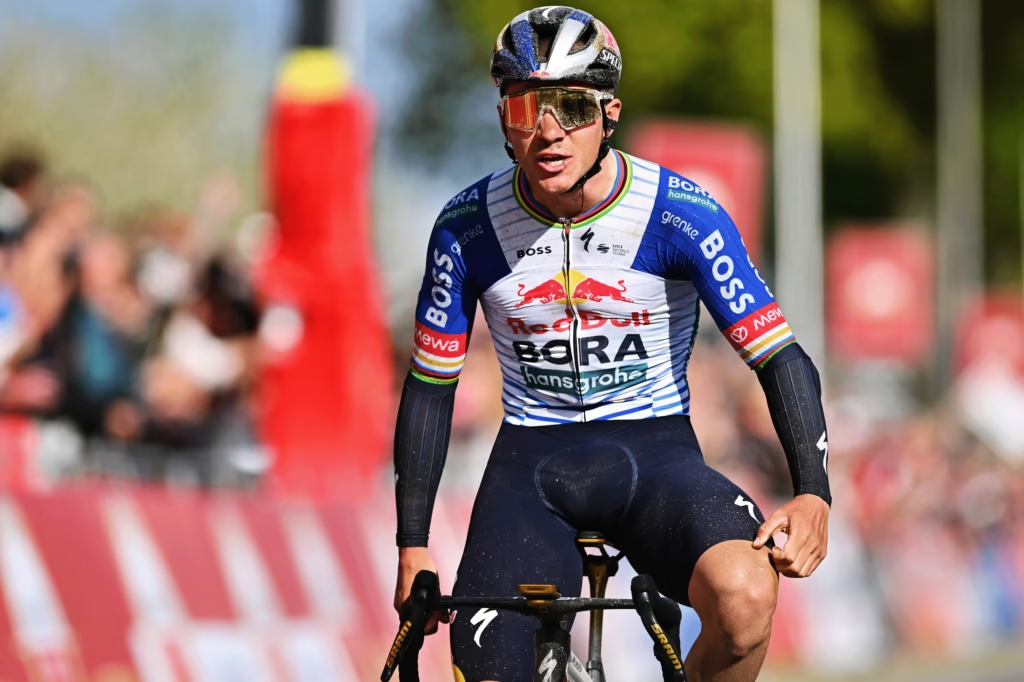 Photo Credit: Getty
Can anyone else stop Pogačar?
That looks harder.
Evenepoel, Ayuso, Del Toro, Seixas, Lenny Martinez and others are close enough to shape the race, but stage 6 did not suggest any of them are currently ready to outclimb Pogačar across the hardest terrain.
Their more realistic influence may be tactical.
If Red Bull-Bora-Hansgrohe, Lidl-Trek and Visma-Lease a Bike all ride only for their own podium ambitions, Pogačar benefits. If they find moments where their interests align, the race becomes harder for UAE.
That is easier to write than to do. Teams do not often sacrifice their own podium chances for the abstract good of making the race interesting. But if Pogačar keeps looking this strong, the other contenders may eventually have to decide whether controlled podium racing is simply handing him the Tour.
The importance of the next mountain block
The next question is not whether Pogačar can win sprints in Bordeaux or Bergerac. The next question is how he looks when the race returns to proper climbing stress.
Stage 9 to Ussel brings a hilly day before the first rest day. Stage 10 to Le Lioran then reintroduces more serious climbing. Later, the race heads towards the Vosges and then the Alps, where the final week becomes much more difficult.
That is where the Tour will either close down or reopen.
If Pogačar keeps controlling every hard stage, the “is the Tour over?” question will become louder. If Vingegaard or another rival can put him under pressure once, the narrative changes again.
That is the Tour. One mountain day can make a race feel finished. Another can make it feel alive again.
Our Tour de France 2026 mountain stages ranked by difficulty shows why there is still enough climbing left to matter.
The psychological damage may be as important as the time
A time gap can be measured. Psychological damage is harder.
Stage 6 hurt Vingegaard because it gave him a clear answer to the first mountain question, and it was not the answer he wanted. Pogačar attacked on the iconic climb of the Tourmalet and rode away. That has a different emotional weight from losing a sprint bonus or being caught on the wrong side of a flat-stage split.
It also gives Pogačar freedom. He does not need to chase the race. He can choose where to spend energy, where to mark, where to let others move, and where to strike again. Rivals now have to reveal more of themselves.
That is often how dominant Tour performances grow. The first big blow gives the leader a gap. The second comes when rivals overextend trying to repair it.
Vingegaard’s job is to prevent that second blow.
What would reopen the race?
The race reopens if Pogačar is isolated and loses time on a mountain stage, if Vingegaard attacks early and gains enough to change the pressure, or if UAE are forced into repeated defensive work across several days.
It could also reopen through crosswinds or crashes, although nobody wants a race decided that way. Heat could be another factor, especially if recovery begins to diverge between teams. A long chain of mountain stages may also change the balance if one rider handles repeated stress better than another.
The cleanest sporting route is simple: Vingegaard or another rival has to take time back on the road.
Not ten seconds. Not a symbolic move. Real time.
If that happens, the Tour is alive again. If it does not, Pogačar’s lead becomes heavier with every stage.
-
 Photo Credit: Getty
 -
 Photo Credit: Cs-wolves / Wikimedia Commons, CC BY-SA 4.0

Verdict: not over, but now Pogačar’s race to lose
The Tour de France 2026 is not over after Pogačar’s Tourmalet attack.
But it is now Pogačar’s race to lose.
Stage 6 changed the hierarchy, the tactics and the psychology of the race. Vingegaard is still close enough to fight, but not close enough to wait. Evenepoel, Ayuso, Del Toro and Seixas are still part of the podium picture, but they are already reacting to a race that Pogačar controls.
That is the difference.
The Tour is not mathematically decided. It is not immune to chaos. It still has mountains, heat, descents, flat-stage danger, team pressure and the possibility of a bad day. But after Gavarnie-Gèdre, everyone else needs something more than normal racing.
They need to make Pogačar uncomfortable.
Until they do, the yellow jersey battle will keep feeling less like a duel and more like a defence of a race already bent around one rider.
FAQs
Is the Tour de France already over after stage 6?
No. The Tour is not over, but Pogačar’s stage 6 attack has put him in control. He now leads Vingegaard by 2:42, which means his rivals need to take real time back rather than simply limit losses.
Can Jonas Vingegaard still beat Tadej Pogačar?
Yes, but he needs a tactical route back into the race. Matching Pogačar from here is not enough. Vingegaard needs to gain time through mountain attacks, team pressure, fatigue, weather or a bad day from UAE.
How much time did Pogačar gain on Vingegaard?
Pogačar gained 2:42 on Vingegaard on stage 6 to Gavarnie-Gèdre after attacking on the Col du Tourmalet.
Who is third overall after Pogačar and Vingegaard?
Isaac del Toro is third overall after stage 6, 3:27 behind Pogačar. That gives UAE Team Emirates-XRG a second podium card as well as the yellow jersey.
Can UAE put two riders on the Tour podium?
Yes. Del Toro is already third overall, so UAE can realistically think about defending both yellow and a podium place. The risk is that controlling two GC positions can become expensive later in the race.
What could still stop Pogačar?
Fatigue, heat, crashes, crosswinds, mechanical problems, team weakness, long mountain stages or one bad day could still change the race. The Tour is long enough for the lead to be challenged, but rivals have to create pressure rather than wait.
Is the race now a battle for second place?
Not officially, and not yet. But stage 6 made that question unavoidable. If Pogačar keeps climbing at this level, the podium battle behind him could become as tactically important as the fight for yellow.

