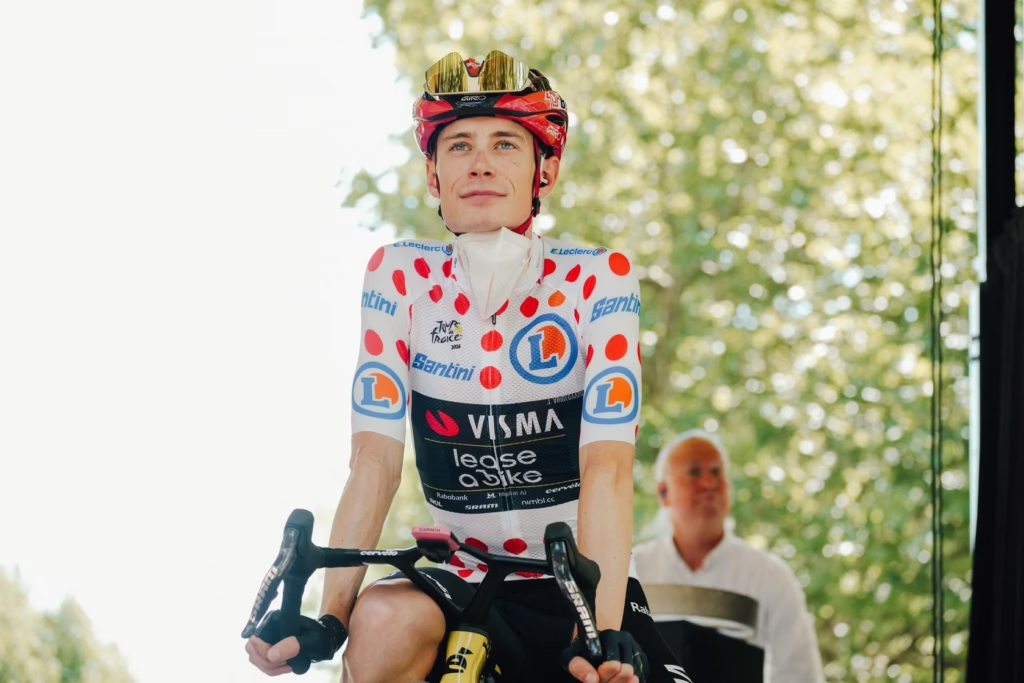
Jonas Vingegaard is wearing the polka-dot jersey at the Tour de France 2026 because Tadej Pogačar leads both the general classification and the mountains classification.
Pogačar is first in the mountains classification, but he is also wearing the yellow jersey as race leader. When one rider leads more than one classification, he wears the most important jersey. At the Tour de France, yellow takes priority over the polka-dot jersey.
That means the polka-dot jersey passes to the next eligible rider in the mountains classification. After stage 9, that rider is Vingegaard, who sits second in the KOM standings behind Pogačar.
So the standings are not wrong. Pogačar still leads the mountains classification. Vingegaard is wearing the polka-dot jersey on the road because Pogačar is already in yellow.
Our GC and jerseys after Tour de France 2026 stage 9 shows the exact standings heading into the first rest day.
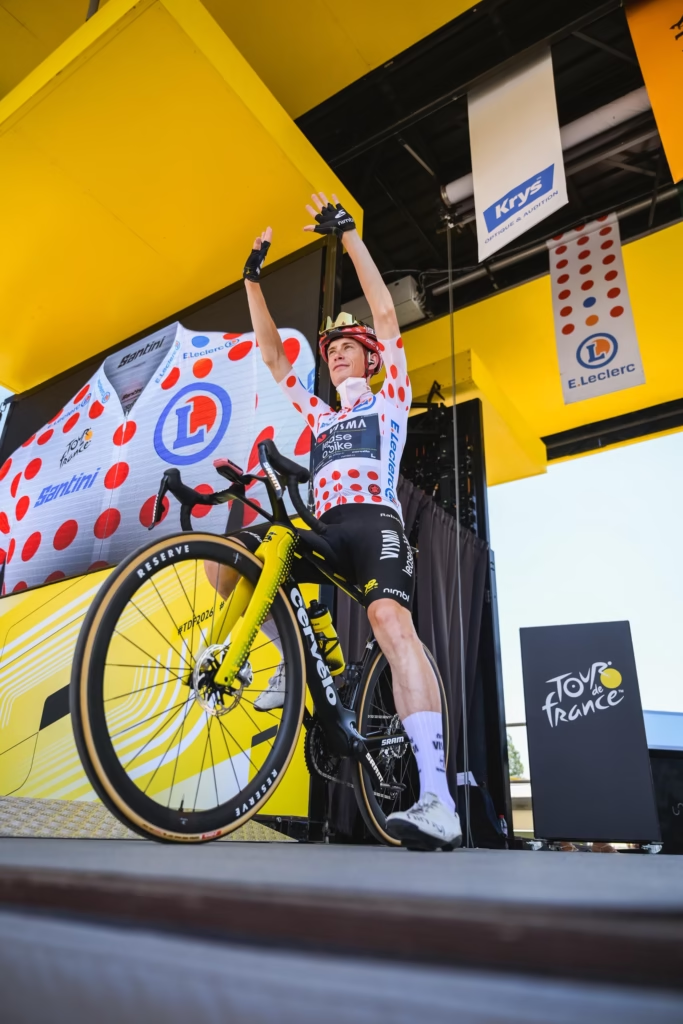 Photo Credit: A.S.O./Thomas Maheux
Quick answer
Tadej Pogačar leads the mountains classification, but he also leads the overall Tour de France. Because the yellow jersey has priority, Pogačar wears yellow. Jonas Vingegaard, who is second in the mountains classification, wears the polka-dot jersey instead.
What is the polka-dot jersey?
The polka-dot jersey is worn by the leader of the mountains classification at the Tour de France.
Riders score points by being among the first over categorised climbs. The harder the climb, the more points are available. Hors catégorie and category 1 climbs usually matter most, while smaller category 3 and category 4 climbs offer fewer points.
The rider with the most mountains points leads the classification.
At this point in the 2026 Tour, Pogačar leads that contest after his major mountain performance on the stage to Gavarnie-Gèdre. Vingegaard is second, which is why he is next in line to wear the jersey while Pogačar wears yellow.
Our Tour de France 2026 climbers guide explains how the mountains classification can still change as the race heads deeper into the mountains.
Why does yellow take priority?
The yellow jersey is the most important jersey at the Tour de France because it belongs to the overall race leader.
If a rider leads several classifications at once, he cannot wear multiple jerseys in the race. The Tour uses a jersey priority order. Yellow comes first. After that, the other jerseys pass down to the next eligible rider in each classification.
That is why a rider can appear in a jersey without actually leading that classification.
In this case, Pogačar is the real leader of the mountains classification. Vingegaard is the visible wearer of the polka-dot jersey because Pogačar has to wear yellow.
Our broader guide to the Tour de France 2026 jerseys explains how yellow, green, polka-dot and white work across the race.
Does Vingegaard actually lead the mountains classification?
No.
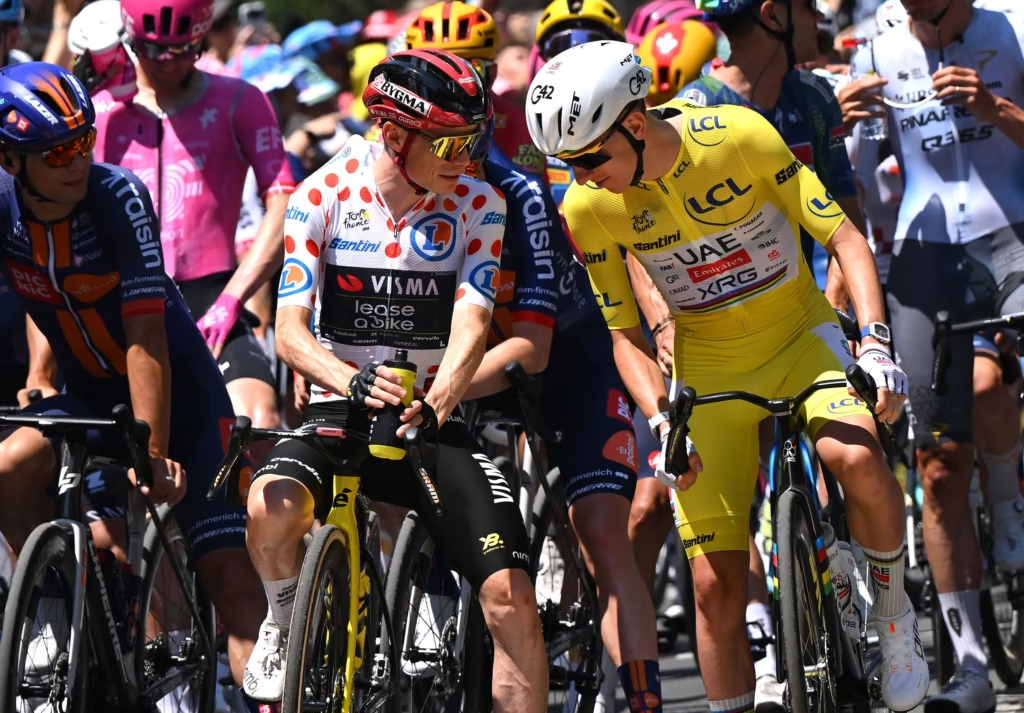
Vingegaard is wearing the jersey, but Pogačar leads the mountains classification on points. Vingegaard is second in that ranking.
This is a common Tour de France situation. TV graphics may show Pogačar as the KOM leader, while the live pictures show Vingegaard in the polka-dot jersey. Both are correct.
The classification leader is Pogačar. The on-road jersey wearer is Vingegaard.
Could Vingegaard take the polka-dot lead properly?
Yes.
If Vingegaard scores enough mountains points to move ahead of Pogačar, then he would become the actual leader of the mountains classification. At that point, he would wear the polka-dot jersey in his own right.
That could happen if he collects points on major climbs such as the Puy Mary, Col de Pertus or later high-mountain stages. Stage 10 to Le Lioran gives riders another chance to score heavily in the mountains classification, especially if the breakaway takes control of the day.
For now, though, Vingegaard is wearing the jersey because of the priority rule, not because he has more KOM points than Pogačar.
Why casual viewers get confused
This is confusing because cycling jerseys show two slightly different things.
Most of the time, a jersey shows the rider leading that classification. But when one rider leads more than one ranking, another rider can wear a jersey on his behalf.
That is what is happening here.
Pogačar is the mountains leader. Vingegaard is the polka-dot jersey wearer. The distinction is small, but it matters.
-
 Photo Credit: Getty

The same rule can apply to other jerseys
This rule does not only apply to the polka-dot jersey.
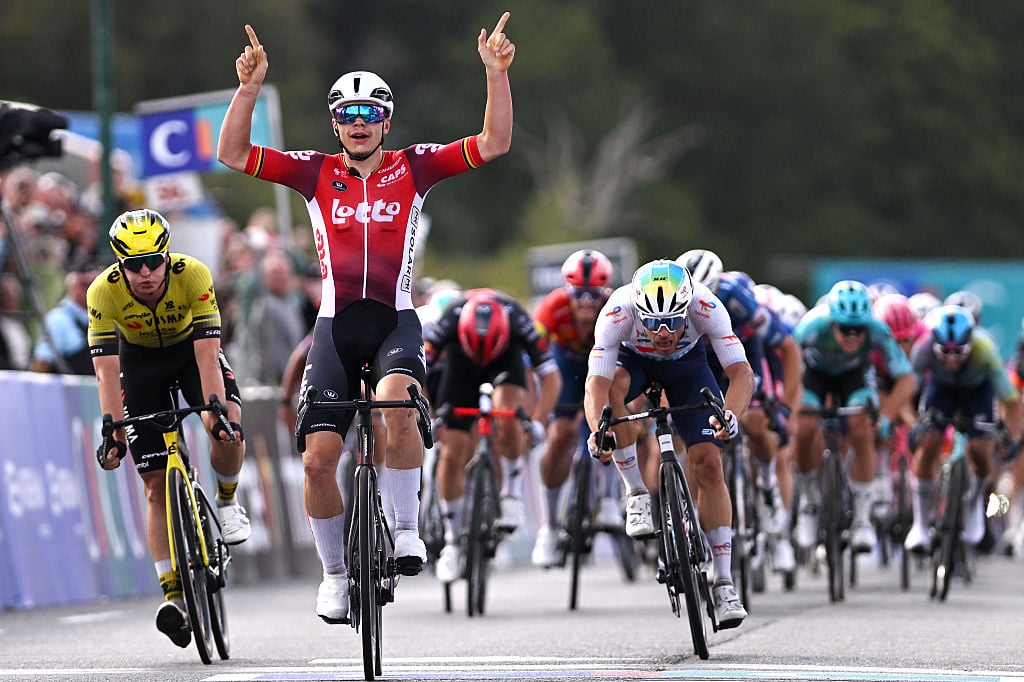
If the yellow jersey also leads the points classification or young rider classification, those jerseys can also pass to the next eligible rider. The same principle applies: the standings still show the true leader, while the race jersey goes to another rider because the classification leader is already wearing a higher-priority jersey.
That is why Tour de France jersey pictures sometimes look different from the standings table.
Verdict
Jonas Vingegaard is wearing the polka-dot jersey because Tadej Pogačar cannot wear two jerseys at once.
Pogačar leads the mountains classification, but he also leads the Tour overall, so he wears yellow. The polka-dot jersey therefore passes to Vingegaard, who is second in the mountains standings.
It does not mean Vingegaard leads the KOM classification. It means he is the next eligible rider to wear the jersey on the road.