
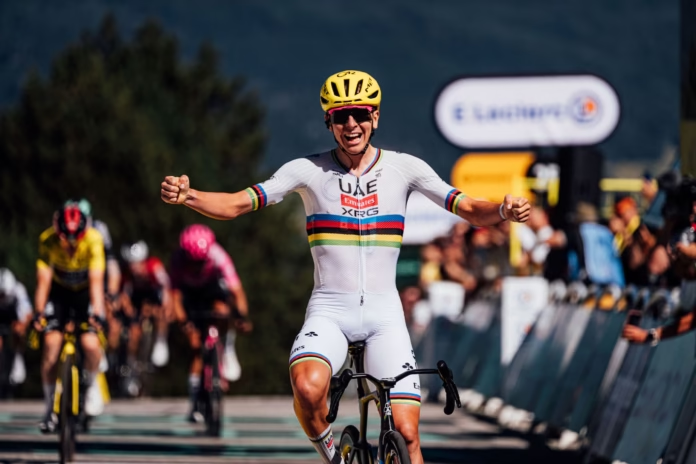
The first week of the Tour de France 2026 has already done what many opening weeks only threaten to do. It has created a race with a clear leader, a defined challenger, a compressed podium fight and a points classification that is alive in more than one direction.
Tadej Pogačar reaches the first rest day in yellow, 2:42 ahead of Jonas Vingegaard, with Isaac del Toro third overall and Remco Evenepoel, Juan Ayuso, Paul Seixas, Florian Lipowitz, Lenny Martinez and Mattias Skjelmose still close enough to make the race behind yellow feel unstable. That is the first big conclusion: the Tour is not over, but it has already acquired a shape.
The second conclusion is that the race has been much more than Pogačar versus Vingegaard. The opening week has produced a strange and compelling mix: Torstein Træen’s unexpected spell in yellow, a brutal Tourmalet reset, Olav Kooij’s breakthrough sprint win, Tim Merlier’s back-to-back response, Mathieu van der Poel’s Ussel breakaway victory, Mads Pedersen’s all-terrain green jersey campaign and a heatwave severe enough to shorten stage 9.
The Tour has arrived at its first rest day with the overall hierarchy clearer than expected, but the supporting races more open than they looked a few days ago.
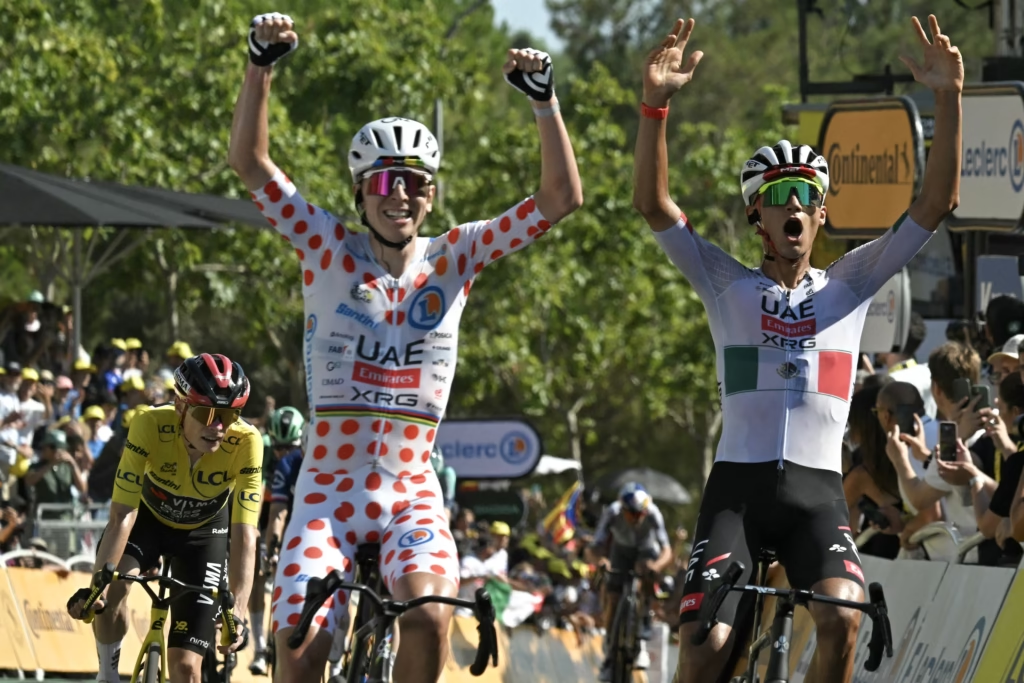 Photo Credit: Getty
Pogačar has the race where he wants it
The decisive image of the first week was not a sprint, a crash or a jersey ceremony. It was Pogačar attacking on the Tourmalet and carrying that damage all the way to Gavarnie-Gèdre.
His stage 6 victory did more than win a mountain stage. It rewrote the race. Before that, the general classification still contained the artificial tension created by the early breakaway and Træen’s yellow jersey. After that, the Tour had its first proper hierarchy.
Pogačar did not just move into yellow. He put Vingegaard at 2:42, pushed Evenepoel, Ayuso and the rest into a chase for podium stability, and left every other team asking whether they were racing to win the Tour or racing around his control of it.
That does not make the race finished. It does make the terms clear. Vingegaard now needs to take time, not just follow. Evenepoel needs to protect his place in the podium fight while finding somewhere to use his own strengths. Ayuso and Del Toro are both high enough to matter, but their positions also complicate the UAE dynamic behind Pogačar.
Pogačar’s first week has been close to ideal. He has a major mountain win, yellow, the lead in the mountains classification and a margin that gives him tactical choice. From here, he can defend selectively rather than chase every stage.
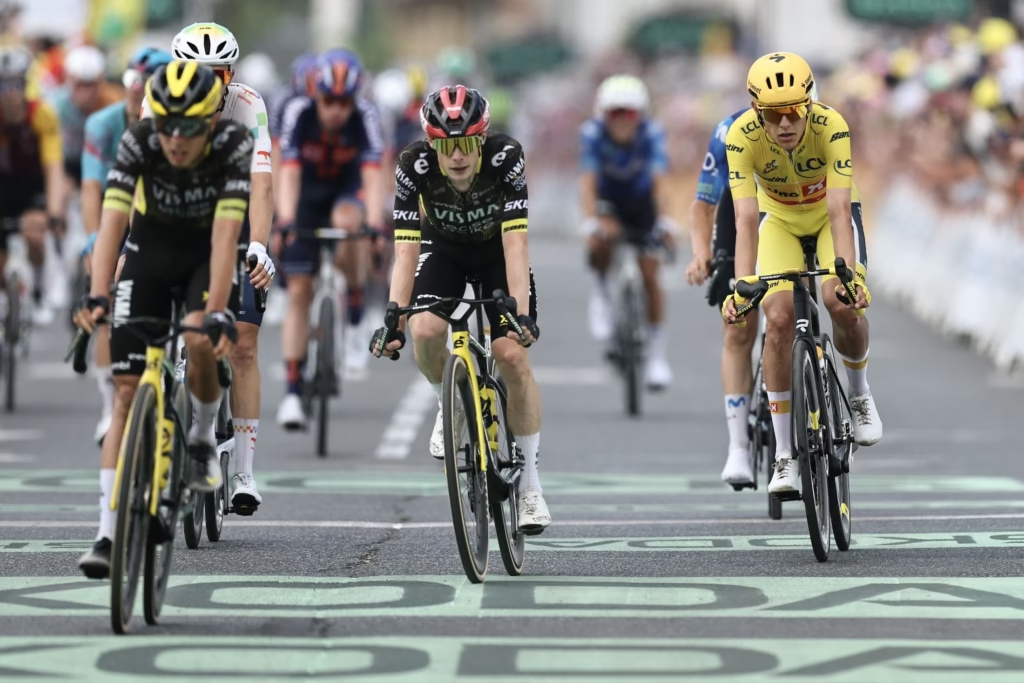 Photo Credit: Getty
Vingegaard is close enough to keep the Tour alive, but not close enough to wait
Vingegaard’s position is awkward.
A 2:42 deficit is not terminal with the Alps still ahead and the Massif Central arriving immediately after the rest day. But it is too big to sit on. He cannot simply shadow Pogačar and hope the race turns. At some point, Visma-Lease a Bike need to make the Tour uncomfortable.
The first week showed that Vingegaard is still the only rider who can be treated as a direct Pogačar rival. He limited the damage on the Tourmalet stage better than anyone else, and he remains second overall. But the gap means he has to find a stage where the race can be made harder before Pogačar chooses to attack.
That is why the next block matters. Stage 10 to Le Lioran is not the biggest mountain stage of the race, but it is exactly the sort of awkward day where Visma can test UAE without needing to throw everything at one attack. Repeated climbs, a steep late Col de Pertus and the post-rest-day uncertainty give Vingegaard a first opportunity to ask whether Pogačar’s team is as settled as Pogačar himself.
He does not need to win the Tour back in one move. He does need to start creating situations where Pogačar has to respond.
The podium fight is already one of the best races inside the race
Behind Pogačar and Vingegaard, the first week has created a tight and slightly unusual podium contest.
Isaac del Toro is third overall and leads the white jersey. Remco Evenepoel is fourth, just three seconds behind him. Juan Ayuso is fifth, seven seconds off Del Toro and still close enough to change the white jersey picture with one small split. Paul Seixas, Florian Lipowitz, Lenny Martinez and Mattias Skjelmose are all close enough to make the top 10 feel alive rather than fixed.
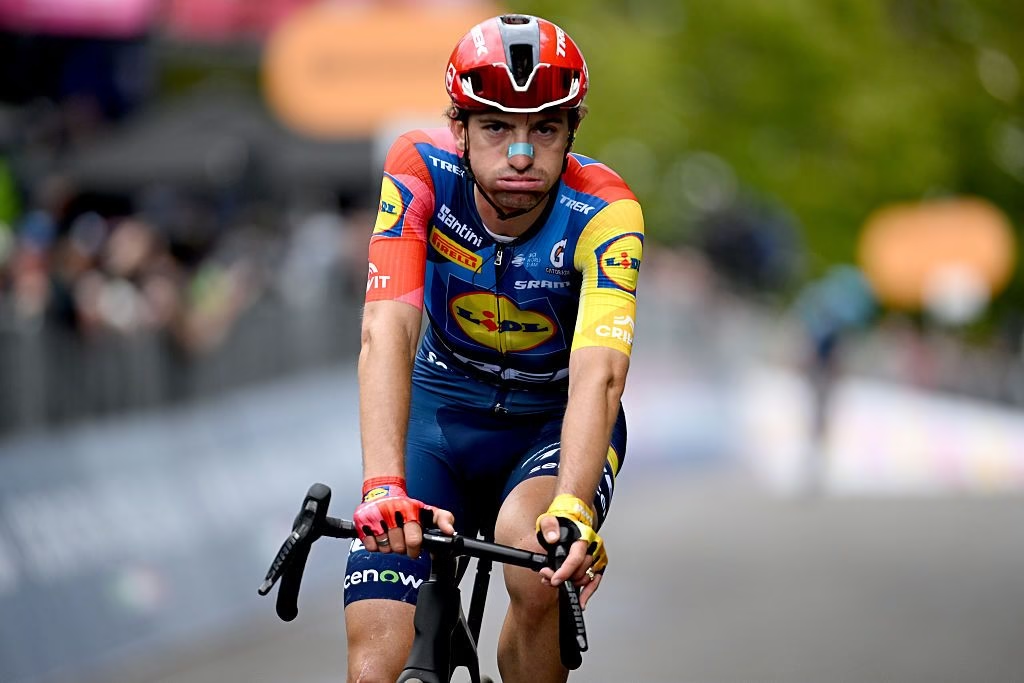
That makes the podium race more interesting than a simple list of GC names. Del Toro’s presence gives UAE two riders in the top five, but it also places a young rider under the pressure of defending a podium position and the white jersey at the same time. Ayuso, riding for Lidl-Trek, remains a direct threat in both classifications. Evenepoel is close enough that one strong day could move him back into the podium places, but one poorly handled mountain finale could push him out of the frame.
The GC and jerseys after stage 9 show how little room there is behind the top two. The Tour may have a clear yellow jersey, but it does not yet have a settled podium.
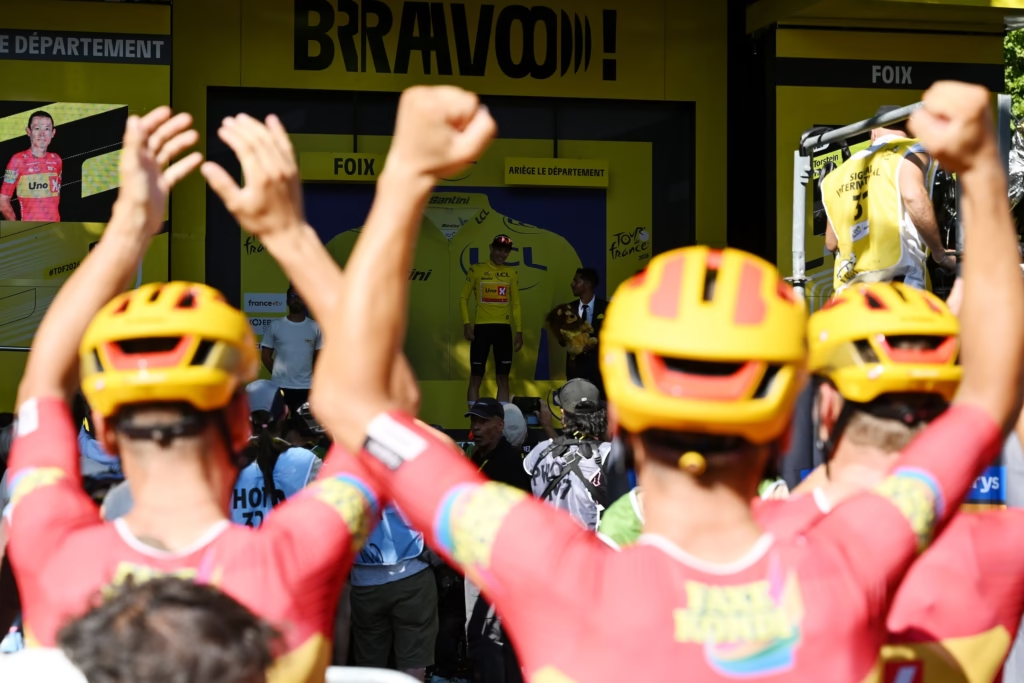 Photo Credit: Getty
Træen’s yellow jersey spell gave the race its first-week twist
Before Pogačar imposed order, Torstein Træen gave the race its early disruption.
His move into yellow after stage 4 changed the tone of the first week. It forced the race to sit in two realities at once: the headline jersey belonged to a breakaway success story, while the long-term race still waited for Pogačar and Vingegaard to collide in the mountains.
That made the Tour feel less predictable. Træen was not a ceremonial yellow jersey. He had earned it, and the time gap created a genuine discussion around whether the favourites had mismanaged the early race. The explainer on why Pogačar and Vingegaard were 7:53 down captured that odd midweek situation.
His withdrawal after the stage 6 crash was a harsh end to one of the first week’s most human stories. The race moved on quickly because the GC battle demanded it, but Træen’s yellow jersey spell still mattered. It gave the opening week a narrative outside the usual favourites, and it showed how quickly an early Tour can shift from opportunity to attrition.
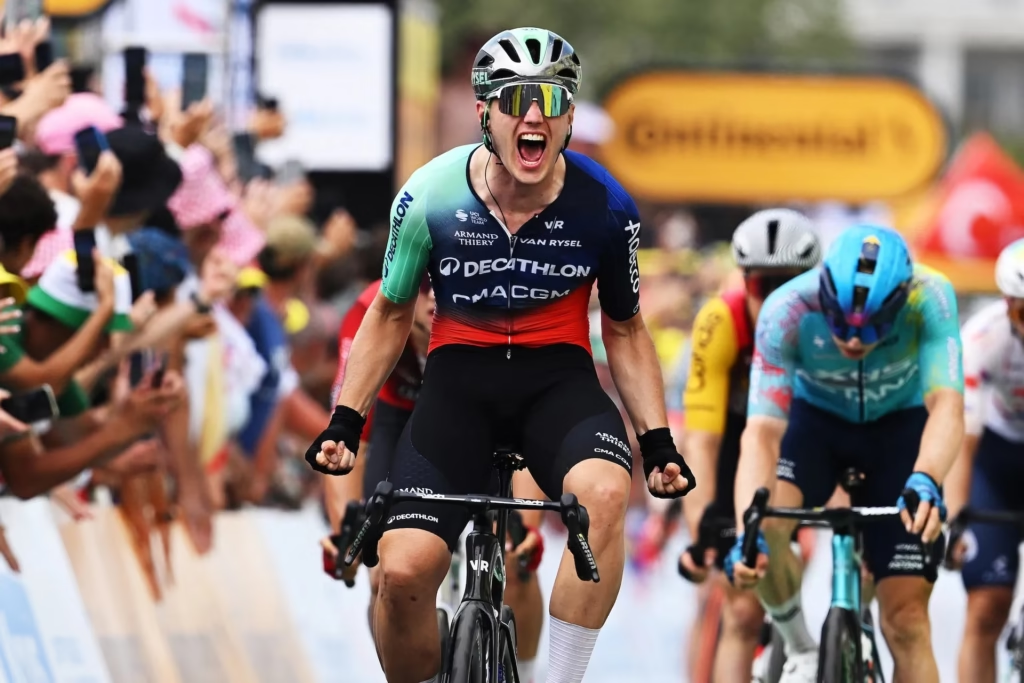 Photo Credit: Getty
The sprint race has been volatile, not predictable
The first week sprint picture has refused to settle.
Olav Kooij’s win in Pau looked like a breakthrough moment, and it was. He moved from promising Tour sprinter to stage winner, and the piece on why Kooij’s Pau win changed the sprint picture still holds up. But the following days reminded everyone that one sprint win does not equal control.
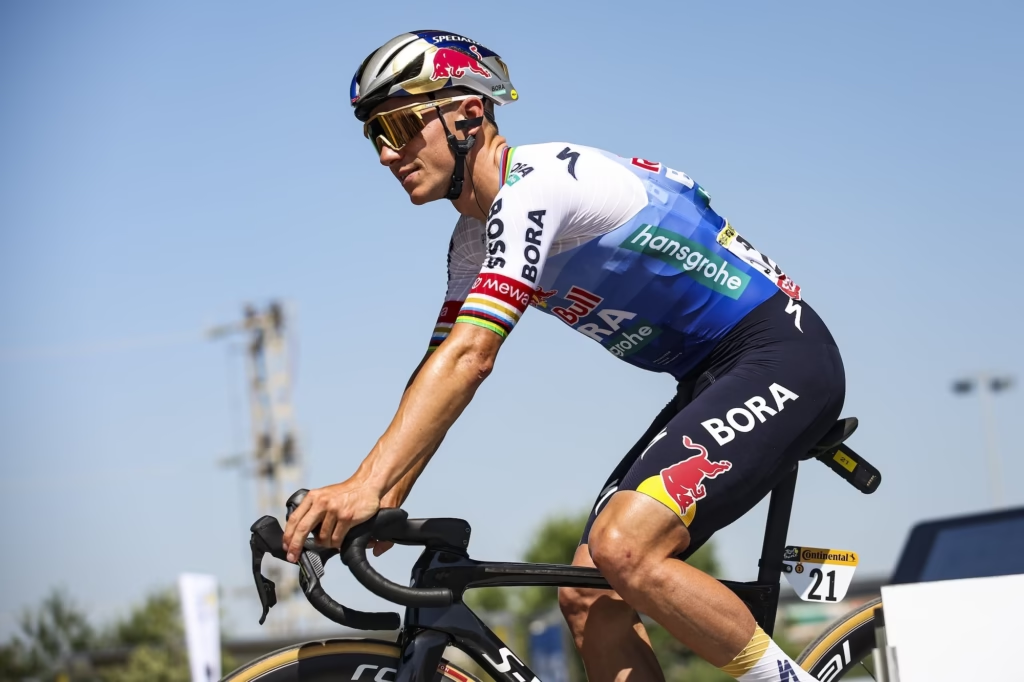
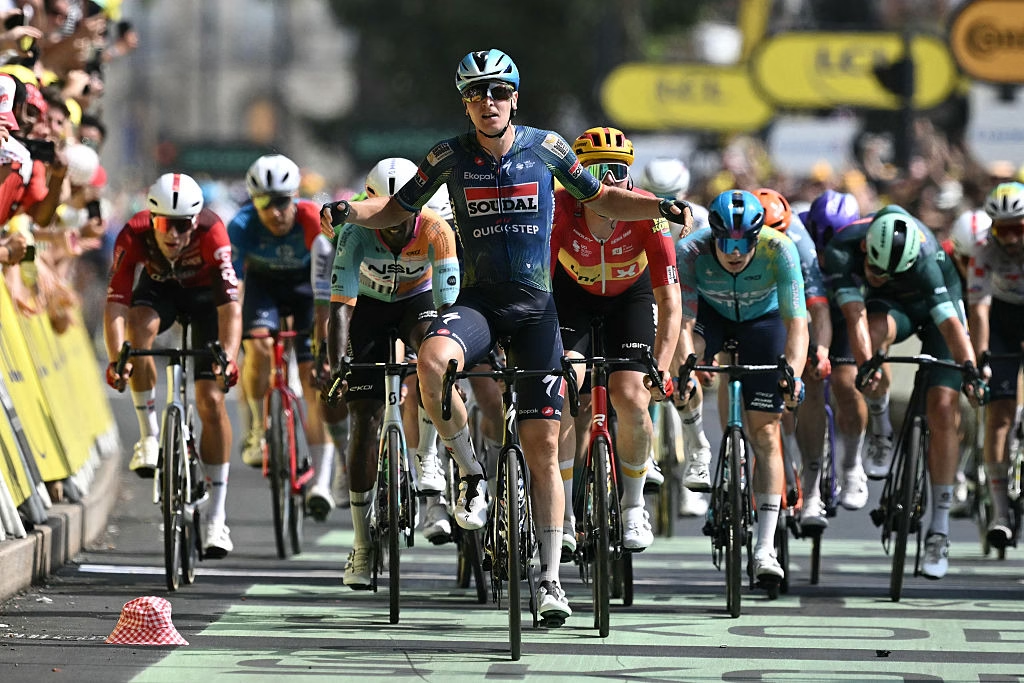
Tim Merlier then won in Bordeaux and Bergerac, giving the race its strongest pure sprint statement. Biniam Girmay has kept scoring. Jasper Philipsen has been close without converting. Mads Pedersen has not needed to dominate bunch sprints because he has built his green jersey campaign across varied terrain.
That is the key to the points classification after week one. Green is not just a fastest-sprinter contest. Pedersen’s advantage comes from range. He can score on reduced days, intermediate sprints and harder finishes. Merlier may be faster in the clean bunch sprint, but he cannot score as reliably when the course bites. Girmay is still close enough to matter. Philipsen’s problem is that he is visible without being decisive.
The question of whether Mads Pedersen can win green looks stronger after stage 9 than it did after Merlier’s double. Pedersen has not killed the contest, but he has reasserted control before the rest day.
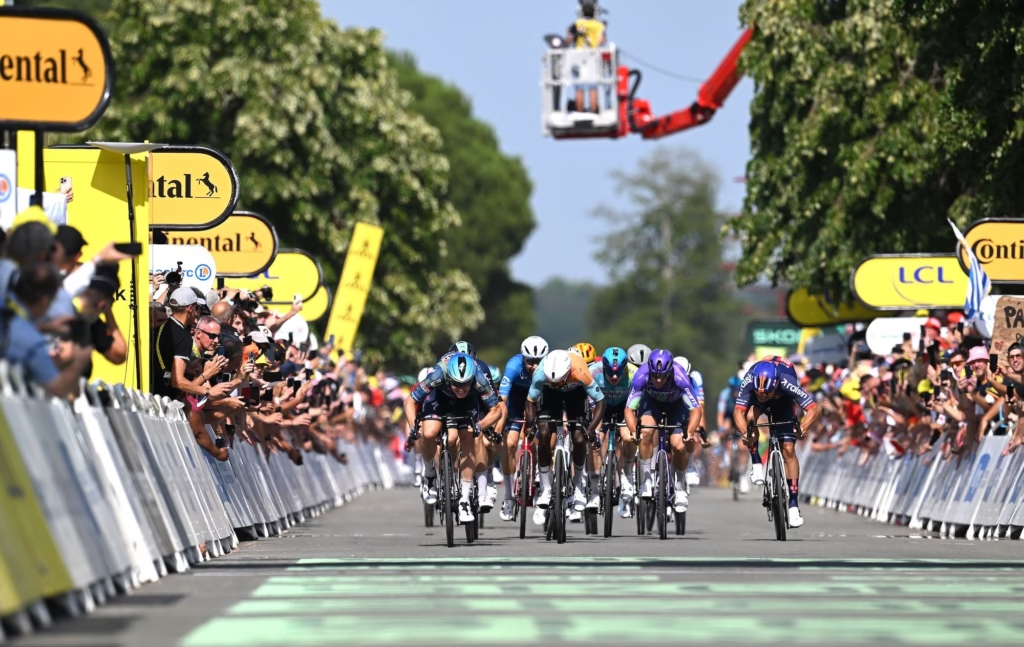 Photo Credit: Getty
Philipsen is the sprinter with the most pressure
Philipsen’s first week has not been a disaster, but it has been uncomfortable.
He is still in the points race. He has been present in sprints. He has not disappeared from the front of the race. But the Tour is judged by conversion, and others have converted. Kooij has Pau. Merlier has Bordeaux and Bergerac. Van der Poel has Ussel for Alpecin-Premier Tech. Philipsen still does not have the stage that changes the feeling around his race.
That is why the question is not simply whether Philipsen is fast enough. He clearly still has speed. The issue is timing, lead-out clarity and whether he is reaching the decisive point of the sprint with the same authority he has shown in previous Tours.
The analysis of what is going wrong for Jasper Philipsen still fits the race after stage 9. He is not out of the green jersey picture, but he is no longer setting the terms of it.
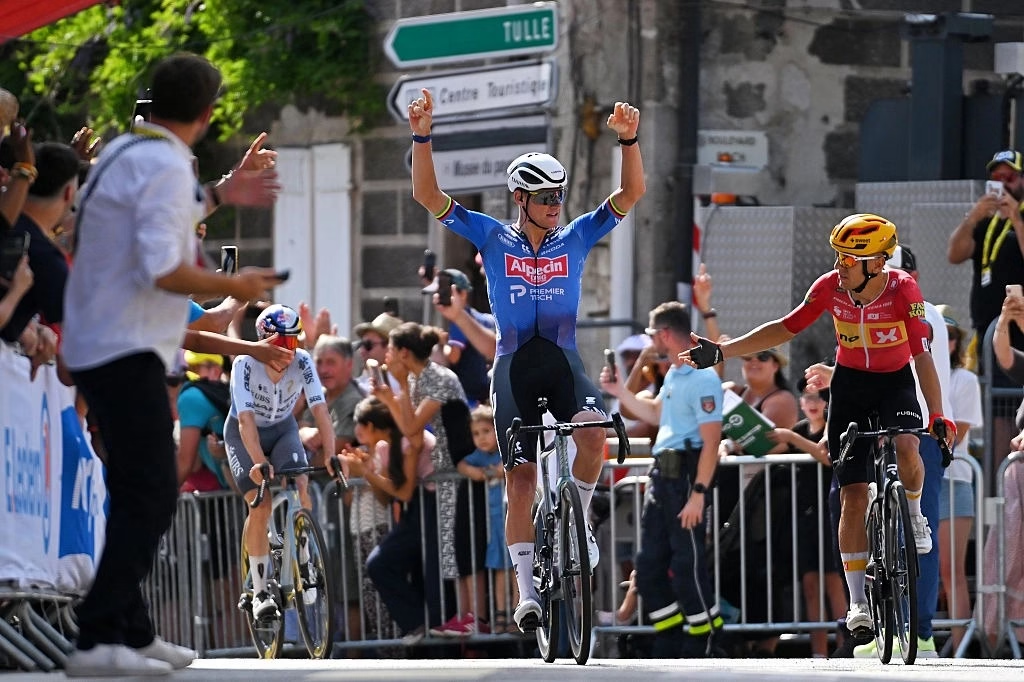 Photo Credit: Getty
Van der Poel’s stage win changed Alpecin’s week
Mathieu van der Poel’s stage 9 win mattered beyond the result sheet.
Alpecin-Premier Tech had been visible without getting the return they wanted. Philipsen had been close but still without a win. The pressure around the team was rising because sprint opportunities had passed and other fast men had already taken their moments.
Van der Poel changed that in Ussel. Winning from the breakaway after a brutal, heat-hit day gave the team a different kind of success, and it shifted the emotional tone of their Tour. It does not remove Philipsen’s sprint questions, but it does mean Alpecin have a stage win before the first rest day.
That matters in the Tour. A team with a stage win can race differently. The chase for validation is gone. The chase for more remains.
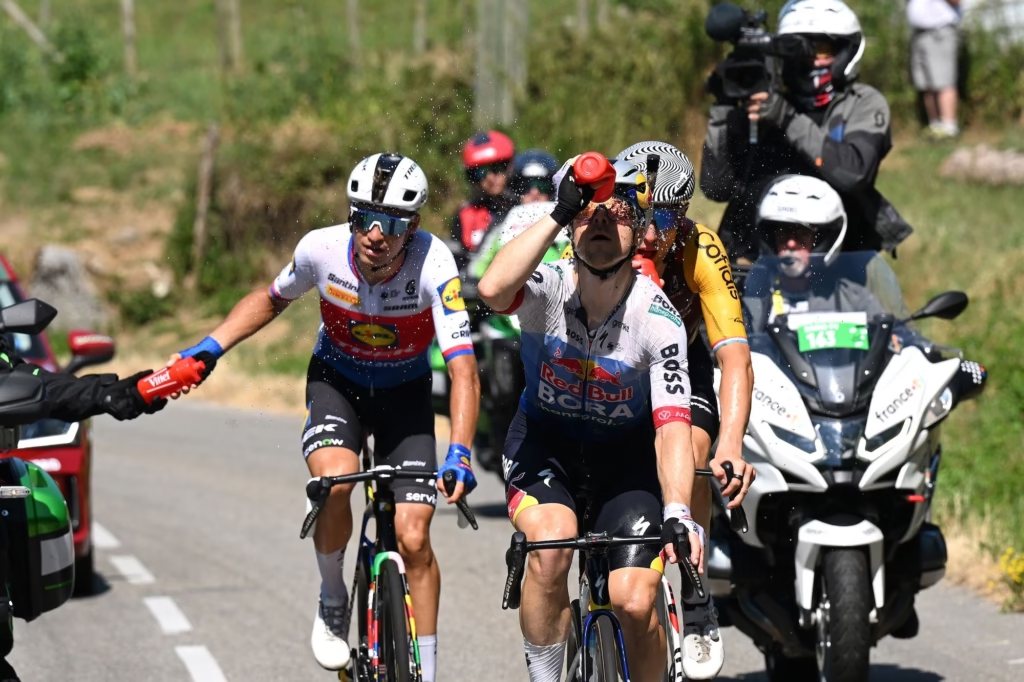 Photo Credit: Getty
Heat became one of the race’s defining early themes
The first week was not only shaped by tactics. It was shaped by heat.
Stage 9 had to be shortened because of a red heat alert in Corrèze, reducing the Malemort to Ussel route before Van der Poel’s win. That turned what already looked like a demanding hilly stage into a wider test of race management, safety and adaptation.
The Tour de France heat protocol explainer has become central to understanding this race, not a side issue. Extreme heat affects feeding, cooling, pacing, team-car logistics, spectator safety and whether stages can be raced as designed. The broader question of whether the Tour de France can survive racing in July heat no longer feels theoretical.
The first week made heat a tactical factor. Riders were not just racing each other. They were racing body temperature, hydration, recovery and the risk of a bad day becoming irreversible.
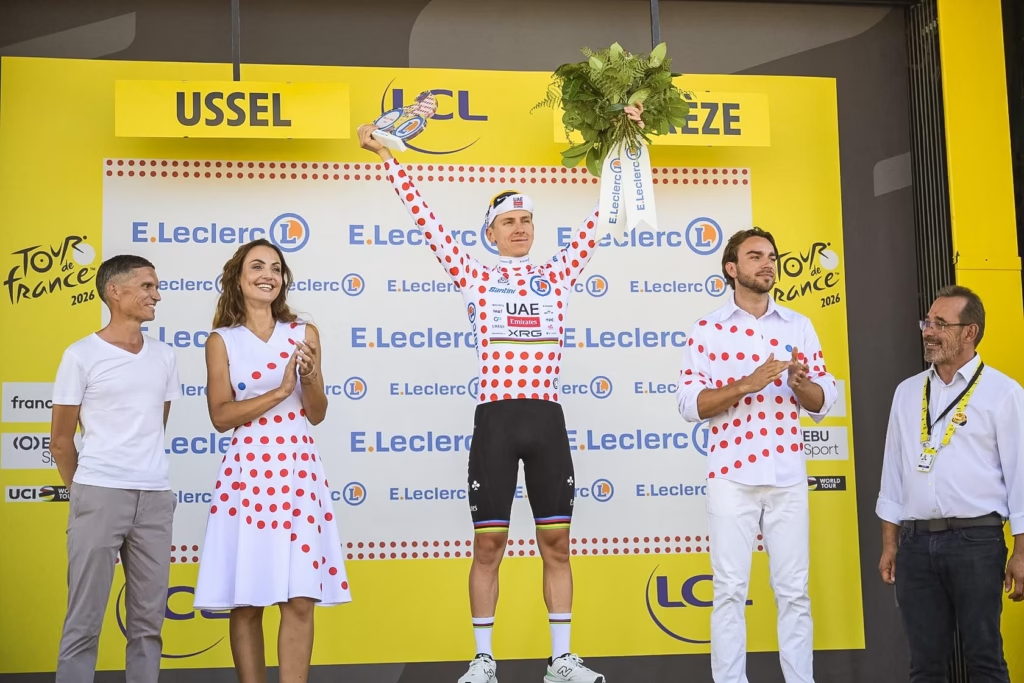 Photo Credit: A.S.O./Charly López
The mountains classification is still waiting to become its own race
The polka-dot jersey has not fully separated from the GC battle yet.
Pogačar leads the mountains classification because of his Tourmalet performance. Vingegaard sits second and has worn the jersey on the road because Pogačar is in yellow. Lenny Martinez, Alex Baudin, Valentin Paret-Peintre, Paul Seixas and Tom Pidcock are all close enough to suggest the competition can still open up, but it has not yet become a specialist’s race.
That may change quickly. Stage 10 offers category 1 points on the Puy Mary and Col de Pertus, with enough climbing to tempt breakaway specialists. If a rider commits to the mountains classification from the Massif Central onwards, the shape of the competition could shift away from the GC favourites.
For now, the Tour de France 2026 climbers guide sits in an interesting place. The jersey is still attached to Pogačar’s dominance, but the route ahead gives room for a more deliberate polka-dot campaign.
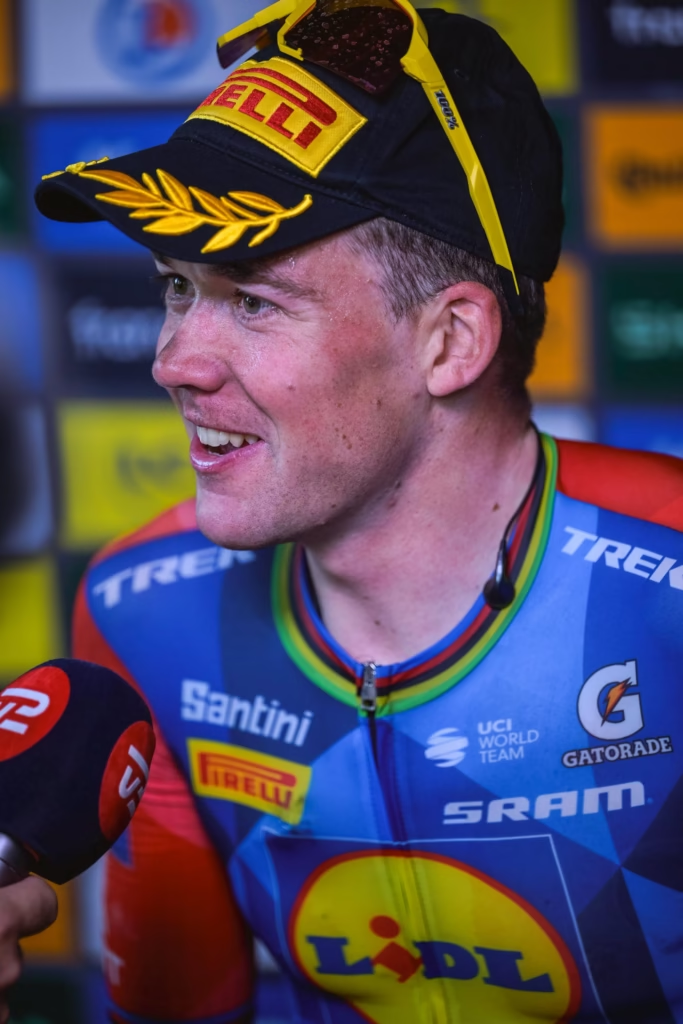 Photo Credit: A.S.O./Charly López
Lidl-Trek have been the deepest team of week one
The team classification is easy to ignore, but Lidl-Trek’s first week has been one of the clearest team performances in the race.
They lead the team classification. Pedersen leads green. Ayuso and Skjelmose are inside the GC top 10. The team has repeatedly influenced reduced days, sprint days and transitional stages. They have not looked like a squad chasing one objective. They have looked like a team with multiple ways to shape the race.
That matters because the Tour rewards depth in different ways. UAE have the yellow jersey and Del Toro in white, which is obviously the strongest headline position. But Lidl-Trek have been involved almost everywhere: GC, green, team classification, breakaways and daily pressure.
If the race becomes more chaotic in the second week, that depth could continue to matter.
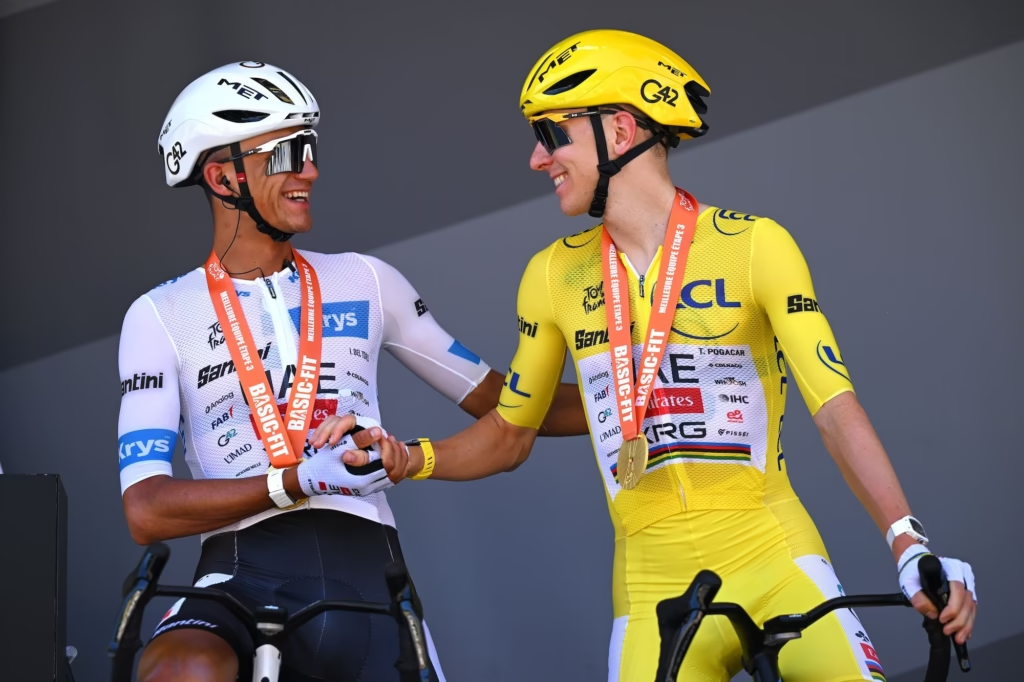
The first week winners and losers
Pogačar is the obvious winner of week one. He has yellow, a major mountain win and a strong time buffer.
Pedersen is another. His green jersey lead looks more robust after stage 9, especially because it is built on versatility rather than a single sprint result.
Del Toro has also had a superb opening week. Third overall and white jersey leader at the first rest day is a major position, even if it now brings its own pressure.
Van der Poel saved Alpecin’s week with the Ussel win. Merlier turned the sprint narrative with back-to-back wins. Kooij got the breakthrough. Træen gave Uno-X a yellow jersey moment that will remain one of the week’s stories, even after his withdrawal.
The losers are more complicated. Philipsen is not losing in the standings, but he is losing the sprint narrative. Vingegaard is still very much in the race, but he is already chasing. Evenepoel is close to the podium but not yet shaping the Tour. The pure sprinters have fewer simple days than they might like, and the heat has made the race more draining than a normal opening week.
What the first week tells us about the Tour ahead
The first week has left the Tour in a strong narrative position.
There is a clear leader, but not an unchallengeable one. There is a clear challenger, but one who must now act. There is a tight podium fight. The white jersey is close. Green has a proper strategic split between Pedersen’s versatility and the sprinters’ top speed. The mountains jersey can still become a real contest. The heat has added an uncomfortable but important modern layer.
The race now moves into a second phase where the question changes. In week one, the question was: who can establish control? Pogačar answered that. In week two, the question becomes: who can disrupt it?
Stage 10 to Le Lioran is the first test of that. It is not the biggest mountain stage of the Tour, but it comes at exactly the right moment: after a rest day, after a heat-shortened stage, with the GC hierarchy set and the chasing teams needing to decide whether they are brave enough to make the race harder.
-
 Photo Credit: Getty
 -
 Photo Credit: Cs-wolves / Wikimedia Commons, CC BY-SA 4.0

First week verdict
The 2026 Tour de France has reached its first rest day with Pogačar in command, but not with every question answered.
He has been the strongest rider in the race and the only rider to reshape the GC by force. Vingegaard remains the obvious threat, but he is now chasing from a clear deficit. Del Toro, Evenepoel, Ayuso and Seixas have made the podium and white jersey fights far more interesting than a simple two-rider Tour would allow. Pedersen has built the best green jersey campaign of the race so far. Van der Poel, Merlier and Kooij have ensured the stage-win narrative is spread across more than one team.
The race is no longer waiting to begin. It has begun, and Pogačar has the advantage. The next week is about whether anyone can make that advantage feel fragile.

