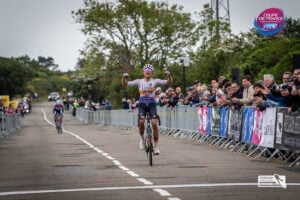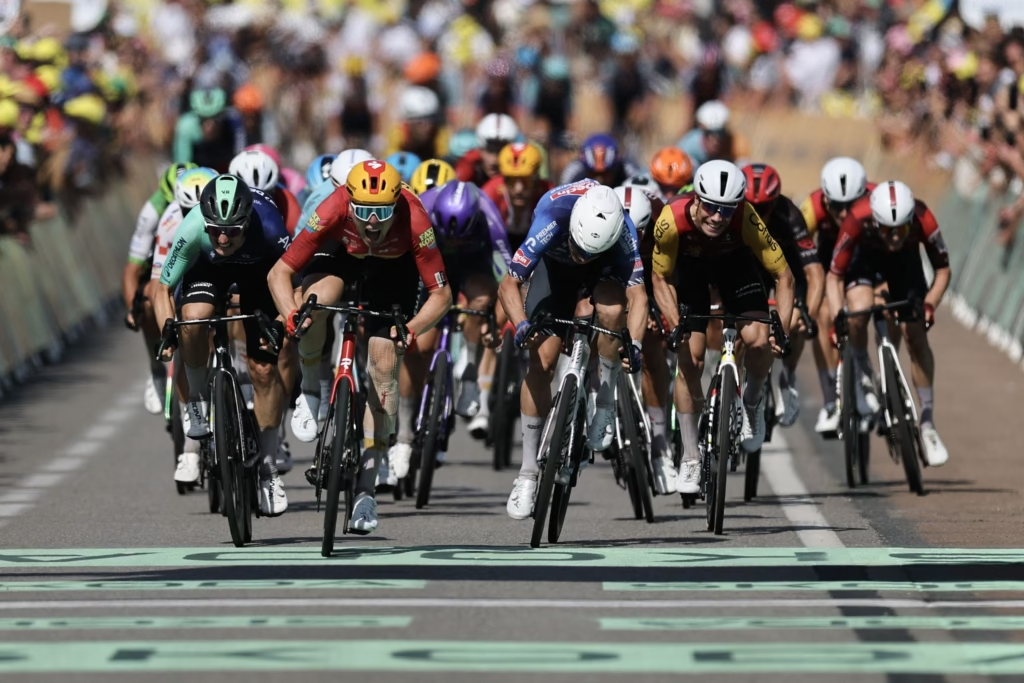
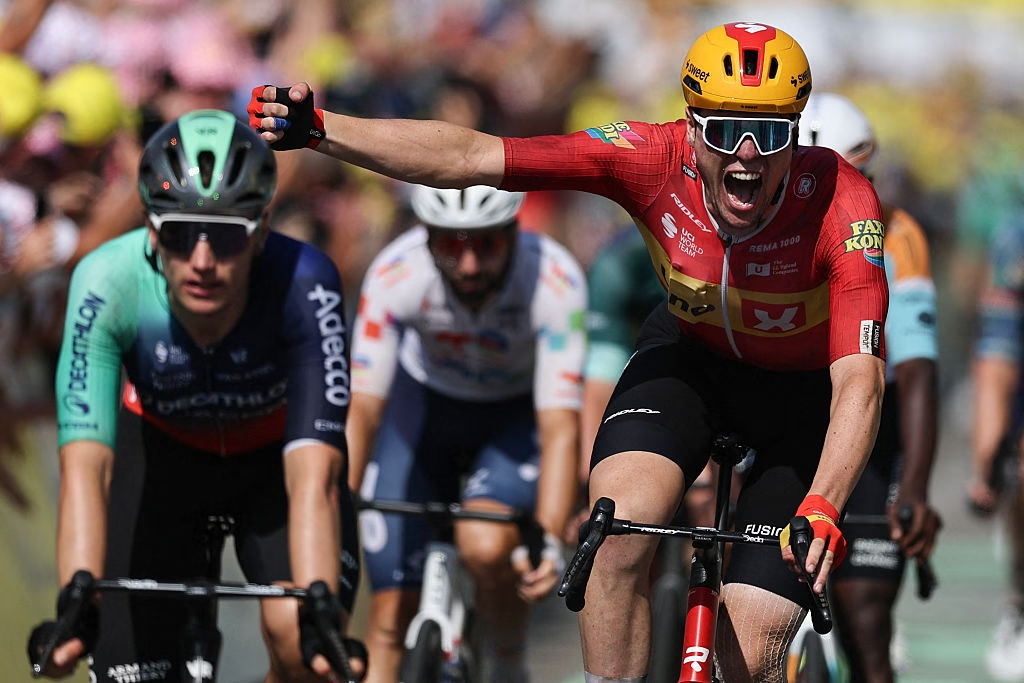
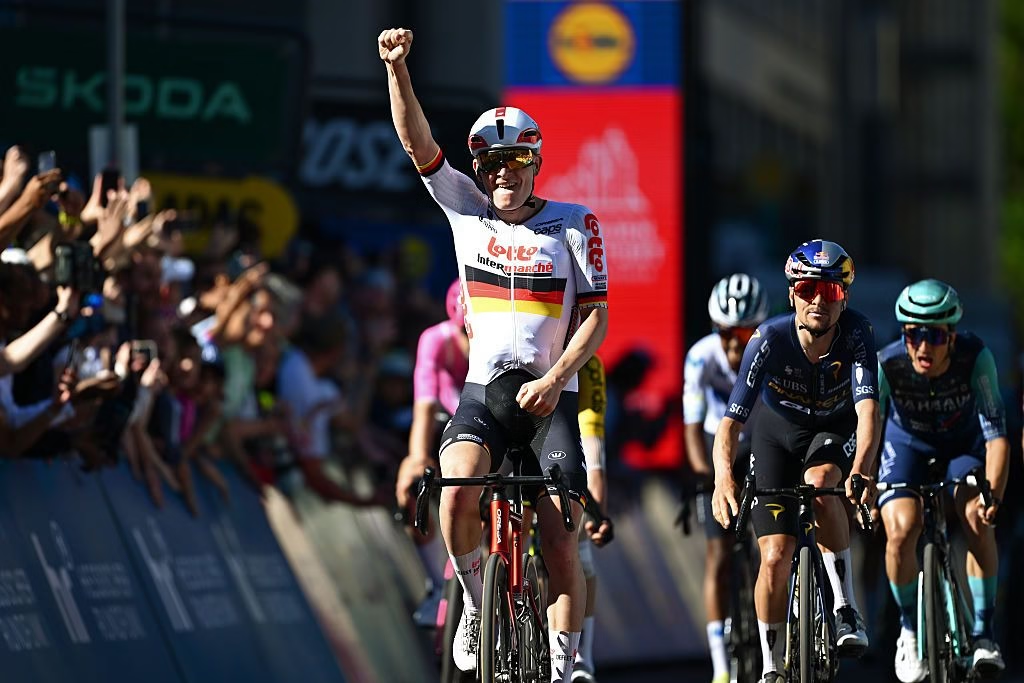
Tour de France stage 11 produced a record that had stood for more than a quarter of a century, with Søren Wærenskjold winning in Nevers after the peloton averaged just under 51km/h.
One day later, the race faces another stage officially classified as flat.
Stage 12 runs for 179.1km from the Circuit Nevers Magny-Cours to Chalon-sur-Saône, creating an immediate question: could the Tour’s road-stage speed record be broken for the second time in two days?
It is possible, but considerably less likely than the flat label suggests.
Stage 12 is longer, contains approximately 1,800 metres of climbing and includes three categorised ascents. The peloton would need to finish in around three hours and 31 minutes to beat the record established on stage 11.
That requires an extraordinary combination of wind, aggressive racing, an efficient breakaway and sprint teams chasing almost continuously.
Our full explainer on why Tour de France stage 11 was so fast looks more closely at how the record was created.
What is the Tour de France speed record?
Stage 11 of the 2026 Tour was completed at an average of approximately 50.9km/h, making it the fastest non-time-trial stage in the history of the race.
Wærenskjold covered the 161.3km route from Vichy to Nevers in approximately three hours and ten minutes.
The performance broke the previous record established by Mario Cipollini on the 194.5km stage from Laval to Blois in 1999. Cipollini’s winning average of 50.356km/h had survived for 27 years before the stage 11 peloton exceeded it.
The complete result and finishing order are covered in our Tour de France 2026 stage 11 report.
Stage 11 was not marginally quick by modern Tour standards.
It was fast enough to push a long-standing historical record close to 51km/h, despite including a breakaway, an intermediate sprint and two categorised climbs.
How fast would stage 12 need to be?
Stage 12 covers 179.1km.
To average more than 50.9km/h, the winner would need to complete the stage in approximately three hours and 31 minutes.
| Average speed | Approximate stage time |
|---|---|
| 43km/h | 4:09:54 |
| 45km/h | 3:58:48 |
| 47km/h | 3:48:38 |
| 50km/h | 3:34:55 |
| 50.9km/h | Around 3:31:10 |
| 51km/h | 3:30:42 |
The Tour’s official timetable is based on expected averages of 43km/h, 45km/h and 47km/h.
Even its fastest published schedule therefore remains almost four kilometres per hour below the record pace required. The organiser expects a fast afternoon, but not one approaching the speed reached on stage 11.
Our Tour de France 2026 stage 12 preview covers the full route, climbs and expected finishing scenario.
The official estimates do not make another record impossible. Stage 11 itself was completed far more quickly than its pre-stage timetable suggested.
They do show the scale of what would be required.
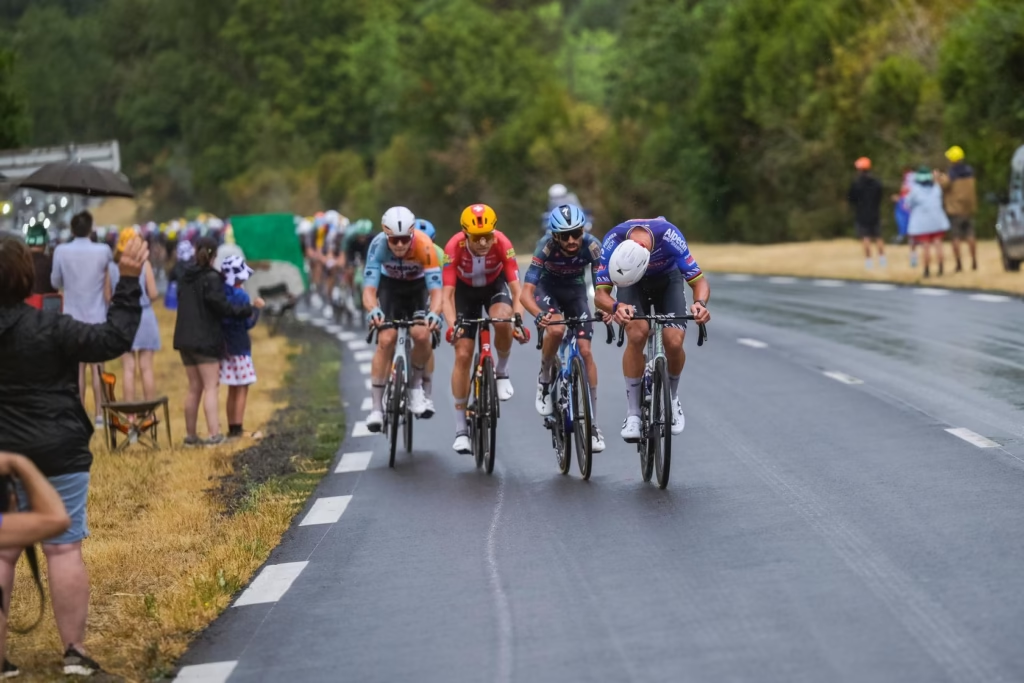 Photo Credit: A.S.O./Charly López
Why was stage 11 so fast?
The stage 11 record came from several favourable conditions occurring together.
It was not simply the result of modern riders producing more power than previous generations.
A favourable wind increased the speed
Wind direction is one of the largest influences on the average speed of a road stage.
A tailwind allows the peloton to travel faster for the same effort. It becomes particularly valuable on wide, exposed roads where riders can maintain momentum without repeated braking and acceleration.
Stage 11 benefited from favourable wind across much of its route towards Nevers.
That raised the natural cruising speed of both the breakaway and the peloton.
The front group could remain efficient without forcing the chasing teams to slow down. Both parts of the race therefore contributed to the record rather than one moving quickly while the other waited.
The breakaway formed without stopping the race
A record-speed stage needs an active opening, but not an hour of disorganised attacking in which riders repeatedly accelerate and then sit up.
Stage 11 found the right balance.
Julian Alaphilippe, Mathis Le Berre, Nelson Oliveira and Anthon Charmig formed a strong four-rider breakaway. The group worked smoothly enough to maintain a high speed, but it never gained an advantage that allowed the peloton to relax.
The escape became a moving target.
It was strong enough to require a chase but not dangerous enough to discourage the sprint teams.
Several sprint teams wanted the same result
A single sprint team may hesitate to accept responsibility for an entire stage.
Stage 11 contained several squads with a realistic chance of winning.
Teams working for Olav Kooij, Tim Merlier, Jasper Philipsen, Biniam Girmay and other fast finishers all had an interest in keeping the breakaway within reach.
That shared workload mattered.
Fresh riders could continue rotating through the chase rather than one team becoming exhausted and allowing the pace to fall.
The breakaway was eventually caught inside the final six kilometres, almost the ideal timing for maintaining a high average.
The route encouraged uninterrupted speed
Stage 11 was largely flat and direct.
There were climbs, but none forced the peloton into a long period at mountain-stage speeds. The route also avoided enough technical interruptions for the race to maintain momentum.
Professional riders can travel at more than 55km/h on a flat road without every rider producing an exceptional individual effort because most of the peloton is sheltered from the wind.
The record came from maintaining that efficiency for more than three hours.
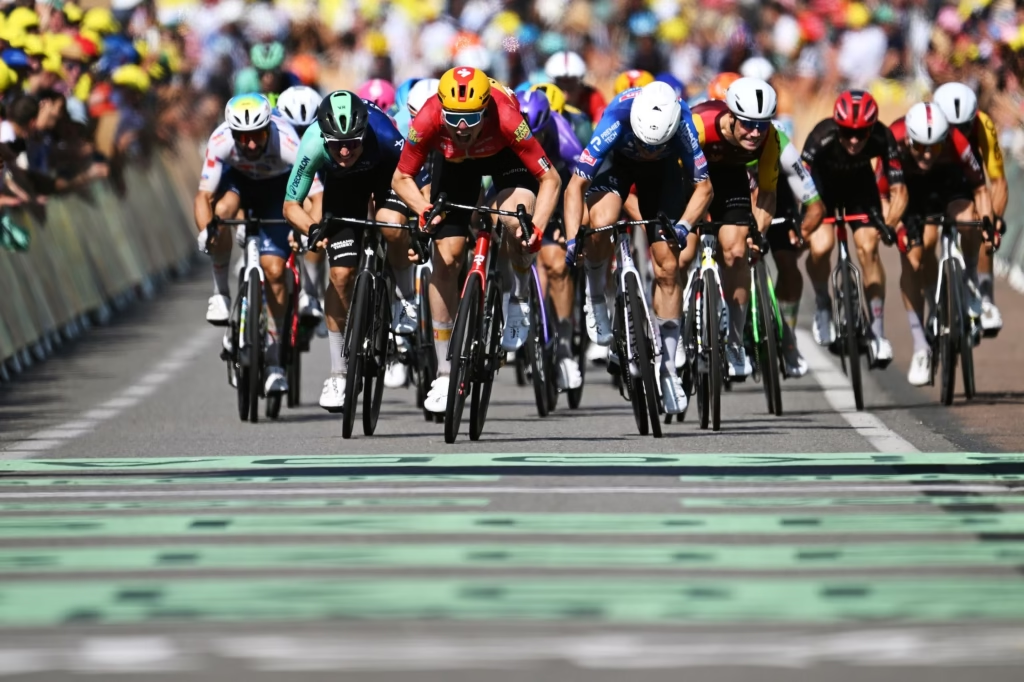
Is stage 12 flat enough to break the record?
The official classification says flat, but stage classifications describe the expected type of winner rather than the complete physical character of the route.
Stage 12 contains around 1,800 metres of climbing, compared with approximately 1,400 metres on stage 11.
It also contains three category-four climbs:
- Côte de Lanty
- Côte de Cuzy
- Côte de Montagny-lès-Buxy
The first two appear during the middle of the stage. The final climb is crested with 19.7km remaining.
None should prevent a bunch sprint.
Together, however, they make maintaining an average above 50.9km/h more difficult.
Climbing slows the race even when the gradients are modest. Descents can restore some of that speed, but corners, road furniture and changes of direction often prevent riders from recovering every second lost uphill.
A stage can be flat enough for a sprint finish without being flat enough to produce a historical average speed.
The wider ranking of the Tour’s likely bunch-finish opportunities is covered in our guide to the Tour de France 2026 sprint stages.
Why does the longer distance matter?
Stage 12 is 17.8km longer than stage 11.
That difference may not sound substantial, but it adds more than 20 minutes of racing at record pace.
The peloton must maintain the required speed for longer while managing fatigue from the previous day.
Stage 11 was already raced at an unusually high intensity. Riders did not receive a conventional transition stage before attempting another flat finish.
The sprinters and their lead-out riders may still be motivated, but the teams responsible for the chase have less energy available than they did in Vichy.
The longer distance also creates more opportunities for the speed to fall:
- A slower breakaway formation
- A temporary ceasefire in the peloton
- More climbing
- Additional feeding
- Rain or wet roads
- Technical sections
- Teams preserving riders for the final hour
To break the record, the race cannot afford many quiet periods.
The breakaway needs to be almost perfectly judged
The composition of the breakaway may determine whether stage 12 even approaches the record.
A small group of strong riders working efficiently can help create a fast stage. It gives the sprint teams a reason to chase while remaining manageable.
A weak breakaway may be allowed to gain time before the peloton begins working seriously.
A very strong or tactically dangerous group could produce a different problem. Teams may spend the opening hour attacking and closing moves before an acceptable break finally forms.
That type of stop-start racing feels aggressive but does not always produce the highest average.
The ideal record attempt would involve:
- A strong break forming quickly.
- The peloton keeping the gap below three minutes.
- Several sprint teams sharing the chase.
- Little interruption from crashes or technical roads.
- The escape being caught close to the finish.
Stage 11 followed that pattern unusually closely.
Repeating it on the next afternoon would require another near-perfect tactical sequence.
Our beginner’s guide to the Tour de France explains why the peloton sometimes allows a breakaway to build a large lead and why that can reduce the overall stage speed.
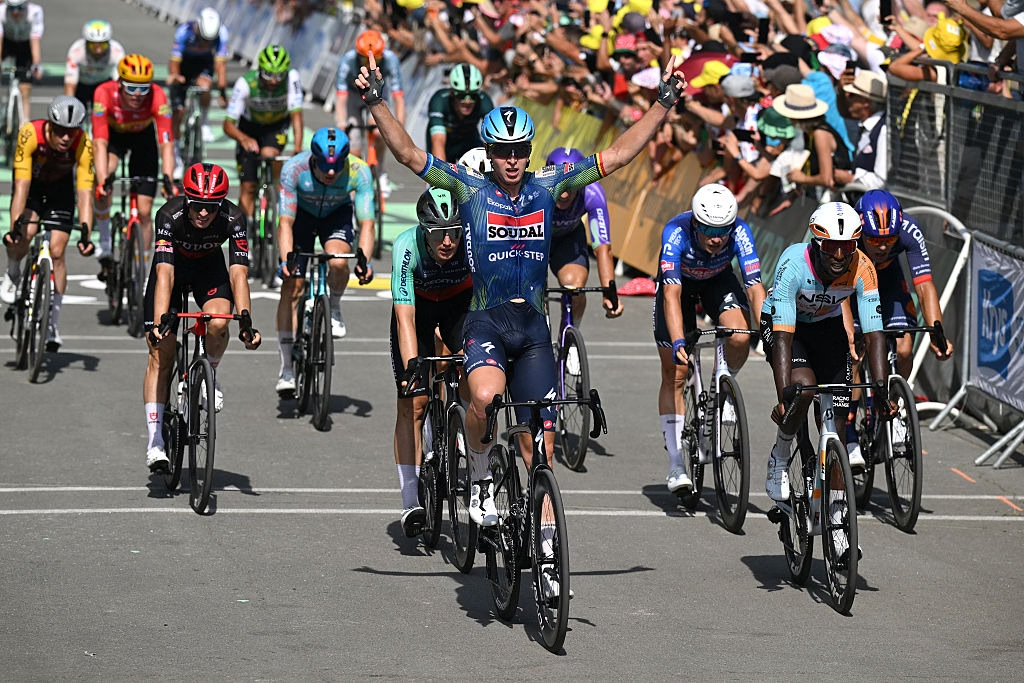 Photo Credit: Getty
Sprint-team control could make stage 12 fast
Stage 12 is one of the remaining clear opportunities for the pure sprinters.
That creates a reason for several teams to chase.
Kooij finished second on stage 11, Philipsen took third after his initial relegation was reversed and Merlier missed the leading positions despite already winning twice during the Tour.
Wærenskjold will also arrive with confidence after his Nevers victory.
His result gave Uno-X Mobility the response it needed following a difficult opening half of the race, as explored in our analysis of Søren Wærenskjold’s stage 11 victory.
Those competing ambitions should prevent a breakaway from receiving complete freedom.
The green jersey contest adds another source of speed. Mads Pedersen, Girmay and Philipsen all have reasons to contest the early intermediate sprint and the finish in Chalon-sur-Saône.
Pedersen’s route towards winning the competition is examined in our analysis of whether Mads Pedersen can win the Tour de France green jersey.
The problem is that sprint-team interest alone does not guarantee record pace.
Teams chase according to the time gap, not the speedometer. If the breakaway is only two minutes ahead, the peloton can reduce the pace and still remain in control.
Stage 11 became record-fast because the natural speed required to manage the gap was already exceptionally high.
Wind matters more than the flat label
A strong tailwind would transform the record discussion.
A headwind would almost end it.
Air resistance is the main force riders must overcome at high speed. The amount of power required rises sharply as speed increases, which is why the difference between averaging 47km/h and 51km/h is much larger than the numbers suggest.
The peloton reduces that cost through drafting, but it cannot remove the influence of wind entirely.
A tailwind can allow the race to remain above 50km/h without every rider working at the limit.
A headwind may reduce the average even if the stage contains more attacking and feels harder.
Crosswinds create a more complicated picture.
They can make the race extremely intense by producing echelons and GC positioning battles. That does not always mean a record average because riders may struggle to organise an efficient paceline across the road.
The fastest stages are not necessarily those containing the greatest competitive tension.
They are those in which the energy of the peloton is converted into forward speed with the least interruption.
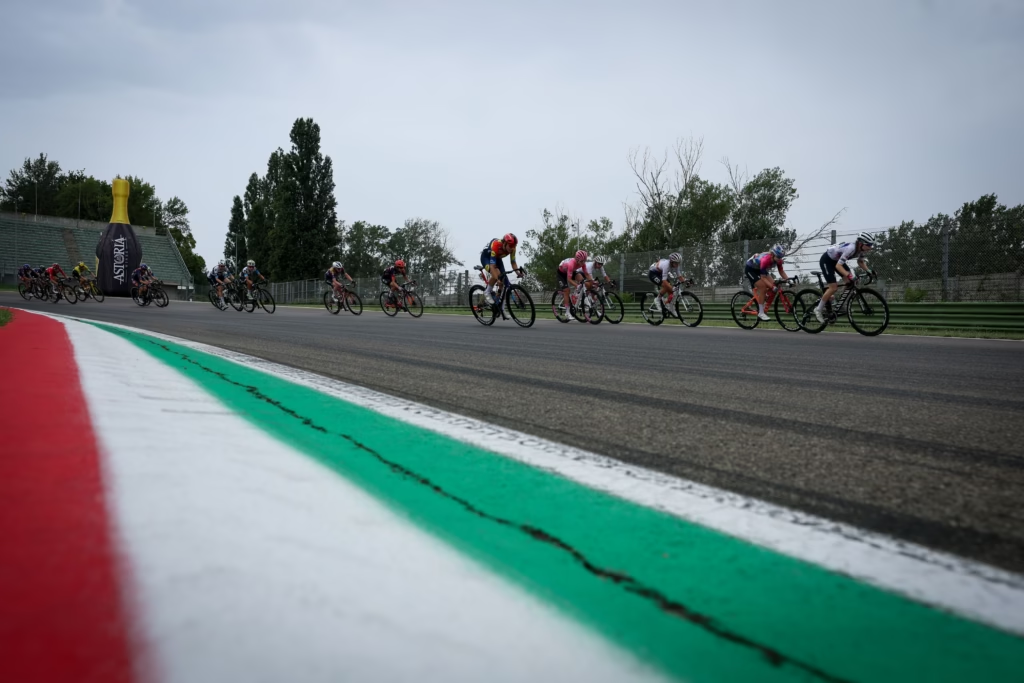 Photo Credit: LaPresse
Could the motor-racing circuit create a fast start?
Beginning at the Circuit Nevers Magny-Cours adds an obvious connection with speed, but the venue itself will not determine the stage average.
The neutralised section begins within the circuit before the riders leave for the public roads.
Once the racing starts, the same factors apply as on any other stage: wind, breakaway formation, terrain and the willingness of the peloton to chase.
The motor-racing setting may encourage an aggressive opening and provides wide roads around the start.
It cannot compensate for almost 180km of changing terrain afterwards.
The confirmed start time, television schedule and expected finish window are included in our Tour de France stage 12 live viewing update.
Why is the record harder to repeat than it looks?
Stage 11 may create the impression that averages close to 51km/h have become normal in the modern Tour.
They have not.
Modern equipment, aerodynamic clothing, improved nutrition, faster tyres and stronger collective pacing all contribute to higher speeds. Riders are also increasingly skilled at maintaining efficient formations.
Those developments explain why the old Cipollini record became vulnerable.
They do not explain why it survived from 1999 until 2026.
A record requires more than the peloton being physically capable of riding at that speed. The race must also produce the right incentives for them to do so from the first kilometre to the last.
Most flat stages contain periods in which the peloton decides not to race hard.
The breakaway may be allowed six minutes. Riders may stop for natural breaks. Teams may collect food. The bunch may reduce its speed to avoid catching the escape too early.
None of those moments looks dramatic, but each makes a record less likely.
Stage 11 contained very little wasted time.
That is difficult to reproduce by design.
Would a faster finish be enough?
No.
Average speed applies to the entire stage.
The final 20km into Chalon-sur-Saône may be completed at more than 55km/h, particularly after the summit of the Côte de Montagny-lès-Buxy.
That cannot compensate for several slower hours earlier in the stage.
If the opening 100km average 47km/h, the peloton would need an implausibly fast final 79km to raise the overall figure above 50.9km/h.
The record discussion will therefore become clearer during the first hour.
If the race covers more than 50km and the breakaway remains close, another attempt may be developing.
If the opening average settles around 44 to 46km/h, the record will already be effectively out of reach.
What would need to happen for stage 12 to set a new record?
Stage 12 could break the record if most of the following conditions align:
- A favourable tailwind across much of the route
- A breakaway forming quickly
- A small but strong group escaping
- Sprint teams beginning the chase immediately
- The gap remaining small throughout
- Dry roads and few technical interruptions
- No prolonged crash neutralisation
- Aggressive racing around the intermediate sprint
- The final climb being ridden at full pace
- A fast approach into Chalon-sur-Saône
Remove two or three of those elements and the average is likely to fall below the stage 11 mark.
The 1,800 metres of climbing and longer distance already give stage 12 a more difficult starting point.

Could the record still fall later in the Tour?
Stage 12 may be the most immediate opportunity, but it is not necessarily the best remaining route for a record.
Later flat stages could contain less climbing or a stronger prevailing tailwind.
They also come with disadvantages. Rider fatigue grows through the Tour, teams lose domestiques and fewer sprinters may remain in the race.
The speed record is therefore not simply a question of finding the flattest profile.
It requires the right route on a day when enough teams still possess the riders and motivation to chase continuously.
Stage 11 combined all of those conditions.
Will stage 12 break the Tour de France speed record?
The most likely answer is no.
Stage 12 should still be fast. It is officially classified as flat, several sprint teams have a reason to control the breakaway and the final 20km should be completed at a very high speed.
Breaking the record requires more.
The stage is longer than the route to Nevers, contains an additional 400 metres of climbing and has a late ascent capable of disrupting the rhythm of the chase.
The riders would need to reach Chalon-sur-Saône in approximately three hours and 31 minutes.
The Tour’s fastest official estimate is nearly 18 minutes slower than that target.
Stage 11 proved that official schedules can be beaten dramatically. It also showed how exceptional the circumstances must be.
The record could fall again.
Repeating a once-in-27-years combination of wind, tactics, terrain and sustained sprint-team control on consecutive days would be even more remarkable than breaking it the first time.