
Søren Wærenskjold’s victory in Nevers did not erase the disappointment of Torstein Træen leaving the Tour de France.
It gave Uno-X Mobility somewhere new to place it.
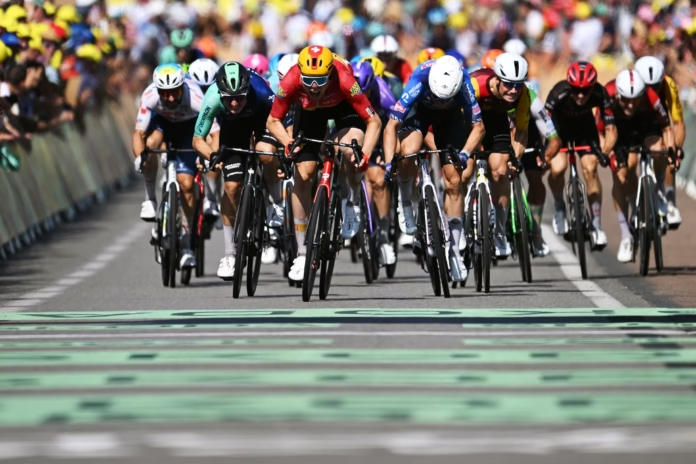
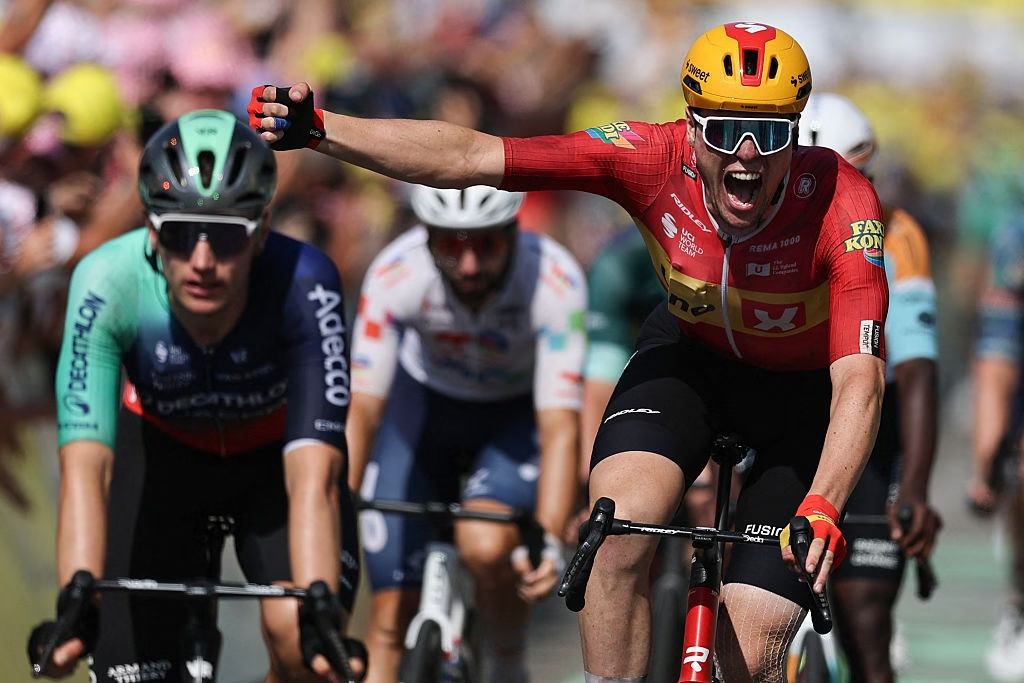
Five days after Træen did not start stage 7 with concussion and multiple fractured ribs, Wærenskjold won the fastest road stage in Tour history. He launched his sprint early, powered past Cees Bol and held off Olav Kooij to claim his first Tour stage victory.
The result would have mattered in any circumstances. Wærenskjold had spent several Tours moving closer to a sprint breakthrough without quite reaching it.
For Uno-X, it carried more weight.
The team’s race had already travelled from Træen taking yellow in Foix, to his crash on the Tourmalet descent, to the abrupt end of what had become one of the Tour’s most human stories.
Wærenskjold provided the response they needed.
Not a replacement for Træen’s story, but proof that the team’s Tour did not have to end with it.
Uno-X had already changed its Tour in Foix
Uno-X arrived at the 2026 Tour with several realistic objectives rather than one defining leader.
Tobias Halland Johannessen offered a general classification option. Magnus Cort and Jonas Abrahamsen brought proven breakaway strength, while Wærenskjold gave the team a powerful rider for sprints, Classics-style finishes and short time trials.
Træen was part of that depth rather than the rider expected to define the race.
Stage 4 changed everything.
A large breakaway reached Foix with enough time to reshape the general classification. Mads Pedersen won the stage, but Træen finished high enough to take yellow and force Tadej Pogačar and Jonas Vingegaard temporarily down the standings.
The full classification shift is covered in our GC and jerseys update after Tour de France stage 4.
It was the first yellow jersey in Uno-X history and only the third time a Norwegian rider had led the Tour, following Thor Hushovd and Alexander Kristoff.
For a team built around Scandinavian development, the symbolism was difficult to overstate.
Træen was not a borrowed international superstar delivering a sponsor’s short-term objective. He was a Norwegian rider representing a Norwegian team, managed by Hushovd, standing in the jersey that had shaped much of the country’s relationship with the Tour.
His own story added another layer.
Træen had recovered from testicular cancer after being diagnosed in 2022. Four years later, he was leading the Tour de France.
Our profile of Torstein Træen as the new Tour de France yellow jersey wearer explains why his breakthrough resonated beyond the normal general classification reshuffle.
The yellow jersey turned Uno-X from one of the race’s active teams into one of its central stories.
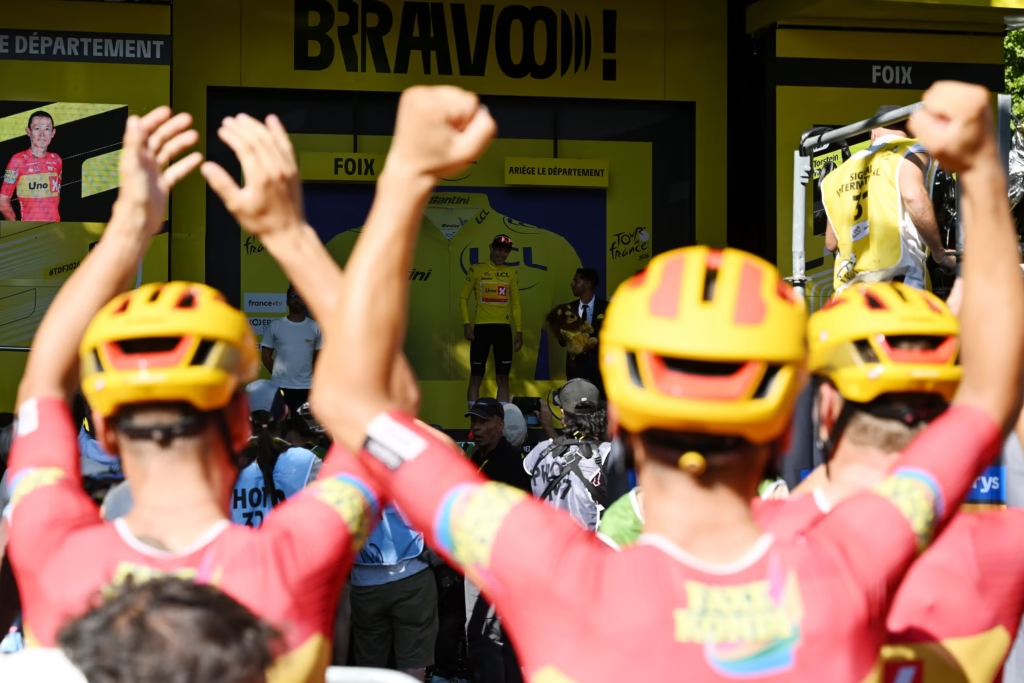 Photo Credit: Getty
The Tourmalet ended the yellow adventure too suddenly
Træen successfully defended yellow through stage 5 to Pau.
Stage 6 always looked likely to end his time in the race lead. The route over the Col d’Aspin and Col du Tourmalet towards Gavarnie-Gèdre provided Pogačar and Vingegaard with their first major mountain opportunity.
Losing yellow would not have reduced what Træen had achieved.
His crash changed the meaning of the day.
Træen clipped the rear wheel of teammate Anders Halland Johannessen during the descent of the Tourmalet and fell heavily. He completed the stage after passing an initial roadside assessment, but further checks diagnosed concussion and multiple fractured ribs.
Uno-X confirmed that he would not start the following morning. The full medical details are covered in our report on Torstein Træen withdrawing from the Tour de France after his stage 6 crash.
The sequence was brutal.
Træen began stage 6 wearing yellow, lost the race lead on the Tourmalet and then lost the rest of his Tour on the descent.
The team had expected the jersey to change shoulders. It had not expected its rider to disappear from the race entirely.
That distinction mattered.
Uno-X could have celebrated two historic days in yellow and immediately redirected its attention towards the next objective. Instead, the riders had to process the sight of a teammate finishing injured before being removed from the Tour.
There was pride in what Træen had achieved, but no sporting conclusion to it.
His withdrawal was a harsh end to one of the opening week’s defining stories, as explored in our Tour de France 2026 first-week analysis.
Wærenskjold’s win came after his own difficult 24 hours
Wærenskjold did not reach stage 11 with the appearance of a rider ready to win.
He crashed during the Bastille Day stage to Le Lioran and finished last, more than 38 minutes behind Pogačar. He began the following morning uncertain about how his body would respond and required treatment for an injured right hand during the stage.
That created a smaller version of the uncertainty Uno-X had already experienced with Træen.
Wærenskjold had survived the crash, but starting did not guarantee that he could sprint.
Uno-X also committed a rider to the breakaway.
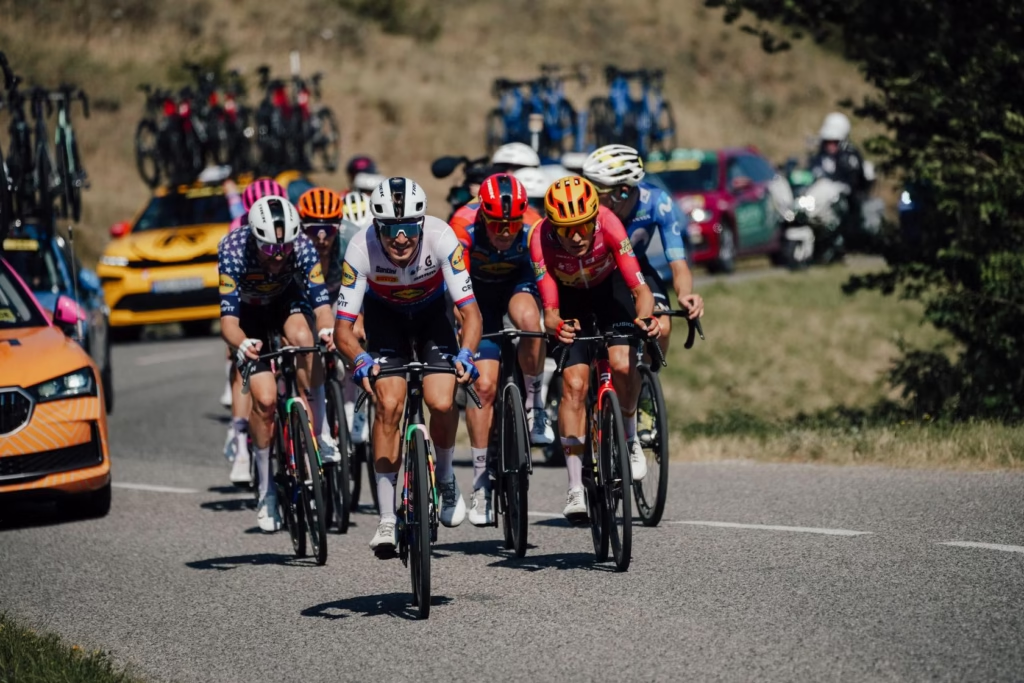
Anthon Charmig joined Julian Alaphilippe, Nelson Oliveira and Mathis Le Berre in the day’s main move. Charmig collected both categorised climbs and remained at the front until the break was caught inside the final kilometres.
The team therefore shaped both versions of the stage.
Charmig gave Uno-X a route towards victory if the break survived. Wærenskjold waited behind in case the sprint teams completed the chase.
That is an important detail.
The victory did not come from Uno-X placing all its resources behind one protected sprinter and waiting for the expected result. It came from the team remaining open to the race and creating more than one possibility.
Charmig was still trying to win when Wærenskjold’s opportunity began.
That attacking depth was already visible in our Tour de France 2026 team-by-team guide, which identified Uno-X as one of the squads most likely to animate the middle of the race.
Wærenskjold did not wait for the perfect sprint
The finish in Nevers briefly slowed after a day raced at a record average speed.
Bol opened a gap inside the final kilometre, creating a moment of hesitation among the riders behind. Wærenskjold recognised it before the more established sprinters.
He accelerated from around 350 metres to go.
That was a long way to commit after 161.3km covered at more than 50km/h. It was also exactly the kind of sprint Wærenskjold needed.
He was unlikely to beat every pure fast man by waiting until the final 150 metres. His advantage lay in the force of his initial acceleration and his ability to sustain speed after opening the sprint early.
Kooij closed during the final metres but could not pass.
Wærenskjold crossed the line first to claim his first Tour victory. Our full Tour de France stage 11 report covers the breakaway chase, record speed and final sprint in Nevers.
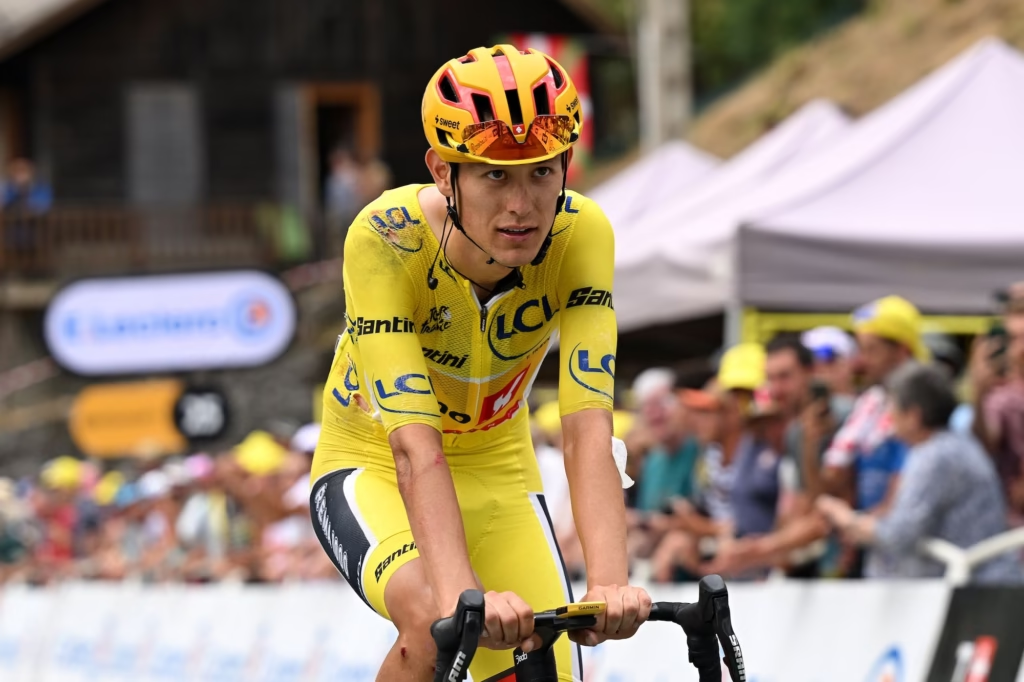
Yellow showed the dream, the stage win showed the depth
Træen taking yellow was a bigger moment than Wærenskjold winning a sprint.
The yellow jersey carries a scale and visibility that no ordinary stage victory can match. It placed Uno-X at the centre of the entire race and gave the team responsibility for controlling the peloton.
Wærenskjold’s win answered a different question.
Could Uno-X respond after its biggest story ended in injury?
Could the riders avoid allowing Træen’s withdrawal to become the emotional conclusion to their Tour?
Could the team create another route towards success rather than spending the rest of July remembering the jersey it had lost?
Nevers answered all three.
The victory also demonstrated the range within the team.
Træen took yellow from a breakaway on a hot, hilly stage to Foix. Charmig attacked on rolling roads into Nevers. Wærenskjold then beat the sprinters.
Those performances came from different riders with different strengths, but all were delivered within the same race.
Uno-X had not simply found one fortunate break.
It had developed enough depth to keep producing new possibilities.
The team’s options were clear before the race in our guide to the Tour de France 2026 breakaway specialists, but Træen and Wærenskjold have now converted that potential into yellow and a stage victory.
The feel-good wildcard description no longer fits
Uno-X spent its first Tours being judged through the language of invitations.
Was the team active enough? Had it justified its place? Could a Scandinavian project compete consistently against the WorldTour squads?
That description was already becoming outdated before Wærenskjold won.
Uno-X arrived at this Tour as a WorldTeam rather than a wildcard hoping to prove it belonged.
The old perception has taken longer to disappear.
The team retains some of the characteristics that made it popular as an outsider. Its Scandinavian identity remains clear, its riders are often willing to attack and its growth has been gradual enough for supporters to follow.
The results now demand a different assessment.
Jonas Abrahamsen gave the team its first Tour stage victory in 2025. Johannessen finished seventh overall, becoming the first Norwegian rider to place inside the Tour’s final top ten.
In 2026, Træen has worn yellow and Wærenskjold has won a stage before the race has reached its second mountain weekend.
Uno-X is no longer an agreeable addition to the Tour.
It is one of the teams shaping it.
Wærenskjold’s victory does not need to become a tribute
There is a temptation to frame every result following an injured teammate’s withdrawal as a dedication.
The connection here is stronger when left more natural.
Wærenskjold did not win because Træen crashed. Uno-X did not need a stage victory to validate the yellow jersey, and Træen’s Tour would remain historic even if the team achieved nothing else.
The two stories still belong together.
Træen’s withdrawal left Uno-X with a sudden emotional gap. A race that had offered more than the team could reasonably have expected then removed its central figure.
Wærenskjold filled the sporting space without pretending he could fill the personal one.
His victory allowed the team to celebrate again.
That is the response Uno-X needed.
Uno-X has already made this a successful Tour
The team still has objectives for the remaining stages.
Johannessen can continue pursuing the general classification. Cort, Abrahamsen and Charmig provide multiple breakaway options, while Wærenskjold has another sprint opportunity immediately on stage 12 to Chalon-sur-Saône.
None of those ambitions is now required to rescue the Tour.
Uno-X has held yellow for two stages and won in Nevers. It has placed riders in important breakaways and remained visible after losing Træen.
The contrast with the team’s first Tour appearance is substantial.
Uno-X once entered the race needing to prove it could contribute.
It now enters individual stages with several credible ways to win.
That is what progression looks like at the Tour. Not a straight line from invitation to victory, but the gradual accumulation of riders and tactics until success no longer depends on one perfect day.
The answer came in Nevers
Træen gave Uno-X its breakthrough image of the 2026 Tour.
The yellow jersey in Foix represented the scale of the team’s ambition and the progress of Norwegian cycling. His crash made the story painfully short.
Wærenskjold could not repair that ending.
He changed what came after it.
Five days after Uno-X lost its yellow jersey wearer from the race, another Norwegian rider opened his sprint early and refused to be caught.
The team’s Tour had moved from breakthrough to heartbreak.
In Nevers, Wærenskjold gave it somewhere else to go.

