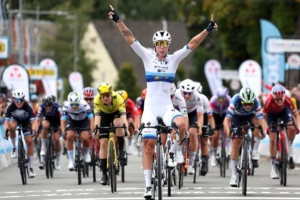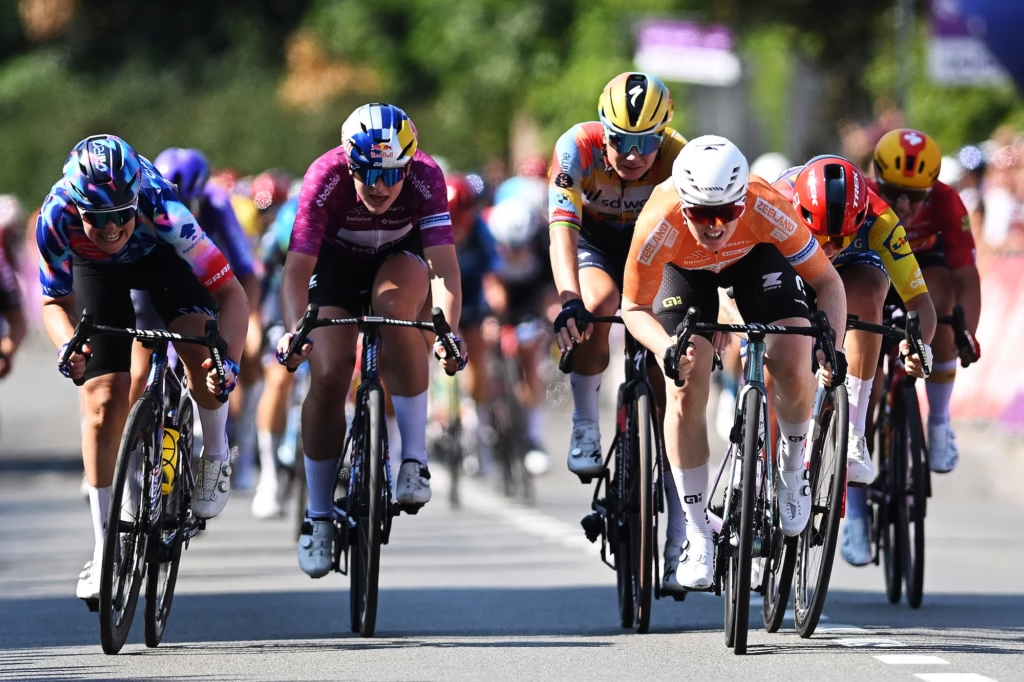
Charlotte Kool took her revenge at the Baloise Ladies Tour with victory on stage 2 in Zulte, beating Nienke Veenhoven and Maike van der Duin in the bunch sprint and moving into the overall race lead.
The Fenix-Premier Tech sprinter had finished second behind Veenhoven the previous day in Knokke-Heist, but this time she got the timing right. Zoe Bäckstedt tried to surprise the sprinters by launching from distance, only for Kool to react, come past and finish the job.
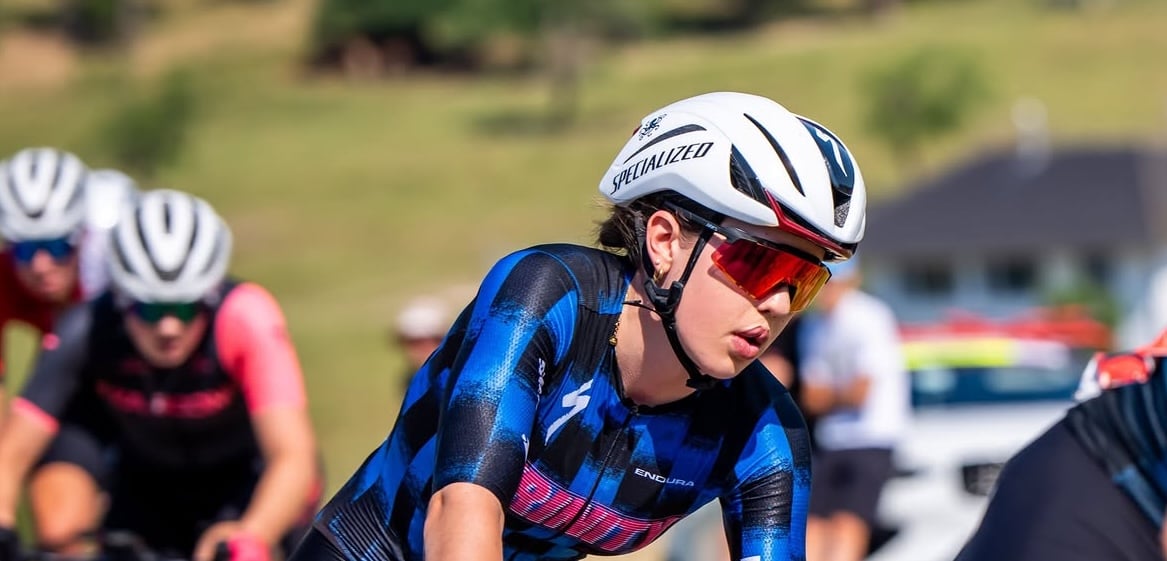
Veenhoven finished second for Team Visma | Lease a Bike, with Van der Duin third for Canyon SRAM. Clara Copponi was fourth for Lidl-Trek, Lotte Kopecky fifth for SD Worx-Protime and Bäckstedt sixth, a result that saw her lose the purple leader’s jersey to Kool.
Kool turns second place into victory
Kool had been one of the obvious favourites for stage 1, only to be overhauled by Veenhoven in the final metres on De Wandelaar. In Zulte, the roles were reversed. Veenhoven again finished strongly, but she had to come from too far back, while Kool had already made the winning move.
The victory gives Kool her fifth win of the season after earlier successes at Omloop van het Hageland, Scheldeprijs, Veenendaal-Veenendaal and GP Mazda Schelkens. It also gives Fenix-Premier Tech a major result in a race where sprint chances are valuable but not always straightforward.
The time bonuses changed the general classification too. Kool now leads the Baloise Ladies Tour by 5 seconds ahead of Bäckstedt, with Veenhoven third at 7 seconds. Fleur Moors is the best Belgian rider, sitting fifth overall at 15 seconds, while Kopecky is seventh at 19 seconds.
For Kool, the leader’s jersey is a bonus rather than a declared objective, especially with Saturday’s time trial still to come. But the stage win was the response she needed after missing out 24 hours earlier.
A more awkward sprint day than the profile suggested
Stage 2 was a 130.4-kilometre race starting and finishing in Zulte. On paper, it was another likely sprint stage, but the route was more complicated than the previous day’s coastal run-in.
The peloton began with two local laps in Zulte before heading towards a middle section with cobbles and short climbs, including the Huisepontweg, Holstraat, Nokereberg and Herlegemstraat. Those sections gave aggressive teams the chance to split the race before the flat finishing laps.
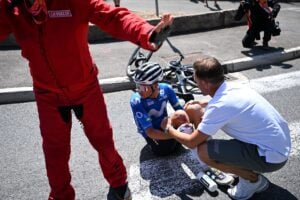
There were also notable absences after the crash on stage 1. Sandrine Tas did not start after going down heavily on the tram tracks in Knokke-Heist. Lotto Intermarché confirmed she was suffering from rib pain, breathing difficulty and bruising to her shoulder and hip, with further hospital checks planned as a precaution. Erin Boothman and Imogen Wolff were also not at the start.
With no mountains classification in the race, Hélène Hesters wore the rushes classification jersey after taking points on stage 1. The intermediate sprints would again give riders a reason to race early, even before the harder middle section.
Teutenberg, Brauße and Cousineau form the early break
Unlike stage 1, the early break did form. After around 15 kilometres, Lea Lin Teutenberg, Franziska Brauße and Clémence Cousineau got away and began to build a lead.
Teutenberg took the first intermediate sprint ahead of Brauße and Cousineau, while the peloton allowed the trio to move clear. Their gap stretched to around 3 minutes as they headed towards the first passage over the Huisepontweg.
Brauße was the best placed rider in the break, starting the day 26th overall at 21 seconds. The German also brought track pedigree to the move, having been part of Germany’s Olympic gold medal-winning team pursuit squad in Tokyo.
Lauren Bates briefly tried to bridge from the peloton, but the move became a chase in no-man’s land. She remained more than a minute behind the leaders and eventually drifted back.
The break gave the stage a different rhythm from Thursday’s race, but the peloton always looked capable of bringing the move under control once the harder section began.
Kopecky tries to open the race
The first real pressure came as the race reached the cobbles and climbs. Lidl-Trek lifted the pace on the Huisepontweg, and the peloton began to sharpen before the Nokereberg.
Femke Markus attacked, with Fenix-Premier Tech reacting quickly to keep things under control for Kool. Hesters also accelerated as the leader of the rushes classification, while SD Worx-Protime began to place riders near the front.
Kopecky made the race’s clearest selection attempt on the Nokereberg. She attacked hard and was joined by Kool and Margaux Vigié, while Bäckstedt immediately tried to limit the gap. It was an important moment because it showed Kool was not simply waiting for a sprint. She was willing to follow Kopecky on the harder terrain as part of her Tour de France Femmes build-up.
The trio did not get far. The cooperation was not strong enough, and the peloton came back relatively quickly. The Herlegemstraat, the final section where the race might naturally have split, also failed to create decisive gaps.
Kopecky had shaken the tree twice, but the sprinter teams had enough control to bring everything back together.
Knijnenburg attacks again
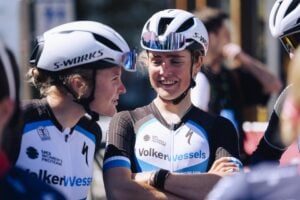
Once the race returned towards the local laps in Zulte, Anne Knijnenburg repeated the aggression she had shown in Knokke-Heist. For the second day in a row, the VolkerWessels rider attacked late and forced the sprinter teams to respond.
This time, she got more room than on stage 1. Her advantage grew towards a minute, and she took the intermediate sprint points as Hesters added more behind to protect her rushes classification lead.
Aileen Schweikart counter-attacked and joined Knijnenburg, before Eline van Rooijen and Noémie Thomson also became part of the move. The two duos came together to create a four-rider break on the Zulte circuits.
For a moment, there was at least a question over whether the group could make the sprinters nervous. But the peloton held them around 20 seconds and never allowed the situation to become too dangerous.
Schweikart and Van Rooijen then decided the group was not moving quickly enough. They pushed on together, dropping Thomson and Knijnenburg to form a leading duo.
Sprint becomes inevitable
The reduced break still had a slender advantage with one lap remaining, but the peloton had the race under control. With 9 kilometres to go, the gap was only 14 seconds. With 5 kilometres remaining, the escape was over.
That left the sprint trains to organise. SD Worx-Protime appeared well placed for Kopecky, while Fenix-Premier Tech prepared Kool. Canyon SRAM also had numbers, with Bäckstedt still in the leader’s jersey and Van der Duin another fast option.
The final kilometre began after the riders crossed the Leie one last time. The trains of Kool and Kopecky looked best organised, but it was Bäckstedt who made the boldest move.
The British rider went early, trying to surprise the pure sprinters and use the hesitation behind. It was an understandable gamble. Bäckstedt had the leader’s jersey to defend, time bonuses to fight for and enough speed to be dangerous if others hesitated.
But the sprint was too long. Kool reacted quickly, came past Bäckstedt and powered towards the line.
Veenhoven comes too late
Veenhoven once again finished fast, but this time she could not repeat her Knokke-Heist comeback. The Team Visma | Lease a Bike sprinter had been left alone in the final kilometre and later admitted she had chosen the wrong lead-out to follow.
“I have a bit of a sour feeling,” Veenhoven said. “I rode a good sprint, but I had to come from a little too far back. That meant I came just too late.”
It was still another strong result after her stage 1 victory, and she remains third overall. But after winning on Thursday, second place in Zulte felt like a missed chance to double up.
“I think we rode well as a team in the dangerous hill zone,” Veenhoven added. “On the local laps, the girls did good work to bring the break back. In the final kilometre I was alone and had to find a way through the teams. Looking back, I gambled on the wrong team for the lead-out. That was a mistake.”
Kool, by contrast, had the better position and the better timing. After being beaten by Veenhoven the previous day, she made sure the sprint did not slip away this time.
Bäckstedt loses purple before the time trial
Bäckstedt’s sixth place was enough to keep her close, but not enough to keep the race lead. Kool’s stage win and bonus seconds moved the Dutch sprinter 5 seconds ahead in the general classification.
The result leaves the race finely balanced before Saturday’s double stage day in Maaseik. The morning brings an 8.4-kilometre individual time trial, where Bäckstedt will be expected to make a serious attempt to regain the purple jersey. The afternoon then brings a 104.8-kilometre road stage, another chance for the sprinters if the race comes back together.
Bäckstedt admitted she had deliberately stayed out of the very front of the bunch for much of the stage, often riding near the tail of the peloton to avoid the worst of the fight for position. When the sprint came, she tried to catch the sprinters out by going from long range, but it did not work.
Her focus now shifts to the time trial, where the prologue winner should be one of the strongest favourites. Kool herself was realistic about that threat, noting that Bäckstedt is in a different class against the clock.
That makes the race lead useful for Kool, but not secure. She has taken control, but Saturday morning is likely to reshape the classification again.
Kopecky active but fifth
Kopecky’s fifth place did not match the work she put into the stage. She had twice tried to make the race harder, especially on the Nokereberg, and SD Worx-Protime looked well organised on the finishing laps.
But the sprint did not come off. Kopecky had been ninth in both the prologue and stage 1, and although this was a better result, she still did not land the podium finish or stage win she would have wanted.
There were positives in the way she raced. She was attentive when the road became harder, willing to attack, and present in the finale. But on a day that still came back to a flat bunch sprint, Kool, Veenhoven and Van der Duin had the sharper finish.
For Moors, seventh overall after the stage and best Belgian rider, the race remains promising. For Copponi, fourth on the stage was another reminder that Lidl-Trek have a strong sprint option if the finish opens up differently.
Kool gets the stage and the jersey
Kool’s win changed the feel of the Baloise Ladies Tour. After Bäckstedt’s prologue and Veenhoven’s Knokke-Heist sprint, stage 2 gave the race a third Dutch success in as many days and moved a pure sprinter into the leader’s jersey.
The question is how long she can keep it. Bäckstedt is only 5 seconds behind and has the time trial to come. Veenhoven is 7 seconds down and still sprinting well. Van der Duin, Copponi, Moors and Kopecky are all close enough for bonus seconds and stage results to matter.
Stage 2 looked like it might be broken open on the cobbles and short climbs, but the sprinter teams were strong enough to bring everything back. Kopecky tested the race, Knijnenburg attacked again, Schweikart and Van Rooijen kept the late move alive, and Bäckstedt tried to catch the sprinters out.
Kool had the answer. A day after being beaten late, she won the sprint, took the stage and pulled on purple.
Baloise Ladies Tour 2026 stage 2 result
Results powered by FirstCycling.com
Main photo credit: Getty