
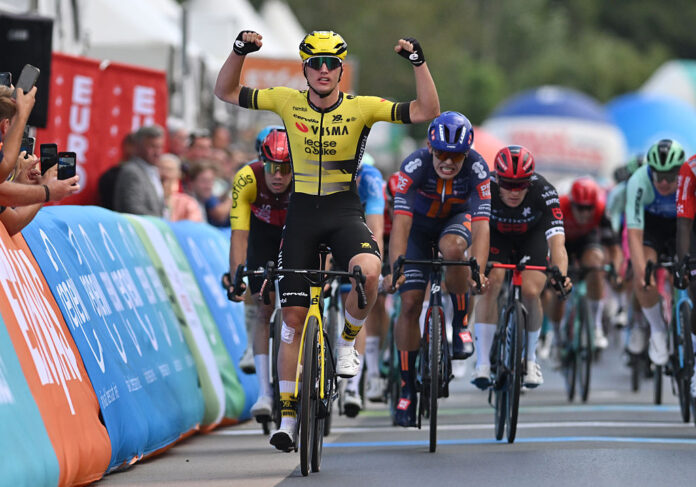
The Renewi Tour has changed name often enough that even experienced cycling fans can lose track of what they are watching.
The Eneco Tour, BinckBank Tour, Benelux Tour and Renewi Tour are all versions of the same modern stage race, a WorldTour event built around the roads of Belgium and the Netherlands. Beneath the sponsorship changes, its identity has remained remarkably consistent: flat and exposed roads for the sprinters, short steep climbs for the Classics riders, occasional time trials, and a general classification often decided by seconds rather than minutes.
The current race dates from 2005, when the Tour of the Netherlands was reshaped for the newly created UCI ProTour. Since then it has developed into one of the most distinctive stage races outside the Grand Tours, with winners ranging from powerful time triallists to riders better known for the cobbled Classics.
For the current edition, our beginner’s guide to the Renewi Tour 2026 covers how the race works, what kind of riders it suits and what to expect from the five stages.
From the Tour of the Netherlands to the Eneco Tour
The roots of the race go further back than 2005.
The Tour of the Netherlands was first held in 1948 and eventually became a regular fixture on the European calendar. The creation of the UCI ProTour for 2005 provided an opportunity to turn it into something broader and more ambitious.
The result was the Eneco Tour of Benelux, with racing across Belgium and the Netherlands rather than a stage race centred solely on Dutch roads.
American Bobby Julich won that first edition in 2005, establishing a race that quickly became unusual within the top level of the sport. There were no Alpine summit finishes and no obvious terrain for pure climbers to dominate. Instead, the general classification had to be created using wind, short climbs, technical roads and time trials.
The shortened Eneco Tour name soon became familiar to cycling fans and remained in place for more than a decade.
The Eneco Tour found a different way to create GC gaps
The geography of Belgium and the Netherlands shaped the race from the start.
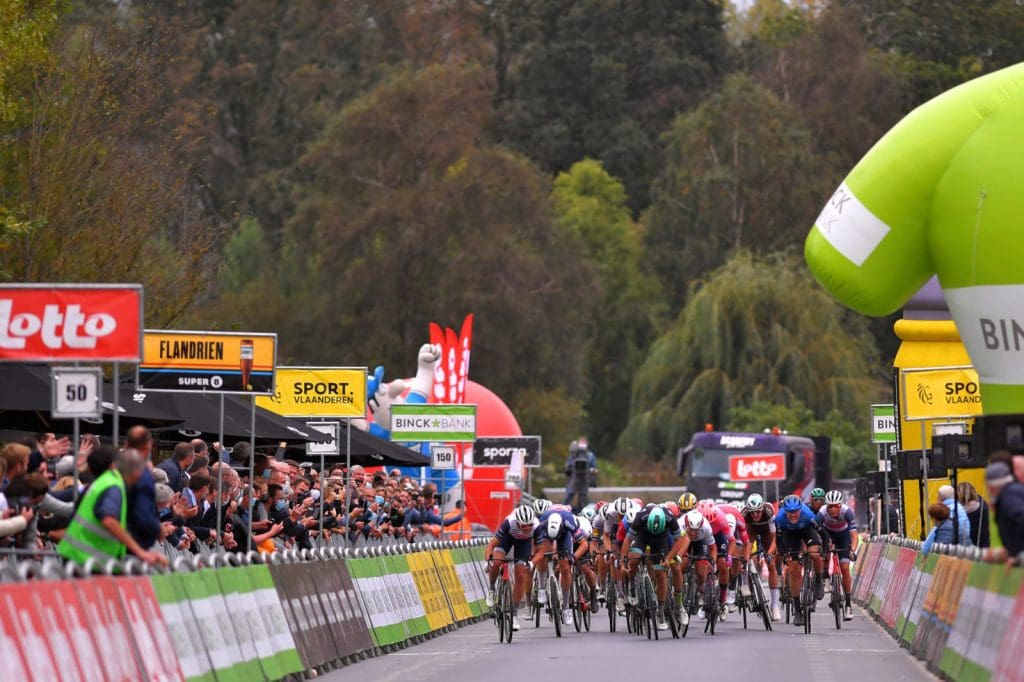
Without major mountain ranges, organisers leaned into the features the region already had. Exposed flat roads could become difficult when crosswinds arrived, while the Belgian stages increasingly borrowed terrain associated with the spring Classics.
Cobbles, short steep climbs, twisting local circuits and repeated accelerations became more important than long mountain passes.
Time trials added another way to separate riders.
The result was a stage race with an unusual type of overall contender. Winning required power, positioning and tactical awareness as much as climbing ability. Riders who could perform in the Tour of Flanders or Amstel Gold Race often had a much better chance than a lightweight Grand Tour climber.
Edvald Boasson Hagen won consecutive editions in 2009 and 2010. Zdeněk Štybar, Lars Boom and Niki Terpstra would later add their names to a winners list that increasingly reflected the race’s Classics character.
Tim Wellens became synonymous with the race
Nobody has been more successful in the modern event than Tim Wellens.
The Belgian took his first overall victory in 2014, attacking decisively on the road to Aywaille before successfully defending his title in 2015.
Those victories helped establish Wellens as one of the peloton’s most effective riders on short, difficult stage-race terrain. He could time trial, climb repeated short hills, race aggressively and handle poor weather, all qualities the Eneco Tour rewarded.
Wellens later returned to win in 2023 and 2024, taking his record to four overall victories.
His career has stretched across several versions of the event, making him the clearest link between its different identities. Our look at Tim Wellens’ career after his UAE Team Emirates-XRG contract extension includes the 2014 and 2015 victories that helped establish him as a major stage-race rider.
BinckBank replaced Eneco in 2017
After 12 editions under the Eneco identity, BinckBank became title sponsor for 2017.
The race was renamed the BinckBank Tour, but relatively little changed in sporting terms. It remained a top-level stage race across Belgium and the Netherlands, with sprinters competing for individual stages while Classics riders and powerful all-rounders fought for the GC.
Tom Dumoulin won the first edition under the new name in 2017, adding another type of rider to the race’s varied list of champions.
Matej Mohorič followed in 2018, Laurens De Plus in 2019 and Mathieu van der Poel in 2020.
Van der Poel’s victory felt particularly appropriate. By then the race had evolved into something close to a week-long stage race for Classics specialists, and one of the best one-day racers of his generation was an obvious fit.
The race briefly became the Benelux Tour
A further rebrand followed in 2021 when the event became the Benelux Tour.
Unlike Eneco and BinckBank, this was not a sponsor name. It was intended to describe the geographical identity of the race itself and potentially gave the event a permanent title.
Sonny Colbrelli won the 2021 edition during the finest season of his career, the same year he became European champion and won Paris-Roubaix.
The Benelux name did not become permanent.
The 2022 race was cancelled amid difficulties fitting the event into the late-season calendar. When it returned the following year, another commercial partnership brought another identity.
Why is it called the Renewi Tour?
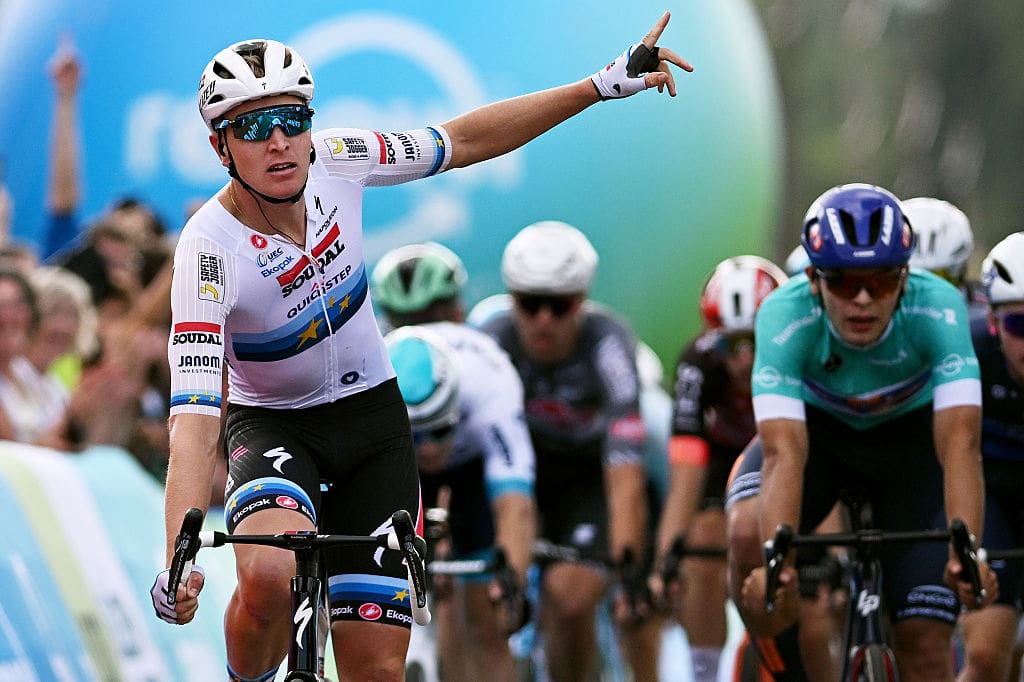
The race returned in 2023 as the Renewi Tour.
Renewi is a waste management and recycling company operating across the Benelux region, and its sponsorship was linked to efforts to reduce the environmental impact of the race through waste prevention, reuse and recycling.
For fans, the name change meant learning another title for what was fundamentally the same event.
Eneco Tour, BinckBank Tour, Benelux Tour and Renewi Tour should therefore not be treated as four different races when looking through historical results. They represent different eras of the same WorldTour stage race that began in its modern form in 2005.
That naming history is also explained in our Renewi Tour 2026 beginner’s guide.
The Renewi era began with another Wellens victory
The first edition under the Renewi name immediately produced a familiar winner.
Wellens took the 2023 general classification, eight years after his previous overall victory in the race.
He then won again in 2024, establishing a record fourth title.
That longevity says plenty about the race itself. Despite the changes in name and route details, the qualities needed to win had not changed dramatically. Wellens was still able to use the same combination of power, climbing ability and tactical aggression that had made him successful during the Eneco era.
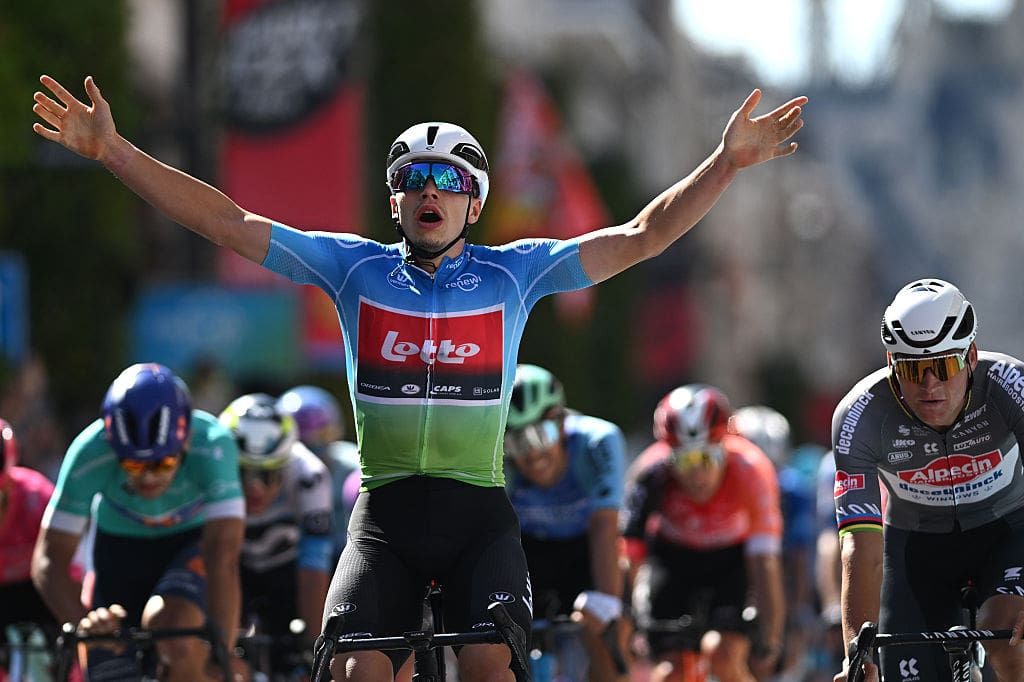
Arnaud De Lie won a three-second thriller in 2025
The 2025 Renewi Tour provided an almost perfect demonstration of how the race can be decided without major mountains.
Arnaud De Lie and Mathieu van der Poel reached the final stage around Leuven separated by almost nothing.
Van der Poel attacked during the finale and collected bonus seconds that briefly moved him into the virtual overall lead. De Lie then responded in the most direct way possible by winning the stage sprint in Leuven.
The result gave De Lie his first WorldTour stage-race overall victory, with Van der Poel finishing only three seconds behind.
Wellens completed the podium.
The margins showed why bonus seconds, intermediate opportunities and finishing speed can matter so much at the Renewi Tour. The strongest GC rider does not necessarily need to drop everyone on a long climb. A stage placing or one tactical sprint can decide the entire race.
Why does the Renewi Tour suit Classics riders?
Few WorldTour stage races resemble the Renewi Tour.
Paris-Nice and Tirreno-Adriatico usually contain major climbing. The Dauphiné and Tour de Suisse are built around preparation for Grand Tours. The Renewi Tour instead takes the characteristics of northern European one-day racing and spreads them across several days.
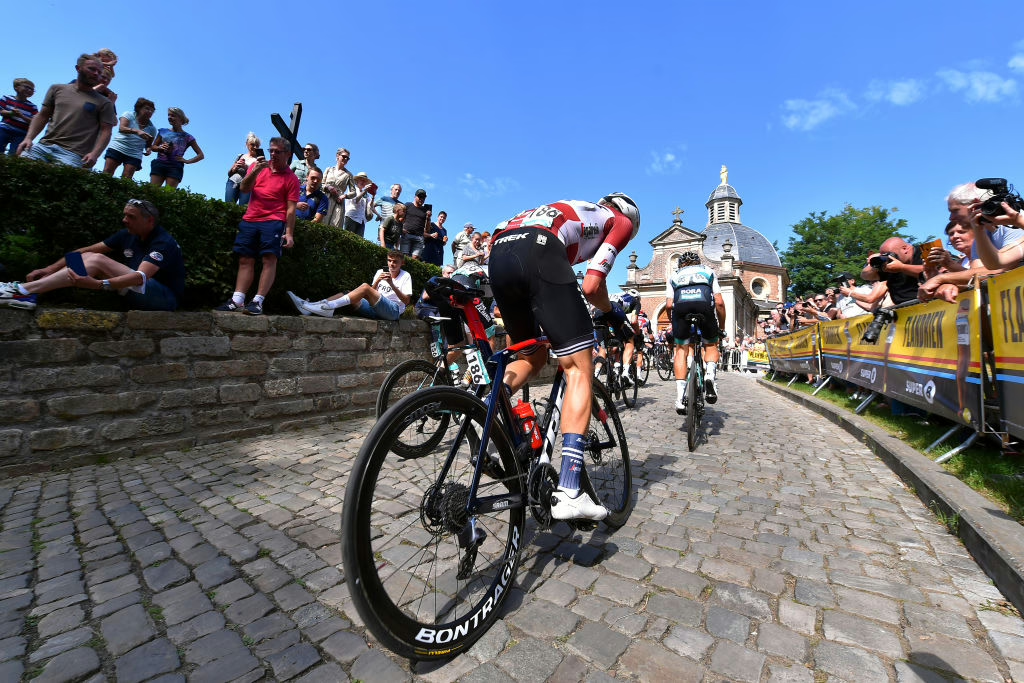
Geraardsbergen has become particularly important, with the Muur and Bosberg providing obvious terrain for attacks. Limburg offers rolling roads and repeated climbs, while flat stages around Belgium and the Netherlands can become difficult simply because of wind and positioning.
Sprinters still have plenty to race for, but an overall contender has to survive more than the final kilometre.
That is why riders such as Wellens, Van der Poel, Mohorič and Colbrelli make sense on the winners list.
Has the Renewi Tour ever raced in Luxembourg?
Despite the Benelux identity, the modern race has overwhelmingly been held in Belgium and the Netherlands.
The 2021 rebranding to Benelux Tour came with ambitions to eventually take the race into Luxembourg, but that geographical expansion never became central to the event.
In practice, the race’s identity has been shaped by Dutch flatlands and Belgian Classics terrain.
The 2026 edition goes even further in that direction because all five stages take place entirely in Belgium.
What does the Renewi Tour look like in 2026?
The 21st edition runs from 19 to 23 August 2026, with five stages beginning in Diest and finishing in Leuven.
Stage 1 starts and finishes in Diest before the race heads from Blankenberge to Ardooie for a likely sprint opportunity. Stage 3 from Celles to Geraardsbergen should be central to the GC, with the Muur van Geraardsbergen and Bosberg once again providing terrain for the Classics riders.
The race then heads through Limburg from Riemst to Bilzen-Hoeselt before concluding with a final circuit around Leuven.
The Renewi Tour sits on the 2026 Men’s WorldTour calendar between the ADAC Cyclassics and the Vuelta a España, making it an important late-summer target for sprinters, Classics specialists and riders preparing for the final one-day races of the season.
The name may have changed repeatedly since 2005, but the basic appeal has not.
The Renewi Tour takes the roads of the Low Countries and turns their apparent lack of mountains into the point. Wind, cobbles, short climbs, positioning, bonuses and explosive racing create the gaps instead, producing a stage race where seconds matter and a Classics specialist can be every bit as dangerous as a traditional GC rider.

