
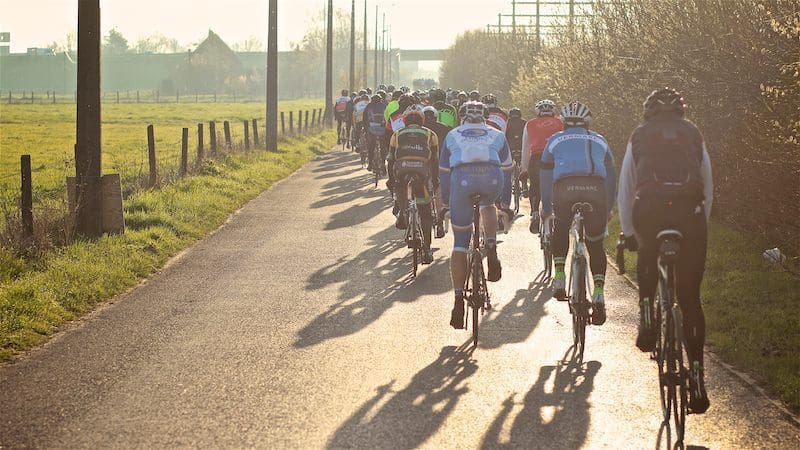
Training for your first sportive is really about making the event feel like an extension of what you already do rather than a one-off leap into the unknown.
You do not need to copy a professional training plan, ride every day or build your week around complicated intervals. What matters is developing enough endurance to cover the distance comfortably, adding some climbing if the route demands it, learning how to eat and drink properly on the bike and arriving at the start with enough confidence that several hours in the saddle already feels familiar.
For most first-time riders, a simple eight to twelve-week build is enough. The exact plan depends on whether you are targeting 60km, 100km or something closer to 100 miles, but the principles stay largely the same.
Start with the distance you can already ride comfortably
Before planning training, look honestly at what you can already do.
If 40km is currently a decent weekend ride, your first priority is not speed. It is extending the amount of time you can spend riding comfortably without the final hour becoming a struggle.
If you are already riding 70km to 80km regularly, a 100km sportive becomes a much more straightforward target. The focus then shifts towards making those longer rides easier, adding climbing and improving how well you finish rather than simply trying to survive the distance.
That is why choosing the right event matters before the training plan even starts. If you are still deciding between a shorter route, 100km or something longer, our guide to what distance sportive you should choose is the place to start.
Build around one long ride each week
The most useful session for a first sportive is the weekly long ride.
That is where you build endurance, learn how your body responds after several hours and find out whether your bike setup, clothing and fuelling actually work over the duration of the event.
The long ride does not need to jump dramatically from week to week. Adding around 10km to 20km every one or two weeks is usually enough, depending on your starting point and the difficulty of the terrain.
For a 100km sportive, you might progress from 50km to 60km, then 70km, then 80km before reaching one or two rides around 90km. You do not need to ride the full 100km in training unless you want to.
The goal is to make race distance feel familiar enough that the final section is manageable.
If 100km is your target, our training plan for your first 100km ride gives you a more detailed progression.
Two or three rides a week can be enough
You do not need a six-day training schedule.
For many recreational riders, three rides per week is enough to prepare well for a first sportive.
One should be the long endurance ride.
One should be a shorter, steadier midweek ride.
The third can add hills, tempo riding or a slightly harder effort depending on the event.
If life gets busy, two rides can still work if one is long and consistent. The important thing is regularity across several weeks rather than one huge weekend followed by five days doing nothing.
Consistency beats occasional heroics.
 Photo Credit: Getty
Keep most of your riding easy
One of the most common mistakes is turning every ride into a test.
If your long ride, midweek ride and hills session all become hard, fatigue builds quickly and training stops being enjoyable.
Most sportive preparation should be done at a pace where you can still talk comfortably. That easy riding builds aerobic endurance without creating the recovery cost of repeated hard sessions.
You should finish many training rides feeling like you could have done more.
That may feel less productive than arriving home exhausted, but it is much easier to build fitness when you can train again two days later rather than needing half a week to recover.
Add one harder session if you already ride regularly
Once you are comfortable with the basic volume, one harder ride each week can make a big difference.
This does not need to involve a complicated interval programme.
A simple option is to ride hard for five to ten minutes on several climbs, recover between them and repeat. Another is to include 20 to 30 minutes of steady, moderately hard riding during a shorter midweek session.
The aim is to make the pace you expect to ride during the sportive feel easier.
You are not training to sprint for a finish line. You are training so that a long climb, headwind or faster group does not immediately push you beyond what you can sustain.
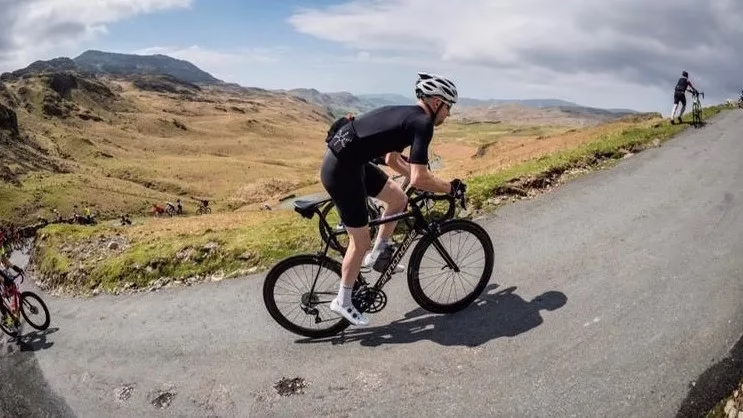
Train for the climbing, not just the distance
A 100km flat sportive and a 100km mountainous sportive are completely different challenges.
If your event includes a lot of climbing, your training needs to include climbing too.
That does not mean finding one enormous mountain if you live somewhere flat. Repeated shorter hills work. A route with several rolling climbs works. Even riding the same hill multiple times can build the muscular endurance you need.
What matters is getting used to climbing when you are already tired.
The final hill of a sportive often feels harder than the first one, even if it is technically easier. That is why some long training rides should include climbing in the second half rather than doing every hill while your legs are fresh.
Practise pacing before the event
The easiest way to ruin a sportive is to ride the first hour too hard.
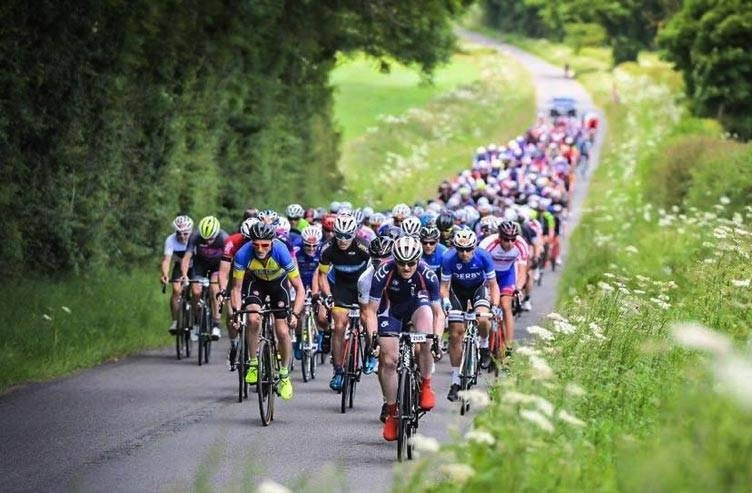
Adrenaline makes this particularly easy at an organised event. You are surrounded by riders, everyone is moving quickly and sitting in a group can make the pace feel easier than it really is.
Then three hours later, the bill arrives.
Training should teach you what sustainable feels like. On long rides, deliberately keep the opening hour controlled even if you feel fresh.
A good sportive is usually ridden by gradually spending energy, not by borrowing heavily from the final hour.
Learn to eat while riding
Fuelling is one of the biggest differences between a two-hour ride and a five-hour ride.
For a shorter session, you can get away with poor nutrition. For a sportive, you often cannot.
Start eating early rather than waiting until you feel hungry, and use training rides to work out what your stomach tolerates and what is easy to carry.
That might be bars, bananas, sandwiches, gels, sweets or a mixture. The exact food matters less than finding something you can keep eating consistently.
A rider who has trained well but stops eating after two hours can still have a miserable final 30km.
Our simple cycling nutrition guide for beginners covers the basics of eating and drinking on longer rides.
Use your long rides to practise hydration
Hydration should be part of training for exactly the same reason.
Work out how much you normally drink over two, three and four hours. Learn whether you prefer plain water, electrolyte drink or a combination, and pay attention to how those requirements change in warmer conditions.
A cool spring ride and a hot summer sportive can have very different fluid demands.
Training is where you learn those differences without the pressure of an event. If you finish every long ride extremely thirsty, that is useful information.
Fix it before sportive day.
Get used to riding in groups if possible
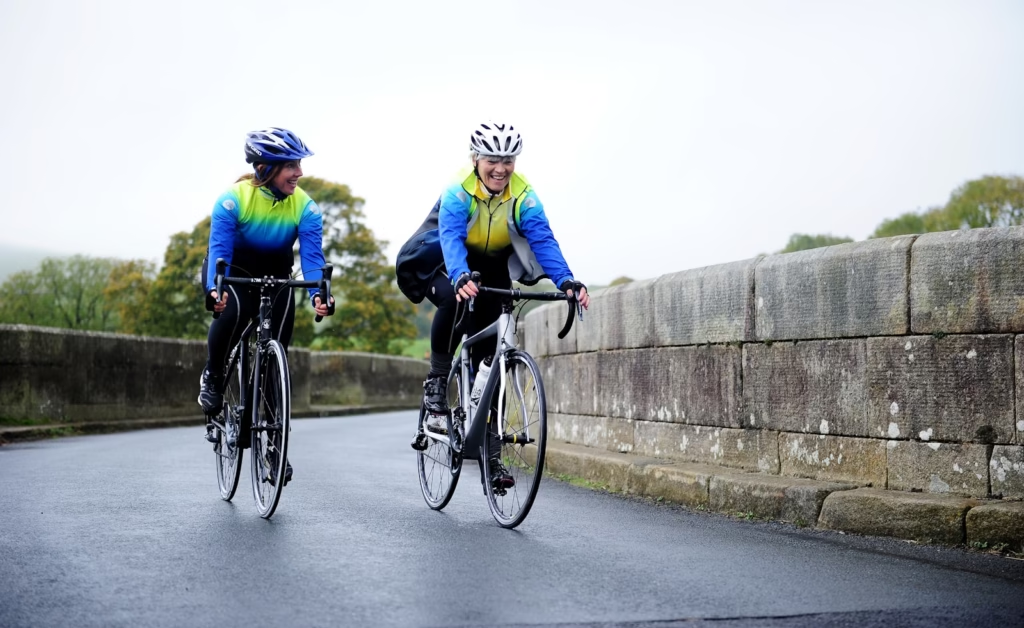
Sportives often involve more group riding than people expect.
Even if you start alone, you may spend long sections sitting behind other riders or moving through groups.
That can make the ride faster and easier, but only if you are comfortable doing it.
Practise riding with others before the event if you can. Learn to hold a steady line, avoid sudden braking and communicate potholes, turns and hazards.
Good road positioning also matters when the event uses open roads. Our guide to road positioning for cyclists covers the basics of using primary and secondary position confidently rather than being pushed towards the kerb.
Make sure your bike is comfortable for several hours
Fitness is not the only thing that can end a sportive early.
A saddle that feels fine for 90 minutes can become unbearable after four hours. The same applies to numb hands, neck pain, shoes that are slightly too tight or a bike position that only works when you are riding hard.
Long training rides expose those problems.
That is one of their most important jobs.
Do not make major bike fit changes in the final week before the event. If something is uncomfortable, fix it early enough to test the change over several rides.
Comfort becomes performance once the ride is long enough.
Build gradually over eight to twelve weeks
A simple structure works well.
During the first few weeks, focus on riding regularly and extending your long ride. In the middle of the plan, add more climbing and slightly harder efforts. In the final few weeks, complete your longest rides and practise everything exactly as you expect to do it on event day.
Then reduce the workload before the sportive.
The process should feel progressive rather than dramatic.
You do not need one enormous breakthrough ride. You need several weeks where the distance gradually becomes normal.

Example eight-week plan for a 100km sportive
A simple three-ride week might look like this:
| Week | Ride 1 | Ride 2 | Long ride |
|---|---|---|---|
| 1 | 30km easy | 40km steady | 55km |
| 2 | 30km easy | 45km with hills | 60km |
| 3 | 35km steady | 45km with harder efforts | 65km |
| 4 | 30km easy | 40km steady | 55km |
| 5 | 35km steady | 50km with hills | 75km |
| 6 | 40km steady | 50km with harder climbing | 85km |
| 7 | 30km easy | 40km steady | 90km |
| 8 | Two short easy rides | Rest | Sportive |
The easier fourth week gives your body time to absorb the first block before the final build.
You can adjust the distances depending on your current level. The principle matters more than the exact numbers.
You do not need to ride the full distance beforehand
This worries a lot of first-time sportive riders.
You do not need to complete 100km in training before a 100km event, and you do not need to ride 160km before your first 100-mile sportive either.
What matters is getting close enough that the remaining distance is a manageable extension rather than completely unknown territory.
For a 100km event, a longest training ride of around 80km to 90km is enough for most riders.
For a century, getting comfortable around 120km to 140km can be more valuable than forcing yourself through the full 160km weeks before the event.
Save some motivation for the actual day.
Recovery is part of training
Progress does not happen only while you are riding.
It also happens when you recover from the ride.
Sleep matters. Eating properly after long sessions matters. Taking an easy day when you are genuinely tired matters.
If your legs are constantly heavy and every ride feels worse than the previous one, adding more training is usually not the answer.
A sportive plan should fit around the rest of your life.
If it leaves you exhausted all week, it is probably too aggressive.
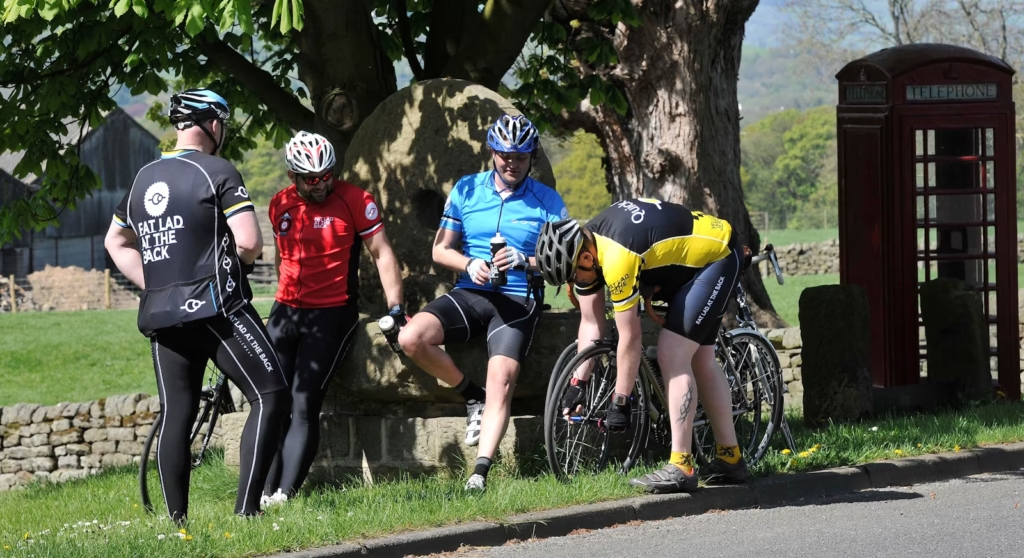
Do not panic if you miss a session
Real training plans get interrupted.
Work happens. Weather happens. Family plans happen.
Missing one ride makes almost no difference. Trying to compensate by doubling the next session can.
If you miss a midweek ride, continue with the plan. If you miss a long ride, move forward rather than cramming two long rides close together.
Training works because of the accumulation of weeks, not because every individual session is perfect.
Do some riding in bad weather
You do not need to deliberately spend five hours riding through a storm.
It is still useful not to train exclusively in perfect conditions.
Sportives do not guarantee sunshine, so a few rides in rain, cold or strong wind will teach you what clothing works and how your bike feels on wet roads.
That experience also reduces the psychological impact if event morning arrives looking unpleasant.
Bad weather is much easier to deal with when it is familiar.
Ride some of your training without stopping
Café rides are excellent.
They are not always the best simulation for a sportive.
If every long ride includes a 45-minute stop halfway through, you may be surprised by how different four continuous hours of riding feels.
You do not need to eliminate stops completely. Just make sure some long training rides involve short refills rather than a complete reset.
That teaches you to keep moving while eating, drinking and managing fatigue.
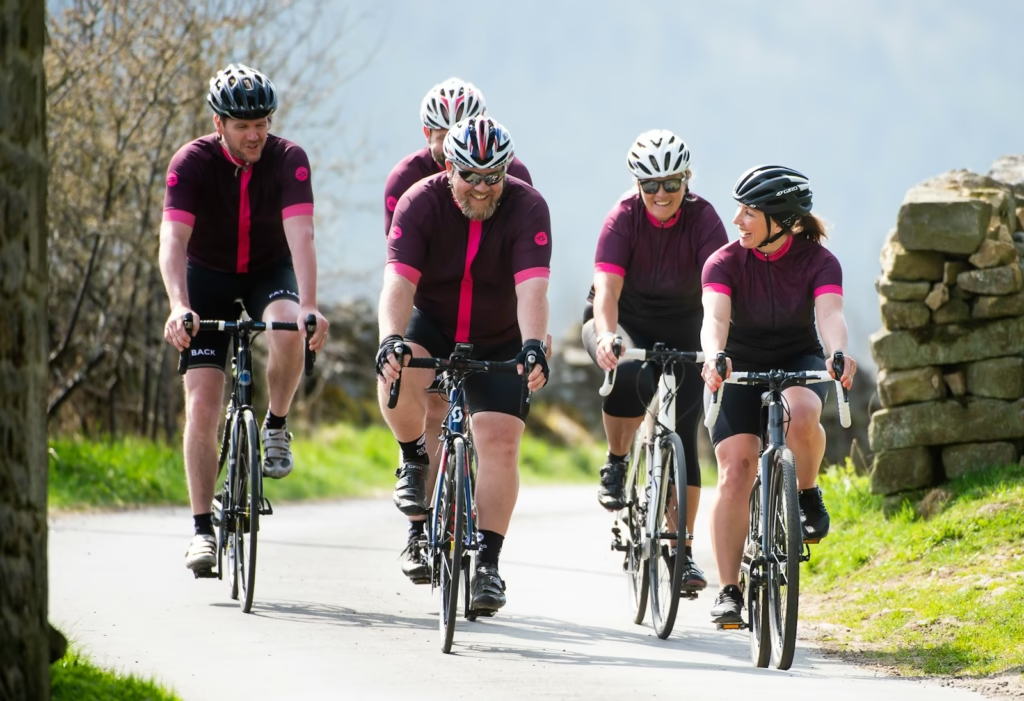
Test everything before sportive day
Your longest training rides should be rehearsals.
Wear the shorts you plan to use. Use the same shoes. Carry the same food. Try the same bottles. Take the jacket or gilet you expect to carry.
If you intend to use gels, practise using them.
If your sportive has feed stations, do not assume they will contain exactly the food you like.
The event is not the place to discover that your new energy drink gives you stomach problems after three hours.
Nothing on sportive morning should feel experimental.
Taper rather than cram
The final week is not the time to get fitter.
The work is already done.
Reduce the volume and keep the legs moving with a couple of short, easy rides.
Avoid a huge training ride the weekend before because you suddenly feel underprepared. That ride will not create meaningful fitness in time.
It can create fatigue.
You want to reach the start feeling slightly restless rather than slightly exhausted.
What should you do the day before?
Keep it simple.
Prepare the bike, check tyres and brakes, charge anything electronic, lay out your clothing and organise food.
Know where you need to be in the morning and what time you actually need to leave.
If you want to ride, 20 to 40 minutes very easily is enough.
Our first sportive checklist covers the practical side of the final preparation, including kit, food and what to expect on the day.
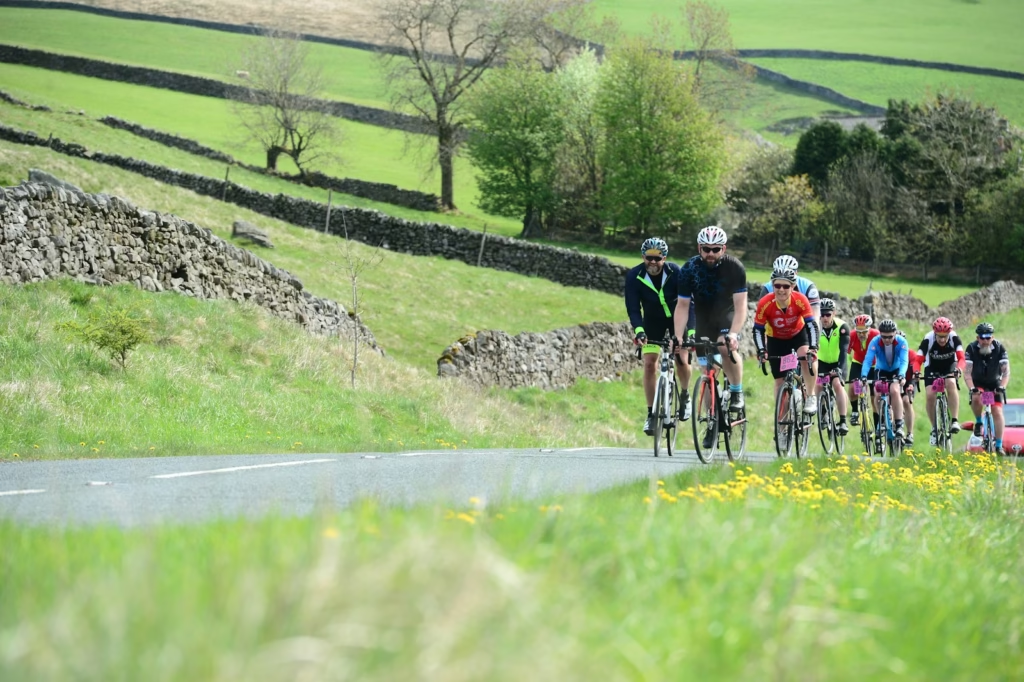
How hard should you ride the sportive?
Start easier than you think you need to.
The first hour should feel controlled.
If you are riding with a group that is clearly too fast, let it go. Another group will come along.
On climbs, use your easier gears early rather than waiting until you are already struggling. Eat regularly, drink regularly and judge the effort by how you expect to feel in two hours rather than how you feel right now.
If you still feel strong in the final quarter of the ride, that is when you can increase the pace.
Finishing strongly is far more enjoyable than spending the last 30km trying to undo an enthusiastic first hour.
How much training do you need for a 60km sportive?
Not much if you already ride regularly.
If you can comfortably complete 30km to 40km, six to eight weeks of consistent riding should be enough for most riders to build towards 60km.
One longer ride each week is the priority.
Gradually extend it until 50km feels comfortable, then let the event provide the final step.
The main goal is confidence rather than extreme fitness.
For riders still choosing an event at this level, our guide to the best beginner-friendly sportives in the UK includes several sensible first-event options.
How much training do you need for 100km?
For a first 100km sportive, eight to twelve weeks is a sensible preparation period if you already have some basic cycling fitness.
Aim to build towards several rides above 70km and at least one around 80km to 90km.
Include hills if the event is hilly.
Most importantly, use those longer rides to practise pacing and fuelling.
A first 100km ride usually goes wrong because someone rides too hard or stops eating, not because they lacked the physiological ability to cover another 10km.
What about a first 100-mile sportive?
A 100-mile event needs more endurance preparation.
You should already be comfortable around 100km before treating 160km as the next target.
Build longer rides gradually and pay particular attention to how you feel beyond four hours.
For many riders, the biggest jump is not physical strength but learning to keep eating, drinking and riding smoothly for an entire day.
A century is much easier when the first 100km feels controlled.
If that is your next target, our guide to the best 100-mile sportives in the UK includes both more approachable century rides and genuinely difficult climbing events.
Your first sportive training plan does not need to be complicated
For most riders, the formula is simple.
Ride consistently, do one long ride each week, build the distance gradually and include hills if the event has hills. Practise eating and drinking, make sure the bike is comfortable and reduce the workload before the event.
You can make cycling training far more technical than that, but you do not need to for a first sportive.
The aim is not to reach the start in the best shape of your life. It is to arrive knowing that the distance, the bike and the hours ahead are all things you have prepared for.

