
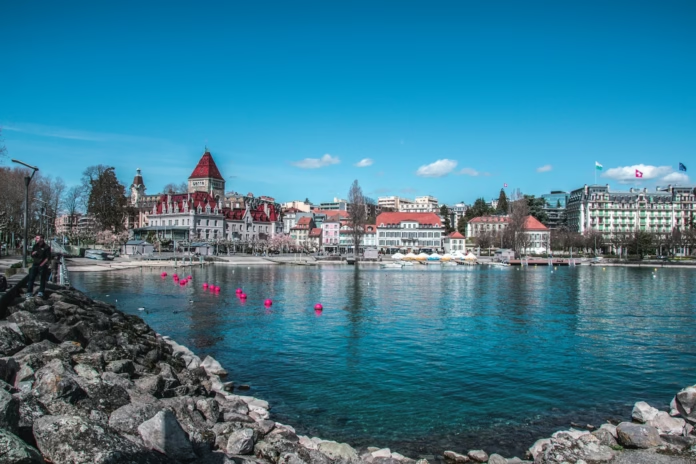
The 2026 Tour de France Femmes begins in Lausanne with a stage that is officially classed as flat but is unlikely to behave like a conventional opening-day sprint.
Stage 1 covers 137km from Lausanne back to Lausanne and includes enough late climbing to blur the line between sprinter and puncheur. The decisive question is not simply who is fastest. It is which of the fast riders can still sprint properly after repeated short climbs and the final uphill approach into Place Saint-François.
Lorena Wiebes should begin as the rider to beat. The gradients are difficult enough to create uncertainty, but not obviously severe enough to remove the strongest sprinter in the race. Marianne Vos offers perhaps the best all-round alternative, while Noemi Rüegg, Kimberley Le Court, Célia Gery and Lotte Kopecky all become more dangerous the harder the final 30km is raced.
The first yellow jersey is on offer, but this is also the first test of positioning, climbing legs and tactical sharpness in a Tour that becomes much harder later. The full 2026 Tour de France Femmes route eventually builds towards the Dijon time trial, Mont Ventoux and Nice. Lausanne is the first problem to solve.
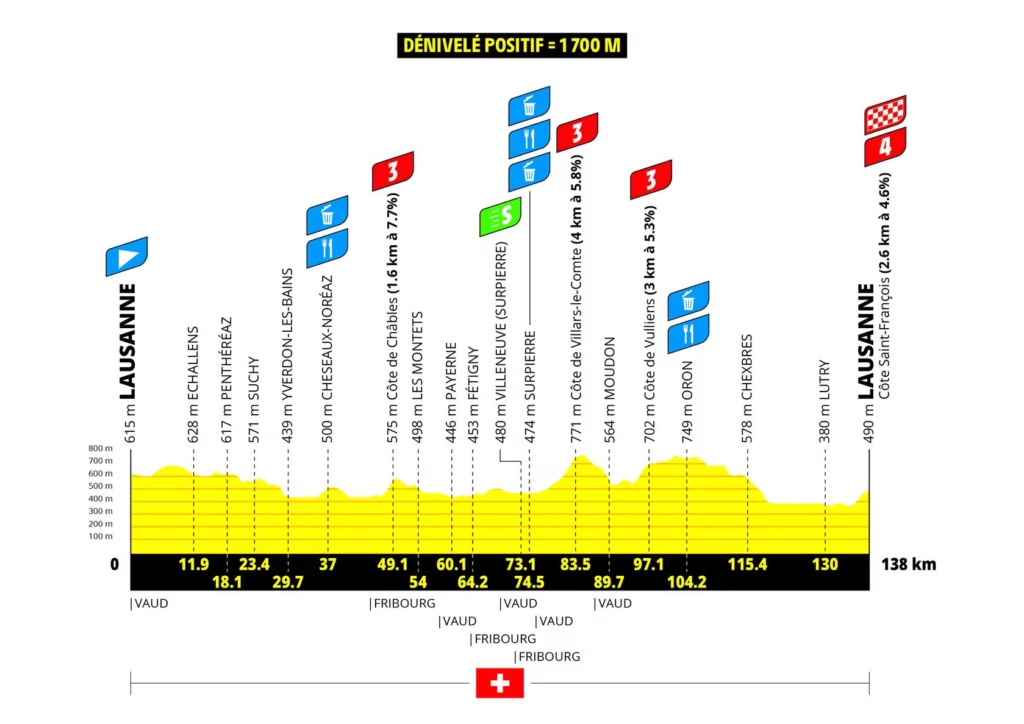
Tour de France Femmes 2026 Stage 1 route
Lausanne to Lausanne
Distance: 137km
Date: Saturday 1 August 2026
Stage type: Flat, with a selective finale
The Tour starts with a loop around Lausanne before heading north towards Lake Neuchâtel and eventually turning back towards Lake Geneva.
Much of the opening part of the stage should allow the peloton to settle, but the character changes on the return towards Lausanne. The climbing comes late enough to affect the finish rather than merely contribute to the day’s elevation total.
That is the important detail.
Stage 1 may be officially flat, but the 2026 Tour de France Femmes stage profiles make clear that Lausanne sits at the harder end of that classification. The opening day is capable of producing a sprint, just not necessarily one involving every sprinter who started the stage.
The final approach into Lausanne should be particularly important. Once the pace rises on the last climb, riders who lose contact will have very little road available to repair the damage before the finish.
Why Stage 1 is not a straightforward sprint
A conventional sprint stage gives the fastest riders one overriding job: survive until their lead-out takes control.
Lausanne complicates that.
The cumulative effect of the late climbs should gradually reduce the number of riders arriving fresh enough to contest the finish. Even if a pure sprinter remains in the front group, some of the teammates normally responsible for positioning her may not.
That changes the final kilometres.
Rather than a full lead-out train controlling the approach, Lausanne could produce a much smaller group containing sprinters, Classics riders, puncheurs and even some GC contenders all trying to hold the same positions.
The Tour de France Femmes 2026 sprint stages include cleaner opportunities for the pure fast finishers later in the race. Lausanne asks them to climb first.
The likely winner needs enough speed to finish the job, but enough climbing ability to reach the final few hundred metres without already being at the limit.
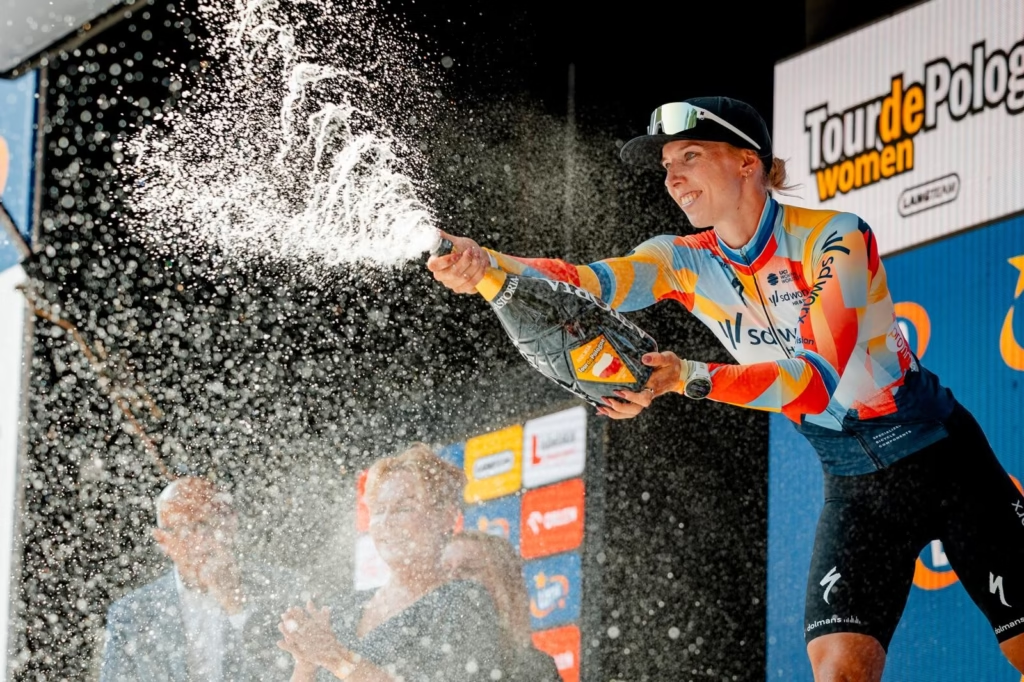
Lorena Wiebes is the rider everyone has to remove
Lorena Wiebes should be the starting point for any Stage 1 discussion.
If she reaches the final straight in the front group with enough energy left to sprint, everybody else’s task becomes extremely difficult.
The question is whether the rest of the peloton can prevent that happening.
Lausanne provides several opportunities to increase the pace, but none of the climbs is obviously severe enough to guarantee Wiebes is dropped. She has also become increasingly difficult to remove from selective races, particularly when the gradients reward raw power as much as lightweight climbing.
That gives SD Worx-Protime a clear first option.
Protect Wiebes, keep the race manageable and trust her speed.
The rest of the field has exactly the opposite incentive. Teams with Vos, Rüegg, Le Court or Gery should want the late climbing raced hard enough that Wiebes either loses contact or spends substantially more energy staying there.
The entire finale may revolve around that battle.
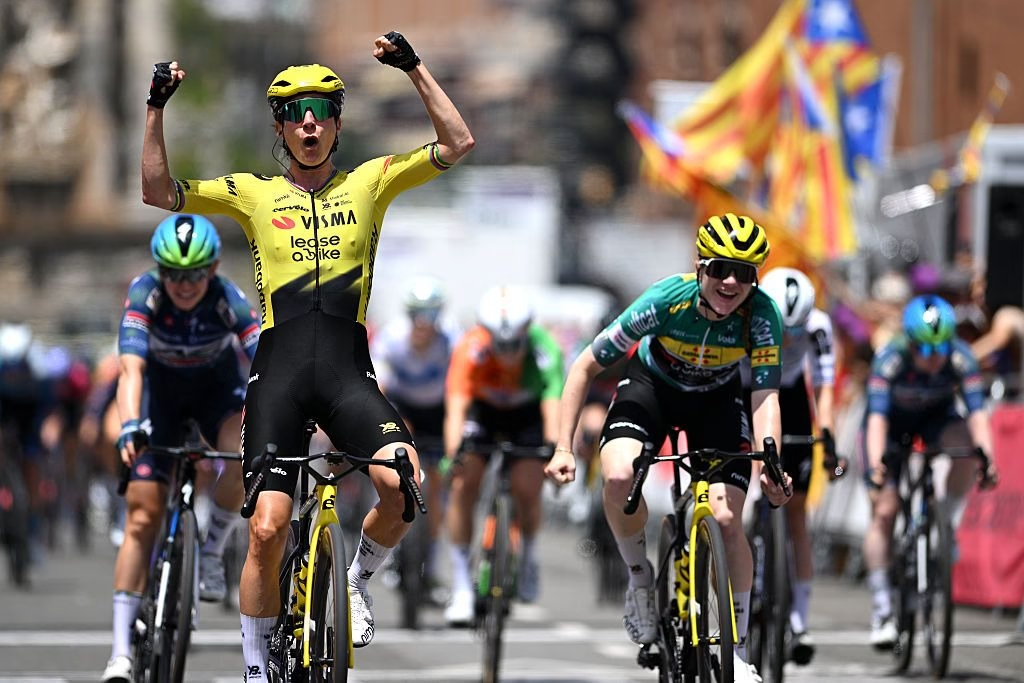 Photo Credit: Getty
Marianne Vos has the widest range of winning scenarios
Marianne Vos does not need Stage 1 to develop in one particular way.
That is why she is so dangerous.
If the race remains relatively controlled and a sizeable group reaches Lausanne, Vos has the speed to contest the sprint.
If the climbing becomes harder, her chances probably improve.
She can absorb repeated short efforts better than most conventional sprinters and still produce a fast finish afterwards. The more the stage moves away from a completely flat sprint without becoming a genuine mountain race, the more it begins to fit her strengths.
Visma | Lease a Bike therefore do not necessarily need to dictate the race.
If other teams increase the pace to hurt Wiebes, Vos can benefit without Visma spending heavily themselves. If the group remains larger, she still has a route to victory.
There is also an obvious piece of recent history. Vos won Stage 1 of the 2025 Tour de France Femmes and took the first yellow jersey.
Lausanne offers another realistic chance to do exactly that.
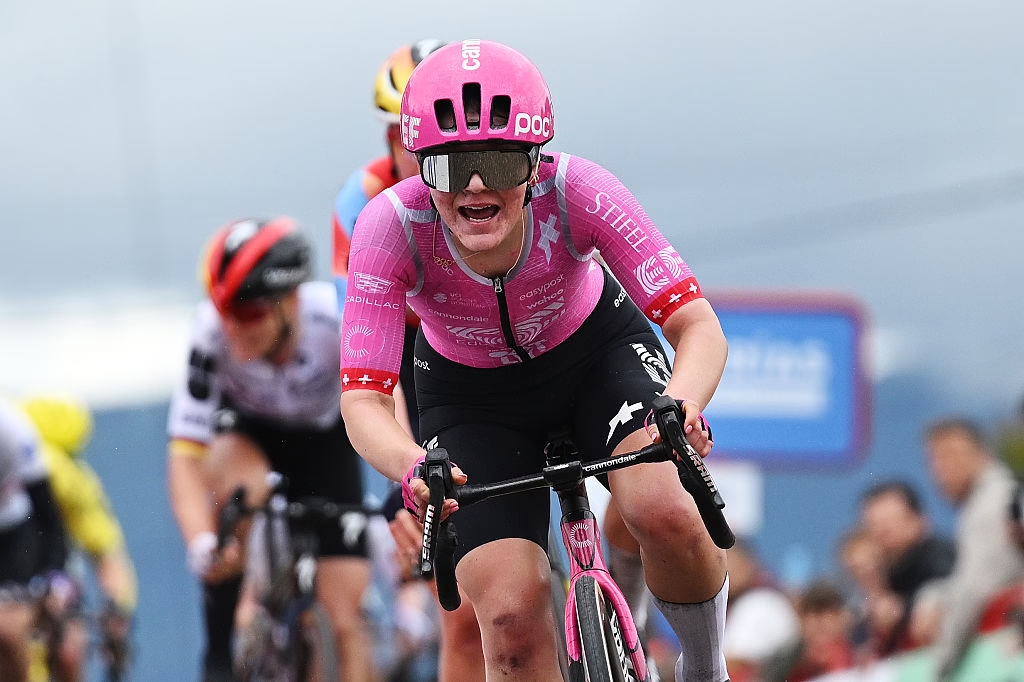 Photo Credit: Getty
Noemi Rüegg has the perfect home-stage opportunity
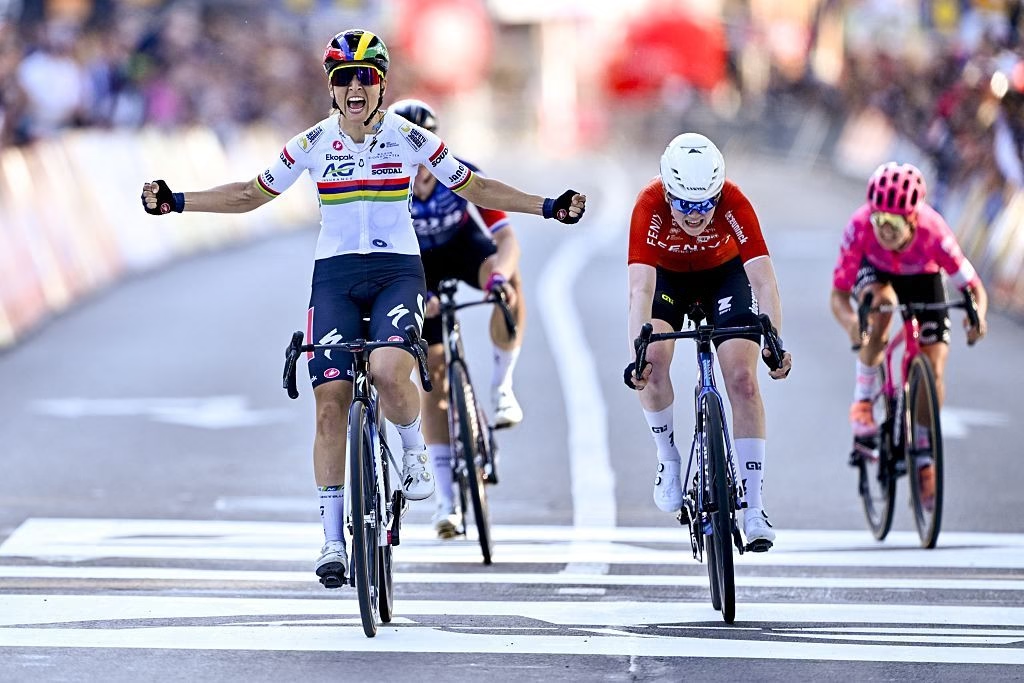
Noemi Rüegg should be treated as one of the leading contenders rather than simply an interesting Swiss outsider.
The stage profile suits her.
Rüegg has enough climbing ability to remain comfortable when the race becomes selective and enough speed to win from a reduced group. Lausanne is therefore the kind of finish where making the race harder can improve her chances rather than simply reduce the field around her.
She also has the incentive of starting the Tour on home roads.
The ideal race for Rüegg is probably one where the late climbs remove some of the fastest riders without reducing the front group to a handful of GC climbers.
If 20 or 30 riders survive to the finish, she becomes a serious candidate for yellow.
Kimberley Le Court benefits if the sprint loses structure
Kimberley Le Court becomes more dangerous as the race becomes less conventional.
She is not the rider most likely to beat Wiebes in a perfectly organised full-peloton sprint. That is not what Lausanne is expected to provide.
The climbing can remove riders, weaken lead-outs and force the favourites to race more independently. That type of finale suits Le Court far better.
If the front group is reduced and the final kilometres become tactical rather than controlled, she has the climbing ability to remain present and enough speed to finish it off.
Her task is therefore similar to that of several other all-rounders.
Make sure Wiebes does not arrive in ideal circumstances.
 Photo Credit: Getty
Célia Gery fits the same selective sprint pattern
Célia Gery is another rider who should benefit if Lausanne is made genuinely difficult.
She does not need the stage to turn into a climbing race. She needs it to become selective enough that pure sprint speed matters slightly less.
Repeated short climbs can do exactly that.
If Gery arrives in the final group after several harder efforts, the differences in finishing speed become smaller because everyone is already fatigued. Positioning and the ability to accelerate after climbing matter more.
That is a much better scenario for Gery than waiting for a conventional lead-out battle against Wiebes.
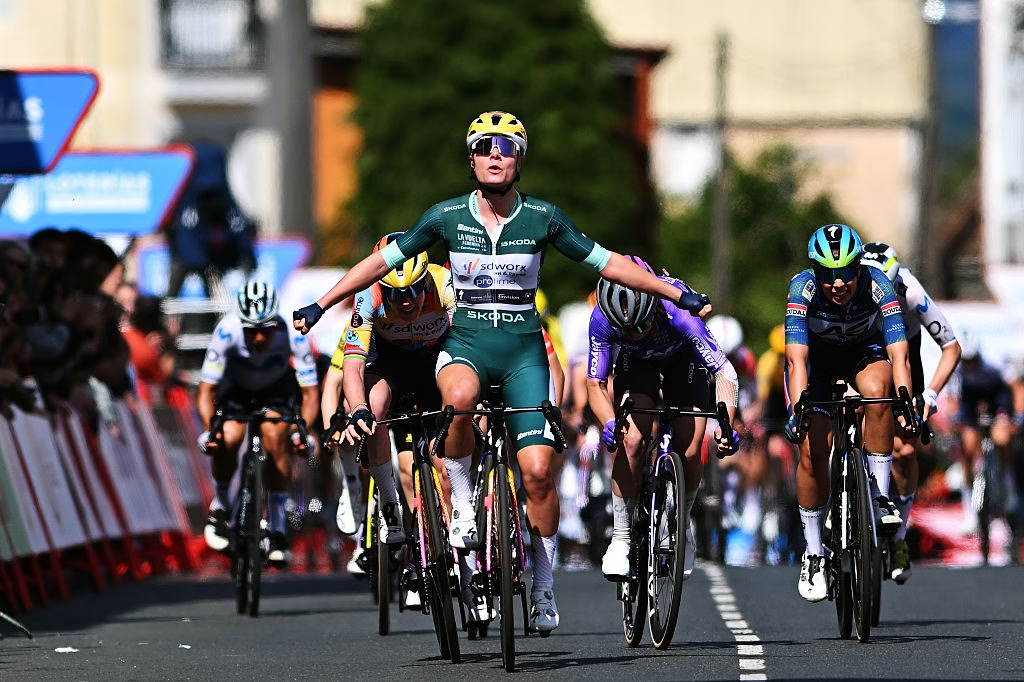 Photo Credit: Getty
Lotte Kopecky’s role depends on Wiebes
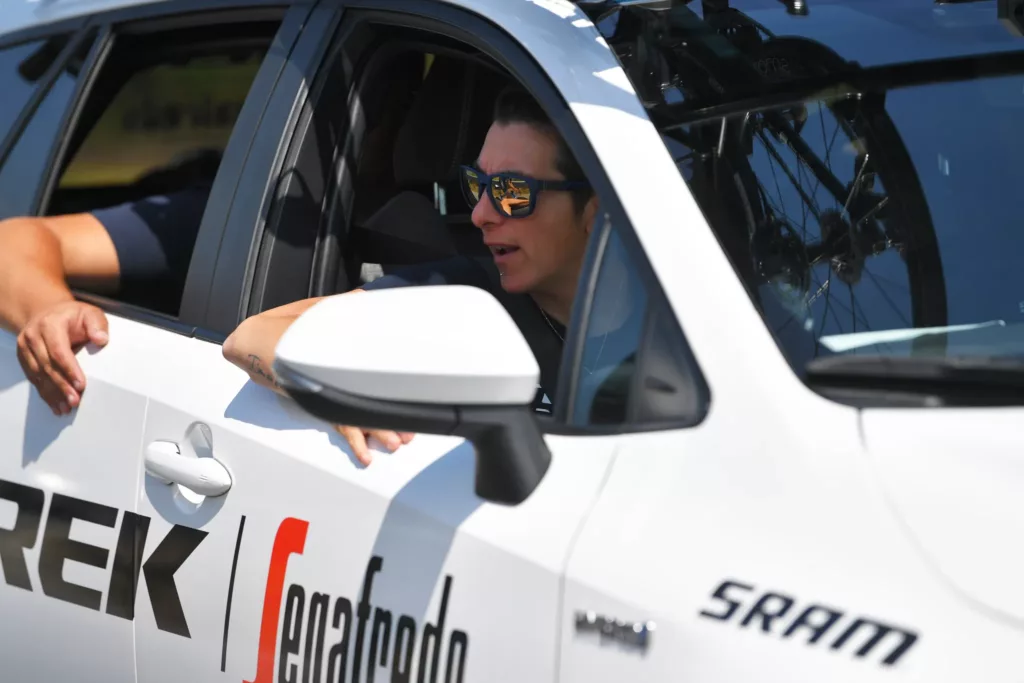
Lotte Kopecky is one of the strongest riders for this type of finish, but her tactical situation is unusual.
She would probably benefit from the stage becoming significantly harder.
Kopecky can survive an aggressive final climb, attack over the top and still sprint from a reduced group if everything comes back together.
But SD Worx-Protime also have Wiebes.
If Wiebes is comfortable, the team have little reason to deliberately turn the final climb into an all-out selection. Protecting the fastest rider in the race is the obvious option.
Kopecky therefore becomes increasingly important as the difficulty rises.
If Wiebes begins to struggle, SD Worx-Protime can immediately shift towards a rider who may actually benefit from the same pace that hurts their sprinter.
Few teams have that kind of tactical insurance.
The GC riders could end up much closer to the action than expected
Demi Vollering, Pauline Ferrand-Prévot, Paula Blasi, Kasia Niewiadoma-Phinney and Elisa Longo Borghini do not need Stage 1 to become a GC battle.
Their priority is straightforward.
Stay near the front, avoid crashes and do not lose time before the race reaches the stages where the general classification can move properly.
But Lausanne’s finale can still pull them into the stage fight.
If the final climb is raced aggressively enough to remove many of the sprinters, riders such as Vollering may simply find themselves in the front group with very few faster finishers left.
At that point, there is little reason to sit up.
That does not mean the GC favourites should attack Stage 1 deliberately. It means the final selection could bring them into contention whether they planned for it or not.
The risk is greater further back.
A GC rider badly positioned before the final climb could lose seconds through a split created by someone else’s fatigue. That is why every classification team will want its leader close to the front at the same time the sprint teams are trying to do exactly the same thing.
Lausanne could become crowded very quickly.

The first yellow jersey raises the stakes
There is no race leader to protect on Stage 1.
Everyone starts level.
That makes yellow itself part of the tactical calculation.
For Wiebes, Vos, Rüegg and the other stage contenders, Lausanne may be one of the best opportunities of the Tour to wear the leader’s jersey. Once the race reaches the time trial and mountains, that possibility disappears for most of them.
It gives teams a reason to commit earlier and more aggressively than they might on an equivalent stage later in the race.
For fans following the Swiss opening weekend, the wider Tour de France Femmes 2026 Grand Départ guide covers how Lausanne fits into the opening three stages before the race crosses into France.
The final climb should decide who can actually sprint
The last climb into Lausanne matters less as a place to create large gaps than as a filter.
A controlled pace favours Wiebes.
A gradually increasing tempo brings Vos and Rüegg further into the picture.
Repeated attacks strengthen Kopecky, Le Court, Gery and the strongest all-round riders.
That is what makes the finale difficult to control.
Almost every team without Wiebes has some incentive to increase the difficulty.
The problem is that someone has to do the work.
If everyone waits for somebody else to make the race hard, Wiebes may simply arrive at the finish exactly where she wants to be.
-
 Photo Credit: Getty
Who should Stage 1 suit?
Lorena Wiebes is the rider to beat because the climbs are not severe enough to assume she will be dropped. If she survives near the front, her finishing speed gives her the simplest path to victory.
Marianne Vos has the widest range of possibilities. She can win from a reasonably large group but becomes more dangerous as the stage gets harder.
Noemi Rüegg has an excellent route for a home victory, particularly if the front group is reduced without becoming tiny.
Kimberley Le Court and Célia Gery both benefit if the sprint loses structure and the final climbs drain the pure sprinters.
Lotte Kopecky becomes one of the most dangerous riders in the race if Wiebes is removed and SD Worx-Protime are forced onto their second tactical option.
The central question is therefore simple.
Can anyone make Stage 1 hard enough to stop Wiebes?
What to expect from Tour de France Femmes Stage 1
A reduced sprint remains the most likely outcome.
That does not necessarily mean a small group. Lausanne could still bring several dozen riders to the finish, particularly if teams hesitate over responsibility for making the climbs difficult.
That scenario favours Wiebes.
If the attacks begin earlier and the final climb becomes a sustained selection, the balance shifts towards Vos, Rüegg and the puncheurs.
Either way, Stage 1 should establish the character of the race immediately.
The opening yellow jersey will probably go to a fast finisher, but Lausanne is difficult enough that speed alone will not be sufficient. The winner will need to survive everything designed to prevent the fastest rider from reaching the line in the first place.

