
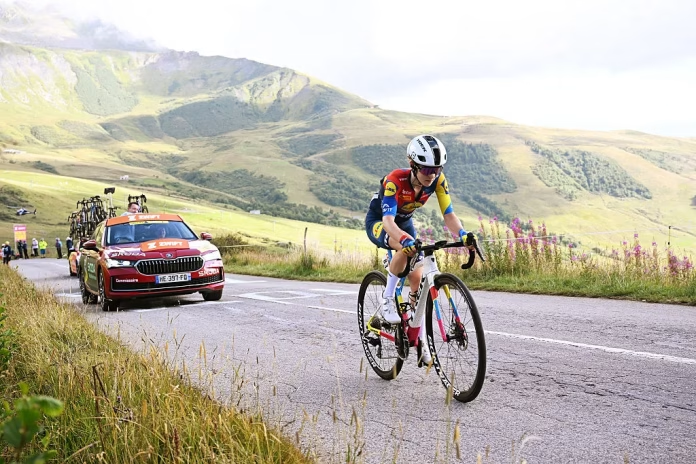
Niamh Fisher-Black is easy to overlook in a Tour de France Femmes field dominated by Demi Vollering, Pauline Ferrand-Prévot, Paula Blasi, Marlen Reusser and Kasia Niewiadoma-Phinney.
She probably should not be.
The New Zealander finished fifth overall at the 2025 Tour de France Femmes and repeated that position at the Giro d’Italia Women earlier this season. She starts the 2026 Tour as Lidl-Trek’s clearest general classification option and one of the riders with a realistic chance of turning a top-five finish into a first Grand Tour podium.
Fisher-Black’s route to that podium is straightforward in theory. She needs to limit her losses in the Dijon time trial, stay close through the hilly middle stages and then make her climbing count on Mont Ventoux and the final mountain stage around Nice.
That final part suits her very well. The question is whether she reaches it close enough to the favourites.
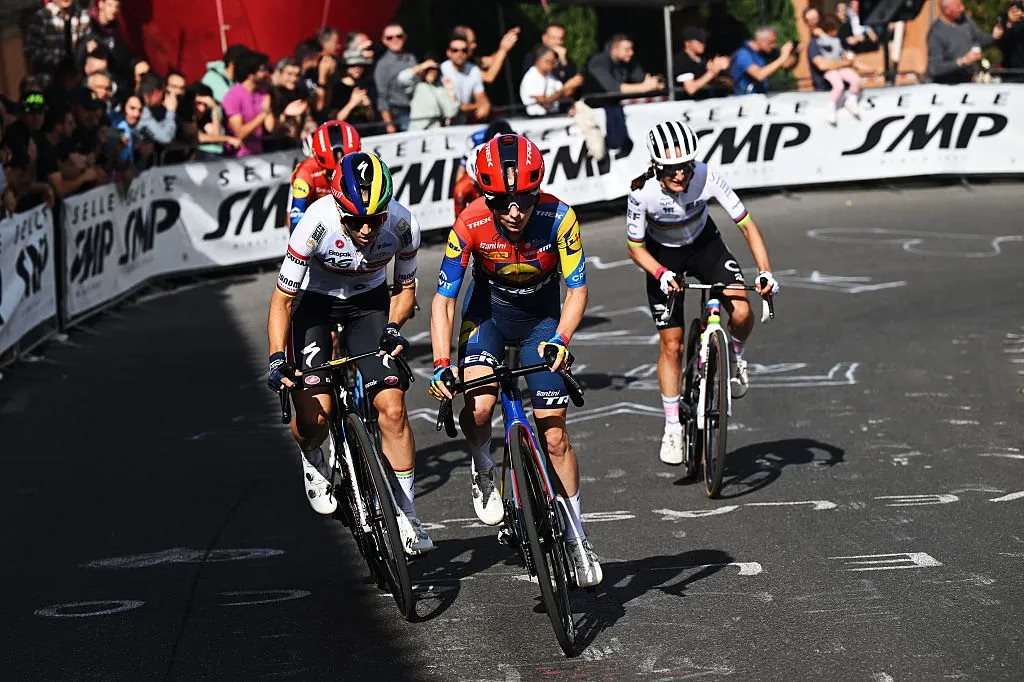 Photo Credit: Getty
Who is Niamh Fisher-Black?
Fisher-Black is a 25-year-old New Zealand climber who has gradually moved from one of the peloton’s leading young prospects into an established Grand Tour contender.
Born on 12 August 2000, she began attracting attention while racing for Bigla before joining SD Worx, where she developed within the strongest women’s team of that period. Her years there produced major victories but also meant spending considerable time riding alongside established leaders rather than building races entirely around her own GC ambitions.
That changed when she joined Lidl-Trek for 2025.
The move gave her greater scope to lead in stage races, and Fisher-Black immediately began proving she belonged in that role. Her fifth place at the 2025 Tour was the clearest evidence yet that she could survive a full Grand Tour alongside the best climbers rather than simply produce isolated mountain performances.
She has now reached the point where another fifth place would still be a strong result without necessarily representing progression.
The podium is the next target.
Fifth at the 2025 Tour changed expectations
Fisher-Black’s 2025 Tour de France Femmes was important because it established a level she now has to build from.
She finished fifth overall after a race in which her climbing became increasingly important as the terrain grew harder. Her performance on the major mountain stages was particularly significant because it showed the level required to compete deep into the hardest part of the Tour rather than simply defend a place lower in the top ten.
That result also highlighted the tension that still exists in her GC profile.
Fisher-Black is capable of producing performances close to the very strongest climbers, but she has not yet consistently converted that ability into the sort of time differences required to challenge for the overall victory.
A rider can stay close to the favourites repeatedly and construct an excellent top-five result.
Getting onto the podium usually requires at least one day where she actually beats some of them.
The 2026 Tour de France Femmes route gives her that opportunity.
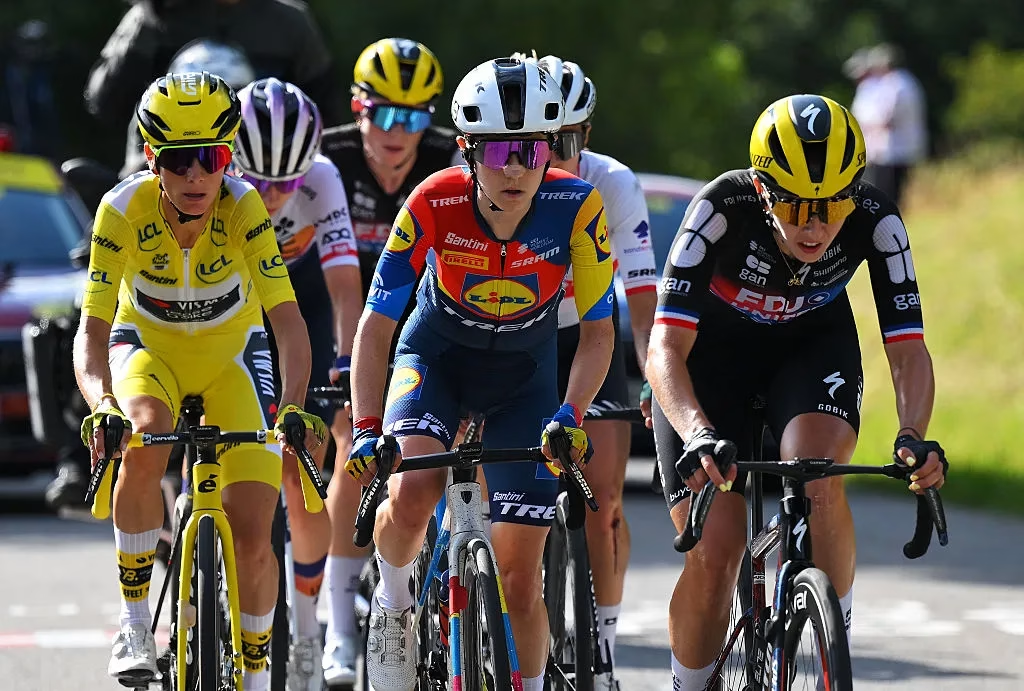 Photo Credit: Getty
Her 2026 season has reinforced the GC argument
Fisher-Black’s 2026 results have not made her the obvious Tour favourite, but they have strengthened the argument that her fifth place last year was not a one-off.
She opened the year with a string of solid stage-race and one-day results before again finishing fifth overall at the Giro d’Italia Women. That repeated top-five finish matters more than one isolated breakthrough because it shows consistency across the season and across different race formats.
Lidl-Trek also emerged from the Giro with another important young GC reference point in Isabella Holmgren, whose white jersey win underlined the depth of the team’s stage-racing options. ProCyclingUK’s updated women’s cycling season form guide after the 2026 Giro looked at how those performances changed the hierarchy heading towards the Tour.
For Fisher-Black, another fifth place reinforced the key point.
She is no longer a speculative GC pick.
She has built a pattern.
Lidl-Trek can treat Fisher-Black as a genuine Tour leader
One of the biggest changes since Fisher-Black left SD Worx is that she now enters races knowing the team can be structured around her ambitions.
That does not mean Lidl-Trek exist solely for GC at this Tour. Elisa Balsamo gives them major sprint opportunities, while the wider squad provides other options across the nine stages.
But Fisher-Black is the rider around whom their overall classification strategy makes most sense.
That brings both support and pressure.
She can expect teammates to position her before important climbs, help control dangerous situations and protect her through the stages where the Tour can be lost through poor positioning rather than climbing ability.
In return, she needs to deliver when the race reaches the terrain that justified that support.
For Fisher-Black, that means Ventoux.
The Dijon time trial is the biggest problem
Stage 4 from Gevrey-Chambertin to Dijon is the obvious weakness in Fisher-Black’s Tour.
The 21km individual time trial comes before the decisive mountain stages and gives riders such as Vollering and Reusser an opportunity to build time before Fisher-Black reaches her preferred terrain.
She cannot afford to treat it merely as a day to survive.
The flatter Dijon course puts a premium on sustained power, aerodynamics and pacing, and that matters because every second lost changes the tactical equation later in the race.
If Fisher-Black reaches Ventoux 20 or 30 seconds behind the podium, the race remains straightforward. One exceptional climbing performance can change everything.
If she reaches it more than a minute down, she has to create much larger separation against riders who are themselves among the best climbers in the world.
Dijon therefore sets the ceiling for her Tour before the road reaches the mountains.
The hilly stages should suit her better than they first appear
Fisher-Black is primarily considered a climber, but the middle of the Tour may help rather than hinder her.
Stages 5 and 6 contain repeated climbing without one giant summit finish, creating attritional racing where riders need to recover between efforts and remain strong after several hours of constant changes in rhythm.
That suits Fisher-Black.
She does not need to win either stage. The objective is to stay close to the front while allowing the accumulation of climbing to expose riders whose GC challenge depends more heavily on the time trial.
Stage 6 is particularly interesting because it comes immediately before Ventoux.
If Fisher-Black is riding well there, Lidl-Trek can begin testing rivals before the main mountain stage even starts. If she struggles, everyone will know it.
The day before Ventoux may tell us more about her condition than the final result suggests.
Mont Ventoux is where Fisher-Black can change the race
Stage 7 is the reason Fisher-Black belongs in the podium conversation.
The Mont Ventoux stage provides the sustained climbing test most closely aligned with her strengths. The final ascent from Bédoin is long enough and steep enough that hiding becomes increasingly difficult once the GC race begins in earnest.
That is the type of scenario Fisher-Black wants.
She has already shown that she can finish near the best on major mountain stages. The next step is producing a day where she takes meaningful time from riders ahead of her on GC.
The podium probably depends on it.
Vollering, Ferrand-Prévot, Blasi, Niewiadoma-Phinney and Reusser all have different strengths, but Fisher-Black’s clearest opportunity comes when the road stays uphill for a long time and the race becomes a test of sustained climbing rather than positioning or explosiveness.
If she reaches the foot of Ventoux still within range, she has the opportunity she needs.
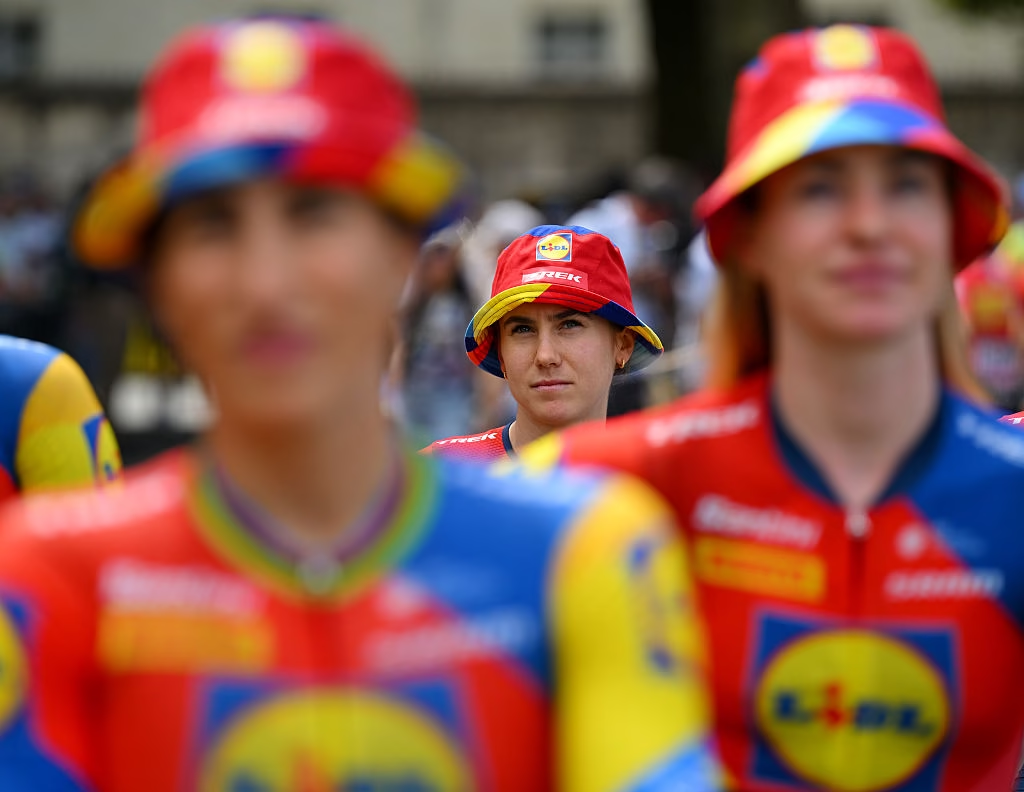 Photo Credit: Getty
Stage 9 gives her another chance if Ventoux is not enough
The final stage around Nice provides a different climbing challenge.
It is shorter and more explosive than Ventoux, with repeated climbing creating opportunities for tactical attacks rather than one sustained summit showdown.
That may not suit Fisher-Black quite as cleanly, but it gives her another chance to move up the classification.
If she starts Stage 9 sitting fourth or fifth and only a small gap separates her from the podium, Lidl-Trek have little reason to race conservatively.
They can send riders ahead, force rival teams to respond and give Fisher-Black opportunities to attack before the final decisive climb.
At that point there is no reason to protect fifth if third is available.
That could make Fisher-Black particularly dangerous on the final day.
Can Niamh Fisher-Black win the Tour de France Femmes?
It would require the best stage race of her career.
Fisher-Black has enough climbing ability to compete with the main favourites, but the route asks more than climbing alone. Vollering and Reusser should gain from Dijon, while Ferrand-Prévot has already demonstrated that she can produce the decisive mountain performance required to win this race.
Blasi has also moved into the first tier of climbing contenders during 2026, while Niewiadoma-Phinney brings a proven ability to construct a Tour result across the entire week.
That places Fisher-Black slightly below the central winning group before the start, but comfortably among the Tour de France Femmes 2026 GC riders worth watching.
That does not make the podium unrealistic.
Her fifth places at both the 2025 Tour and the 2026 Giro provide a stronger Grand Tour record than many of the riders around her in the pre-race hierarchy. If one or two favourites underperform and Fisher-Black produces a better Dijon than expected, she can move very quickly from top-five contender to podium threat.
Victory probably requires several things to go right.
A podium requires fewer.

Is Niamh Fisher-Black eligible for the white jersey?
No.
This is an important distinction because Fisher-Black is still young by the standards of established Grand Tour contenders, but she is not eligible for the Tour de France Femmes white jersey in 2026.
The 2026 young rider classification is restricted to riders born on or after 1 January 2003. Fisher-Black was born in August 2000, placing her outside the age limit.
The Tour de France Femmes 2026 jersey guide explains how the yellow, green, mountains and young rider competitions work, including the 2026 eligibility rule for white.
For Fisher-Black, there is no secondary GC prize available.
If she is fifth overall, she is fifth overall.
That actually simplifies the way Lidl-Trek can approach her Tour. Every decision can be made around the main classification rather than balancing yellow and white jersey objectives.
Fisher-Black is one of the clearest podium outsiders
The Tour de France Femmes field is deep enough that Fisher-Black can arrive with two consecutive fifth places in major stage races and still sit slightly outside the central pre-race conversation.
That may suit her.
She does not carry the expectation attached to Vollering or Ferrand-Prévot. She does not have the same 2026 breakthrough narrative as Blasi. She is unlikely to leave Dijon as the rider everyone is discussing unless she produces something unexpected against the clock.
But the race finishes with the kind of terrain that has repeatedly brought Fisher-Black forward.
Her challenge is making sure she has not lost too much time before it arrives.
If she produces a respectable time trial and enters the final three stages near the top five, there is every reason to take a podium challenge seriously. Fifth at last year’s Tour established her as a GC rider. Fifth at this year’s Giro confirmed it.
The 2026 Tour is where Fisher-Black has the chance to show that fifth is no longer her ceiling.

