

The 2026 Donostia San Sebastian Klasikoa takes place on Saturday 1 August, bringing the men’s WorldTour back to one-day racing less than a week after the Tour de France finished in Paris.
The neutralised start from San Sebastián is scheduled for 11:05 CEST, which is 10:05 BST in the UK. The race covers 221.1km, includes seven categorised climbs and more than 4,150 metres of climbing, with Jaizkibel, Erlaitz and Murgil Tontorra forming the decisive final sequence before the return to the Boulevard.
For UK viewers, TNT Sports is the main television option, with streaming available through HBO Max. Host broadcaster EITB begins its live coverage at 14:30 CEST, or 13:30 BST, which should bring viewers into the race before the main favourites start using the final climbs.
If you want the full practical broadcast breakdown, including streaming and replay options, see our guide to watching Donostia San Sebastian Klasikoa 2026 in the UK.
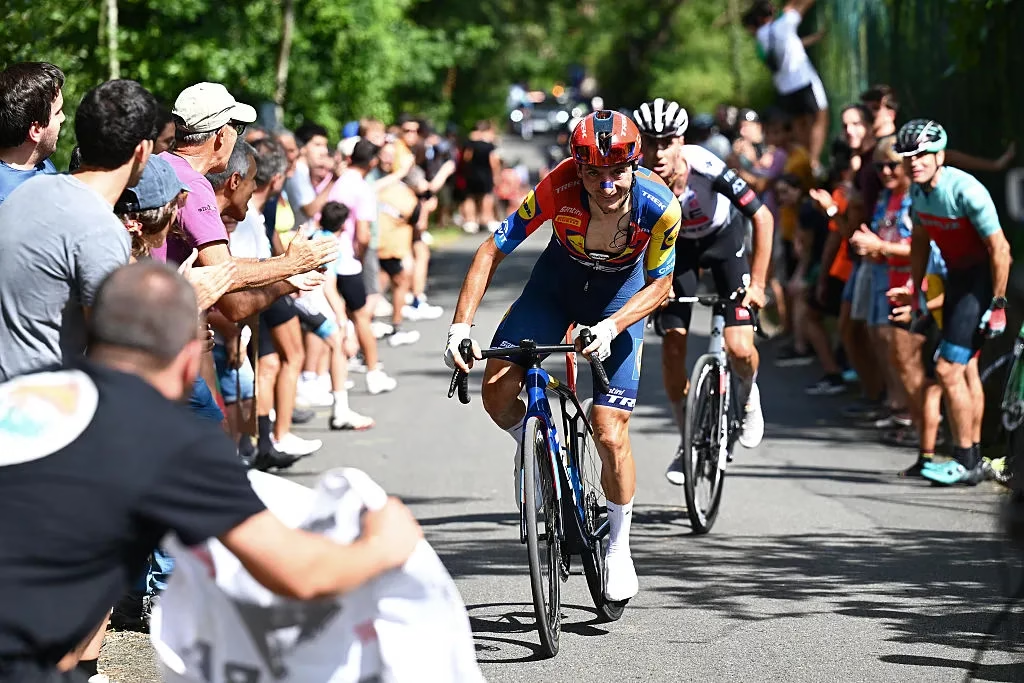
What time does Donostia San Sebastian Klasikoa 2026 start?
The riders begin the neutralised roll-out at 11:05 CEST on Saturday 1 August 2026, which is 10:05 BST for UK viewers.
The start follows the morning sign-on in central San Sebastián before the peloton leaves the city and heads into Gipuzkoa. Competitive racing begins after the neutralised section, so the first attacks and fight for the breakaway should take place shortly after 10:05 BST rather than exactly at that time.
There is little reason for viewers interested mainly in the favourites to be watching from the first kilometre. The opening hours establish the breakaway and begin accumulating fatigue, but the defining part of San Sebastián arrives much later once the race returns towards the coast and the biggest climbs begin to come together.
The complete Donostia San Sebastian Klasikoa 2026 route guide covers all seven climbs and how the course builds towards the finale.
How can UK viewers watch the race live?
UK viewers can watch Donostia San Sebastian Klasikoa through TNT Sports, with live streaming available through HBO Max.
HBO Max is now the streaming home of TNT Sports cycling coverage in the UK, replacing the older Discovery+ setup that many viewers had been used to for the Classics and WorldTour stage races.
The exact TNT Sports channel assignment can depend on the wider Saturday schedule, so it is worth checking the television guide on race morning. The event is included in TNT Sports’ 2026 cycling calendar, and HBO Max should provide the corresponding live stream for viewers with the relevant sports access.
There is no confirmed free-to-air UK live broadcast.
What time does the live broadcast begin?
EITB, the host broadcaster in the Basque Country, has confirmed live coverage from 14:30 CEST, which is 13:30 BST.
That is the most useful reference point for the international television feed.
By then, the early breakaway should be long established and the race should be moving towards the section where the pace begins to increase before Jaizkibel, Erlaitz and Murgil Tontorra.
For viewers who want to understand how the decisive race develops rather than simply see the winning move, 13:30 BST is the ideal time to start watching.
There should still be enough road remaining for the major teams to reveal their tactics, while the accumulated climbing should already have begun reducing the number of riders capable of influencing the finish.
What time should I tune in for the decisive part?
If you cannot watch from the start of the live feed, aim to be watching by 14:00 BST.
San Sebastián is not a race where everything necessarily waits for the final climb. The late terrain is stacked closely enough that the winning move can begin well before Murgil Tontorra, particularly if an aggressive rider decides that waiting for a small-group finish is the wrong strategy.
Jaizkibel is the traditional landmark, but Erlaitz is capable of creating a much more severe selection. A move over either climb can force teams onto the defensive before Murgil is even reached.
That means waiting until the last 20km is risky.
For the full tactical picture, start at 13:30 BST. For the main favourites, 14:00 BST should be safe. If you only care about the final hour, join no later than roughly 15:00 BST, although by then there is a genuine chance that the decisive attack has already been launched.
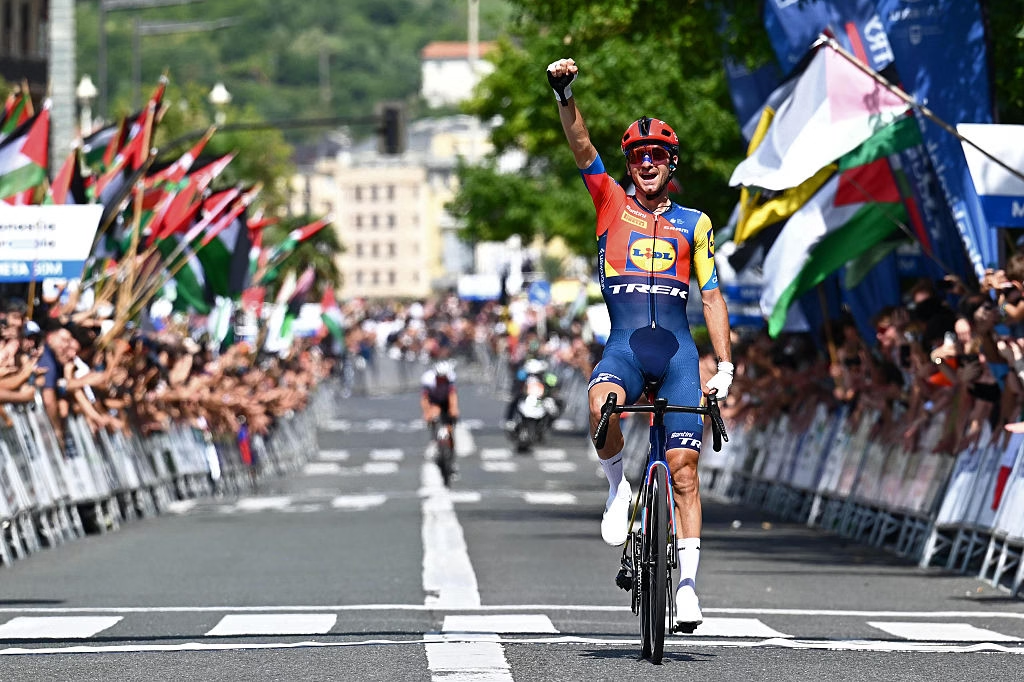
When will Donostia San Sebastian Klasikoa 2026 finish?
The exact finish time depends on the race speed, but the winner should reach the Boulevard in San Sebastián during the late afternoon UK window.
A sensible viewing plan is to treat approximately 15:30 to 16:00 BST as the expected finishing period, while allowing for variation depending on how quickly the peloton covers the opening half of the course and how aggressively the climbs are raced.
The route contains more than 4,150 metres of elevation, so predicting the arrival to the minute is harder than for a flatter Classic. Strong tailwinds, a fast opening breakaway or early attacking can move the schedule forward, while a more controlled race can push it back.
Anyone planning around the finish should therefore be watching comfortably before 15:30 BST.
The race clashes with Tour de France Femmes Stage 1
Saturday creates an awkward viewing schedule because the Donostia Klasikoa overlaps directly with the opening stage of the Tour de France Femmes in Lausanne.
The men’s race begins at 10:05 BST, while the Tour de France Femmes rolls away later in the day. The most important period of San Sebastián then overlaps with the early and middle part of the women’s race.
For viewers trying to follow both, the natural split is to prioritise San Sebastián once the live pictures begin at 13:30 BST, then keep an eye on Lausanne as the women’s race moves towards its uphill finale.
The complication is that both races become increasingly important during the same afternoon. San Sebastián can explode from Jaizkibel onwards, while the Tour de France Femmes opener becomes most interesting once the peloton starts its final return towards Lausanne.
Multiple screens may be the least stressful solution.
Why Jaizkibel is still worth watching
Jaizkibel remains the climb most closely associated with San Sebastián, even though changes to the finale mean it no longer has to be where the winner attacks.
Its importance comes from what it does to the race.
After more than 150km of repeated climbing, Jaizkibel begins exposing which teams still have numbers and which leaders have already been left isolated. The gradient is not as vicious as Murgil Tontorra, but the length and position in the race make it difficult to hide.
It is also far enough from the finish for aggressive riders to attack without committing themselves to a final five-minute effort.
A serious move on Jaizkibel can force the strongest teams to chase through the rest of the finale rather than wait for Murgil.
For newer viewers, our beginner’s guide to Men’s Donostia San Sebastian Klasikoa 2026 explains why the climbs work together rather than functioning as isolated obstacles.
Erlaitz can be more decisive than Jaizkibel
Erlaitz follows later and represents a sharper climbing test.
This is where the race can begin breaking into much smaller groups. Riders who were able to survive Jaizkibel through positioning and support may find that Erlaitz demands significantly more individual climbing strength.
That makes it one of the most important points for anyone watching the favourites.
Teams with several riders remaining can use the climb to attack in sequence. Isolated leaders have to decide which moves they can afford to let go.
A rider who loses contact here may struggle to regain the race before Murgil Tontorra, particularly if the front group keeps attacking over the top.
Murgil Tontorra is the final wall
Murgil Tontorra provides the final steep climbing opportunity before the descent back towards San Sebastián.
The gradients are severe enough for a committed attack to create separation quickly, while its proximity to the finish means there is relatively little time for a chasing group to organise afterwards.
That makes the climb ideal for riders who do not want to take a fast finisher into the city.
If one rider crests Murgil with a meaningful gap, the race can effectively become a time trial towards the Boulevard. If several contenders remain together, the descent and the flat final approach become tactical instead.
The final climb therefore does not simply identify the strongest rider. It determines what type of race remains.
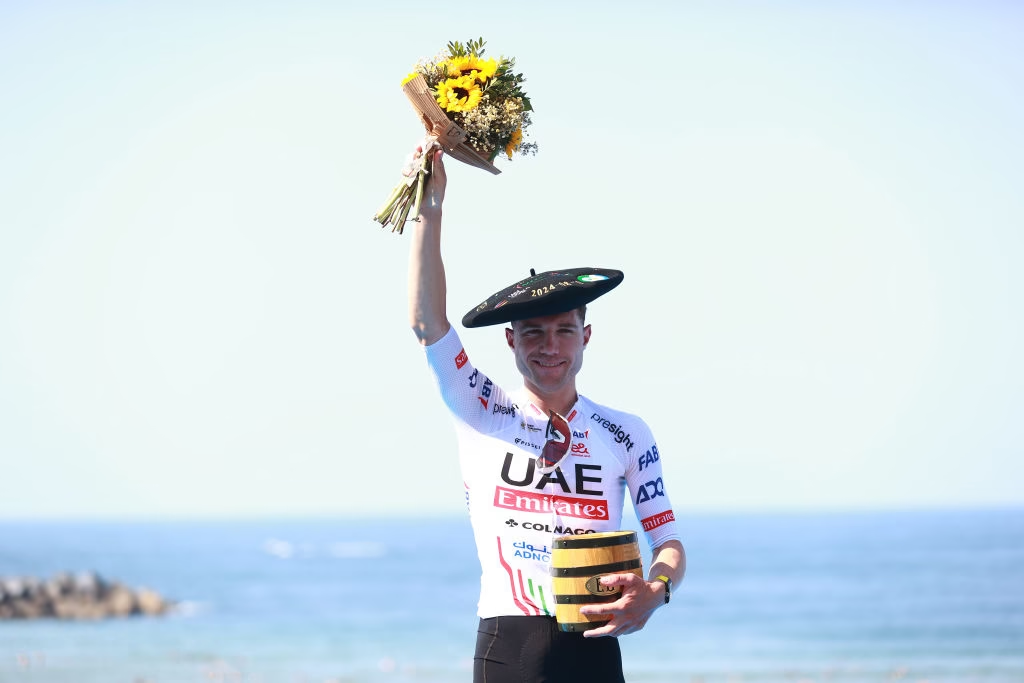
Remco Evenepoel is chasing a fourth win
Remco Evenepoel starts as one of the central figures of the 2026 Klasikoa because a fourth victory would give him the outright record.
He currently shares the benchmark of three wins with Marino Lejarreta after taking victories in 2019, 2022 and 2023.
San Sebastián has repeatedly suited Evenepoel because he does not need to wait for the final steep climb. His sustained power allows him to attack from much further out and turn a tactical Classic into a pursuit.
That makes the live viewing window especially important.
If Evenepoel is going to make one of his trademark long-range moves, it could happen before viewers waiting only for Murgil have switched on.
His move to Red Bull-Bora-Hansgrohe also changes the tactical picture around him, with the team able to approach the race using several strong riders rather than expecting Evenepoel to solve everything alone.
Primož Roglič will not start
One important late change to the pre-race picture is the absence of Primož Roglič.
He had been included in the provisional field and would have given Red Bull-Bora-Hansgrohe another obvious winning option alongside Evenepoel, but he is no longer expected to start after being struck by a car while training.
That removes one of the most dangerous reduced-group finishers from the race and places even more attention on Evenepoel.
It also changes the tactics for Red Bull. Rather than rivals having to choose between marking an Evenepoel long-range attack and protecting against Roglič later, the hierarchy becomes clearer.
Maxim Van Gils still gives the team another strong one-day option, but Roglič’s absence is a significant late change.
Giulio Ciccone returns as defending champion
Giulio Ciccone won the 2025 Klasikoa and returns with a very different status.
Twelve months ago, his attacking strength could create opportunities because rivals did not necessarily have to organise everything around him.
Now he is the defending champion.
Lidl-Trek can expect other teams to react quickly if Ciccone moves on the late climbs, which means he may need teammates to help create the selection before launching his own attack.
The route still suits him extremely well.
A hard race reduces the importance of finishing speed and gives Ciccone the sort of climbing contest he wants. If the race is down to a handful of riders over Murgil, he should be among the most dangerous.

Ben Healy is the rider who can attack before everyone expects it
Ben Healy is one of the main reasons not to treat the Klasikoa as a race beginning on the final climb.
His best results tend to come when he anticipates the obvious tactical moment rather than waiting for stronger pure climbers to dictate terms.
That could mean attacking before Jaizkibel, moving on the climb itself or using the roads towards Erlaitz to force the favourite teams to chase.
If Healy arrives at Murgil in the same group as the strongest climbers, he may already have allowed the race to become too conventional.
His opportunity comes from making everyone else race earlier.
The Basque contenders have extra motivation
Pello Bilbao, Ion Izagirre and Mikel Landa all bring an obvious local dimension.
Bilbao is especially dangerous because he combines climbing ability with a strong finish from a small group. A rider trying to win solo cannot afford to tow Bilbao all the way back into San Sebastián.
Landa wants the opposite type of race. His chances improve as the group becomes smaller and finishing speed matters less, so the climbs need to be ridden aggressively.
Izagirre brings enormous experience of this terrain and is another rider capable of reading the tactical moments around the final climbs.
The history of the Donostia San Sebastian Klasikoa helps explain why a Basque winner still carries particular significance at a race so closely tied to the region.
-
 Photo Credit: Getty


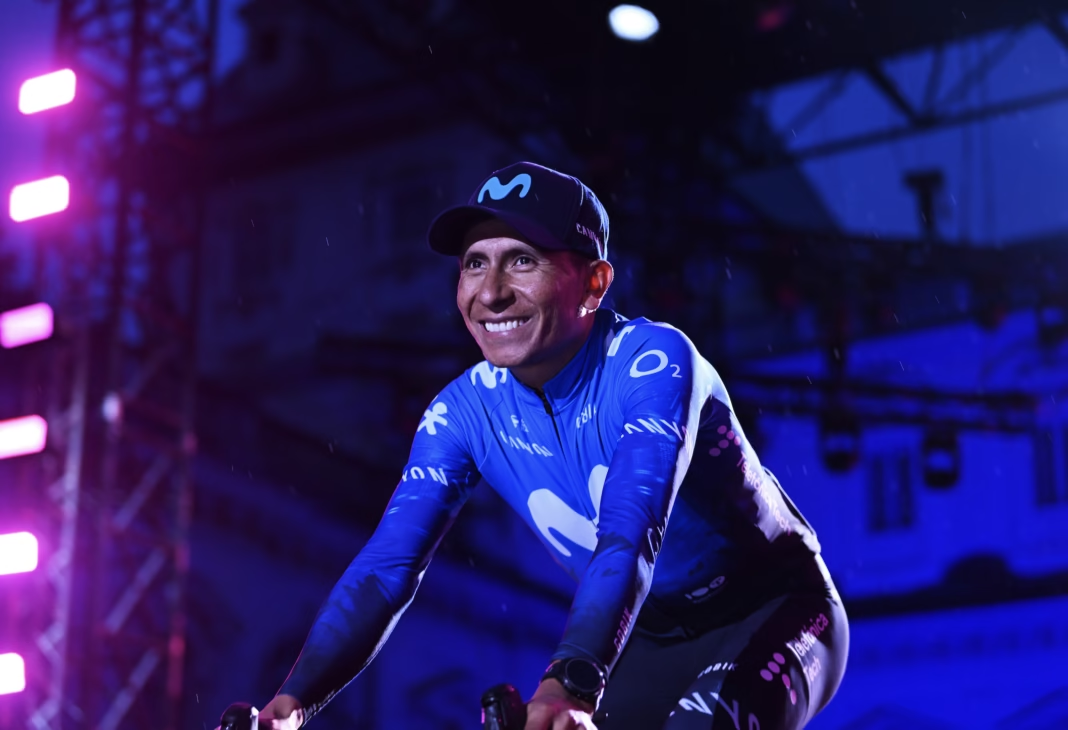
Other riders to watch
The field is deep enough that the race should not become a simple Evenepoel versus Ciccone contest.
Jan Christen has the climbing aggression required to attack before the final selection and already knows he can perform on these roads.
Felix Gall benefits if the race becomes a pure climbing contest and the quicker finishers are removed.
Pello Bilbao becomes more dangerous if the leading group remains together.
Mikel Landa needs a selective race and has every incentive to contribute to creating one.
Julian Alaphilippe and Marc Hirschi give Tudor two different one-day threats, with Alaphilippe capable of attacking and Hirschi dangerous if a reduced group survives.
The eventual winner may therefore be decided as much by who refuses to chase as by who attacks.
That is typical San Sebastián.
Donostia San Sebastian Klasikoa 2026 timings at a glance
Date: Saturday 1 August 2026
Start and finish: Donostia/San Sebastián
Distance: 221.1km
Categorised climbs: 7
Elevation: more than 4,150 metres
Neutralised start: 11:05 CEST
UK start time: 10:05 BST
Host broadcast begins: 14:30 CEST
UK equivalent: 13:30 BST
UK television: TNT Sports
UK streaming: HBO Max
Best time to start watching: 13:30 BST
Latest sensible tune-in for the decisive race: around 14:00 BST
Expected finish window: approximately 15:30 to 16:00 BST
San Sebastián is not a race to join for the final kilometre.
The winning attack could come on Murgil Tontorra, but it could just as easily begin earlier as Jaizkibel and Erlaitz reduce the race and riders such as Evenepoel, Healy or Christen decide waiting is more dangerous than attacking.
With Evenepoel chasing a record fourth victory, Ciccone defending his title and Roglič now absent from what had been expected to be a powerful Red Bull lineup, the tactical picture has shifted again immediately before the start.
For UK viewers, the simplest plan is to have TNT Sports or HBO Max on from 13:30 BST. That should catch the point where San Sebastián stops being a long Basque endurance race and starts becoming one of the most unpredictable finales of the summer.

