
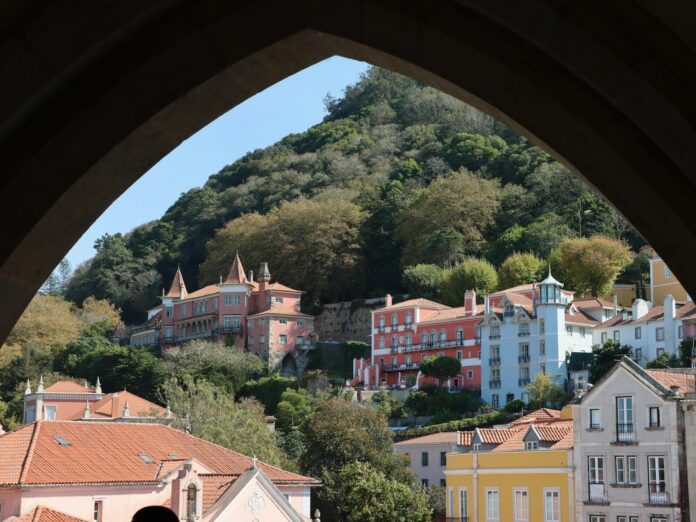
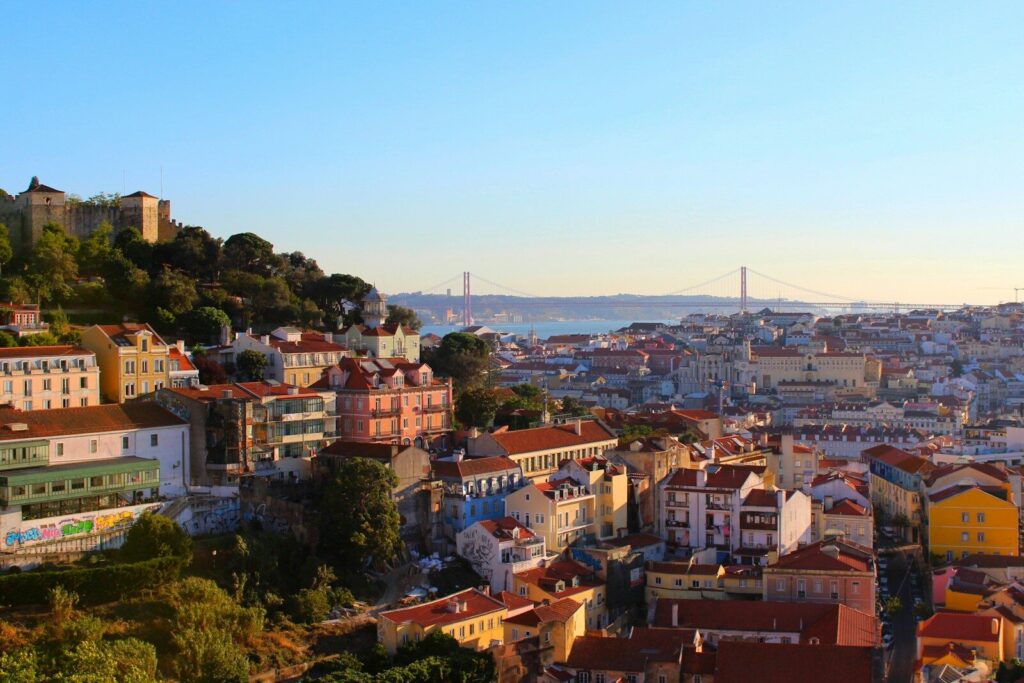
Lisbon works surprisingly well as a cycling destination because the best riding begins where much of the city starts to disappear.
The Portuguese capital itself is famously hilly, busy and paved in places with polished stone that is considerably more appealing on foot than on a road bike. Head west, though, and everything changes. The Tagus opens towards the Atlantic, Cascais provides easy access to the coastline and beyond Guincho the road begins climbing into the Sintra-Cascais Natural Park, towards Cabo da Roca and the wooded Serra de Sintra.
That creates a remarkably varied riding area within a relatively compact part of Portugal. One morning can be spent spinning beside the river through Belém, another following the Atlantic coast beyond Cascais, before a harder day climbing through Sintra’s forests.
ProCyclingUK’s wider guide to cycling tourism in Portugal covers more of what the country offers, but Lisbon and Sintra stand out because a proper cycling trip can be combined so easily with one of Europe’s best city breaks.
The key is not treating central Lisbon as the entire cycling destination. Think of it as the gateway to a riding area stretching west through Cascais and into the Sintra hills.
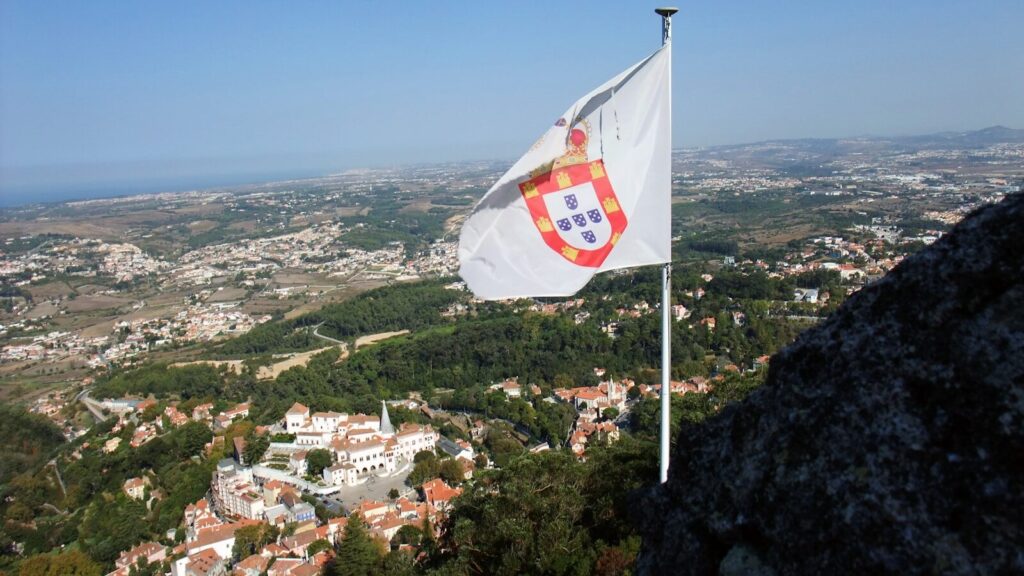
Lisbon and Sintra cycling at a glance
| Area | Best for | Riding character |
|---|---|---|
| Lisbon riverside | Easy and recovery riding | Flat waterfront sections and sightseeing |
| Cascais | Best all-round cycling base | Coast, cafés and easy access to Sintra |
| Cascais to Guincho | Easy to moderate riding | Fast coastal roads and cycleway |
| Cabo da Roca | Scenic road cycling | Atlantic cliffs and exposed climbing |
| Serra de Sintra | Climbing | Short, irregular and wooded ascents |
| Sintra | Climbing and sightseeing | Steep roads and historic surroundings |
| Colares | Linking coast and mountains | Rolling roads and quieter lanes |
For anyone planning a wider European riding trip, Lisbon and Sintra fit naturally within ProCyclingUK’s cycling in the rest of Europe guide, particularly for riders who prefer combining coast, climbing and a major city rather than staying in a dedicated training resort.
Lisbon itself is better for exploring than training
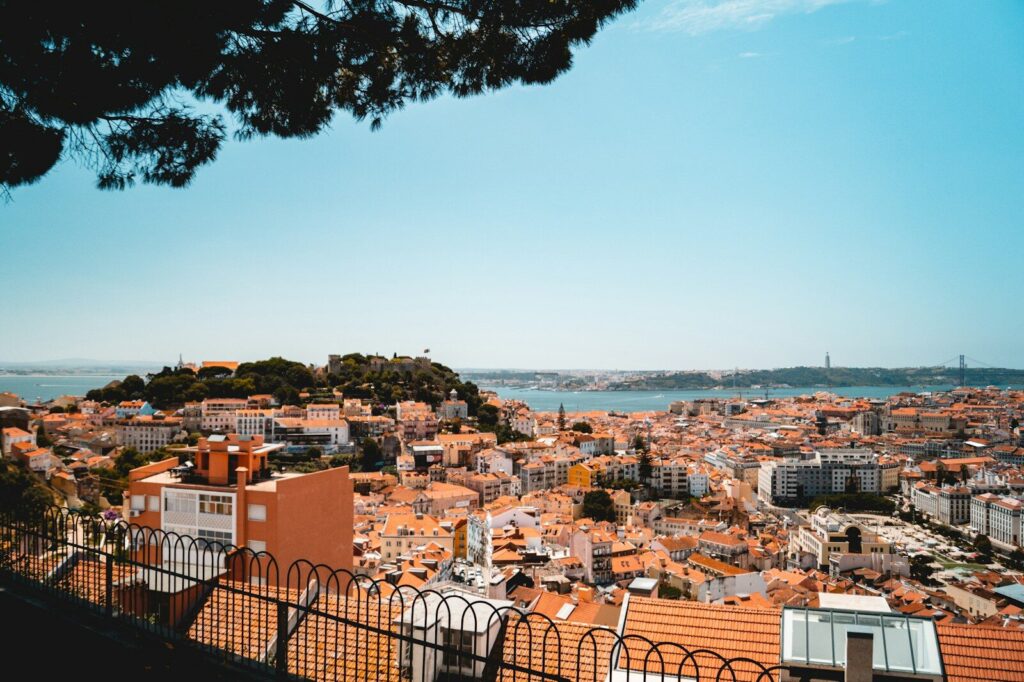
Lisbon’s reputation as the city of seven hills provides the first clue.
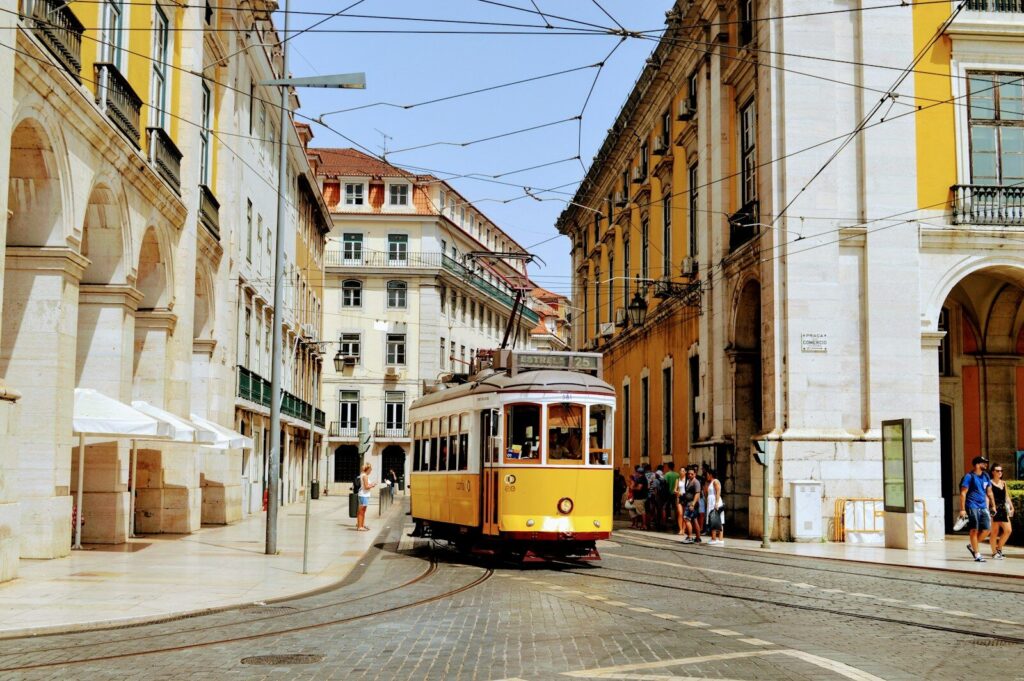
There is plenty of cycling within the city, but a conventional road bike is not necessarily the best way to spend hours exploring Alfama, Bairro Alto or Graça. Gradients can be steep, tram tracks demand attention and many older streets are surfaced with stone rather than smooth tarmac.
For sightseeing, a hire bike or e-bike makes sense.
For proper road riding, head towards the Tagus.
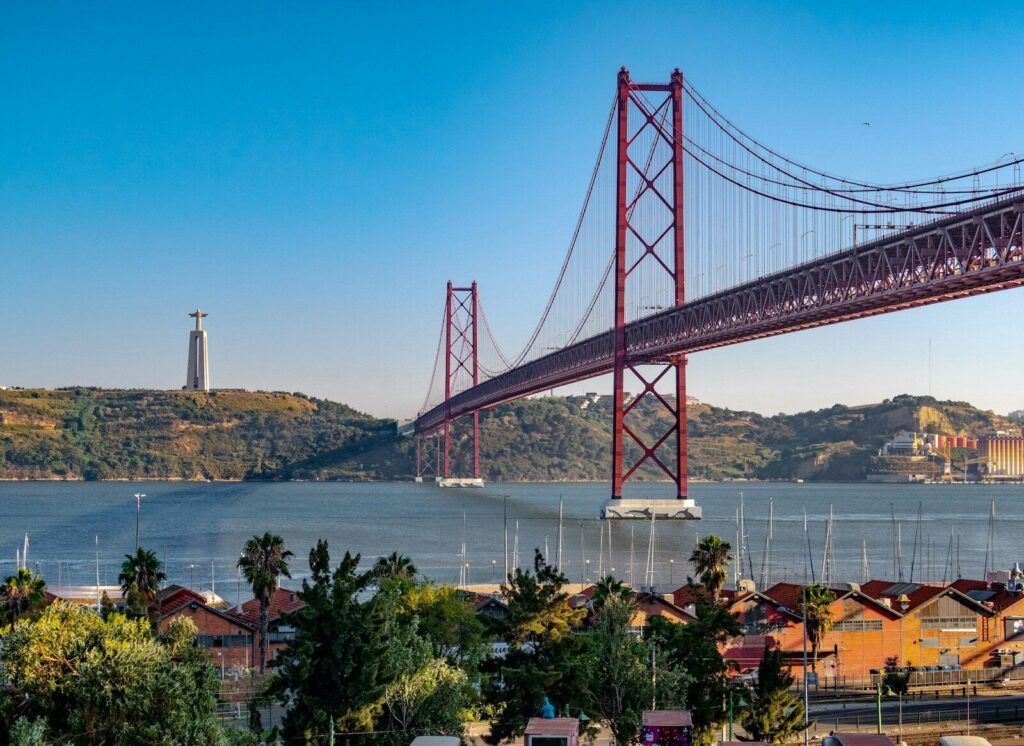
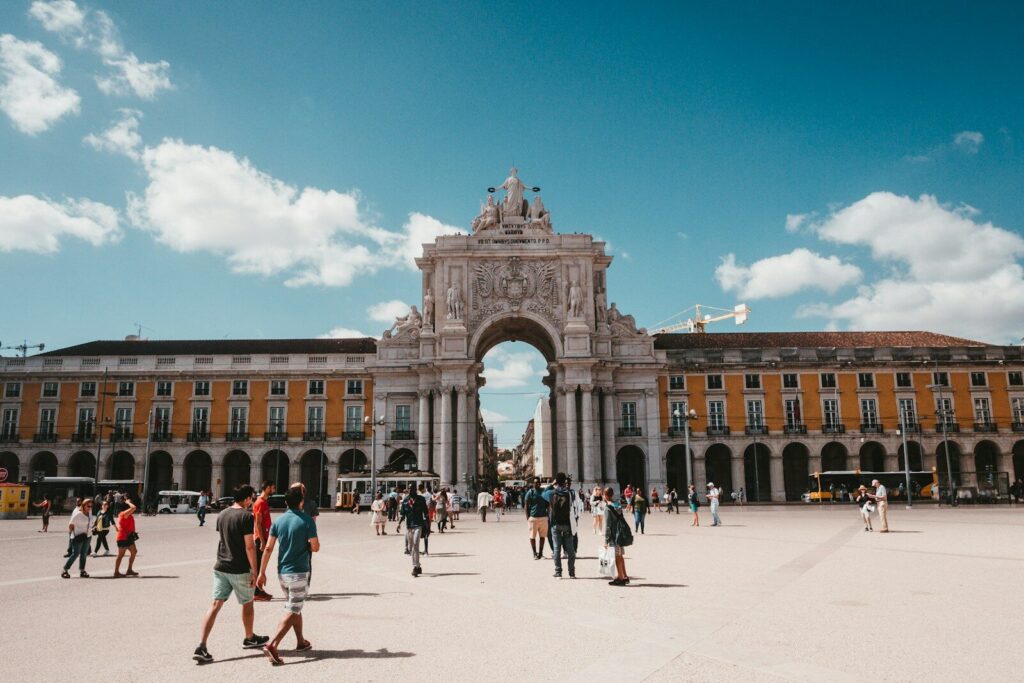
The riverside corridor west through Cais do Sodré and Belém provides one of the easiest introductions to cycling in Lisbon. It takes you away from some of the steepest inner-city streets and towards the 25 de Abril Bridge, Belém Tower and the wider waterfront.
This is also worth separating from a previous ProCyclingUK look at cycling in Lisbon. The city itself can be entertaining on two wheels, but for a modern road-cycling trip the stronger routes increasingly lie towards Cascais and Sintra.
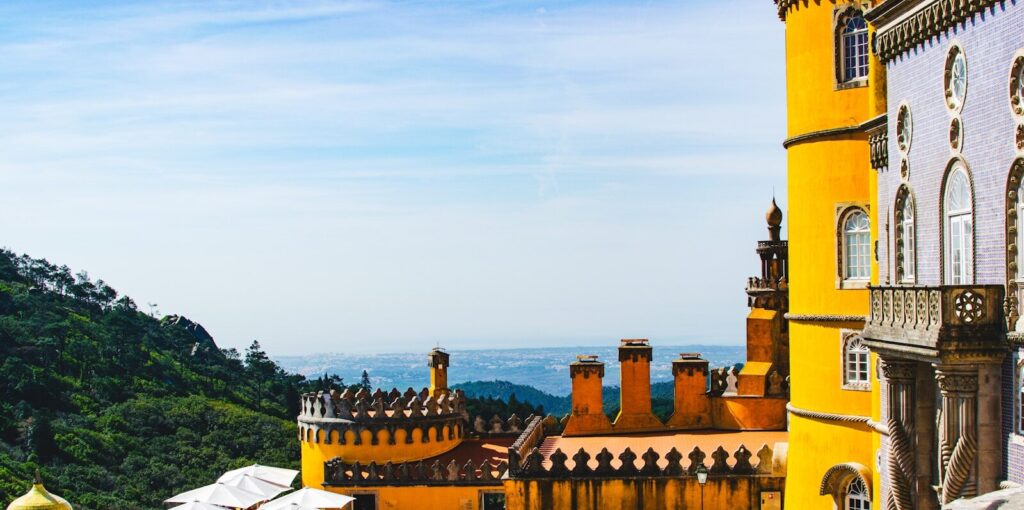
Belém makes an ideal first or recovery ride
Once you reach Belém, Lisbon begins to feel more open.
The Tagus is enormous here and landmarks including the Jerónimos Monastery, Belém Tower and Monument to the Discoveries give even an easy spin a strong sense of place.
It is not where you go for an uninterrupted three-hour training session. Shared paths and tourist areas can become busy, particularly later in the day.
Go early and it works perfectly as an arrival-day ride.
There is also value in having a genuinely easy option on a trip dominated by Sintra’s hills. Not every day needs to involve 1,500 metres of climbing.
Cascais is probably the best base for cyclists
If cycling is the priority, Cascais is arguably the strongest place to stay.
It sits directly on the coast at the point where the more developed Lisbon shoreline begins giving way to the Atlantic landscape.
Ride east and you have Estoril and Lisbon.
Ride west and you quickly reach Guincho, Cabo da Roca and the Sintra-Cascais Natural Park.
That makes getting started much easier than from central Lisbon. You can leave your accommodation on the bike and almost immediately be heading towards the roads you actually travelled to ride.
Cascais also works particularly well for a mixed trip. Lisbon remains close enough for evenings or rest days, while the serious riding begins at the door.
Cascais to Guincho is the obvious easy coastal ride
The coastal road towards Praia do Guincho is almost the opposite of cycling through central Lisbon.
The Atlantic stays alongside you.
The road opens up.
The terrain remains manageable.
And the Sintra hills grow steadily larger ahead.
For an easy day, ride from Cascais past Boca do Inferno and Cabo Raso towards Guincho before turning around.
For a harder day, continue north.
That is where this part of Portugal starts becoming much more interesting.
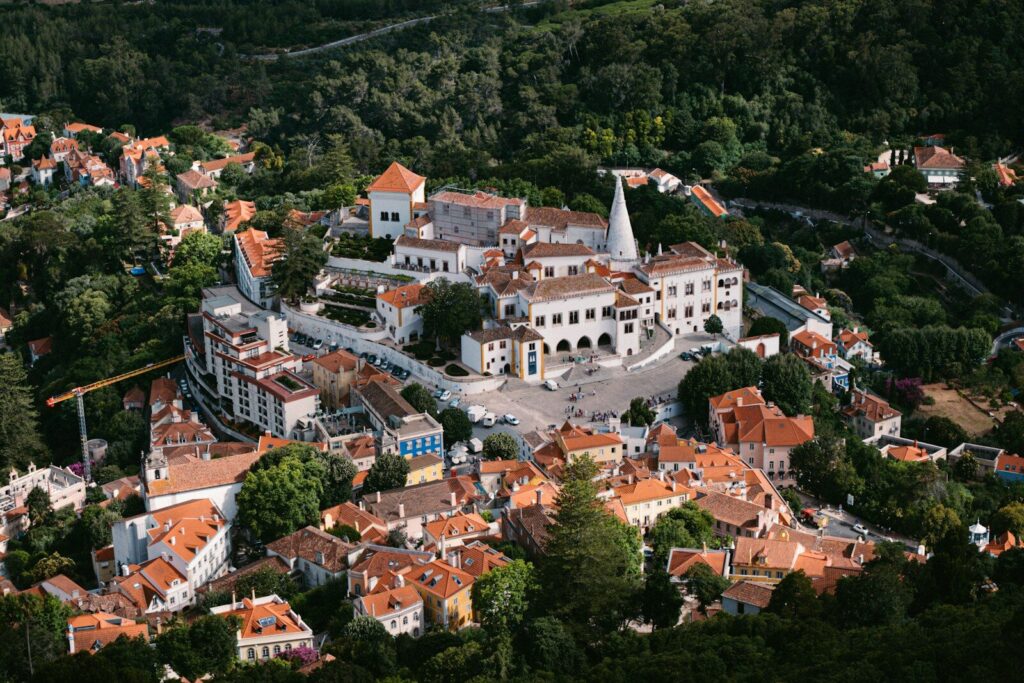
Guincho is where the Atlantic really takes over
The western side of Cascais is fully exposed to the ocean.
Guincho is known for wind and surf rather than sheltered resort beaches, and you notice that immediately from the bike.
The landscape opens, vegetation becomes lower and the Atlantic dominates the view. The Serra de Sintra rises directly ahead.
A tailwind can make the coastal section exceptionally fast.
Eventually you normally have to ride back.
That makes wind direction almost as important as temperature when planning a route. A steady headwind along an exposed coastline can add considerably more difficulty than the elevation profile suggests.
Cabo da Roca is the classic target ride
Continue beyond Guincho and the road begins climbing towards Cabo da Roca, the dramatic headland on the western edge of the Sintra-Cascais Natural Park.
For a first cycling trip to Lisbon, this is the obvious landmark to build a ride around.
The attraction is not one particularly famous climb. Instead, the road repeatedly rises and falls through open coastal terrain before reaching a headland sitting high above the Atlantic.
A typical Cascais to Cabo da Roca loop can be built at around 40 to 50km, depending on the roads chosen, with enough climbing to make it feel like a proper ride without taking over the entire day.
It is probably the best introduction to the region.
A good first serious ride: Cascais, Guincho and Cabo da Roca
Start in Cascais.
Follow the coast past Boca do Inferno and Cabo Raso.
Continue towards Guincho.
Climb towards Cabo da Roca.
Then either retrace the coast or take an inland route back towards Cascais.
Expect roughly 45km with somewhere around 600 to 750 metres of climbing, depending on the exact route.
The appeal lies in how quickly the landscape changes.
Cascais feels polished and urban.
Guincho is windswept and exposed.
Cabo da Roca feels considerably more remote.
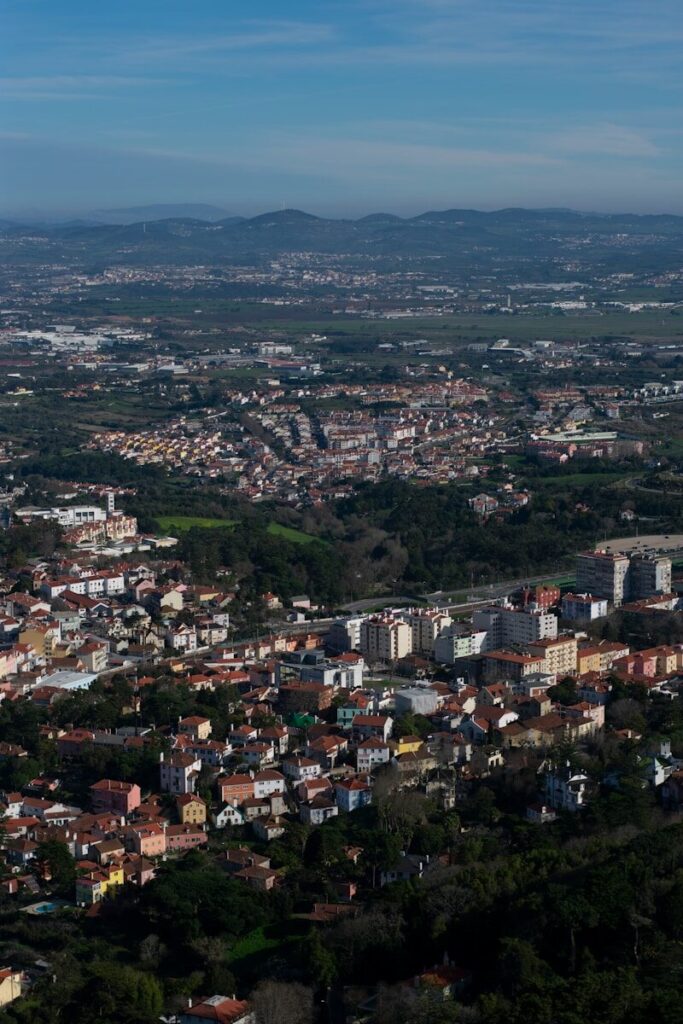
Sintra’s wooded hills sit immediately inland.
Few rides of this length contain quite as much variety.
Sintra is where the real climbing begins
The Serra de Sintra is not high mountain territory.
That does not make it easy.
The massif rises sharply from the surrounding coastline, with twisting roads disappearing into dense forest towards Sintra and the hills surrounding its famous palaces.
These are very different climbs from the long, steady ascents found in the Alps.
Gradients change frequently.
Roads twist.
Shorter ramps interrupt any rhythm you thought you had found.
Brief flatter sections can be followed immediately by another steep rise.
It is excellent terrain for riders who enjoy repeated climbing rather than settling into one gear for 20km.
Do not judge Sintra by altitude
Nothing in Sintra reaches spectacular elevation by European mountain standards.
The difficulty comes from how quickly the climbing accumulates.
There are fewer long valleys allowing you to approach an ascent gradually. Roads simply begin rising.
A 60km ride through Sintra can therefore feel considerably harder than a flatter 90km day elsewhere in Portugal.
This is punchy terrain.
If your perfect climb is an hour at a steady 5%, Sintra can feel slightly chaotic.
If you enjoy a road that repeatedly changes gradient and character, it is superb.
You do not need to ride directly to Pena Palace
Looking at a map makes Pena Palace seem like an obvious cycling objective.
In reality, the most popular roads around Sintra’s historic centre can become busy, while access arrangements around the monuments are controlled.
The better approach is to treat the Serra itself as the destination rather than feeling you need to ride directly to every tourist landmark.
The surrounding forest roads provide the climbing and atmosphere you came for.
Visit the palace separately if you want to.
It is one of those occasions where the most famous point on the map is not necessarily the best part of the cycling route.
Colares links Sintra with the coast
West of Sintra sits Colares, one of the most useful locations when building routes between the hills and Atlantic.
Roads through Colares allow you to connect Sintra with Cabo da Roca, Praia Grande and the western coastline without constantly returning towards Lisbon.
That creates one of the best rides in the area:
Sintra → Colares → Cabo da Roca → Guincho → Cascais.
Rather than forcing everything into a loop, start among the wooded hills and finish beside the sea.
Have lunch in Cascais.
Then take the train back towards Lisbon.
For a cycling city break, that sort of flexibility makes route planning considerably more interesting.
The train opens up much better route options
The rail network connecting Lisbon, Cascais and Sintra is one of the area’s quiet advantages.
It means rides do not have to begin and finish outside the same hotel.
You can take the train towards Sintra and ride back through the hills.
Ride from Sintra to Cascais and return by rail.
Or start the ride further west and remove the urban kilometres altogether.
That gives you more freedom to design routes around the best roads rather than wasting mileage simply closing a loop.
For anyone used to taking a bike abroad, it is the sort of small logistical advantage that can significantly improve a trip.
ProCyclingUK’s wider travel and riding abroad section brings together similar destination guides where choosing the right base and transport options matters almost as much as identifying the famous climbs.
Three rides to build a Lisbon cycling trip around
Lisbon to Belém
Best for: arrival day or recovery
Difficulty: easy
Bike: road, hybrid or e-bike
Follow the Tagus west towards Belém, take in the waterfront and turn back before the busier parts of the day.
This is sightseeing on two wheels rather than training.
That is exactly why it works.
Cascais to Cabo da Roca
Best for: first proper road ride
Distance: around 40-50km
Climbing: roughly 600-750m depending on route
Difficulty: moderate
Follow the coast towards Guincho before climbing north to Cabo da Roca.
It combines the Atlantic, hills and some of the area’s best scenery without requiring an entire day.
Sintra to Cascais via Colares and Cabo da Roca
Best for: signature ride
Difficulty: moderate to hard
Start among Sintra’s forests, ride west through Colares, reach the Atlantic around Cabo da Roca and then follow the coast south through Guincho to Cascais.
This is the ride that best explains why Lisbon works as a cycling destination.
Stronger riders can make Sintra considerably harder
The basic Sintra-to-Cascais traverse does not need to be enormous.
That is only the starting point.
Instead of riding directly towards Colares, spend the opening part of the day crossing the Serra and accumulating additional climbs.
The hills are compact enough that it is relatively easy to add another ascent without committing to another 50km.
A strong rider can therefore turn an enjoyable point-to-point route into a substantial climbing day.
That is when Sintra stops feeling like a cycling excursion from Lisbon and starts functioning as a destination in its own right.
Do not ignore the coast north of Cabo da Roca
Most first-time routes naturally turn south towards Cascais.
There is another option.
The Atlantic coast continues north through Praia da Adraga and Azenhas do Mar, with smaller settlements and dramatic cliffs overlooking the ocean.
It is less convenient from a Cascais base, but useful for anyone staying closer to Sintra or building a longer ride.
The roads also feel less connected to the Lisbon metropolitan area.
For a second or third ride, this is where the region becomes much broader than the standard Cabo da Roca loop.
Wind can completely change the coast
The stretch around Guincho and Cabo da Roca is exposed enough that wind needs to be part of the route plan.
Do not simply check whether it will be sunny.
Check wind speed and direction.
A strong Atlantic headwind can transform an otherwise moderate coastal ride.
Crosswinds can also become noticeable on open sections, particularly for lighter riders or anyone using deeper wheels.
The advantage is that Sintra offers an alternative.
If conditions look unpleasant on the exposed coast, shift more of the ride inland and spend additional time in the shelter of the Serra.
Coast and hills being so close together gives you options.
When is the best time to cycle around Lisbon and Sintra?
Spring and autumn are probably the best periods for a dedicated road-cycling trip.
Temperatures are generally comfortable for climbing, the busiest summer tourism period is avoided and the days remain long enough for substantial rides.
Winter can also work well, particularly for riders travelling from Britain, although Atlantic weather means rain and strong winds remain possible.
Summer is rideable, but start early.
That is as much about traffic as temperature around Sintra.
A road that feels peaceful at 08:00 can be a completely different experience several hours later once day visitors arrive.
For more Portuguese riding inspiration, the Algarve offers another strong option for a late-summer cycling escape, with longer inland roads and a very different landscape from Lisbon and Sintra.
What bike should you bring?
A normal road bike is ideal.
There is enough climbing to make sensible gearing worthwhile without requiring anything unusual.
A 50/34 chainset with an 11-30, 11-32 or 11-34 cassette will cover virtually every sensible road route.
Modern 28mm or 30mm tyres suit the area particularly well. They provide extra comfort and confidence through occasional imperfect surfaces without meaningfully compromising speed.
You do not need a gravel bike for the main routes in this guide.
Sintra does have extensive off-road possibilities, but that is effectively a separate trip.
Hiring a road bike makes a mixed holiday easy
Lisbon and the Cascais-Sintra area have enough tourism infrastructure that hiring a suitable bike is realistic.
That makes the region particularly useful for a trip where cycling is important but not the only purpose.
Spend several days exploring Lisbon.
Hire a road bike for two or three days.
Move the riding towards Cascais and Sintra.
Then return the bike without travelling through an airport with a large bike box.
If cycling is the entire reason for travelling, bringing your own bike still offers the obvious benefits of familiar fit, saddle and equipment.
For a mixed city and cycling trip, hiring becomes much more appealing.
-
 Photo Credit: quentinphotographiebe
 -
 Photo Credit: Getty


Where should cyclists stay?
There are three sensible choices.
Lisbon
Choose Lisbon if cycling is only part of the holiday.
You get the capital’s food, nightlife, history and atmosphere, while the better riding can be reached by train or transfer.
The downside is that serious rides require more logistics.
Cascais
Choose Cascais if cycling is the priority.
You can ride directly towards Guincho and Cabo da Roca, Sintra is close and Lisbon remains easy to visit.
For most road cyclists, it offers the best balance.
Sintra
Choose Sintra if climbing and landscape matter more than coastal riding.
You are immediately beside the Serra, although the town itself attracts substantial tourist traffic.
A few nights here can work exceptionally well, but Cascais is likely to suit a broader range of riding.
Lisbon and Sintra offer something different from Europe’s established cycling bases
There is no reason to pretend Lisbon has the density of famous training roads found around Girona, Mallorca or Calpe.
The cycling culture is less dominant.
Some route planning requires more thought.
Parts of the Lisbon metropolitan area are busy enough that there is little reason to ride through them simply for the sake of starting from the hotel.
But that is not really the point of coming here.
This is a trip where cycling fits naturally around a much broader destination.
You can ride beside the Tagus one morning, climb through the cool forests of Sintra the next and stand with your bike above the Atlantic at Cabo da Roca a few hours later.
Then take the train back to Lisbon for dinner.
For more cycling-first destination ideas across Europe and beyond, ProCyclingUK’s Travel & Riding Abroad hub brings together the wider collection.
Lisbon itself is only part of this cycling trip.
The real appeal begins when you point the bike west.

