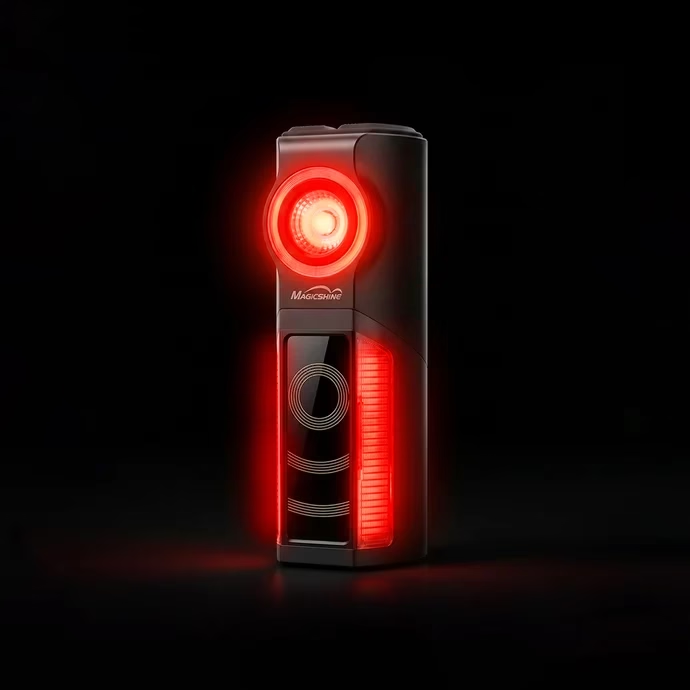
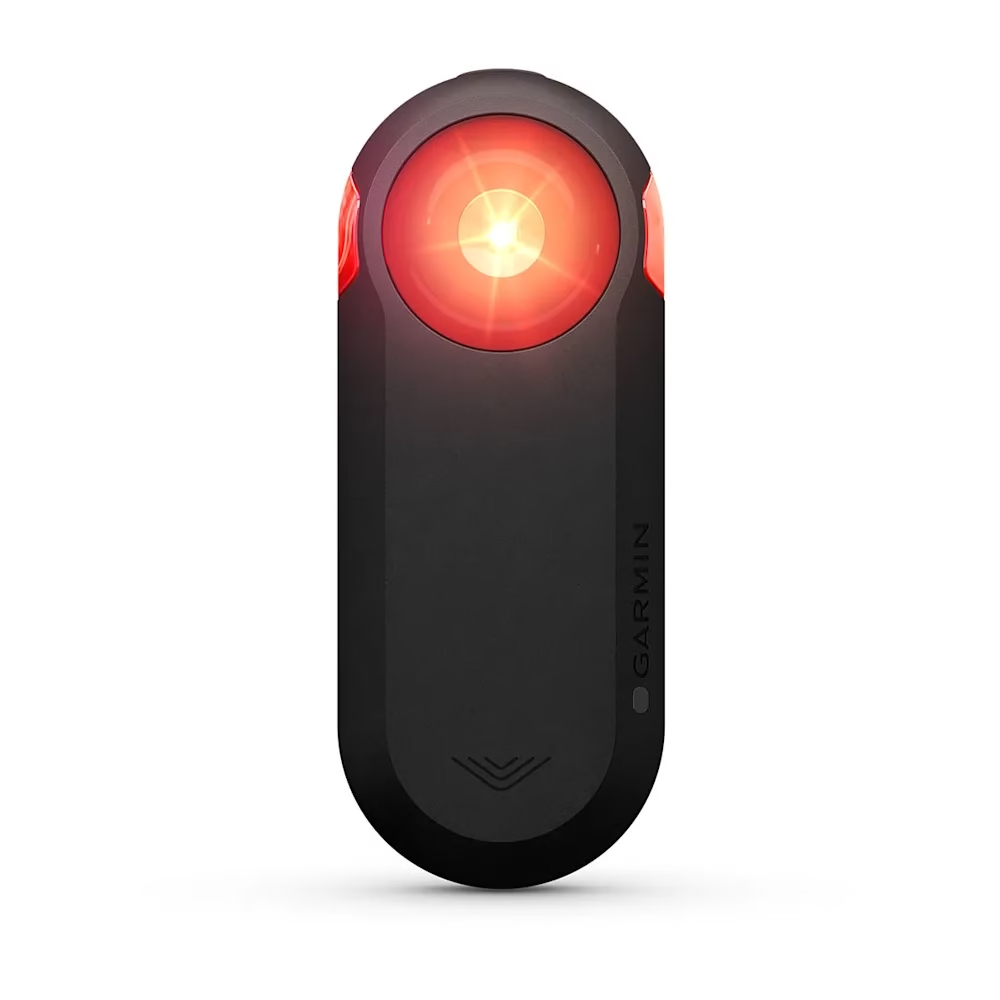
The Magicshine SEEMEE R300 and Garmin Varia RTL515 promise much the same thing: an early warning when traffic is approaching from behind, combined with a rear light that helps make the rider visible. Their priorities are rather different. Magicshine offers more lighting modes, USB-C charging and a bigger headline lumen figure, while the older Garmin has built its reputation around the consistency of its radar alerts. Anyone buying primarily for vehicle detection should treat that difference as more important than the specifications on the packaging.
The R300 is not simply a cheaper Varia with a brighter light. Independent testing has identified situations in which its radar gives spurious warnings or fails to report a vehicle. That matters because confidence in the alerts is the main reason to spend this much on a radar-equipped rear light. Garmin has its own compromises, notably an ageing charging connection and shorter claimed battery life in several light modes, but its radar performance remains a benchmark against which less-established units are judged.
This is a research-based comparison using official specifications and published independent tests. ProCyclingUK has not ridden with these two lights side by side, and their quoted battery figures have not been independently measured here. Prices and firmware behaviour should be checked again before buying.
Buying links: View the Magicshine SEEMEE R300 at Magicshine UK or Garmin Varia RTL515 at Garmin UK. These are direct manufacturer links; no commission-tracking links have been included.
Specifications: the headline figures need context
| Specification | Magicshine SEEMEE R300 | Garmin Varia RTL515 |
|---|---|---|
| Rear radar detection range, claimed | Up to 140m | Up to 140m |
| Maximum quoted light output | 300 lumens | 65 lumens, daytime flash |
| High steady light | 50 lumens | 20 lumens |
| Daytime flash | 100 lumens in Magicshine’s listed day-flash mode | 65 lumens |
| Claimed battery life | Up to 100 hours in very low-output ECO mode without radar; 8 hours at 50 lumens with radar | Up to 16 hours in daytime flash; up to 6 hours in steady or night flash |
| Charging | USB-C | Micro-USB |
| Weather resistance | IPX6 | IPX7 |
| Connectivity | ANT+ radar, with additional app and lighting features | ANT+ and Bluetooth, Garmin Varia app support |
| Mounting | Included round and aero seatpost fittings | Garmin quarter-turn mounting interface with seatpost adapters |
Magicshine’s 300-lumen headline must not be read as the normal continuous output with radar running. Its own mode table lists 50 lumens for the high steady setting, eight hours of battery life with radar active, and a 100-lumen daytime flash mode lasting a claimed 16 hours and 12 minutes with radar. A maximum-output figure and a regularly usable riding mode are not interchangeable. The distinction is equally important for Garmin: its quoted maximum of 65 lumens belongs to daytime flash, not steady illumination.
Both manufacturers claim detection at up to 140 metres. That is a useful distance on a straight road, but it is not a guarantee of detection around blind bends or with vehicles approaching from awkward angles. The valuable question is how consistently each device identifies an approaching vehicle once it enters the radar’s field of view, and how well it avoids warnings for objects that are not an approaching threat.
Radar performance: Garmin’s biggest advantage
The SEEMEE R300 has received mixed assessments. Cycling Weekly’s independent road and controlled testing praised its brightness, overall build and approachable controls, but reported false positives as well as occasions when an approaching vehicle did not generate an alert. The publication’s wider radar group test reached a similar conclusion, describing unreliable detection in some real-world situations. A separate review by Cyclists Hub documented repeated false alerts from early units and discussed subsequent attempts to improve the product. Those tests do not establish the performance of every current firmware revision, but they are a warning against assuming the two products are equivalent because they quote the same range.
The Garmin RTL515 has a longer independent track record. In road.cc’s review, the tester reported that the Varia consistently warned of overtaking traffic and did not recall a missed approaching vehicle during testing. Occasional warnings from other cyclists were noted, but they were comparatively infrequent. That does not mean the RTL515 is infallible. Radar cannot see through solid obstructions or replace a shoulder check, and group riding can still generate confusing information. What the comparison suggests is that Garmin has the more convincing evidence for the accuracy and predictability of its warnings.
That distinction changes the purchasing decision. The R300 may make more sense to someone whose main requirement is a highly visible rear light with radar as an additional feature. The Garmin is a stronger choice for a rider who will regularly consult radar alerts on quieter roads, particularly when cars can approach quickly from behind. It would be misleading to recommend the cheaper unit as an equally dependable safety upgrade without explaining the test findings.
Lighting: Magicshine has the more ambitious feature set
Magicshine’s R300 is an interesting light in its own right. Its wide-angle architecture, separate radar and light controls, grouped-riding options and a choice of flash patterns give riders flexibility that is less obvious from Garmin’s simpler mode selection. Magicshine also provides lock and wake-up functions, which should reduce accidental battery drain and make daily use more convenient. The high-output claim attracts attention, although a light’s useful visibility depends on beam pattern and viewing angle as well as lumens.
Garmin’s RTL515 is more restrained. Its steady mode is rated at 20 lumens, with 29 lumens in night flash and 65 lumens in daytime flash. It also has a peloton mode intended to limit the nuisance of an excessively strong light when riders are close together. According to Garmin’s manual, the unit changes its flashing behaviour when a vehicle approaches. That is a practical way of linking detection with visibility rather than requiring the rider to make an adjustment.
The fact that Magicshine lists 300 lumens while Garmin lists 65 must not be interpreted as Magicshine being nearly five times more useful to approaching drivers. The figures come from different operating modes, and an intense flash can be uncomfortable for someone cycling directly behind. For commuting, look for a setting that balances lateral visibility, daytime contrast and the need to avoid dazzling other riders at night. In a group, the least aggressive suitable mode is generally the more considerate option.
Battery life and charging: a split decision
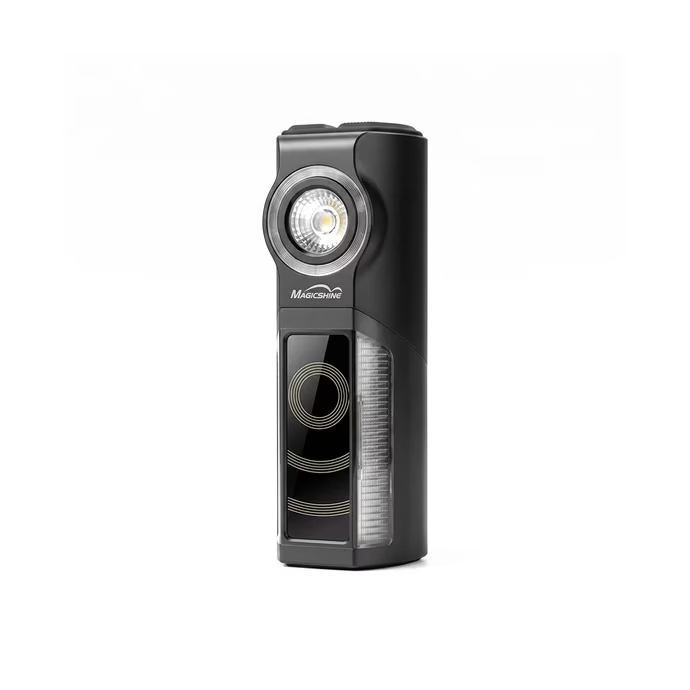
USB-C is one of the R300’s clearest everyday advantages. Most current computers, front lights and accessories now use the same charging format, so a rear light that takes USB-C is easier to fit into an established charging routine. The separate radar-only and low-output modes also give more control over battery consumption than a simple headline run-time suggests. Magicshine quotes eight hours with the radar operating at 50 lumens steady, and longer figures in several lower-output modes.
Garmin’s Micro-USB connection feels dated. Anyone travelling with newer electronics may need to remember a separate cable. Garmin nevertheless claims up to 16 hours in daytime flash, which can be useful on long daylight rides, compared with up to six hours for solid illumination and night flash. Comparing that 16-hour figure with Magicshine’s 100-hour maximum would be a false equivalence, because the Magicshine figure applies to a very low-power ECO setting with radar off. For a fairer comparison, use the modes that reflect the riding you actually intend to do.
Both sets of figures are manufacturer claims rather than a promise that a battery will last that long in cold British weather, after several years of use, or with every connected feature enabled. For winter riding, it is sensible to allow a margin beyond the expected journey and check the charge before setting off. Radar lights are particularly poor candidates for riding until the final battery warning appears because the light and warning function can both be compromised.
Connectivity, mounting and the bikes they suit
Both products are intended to work with compatible cycling head units, but compatibility should be checked against the particular computer and software version in use. Garmin has mature ANT+ radar support across its own Edge computers and many third-party units, along with a compatible phone application. Magicshine also advertises ANT+ radar alerts and adds its own lighting controls. Features available through an app do not necessarily mean every alert or adjustment is available on every head unit, so buyers should verify their setup before assuming universal support.
Mounting deserves attention, particularly on aero seatposts or a bicycle with a large saddle bag. The R300 ships with fittings for round and aero posts, while Garmin’s quarter-turn mount has a substantial ecosystem of official and third-party alternatives. Neither fitting should be hidden behind a saddle bag, coat or seatpack. Both units need a clear rearward view for radar operation, and the light must also be visible from the appropriate distance and angle.
The R300’s IPX6 rating covers exposure to water jets and is well suited to heavy road spray. Garmin’s IPX7 specification is rated for temporary immersion under defined laboratory conditions. Neither rating is an invitation to leave a charging port wet or put the device through inappropriate washing procedures. A rear light sits in the worst of road grit and spray, so cleaning the mount and drying the charging connection are basic ownership habits worth keeping.
Value and the problem with calling either one safer
The R300’s attraction is obvious when it is available for meaningfully less than the Varia. It provides an attractive housing, useful lighting features and USB-C while still offering a form of rearward vehicle warning. However, a smaller purchase price does not compensate for unreliable alerts if radar accuracy is the main thing you are buying. The mixed test record means its value depends on which part of the product matters most to you.
Garmin is an older design with a less convenient charging connection and may not offer the most dramatic light output. Nevertheless, it represents a more conservative purchase for riders seeking a consistent radar warning rather than the largest list of supplementary light functions. Buyers should check the exact RTL515 model and current retailer availability, because Garmin now sells newer Varia products with different capabilities and price points. An inexpensive listing is not useful if it turns out to be a different Varia model or a retailer with limited stock.
It is also worth remembering what a radar cannot do. Neither device can judge whether a motorist is paying attention, whether an overtake will be safe, or whether there is a hazard immediately ahead of the rider. The warning can help a cyclist become aware of approaching traffic earlier; it should supplement, not replace, normal observation, road positioning and judgement. Claims that one light can prevent collisions are not supported by this product comparison.
Which should you buy?
For someone riding alone on fast, quieter roads, I would favour the Garmin Varia RTL515 if the price difference is manageable. The reason is not its flash pattern or brand name. It is the more reassuring independent evidence for the warning function, which is the feature that justifies moving beyond a conventional rear light. The reliability gap carries more weight than the convenience of USB-C.
The Magicshine SEEMEE R300 is worth considering if you are particularly interested in its rear-light functions and can accept that independent reviewers have raised concerns over missed and spurious radar alerts. Its USB-C port, battery options and mode controls make it convenient to live with, but prospective owners should look for credible firmware-specific test evidence before treating its radar as equivalent to Garmin’s. A future update could alter that judgement, but it would need to be demonstrated rather than assumed.
Riders who do not need radar should also consider buying a well-reviewed conventional rear light for much less. ProCyclingUK’s existing guide to radar rear lights versus ordinary rear lights explains that distinction, while its Magene L508 assessment provides another comparison point. For those prepared to pay for a newer premium option, the Garmin Varia RearVue 820 review provides further context.