
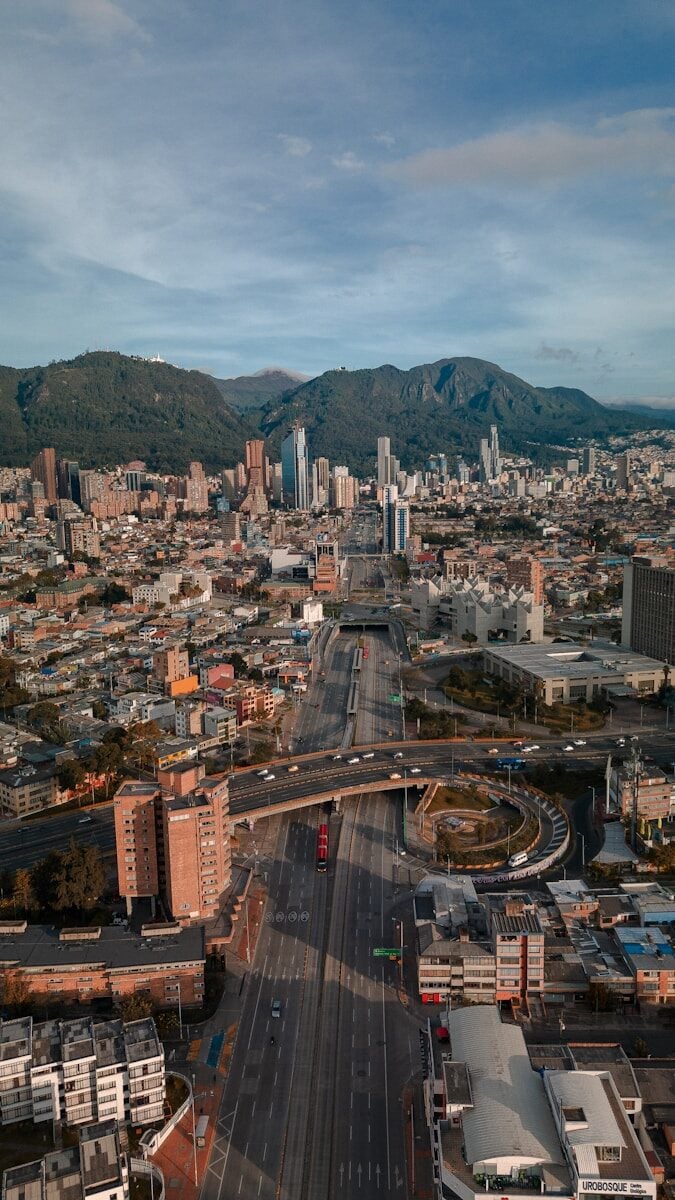
Bogotá makes an immediate statement to a visiting cyclist before the road has even started climbing. The Colombian capital sits at around 2,640 metres above sea level, spread across a vast Andean plateau with the Cordillera Oriental rising almost directly from its eastern edge. An ordinary ride therefore begins at an altitude higher than many of Europe’s famous mountain passes.
That elevation changes almost everything about riding here. A six-kilometre climb that might look routine in Europe demands more from the lungs, recovery between efforts is slower and roads heading east from the city can quickly take you beyond 3,000 metres. Descend towards one of the valleys outside Bogotá and the temperature can rise noticeably, but there is always a catch: if your accommodation is back on the high plateau, most of that lost elevation eventually has to be climbed again.
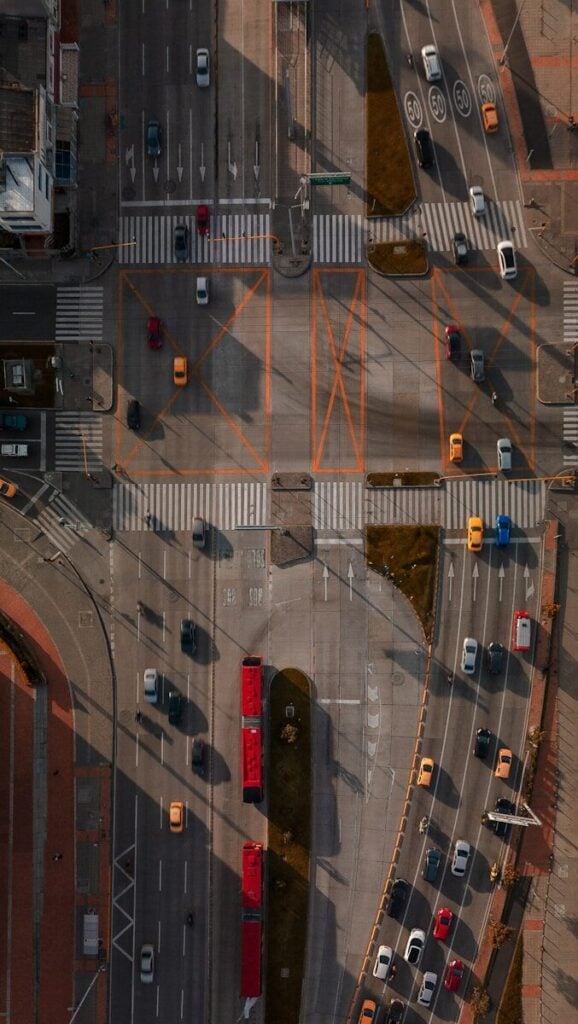
Then there is the cycling culture. Bogotá’s Ciclovía opens more than 120km of city roads to cyclists, runners and pedestrians every Sunday, creating an urban cycling experience on a scale few cities can match. Beyond the capital are benchmark climbs such as Alto de Patios, longer high-altitude roads towards El Verjón and the rolling plateau around Guasca, Tominé and Guatavita.
For riders looking beyond the established European destinations, Bogotá is one of the standout options in ProCyclingUK’s guide to cycling in the rest of the world. It combines altitude, serious climbing and a culture where spending several hours riding uphill needs very little explanation.
Bogotá cycling at a glance
| Ride | Character | What makes it interesting |
|---|---|---|
| Bogotá Ciclovía | Urban and social | More than 120km of Sunday open streets |
| Alto de Patios | Classic benchmark climb | Around 6.4km and close to 3,000m altitude |
| La Calera | Rolling and hilly | Gateway to longer rides east of Bogotá |
| Alto del Verjón | Sustained high-altitude climb | Longer climbing and roads above 3,000m |
| Guasca | High-plateau riding | Quieter roads and repeated climbing |
| Guatavita and Tominé | Endurance riding | Open plateau, reservoir scenery and longer loops |
The important figure is not simply distance or gradient. It is altitude. In Bogotá, you are already starting at around 2,640 metres before the first proper climb has begun.
Bogotá’s altitude changes the first few days
A cyclist arriving directly from Britain should resist the temptation to unpack the bike and immediately attack the hardest climb on the map. At Bogotá’s elevation there is less oxygen available than at sea level, which means familiar power numbers can feel noticeably harder and even fit riders may find their breathing elevated at intensities that would normally be comfortably controlled.
An easier opening day therefore makes sense. Use the city’s cycling infrastructure, keep the effort conversational and learn how your body reacts before trying to measure yourself against local riders on the climbs. This is especially important because Bogotá is unlike an Alpine destination where you might sleep in a low valley and only encounter altitude during the hardest part of the ride. Almost every part of a Bogotá cycling trip happens high.
Your recovery spin is at altitude, your café ride is at altitude and you sleep at altitude. That makes conservative early days worthwhile, particularly for anyone who normally trains close to sea level.
Sunday Ciclovía is the perfect introduction to Bogotá
If possible, arrange the trip so that it includes a Sunday. The Ciclovía transforms major roads across the capital into an enormous open-streets network, with more than 120km given over to cyclists, runners and walkers rather than normal motor traffic.
For a visiting cyclist, the scale is striking. Children ride alongside club cyclists, carbon road bikes mix with commuters and old utility bikes, while food vendors and activities appear along routes that would normally form part of one of South America’s largest and busiest cities. It feels considerably more significant than a conventional cycle path because cycling is not being separated from urban life. For several hours, it takes over a substantial part of the city.
That also makes Ciclovía useful as an acclimatisation ride. Explore Bogotá without worrying about producing training numbers, get some easy kilometres into the legs and then, if you feel good, begin heading towards the eastern side of the city. Eventually almost every conversation about road cycling in Bogotá arrives at the same place: Alto de Patios.
Alto de Patios is Bogotá’s benchmark climb
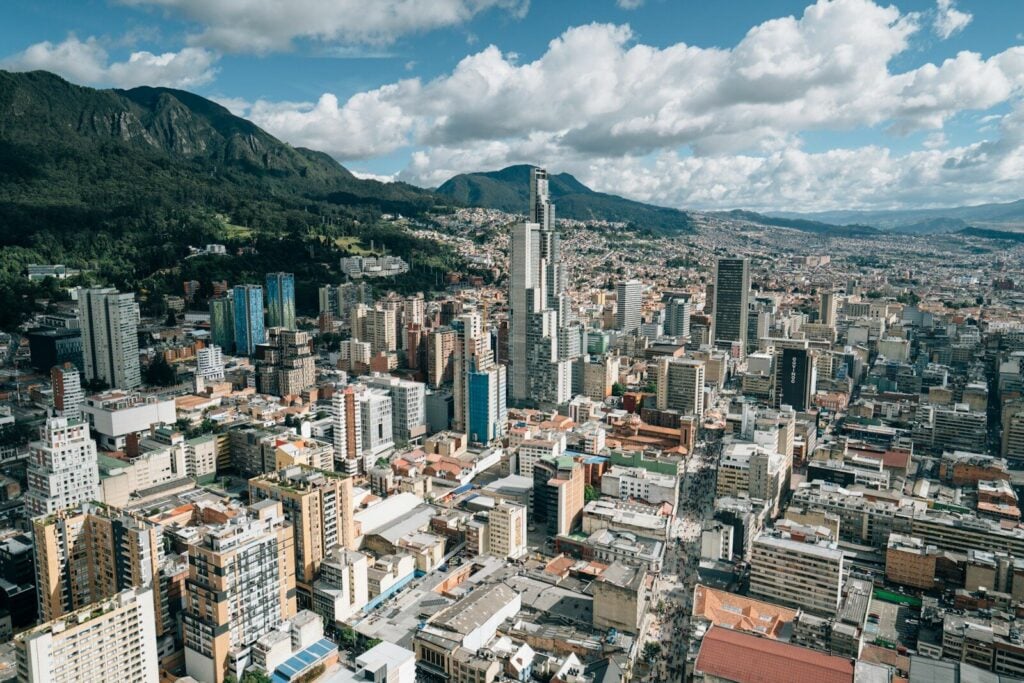
Alto de Patios is the climb almost everybody knows. Beginning on Bogotá’s eastern side on the road towards La Calera, it is commonly measured at around 6.4km, with the summit sitting close to 3,000 metres.
Those figures do not look intimidating by European climbing standards, which is precisely why Patios works so well as a local benchmark. It is short enough to become a regular training climb rather than a once-a-year mountain expedition, and a reasonably fit cyclist can ride it steadily without the gradients becoming overwhelming. Try to ride it flat out, however, and it becomes a completely different proposition.
Altitude adds the extra difficulty. A gradient that would normally allow a comfortable tempo effort feels more expensive when the entire climb takes place between roughly 2,600 and 3,000 metres. There will also probably be somebody going faster than you, particularly on a busy weekend, which makes the temptation to turn an acclimatisation ride into an unplanned threshold test surprisingly difficult to resist.
Do not race Patios on the first morning
The sensible way to ride Patios for the first time is to ignore almost everyone else. Find a comfortable rhythm and pay attention to how the effort feels rather than worrying about the power number you would normally expect to hold on a six per cent climb.
Patios is close enough to the city that there is no need to settle the argument on the first attempt. The first ride can be reconnaissance, the second can become a proper training effort and by the third you can decide that the rider 50 metres further up the road absolutely needs catching.
That repeatability is part of the attraction. Patios is not a mountain you visit once for a photograph at the summit. It is part of everyday Bogotá riding.
The top of Patios is part of the cycling culture
The summit reinforces that point. Groups stop and regroup, riders pick up coffee or food and conversations turn towards whether to descend home or continue towards La Calera and make the ride considerably longer.
That social atmosphere helps explain something fundamental about Colombian cycling. Climbing is not regarded as a specialist pursuit reserved for racers preparing for mountainous events. Riding uphill on a road bike is simply part of what cyclists do.
Colombia’s relationship with climbing has shaped professional cycling for generations. Luis Herrera’s 1984 victory on Alpe d’Huez became a breakthrough moment for Colombian riders at the Tour de France, explored in ProCyclingUK’s history of Alpe d’Huez. Later came Nairo Quintana and Egan Bernal, with Bernal becoming the first Colombian to win the Tour de France in 2019.
Ride around Bogotá and the terrain behind that tradition becomes much easier to understand.
Keep going towards La Calera
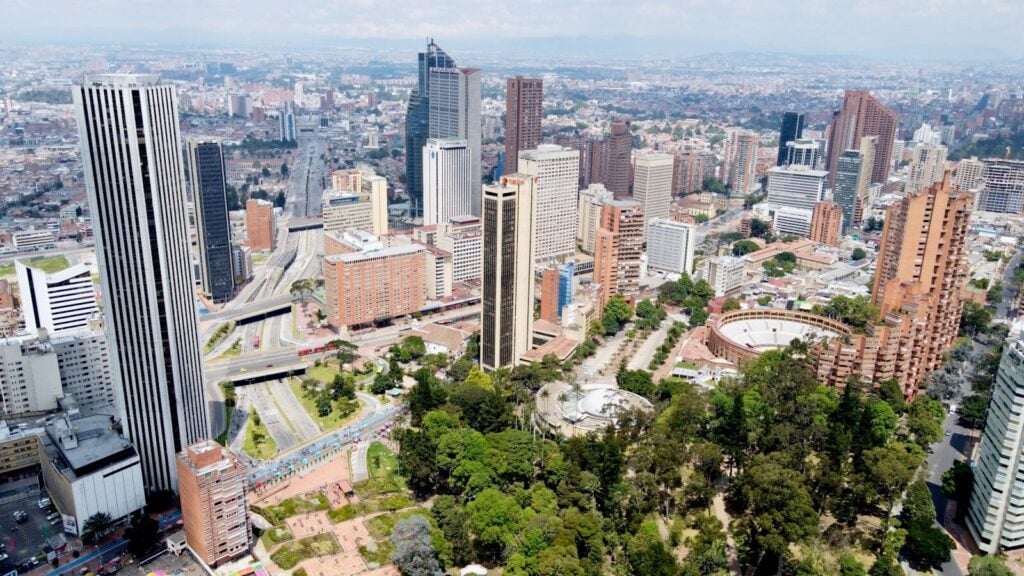
Reaching Patios does not mean the ride needs to end. Continue east and the road drops towards La Calera, immediately introducing one of the defining features of cycling around Bogotá: the high plateau has edges, and crossing them can mean losing substantial altitude remarkably quickly.
That creates excellent descending but also an unavoidable piece of route mathematics. If you descend far enough from Bogotá, you will probably have to climb most of it again later.
La Calera acts as a gateway towards longer rides through Cundinamarca, with routes continuing towards Guasca, Sopó and the quieter plateau roads north-east of the capital. Patios can therefore function either as the entire morning ride or simply as the opening climb before several more hours on the bike.
That flexibility is one reason Bogotá works so well as a destination. There is no requirement to ride a huge mountain every day, but a compact local climb can easily be turned into something much more substantial when the legs are good.
El Verjón is the more serious high-altitude test
If Patios is Bogotá’s social benchmark, El Verjón reveals a more serious side of the Cordillera Oriental. The Bogotá-side climb is considerably longer and eventually takes riders well above 3,000 metres, making sustained climbing and altitude the real challenge rather than extreme gradients.
This is the sort of ascent where stronger riders can settle into a tempo rather than repeatedly fighting steep ramps. As the road rises, buildings thin out, the vegetation changes and Bogotá begins disappearing below. Cloud can move quickly across the mountains and temperatures can fall noticeably even when the ride began in sunshine.
That transition is one of the most memorable parts of riding here. A route that began inside one of South America’s biggest cities gradually starts feeling like a proper mountain road, despite never having required a long transfer from Bogotá.
Bring a layer even when the morning looks warm
Colombia’s position close to the equator can create the wrong expectation about cycling weather. Bogotá is cool because it is high, and the mountain roads east of the city rise higher again.
A clear morning in the capital does not guarantee a warm summit around El Verjón. Cloud, rain and wind can move across the Cordillera quickly, and even a comfortable climbing temperature can become unpleasant once you turn downhill and spend a prolonged period descending at altitude.
A lightweight waterproof, windproof jacket or gilet therefore earns its place in the jersey pocket on the bigger days. Think of Bogotá less as tropical cycling and more as riding through a variable European spring, except many of the roads happen to sit above 3,000 metres.
Descending towards Choachí creates a genuinely big ride
For stronger and properly acclimatised riders, dropping over the eastern side towards Choachí changes the scale again. The descent carries you into lower and warmer terrain, which can feel superb after spending much of the trip on the Bogotá plateau.
The problem arrives when it is time to return.
Climbing back towards the high ridge turns the ride into a sustained Andean effort rather than a quick local loop. This is where route profiles need to be examined carefully before leaving because losing 1,000 metres of elevation creates an obvious consequence when your hotel is still sitting high above you.
It is one of the recurring lessons of Colombian road cycling: distance alone tells you very little about how difficult a route will be. A relatively modest number of kilometres can hide an enormous amount of climbing, while the hardest ascent of the day may finish at an altitude where your body is already working harder than normal.
Guasca reveals a quieter side of the high plateau
North-east of Bogotá, Guasca offers a different experience again. The landscape becomes more rural, rolling farmland replaces the density of the capital and the surrounding mountains provide a backdrop rather than immediately dominating every kilometre.
For someone spending a week in Bogotá specifically to ride, this area deserves at least one full day. Roads can be linked into longer endurance routes without structuring every outing around a famous summit, allowing you to experience the high plateau itself rather than constantly descending away from it.
That variety gives the trip some breathing space. Not every Colombian ride needs to become a search for the steepest road or highest summit. There is something equally satisfying about spending several hours riding through open countryside at elevations that would constitute a major mountain day almost anywhere in Britain.

Alto de la Cuchilla adds another proper high climb
Once the altitude feels more familiar, Guasca also provides access towards harder climbing such as Alto de la Cuchilla. The defining feature again is elevation, with the road taking riders above 3,000 metres and turning what would already be a solid sustained climb into a more distinctive Andean effort.
At those heights, the landscape begins moving towards the páramo, the high-altitude ecosystem characteristic of the northern Andes. That gives the scenery a completely different character from the Alps or Pyrenees.
There are no ski resorts or endless rows of Alpine chalets, and there is no requirement for a famous Tour de France history to make the climb feel significant. The altitude, vegetation and scale of the Cordillera create their own atmosphere.
Tominé and Guatavita are ideal for the long endurance day
A Bogotá cycling week should not consist entirely of climbing out of deep valleys. The roads around Tominé Reservoir and Guatavita provide a strong alternative, combining rolling high-plateau riding with open water, green hills and longer route options.
This is less about ticking off one named climb and more about joining roads together. Small towns become natural places to stop for food or coffee, while the reservoir gives the ride a visual focus completely different from the enclosed mountain roads around El Verjón.
That makes the area particularly useful after several harder climbing days. You remain at substantial elevation and can still accumulate plenty of ascent, but the riding feels more rhythmic and less defined by one prolonged effort.
Bogotá’s professional cycling connection runs deep
Part of the atmosphere comes from Colombia’s extraordinary place in professional road cycling. Bernal became the country’s first Tour de France winner in 2019, continuing a climbing tradition stretching back through Quintana, Herrera and generations of Colombian riders whose European reputations were built in the mountains. ProCyclingUK’s Tour de France winners list puts Bernal’s achievement into the wider history of the race.
The modern connection remains visible too. When Mark Cavendish travelled to Colombia for the 2024 Tour Colombia, the race concluded in Bogotá and once again brought an international professional field to the capital.
Nairo Quintana’s importance to the country’s more recent cycling identity is equally difficult to overstate. His decision to retire at the end of the 2026 season closes one of the defining Colombian careers of the modern era.
Riding around Bogotá makes that history feel less abstract. The terrain that repeatedly produces elite climbers is visible almost every time you look towards the eastern edge of the city.
Café stops feel different in Colombia
Colombia hardly needs an introduction when it comes to coffee, and roadside stops naturally become another part of the cycling experience. Coffee is the obvious choice, but bocadillo, the dense guava sweet regularly used as simple cycling fuel, is equally worth trying alongside arepas, fresh fruit and juices.
On longer rides into Cundinamarca, small towns become natural refuelling points rather than places selected because somebody has deliberately built a cycling café there. That creates a different atmosphere from the highly polished training destinations of Europe.
The experience is less curated, which is often exactly what makes it memorable. You are not riding through a landscape organised primarily around visiting cyclists. You are riding through an established local cycling culture that already existed without you.
Bogotá is not Mallorca when it comes to traffic
That authenticity also comes with complications. Bogotá is a major South American capital with heavy traffic, buses, commercial vehicles and complex urban roads. Even the popular cycling climbs remain public highways rather than closed training routes.
Local knowledge is therefore particularly valuable. Ride early, favour the routes Bogotá cyclists already use and do not assume that a minor road on a mapping app is automatically the best road-bike option. Sometimes knowing when to use a road is as important as knowing where it goes.
For a first serious ride beyond the city, joining a local group or guide can remove much of the unnecessary stress. Once the main corridors and riding patterns become familiar, exploring independently becomes considerably easier.
Security should be part of ordinary route planning
Bogotá’s enthusiasm for cycling does not remove the usual security considerations associated with travelling through a large city. An expensive road bike should be stored securely inside accommodation, rather than left unattended outside a café, and it is sensible to be thoughtful about where phones and cameras are displayed.
Established riding areas are preferable to improvising through unfamiliar districts simply because an automatic route-planning service has created an attractive-looking loop. The same principle applies almost anywhere unfamiliar, but it matters more when carrying several thousand pounds’ worth of cycling equipment.
The wider ProCyclingUK Travel & Riding Abroad hub covers destinations where local road conditions, transport and route planning need to form part of the preparation rather than being treated as details to solve after arrival.
What bike should you take to Bogotá?
A conventional road bike is ideal for the headline Bogotá rides. Low gearing is sensible, not because every climb contains extreme gradients, but because an ordinary six per cent road can feel very different at 3,200 metres after several hours of riding.
A compact chainset paired with a 30, 32 or 34-tooth largest sprocket gives enough flexibility for most riders, while modern 28mm or 30mm tyres provide extra comfort and confidence over variable surfaces without sacrificing the road-bike feel.
Brakes deserve particular attention before travelling. The Andes provide long descents, and this is not the trip to begin with worn pads or equipment you already know is approaching replacement. Reliable braking matters considerably more here than saving a few grams.
A five-day Bogotá cycling plan
For a first visit, build the difficulty gradually rather than trying to make Day 1 the defining ride of the holiday.
Day 1: Bogotá and Ciclovía
If the dates allow it, start on a Sunday and use the Ciclovía to explore the city at an easy pace. The objective is to move the legs, understand the altitude and experience Bogotá’s cycling culture without immediately turning the trip into a training camp.
Day 2: Alto de Patios and La Calera
Ride Bogotá’s benchmark climb at a controlled pace. If the altitude feels comfortable, continue over the top towards La Calera before returning. There will be plenty of opportunities later in the trip to discover how fast you can actually climb Patios.
Day 3: Guasca and the high plateau
Make this the longer endurance day, using the quieter plateau roads around Guasca, Tominé or Guatavita. The altitude remains substantial, but the ride does not need to revolve around one prolonged climb.
Day 4: recovery and Bogotá
Get off the bike, eat properly and explore the city. Several days of riding above 2,600 metres can accumulate fatigue more quickly than expected, and recovery remains part of the acclimatisation process.
Day 5: El Verjón or a higher climbing route
Once the body has had several days to adjust, make this the proper mountain day. A sustained climb above 3,000 metres provides a much stronger taste of Andean road cycling when you are no longer dealing simultaneously with travel fatigue and your first exposure to altitude.
-
 Photo Credit: quentinphotographiebe
 -
 Photo Credit: Getty
Bogotá can change what you consider a big climb
This may be the most dangerous consequence of spending a week riding here. Patios initially feels like the mountain ride, then you discover El Verjón, somebody suggests another road finishing beyond 3,000 metres and eventually conversations turn towards the enormous Colombian ascents elsewhere in the country.
Bogotá does not need those extreme climbs to justify the trip. What it provides is the context for understanding them. In much of Europe, reaching 2,600 metres is the climax of a major cycling day. In Bogotá, that is approximately where the ride begins.
That changes your perception surprisingly quickly.
Why Bogotá belongs on a cyclist’s travel list
Bogotá is not an immaculate cycling resort and should not be presented as one. Traffic exists, the weather changes quickly, altitude can punish early enthusiasm and the best routes benefit from local knowledge. Those complications are real, but they come with something destinations built primarily around cycling tourism struggle to reproduce.
The bicycle feels embedded in everyday life. On Sunday morning, major roads across the capital are turned over to people on bikes. On Patios, climbing is a social ritual rather than a niche sporting activity. Beyond La Calera, one of South America’s largest cities quickly gives way to open Andean countryside, while roads around El Verjón and Guasca reach elevations higher than many of Europe’s most celebrated mountain passes.
That combination gives Bogotá an unusual range. It can be a city cycling experience, an altitude training camp, a climbing destination and a gateway to the Andes during the same trip. For more destinations beyond the traditional European bases, see ProCyclingUK’s cycling in the rest of the world and wider Travel & Riding Abroad guides.
Most importantly, Bogotá is somewhere you never need to explain why spending a Sunday morning riding uphill sounds like a good idea. In Colombia, everybody already understands.

