
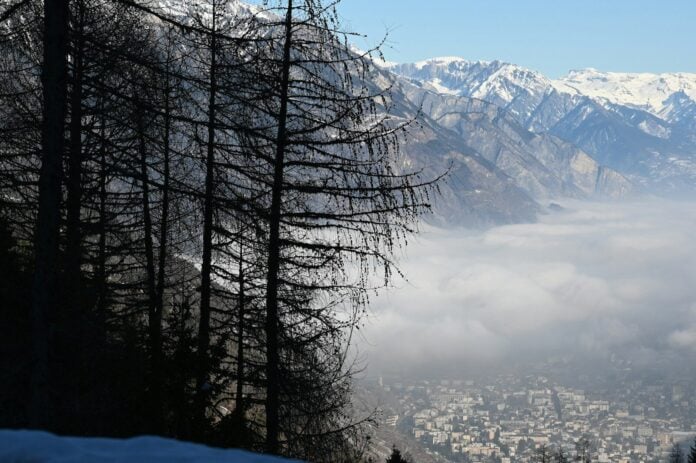
There are Alpine cycling destinations built around one famous climb, and then there is Valais.
Stay somewhere between Martigny and Sion and the Rhône valley becomes the central corridor of an enormous road-cycling playground. Turn away from Martigny and you can climb towards Col de la Forclaz, Emosson, Champex-Lac or the Grand Saint-Bernard. Base yourself around Sion and another collection of serious ascents appears, including Sanetsch, Grande Dixence, Crans-Montana and the roads towards Nendaz and Col de la Croix de Cœur.
Between all those mountains lies an almost flat valley floor, giving Valais something many Alpine bases lack: genuinely useful easier riding. A recovery day can follow the Rhône or roll through vineyards instead of requiring another 1,500 metres of climbing.
For riders building a wider Swiss cycling trip, Valais belongs alongside ProCyclingUK’s guides to cycling in Andermatt and the central Swiss passes and cycling in the Bernese Oberland. Andermatt is defined by famous high passes in almost every direction, while the Bernese Oberland combines dramatic scenery with lakes and mountain villages. Valais offers another formula: a sunny vineyard-filled valley with giant climbs branching away from it.
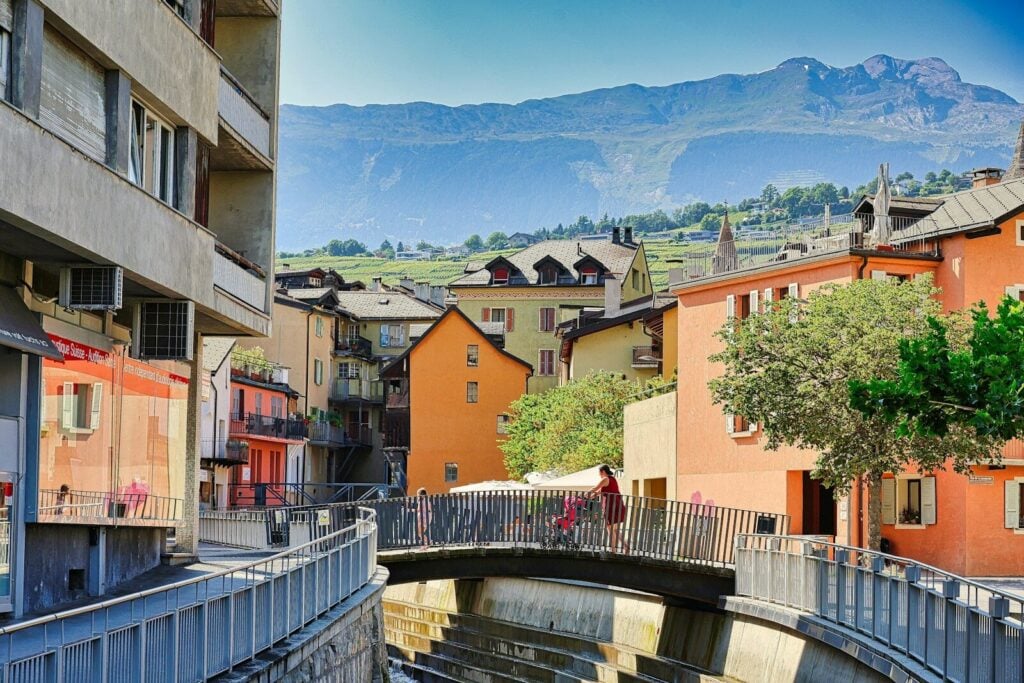
Martigny and Sion cycling at a glance
| Ride | Best base | Character |
|---|---|---|
| Col de la Forclaz | Martigny | Long, steady Alpine pass |
| Emosson | Martigny | Major mountain climb and dam finish |
| Col des Planches | Martigny | Shorter but much steeper |
| Champex-Lac | Martigny | Sustained climb to an Alpine lake |
| Grand Saint-Bernard | Martigny | Huge high-mountain day |
| Valais Wine Route | Either | Easier vineyard riding |
| Ovronnaz | Either | Irregular climb above the Rhône |
| Sanetsch Pass | Sion | One of Valais’ great high climbs |
| Grande Dixence | Sion | Long ascent to a spectacular dam |
| Crans-Montana | Sion | Multiple route options through the mountains |
| Croix de Cœur | Sion | Long high-altitude challenge |
The attraction is not simply the number of famous names. It is how closely packed they are. You can base yourself in one valley town for several days and ride a completely different type of mountain route every morning.
Martigny or Sion: which is the better cycling base?
For a first trip built heavily around famous climbs, Martigny has a slight advantage. Col de la Forclaz begins almost from town, Emosson provides an obvious big-day objective and roads towards Champex-Lac and Grand Saint-Bernard open to the south. Col des Planches adds something shorter and steeper, meaning the riding does not have to consist entirely of long Alpine tempo climbs.
Sion is arguably better for a longer and more varied stay. The city sits directly beneath vineyard-covered slopes while Sanetsch, Grande Dixence and Crans-Montana offer much larger mountain days. Easier riding through the vineyards is immediately available when the legs need a break, while the Rhône valley makes it simple to link different areas without adding another major climb.
The two bases are close enough that choosing one does not exclude the other. A route along the valley can connect them comfortably, and Switzerland’s railway network makes one-way rides particularly practical.
That basic layout gives Valais one of the features that also makes cycling in Aosta Valley so useful: a strong valley floor with enormous climbs rising directly from it. In both regions, easier riding and serious mountains exist within the same compact area.
Col de la Forclaz is the obvious first Martigny climb
From Martigny, Col de la Forclaz is the natural first serious ascent.
The road climbs for around 13km from the Rhône valley towards a summit at 1,526 metres, gradually leaving vineyards behind before entering woodland and more recognisably Alpine scenery. It is sustained enough to feel like a proper mountain climb without immediately requiring the sort of gearing or pacing needed for Valais’ biggest ascents.
That makes Forclaz ideal for the opening full day of a trip. You can ride it hard if the legs are good, but there is no need. The gradient allows a strong rhythm, while views back towards Martigny reveal how broad and unusually dry the Rhône valley is compared with the greener Alpine landscape higher up.
The summit also creates a problem for anyone trying to keep the ride sensible. Continue through Trient and the road begins leading towards Emosson.
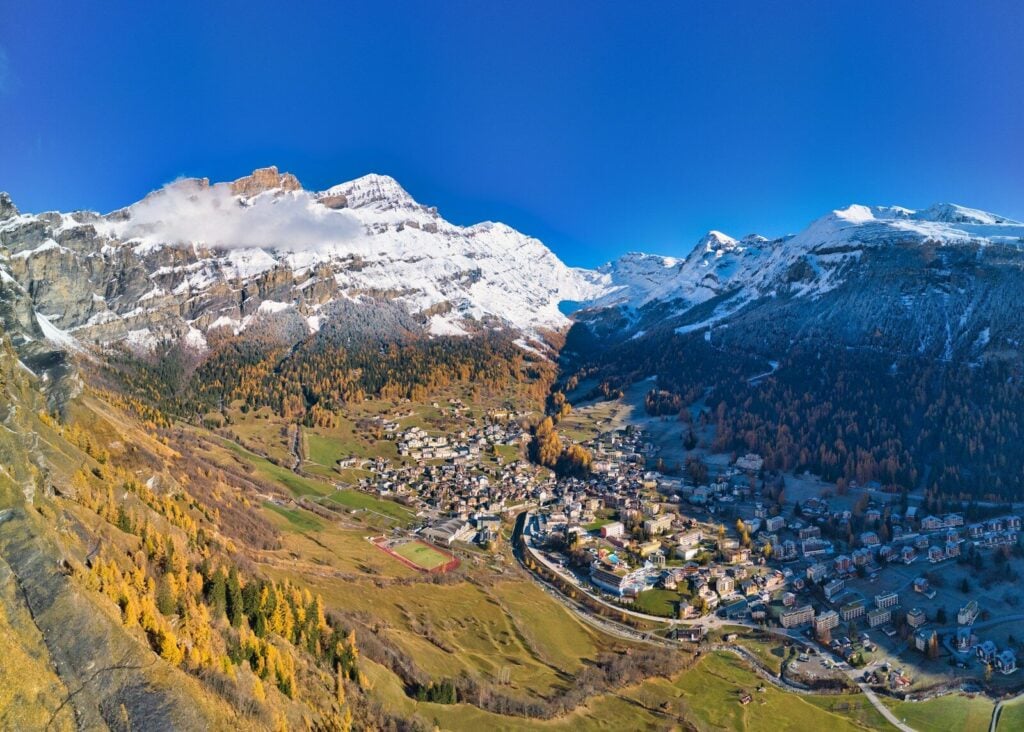
Emosson turns Forclaz into a major mountain day
Emosson is where the first uncomplicated Martigny ride can become something much bigger.
The route climbs Col de la Forclaz, descends briefly towards Trient and then begins rising again through Finhaut towards the Emosson reservoir. Rather than one uninterrupted climb, the day is split into separate mountain efforts, which can make the opening kilometres feel deceptively manageable.
The final ascent provides the visual payoff. The mountains become increasingly dramatic as the road approaches the dam, with the Mont Blanc massif dominating the wider landscape.
Emosson also carries modern Tour de France history. The 2016 Tour finished at Finhaut-Emosson after crossing Forclaz, with Ilnur Zakarin winning the mountain stage. For cyclists who enjoy connecting their own rides with professional racing, it is one of several Valais roads with genuine Grand Tour pedigree.
What makes the route worthwhile, however, is not simply that professionals have raced there. It is that Forclaz and Emosson combine naturally into one of the best days available directly from Martigny.
Col des Planches gives Martigny something much steeper
Not every Valais climb is a long 5 or 6% Alpine drag.
Col des Planches provides the alternative. The ascent begins close to Martigny and is much more irregular, with steep early ramps capable of changing the feel of the ride immediately. It is shorter than the region’s biggest passes, but considerably more aggressive.
That makes it useful for riders who enjoy punchier climbing or want a hard morning without spending the entire day above the valley. It also demonstrates why average gradients should be treated carefully in Valais. A climb can look reasonable on paper while hiding sections significantly steeper than the overall figure suggests.
The nearby Petite Forclaz pushes that idea even further, packing a large amount of climbing into only a few kilometres. There is plenty of opportunity to suffer without going anywhere near a 2,000-metre summit.
Champex-Lac combines a proper climb with a natural destination
South of Martigny, Champex-Lac provides one of the prettiest medium-length climbing days.
The road from Bovernier rises for a little over 10km towards the lake at almost 1,500 metres, with forest covering much of the ascent. It is a genuine mountain effort rather than an easy excursion, but the destination changes the character compared with a conventional col.
Instead of reaching a summit sign and immediately beginning the descent, you arrive beside an Alpine lake with cafés and somewhere worth stopping.
That makes Champex particularly useful during the middle of a cycling week. It is demanding enough to count as a proper mountain day without necessarily creating the recovery requirements of Emosson, Sanetsch or Grand Saint-Bernard.
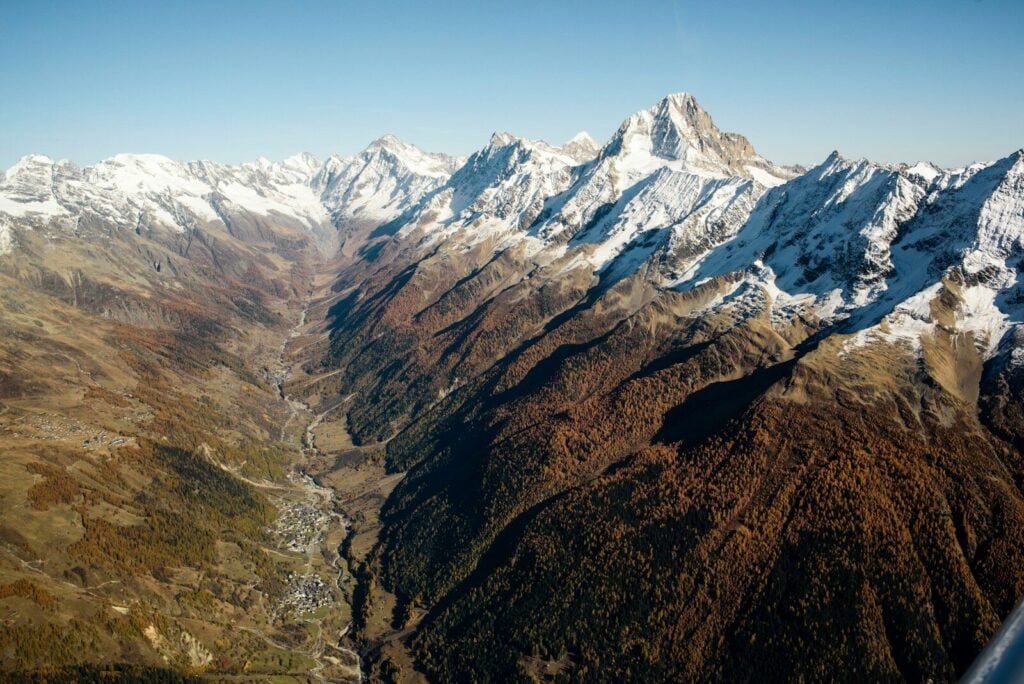
Grand Saint-Bernard is the enormous Martigny challenge
Eventually, anyone spending enough time looking at a map around Martigny notices the road continuing south towards the Grand Saint-Bernard.
From the Rhône valley, this is a climb on an entirely different scale. The route from Martigny towards the 2,469-metre pass stretches for more than 40km and gains roughly 2,000 metres before reaching the Swiss-Italian border.
The lower kilometres rise relatively gently through Val d’Entremont, which makes pacing important. It is easy to ride too quickly when the road does not initially feel like a high mountain pass, only to discover much later that the climb still has a substantial amount of work remaining.
Grand Saint-Bernard also has an important place in Tour history. When the Tour crossed it in 2009, Franco Pellizotti was first over the summit and claimed the Souvenir Henri Desgrange as the first rider across the highest point of that year’s race. ProCyclingUK’s guide to the Souvenir Henri Desgrange and Jacques Goddet includes Grand Saint-Bernard among the high Alpine roads used for the prize.
This is the ride to save for when the body is acclimatised to several days of climbing. Forty kilometres uphill is not something to learn about on the first morning.
The vineyards are Valais’ secret weapon
The mountains naturally dominate any cycling conversation about Valais, but the vineyard roads above the Rhône are one of the main reasons the region works so well for a full week.
The wine route between Martigny and Sion rolls along the sunny side of the valley through villages and terraced vineyards rather than simply following the completely flat river corridor. That creates an easier ride with enough climbing to stay interesting but without demanding another two-hour ascent.
It is almost the perfect recovery ride for someone who does not particularly enjoy recovery rides.
If even that feels too energetic, the Rhône provides flatter alternatives through the valley. This distinction matters. In many Alpine destinations, every road worth riding seems to go immediately uphill, which can make the fourth or fifth day of a trip difficult to manage.
Valais allows you to stay on the bike without automatically turning every outing into a mountain stage.
Ovronnaz is an excellent climb between the two main bases
Between Martigny and Sion, the road towards Ovronnaz provides another excellent example of how quickly the landscape changes once you leave the Rhône valley.
The climb begins among vineyards before becoming increasingly Alpine as it rises through villages, pastures and forest. The overall ascent is substantial enough to provide a proper training effort while still fitting comfortably into a ride from either Martigny or Sion.
This is exactly the kind of route that makes the central valley so useful. You can ride relatively easily along the Rhône, turn towards the mountains for one significant climb and then return to the valley rather than spending an entire day crossing multiple passes.
The lower slopes also emphasise one of Valais’ defining contrasts. Grapevines and dry sunny terrain dominate near the valley floor, while less than an hour later the road can feel unmistakably high Alpine.
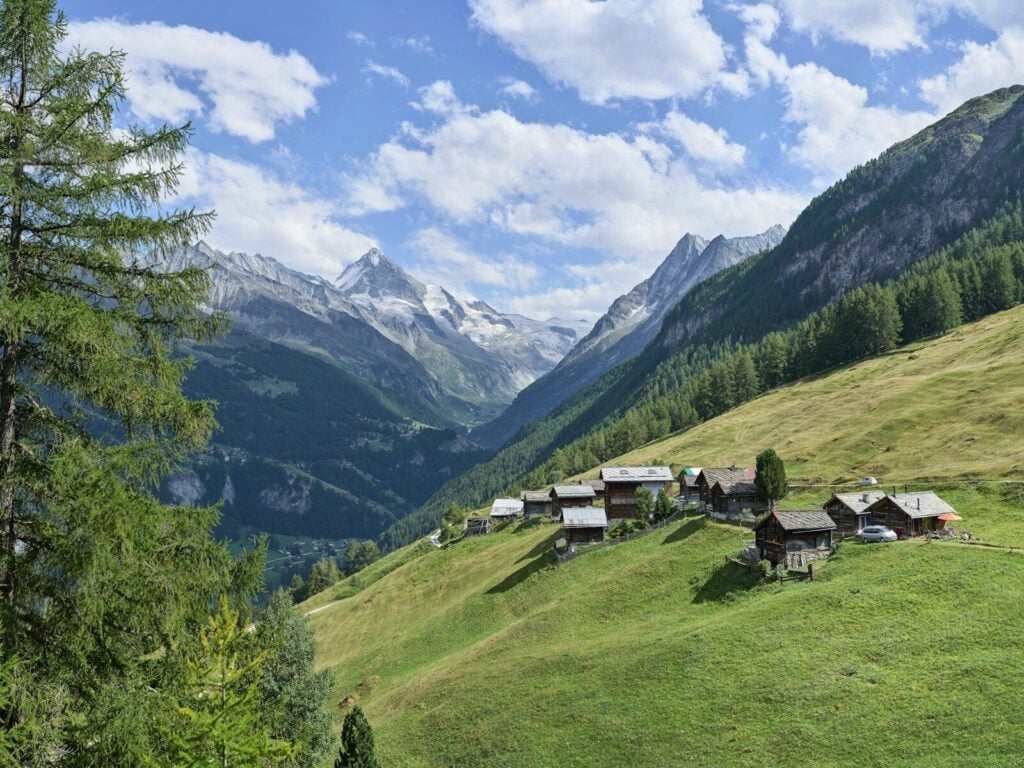
Sanetsch is the Sion climb more cyclists should know
If Martigny has Emosson and Grand Saint-Bernard, Sion has Sanetsch.
From the Conthey side, the climb stretches for around 24km and gains more than 1,800 metres before reaching the pass at 2,252 metres. That places it firmly among the serious high-mountain ascents of the Alps, even if its name is less internationally famous than Galibier, Stelvio or Alpe d’Huez.
The scenery changes repeatedly during the ascent. Vineyards give way to forest, narrow mountain terrain and waterfalls before the upper road emerges into open Alpine landscape beneath the Tsanfleuron Glacier.
There is even a tunnel cut into the rock on the higher section, adding another distinctive feature to a climb already full of them.
Sanetsch is exactly why Valais belongs in ProCyclingUK’s wider Cycling in Rest of Europe guide. Switzerland’s reputation for premium high-pass riding is often attached to Andermatt, but the roads above Sion provide mountain days every bit as serious.
Grande Dixence is another giant directly from the Sion area
The Grande Dixence dam gives Sion another ride that works on an almost absurd scale.
From the valley, the road heads deep into Val d’Hérens and eventually climbs towards one of the most dramatic pieces of hydroelectric infrastructure in the Alps. Depending on the exact starting point and route, the day can accumulate more than 2,000 metres of climbing before you even begin thinking seriously about the descent.
The lower road moves through vineyards and villages, but the setting becomes progressively wilder as it travels into the upper valley. By the final kilometres, the dam dominates the landscape and provides a completely different kind of summit objective from a conventional mountain pass.
Valais has several rides built around high reservoirs, and they work exceptionally well for cyclists because dam access roads naturally create long paved climbs into otherwise remote valleys.
Emosson and Grande Dixence therefore have something in common. Neither needs a famous pass sign at the top. The road itself and what is waiting at the end provide enough reason to climb it.
Crans-Montana can become much more than a direct resort climb
Crans-Montana is another familiar name, but the interesting option is not necessarily taking the most direct road from the valley.
Routes from Sion can use the vineyard-covered slopes through Savièse, Arbaz, Anzère and Lens before eventually reaching Crans-Montana, creating a day of repeated climbing rather than one uninterrupted ascent. That is often the more satisfying way to experience the terrain because it uses smaller roads and provides constant changes in perspective across the Rhône valley.
Crans-Montana also has Grand Tour history. The Giro d’Italia has used the resort as a mountain finish, including the weather-hit 2023 stage in which the Grand Saint-Bernard section was removed from the race programme. ProCyclingUK revisited that episode when extreme-weather concerns returned at the Giro in its piece on the Umbrail Pass and high-mountain weather risks.
For recreational cyclists, the important lesson is slightly different. Crans-Montana does not have to be approached as one famous race climb. The surrounding slope is covered in roads that can turn the journey there into a much more varied cycling day.
Col de la Croix de Cœur requires a little more planning
West of Sion, Col de la Croix de Cœur provides another major high-altitude objective, but it is not quite as straightforward as the headline paved climbs elsewhere in the region.
The route towards Nendaz, La Tzoumaz and the pass rises above 2,000 metres, but sections near the top can involve gravel or rougher surfaces. That makes tyre choice and route checking more important than it is for Sanetsch or Grand Saint-Bernard.
For riders on modern road bikes with wider tyres, that may be part of the attraction. For someone who wants a week consisting entirely of smooth tarmac, there are enough other climbs in Valais that Croix de Cœur does not need to become compulsory.
It is a useful reminder that “road cycling route” does not necessarily mean every metre resembles a Swiss motorway.
Sion has excellent shorter riding when the mountains have taken their toll
One of Sion’s major advantages is the quality of riding available without committing to a giant pass.
The roads around Savièse, Grimisuat, Arbaz and the vineyards above the city can be linked into shorter loops that still contain meaningful climbing and superb views across the valley. Sion’s castles provide a constant visual reference below while mountains surround the entire route.
This is the sort of day that makes a week of serious Alpine riding sustainable. You still ride somewhere worth seeing, still accumulate some elevation and still return with a proper cycling experience, but the body is not being asked to deal with another 1,800-metre ascent.
The same principle makes cycling in the Bernese Oberland work so well. A mountain base becomes much more useful when the easier days remain scenic rather than simply being recovery kilometres on a main road.
The Rhône valley makes the whole region unusually flexible
Valais’ basic geography is almost perfect for a road-cycling holiday.
The Rhône provides a relatively flat east-west corridor, while mountain roads branch away into side valleys on both sides. The result is a route network that can be adjusted according to weather, fatigue and ambition.
Feeling strong? Turn towards Sanetsch.
Need something shorter? Ride Ovronnaz.
Trying to recover? Stay beside the Rhône or use the vineyard roads.
That flexibility becomes particularly valuable after several days in the Alps because it removes the pressure to decide the entire week before travelling. The weather may determine which high passes are sensible, while the legs may have different ideas from the itinerary you constructed at home.
A destination with twenty great rides is more useful than one with a single mandatory climb.
The dry climate gives Valais a different Alpine atmosphere
Valais does not always resemble the stereotypical postcard version of Switzerland.
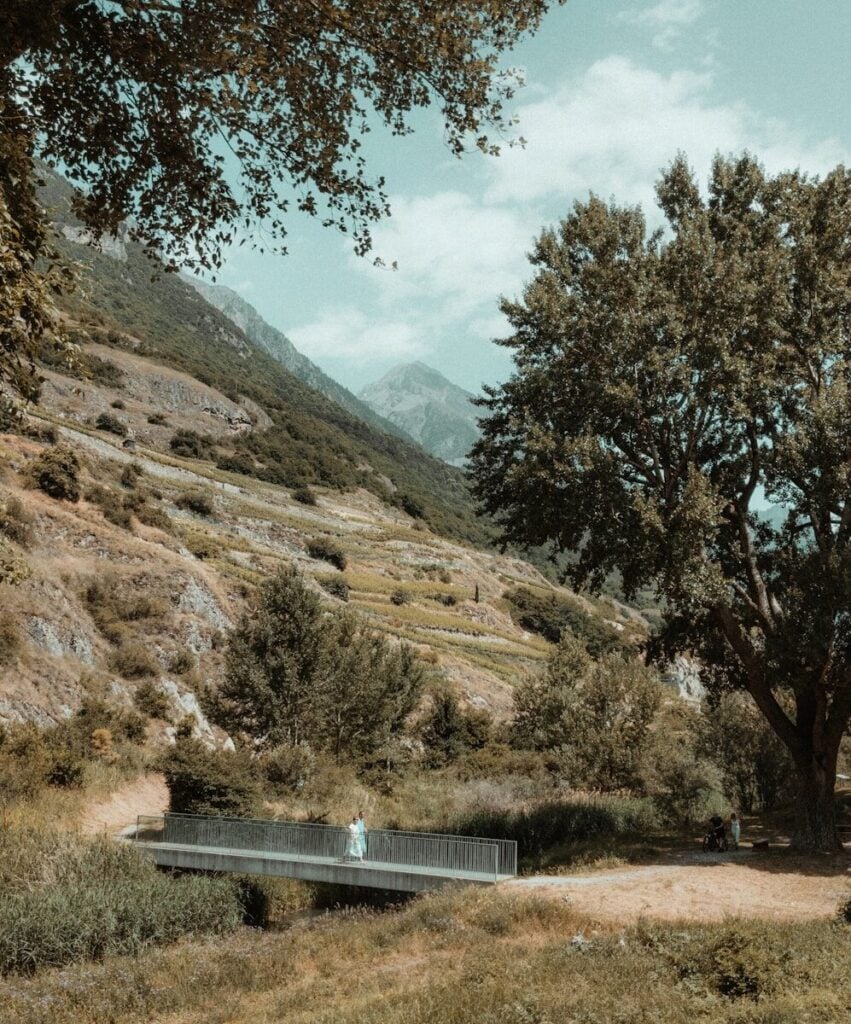
The central Rhône valley is relatively dry and sunny, which allows vineyards to cover the lower slopes. Around Martigny and Sion, the landscape can feel almost Mediterranean during warm summer weather, particularly before the road begins climbing towards the high mountains.
That creates dramatic changes within a single ride. A Sanetsch morning can begin among vines under strong sunshine before eventually reaching glaciers and high Alpine pasture above 2,000 metres.
The contrast is one of the region’s strongest visual characteristics.
It also creates a clothing problem. Conditions near Sion can be hot while a summit 1,500 metres higher is cool, windy or wet. A lightweight windproof or waterproof layer therefore deserves space in the pocket even when the valley forecast looks uncomplicated.
ProCyclingUK’s broader tips for cycling in the Swiss Alps covers the need to prepare for rapidly changing mountain conditions rather than judging an entire ride by the weather outside the hotel.
When is the best time to cycle in Valais?
For a trip centred on the major high passes, summer into early autumn is the safest period.
Valley roads and lower climbs have a considerably longer riding season, but passes such as Grand Saint-Bernard depend on snow clearance and seasonal opening. June can work extremely well once the high roads are accessible, while July and August provide the greatest chance of having the full mountain network available.
Those peak summer months can also be hot on the valley floor, which makes early starts sensible for climbs beginning among exposed vineyards. September can be excellent if the weather remains settled, combining cooler temperatures lower down with quieter roads after the main summer holiday period.
The key is not assuming that every climb follows the same season. A vineyard loop from Sion and a 2,400-metre mountain pass can have completely different conditions on the same day.
Long Alpine descents make equipment matter
The scale of the climbing produces equally substantial descending.
Ride Grand Saint-Bernard and you can lose altitude for tens of kilometres. Sanetsch requires giving back around 1,800 metres. Emosson includes significant descending before and after Col de la Forclaz.
That is tremendous fun when the bike is working properly and considerably less entertaining if it is not.
Good brake pads, dependable tyres and a bike you trust matter more than saving another few hundred grams. Modern 28mm or 30mm tyres are ideal for most of the paved routes, adding useful confidence on long descents without compromising the road-bike experience.
Anyone planning Croix de Cœur or other rougher high roads may want to go wider again.
Bring low gearing even if you normally climb well
Valais is also not the place to arrive determined to prove that a 28-tooth sprocket is all a proper cyclist needs.
A compact or semi-compact chainset with a 32 or 34-tooth largest sprocket makes sense for most recreational riders. Many of the headline climbs last well over an hour, while smaller roads can contain far steeper sections than their average gradients suggest.
Having a low gear does not mean using it all day. It means the option exists when the final ramp arrives after several thousand metres of accumulated climbing.
The same principle applies across the Alps. ProCyclingUK’s Cycling in the Alps FAQ covers gearing, equipment and the practical differences between an ordinary riding holiday and spending consecutive days on major mountain passes.
Swiss trains make one-way cycling routes unusually easy
Public transport is another major advantage of using Martigny or Sion rather than staying in a more isolated mountain resort.
Both towns sit on the main railway through the Rhône valley, which makes point-to-point routes much easier to construct. Ride from Martigny to Sion through the vineyards and return by train. Start further along the valley when you want to remove unnecessary connecting kilometres. Use the railway as an escape option if weather or fatigue turns a planned return ride into a bad idea.
That flexibility is especially useful in Switzerland, where a geographically short detour can accidentally add a substantial amount of vertical climbing.
It also removes the need to hire a car simply because you want to ride from more than one starting point.
A five-day Martigny and Sion cycling plan
A first Valais trip should build gradually rather than trying to complete the three biggest climbs immediately.
Day 1: Martigny to Sion through the vineyards
Use the vineyard roads to introduce the region. There is enough climbing to wake up the legs, but the focus is the Rhône valley, villages and terraced vines rather than a major summit. Take the train back if you want to keep the day controlled.
Day 2: Col de la Forclaz and Emosson
This is the first genuinely big mountain day. Climb Forclaz from Martigny, continue towards Trient and Finhaut and finish the outward leg at Emosson. Pace the opening ascent sensibly because Forclaz is only the beginning.
Day 3: Champex-Lac or a vineyard loop around Sion
Make the decision according to the legs. Champex gives you another substantial climb with a beautiful destination, while Sion provides enough shorter riding to turn the day into proper recovery without making it dull.
Day 4: Sanetsch Pass
Once several days of mountain riding are already in the legs, tackle one of Valais’ defining climbs. More than 1,800 metres of ascent towards a 2,252-metre pass demands patience, even before the thin air and final kilometres are considered.
Day 5: Grande Dixence or Grand Saint-Bernard
Pick one.
Grande Dixence gives the Sion side another spectacular high-dam objective, while Grand Saint-Bernard provides the classic giant Alpine pass experience from Martigny. Either is substantial enough to provide the defining ride of an entire cycling holiday.
If that sounds excessive, it is. Valais has enough great climbing that a week here does not need to become an endurance competition.
-
 Photo Credit: Cor Vos

How Valais compares with other Swiss cycling bases
Switzerland has several exceptional road-cycling regions, but they do not all offer the same experience.
Andermatt and the central Swiss passes are probably better for riders whose dream trip involves famous high passes in every direction. Furka, Gotthard and Oberalp give Andermatt an extraordinary concentration of recognisable names.
The Bernese Oberland offers a better mixed mountain holiday, with lakes, dramatic valley scenery and destinations such as Grindelwald and Grosse Scheidegg.
Valais sits somewhere between them. Its major climbs are enormous, but the Rhône valley makes easy riding much simpler. The dry climate and vineyards create a distinctive lower-altitude landscape, while Sion and Martigny provide proper towns rather than purely mountain-resort bases.
It is perhaps the strongest Swiss choice for someone who wants five or six serious riding days without being forced to climb hard every single time they leave the hotel.
Why Valais deserves a place on your cycling list
The argument for Valais is not built around one famous climb. That is precisely the point.
Martigny alone gives you Forclaz, Emosson, Champex, Col des Planches and Grand Saint-Bernard. Sion adds Sanetsch, Grande Dixence, Crans-Montana and an enormous network of roads climbing away from the vineyards. Between them, the Rhône corridor provides enough easier riding that recovery does not have to mean sitting in a hotel room.
The scale is properly Alpine. Sanetsch gains around 1,800 metres in a single ascent. Grand Saint-Bernard rises almost 2,000 metres above Martigny. Grande Dixence can produce more than 2,000 metres of accumulated climbing before the turnaround. Yet those rides begin beside vineyards, castles and sunny valley towns rather than remote ski resorts.
That contrast is what stays with you. In the morning you can be riding beside the Rhône through grapevines. A few hours later the same road bike can be beside a glacier, an enormous hydroelectric dam or a mountain pass more than 2,000 metres above sea level.
For more ideas across Switzerland and the rest of the continent, ProCyclingUK’s Cycling in Rest of Europe and Travel & Riding Abroad hubs bring together the wider collection of destination guides.
Plenty of places in Europe have one great climb.
Valais has enough that choosing which one not to ride becomes the harder problem.

