
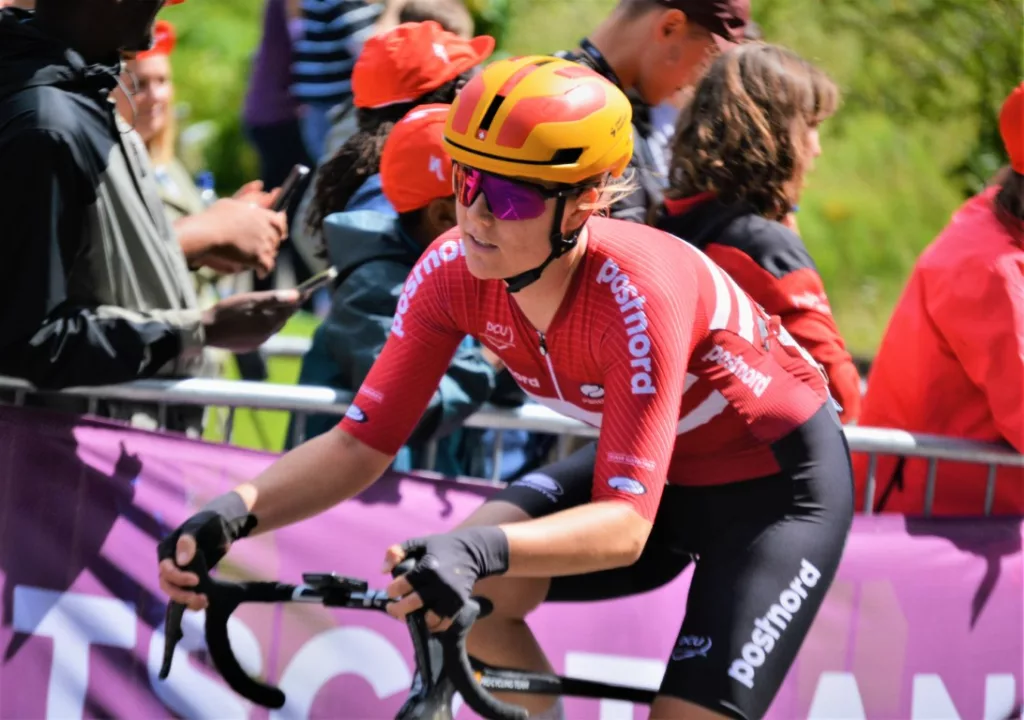
Former world champion and current Danish road champion Amalie Dideriksen will leave Cofidis at the end of the 2026 season to join Human Powered Health on a two-year contract through 2028.
Human Powered Health confirmed Dideriksen’s signing on 14 August, adding one of the most experienced one-day racers in the women’s peloton to a roster that is being strengthened significantly for 2027.
The 30-year-old joins as the reigning Danish road champion after winning her sixth national title this summer and brings a palmarès that includes the 2016 elite road world championship, back-to-back junior world titles, an Olympic silver medal and a track world title.
Dideriksen will complete her second season with Cofidis before moving. She joined the French team on a two-year contract ahead of 2025, initially being recruited for her experience in the Classics and ability to contribute to sprint finishes.
“It just looks like a really good team to work with,” Dideriksen said. “They feel like they do a lot for the athletes and race in a great way.”
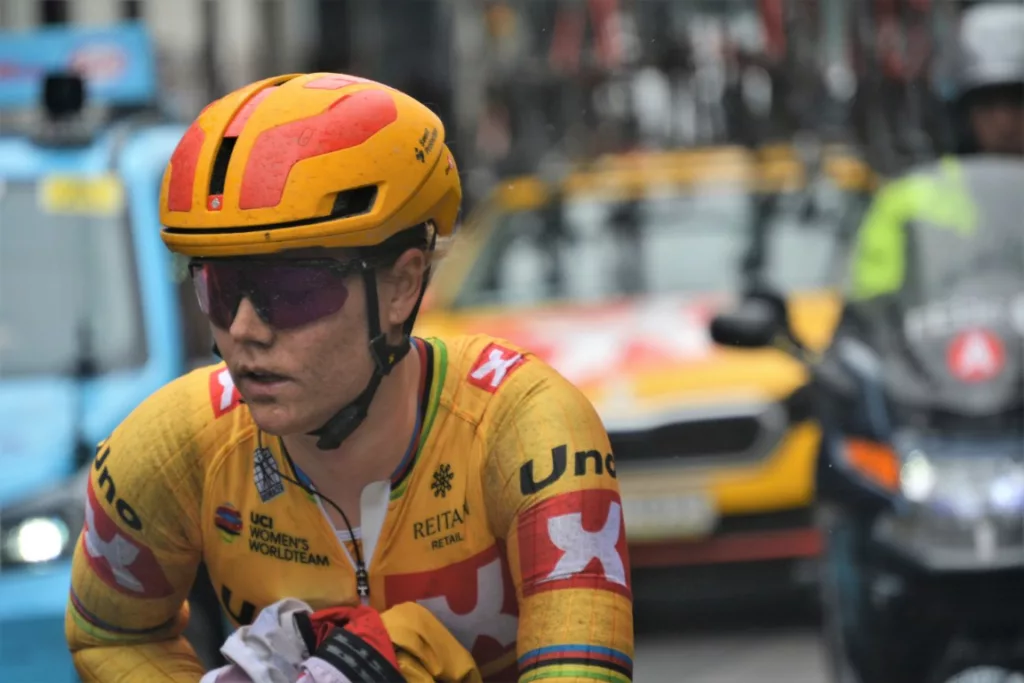
Reunion with Magnus Bäckstedt adds to Human Powered Health appeal
A familiar figure within Human Powered Health helped make the project particularly attractive to Dideriksen.
Magnus Bäckstedt previously worked with her at Cofidis before moving to Human Powered Health as head sports director ahead of the 2026 season. ProCyclingUK covered Bäckstedt’s appointment and the team’s ambition to move towards the top of the Women’s WorldTour when the move was announced last summer.
“I really liked how I worked with Magnus Bäckstedt on Cofidis, then he moved on to Human Powered Health, so that makes it even more interesting for me,” Dideriksen said. “I’m looking forward to joining.”
Human Powered Health general manager Ro De Jonckere believes Dideriksen can provide much more than experience alone.
“She is a rider with an incredible amount of experience, a proven winner at the highest level, and someone who has shown throughout her career that she can perform in many different types of races,” he said.
“Amalie brings strength, versatility and race intelligence, but also the kind of experience that can make a real difference within a growing team.”
Dideriksen has rediscovered her winning instinct in 2026
The move comes during one of Dideriksen’s strongest road seasons for several years.
She returned to winning ways at the 2026 Région Pays de la Loire Tour-Féminin, adding another victory to a career that has increasingly shifted from pure sprinting towards selective one-day racing and harder finishes.
That form made Dideriksen the principal sprint option when Cofidis selected its Tour de France Femmes 2026 team. Her strength after difficult racing gave the team an alternative to trying to compete directly with the pure sprinters on every stage.
She then added another important result by reclaiming the Danish road race title for the sixth time, returning to the national champion’s jersey five years after she last held it.
Dideriksen believes those results reflect something broader than simply improved physical form.
“I think I’ve found a bit back the last few years, like this racing instinct,” she said. “When you as a team can really play in the finals for a good result. You can plan a lot before, but in the end you need this winning instinct or this motivation to really fight.”
That instinct has been one of the defining qualities of her career. Dideriksen has rarely been the strongest climber or the fastest pure sprinter in a field, but she has repeatedly shown an ability to recognise how a finale is developing and put herself in the correct position.
“I like when you enter the final part of the race where time goes slow and really fast at the same time, to make those decisions on the road,” she said.
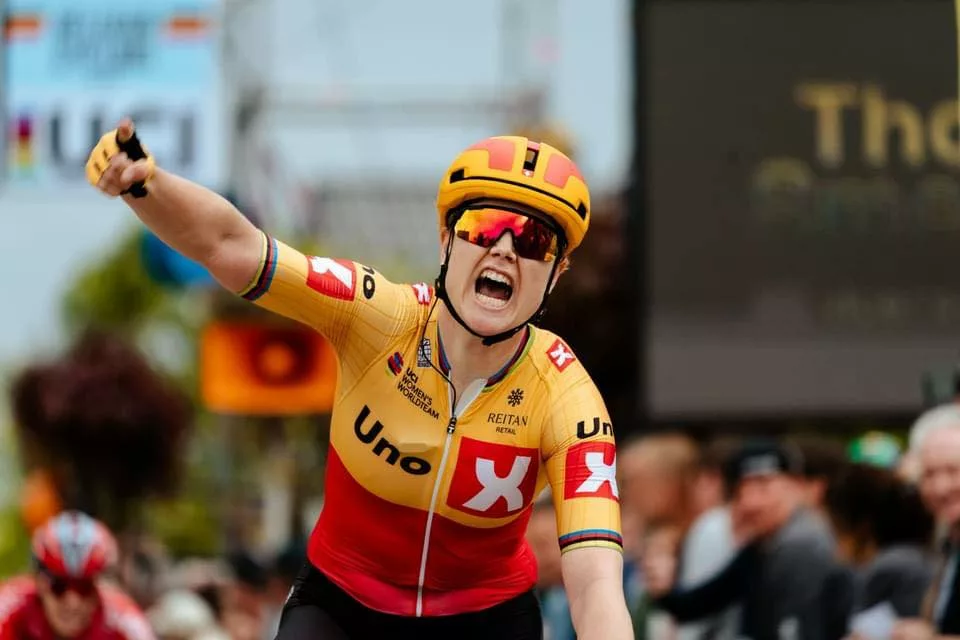
The 2016 world title remains Dideriksen’s defining road victory
Dideriksen’s place in cycling history was secured remarkably early in her career.
She won consecutive junior road race world championships in 2013 and 2014, then stepped up to become elite world champion in Doha only two years later.
The 2016 race ended in a reduced sprint on The Pearl in Qatar. Dideriksen positioned herself behind Kirsten Wild before coming past the Dutch rider to take the rainbow jersey at only 20 years old.
Her name consequently sits alongside some of the defining riders of the modern era in ProCyclingUK’s list of cycling road world champions, between Lizzie Deignan’s Richmond victory in 2015 and Chantal Blaak’s win in Bergen the following year.
Dideriksen returned to the World Championship podium with bronze in 2017 and has since built a long career around the characteristics that produced that rainbow jersey: positioning, tactical awareness, endurance and a strong sprint after difficult racing.
Her wider road palmarès includes victory at the Ronde van Drenthe, numerous international stage wins and six Danish road titles.
Road success has always run alongside a major track career
Dideriksen’s achievements on the track are almost as significant.
She won Olympic silver in the Madison alongside Julie Leth at the Tokyo Games and later became world champion in the same discipline in 2024, adding another rainbow jersey to a collection stretching back to her junior road career.
That track background remains evident in how she races on the road. Dideriksen is comfortable making decisions at high speed, fighting for position in crowded finales and producing repeated accelerations before a sprint.
Those qualities are particularly valuable in the Classics and selective one-day races Human Powered Health increasingly want to influence.
At 30, Dideriksen also arrives with the experience to help younger teammates recognise those situations before they develop. Human Powered Health’s recruitment increasingly suggests the team are looking for riders who can contribute both their own results and something to the wider tactical development of the squad.

Human Powered Health’s performance structure attracted Dideriksen
Dideriksen also highlighted Human Powered Health’s Performance Labs and data-led approach as part of the attraction of making the move.
“It gets more and more important now in the cycling world, with all these helping tools, which I find quite interesting,” she said.
“I feel like now it’s also a part of me of still being in cycling is trying to become the best version of myself. Accessing basically more data and more knowledge about what I can do, I find really interesting.”
That willingness to continue looking for improvements fits the wider direction of the team.
ProCyclingUK’s Human Powered Health 2026 Women’s WorldTour team guide identified a squad with considerable tactical depth but still needing more riders capable of converting strong race positions into victories at the highest level.
The transfer activity for 2027 appears designed to address exactly that issue.
-
 Photo Credit: Cor Vos
Dideriksen becomes the second major addition for 2027
Dideriksen is the second new rider confirmed by Human Powered Health for next season, following the signing of Marta Lach from Team SD Worx-Protime.
Lach has also agreed a contract through 2028, with ProCyclingUK covering her move to Human Powered Health earlier this week.
The two riders offer complementary qualities.
Lach arrives in her late twenties with a growing reputation as one of the peloton’s strongest riders when difficult Classics racing ends in a reduced sprint. Dideriksen brings a much longer record of performing in those situations, stretching all the way back to her world title a decade ago.
Combining riders at different stages of their careers is deliberate.
“As we continue to build towards our ambition of becoming one of the leading teams in the WorldTour, it is important for us to combine young talent with riders who know what it takes to win at the highest level,” De Jonckere said.
“We believe Amalie fits that profile perfectly and will be an important part of what we are building for the future.”
Wearing the Danish champion’s jersey still matters
Despite having worn the rainbow jersey and collected major championship medals across two disciplines, Dideriksen still places considerable value on representing Denmark in national colours.
Regaining the Danish road title this season meant she could return to a jersey she had last worn in 2021.
“It’s really special,” she said. “I feel like something was missing, so I feel like it’s a target every year, so to travel the world riding in your country’s flag, racing in it, it’s really special.”
Human Powered Health will therefore gain one of the most recognisable jerseys in the peloton when Dideriksen joins at the start of 2027, provided she retains the Danish title through next year’s championships.
More importantly, they gain a rider who appears to have rediscovered the racing instincts that produced some of the biggest victories of her career.
Dideriksen is no longer the 20-year-old who surprised the favourites to become world champion in Doha. A decade later, Human Powered Health are signing a more experienced version of the same type of rider: tactically sharp, difficult to remove from a hard race and still capable of turning the right finale into a victory.

