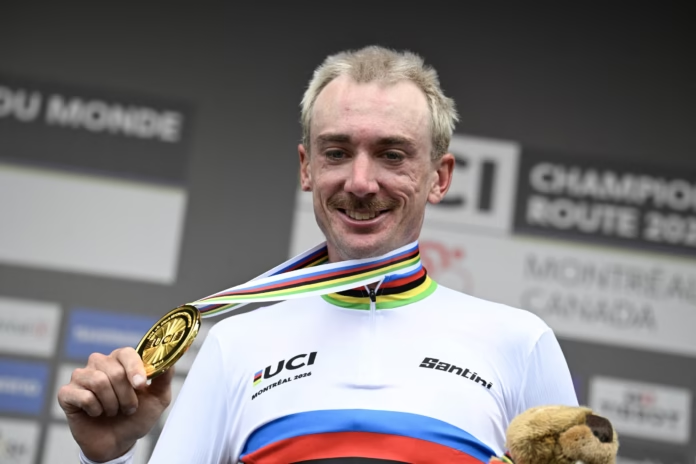
Brandon McNulty started Sunday as one of several strong riders in the United States team at the UCI Road World Championships. He finished it wearing one of cycling’s most recognisable jerseys.
The 28-year-old from Phoenix, Arizona attacked with 32km remaining in Montréal and held off the chase to win the elite men’s road race, ending a 33-year wait for an American world champion in the event.
Not since Lance Armstrong won in Oslo in 1993 had a US man taken the rainbow jersey. Before Armstrong, Greg LeMond won the title in 1983 and 1989. McNulty now joins them on a very short list.
For regular cycling followers, he is hardly an unknown. McNulty has won Grand Tour stages, major stage races, GP Montréal and US time trial championships, while spending much of his career riding alongside Tadej Pogačar at UAE Team Emirates-XRG.
For American sports fans encountering his name because he has just become world champion, though, the obvious question is a fair one.
Who exactly is Brandon McNulty?

Brandon McNulty at a glance
McNulty was born on 2 April 1998 and grew up in Phoenix.
Cycling was part of his life from an early age. His father raced and McNulty began riding dirt trails as a child before moving gradually towards road cycling.
By his teenage years, one quality was already clear. He could ride very hard for a very long time.
That became the foundation of his career. McNulty developed into an elite time triallist who could also climb well enough to remain competitive in hard stage races and selective one-day events.
He is not a pure sprinter or a specialist high-mountain climber. His strength lies between the usual categories, which helps explain why he has been able to win in so many different ways.
McNulty was already a world champion as a teenager
Sunday was not the first time McNulty had worn a rainbow jersey.
Ten years earlier, he won the 2016 junior World Championships individual time trial in Doha.
McNulty was 18 and beat Denmark’s Mikkel Bjerg by more than half a minute. A year later, after moving into the under-23 ranks, he finished second to Bjerg in the World Championships time trial in Bergen.
He added another under-23 Worlds time trial medal in 2019.
So while Montréal produced the biggest result of his career, the World Championships have been part of McNulty’s story since long before he became a familiar name in the professional peloton.
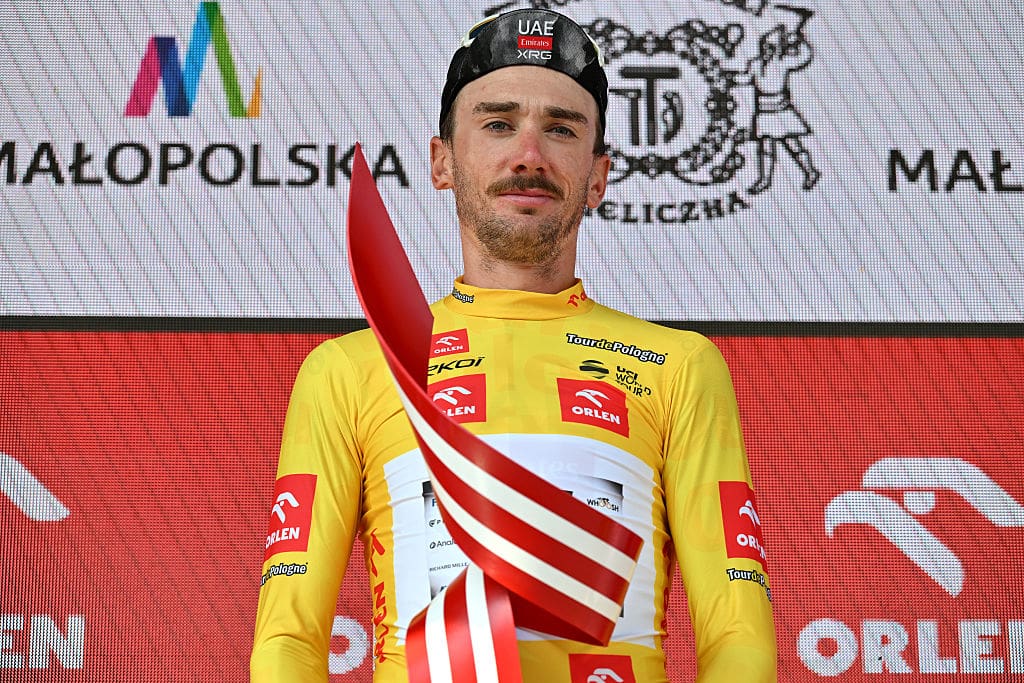
How did Brandon McNulty become a professional cyclist?
McNulty joined Rally Cycling in 2017 and developed within the American team before moving more fully into European racing.
His first major stage-race breakthrough came in 2019 when he won the Giro di Sicilia overall.
That performance helped earn him a move to UAE Team Emirates for the 2020 season.
The timing had a major effect on his career.
Tadej Pogačar was beginning his own rise towards becoming the dominant Grand Tour rider of his generation, and McNulty developed into one of the riders UAE could trust around him in the biggest races.
That role sometimes hid just how strong McNulty was himself.
In professional cycling, a rider can spend an entire mountain stage reducing the peloton to a handful of favourites, pull over once the team leader attacks, and finish well down the stage results despite having been one of the strongest riders in the race.
McNulty has spent several years combining that work with chances to win for himself.
The 2022 Tour de France showed how well McNulty could climb
One of the performances that changed perceptions of McNulty came at the 2022 Tour de France.
Pogačar was trying to recover time from Jonas Vingegaard on stage 17 in the Pyrenees. UAE had been weakened by illness and withdrawals, leaving McNulty with a huge amount of responsibility.
He delivered one of the best mountain performances of his career.
McNulty drove the pace over the final climbs until almost the entire general classification group had disappeared. By the end, only Pogačar and Vingegaard remained with him.
Pogačar won the stage at Peyragudes, Vingegaard finished second and McNulty crossed the line third.
It was a domestique ride rather than an attempt to win himself, but it showed that a rider known primarily for time trialling could also ride most of the Tour de France GC contenders off his wheel in the mountains.
That combination of sustained power and climbing strength is a big part of why his Montréal attack was so difficult to bring back.
 Photo Credit: Getty
McNulty has won stages at the Giro and Vuelta
McNulty has increasingly been given chances of his own when Pogačar is absent or UAE arrive with several possible leaders.
In 2023, he won stage 15 of the Giro d’Italia from a breakaway, beating Ben Healy and Marco Frigo in Bergamo.
A year later came another major result.
McNulty won the opening individual time trial at the 2024 Vuelta a España and took the race’s first red leader’s jersey. ProCyclingUK covered that victory in our report on McNulty’s Vuelta time trial win.
By then, describing him simply as one of Pogačar’s helpers no longer made much sense.
He could win time trials, hilly one-day races, breakaway stages and shorter stage races in his own right.
2024 was when McNulty’s own results began piling up
The 2024 season was one of the most productive of McNulty’s career.
He won the Volta a la Comunitat Valenciana overall, took the Gran Premio Miguel Indurain and won time trials at the UAE Tour and Tour de Romandie, alongside his success at the Vuelta.
He also became US national time trial champion.
At the Paris Olympics, McNulty finished fifth in the individual time trial behind Remco Evenepoel, Filippo Ganna, Wout van Aert and Josh Tarling.
He had already finished sixth in the road race at the Tokyo Olympics three years earlier.
The results were accumulating, even if McNulty still tended to receive less attention than some of the riders around him.
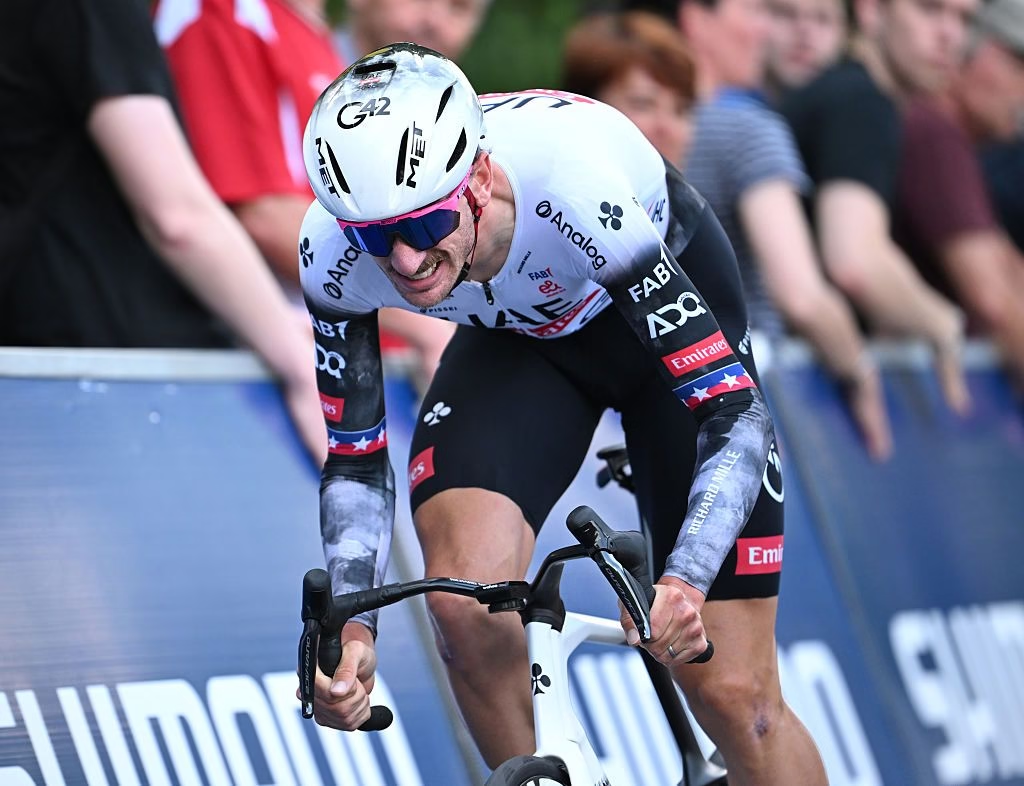
Montréal was already one of McNulty’s best hunting grounds
The roads around Mount Royal were hardly unfamiliar to him before Sunday.
McNulty won GP Montréal in 2025 and returned to finish third in the 2026 edition shortly before the World Championships.
That gave him something valuable when the rainbow jersey was decided on many of the same roads. He already knew where the climbs hurt, where a solo rider could maintain speed and how difficult the circuit became after several hours of racing.
The 2026 GP Montréal had also shown the strength of riders such as Isaac del Toro and Paul Seixas.
Waiting for the final climbing battle against them was unlikely to be McNulty’s best route to victory.
So he did not wait.
Why wasn’t McNulty one of the main favourites?
Because his 2026 season had been solid rather than spectacular.
He finished fifth overall at the Volta a la Comunitat Valenciana and sixth at the Tour de Suisse, but had not won a race before the World Championships.
His Tour de France also ended prematurely when he abandoned on stage 18. His departure was a major loss to UAE’s mountain support, as we looked at in our piece on what McNulty’s Tour withdrawal meant for UAE.
His form improved sharply once he returned to Canada.
McNulty’s third place at GP Montréal was followed by fourth in the World Championships individual time trial, where he narrowly missed a medal as Remco Evenepoel won another world time trial title.
Even then, most of the pre-race attention went elsewhere.
Del Toro had just won GP Montréal. Evenepoel had dominated the Worlds time trial. Mathieu van der Poel was a former world champion, while Seixas, Tom Pidcock and Wout van Aert were all major contenders.
McNulty was dangerous without being the rider everybody expected to control.
That suited the United States perfectly.
 Photo Credit: Getty
How did Brandon McNulty win the 2026 World Championships?
The United States used its numbers well, then McNulty finished the job.
Quinn Simmons spent much of the decisive middle section attacking with riders including Van der Poel. When that move was caught, Matteo Jorgenson went next.
McNulty attacked during the hesitation that followed, with 32km remaining.
The gap did not look decisive at first, but the chase never organised properly.
Jorgenson could follow attacks without working because his teammate was ahead. Simmons remained another American threat. Del Toro had already spent heavily closing previous moves, while Van der Poel had been racing aggressively for much of the previous hour.
Evenepoel was struggling on the climbs.
McNulty’s advantage grew beyond a minute before Pidcock mounted the most serious chase on the final lap and reduced it towards ten seconds.
That was the danger point.
McNulty survived the final climb, reached faster roads and began using the time-trial strength that had defined his career since his junior days.
The gap opened again.
He eventually won by 13 seconds from Michael Matthews, with Van der Poel taking bronze.
Our full tactical breakdown looks at how the United States outmanoeuvred McNulty’s main rivals, while the race report covers the complete World Championships finale.
What does winning the World Championships mean?
For American fans more familiar with the Tour de France, the World Championships work differently.
It is a one-day race held once each year.
Riders compete for their countries rather than their professional teams, which is why McNulty raced in USA colours instead of his usual UAE Team Emirates-XRG kit.
The winner becomes world champion for the following year and earns the right to wear the rainbow jersey in road races.
McNulty will now race in the white jersey with blue, red, black, yellow and green bands until the 2027 World Championships.
Once his year as champion ends, he will retain rainbow bands on the sleeves and collar of his normal racing kit for the rest of his career.
It is one of the most visible honours in professional cycling.
Our guide to Road World Championships winners and records covers the full history of the title.
When was the last American men’s road world champion?
- 1993
Lance Armstrong won the elite men’s road race in Oslo that year at the age of 21.
Before him, Greg LeMond became the first American man to win the title in 1983 and then won it again in 1989.
McNulty is therefore only the third American man to become elite road world champion.
The gap between Armstrong and McNulty lasted 33 years.
American riders have won plenty elsewhere during that period, from Olympic and women’s road medals to track and mountain bike world titles. The elite men’s road race remained out of reach.
McNulty ended that wait in Montréal.
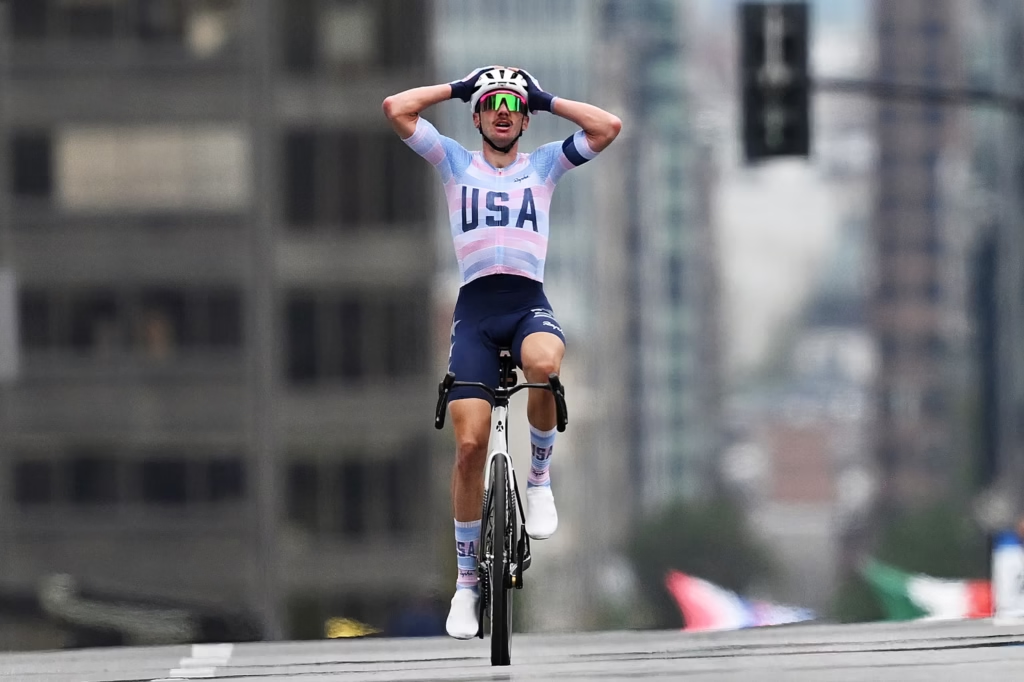 Photo Credit: Getty
Why might American sports fans not already know him?
Because professional cycling does not work much like the major US team sports.
McNulty rides for UAE Team Emirates-XRG, one of the strongest professional teams in cycling. His teammates include riders capable of winning the Tour de France and other major races.
That means he is not always racing for himself.
At the Tour de France, McNulty may spend a mountain stage setting a severe pace for Pogačar, reduce the group to a few contenders and then drop back once his leader attacks.
The final result sheet does not necessarily show how important that work was.
It creates a strange sort of profile. McNulty has been one of the stronger American cyclists of his generation for years without having the kind of single headline result that makes him familiar beyond regular cycling audiences.
The rainbow jersey changes that.
Is Brandon McNulty a Tour de France contender?
Not in the straightforward sense of being a rider around whom UAE would build its entire Tour de France campaign while Pogačar remains available.
McNulty climbs extremely well and has won shorter stage races, but his strengths are particularly well suited to one-week races, time trials, selective Classics and supporting a Grand Tour leader.
Montréal brought those qualities together.
The 273km distance rewarded endurance. The repeated Mount Royal climbs were difficult without turning the race into a pure high-mountain contest, while the flatter sections suited McNulty’s time-trial ability.
Most importantly, he only needed to produce one exceptional day.
He did not have to defend a lead for three weeks.
What changes now for Brandon McNulty?
The most obvious change will be visual.
McNulty is going to be impossible to miss.
Whenever he races on the road over the next year, the rainbow jersey will identify him before television commentators even mention his name.
It may also change how rivals race against him.
A rider who could previously move into a dangerous attack as UAE’s second or third option now carries the world champion’s jersey. Gaps will be harder to obtain and every move will attract more attention.
His range still gives him plenty of ways to win.
McNulty can time trial, climb, attack from distance and survive hard one-day races. He has won at the Giro and Vuelta, taken stage-race general classifications and proved repeatedly that Montréal suits him.
Now he has the biggest one-day result of his career.
For many American sports fans, Sunday was the introduction.
For Brandon McNulty, it was the result of a career that had been heading towards this level for years.