

The Vuelta a España 2026 begins in Monaco on Saturday 22 August, and four classification jerseys will be contested across the 21 stages to Granada.
The structure is familiar from the Tour de France, but the colours are different and some of the scoring details work differently too. The red jersey is for the overall race leader, the green jersey rewards the points classification, the white jersey with blue polka dots belongs to the King of the Mountains, and the white jersey identifies the best young rider.
For anyone following the race for the first time, ProCyclingUK’s beginner’s guide to the Vuelta a España 2026 covers the wider format of the race, while this guide focuses specifically on how the four jerseys are won.
What does the red jersey mean at the Vuelta?
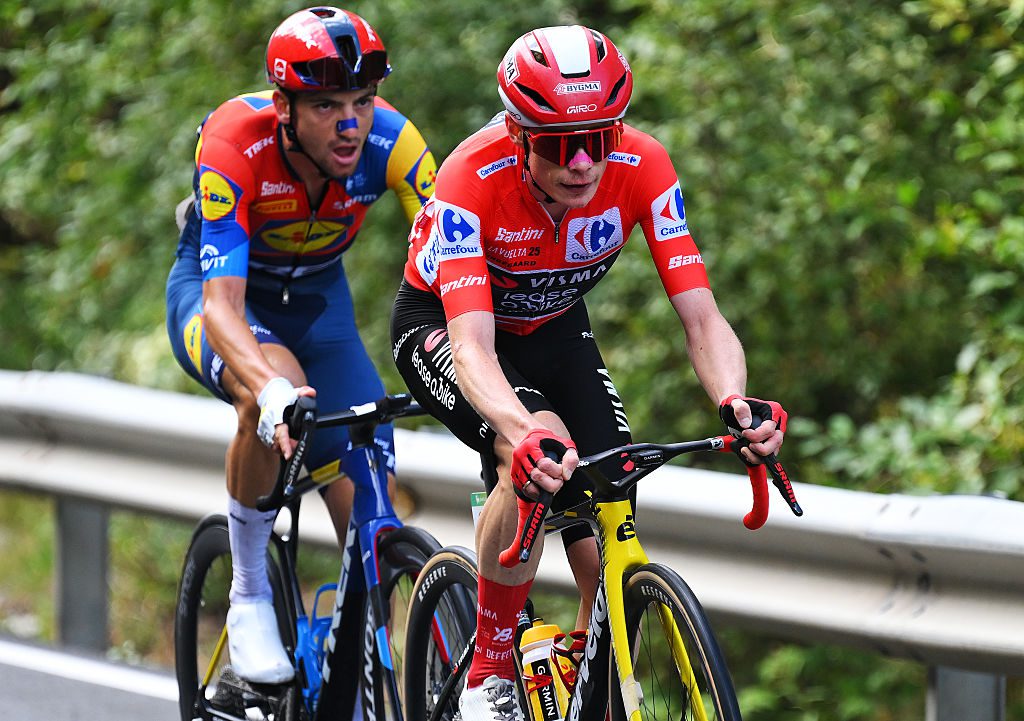
The red jersey, or maillot rojo, is the most important jersey in the Vuelta a España.
It is worn by the rider with the lowest cumulative time across the race.
Every rider’s stage times are added together, with time bonuses and penalties also capable of changing the standings. The rider with the lowest total after Stage 21 wins the Vuelta.
That makes red the Vuelta equivalent of the yellow jersey at the Tour de France and the pink jersey at the Giro d’Italia.
The principles are the same as those explained in ProCyclingUK’s guide to how the general classification works, even though the Vuelta uses red rather than yellow.
For 2026, the classification should be shaped heavily by the mountain stages and the two individual time trials. The race opens with a short test around Monaco before a much longer time trial later in the race.
The Vuelta a España 2026 route guide shows where the biggest overall differences are likely to be created.
How do time bonuses affect the red jersey?
Time bonuses allow riders to gain seconds on their GC rivals without creating an actual gap on the road.
Bonuses are available at selected stage finishes and intermediate points, which makes them particularly important when the general classification remains tightly packed.
A rider who repeatedly finishes near the front on uphill or reduced finishes can therefore gradually build an advantage before the biggest mountain stages.
Individual time trials are different. There are no finish-line bonuses to chase there, with riders simply gaining or losing the exact time difference recorded on the road.
That makes bonus seconds particularly valuable for explosive GC riders who can consistently challenge for stage wins and podium places.
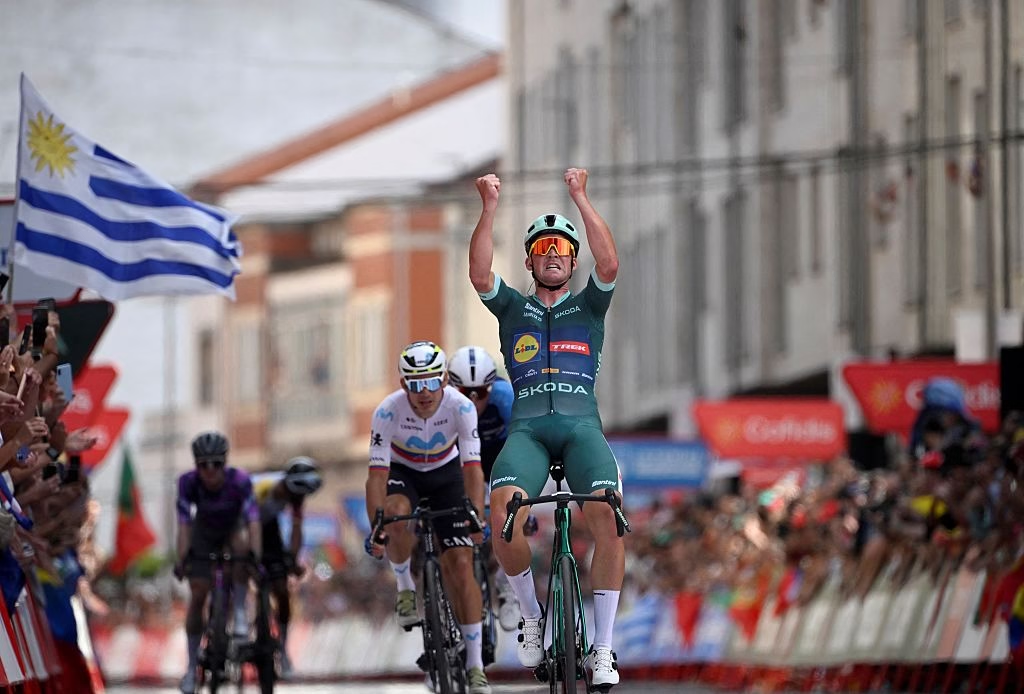 Photo Credit: Getty
What does the green jersey mean?
The green jersey is awarded to the leader of the Vuelta’s points classification.
Unlike the red jersey, it is not based on accumulated time.
Instead, riders score points through their finishing positions on stages and at intermediate sprints.
The important Vuelta-specific detail is that different types of stages can carry different points allocations. Sprint-friendly stages provide the greatest rewards at the finish, while harder mountain stages and time trials award fewer points.
That structure is designed to give fast riders a realistic route towards green rather than allowing the overall race leader to dominate the classification simply by finishing near the front on every major mountain day.
The Vuelta a España 2026 sprinters and points jersey guide looks specifically at the riders best suited to this competition.
How are green jersey points awarded?
The Vuelta awards points to the highest finishers on each stage, with the precise number available depending on how that stage is classified.
The most sprint-friendly stages carry the largest rewards, while increasingly difficult stages offer fewer points at the finish.
Intermediate sprints provide another opportunity to add to a rider’s total.
That means winning green is not simply about taking the most bunch sprints.
Consistency matters.
A rider who finishes second or third repeatedly, scores at intermediate sprints and survives more difficult stages can build a substantial total without dominating the pure sprint days.
Who usually wins the Vuelta green jersey?
The points system generally favours riders capable of scoring across several different types of stage.
Pure sprinters have the biggest opportunities on flat days, but the Vuelta traditionally includes fewer completely straightforward sprint stages than the Tour de France.
That makes versatility especially valuable.
A rider who can contest conventional bunch finishes, survive rolling terrain and fight for intermediate sprint points has far more opportunities to score than a specialist who disappears as soon as the road becomes difficult.
That is why riders such as Mads Pedersen and Wout van Aert are such obvious green jersey profiles in 2026.
There is also a genuine possibility that a GC rider becomes involved.
The Vuelta has historically seen overall contenders win the points classification. Chris Froome won both the overall and points competitions in 2017, showing that a rider who scores heavily across mountain stages and time trials can still accumulate enough points to beat the sprinters.
With Tadej Pogačar capable of winning on steep finishes, mountain stages and against the clock, the 2026 green jersey cannot automatically be viewed as a sprint-only competition.

What does the blue polka-dot jersey mean?
The white jersey with blue polka dots is worn by the leader of the King of the Mountains classification.
This is the Vuelta equivalent of the red polka-dot jersey at the Tour de France.
Riders score points by crossing classified summits near the front.
Harder climbs generally award more points than smaller ones, which means the competition increasingly rewards riders capable of remaining involved on the biggest mountain stages.
A rider does not need to be high in the overall classification to win it.
In fact, losing time on GC can sometimes help.
Once a rider is no longer considered a threat to the red jersey, GC teams may be much more willing to allow them into long breakaways. That creates repeated opportunities to collect mountain points before the race favourites reach the same summits.
How is the mountains classification won?
The principle is straightforward: collect more mountain points than anyone else.
Points are awarded on classified climbs throughout the Vuelta, with larger rewards attached to the most important ascents.
That creates a very different tactical contest from the general classification.
A rider targeting red is concerned primarily with cumulative time.
A rider targeting the mountains jersey may attack much earlier because the main objective of their day could be a classified summit long before the finish.
The 2026 Vuelta route offers plenty of opportunities for that type of rider, with six officially classified mountain stages and four medium-mountain stages across the three weeks.
A dedicated breakaway rider can establish a large advantage early in the race, but the competition can still change quickly if a GC favourite begins winning summit finishes and collecting large mountain-point totals.
Can the Vuelta winner also win the mountains jersey?
Yes.
There is nothing preventing one rider from leading several classifications at the same time.
If the same rider leads both the general classification and mountains competition, they wear the red jersey because GC takes priority.
Another rider then wears the polka-dot jersey during the stage.
The important distinction is that this does not transfer the classification lead itself.
The rider in red still officially leads both competitions. The polka-dot jersey is simply being worn by the next eligible rider because the classification leader cannot wear two jerseys at once.
The same principle applies to green and white.

What does the white jersey mean?
The white jersey is awarded to the best young rider.
Unlike the green and mountains competitions, there is no separate points system.
Eligible riders are simply ranked according to their place in the general classification.
The young rider with the lowest cumulative time leads the white jersey competition.
That makes it effectively a second GC competition restricted to riders who meet the age requirement.
The Vuelta’s white jersey has become particularly important because many of the strongest Grand Tour riders now reach a very high level while still eligible for the young rider classification.
Why the white jersey can become a major GC battle
The strongest young riders are often competing for far more than white.
A rider can simultaneously lead the young rider classification and sit inside the top five overall, challenge for the podium or even lead the Vuelta itself.
If the young rider also leads the general classification, they wear red.
The rider second in the young rider standings then wears white on the road, even though they are not technically leading the classification.
The 2026 field contains several riders capable of making white a genuine GC contest.
Matthew Riccitello is a particularly relevant example after finishing fifth overall and winning the young rider classification at the 2025 Vuelta.
Why is the Vuelta’s white jersey relatively new?
The Vuelta only began using a dedicated white jersey for the young rider classification in 2019.
Before that, white had been associated with the combination classification, a distinctive Vuelta competition based on a rider’s combined positions in the general, points and mountains classifications.
The combination classification disappeared after 2018.
White was then reassigned to the best young rider, bringing the Vuelta’s four main classification jerseys much closer to the structure familiar from the Tour de France.
The colour may now look familiar, but the history behind it is distinctly Vuelta.
What happens if one rider leads several classifications?
The jerseys operate in a hierarchy.
The general classification jersey takes priority.
If the red jersey holder also leads another classification, they continue wearing red and another rider wears the secondary jersey.
For example, if a young rider leads both GC and the white jersey competition, they race in red while the next eligible young rider wears white.
That second rider has not taken over the classification.
The official standings still show the red jersey wearer as the white jersey leader.
The same situation can occur with green and the mountains jersey.
This is why the rider physically wearing a jersey is not always the rider technically leading that competition.
Is there also a team classification?
Yes, although it does not have an individual leader’s jersey.
The team classification rewards collective performance rather than one rider.
The best times from each team are combined on each stage, with those daily results accumulating across the race.
A squad with several riders consistently finishing near the front can therefore lead the team competition even without owning the red jersey.
For teams bringing multiple climbers or GC riders, this classification can develop naturally without being the main objective.
-
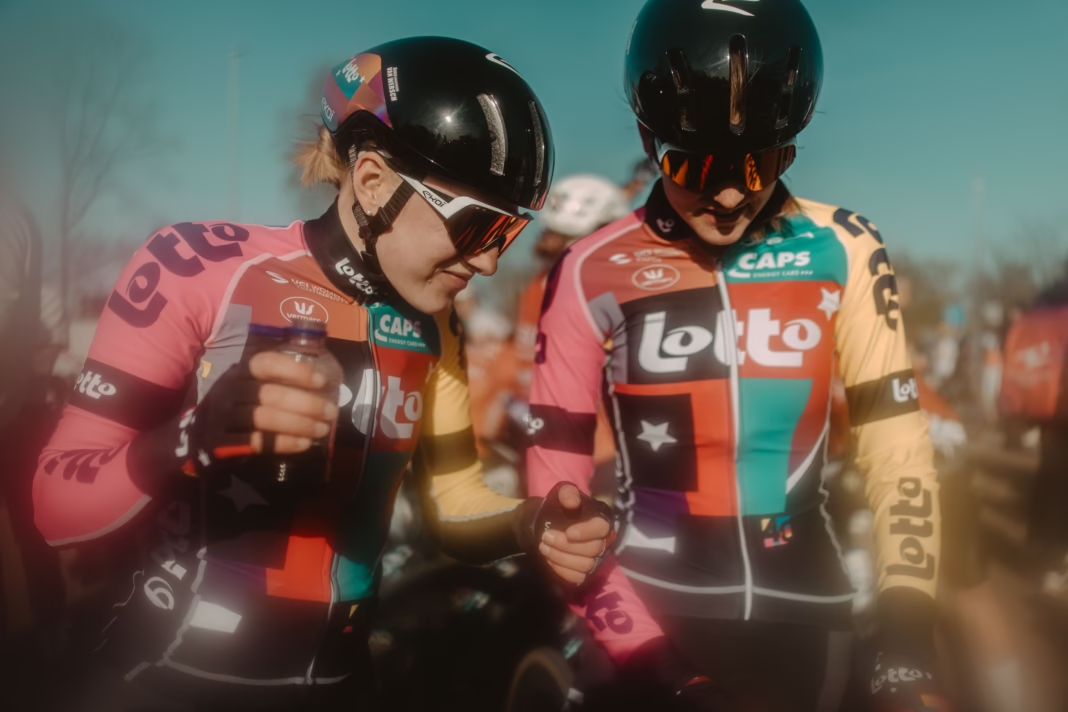
 Photo Credit: Brecht Steenhouwer
 -
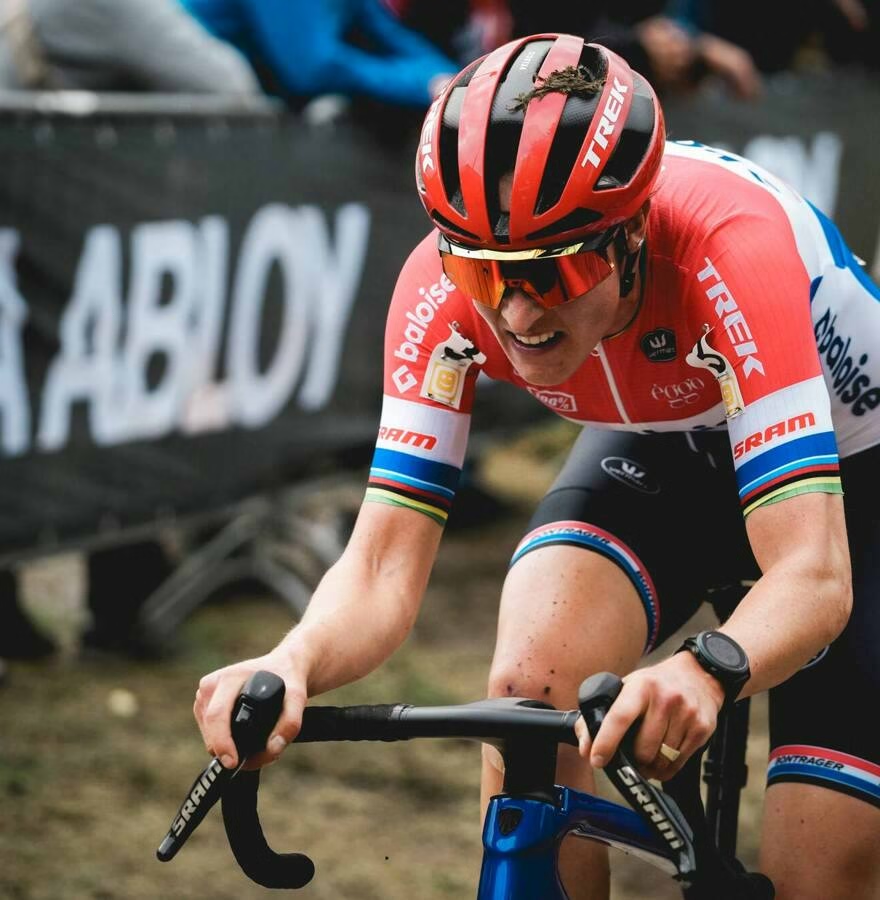
 Photo Credit: Telenet Superprestige

Vuelta a España 2026 jerseys at a glance
| Jersey | Classification | How it is decided |
|---|---|---|
| Red | General classification | Lowest cumulative time |
| Green | Points classification | Points from stage finishes and intermediate sprints |
| White with blue polka dots | Mountains classification | Points collected on classified climbs |
| White | Young rider classification | Best GC time among eligible young riders |
The colours are the easiest visual difference between the Vuelta and the Tour de France.
The Tour uses yellow for GC and red polka dots for the mountains classification.
The Vuelta uses red for GC and blue polka dots on white for the mountains competition.
Green and white have broadly similar meanings at both races, although the detailed scoring and eligibility rules are set by each organiser.
ProCyclingUK’s Tour de France 2026 jerseys explained provides the direct comparison for cycling’s biggest Grand Tour.
Which Vuelta jersey matters most?
The red jersey is unquestionably the biggest prize.
Winning the general classification means winning the Vuelta a España.
The other three jerseys are still major objectives in their own right, particularly for riders whose strengths or team roles make overall victory unrealistic.
The green jersey can define a sprinter or all-rounder’s three weeks.
The mountains classification gives breakaway riders a reason to attack repeatedly even when they are no longer relevant to GC.
The white jersey can identify one of the next generation of Grand Tour contenders.
That is why understanding the classifications changes how the race looks. A move that appears irrelevant to the battle for red may make complete sense once the points or mountain standings are considered.
Across the 21 stages of the Vuelta a España 2026, four individual races are effectively taking place at the same time.

